Donate ☕
201 Military Defense Forums
[🇧🇩] - Save the Rivers/Forests/Hills-----Save the Environment | Page 18 | PKDefense
Home Login Forums Wars Movies Watch Videos
Serious discussion on defense, geopolitics, and global security.

[🇧🇩] Save the Rivers/Forests/Hills-----Save the Environment

Reply (Scroll)
Press space to scroll through posts
G Bangladesh Defense
[🇧🇩] Save the Rivers/Forests/Hills-----Save the Environment
523
13K
More threads by Saif

Stop disturbing the Sundarbans!​

Restrain traffic of ships through the forest

1711232731282.webp


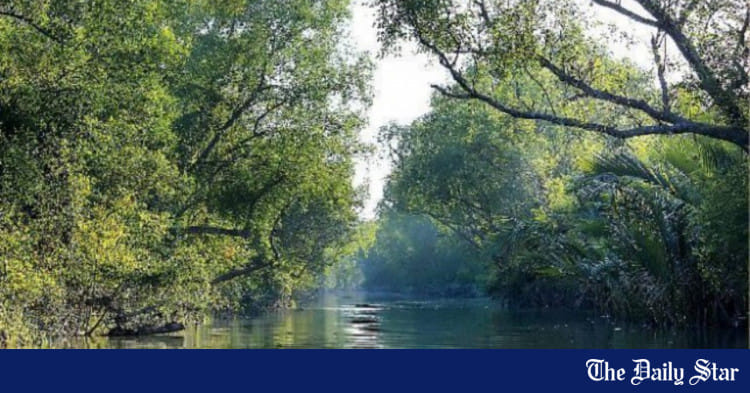
It is deeply concerning that on top of projects, megaprojects, illegal occupations and deforestation ravaging the Sundarbans, traffic of ships through the forest has increased dramatically in recent years. A recent report sheds light on how ships, discharging harmful fumes and sound pollution, and often carrying toxic materials through the forest, have nearly doubled in a decade—from 357 trips monthly in 2012 to 837 trips in 2022, and 701 trips monthly so far this year.

Under the first Protocol on Inland Water Transit and Trade between Bangladesh and India, signed in 1972, lighter cargo vessels can operate between the two countries using the waterways mostly through the Sundarbans. A major route for these ships goes through at least 100 km of the river system inside the mangrove forest, which takes around eight hours for the vessels to travel. While any motor vehicle, including boats and ships, is strictly prohibited from operating through the forest after sunset till sunrise, ships continue to operate 24/7 unrestrained. The customs station in Angtihara, the entry point to the forest on this route, only logs the trips of the ships and does not monitor if any laws have been broken. While the customs and immigration in India close off at night, our customs office continues to operate throughout the night.
By allowing these activities, we are now destroying the Sundarbans from the inside. The toxic fumes and loud sounds greatly impact wildlife habitats and breeding environments. The propellers disrupt the marine ecosystem, and the waves cause severe erosions. For instance, the width of rivers on this route has increased from 20-30 metres to 50-60 metres. Most of the ships on this route contain fly ash, coal, and stones from India for our riverside cement factories. In the last seven years, at least 15 such ships have capsized inside the forest, spilling these harmful materials directly into the river.

Bangladesh has now become a land of lost forestlands and dead ecosystems. We have irredeemably destroyed a number of forests and major sources of biodiversity throughout this delta, and even in the hill tracts. The Sundarbans is the last hope for any unique and great population of wildlife to survive. The government must ensure that any activity harming this forest is halted immediately, and look for an alternative route for maritime trade with India as well as consider moving major power plants and factories from the area.​
 
Analyze

Analyze Post

Add your ideas here:
Highlight Cite Fact Check Respond

How to decolonise our battle against climate change
by Laurie Parsons 18 August, 2024, 00:00

1723941159086.webp

| —Counter Punch

Most colonial economies were organised around extraction, providing the raw materials that drove imperial growth. As a result, even when the imperial administration is taken out, the underlying economic structures put in place by colonisers are very difficult to get away from and continue to hold newly independent countries back, writes Laurie Parsons

ALMOST everything we buy exploits the environment and the people who depend on it to a greater or lesser extent. Almost everything we buy contributes to climate breakdown through emissions, local environmental degradation, or, most commonly, both. Yet, in a world where greenwashing is so commonplace that almost every product proclaims ecological benefits, it tends not to be seen that way. In fact, it tends not to be seen at all.

Carbon emissions and pollution are a phase that we all pass through, meaning that the ability — and crucially the money — to avoid the ratcheting risks of climate change is something we have earned, and others too will earn as each nation continues inexorably along its separate curve. Wealthy countries accept this narrative because it is comfortable and provides a logical and moral explanation of the relative safety and health of the rich world.

But what if it wasn’t true? What if one place was devastated because the other was clean? Just as carbon emissions are not acts of God, neither is exposure to the results of those emissions. In other words, you can’t remove money from the geography of disaster risk.

This is carbon colonialism: the latest incarnation of an age-old system in which natural resources continue to be extracted, exported, and profited from far from the people they used to belong to. It is, in many ways, an old story, but what is new is the hidden cost of that extraction: the carbon bill footed in inverse relation to the resource feast.

Most colonial economies were organised around extraction, providing the raw materials that drove imperial growth. As a result, even when the imperial administration is taken out, the underlying economic structures put in place by colonisers are very difficult to get away from and continue to hold newly independent countries back.

On a basic level, exporting raw materials adds less economic value to the country that does it than processing, manufacturing, and reselling those materials, so for every watt of energy, every hectare of land, and every hour of work used to make goods exported from the global North to the South, the South has to generate, use, and work many more units to pay for it.

Decolonising climate change

WE ALREADY have the ways and means to decolonise how we measure, mitigate, and adapt to climate change.

This task is as sizable as it is vital, but at its core are three priorities. First, carbon emissions targets based on national production must be abandoned in favour of consumption-based measures, which, though readily available, tend to be marginalised for rich nations’ political convenience. Secondly, with half of emissions in some wealthy economies now occurring overseas, environmental and emissions regulation must be applied as rigorously to supply chains as they are to domestic production.

By adopting these new viewpoints, we can aim towards a final priority: recognising how the global factory manufactures the landscape of disaster. Our globalised economy is built on foundations designed to siphon materials and wealth to the rich world while leaving waste in its place.

Yet there is, as ever, another way. It is possible to reject the globalisation of environmental value by giving voice to the people it belongs to. Environments do not have to be merely abstract commodities.

Giving greater value to how people think about their local environments is seen as a way to decolonise our environmental thinking, move away from extractivism, and perhaps forestall the slow death of nature that began in the 1700s.

Environmental myths and how to think differently

ONE of the most widely shared myths in climate change discourse is that climate change increases the likelihood of natural disasters. This burden is ‘disproportionately’ falling upon poorer countries. Yet, it is fundamentally flawed. Climate change is not causing more natural disasters because disasters are not natural in the first place. They do not result from storms, floods, or droughts alone, but when those dangerous hazards meet vulnerability and economic inequality.

A hurricane, after all, means something completely different to the populations of Singapore and East Timor. This difference is no accident of geography but of a global economy that ensures that some parts of the world remain more vulnerable to climate change than others. Natural disasters are, therefore, economic disasters: the result of centuries of unequal trade and the specific, everyday impacts of contemporary commerce.

With rich countries doing an ever-diminishing share of their manufacturing, the responsibility to report real-world emissions is left to international corporations, which have little incentive to report accurate information on their supply chains.

The environments of the rich world are becoming cleaner and safer, even in an increasingly uncertain environment. The resources needed to tackle the challenges of climate change are accruing and being spent to protect their privileged populations.

Yet, for most of the world, the opposite is true. Natural resources continue to flow ever outward, with only meagre capital returning in compensation. Forests are being degraded by big and small actors as climate and market combine to undermine traditional livelihoods. Factory workers are toiling in sweltering conditions. Fishers are facing ever-declining livelihoods.

In other words, we have all the tools we need to solve climate breakdown but lack control or visibility over the production processes that shape it. From legal challenges to climate strikes and new constitutions, people are waking up to the myths that shape our thinking on the environment. They are waking up to the fact that climate change has never been about undeveloped technologies but always about unequal power.

As the impacts of climate breakdown become ever more apparent, this can be a moment of political and social rupture, of the wheels finally beginning to come off the status quo.

Demand an end to the delays. Demand an end to tolerance for the brazenly unknown in our economy. Demand an end to carbon colonialism.

CounterPunch.org, August 16. Laurie Parsons is a senior lecturer in human geography at Royal Holloway, University of London, and principal investigator of the projects The Disaster Trade: The Hidden Footprint of UK Imports and Hot Trends: How the Global Garment Industry Shapes Climate Vulnerability in Cambodia. He is the author of Carbon Colonialism: How Rich Countries Export Climate.​
 

Analyze Post

Add your ideas here:
Highlight Cite Respond
  • Like (+1)
Reactions: Bilal9

55 acres of forest land recovered from former minister Hasan Mahmud's brother

1724713915272.webp


The Forest Department today recovered at least 55 acres of forest land that had been illegally occupied by Ershad Mahmud, brother of former Foreign Minister Hasan Mahmud, in Rangunia upazila of Chattogram.

A team from the Forest Department, led by Maruf Hossain, assistant conservator of forests of the Chattogram South Forest Division, carried out the operation. The team removed several structures during the drive, including six sheds of a farm and a restaurant.

The operation began at 10:00am and continued until 4:00pm at Shukhbilash village under Padua union in Rangunia upazila, confirmed Abdullah Al Mamun, divisional forest officer (DFO) of the Chattogram South Forest Division.

"We will soon conduct another drive to recover additional forest land where Ershad Mahmud has planted orange," the DFO added.​
 
Analyze

Analyze Post

Add your ideas here:
Highlight Cite Fact Check Respond
  • Love (+3)
Reactions: Bilal9

Forest encroachers will be punished, vows Environment Adviser Rizwana
Published :
Aug 27, 2024 23:48
Updated :
Aug 27, 2024 23:48


1724803815758.webp


Environment, Forest and Climate Change Adviser Syeda Rizwana Hasan has said that any influential person involved in encroaching on forest land will face the full force of the law.

She sounded the warning a day after the Forest Department reclaimed 55 acres of land reportedly under the illegal possession of Ershad Mahmud, the younger brother of former foreign and environment minister and Awami League joint general secretary Hasan Mahmud, bdnews24.com reports.

The land was reclaimed during a raid in the Sukbilas village of the Padua Union in Chattogram’s Rangunia Upazila on Monday.

For over a decade, Ershad had been clearing forest trees and occupying the land to build six houses for a dairy farm.

He had grabbed Forest Department land near the Dashmail area on the Rangamati-Bandarban road, constructing a park and restaurant named Muktijoddha Park.

He also created three ponds in a hilly area by blocking water flow.

However, the Forest Department has not provided any information regarding legal actions against the encroachers after reclaiming the land.

When contacted on Tuesday, Rizwana told bdnews24.com: "I saw [on Monday] that it has been evicted. There are more such incidents in Bangladesh. I will establish a system where ministers, officials, NGOs, land grabbers—whoever illegally occupies protected forest land or any other land—will face punishment."

"Illegally occupying forest department land is a criminal offence. Whoever does it will have to face consequences,” added Rizwana, herself an award-winning activist campaigning for environmental justice for decades.

“The government is currently busy dealing with the floods. I know this area has been cleared, and more [illegal establishments] will be evicted. We will try to bring all the criminals together and ensure they face justice."​
 
Analyze

Analyze Post

Add your ideas here:
Highlight Cite Fact Check Respond
  • Love (+3)
Reactions: Bilal9

Sundarbans reopens Sunday after three-month closure
Published :
Aug 29, 2024 23:12
Updated :
Aug 29, 2024 23:12

1724977139947.webp


The Sundarbans are set to reopen for foresters and tourists from Sunday after a three-month closure.

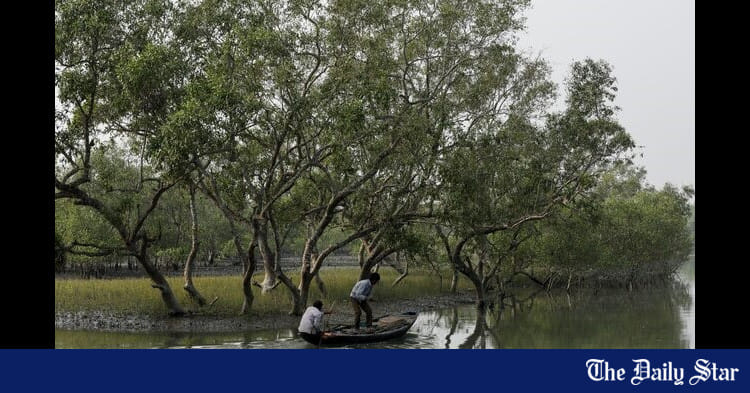
Following a long break, forester families living near the Sundarbans in Khulna are getting ready to resume fishing and crab hunting.

Mihir Kumar Doe, conservator of forests for the Khulna region, said as many as 12,000 boats and trawlers have been issued board licence certificates, or BLCs, for resource extraction in the Sundarbans. Each year, between 100,000 and 150,000 fishermen, golpata collectors, and beekeepers use these boats to harvest resources from the forest, bdnews24.com reports.

He says that the Sundarbans are not only a reservoir of biodiversity but also rich in fishery resources. From June to August, which is the breeding season, most fish in the Sundarbans’ rivers and canals lay their eggs. To safeguard this process, Bangladesh Forest Department, or BFD, has imposed a three-month ban on fishermen and tourists entering the forest.

Mihir also said: "Fishermen and tourists will receive entry passes to the Sundarbans starting Sept 1.

“Instructions have also been issued to the designated forest stations in this regard.”

According to the permit's validity, the camp officers of the forest guards will maintain a list of fishermen staying in the Sundarbans. The forest guards will patrol each canal and inspect the approved fishermen's boats following the list.

However, ordinary fishermen and golpata collectors complain that crime in the Sundarbans increases significantly during the prohibition period. Some unscrupulous local fishermen’s gangs, operating in the area adjacent to the Sundarbans, enter the forest through secret arrangements with certain forest department officials and engage in illegal fishing and crab hunting by using poison in a short amount of time.

Inside the forest, trees are burned and used to make dried fish. The demand and price for these dried shrimp are high in both domestic and international markets.

These fish and crabs are sold openly in markets around the Sundarbans. This situation has impacted legitimate fishermen, who have called for the identification and prosecution of the criminals involved.

In this regard, Mihir said, "The forest guards work to suppress all types of crimes related to the Sundarbans during the prohibited season. However, there are a few isolated incidents."

The forest official also said that if any allegations of negligence or connivance with criminals are proven against forest guards in the performance of their duties, appropriate action will be taken.

According to the BFD, the watershed area of the Sundarbans in Bangladesh, which covers 6,017 sq km, is 1,874.1 sq km. This accounts for 31.15 per cent of the entire Sundarbans area. The Sundarbans contains around 450 canals, including 13 major rivers.

This tidally flooded forest reservoir is home to 210 species of whitefish, including Bhetki, Rupchanda, Datina, Chitra, Pangash, Loitta, Poa, Topse, Lakkha, Koi, Magur, Kain, and Hilsa.

There are also 24 different species of shrimp including Galda, Bagda, Chaka, Chali, and Chami.

14 species of crabs, including the world-famous softshell crab, breed here.

People from around the world are drawn to the Sundarbans, renowned for its extraordinary natural beauty and located near the Bay of Bengal. Over 250,000 tourists visit its seven ecotourism centres each year.

216,000 tourists visited the Sundarbans in the fiscal year 2022-23, generating a revenue of Tk 39.4 million for the Sundarbans division, the BFD reports.

In the fiscal year 2021-22, 75,560 domestic tourists and 864 foreign tourists visited the Sundarbans. During that period, the Sundarbans division earned Tk 8.894 million from tourism.

Khulna tour operators have said the tourism season in the Sundarbans begins in October and runs until March. Business owners in this sector eagerly anticipate these six months of business. However, last season, the Sundarbans-centric tourism industry suffered a collapse due to the country’s unstable political situation.​
 
Analyze

Analyze Post

Add your ideas here:
Highlight Cite Fact Check Respond
  • Like (+1)
Reactions: Bilal9

Why should Bangladesh have Sundarbans biosphere reserve?

1725147415253.webp

Increasing donor interest in the Sundarbans could be capitalised by channelling further finance, to help declare and manage the Sundarbans biosphere reserve. PHOTO: REUTERS

When we discuss biodiversity conservation in Bangladesh, the Sundarbans Reserved Forest always receives special attention. Although the Sundarbans Biodiversity Conservation Project, supported by the Asian Development Bank, failed by getting suspended abruptly in 2003, other funders, such as USAID, GIZ/Germany, European Commission, FCDO/UK, World Bank, and UNDP, have always prioritised this ecosystem, especially since 2011. This coincided with the tension between the Government of Bangladesh (GoB) and UNESCO's World Heritage Committee (WHC) over the Rampal Power Plant, starting in 2014. The regular recommendations from the WHC prompted the GoB to undertake several initiatives, captured in the country's State of Conservation Report of 2022 (whc.unesco.org). Two notable developments are the preparation of the Strategic Environmental Assessment (SEA) of Southwest Region of Bangladesh for Conserving the Outstanding Universal Value of the Sundarbans (2021) led by the CEGIS, and the Methodological Framework for Ecological Monitoring of the Sundarbans (2023) by Bangladesh Forest Department (BFD) and IUCN.

In November 2023, Bangladesh achieved a significant milestone in conservation diplomacy. In the General Conference of UNESCO, Bangladesh was elected a member of the International Coordinating Council of the Man and the Biosphere (MAB-ICC) for four years receiving the highest vote in Group 4. The MAB is an intergovernmental scientific programme of UNESCO. Operating since 1971, it brings together the natural and social sciences to protect ecosystems and promote sustainable development. The MAB-ICC is the main governing body of the MAB.

Biosphere reserve is a core concept promoted by the MAB, where a region is designated as a biosphere reserve to undertake a combination of environmental, social, economic and cultural actions, linking with scientific evidence. A biosphere reserve has three zones: core zone—for strict protection, buffer zone—for sound ecological practices, and transition zone—for sustainable human activities. Details on biosphere reserves can be found in UNESCO's Technical Guidelines for Biosphere Reserves (2022).

Interestingly, although Bangladesh is governing the MAB, it does not have any of the 748 biosphere reserves spread all over the world. The recent developments in this regard demand an answer to the question: Should Bangladesh explore the possibility to declare Sundarbans as its first biosphere reserve?

Before answering this question, we need to be clear: why we need so many designations for a single ecosystem—reserved forest, wildlife sanctuaries, world heritage site, Ramsar site, and now biosphere reserve. All such inscriptions have value. Nationally, the whole Sundarbans has been a reserved forest for the last 149 years, and due to its rich biodiversity, 53 percent of it is wildlife sanctuaries under the country's Wildlife Act 2012. But, given its global significance as a natural heritage, it became a UNESCO World Heritage Site in 1997, and for its global importance as a water-bird habitat, it was declared a Ramsar site in 1999 under the Ramsar Convention on Wetlands.

There are a few reasons why we should now explore the possibility of the Sundarbans to become a biosphere reserve: i) Bangladesh is now part of a strong global biodiversity network as a member of the MAB-ICC. This should allow Bangladesh to seek support and guidance from fellow members to prepare its proposal on the Sundarbans Biosphere Reserve; ii) through the SEA, Bangladesh now has good understanding of the whole south-west region. This will act as a basis for demarcating three biosphere reserve zones as noted above; ii) increasing donor interest in the Sundarbans could be capitalised by channelling further finance, which will be needed to declare and manage the Sundarbans biosphere reserve; iv) the Protected Area Management Rules 2017 has provisions to declare core and buffer zones, landscapes, and corridors (Clause 21) to allow different activities within and around a protected area, which could be aligned with biosphere reserves' guidelines to find and apply complementarity; v) an ecological monitoring framework for the Sundarbans is now available, which will create a strong basis to undertake scientific research in the envisaged Sundarbans Biosphere Reserve.

The environment ministry now needs to do three things. First, the ministry should establish a national committee on Man and the Biosphere. To do this, it needs to revisit the national committee established in 2004. The composition of this committee should reflect Bangladesh's changed aspirations as a member of the MAB-ICC and the recent developments in the conservation sector. Second, the ministry needs to work with the forest department to formulate a project to prepare an application for Bangladesh Sundarbans to be designated as a biosphere reserve. UNESCO's technical guidelines will be a great help in this. The target should be to submit the proposal to the MAB Secretariat over the next one year. In that way, the Sundarbans could be designated as a biosphere reserve in October 2025 in Hangzhou, China during the 5th World Congress on Biosphere Reserve. Third, the ministry should urgently map scientific institutions of Bangladesh and abroad to support the above proposal development. This mapping would also help to undertake research within the biosphere reserve once the declaration is made.

The interim government of Bangladesh is now actively reforming our institutional, legal and policy regimes. Along with reform, we need to rejuvenate the country's conservation actions and introduce new approaches in biodiversity space. Having the Sundarbans Biosphere Reserve could be a landmark of our ongoing journey to protect our nature while attaining sustainable development.

Dr Haseeb Md Irfanullah is independent consultant working on environment, climate change, and research system and visiting research fellow at the University of Liberal Arts Bangladesh (ULAB).​
 
Analyze

Analyze Post

Add your ideas here:
Highlight Cite Fact Check Respond
  • Like (+1)
Reactions: Bilal9

Members Online

⤵︎

Latest Posts

Latest Posts