[🇧🇩] Save the Rivers/Forests/Hills-----Save the Environment

[🇧🇩] Save the Rivers/Forests/Hills-----Save the Environment
568
18K
More threads by Saif

G Bangladesh Defense

Climate finance: COP29 draft proposes $250b a year

1732322634932.webp

Photo: AFP Activists hold a silent protest inside the COP29 venue to demand that rich nations provide climate finance to developing countries, during the United Nations Climate Change Conference (COP29) in Baku on November 16, 2024.

A new draft deal at UN climate talks today proposes that rich nations commit $250 billion a year to help poorer nations combat global warming in an 11th-hour bid to break the deadlocked negotiations.

African countries and climate activists quickly denounced the figure as "unacceptable" and inadequate to meet the realities of a rapidly warming world, but wealthy nations including the United States have insisted that massive packages are not politically realistic.

With the gathering scheduled to end later today, delegates from nearly 200 nations had eagerly awaited COP29 hosts Azerbaijan's new proposal after two weeks of fraught bargaining.

The text sets an ambitious overall target to raise at least $1.3 trillion per year by 2035 from not only the public money but also the private sector.

It is the first time concrete numbers were formally proposed at talks dominated by divisions over how to increase assistance for developing nations to cut emissions and adapt to climate change.

Developing countries were seeking a significant boost in the existing pledge that commits rich nations to $100 billion a year in climate finance.

"The proposed target to mobilise $250 billion per year by 2035 is totally unacceptable and inadequate to delivering the Paris Agreement," said Ali Mohamed, chairman of the African Group of Negotiators.

He said it would "lead to unacceptable loss of life in Africa and around the world, and imperils the future of our world."

"The $250 billion target is not enough -- not big enough, not fast enough, not good enough," said Friederike Roder from activist group Global Citizen.

"Inadequate, divorced from the reality of climate impacts and outrageously below the needs of developing countries," said Jasper Inventor from Greenpeace.

But the US, which President-elect Donald Trump is expected to pull out of climate diplomacy, signalled it was not looking to negotiate a higher figure.

"It has been a significant lift over the past decade to meet the prior, smaller goal. $250 billion will require even more ambition and extraordinary reach," said a senior US official, whose team in Baku comes from outgoing President Joe Biden's administration.

COP29 host Azerbaijan said the $250 billion reflected the submissions made by rich nations during the negotiations.

Azerbaijan said it would keep working on "final adjustments" on outstanding issues.

An influential negotiation bloc of 134 developing nations including China had pushed for at least $500 billion from developed countries.

But major contributors such as the European Union have said that private-sector money inevitably must play a part.

The EU also wanted newly wealthy emerging economies like China, the world's largest emitter, to contribute to the overall goal.

Azerbaijan, an authoritarian state that relies on oil and gas exports, has been accused of lacking the experience and bandwidth to steer such large and complex negotiations.

"This is the worst COP in recent memory," Mohamed Adow, speaking for the Climate Action Network, said at a press conference before the text's release, adding that "no deal is better than a bad deal" for developing countries.

Sindra Sharma from the Pacific Islands Climate Action Network, an activist coalition, expressed "a complete sense of frustration" at the talks.

"I've never seen a presidency like this, I've never seen a process like this," she said.

The EU had also called for stronger leadership from Azerbaijan, whose leader, Ilham Aliyev, opened the conference by railing against Western nations and hailing fossil fuels as a "gift of God".

Apart from splits over money, many nations fear the climate deal in negotiation does not reflect the urgency on phasing out coal, oil and gas -- the main drivers of global warming.

Last year's COP28 summit in Dubai made a landmark call on the world to transition away from fossil fuels after long negotiations in Dubai.

But a Saudi official speaking on behalf of the Arab Group said the bloc would "not accept any text that targets any specific sectors, including fossil fuel" in Baku.

German Foreign Minister Annalena Baerbock singled out Saudi Arabia as she said it was "essential" to keep last year's call on fossil fuels.

"Apparently some had a different goal here, and that is turning back the clock," she told reporters.

But European countries, like the US, have also seen a shift in political mood with a backlash against foreign aid and the green agenda.

The annual UN-led climate talks come on what is already poised to be the hottest year in history and as disasters rise around the world.

Just since the start of COP29 on November 11, deadly storms have battered the Philippines and Honduras, while Ecuador has declared a national emergency due to drought and forest fires and Spain has been reeling after historic floods.​
 

COP 29: BD seeks EU support for US$ 200b to LDCs
BSS
Published :
Nov 22, 2024 17:27
Updated :
Nov 22, 2024 17:27

1732326097670.webp


Bangladesh has urged the European Union (EU) to support a proposal for allocating US$ 200 billion to the least developed countries (LDCs) and the most climate-vulnerable countries so that these nations can effectively respond to the challenges of the climate crisis.

Bangladesh made the call at a bilateral meeting held today between the ministers of LDCs and the EU on the final outcomes of COP-29 in Baku, Azerbaijan, according to a message received.

The meeting emphasised the need for collaboration on unresolved issues to achieve a balanced and equitable outcome for all parties.

In the meeting, the Bangladesh delegation highlighted that “many issues remain unresolved," urging both groups to work together to secure a meaningful and inclusive deal for COP29.

During the meeting, the LDC ministers shared their key positions, emphasising on urgent need for financial and technical support to address the adverse impacts of climate change.

The EU ministers acknowledged the concerns raised by the LDCs and reaffirmed their commitment to address climate vulnerabilities to foster sustainable development.

They discussed crucial progress in the negotiations, such as climate finance, adaptation, mitigation, and the global stocktaking process.

The meeting marked an essential step in ensuring that the voices of the most vulnerable countries are heard and acted upon in the final negotiations of COP-29.​
 

World approves $300 bn for poor nations in climate deal

1732405763288.webp

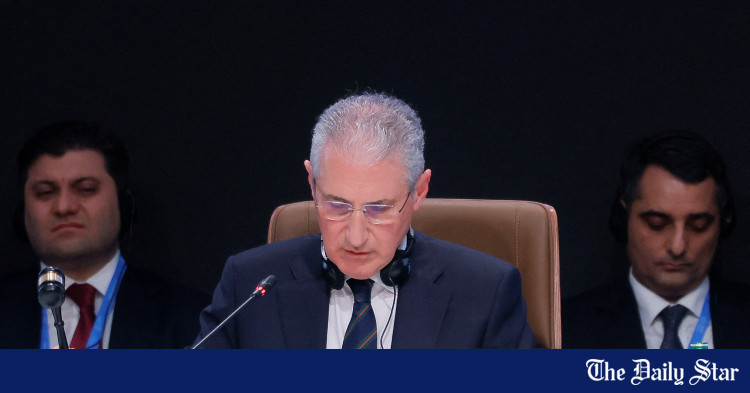
COP29 President Mukhtar Babayev holds a hammer as he attends a plenary meeting, during the COP29 United Nations Climate Change Conference, in Baku, Azerbaijan November 24, 2024. Photo: Reuters/Maxim Shemetov

Countries agreed on Sunday to an annual finance target of $300 billion to help poorer countries deal with the impacts of climate change, with rich countries leading the payments, according to a hard fought deal clinched at the COP29 conference in Baku.

The new goal is intended to replace developed countries' previous commitment to provide $100 billion per year in climate finance for poorer nations by 2020. That goal was met two years late, in 2022, and expires in 2025.

Countries also agreed Saturday evening on rules for a global market to buy and sell carbon credits that proponents say could mobilise billions more dollars into new projects to help fight global warming, from reforestation to deployment of clean energy technologies.​
 

Poor nations stage walkout at cop29
Small islands and least-developed nations say their climate finance interests were ignored

1732406059847.webp

Photo: Reuters Activists hold a protest during the COP29 United Nations climate change conference, in Baku, Azerbaijan November 23, 2024.
  • Chance of success at COP29 'iffy': EU climate chief​
  • EU offers to raise rich countries' climate pledge to $300b​
  • No climate deal better than 'bad' one: NGOs​

The world's most climate-imperilled nations stormed out of consultations in protest at the deadlocked UN COP29 conference yesterday, as simmering tensions over a hard-fought finance deal erupted into the open.

Diplomats from small island nations threatened by rising seas and impoverished African states angrily walked out of a meeting with summit hosts Azerbaijan over a final deal being thrashed out in a Baku sports stadium.

"We came here to this COP for a fair deal. We feel that we haven't been heard," said Cedric Schuster, the Samoan chairman of the Alliance of Small Island States (AOSIS).

An unpublished version of the final text circulating in Baku, and seen by AFP, proposes that rich nations raise to $300 billion a year by 2035 their commitment to poorer countries to fight climate change.

It is up from $100 billion now provided by wealthy nations under a commitment set to expire.

COP29 hosts Azerbaijan intended to put a final draft before 198 nations for adoption or rejection on Saturday evening, a full day after the marathon summit officially ended.

Sierra Leone's climate minister Jiwoh Abdulai, whose country is among the world's poorest, said the draft was "effectively a suicide pact for the rest of the world".

In a statement, Schuster said AOSIS nd the group of Least Developed Countries (LDCs) have found themselves "continuously insulted by the lack of inclusion" at COP29.

Schuster said that without an inclusive process, "it becomes very difficult for us to continue our involvement here at COP29".

But negotiators from AOSIS, the LDCs and wealthy nations met later with the COP29 presidency.

"We're doing our utmost to build bridges with literally everyone," EU climate commissioner Wopke Hoekstra said in a statement.

"It is not easy," he said. "There is no alternative to do whatever we can."

An earlier offer from rich nations of $250 billion was slammed as offensively low by developing countries, which have demanded much higher sums to build resilience against climate change and cut emissions.

UK Energy Secretary Ed Miliband said the revised offer of $300 billion was "a significant scaling up" of the existing pledge by developed nations, which also count the United States, EU and Japan among their ranks.

Harried diplomats ran to-and-fro in the stadium near the Caspian Sea searching for common ground.

"Hopefully this is the storm before the calm," said US climate envoy John Podesta in the corridors as somebody shouted "shame" in his direction.

Panama's negotiator, Juan Carlos Monterrey Gomez, said delegates could not go home without a deal and repeat the failure of COP15 in Copenhagen in 2009.

"I'm sad, I'm tired, I'm disheartened, I'm hungry, I'm sleep-deprived, but there is a tiny ray of optimism within me because this cannot become a new Copenhagen," he told reporters.

Wealthy nations say it is politically unrealistic to expect more in direct government funding.

Donald Trump, a sceptic of both climate change and foreign assistance, returns to the White House in January and a number of other Western countries have seen right-wing backlashes against the green agenda.

The draft deal posits a larger overall target of $1.3 trillion per year to cope with rising temperatures and disasters, but most would come from private sources.

Ali Mohamed, the Kenyan chair of the African Group of Negotiators, told AFP: "No deal is better than a bad deal."

South African environment minister Dion George, however, said: "I think being ambitious at this point is not going to be very useful."

"What we are not up for is going backwards or standing still," he said. "We might as well just have stayed at home then."

A coalition of more than 300 activist groups accused historic polluters most responsible for climate change of skirting their obligation and urged developing nations to stand firm.

A group of developing countries had demanded at least $500 billion, with some saying that increases were less than met the eye due to inflation.

Experts commissioned by the United Nations to assess the needs of developing countries said $250 billion was "too low" and by 2035 rich nations should be providing at least $390 billion.

The US and EU have wanted newly wealthy emerging economies like China -- the world's largest emitter -- to chip in.

China, which remains classified as a developing nation under the UN framework, provides climate assistance but wants to keep doing so on its own voluntary terms.

The EU and other countries have also tussled with Saudi Arabia over including strong language on moving away from fossil fuels, which negotiators say the oil-producing country has resisted.

"We will not allow the most vulnerable, especially the small island states, to be ripped off by the new, few rich fossil fuel emitters," said German Foreign Minister Annalena Baerbock.​
 

Restore Leinga canal in Chattogram
What’s the point of excavating a canal if it gets filled up soon?

1732407363627.webp

VISUAL: STAR

We are disappointed to learn about the fate of Leinga canal in Chattogram's Karnaphuli upazila, which has been filled up just two years after its excavation. Reportedly, the Bangladesh Water Development Board (BWDB) dredged a nine-kilometre stretch of the canal in 2021 under a project intended to restore its natural flow. However, upon completion in 2022, heaps of excavated earth and garbage were left piled along its banks. These were eventually washed back into the canal by rain, reducing it to a narrow ditch. It's baffling why the BWDB would leave excavated earth on the banks instead of disposing of it responsibly. Wasn't it part of the project to clear it as well? Such oversight from a state agency is simply unacceptable.

A few decades ago, this 12-kilometre-long and 20-45 foot-wide canal was the lifeline of the area. Farmers relied on it for irrigation, boats used it for transporting goods, and it acted as a natural drainage channel for rainwater into the Karnaphuli River. However, siltation and indiscriminate dumping of garbage gradually blocked its flow, causing severe waterlogging along its banks. The BWDB initiated the project to address this problem, but the canal became clogged again due to its mismanagement.

Unfortunately, this counterproductive practice of leaving excavated material after dredging canals and rivers on their banks is all too common across the country. In Dhaka, for instance, city corporations often leave canal and drain waste on the banks or roads. This defeats the very purpose of cleaning or excavation drives, resulting in further public suffering. Moreover, such unplanned work squanders public funds. In the case of Leinga canal, for instance, around Tk 2 crore was effectively wasted. This is unacceptable.

Over the decades, unplanned development projects have cost the nation thousands of crores, but to little avail. The situation was particularly bad during the 15-plus years Awami League rule when corruption and irregularities regularly drained resources meant for public interest projects. This must stop. We urge the interim government to ensure transparency and accountability in all such initiatives so that public money is no longer squandered due to the inefficiency or corruption of project authorities. The BWDB must answer for the failed Leinga canal excavation and take immediate steps to restore the flow of this water body.​
 

Developed nations are missing the bus
They must fulfil their obligations in combating climate change

1732407959124.webp


We are disheartened by the outcome of the negotiations at the COP29 summit between developed and developing countries regarding the amount of money the former will pay the latter to tackle the devastating impacts of climate change. As we all know, developed countries are the biggest contributors to climate change, while developing nations bear the highest costs of its impacts. This is why developing nations have expressed their shock at the $250 billion per year fund proposed in a draft deal by the developed nations. It is a deliberate deviation from their commitment to the Paris Agreement.

Developing countries had called for $1.3 trillion to be mobilised annually by developed countries. The funds would be in the form of grants and would be disbursed starting next year. Another draft—the New Collective Quantified Goal on Climate Finance (NCQG)—has also proven disappointing, as our adviser to the environment ministry has rightly pointed out. The adviser criticised the package for failing to meet the essential needs of the Least Developed Countries (LDCs) and the Small Island Developing States (SIDS).

It seems the developed nations have chosen to disregard the spirit of the Paris Agreement, which clearly states that developed countries are to provide financial resources to assist developing nations in their mitigation and adaptation efforts. It is also disconcerting that not all of these funds will be grants; some will come in the form of loans, which experts warn could increase the indebtedness of poorer nations already burdened by loans for their development needs. The latest text at COP29 has broadened the base of climate finance donors, meaning some developing countries may also have to contribute to the targeted $1.3 trillion per year by 2035.

These developments do not bode well for our future. The effects of climate change are becoming more severe and frequent each year, as manifested all over the world, but more profoundly in poorer nations. It makes little sense that developed nations have chosen to adopt an ostrich approach when it comes to adhering to their commitments. Contributing to climate funding is not a favour to developed nations—it is an obligation.

Experts have reiterated that we are still heading in the wrong direction, with greenhouse gas emissions increasing rather than decreasing. The goal of limiting the temperature rise to within 1.5 degrees Celsius is becoming more and more far-fetched. This places millions of people at risk of being displaced, suffering severe health problems, and experiencing adverse societal changes globally. Developed countries must realise that they are jeopardising the survival of humankind as a whole by not fulfilling their obligations to reduce the catastrophic impacts of climate change. It is in their own interest, as much as it is in that of the developing world.​
 

A village engulfed by pollution
Atiqul Kabir Tuhin
Published :
Nov 23, 2024 23:57
Updated :
Nov 23, 2024 23:57

1732410355796.webp


Environmental pollution by industrial wastes continues unabated everywhere. Wherever we cast our eyes we encounter the same damaging process. Wastes discharged by a large number of industries in Gazipur, Narayanganj and other major industrial hubs continue to pollute land, air and water. And because of continuous failure of the authorities concerned to stop the damaging process, it has become an unalterable reality of life in Bangladesh, with seemingly none to protect helpless people from the myriad effects of environmental pollution.

A recent report published in a national daily highlights the severe consequences of environmental pollution in the village of Kewa Purba Khanda, Gazipur. The once calm and quiet daily life in the village is now severely disrupted by a growing environmental and health crisis. What was once a peaceful agricultural community with fertile land that produced crops in abundance has now been reduced to an infertile wasteland, plunging thousands of farmers into economic hardship. The leaves of trees are withering and dying, and the yield of various fruits, including jackfruit, has significantly declined. Even cattle are reportedly dying after grazing in the local meadows.

All these devastations are taking place because of the toxic smokes billowing from a factory named Daily Industrial Limited, commonly known as the "Lead Factory." Since its establishment in 2015, this factory has been processing lead from old batteries to manufacture new ones.

Perhaps the most alarming aspect of the crisis unfolding in the village is the suffering of the children. Reports indicate that children are experiencing severe respiratory diseases caused by the toxic fumes emitted from the factory's furnace. Students at the nearby Kewa Purba Khanda Government Primary School complain of difficulty breathing, burning eyes, and dizziness during class. It is unimaginable that children should be subjected to such conditions, where the very air they breathe is poisoning them.

The people in the locality have repeatedly complained about the factory to the local administration, and even organised protest rallies and human chains demanding closure of the factory. In the face of public outcry, the factory has been sealed off twice by the police, but each time, it was reopened under mysterious circumstances. It gives rise to many unsavoury questions. Why have the authorities allowed this hazardous factory to continue operation, putting lives, livelihoods, ecology, and biodiversity in jeopardy?

Actually, failure of the authorities in enforcing environmental and industrial laws and protecting ecology and environment is an old story. And this disturbing scenario is not unique to Gazipuir. Almost each and every industrial unit - be it tannery, garment, dyeimg-chemical or pharmaceutical-is spewing enormous quantities of untreated toxic wastes into the environment and causing irreparable damage. The department of environment and government agencies concerned claim to have directed industries to set up effluent treatment plants but to no avail as most of the industry owners did not feel it necessary to pay heed to the weak and lukewarm appeal of the authorities. The grave environmental reality in Kewa Purba Khanda and its detrimental impact on the lives and livelihoods of the local people should persuade authorities concerned to take the issue seriously and act.​
 

Main points of the $300bn climate deal

The deal reached at UN climate talks in Azerbaijan ramps up the money that wealthy historic emitters will provide to help poorer nations transition to cleaner energy and adapt to global warming. Here are the main points of the agreement reached at COP29 in Baku:

$300 BILLION

Under a framework established by the UN in 1992, 23 developed countries -- and the European Union -- historically responsible for most planet-heating emissions are obliged to contribute to climate finance.

The Baku accord raises the amount of money that developed countries must provide to at least $300 billion per year by 2035. It is higher than the $100 billion that is currently required under a previous agreement that runs until next year.

But it falls well short of the $500 billion that some developing countries had demanded at the fraught negotiations in Baku.

The deal states that the money will come directly from a "wide variety of sources" including government budgets, private sector investment, and other financing.

CHINA ROLE

The United States and EU had pushed to broaden the donor base to include countries that are still listed as developing but have now become wealthy, such as China and Saudi Arabia.

But China, the world's second-biggest economy and top emitter of greenhouse gases, has steadfastly refused to change its status while recalling that it already provides bilateral aid.

SHARE OF MONEY

The negotiations were also the scene of disagreements within the developing world.

The Least Developed Countries bloc had asked that it receive $220 billion per year, while the Alliance of Small Island States wanted $39 billion -- demands that were opposed by other developing nations. The figures did not appear in the final deal. Instead, it calls for tripling other public funds they receive by 2030.

FOSSIL FALLOUT

Activists are worried that the promise to "transition away" from fossil fuels -- the main achievement of COP28 in Dubai -- disappeared from the final deal in Baku.

A text that was supposed to reinforce implementation of the landmark agreement was ultimately not adopted at the close of COP29, after a long battle that had already largely emptied it of its substance.​
 

Latest Posts

Back