Donate ☕
201 Military Defense Forums
[🇧🇩] - Semiconductor Industry in Bangladesh | Page 6 | PKDefense
Home Post Alerts Inbox Watch Videos

[🇧🇩] Semiconductor Industry in Bangladesh

Reply (Scroll)
Press space to scroll through posts
G Bangladesh Defense
[🇧🇩] Semiconductor Industry in Bangladesh
34
3K
More threads by Saif


Taskforce led by Bida formed for semiconductor sector
Bida executive chairman will head the 13-member taskforce

1735780245373.webp


The government has approved the formation of a national taskforce to develop Bangladesh's semiconductor sector, which will be led by the Bangladesh Investment Development Authority (Bida).

This landmark initiative aims to enhance the country's expertise in chip design, testing, and assembly, capitalising on its strategic location, competitive labour costs, and skilled workforce, according to a letter issued by the press wing of the Chief Adviser's Office.

"Bangladesh's position in the Asia-Pacific supply chain and its young talent pool make it a key player for global semiconductor growth," said Ashik Chowdhury, executive chairman of Bida and Bangladesh Economic Zones Authority (Beza).

The 13-member taskforce will address policy gaps, recommend incentives, and identify immediate opportunities to attract international investment.

It is tasked with presenting actionable outcomes by January's end.

Prominent members include Mohammed Enayetur Rahman, CEO of Ulka Semi, and Istak Ahmmed, chairman of Prime Silicon Technology (BD) Ltd.

Additional experts include Prof Dr ABM Harun-ur-Rashid from Bangladesh University of Engineering and Technology; Maj Gen Md Nasim Parvez of Military Institute of Science and Technology, and global semiconductor specialists like Mustafiz Choudhury of Silicon Valley.

The taskforce's member secretary, Nahian Rahman Rochi of Bida, will coordinate the initiatives to ensure timely and impactful results.

This approval signals a pivotal moment for Bangladesh in establishing itself as an emerging player in the global semiconductor industry.​
 
Analyze

Analyze Post

Add your ideas here:
Highlight Cite Fact Check Respond

Can Bangladesh become a key player in the global semiconductor industry?

1736381873111.webp

The semiconductor manufacturing industry is a niche and well-guarded industry, one that requires highly trained personnel as well as costly equipment. Image: Representational image by DragonImages

Semiconductors—small chips which can control the flow of electricity hide in plain sight inside our smartphones, computers, laptops, televisions, and air conditioners— are in almost any electronic device that one can think of. These tiny marvels form the foundation of virtually every modern innovation, which means that with the growing usage of electronic products, the semiconductor market - also called the 'chip market' - will scale up, offering tremendous potential for countries, businesses, engineers, and consumers alike.

According to a recent report by Fortune Business Insights, a global market research firm, the global semiconductor market size was valued at USD 611.35 billion in 2023 and is projected to grow from USD 681.05 billion in 2024 to USD 2062.59 billion by 2032, exhibiting a Compound Annual Growth Rate (CAGR) of 14.9% during the forecast period of 2024-2032.

However, the semiconductor manufacturing industry itself is a niche and well-guarded industry, one that requires highly trained personnel as well as costly equipment.

Building semiconductor fabrication plants - also known as fabs - is a capital-intensive endeavour, requiring billions of dollars in investment. These costly facilities manufacture integrated circuits (ICs) from raw silicon wafers, requiring advanced manufacturing tools, a clean environment with suits for workers, fan filter units, and a supply chain for raw materials.

While building these fab facilities and manufacturing chips may require a huge sum of investment and time, there is another field that launched Bangladesh into the stage of the semiconductor industry - the VLSI (Very Large-Scale Integration), a process for creating complex ICs by designing semiconductor chips.

Current industry status in Bangladesh

The domestic semiconductor industry is still in its infancy in this country. While large-scale chip fabrication or testing facilities are absent, the sector is dominated by a few companies focusing on design and simulation.

A paper published by the Metropolitan Chamber of Commerce and Industry (MCCI) in July 2024 titled 'Developing the Semiconductor Industry in Bangladesh', mentions two chip-designing firms, Ulkasemi and Prime Silicon, which were launched back in 2007. The paper also states that the industry of around 400 local chip designers now earns USD 6 million in export revenue.

Given Bangladesh's ongoing success in freelancing and IT outsourcing, the country is well-positioned to extend this model to semiconductor design services. With the right training and infrastructure, Bangladeshi engineers could contribute to global semiconductor projects, particularly in chip design and verification.

Educational foundations

As a niche sector, semiconductor manufacturing requires specialised knowledge and academia in Bangladesh, which has a growing interest in semiconductor engineering within its academic institutions.

Many universities have introduced courses on VLSI and microelectronics. These courses provide a theoretical grounding in semiconductor design, though practical exposure remains limited.

Dr Md Mostofa Akbar, Professor of the Department of Computer Science and Engineering (CSE) at BUET said, "I started teaching about VLSI at an undergraduate level from 1996. However, VLSI courses did not become popular as there was no related work in Bangladesh. But we are planning to buy equipment which will be helpful for the students."

Highlighting the importance of VLSI designing in regard to the semiconductor industry situation in Bangladesh, Professor Mostofa added, "There are four parts to semiconductor manufacturing - design, testing, structural verification, and fabrication. Most firms in Bangladesh focus on structural verification, but we need to give more attention to designing and testing if we want a sustainable ecosystem for this sector. The rise of AI and automation will soon shrink the opportunities for manual structural verification."

"Design, testing, and structural verification mostly use software meanwhile, and in the case of chip fabrication, we need high-end facilities. Taiwan produces the best chips. However, it is unlikely for them to share their proprietary knowledge," shared Professor Mostofa. He added, "The government needs to coordinate with Bangladeshi expatriates so that Bangladesh can get more work and outsource in this sector. Proper investment and resource mobilisation is also crucial."

Competitions like VLSITHON, organised by Ulkasemi, a semiconductor design services company in Bangladesh, are stepping stones for young engineers to apply their knowledge. The 2nd edition of VLSITHON focused on RTL (Register Transfer Level) design and Analog design, and attracted 235 participants from 20 universities, highlighting the latent talent pool in Bangladesh.

Regarding the purpose behind the competition, Mohammad Enayetur Rahman, CEO and President of Ulkasemi, said, "Our main purpose is to create resources in this sector by making students aware. We understand that a lot of the universities in Bangladesh do not have any dedicated professors or courses for this sector. So, we are trying our best to make more people aware of the semiconductor industry in Bangladesh."

"We have been working in this sector for 17 years and we aspire to make Bangladesh stand out in the chip industry. Through competitions like these, we offer opportunities and jobs for students who want to pursue a career in this sector," said Enayetur.

About the industry practices, Dr Satyendra Nath Biswas, Professor of Electrical and Electronics Engineering (EEE) at Ahsanullah University of Science of Technology (AUST) said, "The main problem is keeping talents in Bangladesh. For example, an engineer with 3 to 4 years of experience in this sector gets 5 times more salary in the US compared to Bangladesh. India also pays 3 times more than Bangladeshi firms. Not just about industry-standard payments but the quality of life is also a big issue for some if we think about the existing problems like the security of life, traffic jams, and air pollution in Bangladesh."

"Bangladeshi students have the talent it takes to navigate in this field. They just do not get the proper recognition," shared Professor Satyendra, who also teaches at the Commonwealth University of Pennsylvania in the US. "I have taken advanced-level courses on VLSI at AUST. However, only 36 students got the opportunity to enrol in this course due to the shortage of facilities. In 2016, we bought Cadence Design Systems software at a 90% discount for BDT 30 lakh with 4 years licence. Around BDT 4 lakh was spent on buying server computers which are essential for running the software. The software needs to be renewed every 3 years and that costs about BDT 17 to 22 lakh, depending on research resources."

Regarding the sustainability of the chip industry in the country, Professor Satyendra said, "Bangladesh needs more contracts from abroad if the country wants to sustain itself in the semiconductor ecosystem. The government also needs to listen to experts if they want to avoid the failures of previous initiatives."

Government initiatives

The government also acknowledged the importance of this industry in Bangladesh and is working fast to implement an actionable roadmap and policy.

During a stakeholder meeting on December 18, 2024, titled 'Semiconductors - A new frontier for the Bangladesh economy and employment', it was announced that a high-level task force will be formed for the growth of the semiconductor sector in Bangladesh.

On January 1, 2025, Bangladesh Investment Development Authority (BIDA) announced a 13-member task force to address policy gaps, recommend incentives, and identify immediate opportunities in the semiconductor sector in Bangladesh. The task force comprises 3 members of academia, 3 industry experts, 3 non-resident Bangladeshi (NRB), and 4 members from the government. The task force will present actionable outcomes by the end of January, says BIDA.

The future of semiconductor engineering in Bangladesh is a story of potential waiting to be realised. Bangladesh might not become Taiwan overnight, which dominates the global semiconductor market, led by companies like TSMC, but while the challenges are considerable, the opportunities are too significant to ignore. Bangladesh could adopt an approach prioritising VLSI design and gradually moving towards manufacturing in the long term.

With strategic planning, foreign and domestic investment in education and infrastructure, research, talent development, and industry-academia collaboration, Bangladesh can carve out a place in the global semiconductor industry as it did previously with the freelancing and garment sector.​
 
Analyze

Analyze Post

Add your ideas here:
Highlight Cite Fact Check Respond

Taskforce proposes semiconductor fund for design and testing

The national semiconductor taskforce has recommended creating a dedicated "semiconductor fund" under the ICT Division or the Bangladesh Bank to support new ventures through venture capital or term financing.

The recommendation was part of a series of short-term (2025-26) proposals submitted to the chief adviser on July 1 by Chowdhury Ashik Mahmud Bin Harun, executive chairman of the Bangladesh Investment Development Authority and Bangladesh Economic Zones Authority, according to a press release.

Among the short-term priorities, the taskforce proposed launching a virtual knowledge portal offering tiered certification aligned with global standards, setting up industry-grade training labs in at least five institutions by 2027, and creating shared cleanrooms for chip packaging and testing.

It also called for practical training for engineers through rotation-based on-site programmes, rolling out certification through select universities, and implementing targeted tax and import policy measures with clear policy guardrails.

Formed on January 1, 2025, the 13-member taskforce includes representatives from the government, private sector, academia, and the non-resident Bangladeshi community.

The taskforce also called for practical training for engineers through rotation-based on-site programmes

It was tasked with identifying capability gaps and outlining a phased roadmap for Bangladesh's entry into the semiconductor sector.

In its findings, the taskforce recommended prioritising chip design, testing, and packaging in the short and medium terms, citing the capital-intensive nature of fabrication.

The roadmap focuses on three pillars: skills development, business and policy support, and global partnerships. Long-term strategies include engaging NRBs in investment and training, and forming strategic G2G partnerships for technical cooperation and knowledge transfer.

"The roadmap offers Bangladesh a clear, feasible route to join the global chip design and testing scene," said Chowdhury.

"With focused interventions, this could be a turning point in transforming Bangladesh into a technology-driven economy," he added.

Professor Yunus lauded the taskforce's efforts and stressed the need for international collaboration and talent development to implement the roadmap effectively.

The Chief Adviser's Office will form dedicated working groups to oversee implementation, as Bangladesh eyes a competitive role in the evolving global semiconductor supply chain.​
 
Analyze

Analyze Post

Add your ideas here:
Highlight Cite Fact Check Respond

Taskforce unveils roadmap for semiconductor growth

1751679292415.webp

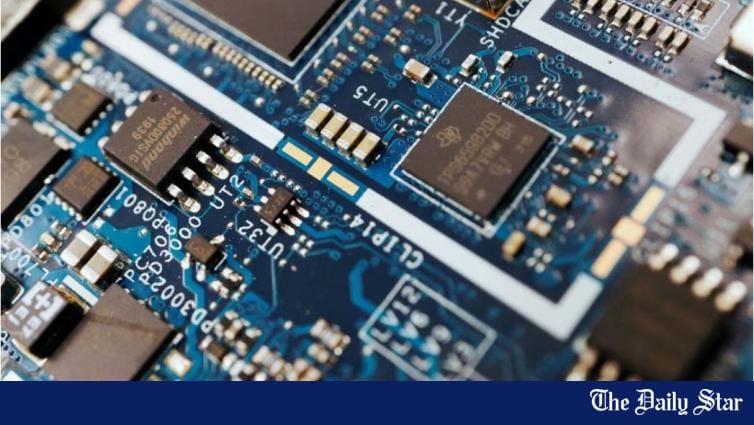
PHOTO: REUTERS

The national semiconductor taskforce has charted a roadmap to unlock the country's potential in semiconductors, focusing on three priority areas — skills development, business environment and policy support, and global linkages.

As per the roadmap, the plan includes training programmes, virtual certification portals, and high-tech labs to build a skilled workforce in chip design and testing.

Ashik Chowdhury, executive chairman of the Bangladesh Investment Development Authority (Bida) and the Bangladesh Economic Zones Authority, shared the vision at a press conference held yesterday at the Foreign Service Academy.

He said the taskforce has recommended fiscal incentives, streamlined customs processes, and dedicated zones in high-tech parks to attract investors and startups.

"Globally, Bangladesh aims to forge partnerships, pursue joint ventures, and leverage its diaspora network to tap into talent, technology, and markets," he added.

He also said that with this roadmap, Bangladesh aspires to emerge as a major player in the global semiconductor ecosystem, transforming its economy and technological future.

However, he acknowledged that Bangladesh is not yet prepared for the massive investments required to establish semiconductor fabrication plants.

He highlighted significant opportunities in design services, chip testing, and packaging.

"Design and packaging offer us the fastest route to entry," the taskforce's report notes, citing local professionals who are already working with Silicon Valley firms and the country's large cohort of science and engineering graduates.

In the medium term, the taskforce proposes expanding advanced training, fostering research collaborations, and exploring prospects in semiconductor fabrication through global partnerships.

Countries like Malaysia, which currently face shortages of skilled chip designers, represent potential partners and markets for Bangladeshi talent, the report adds.

If realised, the taskforce expects that these recommendations will transform Bangladesh from a marginal player into a serious contender in the global semiconductor value chain.

"Bangladesh's advantage lies in its young, tech-savvy workforce eager to gain advanced skills," Bida chief Chowdhury said.

Stating that clear timelines have been proposed to ensure accountability, he said, "The ball is now in the court of the Chief Adviser's Office."

Chowdhury believes the sector could attract hundreds of millions — or even billions — of dollars in investment if Bangladesh can build an investor-friendly environment. "Systematic implementation and political continuity are crucial for success."

Taskforce member ABM Harun-Ur-Rashid, professor at Bangladesh University of Engineering and Technology (Buet), echoed the optimism.

"Our graduates from engineering universities are globally competitive. If we can create good opportunities here, they won't need to go abroad to work in places like Silicon Valley," he said.

Bangladesh, however, faces significant challenges in building a domestic semiconductor industry, he noted.

"Competing with established global semiconductor hubs will require strong international partnerships and rigorous adherence to quality standards," the Buet professor said.

Another taskforce member, Syed Mahfuzul Aziz, former pro-vice-chancellor of BRAC University, said Bangladesh aims to train 4,000–5,000 engineers annually by 2030 to bridge the semiconductor talent gap.

Short-term strategies include online learning, industry-led programmes, and university partnerships to accelerate skills in chip design, verification, and testing, he noted.

"This is a high-skill, high-paying sector. Our young population is our biggest asset, but we must ensure proper training and industry exposure," said Aziz.

He also revealed that Bangladesh is pursuing collaborations with semiconductor powerhouses like Taiwan, South Korea, Malaysia, and the US to integrate into global supply chains.

Long-term success, he stressed, will require policy stability and sustained commitment to secure Bangladesh's place in a market projected to exceed $1 trillion by 2030.

Mohammed Enayetur Rahman, founder, CEO, and president of ULKASEMI, underscored the importance of building cleanroom infrastructure, expediting import processes for specialised equipment, and ensuring government-backed financial support, such as soft loans or grants, to help local firms scale operations.

"We are ready to work closely with the government. If we get the right support, our current team of 500 engineers could quickly grow to 1,000," said Rahman, whose company is one of Bangladesh's leading semiconductor design firms.

Despite the optimism, Rahman acknowledged significant hurdles. Establishing a semiconductor fabrication plant can require investments upwards of $12 billion — a scale currently beyond Bangladesh's capacity, he said.

Instead, the country aims to consolidate its position in design services and the less capital-intensive segments of the value chain.​
 
Analyze

Analyze Post

Add your ideas here:
Highlight Cite Fact Check Respond

Readying for global microchip market

Syed Fattahul Alim
Published :
Jul 07, 2025 23:10
Updated :
Jul 07, 2025 23:10

1751931250445.webp


Tasked with preparing a roadmap so Bangladesh may explore its potential as a player in the world's booming semiconductor market, the National Semiconductor Taskforce (NST), which was formed in early January this year, has come up with a set of recommendations. The recommendations focus on identifying the segments in the global microchip industry's value chain that offer the best opportunities for Bangladesh to exploit and chart out a course of action, for instance, assessing the need gap, adopting a policy, building capacity and so on. Led by the Bangladesh Investment Development Authority (BIDA), the 13-member NST has been drawn from a cross section of people including representatives from the government, the private sector, the academia and the Non-Resident Bangladeshi (NRB) community. Admittedly, the roadmap the NST submitted to the interim government's Chief Adviser (CA), Dr Muhammad Yunus, covers the critical areas that would require the government's support, especially in terms of its fiscal incentives and other policy-related backups. The plan to train thousands of IT engineers to power the growth of the domestic semiconductor industry is, of course, the first step. However, the training should involve hands-on experience, not just theoretical knowledge that Bangladesh's tech graduates usually learn from the technical institutes. That would necessitate the science and engineering graduates to have industry exposures through internship or other forms of work experience so they might be hired by the domestic tech companies or those in the global market. Alongside preparing the youths for jobs in the local and overseas tech markets, the government, as it spelt out in the NST's recommendations, would also be required to streamline its customs procedures and create dedicated zones in the high-tech parks to attract investors and encourage startups. These are some of the basic steps to develop country's semiconductor industry and turn Bangladesh into a player in global microchip market. There is no gainsaying the importance of these steps which have been described in the roadmap. These issues are also being talked about at various discussion forums since long. So after all the talks, it is now time to put those into concrete actions and ensure Bangladesh's entry into the multibillion dollar semiconductor market. According to an estimate, globally, total sales of the semiconductor sector reached USD627 billion in 2024 and is expected to rise to USD 697 billion by the end of 2025. Though the semiconductor industry is more than 75 years old, the digital revolution, also called the Third Industrial Revolution, that started with the invention of the Integrated Circuit (IC) or microchip in 1958, actually fuelled the growth of the semiconductor, or to be more to the point, the microchip industry. As no digital device can now be conceived of without microchips to run it, the industry has been expanding at breakneck speed so much so that the sector is forecast to grow into a trillion dollar one by 2030. Obviously, microchip sector is a highly competitive one. And that is more so because it has also become a theatre of competition between global tech powers, especially the USA and China. And the race is about taking the lead in the advancement of the AI industry. It is worth noting that AI's efficiency depends on development of the most advanced microchips, an area traditionally dominated by the US, the Netherlands, Taiwan and South Korea. China, too, has recently emerged as a big player in developing advanced microchips. To be frank, the domain of semiconductor has, of late, turned into a veritable hotspot of geopolitical rivalry.

Since Bangladesh lacks the required physical infrastructure and trained manpower to start in a big way, the natural course of action it can take is to target areas in the semiconductor industry that are neither capital intensive, nor in need of high levels of skill. At present, Bangladesh's fledgling semiconductor industry caters mainly for designing service for the international microchip sector. Other areas including fabrication or making the chips, their assembly and testing require more advanced skills. But all the prospects are contingent upon uninterrupted supply of power and other utilities. So, before everything else, the government needs to get back to the basics.​
 
Analyze

Analyze Post

Add your ideas here:
Highlight Cite Fact Check Respond

Members Online

⤵︎

Latest Posts

Latest Posts