[🇧🇩] Ship Building Industry in Bangladesh

[🇧🇩] Ship Building Industry in Bangladesh
53
4K
More threads by Saif

G Bangladesh Defense

Govt likely to consider shipbuilding as thrust sector: Rabiul

BSS

Published :
Jun 25, 2026 17:41
Updated :
Jun 25, 2026 17:41
1782430329438.webp


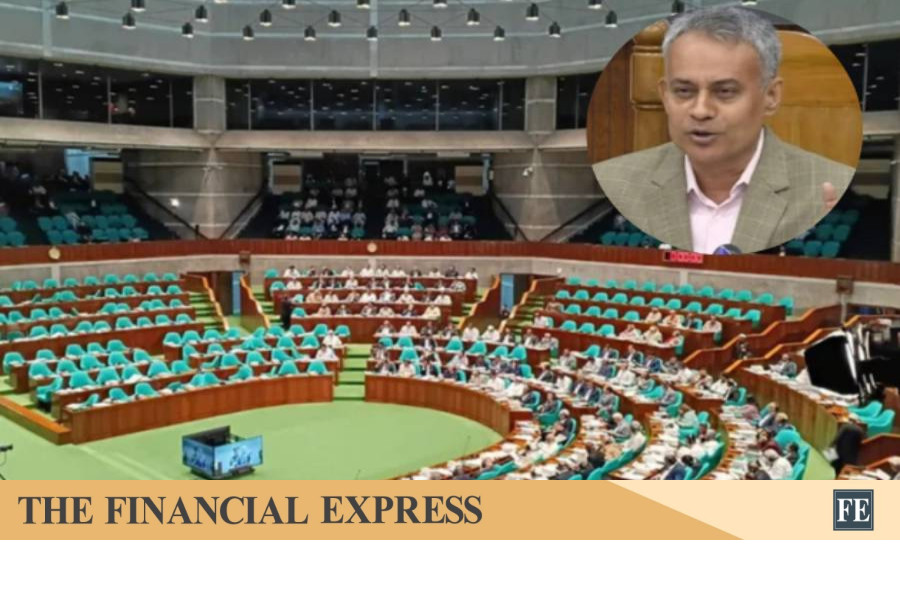
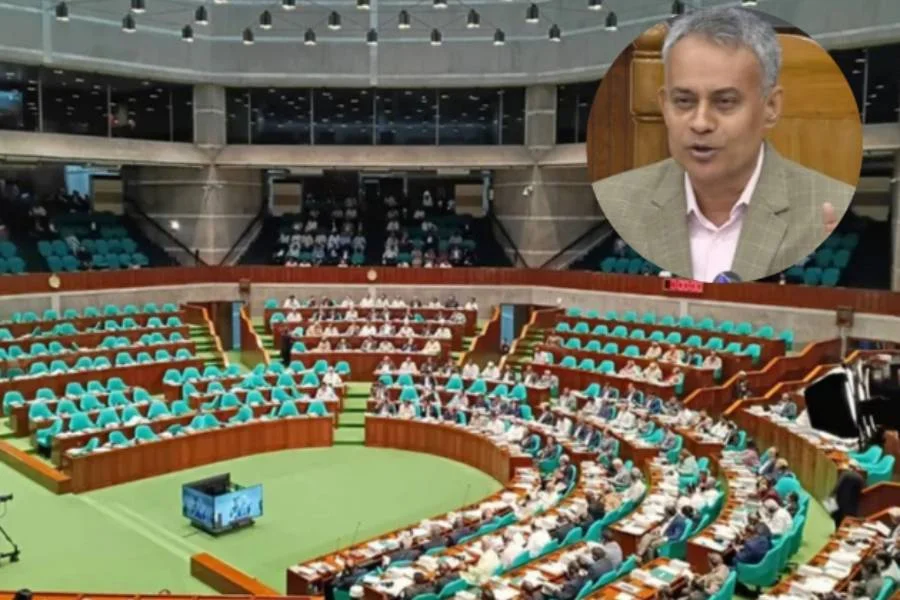
Shipping Minister Shaikh Rabiul Alam on Wednesday said the government may consider the shipbuilding industry as a “thrust sector” to increase export earnings through extensive employment generation and higher value addition.

Responding to a tabled starred question from BNP lawmaker Joynal Abdin in Parliament, he said providing policy support for the sector is highly justified to help achieve sustainable blue economy goals and export targets by leveraging Bangladesh’s low labour costs, skilled workforce and growing global demand for medium-sized vessels.

The minister noted that shipbuilding is a highly capital-intensive industry and stressed the need for special financial assistance and credit facilities to strengthen the sector.

According to him, ensuring long-term, low-interest loans – such as financing at 4 percent interest – along with export credit support could significantly enhance the capacity of local entrepreneurs and shipyards.

Rabiul also underscored the importance of developing backward linkage industries.

At present, locally built ships generate around 25 to 30 percent value addition, but domestic production of key inputs such as marine cables, marine paints, fibreglass and steel plates could raise the value addition rate to between 45 and 50 percent, he said.

The minister called for customs incentives and tax holidays for export-oriented shipyards, noting that there is substantial international demand for small and medium-sized vessels, particularly those with capacities of up to 12,000 tonnes.

Reducing import duties on raw materials and offering long-term tax holiday facilities will improve the competitiveness of Bangladeshi shipbuilders in the global market, he added.

Rabiul further emphasised the need to develop skilled human resources through modern training institutes specialising in welding, ship design, electrical systems and naval architecture.

Such initiatives could create employment opportunities for thousands of skilled and semi-skilled young people every year, he said.

Highlighting the growing global demand for environment-friendly vessels, particularly in Europe, the minister said Bangladesh must adopt green technologies and comply with international standards to strengthen its position in the global shipbuilding market.

He expressed optimism that proper implementation and simplification of existing initiatives, including the Ship Building Industry Development Policy and Bangladesh Bank’s refinancing schemes, could help the country earn billions of dollars in export revenue from the sector.​
 

Ananda shipyard exports 5500-ton multi-purpose ship to Turkey​


Ananda Shipyard & Slipways Ltd has built a 5,500 Deadweight Ton (DWT) multi-purpose ship, "WES WIRE," for export to Turkey.


1784035758494.webp


The ship was handed over to NOPAC Shipping & Trading Ltd at Ananda Shipyard, Meghna Ghat, Narayanganj on Sunday.

Brigadier General (Retd.) Dr. M. Sakhawat Hossain, Advisor to Ministry of Shipping and Labour & Employment, was the chief guest at the handing over ceremony. Adilur Rahman Khan, Adviser to Ministry of Industries and Housing & Public Works was special guest on the occasion.

Turkish ambassador to Bangladesh Mr Ramis Sen also attended the event as special guest. The ship will proceed to a sea trial today.

The vessel measures 341 feet long, 55 feet wide and its depth is 25 feet. The ship is powered with a 2,735 HP Wartsila four stroke main engine having a service speed of 12 knots.

It can carry a minimum 5,500 tonnes of diverse cargo including steel coils, coal, fertilizer, food grains, wind mills and hazardous materials.

1784035885103.webp

“Wes Wire,” powered by a 2,735-horsepower engine, can carry 5,500 tons of cargo at a speed of 12 knots per hour | Photo: Ananda Shipyard. According to Ananda Shipyard, “Wes Wire” has been built with advanced design and technology of international standards (DNV). The ship measures 341 feet in length, 55 feet in width, and 25 feet in depth.

The Shipping Adviser expressed his deep satisfaction for building the ship for Turkey and said it is pleasure that our ships are being exported to Europe.

He further observed that if the country had achieved the capability, he would place order for BSC ships in the country's shipyard, not anywhere else.

Dr Abdullahhel Bari, Chairman of Ananda Shipyard & Slipways Ltd., said on this occasion that "Ananda Shipyard has been producing vessels of international standards.

He said with cost effective workforce and firm support of present Government, Bangladesh is looking forward to building and exporting more large ships in the near future.

He highlighted that the government of Bangladesh has declared shipbuilding as a thrust sector and extended policy support and providing incentives to build ship for export.

The sector at present contributes nearly Tk 15,000 crore annually to the exchequer through ship exports, supply of captains, marine engineers and crew on board.

It is also providing fleet for inland and coastal shipping, fishing and look forward to contribute to the development of the country's Blue Economy.

This income is projected to reach Tk 100,000 crore by 2041. Over the years, Ananda Shipyard has delivered more than 350 vessels to both local and international clients.

In 2008, it marked a milestone exporting Bangladesh's first oceangoing container vessel, "Stella Maris," to Denmark. Since then, ships built by Ananda have been delivered to Denmark, Germany, Norway, Mozambique, the United Kingdom, and most recently to Turkey.

Ananda Shipyard operates a 900,000 square-foot shipyard facility capable of constructing up to eight 10,000-DWT vessels simultaneously.

The company also specializes in building dredgers and other complex vessels. At least 10 international-standard ships currently under construction for export at this shipyard.
 

Ananda Shipyard exported a 6,100-DWT vessel to UK in 2022.​

This image shows a ship at Ananda Shipyard in Narayanganj. File Photo: Collected

Image shows a tug at Ananda Shipyard in Narayanganj. File Photo: Collected

In September 2022, the company exported a 6,100-DWT vessel to the UK-based Enzian Shipping Company Ltd, which was one of the largest vessels exported from Bangladesh at the time.

1784036460055.webp


Speaking at the handover, Adilur Rahman Khan said Bangladesh's shipbuilding law would be modernised to meet contemporary needs. "After the garment sector, shipbuilding is the most important industry. The shipbuilding industry will advance, and diversity must be brought into this sector."

Ananda Shipyard officials said the company has delivered more than 350 vessels to domestic and international clients since Bangladesh first entered the global market in 2008, when Ananda Shipyard exported the container ship Stella Maris to Denmark. Since then, 17 vessels have been supplied to Germany, Norway, Mozambique, the UK and several other countries.

Spread over 9,00,000 square feet, Ananda Shipyard has the capacity to build eight vessels of up to 10,000 DWT at a time, along with dredgers and technologically advanced vessels. With round-the-clock operations, the shipyard has set an important benchmark in Bangladesh's shipbuilding sector, officials said.

1784036556122.webp


Ananda Shipyard & Slipways Ltd Chairman Abdullahhel Bari said, "After 2022, we resumed vessel exports, and the ship now going to Turkey is the largest and most technologically advanced we have sent there so far.

Sonargaon has a tradition of shipbuilding from the middle ages, and Ananda Shipyard has upheld that legacy. Once without guardianship, this important manufacturing sector has progressed with the cooperation of relevant ministries.

However, challenges remain in securing long-term and low-interest financing. As per international practice, about 85% of a vessel's financing comes through bank guarantees, but the remaining 15% – equivalent to Tk25-30 crore ($2.5-3 million) – must be arranged from our own funds.

Banks are often reluctant to provide this portion, causing working capital to remain tied up during production and leading to delays. With proper government support, a strong and competitive shipbuilding industry can be built, which will accelerate the country's development."

Earlier, in July this year, Western Marine Shipyard, based in Chattogram, announced the export of two tugboats to the United Arab Emirates. The 80-tonne bollard pull ASD tug "Gaya" and the 65-tonne bollard pull AHT tug "Khalid" earned the company $1.6 million in export revenue.

Shipbuilding in Bangladesh

Bangladesh has now gained recognition as an emerging shipbuilding nation in the world. Skilled manpower, use of modern technology, and adherence to international standards have accelerated the sector's growth.

Currently, the country has more than 30 large shipyards, several of which directly export vessels to international markets. Within Asia's shipbuilding industry, after China, South Korea and Japan, Bangladesh is gradually making its presence felt. The country is earning an increasing reputation in building medium-sized cargo vessels, container ships, tankers and dredgers.

Although the primary focus remains on meeting domestic demand, exports have grown significantly over the past decade. At present, about 90% of fuel, 70% of cargo and 35% of passenger transport in Bangladesh is carried out through waterways. To meet this vast demand, around 300 shipyards of different sizes have been established, but only 10 of them build export-quality vessels, employing nearly 3,00,000 workers.

According to the Bangladesh Investment Development Authority (BIDA), there are currently over 100 shipbuilding companies and more than 120 registered shipyards, while entrepreneurs estimate around 300 small and large active shipyards in the country.

The domestic ship market is growing at 10-15% annually, whereas exports are increasing at a comparatively slower pace of 5-6% per year. The country's local shipbuilding industry is valued at about $1 billion annually but is poised for a significant takeoff.

With its current capacity, Bangladesh can export around 20 vessels per year. In the international market, the country has strong potential in the segment of small vessels up to 12,000 DWT, such as multipurpose vessels, cargo feeders and passenger ferries for regional services.

In this segment, labour costs play a crucial role and Bangladesh holds a clear advantage with 20-30% lower labour costs compared to other countries.
 

Govt forms committee to review ship industry laws

Staff Correspondent, Ctg

1784850706087.webp

Photo: Anurup Kanti Das

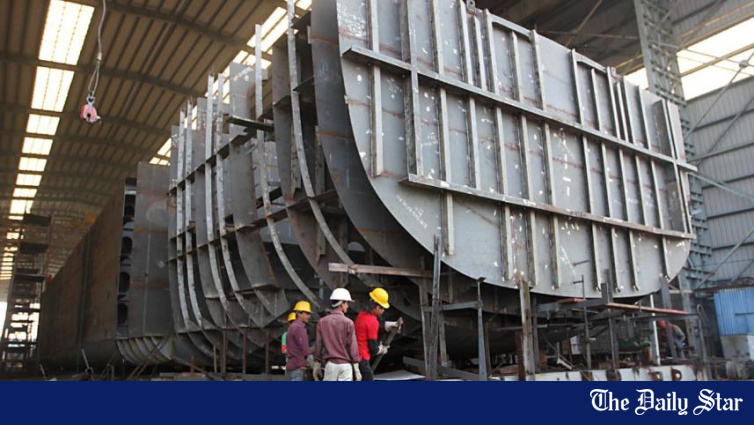
The government has formed a high-level committee comprising ministers and secretaries to review existing laws, rules, policies and other relevant issues concerning the country’s ship industry and recommend necessary reforms.

The Cabinet Division issued a gazette notification in this regard on July 12.

According to the notification, the minister for environment, forests and climate change will chair the committee. Its members are the minister for industries, the state minister for shipping, the cabinet secretary, the finance secretary, the secretary of the Legislative and Parliamentary Affairs Division, and the secretary of the Ministry of Industries.

The notification says the committee will review existing laws, rules, policies and other relevant issues related to shipbuilding, ship recycling and shipbreaking industries, and formulate necessary recommendations.

The committee will review existing laws, rules, policies and other issues related to shipbuilding, ship recycling and shipbreaking.

The committee may co-opt members, if necessary, while the Ministry of Industries will provide secretarial support.

Stakeholders in the sector welcomed the move, saying they have long been facing various regulatory complexities and hope the committee will address those issues.

Bangladesh’s shipbreaking industry is centred along the Sitakunda coast in Chattogram. While there were once more than 150 shipbreaking yards in the area, only 23 have so far been converted into green ship recycling yards as the industry shifts from conventional practices.

Taslim Uddin, owner of KR Shipbreaking Yard and the country’s largest importer of scrap ships in the last fiscal year, said ship recyclers have long faced complications over land-use approvals.

“For years, we obtained permission from the deputy commissioner’s office to operate our yards. But over the past few years, the Bangladesh Inland Water Transport Authority has required us to obtain another approval after the Sitakunda coast was declared a port area. This means we have to secure permission from two authorities for the same piece of land,” he told The Daily Star.

“There is no other sector in Bangladesh that has to go through such a process. We believe the government has not given sufficient attention to these issues. Now that the committee has been formed, we will place our concerns before it.”

Nazmul Islam, secretary of the Bangladesh Ship Breakers and Recyclers Association (BSBRA), said the industry’s classification is another longstanding concern.

“Shipbreaking was once classified as an orange-category industry, but it was upgraded to the red category a few years ago. As a result, imported ships often have to remain anchored for days while waiting for environmental clearance, causing financial losses,” he said.

“We have repeatedly requested that the industry be restored to its previous classification. We will raise the issue with the new committee.”

Labour leaders also welcomed the committee but said previous committees had largely favoured yard owners, leaving workers’ concerns unaddressed.

Tapan Dutta, convener of the Shipbreaking Trade Union Forum, said workers are still not receiving fair wages despite the wage structure announced in 2021.

“Owners have invested crores of taka in upgrading their yards, but workers’ lives have not improved. We welcome the committee and will urge it to determine wages in line with present realities. Given the hazardous nature of this work, risk allowances and other benefits should also be included,” he said.​
 

Maersk Line keen to invest in Bangladesh's shipbuilding, ship recycling sectors
1788044450917.webp


Maersk Line, one of the world's leading shipping and logistics companies, has signalled interest in direct investment in Bangladesh's shipbuilding industry.

Commerce Minister Khandakar Abdul Muktadir also discussed the possibility of Maersk investing in the country's ship recycling sector during a meeting at his residence on Saturday, the commerce ministry said.

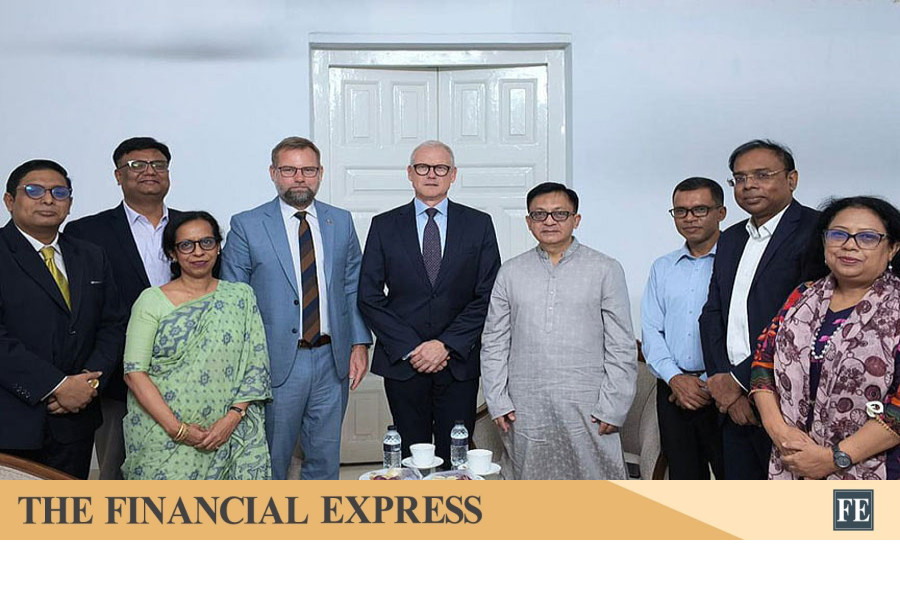
Denmark's Ambassador to Bangladesh Christian Brix Moller and AP Moller Singapore Managing Director Rene Piil Pedersen attended the meeting.

The Danish envoy said Maersk Line was keen to invest directly in the shipbuilding sector, noting the company's longstanding global reputation in ship operations, shipping and logistics.

Muktadir urged Maersk to expand its investment beyond shipbuilding into Bangladesh's ship recycling industry as well.

He said Maersk operates a large fleet of vessels worldwide, positioning Bangladesh as a potential hub for both environmentally sound, internationally compliant recycling of its older ships and the construction of new ones.

The session highlighted the country’s “deep-rooted” experience and growth potential across both shipbuilding and recycling.

Attracting major international investment, it was said, would boost the industrialisation drive while unlocking further blue economy opportunities.

Such investment could also play a key role in generating employment, transferring technology and skills, and developing related industries, the meeting noted.​
 

Govt moves to simplify shipbuilding, recycling processes

Staff Correspondent . Dhaka 07 October, 2026, 00:00

1791333097722.webp

Environment, forest and climate change minister Abdul Awal Mintoo and industries minister Khandakar Abdul Muktadir, among others, attend a meeting on ship recycling in the capital on Tuesday. | Press release.

The government has taken steps to simplify approval procedures and remove institutional complexities to improve the international competitiveness of Bangladesh’s shipbuilding and ship recycling industries.

The issues were raised on Tuesday at a meeting of a committee formed to review existing laws, rules and policies related to ship recycling and make recommendations.

The meeting, held at the commerce ministry, discussed ship waste management, yard modernisation, environmental compliance and delays in obtaining approvals.

Environment, forest and climate change minister Abdul Awal Mintoo chaired the meeting.

In the meeting, industries minister Khandakar Abdul Muktadir stressed simplifying and speeding up the procedures to create a business environment suitable for foreign buyers.

Moreover, Abdul Awal Mintoo instructed the speedy establishment of a Treatment, Storage and Disposal Facility for waste management.

According to a gazette notification from the cabinet division, the government formed the committee on July 12, with the environment minister as president, the industries minister, the state minister for shipping and officials from relevant ministries as members.

The meeting was held in line with the committee’s functions.

Industry secretary Abdun Naser Khan presented the working paper at the meeting.

The meeting decided to make the One-Stop Service under the Ship Recycling Board fully operational for ship recycling-related approvals.

It also asked the National Board of Revenue to review double taxation and the tax rate on used lubricating oil.

The industries ministry sent a letter to the NBR on October 1 seeking necessary action.

For the proposed TSDF, a team visited Mirsarai Economic Zone and decided to reserve 59.35 acres of land there.

Japan Marine Science completed a feasibility study with IMO assistance, and the project is estimated to cost around Tk 1,500 crore.

A policy decision is needed on whether to use government or external financing, said the meeting minutes.

Proposed JICA terms are 3.40 per cent interest, 30-year repayment and a 10-year grace period.

The meeting also noted ADB financing at 4.5 per cent for 20 years, that of China at 3 per cent for 20 years and the World Bank at 3.1-4 per cent for 20 years.

In future, ship recycling would be allowed only at Hong Kong Convention-compliant green yards, and a guideline for developing such yards has been prepared and is under review.

The environment ministry would expedite environmental clearance and consider reclassifying ship recycling from ‘red’ to ‘orange’ category.

It would also notify the Basel Convention Secretariat that the Hong Kong Convention applies to ship recycling in Bangladesh.

According to the minutes, Bangladesh must communicate its legal position by October 9.

The Bangladesh Bank would also take necessary steps to resolve banking difficulties related to letters of credit for ship imports.

It also discussed training and research, an auditing body, and updating relevant laws and regulations.

The industries ministry has already sent letters to the required ministries, departments, international bodies, trade bodies and organisations.

Minister Muktadir said that Bangladesh would have to compete with other countries based on its capacity to secure ship orders in the international market.

On simplifying procedures, he said that a special committee, involving Invest Bangladesh, was working to streamline rules and procedures by considering the policies and standards of countries advanced in shipbuilding.

He also emphasised the importance of effective, implementable policies, saying that enacting laws alone was insufficient without proper implementation and compliance.

He urged regulatory agencies to make regulations more practical, raising concerns over financing and stalled loans in the shipbuilding industry.

Referring to limitations faced by banks, he said that efforts should focus on overcoming the sector’s current difficulties rather than spending excessive time on complications related to old loans.

He said that the government would seek to increase facilities for entrepreneurs and hold meetings with stakeholders to remove obstacles through coordinated initiatives.

Abdul Awal Mintoo said that the absence of a TSDF was discouraging parties associated with European ships from working in Bangladesh, prompting them to choose alternative destinations.

He said that European ships contained various high-quality recyclable materials and that Bangladesh needed appropriate waste treatment, storage and disposal facilities to attract them.

He instructed rapid implementation of the TSDF to ensure environmental standards and strengthen the industry’s competitiveness.

The minister also pointed to demand for raw materials and scrap in the housing and re-rolling industries, stressing the need to balance compliance with international conventions with keeping industrial activities operational.

The meeting emphasised processing files and giving clearances and approvals in Chattogram to avoid delays of 45-60 days.

Muktadir said that Bangladesh would attach importance to implementing the Hong Kong Convention to develop the ship recycling sector in an environmentally friendly manner and in line with international standards.

State minister for shipping Rajib Ahsan, cabinet secretary Nasimul Gani, finance secretary Md Khairuzzaman Majumder, law and parliamentary affairs secretary Liaquat Ali Molla, and senior officials from relevant agencies were also present.

Khondaker Golam Moazzem, president of the Knowledge Hub Institute Trust, told New Age that the requirements for maintaining sustainability in the ship recycling and shipbuilding industries were not new. The industries can be made sustainable by complying with national laws as well as international laws and protocols, he said.

He said that ships should be purchased only after ensuring that toxic materials have been removed in the country of origin.

‘The government must monitor whether the entire supply chain is complying with all relevant laws and protocols. It must also ensure that labour standards are fully maintained. Industrialisation that destroys the environment and human lives can never be desirable,’ he said.

According to the Review of the Maritime Transport 2025 report published by the United Nations Conference on Trade and Development, Bangladesh, India, Pakistan and Turkey together accounted for 91.7 per cent of the global ship recycling market, with Bangladesh holding 43.2 per cent alone and recycling 2.74 million gross tonnes.

Bangladesh currently has about 50 ship recycling entities, of which only around 23 are compliant with the Hong Kong International Convention.

About 60 per cent of the raw materials of the country’s steel industry come from this sector, said the industry ministry data, adding that about two lakh people were involved with this sector directly and indirectly for livelihoods.

Bangladesh has also been in shipbuilding sector following the export of MV Stella Maris to Europe in 2008.

The sector includes roughly 200 companies and over 120 registered shipyards, concentrated near Dhaka (Narayanganj and Keraniganj), Chattogram and Khulna.​
 

Latest Posts

Back