New Tweets

[🇧🇩] Textile & RMG Industry of Bangladesh

G Bangladesh Defense
[🇧🇩] Textile & RMG Industry of Bangladesh
451
19K
More threads by Saif


RMG exporters in a race against time to offset losses
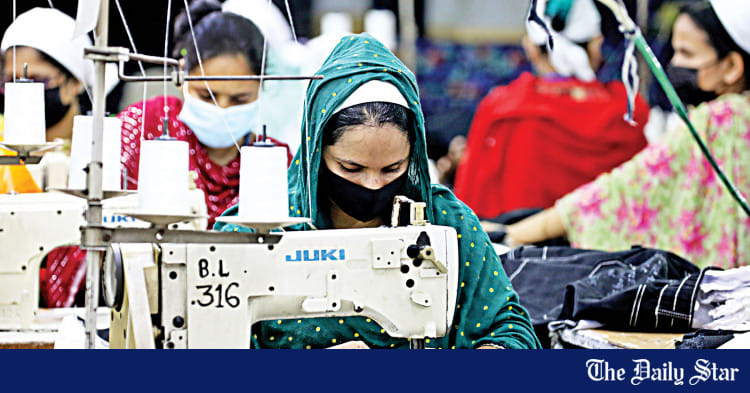
View attachment 7097

Photo: Star/File

Local apparel exporters are in a frantic race to recover the losses they incurred during the latest spell of violence centring the quota reform movement and nationwide curfew, with international retailers and brands pressuring them to ensure timely delivery of goods.

Following the shutdown of factories and mills for four days, apparel exporters are planning to keep their production units open on Friday and pay overtime bills to meet lead times as they believe increasing productivity can offset a portion of losses.

Due to the situation over the past week, suppliers had to cancel hundreds of pre-scheduled meetings and factory inspections. They also could not communicate with foreign buyers due to an internet blackout, which began on July 18 and persisted until July 23.

The disruption in production, delivery and shipment took place at a time when the sector is struggling to recover its international trade.

Bangladesh's garment shipments fell 5.2 percent to $33.04 billion in the July-May period of the last fiscal year compared to the same period a year prior, according to data from the Bangladesh Bank.

International buyers are also piling pressure on apparel exporters to ship goods quickly as they have to fill their stores with new designs ahead of Christmas, the biggest retail sales extravaganza in the Western world.

The months of July, August and September are the peak time for the shipment of goods to be sold during Christmas.

"Buyers do not want to hear about any crisis. They want on-time delivery of goods," said a garment exporter who ships T-shirts and polo shirts to the US and Canada.

The global apparel supply chain has been struggling to recover from the severe fallout of the Covid-19 pandemic, the Russia-Ukraine war, and historic inflationary pressure on Western consumers.

It was dealt another blow this year in the form of the Red Sea crisis, which triggered commercial vessel operators to nearly double shipping charges.

The shipment of goods from Bangladesh to Europe is taking at least a month more than in previous times due to the crisis, which has forced commercial vessel operators to forgo the traditional route through the Suez Canal and navigate an additional 3,500 kilometres around the Cape of Good Hope in Africa.

As such, in many cases, international clothing retailers and brands are asking for expensive air shipments so goods can reach stores timely.

If a kilogramme of garment is sent to Europe through waterways, it costs around 10 cents or less. But if the same shipment is sent through air from Dhaka airport, it costs more than $4.

An apparel exporter, asking not to be named, said: "I have planned to keep my factory open on Friday so I can ship goods timely and avoid work order cancellations and expensive air shipment."

However, another exporter said it would be difficult to cater to the work orders because of a raw material shortage, which happened because goods could not be transported to factories over the past week.

Faruque Hassan, managing director of Giant Group, said his American buyers could not place work orders during the past week. So, he sent two of his officers to the US so that he does not lose business.

It will take more than one month to overcome the losses of one week, he lamented, adding that port, customs and transport services should be expedited so the business can run smoothly.

"My buyers are yet to seek discounts or cancel orders, but I am sure that I have to make a lot of air shipments to meet deadlines," said another major exporter, seeking anonymity.

Overtime is the main measure to recover losses, he said, adding that customers are not willing to accept any delays in shipment as they need goods quickly to prepare for Christmas.

Mohammad Ali Khokon, president of Bangladesh Textile Mills Association, said the primary textile sector, which includes spinning, weaving, dyeing and finishing activities, lost $58.8 million over the last six days because of shutdown and internet blackout, which is about $9.8 million per day.

Although buyers are not cancelling work orders or seeking discounts, they are putting a pause on work orders or delaying them, which is creating a stockpile of yarn and fabrics in mills.

Khokon also sought a government waiver from extra port charges during the shutdown.

SM Mannan Kochi, president of the Bangladesh Garment Manufacturers and Exporters Association, said he would sit in a meeting in a day or two with the international buyers and request them to not cancel work orders or seek discounts.​

It's only been about a week's worth of delays, I am sure the factories will bounce back into production nicely.

What will not be recovered however is the lives lost because of this lady's bullheaded attitude and greed. People will not forget this easily. There will be a high cost exacted from her and her sponsors.
 
Analyze

Analyze Post

Add your ideas here:
Highlight Cite Respond
  • Like (+1)
Reactions: Saif
It's only been about a week's worth of delays, I am sure the factories will bounce back into production nicely.

What will not be recovered however is the lives lost because of this lady's bullheaded attitude and greed. People will not forget this easily. There will be a high cost exacted from her and her sponsors.
I wonder why the Bangladeshi entrepreneurs are not establishing factories to manufacture textile machineries. Textile is the largest industry in Bangladesh and the annual import of textile machineries from abroad stands at $4 billion. So, local production of textile machineries could save the country $4 billion a year.
 
Analyze

Analyze Post

Add your ideas here:
Highlight Cite Respond
  • Like (+1)
Reactions: Bilal9

RMG factories resort to weekend production to minimise loss
1722123712499.webp

Garment makers are desperately trying to meet deadlines as July, August and September are the peak season for shipping goods to buyers. Photo: Palash Khan

The garment and textile millers kept factories open on last Friday in an effort to meet the sharp deadline set by their international retailers, as the latest weeklong countrywide violence ate up four vital days of their peak production season.

Amid the perennial inadequate supply of gas and power outages, last week's internet shutdown came as a major challenge for the manufacturers, as they failed to send the inspection reports to their buyers online, which they have to do regularly.

The local garment manufacturers are frantically trying to cover up the losses as July, August and September are the peak months for shipping goods to the western buyers, which they will sell in the upcoming Christmas, the biggest retail sales season in the western world.

Many owners are also running their factories for additional hours, using overtime to adhere to the strict lead time in an effort to avoid going for expensive air shipments, giving big discounts or cancellation of work orders from the buyers.

The violence centring the quota reform movement eroded the foreign retailers' confidence in Bangladesh to a great extent, as many of the local garment suppliers have received 30 percent to 40 percent fewer work orders than usual as the buyers are following a go-slow policy.

Consequently, the international retailers and brands did not place fresh work orders and also did not confirm the price level for the goods meant for the next summer and spring, which they were supposed to do last week, the exporters said.

"I have been running my unit even on Friday as I have counted a huge loss because of the four-day factory shutdowns following the violence," said a garment exporter asking not to be named.

However, the exporter could not run the factory on Friday in full swing because of long power cuts.

"I am worried about how I will pay the workers' July salary as I made a loss this month and I failed to confirm goods' prices due to the internet disruption," the exporter said.

Shaif Ullah Mansur, managing director of Chattogram-based Mellow Fashions Ltd, said he used to run night shifts in his factory in peak production seasons when pressure from the buyers increases.

But this year he preferred not going for night shifts amid fears of being affected by violence although the work pressure is immense now. Mansur said the monthly income from his 800-worker factory is Tk 5 crore and he lost Tk 1 crore of his monthly income because of the weeklong violence.

"My American buyers are now asking me whether I am capable of supplying the goods in time if new work orders are placed."

Mohammad Zaber, managing director of Noman Group, the single largest textile and garment exporter of Bangladesh, said his company lost 40 percent of the monthly work orders because of the factory and mill shutdown and internet suspension.

This is the peak season for Zaber's company for the confirmation of work orders for the next summer and spring seasons.

He said his company has been communicating with the buyers for a time extension for shipment. Moreover, the shipment time extension does not end the problem, he said.

The commercial shipping vessels, which carry the export goods, have to follow a tight global schedule to meet the increased competitiveness since the beginning of the Covid-19 pandemic, the Russia-Ukraine war and the Red Sea crisis, he said.

Instant communication is very important in garment trade and both the buyers and suppliers use WhatsApp now, but the sad part is the service is down now, he added.

Two garment exporters said they lost one million pieces of garment production each during the last weeklong violence and now he is working day and night to cover up the losses and ship goods timely.

Mohammad Hatem, executive president of Bangladesh Knitwear Manufacturers and Exporters Association, said many factory managements ran their units on Friday but still many of them will have to face air shipment.​
 
Analyze

Analyze Post

Add your ideas here:
Highlight Cite Respond
  • Love (+3)
Reactions: Bilal9

Govt to waive port demurrage for RMG raw materials

The shipping ministry yesterday announced that it would waive demurrage charges for imported containers carrying accessories and raw materials for the readymade garment sector which could not be delivered from the Chattogram port as operational activities were hampered for the past seven days.

Violence centring the quota reform movement, the government's imposition of a nationwide curfew, and a five-day internet blackout prevented the goods from being delivered on time from the country's premier seaport.

A press release issued by the shipping ministry's Senior Information Officer Md Jahangir Alam provided the update, but it did not specify a timeframe.

State Minister for Shipping Khalid Mahmud Chowdhury announced the decision at a meeting with a delegation of Bangladesh Garment Manufacturers and Exporters Association (BGMEA) at his office in Dhaka yesterday, the release said.

BGMEA President SM Mannan led the delegation.

During a visit to the port on July 25, the state minister assured the media that the government would waive demurrage charges for delayed delivery of imported containers.

Addressing the meeting with the BGMEA yesterday, the state minister said the port remained operational despite the turmoil of the past week.

But due to the internet blackout, which affected the functioning of the port and customs authority, garment exporters failed to take timely delivery of their import consignments from the port, said the minister.

He said the decision was taken with the aim of assisting RMG factories to continue import and export activities through the port and ensure export shipments within the lead time fixed by the buyers.

BGMEA Vice-President Rakibul Alam, who was present at the meeting, told The Daily Star that the waiver would be effective for import containers that could not be taken out after the expiry of a four-day free stay.

Imported containers are allowed to stay at the port yards free of charge for the first four days after being unloaded from vessels.

For a 20-foot loaded container, the port charges demurrage at $6 per day during the first week following the four free days. It then charges $12 each day during the second week. From then onwards, it charges $24 per day.

For a 40-foot container, the charges are double.

Chittagong Port Authority (CPA) Secretary Md Omar Faruk said they heard about the decision but were yet to get an official letter in this regard.

Upon getting an official decision, the port authority will comply, he said.

Cargo and container delivery from the port yards gradually came to a halt since July 17 due to the volatile situation before the internet blackout, which began on July 18, caused further disruptions.

The lack of assessment facilities due to the absence of the internet as well as the countrywide curfew created a container congestion at the port.

On July 22, the Chattogram port was encumbered with 42,150 TEUs (twenty-foot equivalent units) of containers, occupying over 79 percent of the port's storage capacity of 53,118 TEUs.

Smooth operations of a port are hampered if containers occupy over 60 percent of its storage capacity, port officials said.​
 
Analyze

Analyze Post

Add your ideas here:
Highlight Cite Respond
  • Love (+3)
Reactions: Bilal9
I wonder why the Bangladeshi entrepreneurs are not establishing factories to manufacture textile machineries. Textile is the largest industry in Bangladesh and the annual import of textile machineries from abroad stands at $4 billion. So, local production of textile machineries could save the country $4 billion a year.

Some of the basic textile machinery (simple looms) are already made locally (for ganjee and lungi business). Mid-grade and of course Highest grade looms (waterjet and air jet looms) are all made overseas but some mid-grade looms are also assembled locally.

Making or assembling machinery locally has to be cost effective (for the end result, compared to imports) and when China is such a low-cost producer already for mid and higher grade looms, it doesn't encourage local Bangladeshi entrepreneurs to add value by making high grade textile loom parts or machines locally.

The primary reason is that high grade machinable steel and other parts making inputs (even CNC machining centers to make precision parts) are still cheaper in China because they are locally sourced from in-country suppliers there. Even in India these inputs are more expensive locally, so the inputs (such as high grade alloys and steel bars/ingots/rod stock) are all imported from China to make machines and parts in India.

The way Indians encourage local production of looms and parts of looms is by assigning very high import tariff on mfd. and finished machinery, especially from China. Bangladesh does not do so. But maybe we need to (like how we boldly did for the cellphone mfrs. by increasing tariff for finished cellphone imports).

Currently the Bangladeshi textile loom importer lobby is quite strong and they exert pressure on NBR and textile ministry not to heavily tax textile machinery imports which would actually encourage local loom and knitting machine manufacturing. That needs to change and it will when larger companies like Meghna, Energypac and other light engineering firms start pressuring the govt. to change tariff policy.
 
Analyze

Analyze Post

Add your ideas here:
Highlight Cite Respond
  • Like (+1)
Reactions: Saif
Some of the basic textile machinery (simple looms) are already made locally (for ganjee and lungi business). Mid-grade and of course Highest grade looms (waterjet and air jet looms) are all made overseas but some mid-grade looms are also assembled locally.

Making or assembling machinery locally has to be cost effective (for the end result, compared to imports) and when China is such a low-cost producer already for mid and higher grade looms, it doesn't encourage local Bangladeshi entrepreneurs to add value by making high grade textile loom parts or machines locally.

The primary reason is that high grade machinable steel and other parts making inputs (even CNC machining centers to make precision parts) are still cheaper in China because they are locally sourced from in-country suppliers there. Even in India these inputs are more expensive locally, so the inputs (such as high grade alloys and steel bars/ingots/rod stock) are all imported from China to make machines and parts in India.

The way Indians encourage local production of looms and parts of looms is by assigning very high import tariff on mfd. and finished machinery, especially from China. Bangladesh does not do so. But maybe we need to (like how we boldly did for the cellphone mfrs. by increasing tariff for finished cellphone imports).

Currently the Bangladeshi textile loom importer lobby is quite strong and they exert pressure on NBR and textile ministry not to heavily tax textile machinery imports which would actually encourage local loom and knitting machine manufacturing. That needs to change and it will when larger companies like Meghna, Energypac and other light engineering firms start pressuring the govt. to change tariff policy.
Your post is very informative. Thank you:)
 
Analyze

Analyze Post

Add your ideas here:
Highlight Cite Respond
  • Love (+3)
Reactions: Bilal9

Apparel retailers express concern about shipment delay
1722297231731.webp

The disruption in production at garment factories caused by violence stemming from the quota reform movement as well as a nationwide curfew and internet blackout has created anxiety among foreign buyers, who are desperate to receive timely shipment of goods ahead of the Christmas season. PHOTO: STAR/FILE

International clothing retailers and brands yesterday expressed concern about the timely shipment of goods following the latest spell of violence stemming from the quota reform movement, imposition of curfew and five-day internet blackout, which crippled economic activities.

In light of the situation, retailers urged leaders of the Bangladesh Garment Manufacturers and Exporters Association (BGMEA) to ensure timely shipment of goods to be sold during the Christmas season.

They also demanded that the government quickly restore high-speed internet and broadband services to allow quick communications with their headquarters abroad.

They made the demands at a meeting with BGMEA leaders at the trade body's office in the capital's Uttara.

Although it was a regularly scheduled meeting between the BGMEA and buyers, important issues came to the fore due to the recent crisis.

For example, buyers called for addressing the backlog and congestion of containers at the Chattogram and Benapole ports so that export activities could run smoothly, according to a senior BGMEA leader who was present at the meeting.

Their concerns had been compounded by the fact that factories faced a complete shutdown for four days, especially as the months of July, August and September are the peak time for the shipment of goods to be sold during Christmas, the biggest retail sales extravaganza in the Western world.

It is also the peak time to confirm the prices of goods to be shipped next summer and spring.

The disruption in production, delivery and shipment took place at a time when Bangladesh's exports were trending downwards.

Overall exports declined from $39.69 billion in the July-May period of FY23 to $37.35 billion in the same period of FY24, according to data from the Bangladesh Bank.

In the same period, Bangladesh's garment shipments fell 5.2 percent to $33.04 billion.

At present, many garment factories cannot continue timely production due to a lack of raw materials like yarn, which could not be transported to factories because of the volatile situation over the past week.

Furthermore, suppliers had to cancel hundreds of pre-scheduled meetings and factory inspections over the past week.

Almost all the major garment sourcing companies were present at the meeting, including representatives from retailers like H&M, M&S and Bestseller.

They expressed concern about difficulties transporting goods as well as shipments from Chattogram port while also lamenting the slow internet speed, which hindered communication with their headquarters.

After the meeting, BGMEA president SM Mannan Kochi said retailers and brands assured them that they would not seek discounts or air shipments or cancel work orders.

Kochi added that production had resumed at factories while internet services and port operations were restarted after meetings with the prime minister, ICT minister, home minister and shipping minister over the last few days.

The BGMEA chief also said retailers were a bit worried as they want fast internet and smooth operations in ports.

The garment sector incurred production losses amounting to Tk 6,400 crore during the four-day shutdown. Additionally, Tk 1,000 crore will have to be paid to workers although there was no production in the units.

Kochi urged the government to keep the garment sector out of the purview of curfews or any kind of political activity considering the importance of the sector.

Last week, Mohammad Ali Khokon, president of the Bangladesh Textile Mills Association, said the primary textile sector, which includes spinning, weaving, dyeing and finishing activities, lost $58.8 million in six days due to the shutdown and internet blackout, which is about $9.8 million per day.

Although buyers are not cancelling work orders or seeking discounts, they are putting a pause on work orders or delaying them, which is creating a stockpile of yarn and fabrics in mills.​
 
Analyze

Analyze Post

Add your ideas here:
Highlight Cite Respond

Global RMG buyers concerned over business disruption
Staff Correspondent 29 July, 2024, 23:00

1722298222112.webp

New Age file photo

Global apparel buyers and retailers on Monday expressed concerns over the disruption of business activities with Bangladesh, citing the ongoing issues with internet connectivity.

Despite the restoration of internet connection after a blackout amid unrests over the quota reform movement in the country, the connection remained slow, buyers said at a meeting with leaders of the Bangladesh Garment Manufacturers and Exporters Association at its office at Uttara in the capital Dhaka.

The buyers also urged the apparel manufacturers to ensure the timely shipment of goods and restore high-speed internet and broadband connections to facilitate communication with their headquarters.

According to the meeting sources, the global buyers also discussed about the image of Bangladesh over the recent violence centring on quota reform movement in which more than 200 people were killed.

The buyers requested the RMG sector leaders to work proactively to prevent the ongoing situation from affecting Bangladesh's eligibility for the GSP+ benefit in its largest export market, the European Union.

They emphasised that eligibility for the market access facility would depend on addressing several soft issues, meeting sources said.

The regional head of British multinational retailer Marks and Spencer, Shwapna Bhowmick, Swedish fast fashion brand H&M regional country manager Ziaur Rahman, along with representatives from Inditex and Bestseller were present in the meeting.

The BGMEA and the global buyers sought mutual support to mitigate the impact of the recent business disruption.

BGMEA vice-presidents Syed Nazrul Islam, Arshad Jamal Dipu, Abdullah Hil Rakib and Miran Ali, among others, were present.

Following the meeting, a buyer representative said that they were struggling to communicate with their respective headquarters even after the internet connection resumed on July 24.

The complete internet shutdown resulted in a total breakdown of communication and this disruption could negatively impact the country's image, he said.

Another buyers' representative said that they were facing difficulties in shipping containers to the ports as rail communication was yet to resume.

A BGMEA director told New Age that internet blackout was the prime concern for the buyers.

The buyers said that the recent internet cutoff had given a signal to the global stakeholders that Bangladesh could be disconnected from global communication any time.

Following the meeting, BGMEA president SM Mannan Kochi said that international retailers and brands assured the BGMEA that they would not seek any discounts, air shipments or cancellation of work orders due to the recent violence and production suspension.

During the meeting, Kochi also informed buyers about BGMEA's engagement with the government to restore stability in the industry and highlighted the significant loss of production and shipment during the closure, which caused severe financial and supply chain impacts.

'I urge everyone to consider the extraordinary circumstances and show considerate approach towards their suppliers,' the BGMEA president said.

Some of local apparel makers told New Age that they had decided to travel to various export destinations to directly communicate with their respective buyers, assuring them of timely production and shipments after the reopening of factories and other services.

They said that the buyers were worried and they (buyers) wanted to understand both the current situation and future prospects.

Shovon Islam, managing director of Sparrow Apparels Ltd, said that he planned to travel to the United States next week to meet with two major buyers who have been silent about new work orders.

He said that buyers were anxious and wanted clarity on what was happening and what would happen next.​
 
Analyze

Analyze Post

Add your ideas here:
Highlight Cite Respond

Latest Posts

Back
PKDefense - Recommended Toggle