Home Login Watch Videos Wars

[🇧🇩] Trump's Victory/Tariff/ Bangladesh

[🇧🇩] Trump's Victory/Tariff/ Bangladesh
209
6K
More threads by Saif

G Bangladesh Defense

The new tariff order: how poor countries got played

MG Quibria
Published :
Aug 14, 2025 23:44
Updated :
Aug 14, 2025 23:44

1755218023858.webp


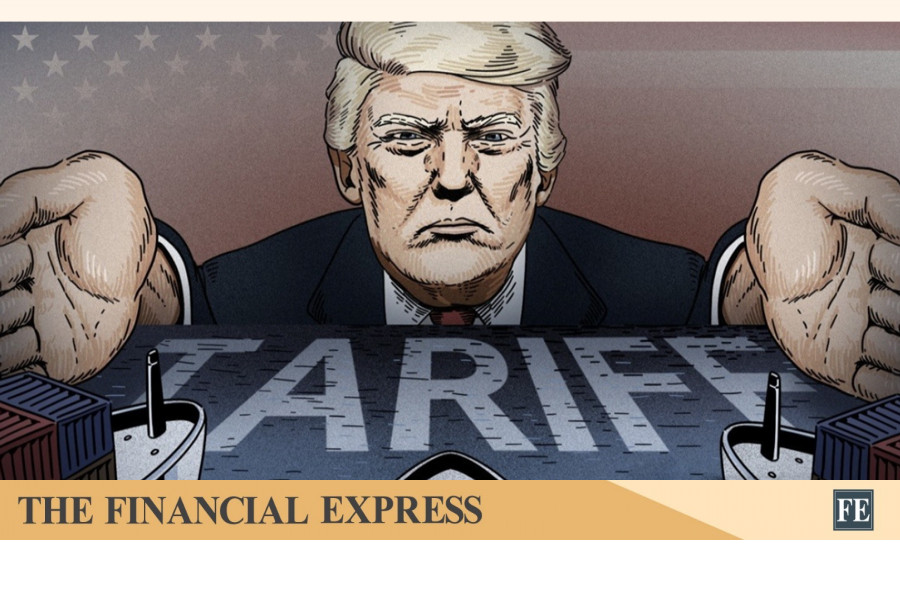
The Trump administration’s sweeping tariff overhaul flipped decades of Untied States (US) trade policy. Tariffs—once a shield for domestic industries—were recast as instruments of pressure and punishment. While headlines focused on battles with China and the European Union, the bigger losers were poorer nations with the least power to fight back.

At the heart of the strategy was a “reciprocal tariff” formula: divide the US trade deficit with a country by that country’s exports to the US, halve the result, and set a 10 per cent minimum. It was simple arithmetic with skewed consequences. Smaller economies with narrow export bases were hit hardest: Cambodia 49 per cent, Laos 48 per cent, Madagascar 47 per cent, Vietnam 46 per cent, Sri Lanka 44 per cent, and Bangladesh 37 per cent. By contrast, the European Union (EU) paid 20 per cent, Israel 17 per cent, and Australia and the United Kingdom (UK) just 10 per cent.

For Bangladesh—where more than 80 per cent of exports to the US are garments—the blow was severe. Apparel tariffs, once around 15–16 per cent, were slated to rise to 37 per cent, pushing the duty on a $10 polo shirt from $1.60 to over $5, effectively pricing Bangladeshi goods out of the market. Nor did Bangladesh enjoy any preferential access: it had been excluded from the US Generalised System of Preferences (GSP) in 2013 over labor issues, the program ended for other developing countries in 2020, and in any case, US GSP law (USC 2463) excluded most textile and apparel products as “import sensitive.”

The US trade team driving this policy—Trade Representative Jamieson Greer, Treasury Secretary Scott Bessent, and Commerce Secretary Howard Lutnick—pushed for rapid bilateral deals under tight deadlines. Greer’s playbook was blunt: open with extreme demands, sidestep WTO channels to block coalitions, and link tariff relief to unrelated concessions in areas like intellectual property or agriculture where richer countries had leverage.

One tactic was particularly effective: non-disclosure agreements (NDAs). Several delegations, including Bangladesh’s, were required to sign NDAs covering all negotiation details. This enforced secrecy and isolated countries from one another, preventing them from sharing strategies or mobilising industry support. Wealthier nations sometimes refused; poorer ones, fearing exclusion from talks, often complied.

Bangladesh’s delegation was disadvantaged from the outset. Without authority to bargain across policy domains, they could only plead humanitarian and developmental cases. Their approach was reactive, shaped by US proposals rather than their own agenda. Lacking technical capacity to challenge US calculations, and barred from coordinating with fellow garment exporters, they faced Washington alone.

The final deal brought the tariff down to 20 per cent —still a third higher than before—but at a steep price. Bangladesh agreed to significantly expand imports of specific American goods, including large volumes of wheat, cotton, soybeans, dairy, meat, poultry, liquefied natural gas, and 25 Boeing aircraft, while also opening its markets more broadly to US agricultural and energy products.

The Boeing purchase provided an almost comic subplot. Bangladesh’s order was part of a global buying spree: Indonesia 50, Cambodia 20, Bahrain 12, Saudi Arabia 20 (plus 10 on option), Japan 100, and Qatar an eye-popping 260. If even half these orders materialize, they could help revive Boeing’s accident-prone fortunes, turning trade diplomacy into an informal corporate rescue plan.

For Bangladesh, the economic consequences were swift: US garment orders fell, manufacturers absorbed higher costs on razor-thin margins, and competition from free-trade partners intensified.

The inequity was glaring. The poorest nations, with the least diversified economies and weakest safety nets, bore the steepest hikes. Wealthier partners, with greater bargaining power, secured lighter terms. The logic was cold but seemed clear: squeeze those least able to retaliate while accommodating those who could hurt you.

Two major economies, however, were punished for politics rather than economics. India faced a 50 per cent tariff—25 per cent under the reciprocal formula and another 25 per cent penalty for continuing to buy Russian oil, a move opposed by Washington. Brazil also faced a 50 per cent tariff—10 per cent base plus a 40 per cent ad valorem rate—explicitly tied to its prosecution of former president Jair Bolsonaro, whom Trump called a victim of a “witch hunt.” The White House accused Brazil’s judiciary of political persecution and censorship, framing the tariff as a defense of U.S. business and free speech.

For Bangladesh and other developing economies, the lessons are sobering. Diversify exports and markets to reduce reliance on a single product or buyer. Build technical expertise in trade law, economics, and negotiation strategy. Engage early, before the stronger party defines all the terms. And even under NDA constraints, seek discreet channels to coordinate with similarly affected nations.

The new tariff order is a blunt reminder that in trade diplomacy, the rules may be multilateral—but outcomes are dictated by raw power. Appeals to fairness or development rarely prevail. Without leverage, preparation, and alliances, poorer nations will continue to be outmaneuvered—and forced to pay the highest price.


Dr MG Quibria is a development economist and former Senior Advisor at the Asian Development Bank Institute.​
 
Analyze

Analyze Post

Add your ideas here:
Highlight Cite Fact Check Respond
Bangladesh seeks US tariff cut as USTR agrees to consider proposal

Published :
Jan 09, 2026 12:39
Updated :
Jan 09, 2026 12:39

1768006299105.webp


Bangladesh’s National Security Adviser Dr Khalilur Rahman meets US Trade Representative Ambassador Jamieson Greer in Washington DC on Thursday — Photo: Courtesy


National Security Adviser Dr Khalilur Rahman has proposed that the Office of the United States Trade Representative (USTR) reduce the reciprocal tariff from the current 20 per cent.

US Trade Representative Ambassador Jamieson Greer has agreed to consider the proposal positively.

He also agreed to give serious consideration to Dr Rahman’s proposal to lower or eliminate the US reciprocal tariff on apparel using US content.

Dr Khalilur Rahman met Ambassador Greer in Washington, DC, on Thursday afternoon, UNB reports.

He also held a separate meeting with Assistant USTR Brendan Lynch.

During the meeting with Ambassador Greer, Dr Khalilur Rahman briefed him on the progress Bangladesh has made in reducing the trade gap between Bangladesh and the United States.

“Even before the formal execution of the reciprocal trade agreement, Bangladesh has made major strides in reducing the trade gap by substantially increasing imports from the US and implementing some key aspects of the agreement,” Dr Khalilur Rahman said.

Both sides agreed to rapidly resolve a handful of outstanding issues so that the reciprocal tariff agreement could be finalised and executed expeditiously.

Dr Khalilur Rahman noted that business contacts between Bangladesh and the US are expected to increase significantly in the coming days as a result of expanded trade between the two countries.

He invited Ambassador Greer to use his good offices to ease business travel for Bangladeshis in light of Bangladesh’s recent inclusion in the US visa bond programme.

Dr Khalilur Rahman also requested access to US Development Finance Corporation (DFC) funding for Bangladesh’s private sector.

Ambassador Greer assured Dr Khalilur Rahman of his efforts in these matters.

Bangladesh Ambassador to the US Tareq Md Ariful Islam accompanied the National Security Adviser, while Assistant USTR Brendan Lynch and other officials were present on behalf of the USTR.

Dr Khalilur Rahman is also expected to meet senior US State Department officials on Friday.​
 
Analyze

Analyze Post

Add your ideas here:
Highlight Cite Fact Check Respond

Bangladesh secures a major breakthrough in the US trade talks
Staff Correspondent 10 January, 2026, 18:27

1768116539934.webp

Bangladesh national security adviser Khalilur Rahman meets with US trade representative ambassador Jamieson Greer in Washington on Thursday. | BSS photo

Bangladesh has achieved a major step forward in strengthening mutually beneficial trade relationships with the United States, which could open the door to market access and new opportunities for the country’s textile and apparel sector.

According to a statement from the chief adviser›s press wing issued on Saturday, US Trade Representative ambassador Jamieson Greer has agreed to raise the issue of reducing Bangladesh’s current 20 per cent reciprocal tariff rate with US President Donald Trump.


National security adviser Khalilur Rahman, currently visiting Washington, D.C., met with USTR ambassador Jamieson Greer to discuss trade-related issues.

In April, the US imposed sharply higher reciprocal tariffs on several countries, including Bangladesh, and raised the duty on apparel shipments to the US to 37 per cent. The tariff was later lowered to 35 per cent and then to 20 per cent, following a series of negotiations on July 31.

Since August 7, Bangladeshi apparel items have faced a 20 per cent reciprocal tariff, in addition to the regular 16.5 per cent tariff.

In response to a request from Khalilur Rahman, the USTR agreed to reconsider the tariff to bring it more in line with regional competitors, the press wing stated.

The statement also said that both sides have developed an innovative and forward-looking solution to support Bangladesh’s export priorities.

During the meeting on Friday, they discussed a proposed preferential scheme by which Bangladesh would receive tariff-free access to the US market for textile and apparel exports equivalent to its imports of US-produced cotton and man-made fiber textile inputs, measured on a square-meter basis, said the press wing.

This win-win approach could strengthen bilateral trade, support Bangladeshi manufacturers and workers, and deepen supply-chain ties with US producers.

Press wing also said that the discussion would reflect growing momentum and goodwill in US–Bangladesh economic relations and would mark a promising new chapter for Bangladesh’s global trade prospects.

He Khalilur Rahman also had a separate meeting with Assistant USTR Brendan Lynch.

‘Even before the formal execution of the reciprocal trade agreement, Bangladesh has made major strides in reducing the trade gap by substantially increasing imports from the US and has implemented some key aspects of the agreement,’ Khalilur said.

Both sides agreed to resolve a handful of outstanding matters promptly so that the reciprocal tariff agreement could be finalised and executed expeditiously.

Khalilur noted that business contacts between Bangladesh and the US were expected to increase significantly in the coming days, driven by rising trade between the two countries.

He invited Ambassador Greer to use his good offices to ease business travel for Bangladesh in light of Bangladesh›s recent inclusion in the US visa bond.

Khalilur also took the opportunity to request Bangladesh’s access to DFC funding for its private sector.

Greer assured Khalilur of his efforts in these regards.

Bangladesh ambassador to the US, Tareq Md Ariful Islam, accompanied the national security adviser, while assistant USTR Brendan Lynch and other officials were with the USTR.

Khalilur Rahman was also expected to meet senior US State Department officials during his visit.​
 
Analyze

Analyze Post

Add your ideas here:
Highlight Cite Fact Check Respond

US hinted at tariff relief for Bangladeshi goods, says Lutfey Siddiqi

bdnews24.com
Published :
Jan 27, 2026 21:56
Updated :
Jan 27, 2026 21:56

1769561132273.webp


Bangladeshi goods may soon face lower tariffs in the United States, Chief Advisor’s International Affairs Special Envoy Lutfey Siddiqi has said after recent bilateral discussions.

On Tuesday, he said the tariffs are “expected to remain around 20 per cent”.

“We hope tariffs will not increase… Compared with the current rate, we have been given very strong assurances that it will be better.”

Speaking at a press conference, Lutfey highlighted Bangladesh’s participation at the World Economic Forum (WEF) in Davos, and the outcomes of multiple bilateral meetings held on the sidelines.

He added, “Following meetings with a senior US Cabinet-level official and further discussions at several levels, prospects of additional benefits in some sectors were also raised.”

The United States has imposed a 35 per cent total tariff on Bangladeshi products -- 20 per cent supplementary duty added to an existing 15 per cent.

While the tariff-reduction signal is promising, no formal decision or announcement schedule has been set, Lutfey said.

“We hope the issue will become clear by the end of this week or early next week, at which point detailed information will be shared.”​
 
Analyze

Analyze Post

Add your ideas here:
Highlight Cite Fact Check Respond

Pitfalls of Trumpian tariffs

Helal Uddin Ahmed
Published :
Jan 29, 2026 23:44
Updated :
Jan 29, 2026 23:44

1769734147969.webp


Aimed at pulling up the cost of foreign products, protecting domestic industries, and raising revenue, tariffs are taxes or duties imposed by a government on imported commodities. These are used as an important tool in inter-governmental economic policy-making, as they influence foreign trade, affect consumer prices, but often lead to disputes between nations. However, economists have traditionally considered them as potentially self-defeating protectionism that hinder international trade and increase prices for the people they are supposed to protect. This has been the philosophy that led to a decline in tariff rates levied by the global economic super-power USA from 18.4 per cent in 1934 to below 2 per cent in 2007.

Times, however, have changed and the current administration of the US President Donald Trump appears hell-bent to raise tariffs on commodities from over 90 countries of the world. The Trump administration's approach to tariffs is linked to some key economic and political objectives, which includes a desire to protect American industries and workers from perceived unfair foreign competition. The strategy particularly focuses on trade imbalances with countries like China, India, Mexico, Canada, and the European Union (EU), although political motives are also apparent in many of the United States (US) moves. But these measures already appear to be backfiring especially by hitting the US consumers, and it is not yet clear how long the US administration can sustain this highly aggressive strategy that has already rattled the global economy.

Let us now have a look at the advantages and disadvantages of imposing Tariffs. As mentioned before, tariffs protect domestic industries, as they serve as a vital shield especially for emerging domestic industries against foreign competition. Tariffs also make a significant contribution to revenues generated by a government, especially in developing countries. They can aid countries in managing their trade balances more effectively by influencing the flow of import and export trade. Besides, they can play a vital role in upholding national security by encouraging domestic production in strategic industries, and can also serve as a powerful tool in transnational negotiations and diplomatic bargains.

The disadvantages or downsides of tariffs as pointed out by critics include: higher consumer prices and reduced purchasing power of a country's citizens, as businesses typically pass on the additional costs to the ultimate consumers; curtailment of market efficiency and innovation, as protected firms face less pressure to improve products, optimise operations, and reduce costs; may trigger retaliatory steps from trading partners leading to trade wars that adversely affect the economies of all involved parties; although tariffs may protect jobs in import-competing domestic industries, they often lead to substantial job losses in export-oriented industries dependent on imported inputs; lastly, they distort market signals that often lead to inefficient allocation of economic resources in various sectors.

It may be recalled that the Smoot-Hawley Tariff Act of 1930 passed by the US Congress had raised US tariffs on over 20 thousand imported products; and this unilateral measure contributed to a collapse in international trade soon afterwards that deepened the Great Depression during the 1930s. The 2018-20 trade war waged by the previous Trump administration against China revived the fears of similar harmful consequences for international trade; however, Trump's defeat in the 2020 presidential election provided a temporary respite for other vulnerable countries. But sadly, Trump has gone back to his old ways after winning the presidency in 2024, and the world economic order is once again under serious threat due to a new and more dangerous round of aggressive trade wars being pursued by him.

Before considering the situation since President Trump assumed office in January 2025, let us first review the impact of 2018-2020 US-China trade war during his first tenure. The Trump administration then escalated trade tensions with China through the application of punishing tariffs, as average tariff rate on commodities coming to the USA from China jumped from 1.7 per cent in 2017 to 13.8 per cent in 2019. US tariffs on Chinese goods were mostly targeted at electronics, machinery, furniture, clothing, auto-parts and agricultural equipment, while Chinese tariffs on US goods were mainly targeted at soybean, pork, beef, whiskey, LNG, and automobiles. The two countries, however, signed a trade deal in January 2020 that was showcased as a victory for Trump, although the actual benefits have always been questioned.

The impact of that brief trade war on the US economy included: higher prices for consumers and businesses; disrupted supply chains; bruising the agriculture sector; and volatility in the stock market. The adverse effects in China included export slowdown, currency devaluation, and shift in global supply chains. The global implications were: formal complaints with the World Trade Organization (WTO); ripple effect on international trade; trade uncertainties leading to delayed investments and hirings by businesses worldwide. Lessons learned from that episode were broadly as follows: tariffs are not costless; they may be a negotiation tool, but not a solution; they have long-term consequences, as many tariffs remained in place altering the trade scenario permanently even after the deal came into force; policy unpredictability is harmful, as the uncertainties centring on tariff policy generated instability that adversely affected business decisions and financial markets.

The findings from a recent research-study conducted by the German Think-tank 'Kiel Institute for the World Economy' suggests that the impact of the latest Trumpian tariffs is also likely to adversely affect US citizens over time in the shape of higher consumer prices. The study showed that it was the Americans, not the foreigners, who were bearing almost the entire cost of US tariffs. It contradicts the Trumpian claim that the tariffs applied aggressively during the past year as revenue-raising and foreign-policy tool will be paid by the foreigners. The latest survey by the AP-NORC Centre for Public Affairs also shows that about 60 per cent of US adults now say Trump has hurt the cost of living. Only 16 per cent US citizens now opine that Trump has helped 'a lot' in making things more affordable, down from 49 per cent recorded in April 2025.

The study by the Kiel Institute analysed shipments worth US$4 trillion between January 2024 and November 2025 and found that foreign exporters contributed only 4 per cent of the burden emanating from last year's tariff increases (by lowering prices), while US consumers and importers absorbed 96 per cent of the burden. The tariffs also had a significant impact on trade volumes as exemplified by 18 per cent to 24 per cent reduction in shipments to the USA by Indian exporters despite maintaining prices. The Kiel report concluded that the tariffs therefore acted as a consumption tax on Americans instead of functioning as a tax on foreign producers. A co-author of the report - Professor Julian Hinz of Germany's Bielefeld University claimed: "There is no such thing as foreigners transferring wealth to the USA in the form of tariffs", because the US$ 200 billion in additional tariff revenue was paid almost entirely by the Americans. This is likely to fuel higher inflation in the USA over time, thereby jeopardising Trump's remaining months in office, especially when US Congressional elections are due in November.


Dr Helal Uddin Ahmed is a retired Additional Secretary and former Editor of Bangladesh Quarterly.​
 
Analyze

Analyze Post

Add your ideas here:
Highlight Cite Fact Check Respond

Members Online

Latest Posts

Back
PKDefense
G
O
 
H
O
M
E