New Tweets

[🇧🇩] UN investigation into enforced disappearances /deaths of students/citizens at the hands of security agencies

G Bangladesh Defense
[🇧🇩] UN investigation into enforced disappearances /deaths of students/citizens at the hands of security agencies
96
3K
More threads by Saif


Another victim of enforced disappearance returns home from India
Staff Correspondent 23 December, 2024, 10:55

Another enforced disappearance victim returned home allegedly from India on Saturday, one

year four months after he was picked up by people identifying themselves as Rapid Action Battalion members on August 29, 2023.

The victim is Rahmatullah, an electrician who was picked up from his own house in Dhamrai, human rights organisation Odhikar revealed in a statement issued on Sunday.

His family searched RAB offices, various Detective Branch offices and police stations but all law enforcement agencies denied picking Rahmatullah up.

Rahmatullah was blindfolded and threatened in various places in Bangladesh for nine months and later was taken to India where he was held in Dum Dum jail for ‘illegal entry’, the statement said.

He had been in India for seven months.

The statement read that Indian Border Security Force sent Rahmatullah back to Bangladesh through the Mahananda River on Saturday night.

After entering the country, he arrived at Gomastapur police station in Chapainawabganj from where police contacted his family.

The family later went there and rescued him.

The statement cited examples of Sukharanjan Bali and Bangladesh Nationalist Party leader Salahuddin Ahmad being relocated to India after abduction.

Such incidents prove that Indian authorities were involved in the system of enforced disappearance in Bangladesh, Odhikar said in its statement.

The Commission of Inquiry on Enforced Disappearance recently revealed that they found prima facie evidence of the India’s involvement in the system of enforced disappearance.

According to Odhikar, 721 people have fallen victim to enforced disappearances from 2009 till September 2024. Of them, 158 people were still not found.

Odhikar believe that there is a possibility that more victims may be held in Indian jails after being disappeared from Bangladesh.

The human rights body said that the government should immediately check the information of all Bangladeshis imprisoned in Indian jails to determine if there are any enforced disappearance victims.

It demanded compensation for Rahmatullah and punishment for those involved in his disappearance.​
 

What Bangladesh can learn from Argentina’s struggle with enforced disappearance

1735257439893.webp

The families of the disappeared in Bangladesh, like the Mothers of the Plaza de Mayo, have refused to stay silent. FILE PHOTO: PRABIR DAS

In Bangladesh, Argentina is more than just a footballing nation; it's a symbol of passion, resilience, and shared identity. The famous "Hand of God" moment and Maradona's dazzling 1986 World Cup victory are still celebrated with immense enthusiasm. But beyond the footballing legacy, there's another connection between the two nations—a shared pain and sorrow that ties them together in ways most would never expect.

Between 1976 and 1983, Argentina endured one of the darkest periods in its history, known as the "Dirty War" (Guerra Sucia in Spanish). The country was ruled by a military junta that used brutal tactics to eliminate perceived threats. Thousands of citizens, including political activists, intellectuals, union leaders, and students, were disappeared without a trace. These individuals, often the brightest and most outspoken members of society, were subjected to torture, imprisonment, and death. Their families, left in torment, had no idea whether their loved ones were alive or dead. This led to a profound trauma that still echoes in Argentina today.

In many ways, Bangladesh's modern-day struggle mirrors this painful past. Since Sheikh Hasina assumed power in 2009, Bangladesh has seen a troubling rise in cases of enforced disappearances and extrajudicial killings, particularly between 2009 and 2022. Human rights organisations estimate that more than 3,000 people have vanished over the last decade, many of them political activists, journalists, and ordinary citizens who dared to challenge the government. The tactics used by Bangladesh's security forces, especially the Rapid Action Battalion (Rab), are chillingly similar to those of authoritarian regimes, with violence wielded as a tool of political control. The Digital Security Act, introduced in 2018, further silenced dissent by criminalising free speech, in essence, and empowering the government to target critics.

Although the political contexts in Argentina and Bangladesh differ in many ways, both countries have been profoundly impacted by authoritarian rule and the heavy human cost of enforced disappearances. However, the paths they have taken to address these abuses and the extent to which justice has been served are markedly distinct.

After the fall of Argentina's brutal military dictatorship in 1983, the country began the long and difficult process of confronting its past. One of the most significant steps was the formation of the National Commission on the Disappearance of Persons (CONADEP), which investigated the forced disappearances and human rights violations committed during the dictatorship. Their report, Nunca Más ("Never Again"), was a landmark document that detailed the scale of the atrocities and gave voice to the victims' families. For the first time, the suffering was acknowledged, and the public could no longer ignore the truth.

In the years that followed, Argentina took important steps toward achieving justice. Laws that had previously shielded military officials from prosecution, such as the Full Stop Law and the Law of Due Obedience, were repealed in 2003. In the subsequent years, former military officers were put on trial, and some were convicted of crimes against humanity, including torture, forced disappearances, and murder. While justice was delayed, it wasn't denied. The Mothers of the Plaza de Mayo, a group of mothers whose children had disappeared during the dictatorship, became a powerful symbol of resistance, relentlessly demanding truth and accountability. Their courage and determination brought the issue of human rights violations to the forefront, forcing Argentina to reckon with its past.

In contrast, Bangladesh's struggle with enforced disappearances remains largely unresolved. In 2024, after the fall of Sheikh Hasina's government, an interim administration led by Muhammad Yunus signed the International Convention for the Protection of All Persons from Enforced Disappearance (ICPPED). Later, a commission of inquiry into the disappearances was established. While this is a positive step, it remains to be seen whether the commission will be independent enough to carry out its work without political interference. Moreover, ensuring that the victims' families receive reparations and recognition for their suffering will be crucial if any real healing is to occur.

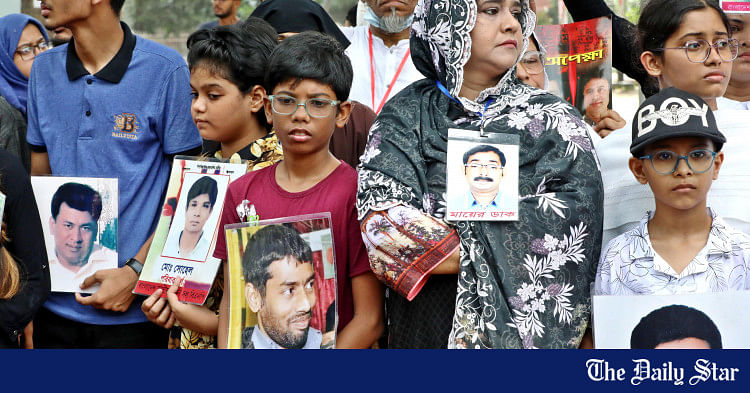
The families of the disappeared in Bangladesh, much like the Mothers of the Plaza de Mayo, have refused to stay silent. Through the Mayer Daak movement, they have taken to the streets, demanding answers and justice. These families, most of them mothers and wives, have been vocal about their pain, their hopes, and their grief. They continue to march, protest, and speak out, hoping that one day, they'll get the closure they so desperately need. But their struggle has not been met with the same level of national support or legal recourse that Argentina's victims received.

The Mayer Daak movement in Bangladesh has emerged as a powerful symbol of resistance, not just to the state's systematic efforts to suppress dissent, but also to the culture of impunity that allows the state's security forces to operate with minimal accountability. Like the Mothers of the Plaza de Mayo in Argentina, the Mayer Daak group has demanded justice for the victims of forced disappearances, courageously standing up against the government's repression and the silence that surrounds these atrocities.

Despite the intense political and legal obstacles, they face, the Mayer Daak movement continues to gain momentum. The group's members, many of them mothers, sisters, and wives have become the public face of resistance. Their constant presence at protests and public demonstrations is a testament to their refusal to let the truth be buried. Through their tireless efforts, the Mayer Daak movement has kept the issue of enforced disappearances in the national conversation, pushing for recognition of the victims and accountability for the perpetrators.

Bangladesh has not yet seen the same level of institutional reforms as Argentina, such as the creation of a national truth commission. However, the activism by Mayer Daak has the potential to spur a broader movement for justice, one that might eventually lead to formal inquiries, legal accountability, and reparations for the families of the disappeared. The group's insistence on truth and justice offers a glimmer of hope in the face of a long history of government oppression.

Both Argentina and Bangladesh have suffered through brutal authoritarian regimes that used forced disappearances and extrajudicial killings to maintain control. Argentina's eventual commitment to justice, accountability, and truth has allowed the country to begin the healing process.

With the right commitment and action, there is hope that Bangladesh can take meaningful steps toward healing, and the painful legacy of enforced disappearances can eventually be addressed. By learning from Argentina's example and ensuring accountability, recognition for the victims, and a genuine process of truth-telling, Bangladesh has the potential to move forward. While the journey may be long, it is not without hope. In time, the families of the disappeared may find the justice and closure they deserve, and the country as a whole can begin to heal from this dark chapter.

Barrister Md Zahid Hasan Akhand is a human rights lawyer, activist, and founder and head of Akhand and Associates.​
 

Enforced disappearances occured mainly due to political reasons

1735525958586.webp

Justice Moyeenul Islam Chowdhury

The enforced disappearances would be carried out under orders from the highest level of government. The orders would come from the top most level through Tarique Siddique (former prime minister Sheikh Hasina's security-related advisor)

The commission formed to look into the enforced disappearances that occurred over the 15 and a half years of the Awami League rule, has submitted its interim report, ‘Unfolding the Truth’. Head of the committee, retired Justice Moyeenul Islam Chowdhury, on 19 December spoke to Prothom Alo’s news editor Rajib Hasan and staff correspondent Mahmudul Hasan at the commission office in Gulshan, Dhaka.

Prothom Alo: The interim report has been submitted three and a half months after the commission was formed. Within this span of time have you been able to gather enough information and evidence to prove the crimes involved in the incidents you all have been investigating?

Moyeenul Islam Chowdhury:
Our commission is a fact-finding commission. No chargesheet or FIR against any accused will be filed as a result of this commission's report. The report to be submitted by the investigating body of the International Crimes Tribunal will be the police report. This commission is not any investigative agency, not any prosecuting agency. The commission report can serve as a basis for the tribunal's investigations. It has plenty of necessary material required for the investigations.

The commission report will have a lot of evidence. The victims of enforced disappearance who have returned and the families of those who have not returned, have given us their depositions. We physically visited the areas or detention prisons that they described to us. These match 98 per cent of the victims' descriptions. All this will serve as circumstantial evidence.

We are also getting first-hand evidence from the victims. There is no scope to get any neutral witness. Those who abducted these people, tortured them, unlawfully kept them imprisoned for year after year, will not speak against themselves. For instance, those who unlawfully kept Barrister Arman and General Azmi incarcerated for eight years, will not admit to their own crimes.

They held Hummam Quader Chowdhury for seven months. They kept former ambassador Maruf Zaman in detention for two and a half to three years. Without any cases, they kept their prisoners in detention and tortured them for year after year.

Prothom Alo: What sort of evidence did you get from the secret detention units? Is there any apprehension that the evidence may be destroyed? A lot of evidence, for example, had been destroyed in the case of Argentina's commission on the disappearance of persons.

Moyeenul Islam Chowdhury:
Changes had been brought about in a couple of the secret detention units. Walls were painted to erase the writing by the prisoners, where they had jotted down their names, mobile phone numbers, their thoughts and feelings and so on. In some places such evidence had only been partially destroyed. In some places where there were several cells, the walls were demolished to make a single cell, or where there was one cell, that has been made into three.

These are not major changes. In most of the cases the changes have been minor. We went there, telling them to keep things as they were. Until the investigations are over and in some case, until the trial or case is over, things must be kept as they were. All this is circumstantial evidence. We wrote letters too, informing them of this. In our final report we will say whether these secret cells are to be made into museums or not.

Prothom Alo : Have you found any documents about the internment of the victims of enforced disappearance?

Moyeenul Islam Chowdhury:
In most instances we did not find documents regarding internment in these detention cells. The reason behind this is that because these were unlawful deeds, no documents were kept on record. Once the prisoners were released, all records were destroyed. This is particularly true in the case of DGFI.

Prothom Alo: How were the decisions taken to abduct anyone and how was this implemented? Were there any special perks or prizes for those carrying out such tasks?

Moyeenul Islam Chowdhury:
First it would be decided who was to be abducted. The persons would be kept under surveillance and then picked up from a convenient spot. Most of these incidents would happen after dark. At times one force and at time several forces would be involved in these enforced disappearances. For example, DGFI doesn't have the capacity to conduct such operations and so they would at times take RAB along or at times wear RAB or DB jackets and carry out the operation. The force involved in the enforced disappearance and the concerned persons would work in an extremely well-coordinated manner. This would be carried out by means of a central command structure. Those involved in the process would be given promotions, sent on overseas missions and provided with other benefits and facilities.

The enforced disappearances would be carried out under orders from the highest level of government. The orders would come from the top most level through Tarique Siddique (former prime minister Sheikh Hasina's security-related advisor).

In most instances the orders would be made over mobile phone. The matter was revealed in the statements of those victims or witnesses who have a standing on society. We summoned those were accused of being involved in the enforced disappearances. Their statements also reveal that the orders came from Sheikh Hasina. A retired senior army official, for example, admitted this to us.

Prothom Alo : Some victims were killed after being abducted, some were released after a few days, some were at a later date shown to be arrested and some were kept in detention for years on end. How was all this determined?

Moyeenul Islam Chowdhury:
From what has been learnt so far, these matters would be decided upon after the person was picked up. A person would be picked up and questioned. The information gathered from this person would be assessed. Sometimes a person would be picked up to fulfill a certain objective. After that their fate would be decided upon at the behest of the central command. If the person was a political personality or some important member of the civil society, the next step would be taken in accordance to orders from the top level of government. For example, when Hummam Kader Chowdhury was released from incarceration, he was told, “The prime minister has granted you a second life. Leave politics and go abroad. Do not return to the country until the situation improves.”

Outside of all this, we have confirmed that there was the matter of exchange of certain abducted persons with India. This was not done under the extradition treaty, but informally. There probably was a secret understanding in this regarding between our intelligence agencies and Indian intelligence agencies. Once those persons were in India, they would be questioned on various issues.

Prothom Alo: The junior officers and soldiers, constables or field level persons may argue they were just carrying out orders. What about that?

Moyeenul Islam Chowdhury:
Those who issued the commands for enforced disappearance, those who were at a senior level in the structure involved in enforced disappearance but took no action despite seeing it all, or those who followed the orders from above, are all guilty. It is a crime to obey unlawful orders.

Prothom Alo : How far are those at a field level being identified?

Moyeenul Islam Chowdhury:
Most of those who would pick up the people would be do so at night, wearing caps, sunglasses and masks and so were unrecognisable. They would nab the persons and immediately pull a long cap over their heads up till the neck. In many instances they would create a smokescreen by identifying themselves as members of a different force. So it is difficult to identify those at a field level. What we will do is identify those who issued the orders and those in higher positions of the concerned agencies, forces or their units.

Prothom Alo: Are the concerned forces or agencies cooperating? Are the accused responding to the summons of the commission?

Moyeenul Islam Chowdhury:
Till now the law enforcement, such as the police, RAB, DB, CTTC have been more or less cooperating. DGFI is less cooperative. They claim that as these matters were unlawful, no records were maintained. It was clear that this was at the behest of the top person of the government at the time, that is the prime minister.

Many of those involved in the enforced disappearances have retired. Many are still in service. Three or four of those who did not respond to the commission’s summons have fled abroad. In keeping with the law, there will be “adverse presumption” against those who have not responded to the summons. In order words, the accused does not want to reveal anything about the accusations.

For example, we summoned the five persons against whom former army officer Hasinur Rahman brought about specific allegations. One came after the stipulated time, the remaining four didn’t show up. They will face advance presumption, meaning they didn’t turn up because they were involved. In the case of former and serving army officers, we are issuing the summons via the army chief. Some are coming, some are not.

Prothom Alo: The main targets of enforced disappearance were supporters of the political opposition. Outside of that, who else were the victims of enforced disappearance?

Moyeenul Islam Chowdhury:
When anyone disappeared, the government at the time would say that they have eloped or are hiding from moneylenders or such, but we have proof that such statements were untrue and baseless. Basically four types of persons were abducted. For example, the political opposition or, to be more specific, leaders and activists of BNP and Jamaat. Then there were representatives of the civil society or persons who criticised the past government. Such criticism could have been on Facebook, on various online platforms or in newspaper columns, talk shows or other means. Former ambassador Maruf Zaman, for example, would write on online platforms. Then there was Lt Col Hasinur Rahman who was told to work with the Indian intelligence RAW. He refused. That is why even while in service he was picked up. Just imagine fellow officers holding a gun to the head of a serving army officer and abducting him. He was abducted twice. Lt Col Abdullah Zahid was also picked up while in service. He was kept in detention for nine months before being court-martialed and sacked.

Then there were those subject to enforced disappearance on suspicion of being militants. We are examining the allegations of enforced disappearance that have come to us. For instance, of the 100 enforced disappearances on grounds of involvement in militancy, 80 of the allegations were false. The remaining 20 per cent may have had some truth.

Then there were the cases of business or personal conflict or family feuds over land and property, where money was paid for the rivals subjected to enforced disappearance by means of the law enforcement. For example, if anyone had a family feud with an important Awami League person, he would tell RAB or the police to abduct them. In certain isolated cases, some members of the law enforcement could have carried out the enforced disappearance in their personal interests.

Prothom Alo : Have you found any instances of money being taken from the victims of the victims' families after the enforced disappearance?

Moyeenul Islam Chowdhury:
In some cases when DGFI, RAB, DB and others who would abduct the people, they would take money from the family of the victims. They would say that they would release the victims or provide information about him in exchange of money. But there are no instances of instant release upon receiving payment. We have found instances of release a few days after the payment was made. But then sometimes they would simply be shown arrested in some other case.

Prothom Alo: The families of persons still missing are waiting. What possibility do you see of these missing persons being recovered alive? Do you all have any initiative in this regard?

Moyeenul Islam Chowdhury:
So far we have examined 758 of the 1,676 complaints we have received. From that we have come to know of 204 who have not returned. And of the total complaints, there is no trace of 400 to 450 persons.

We are working to find the people of whom there is no trace. We are endeavouring to locate them. But in investigating these incidents, from what we have understood so far, it seems that these missing persons may never be found. For example, there is very little possibility of finding BNP leader Ilias Ali, the Sylhet Chhatra Dal leader Dinar, former member of parliament Saiful Islam Hiru of Laksham, Cumilla, because after the fall of Sheikh Hasina’s government, we for information of people leaving the secret detention cells. But there has been further information of any releases after that.

If the family of the victims filed cases with the International Crimes Tribunal regarding those still missing, these matters may come up in the investigations of the investigating agencies.

Prothom Alo : How will the trial of these involved in the enforced disappearances be ensured?

Moyeenul Islam Chowdhury:
In our final report we will state how the enforced disappearances occurred during Sheikh Hasina’s rule, who carried these out who are responsible for these. This report will assist in the investigations of the International Crime Tribunal’s investigating agency.

A few names including that of Sheikh Hasina have appeared in the interim report. We have not published many other remaining names. We have not revealed all names in the interests of the safety of the victims and their families, and also so the criminals cannot flee. Many of them face a ban of foreign travel. And there is scope of bringing back those who have already fled abroad, especially to India, under an extradition treaty.

Also the International (Tribunal) Amendment Ordinance-2024 will make the trial proceedings easier. The most important part of this amendment is it has been modeled on the lines of the Rome Statute based o which the International Crimes Tribunal was established. It contains many of the provisions from there. It seems that the limitations of the law have been eliminated. That has created the scope of this trial to be of international standards.

Prothom Alo : Do you have any recommendations to ensure that no environment arises again in future for enforced disappearances? Will the commission have any recommendations?

Moyeenul Islam Chowdhury:
The political culture that had grown up over the past 15 and a half years must be finished. The enforced disappearances that occurred in this span of time were basically due to political reasons. The government, state and ruling party had all merged as one. The judges who were trustees of sovereign judicial powers, the ministers who were trustees of sovereign executive powers, the members of parliament who were trustees of sovereign legislative powers, did not carry out their duties correctly. That is why there was a lacking emerged in the rule of law. The law was not applied equally for all, it was done selectively. It was seen that nothing happened to those in the ruling party even if they committed crimes. Yet cases were filed against innocent persons who were in the opposition.

A balance of the prime minister’s powers is essential to overcome this situation. A balance must be brought about between the powers of the president and the prime minister so that absolute power does not rest with anyone. This will require an amendment or change of the constitution. Good governance will also be required. Unless politics is cleaned up, good governance cannot be established. Enforced disappearances will not stop. It is the duty of the politicians to clear up politics. Only politicians who have honestly, no greed, of good character, efficient and patriotic will be able to clean up politics. Whether an end will come to enforced disappearance will depend on the will of the ruling party politicians.

* This interview appeared in the print and online edition of Prothom Alo and has been rewritten for the English edition by Ayesha Kabir​
 

Children also became enforced disappearance victims with mother: commission
Staff Correspondent 20 January, 2025, 00:29

1737331104798.webp


The Commission of Inquiry on Enforced Disappearance on Sunday informed the interim government chief adviser, Professor Muhammad Yunus, that it found children were also victims of enforced disappearance along with their mothers.

The commission had interviewed several children, allegedly victims of enforced disappearance, several commission members told New Age.

The members who attended the meeting with the chief adviser at the state guest house Jamuna said that the head of the government assured them of visiting Joint Interrogation Cell and secret detention centres, popularly known as ‘Aynaghar’, soon.

They said that such a visit would decrease their fears, said a press release of the chief adviser’s press wing.

They also said that even disappearance of a six-year-old child was revealed during the investigation, the release said.

‘The shocking stories have come to light in your investigation. I will visit Aynaghar soon,’ Yunus said, responding to the commission’s call.

Commission member and BRAC University teacher Nabila Idris told New Age that the chief adviser assured them of visiting Aynaghar but the date had not been fixed yet.

‘We are scheduled to visit the joint interrogation cell located in the Directorate General of Forces Intelligence compound in Dhaka and two other detention centres,’ Nabila said, adding that they had found that some children were victims of enforced disappearance with their mothers.

She said that they had interviewed several children and they saw that they were traumatised.

‘We think that the number would be higher than what we recorded,’ she added. A pregnant woman and her two children, one aged one and a half years and another three years, were also victims of enforced disappearance, Nabila said.

Referring to recording a statement of a child, who became victim of enforced disappearance at the age of 10, she said that the child became traumatised and could not share full interview due to trauma.

The commission was formed by the interim government led by Professor Muhammad Yunus after it had assumed office on August 8 following the ouster of Sheikh Hasina-led Awami League regime on August 5 through a student-led mass uprising.

A total of 1,676 complaints of enforced disappearances were recorded in the commission.

In its first interim report submitted to the chief adviser on December 14, the commission found prima face involvement of Sheikh Hasina and some high-ranking officials of security forces and her government, including her defence adviser retired major general Tarique Ahmed Siddique in enforced disappearances.

It also found prima facie evidence of the involvement of Indian authorities in the system of enforced disappearance in Bangladesh.​
 

Jt Interrogation Cell evidence destroyed after August 5
Says commission probing enforced disappearances in report

1737415662105.webp

VISUAL: ANWAR SOHEL

Evidence of "Aynaghar" was destroyed even after August 5, 2024, to hide the complicity of the Directorate General of Forces Intelligence (DGFI), said the commission investigating enforced disappearances in its report to Chief Adviser Muhammad Yunus.

The commission was formed on September 15, 2024, and it inspected the Joint Interrogation Cell (JIC) housed inside the DGFI headquarters on September 26, 2024.

At the time of the commission's visit, Maj Gen Muhammad Faizur Rahman was the director general of the DGFI. He was made the DG on August 11, 2024, replacing the AL-era DGFI chief Maj Gen Hamidul Haque. Faizur was replaced on October 17.

"The post-August 5 partial structural alterations of the JIC at the DGFI headquarters include walls that have been painted over where prisoners testified that they had carved out their details," said the report, a section of which was shared with the media by the Chief Adviser's Press Wing yesterday.

"The then director general of the DGFI assumed his role several days after August 5, 2024. And yet, at least some of this evidence manipulation was carried out as recently as the day before our visit .... because we found the paint wet at the time of our visit. The wet paint and incomplete structural modifications clearly indicated a hurried attempt to conceal crimes," said the report.

"While the then DG argued that he was not directly involved in crimes committed before his tenure, his immediate response to manipulate evidence underscores the coercive power of this culture of impunity," added the report.

"His actions, ostensibly to shield perpetrators of past crimes, went against his own self-interest and professional integrity.

"During Sheikh Hasina's rule, a culture of impunity became entrenched within the security forces. It was evident in our conversations with the officers of both civil and military forces that not only did most of them never expect to be ever held accountable for their crimes, they also did not necessarily view the crimes as crimes."

Talking about the security forces, the report stated, "Enforced disappearances of people accused of being terrorists, for instance, were regularly brushed aside [by officials they interviewed] as insignificant and not worthy of the commission's attention. Similarly, custodial torture was nonchalantly described as a routine matter, indispensable to crime fighting.

"This pattern of doctoring of evidence and non-cooperation was not isolated to the DGFI. Across various security forces, evidence of crimes spanning over 15 years has been systematically manipulated. It was done not only by those in power till August 5, 2024 …, but also by those who assumed leadership afterwards.

"It reveals the pervasive and coercive nature of the culture of impunity, which compels even those not originally directly involved in the commission of offences to protect and perpetuate it."

The report said that some prison guards used to be kind towards victims but were compelled to commit crimes.

"Whilst many prison guards shared the cruelty of their high-ups, a number of prison guards were reportedly kind—sharing food, information, and expressing empathy by acknowledging the innocence of the detainees. To the prisoners, they excused their inability to confront the injustice they personally oversaw by pleading that they were slaves to command."

The report quoted the testimony of a survivor who was thrown in front of an oncoming vehicle.

The victim, a supporter of Jamaat-e-Islami, recounted how a police officer, while throwing him in front of the oncoming vehicle, apologised for doing so by saying, 'Please forgive me. I have no choice', said the report. The person survived because the vehicle was able to swerve at the last moment.

The report said that women were forcibly disappeared along with their children. "For example, one female victim we interviewed was detained for a month while she was pregnant, with her three-year-old and 18-month-old children incarcerated alongside her. She reported being beaten by a male officer despite being pregnant," said the report.

"A young child we interviewed recalled being held in CTTC [Counter Terrorism and Transnational Crime unit] along with her mother when the child had been only six years old."

The report narrated another case in which a mother and her young daughter were picked up and detained overnight at the then Rab-2 headquarters.

"The next day, the daughter was thrown out of a vehicle onto the streets. According to the family, an imam found the child and returned her to them. We took this girl, now a grown-up, to suspected Rab facilities, where she was able to definitively identify one of the rooms where she had been held that night. Her mother never returned," it said.

"In one harrowing account, a male victim described how his wife and newborn baby were brought to a police station, where the child was reportedly denied milk from its mother as a form of psychological torture directed at him," said the report.

The report went on to say that it is highly likely that a significant portion of security personnel did not directly engage in these crimes of their own volition but were compelled to do so by their power-hungry supervisors.​
 

ENFORCED DISAPPEARANCE: Female survivors hesitant to file complaints
Staff Correspondent 21 January, 2025, 00:52

1737418952697.webp


The Commission of Inquiry on Enforced Disappearance in its interim report said that although it had identified significantly more male victims than female ones, many female victims were hesitant to come forward, mostly due to fear of social stigma.

‘Nevertheless, several brave female survivors have shared their experiences with us. Their accounts of abduction, torture during detention, and eventual release into the legal system are, in many respects, similar to those of male victims,’ said the part of the commission report shared by the chief adviser’s press wing on Monday.

Asked about what steps are being taken by the commission to encourage women survivors to file complaints, commission member and human rights activist Nur Khan Liton said that they were urging all to file complaints from the beginning.

‘We have held two divisional meetings where we urged women also to file complaint without any hesitation and fear,’ he added.

Another commission member and BRAC University teacher Nabila Idris told New Age that the number of female enforced disappearance victims were several times higher than the reported ones.

‘We urge all female survivors to file complaints and share their experience with us,’ she added.

In numerous instances, women were targeted because of their association with male relatives who were suspected of being involved in criminal activities—particularly terrorism—regardless of whether such suspicions were based on credible evidence or fabricated claims, said the report, adding that the most shocking aspect of female enforced disappearance has been the discovery of multiple verified cases where women were disappeared along with their children.

The commission was formed by the interim government led by Professor Muhammad Yunus after it had assumed office on August 8 following the ouster of Sheikh Hasina-led Awami League regime through a student-led mass uprising.

A total of 1,676 complaints of enforced disappearances were recorded by the commission.​
 

Enforced disappearances' victims faced systematic denial of justice during Hasina regime: Report
FE ONLINE REPORT
Published :
Jan 20, 2025 20:42
Updated :
Jan 20, 2025 21:30

1737420211809.webp

Relatives of the disappeared form a human chain at the Central Shaheed Minar on International Day for the Protection of All Persons from Enforced Disappearances on August 30, 2024 — FE/file

The Probe Commission on Enforced Disappearances has reported that under Sheikh Hasina’s regime, victims faced systematic denial of justice and deprivation of their fundamental rights.

Part of the report was released on Monday.

According to the report, law enforcement agencies frequently refused to register complaints or conduct proper investigations, often justifying their inaction by citing "orders from above." Instead, they dismissed the disappearances with unfounded claims, such as victims going into hiding to evade creditors or due to personal matters.

“For those who returned alive, the ordeal continued unabated. Victims often endured ongoing threats, silencing them from sharing their experiences or seeking accountability,” it said, adding that their fear was intensified by the absence of due process, the lack of judicial safeguards, and the systemic impunity granted to the perpetrators.

The cumulative psychological, social, and financial toll on the victims highlights the urgent need for restorative justice, systemic reforms, and comprehensive support for them.

It further revealed that the practice of forcibly disappearing children alongside their mothers has been widespread and longstanding, with cases reported from 2015 to as recently as 2023. These incidents involved security forces ranging from the Metropolitan Police in Chittagong to the Counter Terrorism and Transnational Crime (CTTC) unit in Dhaka.

The report also pointed out the dire economic conditions faced by families of the disappeared, as many victims were primary breadwinners. Their absence has plunged families into financial crises, affecting their overall well-being and limiting their ability to search for missing loved ones. It has also hindered their access to basic human rights such as education, healthcare, and shelter.

Additionally, the report noted that legal challenges related to inheritance have added further complications for these families.

The Commission observed that during Sheikh Hasina’s tenure, a culture of impunity became deeply entrenched within the security forces.

“It was evident in our conversations with the officers of both civil and military forces that not only did most of them never expect to be ever held accountable for their crimes, they also did not necessarily view the crimes as crimes,” the report stated.

For example, cases of enforced disappearances involving individuals accused of terrorism were often dismissed as unimportant and unworthy of investigation. Similarly, custodial torture was described as a routine part of law enforcement operations, according to the report.

The report emphasised that this culture of impunity has had a profound impact on the nation, particularly on the victims and their families. However, it also noted the detrimental effect on the security forces themselves.

Over the past 15 years, evidence of crimes committed by security forces has been systematically manipulated. The report indicated that this was not only done by those in power until August 5, 2024—who likely sought to cover up their own wrongdoings—but also by those who later assumed leadership roles.

“It reveals the pervasive and coercive nature of the culture of impunity, which compels even those not originally directly involved in the commission of offences to protect and perpetuate it,” the report added.​
 

ENFORCED DISAPPEARANCE: 5 ex-servicemen yet to respond to commission’s summons
Tanzil Rahaman 22 January, 2025, 00:37

1737505102154.webp


Five men did not respond to the summons by the Commission of Inquiry on Enforced Disappearance to appear before it early November last year over the alleged enforced disappearance of retired lieutenant colonel Md Hasinur Rahman.

Of them, four were serving in the army at the time of the issuance of the summons and the other was a retired serviceman at the time.

The commission in a letter on October 28, 2024 summoned one former and four then serving army officers to appear before it on November 7 for questioning, said the commission members.

The five men are retired brigadier general Redwan Al Mahmud, colonel Moinul Hasan, lieutenant colonel Akter Hamid Khan, lieutenant colonel Abdullah Al Azhar and lieutenant colonel Moksurul Haque.

‘We have summoned many former and serving military officials to the commission for interrogation over the enforced disappearance. All of them came to the commission in response to the summons, except these five,’ commission member Sazzad Hossain told New Age on Tuesday.

He said that by not responding to the summons they were violating law as the commission served as a civil court in limited purpose.

‘As they were not present in the commission in the scheduled date, we will provide report to the government considering them as guilty,’ said Sazzad.

He also said that when the commission summoned them, four of them were serving in the army.

‘We don’t know their present status whether they are still serving or have retired,’ Sazzad added.

When contacted, the Inter Service Public Relations Directorate told New Age that all the five men were now retired and that the ISPR would not comment on retired officials.

According to the commission, Lieutenant Colonel Md Hasinur Rahman for the first time became the victim of enforced disappearance on July 9, 2011 when he was still in the army.

On August 8, 2018, he became a victim of enforced disappearance for the second time when he had already retired.

According to a report the enforced disappearance commission submitted to the chief adviser on Sunday, although a new director general assumed office of the Directorate General of Forces Intelligence several days after August 5, 2024, at least some of the evidence was manipulated at the detention centre of the joint interrogation cell at the DGFI headquarters.

The report further said that during the visit at the detention cell at the DGFI headquarters, commission members found that the cell’s wall was freshly painted, implying that whatever evidence was on the wall was destroyed. There were signs of hasty ‘structural modifications’ also which was further indicative of concealing evidence of crimes.

Despite the director-general persuasively argued that he was not directly involved in crimes committed before his tenure, his immediate response to manipulate evidence underscored the coercive power of this culture of impunity, the report said.

‘His [the DG] actions, ostensibly to shield perpetrators of past crimes, went against his own self-interest and professional integrity. This pattern of doctoring of evidence and non-cooperation was not isolated to DGFI only,’ the report added.

The chief adviser’s press wing shared part of the report with the media on Monday.

The interim government after taking over on August 8 formed the Commission of Inquiry on Enforced Disappearance.

A total of 1,676 complaints of enforced disappearances were recorded in the commission so far.

In its first interim report submitted to the chief adviser on December 14, the commission found prima face involvement of Sheikh Hasina and some high-ranking officials of security forces and her government, including her defence adviser retired major general Tarique Ahmed Siddique in enforced disappearances.

It also found prima facie evidence of the involvement of Indian authorities in the system of enforced disappearance in Bangladesh.​
 

Members Online

No members online now.

Latest Posts

Back
PKDefense - Recommended Toggle