Wars 2026 02/28 Israel-Iran War 3.0

Afghanistan Albania Algeria Andorra Angola Antigua Austria Azerbaijan Bahamas Bahrain Bangladesh Barbados Canada China Egypt Finland Germany India Iran Israel Japan Lebanon North Macedonia Pakistan Palestine Qatar Russia Syria Turkey Ukraine United Kingdom United States Yemen
Wars 2026 02/28 Israel-Iran War 3.0
271
3K
More threads by RayKalm

G War Archive

Iran says Hormuz closed, US claims traffic flows
Tehran strikes 6 Gulf countries after US attacks Arabs& Middle Easterners

Agence France-Presse . Tehran, Iran 12 July, 2026, 06:56
1783902755916.webp

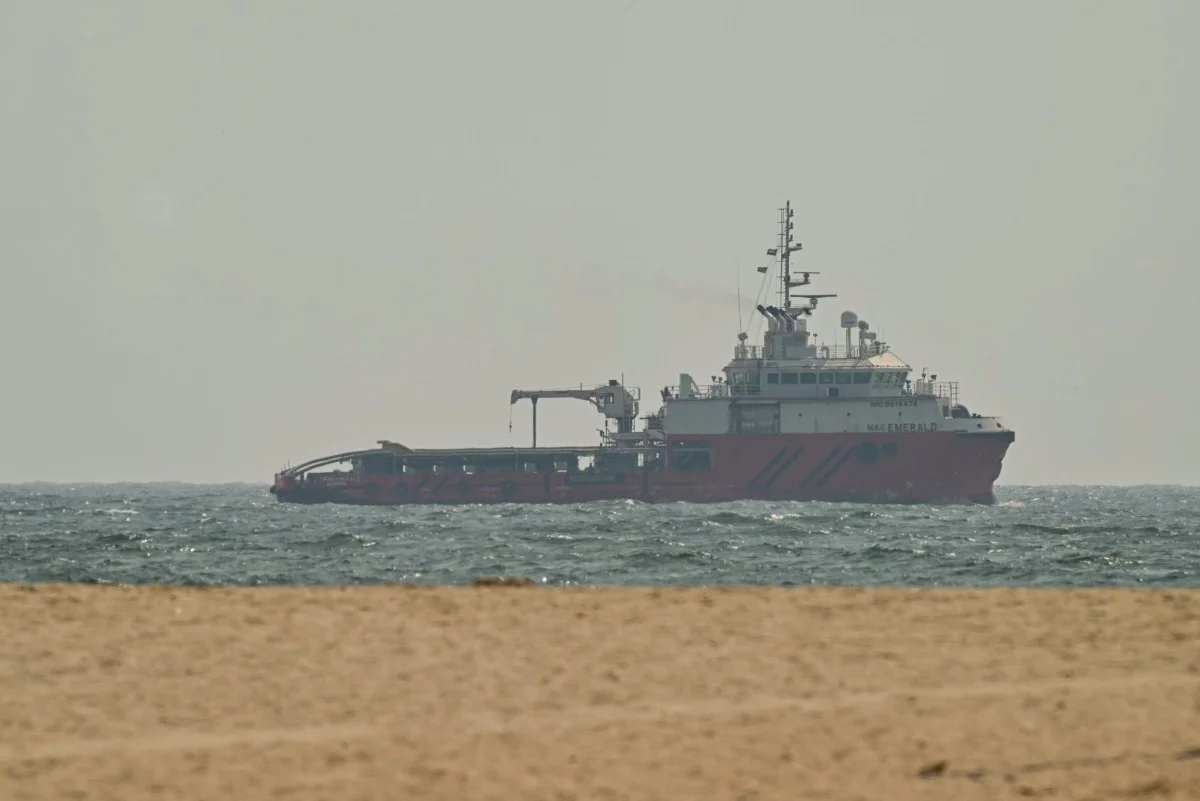
A ship sails off the coast of Ajman on July 10, 2026. | AFP photo

Iran said the Strait of Hormuz was closed on Sunday while the United States insisted it remained open, after the confrontation over the vital waterway again sparked US and Iranian strikes.

The strait, essential to global oil and gas supplies, has become a central point of contention between the two foes, repeatedly leading to exchanges of fire despite an agreement aimed at ending the Middle East war that was struck last month.

The latest exchange was prompted by another Iranian attack on a commercial ship in the waterway whose crew was forced to abandon it after it went up in flames.

Before the war began with surprise US-Israeli strikes against Iran on February 28, there was free passage through Hormuz, but Tehran now insists that it will control the strait, while Washington is adamant it cannot.

‘Following this incident... the Strait of Hormuz will be closed until further notice and until the end of American interventions in this region,’ Iran’s Revolutionary Guards said Sunday, according to state news agency IRNA.

The US military’s Central Command countered on X that the strait was ‘open to all vessels seeking to lawfully transit the international waterway’.

It said US forces were ‘positioned and prepared to ensure’ freedom of navigation, adding: ‘Iran does not control the strait. Traffic is flowing.’

Control of the waterway has become key leverage for Iran, with an adviser to the country’s supreme leader on Sunday saying it was more important than ‘dozens of atomic bombs’.

Iran said it had targeted two ships in Hormuz, accusing them of ignoring instructions to use an approved transit corridor or ‘violating regulations’, IRNA said.

The attacks prompted a barrage of US strikes across Iran in response, with the US military saying it had hit about 140 targets in its third round of attacks this week.

Iranian media reported explosions in Bandar Abbas, Sirik, Jask and on Qeshm Island, as well as in Khuzestan province, with one soldier reported killed in the southern city of Jask.

US president Donald Trump told CNN that ‘we hit them very hard last night’, and said the Iranian attack had come despite the two sides being close to a deal on Saturday.

‘They were giving up everything, and then all of a sudden two hours after that they hit a ship with a drone,’ he said

Iran’s response to the US strikes came quickly, with sirens and explosions heard in Qatar, the United Arab Emirates and Bahrain, AFP journalists and local authorities reported.

Qatar said three people were injured by Iranian attacks, while the UAE issued a warning for incoming missiles but later said they did not enter its territory.

Kuwait also said it was working to intercept an attack, and Jordan said three Iranian missiles fell inside the kingdom.

Iran’s Guards said they also hit Oman, which has rarely been targeted.

They claimed to have destroyed ‘the logistical support centres for naval vessels and the refuelling facilities for US aircraft carriers at the port of Duqm’.

Muscat summoned the Iranian ambassador and handed him a formal protest—a rare move for the sultanate, which has been attempting to balance competing demands from Washington and Tehran.

The attack came just hours after the country hosted Iran’s foreign minister to discuss the Strait of Hormuz.

Sunday’s attack on a Cyprus-flagged container ship in the waterway left one Indian sailor missing, New Delhi said.

Muscat, meanwhile, said it had rescued 23 crew members from a commercial ship.

Iran said it had fired ‘warning shots’, but the US military accused Tehran of ‘blatantly’ attacking the vessel.

The crew abandoned ship and were on a lifeboat, British maritime agency UKMTO reported, around 17 kilometres east of Oman.

Separate Iranian strikes on ships in Hormuz had triggered fighting earlier this week, along with heated rhetoric.

Iran’s supreme leader Mojtaba Khamenei has vowed revenge for the killing of his father and predecessor on the first day of the war, and said Iran had compiled a list of individuals to be targeted.

Trump on Saturday said any attempt to assassinate him would lead the United States to ‘completely decimate’ Iran.

He has declared the ceasefire over while leaving the door open for talks, and mediators have been trying to salvage a diplomatic solution.

The top diplomat for Pakistan, which has been mediating, called for ‘de-escalation’ on Sunday during a phone call with his Iranian counterpart, Islamabad said.

‘Dialogue and diplomacy remain the only viable path to resolving disputes and achieving lasting peace,’ said Foreign Minister Ishaq Dar.​
 

US, Iran must act responsibly

1784071957601.webp

Photo: Reuters/Files

Just when the world had begun to breathe a sigh of relief, the spectre of another devastating conflict has returned. The memorandum of understanding (MoU) signed by the United States and Iran to halt hostilities had raised hopes that diplomacy had finally prevailed over military confrontation. Negotiators from both sides were reportedly working towards a permanent agreement, financial markets responded positively, and oil prices began to retreat from their wartime highs. For a brief moment, the world believed that one of the most dangerous flashpoints in modern geopolitics might finally be cooling.

Those hopes have been shattered.

The renewed exchange of attacks last week has once again pushed the Middle East to the brink of a wider regional war. Beyond the immediate military implications, the latest escalation has reignited fears of a global economic slowdown, higher inflation and another humanitarian catastrophe. It serves as a stark reminder that in today's interconnected world, no conflict remains confined within national borders. A war between the US and Iran inevitably becomes the world's problem.

The most immediate casualty of renewed hostilities has been confidence in the global economy. During the height of the conflict, Brent crude oil prices surged dramatically, climbing from around $67 a barrel to nearly $113, as investors feared disruptions to supplies from the Gulf. Although prices began to ease after the ceasefire understanding was announced, they rose sharply again following the latest military exchanges, with Brent crude gaining nearly 5 per cent in a single trading session amid renewed concerns over regional stability. The sharp swings in energy markets underscore how vulnerable the global economy remains to geopolitical shocks.

The reason is simple. Nearly one-fifth of the world's seaborne oil trade passes through the Strait of Hormuz, the narrow waterway separating Iran from the Arabian Peninsula. Even the possibility that military action could disrupt shipping through this strategic passage is enough to send global oil prices soaring. Energy traders do not wait for supply disruptions to occur; they react to the risk itself. As a result, every missile launched and every military threat exchanged between Washington and Tehran reverberates through international markets within hours.

Higher oil prices are not merely an inconvenience for motorists. They affect almost every aspect of modern life. Fuel powers transportation, manufacturing, agriculture and electricity generation. When crude prices rise sharply, the cost of moving goods increases, airlines raise fares, shipping companies impose higher freight charges and factories face higher production costs. Those additional expenses are eventually passed on to consumers in the form of more expensive food, medicines, clothing and other essential commodities.

The consequences are particularly severe for developing economies. Countries such as Bangladesh, Pakistan, Sri Lanka and many African nations depend heavily on imported fuel while already struggling with inflation, foreign exchange shortages and mounting debt. Every increase in global oil prices widens trade deficits, puts pressure on national currencies and forces governments either to subsidise fuel at enormous fiscal cost or allow domestic prices to rise, further burdening ordinary citizens.

Bangladesh offers a telling example. As a net importer of petroleum products, the country remains highly vulnerable to volatility in global energy markets. Rising fuel prices increase transportation costs, raise electricity generation expenses and ultimately make food and essential goods more expensive. Export-oriented industries also face higher operating costs, reducing their competitiveness at a time when global demand is already slowing. What appears to be a distant geopolitical conflict therefore has direct consequences for millions of Bangladeshi households.

Wars invariably inflict their greatest suffering on civilians. Military targets may dominate headlines, but it is ordinary people who pay the highest price. Homes are destroyed, hospitals become overwhelmed, schools close, businesses collapse and families are displaced. Children lose access to education. Medical supplies become scarce. Entire communities live under the constant threat of airstrikes and missile attacks.

History offers painful reminders that wars are rarely as short or as limited as leaders initially anticipate. Once military retaliation begins, escalation often develops its own momentum. Miscalculations occur. Alliances become activated. Proxy groups enter the conflict. Diplomatic space narrows as public opinion hardens on both sides.

Neither the United States nor Iran can afford such an outcome.

The United States remains the world's most powerful military force, but decades of involvement in the Middle East have demonstrated that military superiority alone cannot deliver lasting peace. From Iraq to Afghanistan, overwhelming firepower has often failed to resolve complex political disputes. Sustainable peace requires diplomacy, compromise and long-term political engagement rather than perpetual military confrontation.

Iran, meanwhile, has shown remarkable resilience despite years of sanctions and economic isolation. Yet resilience does not eliminate vulnerability. Continued conflict further weakens its economy, discourages foreign investment, reduces employment opportunities and deepens the hardship already experienced by millions of ordinary Iranians. The country's long-term development cannot be secured through endless confrontation.

The international community also has much at stake.

The recently signed MoU demonstrated that dialogue remains possible despite profound differences. It represented an important acknowledgment by both sides that military confrontation cannot provide a sustainable solution. That diplomatic foundation should not be abandoned because of renewed tensions. Instead, it should be strengthened through continuous negotiations, confidence-building measures and credible mechanisms to prevent future military incidents.

Compromise will inevitably be required.

Neither Washington nor Tehran is likely to achieve every objective it seeks. That is the nature of diplomacy. Successful negotiations are rarely about absolute victories. They are about finding practical solutions that serve the broader interests of peace and stability.

The United States may need to recognise that long-term regional security cannot be achieved solely through military pressure or economic sanctions. Iran, for its part, must reassure the international community that its regional activities will contribute to stability rather than further escalation. Both governments should place the welfare of their citizens above political symbolism or strategic posturing.

Responsible leadership is not demonstrated by refusing to make concessions. It is demonstrated by possessing the courage to pursue peace even when compromise carries domestic political costs.

The United Nations, regional powers and influential international partners must also intensify diplomatic efforts. They should encourage sustained negotiations rather than merely reacting after violence has erupted. Preventive diplomacy is invariably less costly than post-conflict reconstruction.

Time is running short.

Every additional day of military confrontation increases the possibility of a catastrophic miscalculation. A single mistake, an unintended strike or an escalation involving regional allies could rapidly transform a bilateral conflict into a broader regional war with unpredictable global consequences. Once such a conflict expands, diplomatic options become significantly more difficult.

The stakes extend far beyond Washington and Tehran. Billions of people depend upon stable energy markets, secure international shipping lanes and a peaceful Middle East. Farmers, factory workers, transport operators, exporters, students and families across the world all bear the economic consequences of decisions made thousands of miles away.

The world has witnessed enough destruction. It has seen too many conflicts that promised swift victories but instead produced decades of instability, displacement and economic hardship. Humanity cannot afford another avoidable war.

This is not the time for ego, political grandstanding or displays of military strength. It is a moment that demands wisdom, restraint and statesmanship. The United States and Iran must return to meaningful negotiations with sincerity and urgency. They should honour the spirit of the understanding they had already reached and demonstrate that diplomacy remains stronger than warfare.

Peace may require difficult compromises from both sides. But compromise is not a sign of weakness; it is the highest expression of responsible leadership. If Washington and Tehran truly seek security and prosperity for their peoples, they must choose dialogue over destruction.

Millions of lives -- and the stability of the global economy -- depend on that choice.​
 

Iran hacked Middle East mobile networks to track US personnel: Financial Times

1784072386216.webp


Iran has hacked mobile networks throughout the Middle East to track the locations of US personnel and contractors throughout the war, London’s Financial Times (FT) newspaper reports, citing telecommunications data from the Mobile Surveillance Monitor research project and quoting people familiar with the matter.

US lawmakers were alarmed by the information, the newspaper said, as they warned that roaming systems and smartphone advertising technology have left the military vulnerable to attack.

Officials in the Gulf suspected Iran or its allies of exploiting roaming agreements with local phone providers to try to locate US personnel, one person familiar with the matter told the FT.

A US official speaking on the condition of anonymity told the newspaper that actors linked to Iran had abused commercially available advertising databases to track phones in northern Iraq’s semiautonomous Kurdish region.

“Iran absolutely has capabilities to get real-time, immediate and continuous location information,” Gary Miller, a senior research fellow at the cybersecurity watchdog Citizen Lab who reviewed the data, was quoted as saying by the FT.

“It would surprise me very much if Iran were not using SS7, or mobile network access in the region, to track US users.”​
 

US expands sanctions targeting oil sector of Iran
Agence France-Presse . Washington, United States 15 July, 2026, 06:05

1784075587217.webp

Trucks wait to enter the Khor Fakkan Container Terminal, the only natural deep-sea port in the region and one of the major container ports in Sharjah Emirate, along the Gulf of Oman on July 14, 2026. | AFP photo

The United States on Tuesday expanded its sanctions targeting Iran's oil sector, taking further aim at the network of petroleum shipping magnate Mohammad Hossein Shamkhani, said the Treasury Department.

The move came after US forces carried out a fourth straight day of strikes against Iran and reimposed a naval blockade, with Iran in turn hitting ships in the Strait of Hormuz, according to the International Maritime Organization.

Iran started blocking the strait -- a key waterway for energy transit -- after US-Israel attacks in February. After which, Washington imposed an initial blockade on Tehran's ports from mid-April to mid-June.

'This action is part of Treasury's ongoing efforts to ramp up economic pressure on the Iranian regime after it resumed destabilizing attacks in the Strait of Hormuz,' the Treasury Department said in a notice Tuesday.

It charged that the Shamkhani network remains a key force behind Iran's oil exports, and has expanded into global commodities trading.

The latest move took aim at more than 50 individuals, entities and vessels that it said enabled Iranian authorities to reap profit.

The Treasury Department added that it has now imposed sanctions on over 200 individuals, entities and vessels operating under Shamkhani's patronage.

Shamkhani is the son of security official Ali Shamkhani, an advisor to Iranian supreme leader Ali Khamenei.

Both were killed February 28, the first day of US-Israeli attacks and the start of the Middle East war.​
 

US launches fresh strikes against Iran as escalation threatens shipping


1784168656054.webp

A vessel at the Strait of Hormuz, as seen from Musandam, Oman, Jul 15, 2026.

The US conducted a new wave of strikes against Iran's coastal defence systems and missile sites on Wednesday after reimposing a naval blockade of Iranian ports, while Iran threatened to shut off more regional energy exports.

The daytime strikes mark the latest escalation of attacks and counterattacks launched by the two sides as they vie for control of the Strait of Hormuz, which carried about a fifth of global oil and gas shipments before the war.

"At 6am ET (1100 GMT) today, US Central Command forces began launching a wave of strikes against Iran," the US military said.

"The strikes are designed to further degrade military capabilities Iranian forces have used to attack commercial shipping in the Strait of Hormuz."

Iran's Mehr news agency reported that US projectiles had hit a location on Iran's Hengam Island in the Strait of Hormuz.

US Central Command said the military had attacked coastal defence systems and cruise missile storage and launch sites on Iran's Greater Tunb Island, and had completed the wave of strikes within around 90 minutes.

That followed seven hours of strikes on Tuesday in which the US said it had hit dozens of military targets near the Strait of Hormuz and Iranian coastal areas.

In response, Iran's Islamic Revolutionary Guard Corps said on Wednesday it had struck US military targets in the region, including in Bahrain, Kuwait and Jordan.

It also threatened on Wednesday to shut off more regional energy exports, saying the US "must brace for the closure of all other export corridors that benefit the US and its allies".

An interim ceasefire deal in the conflict signed last month was meant to lead to further negotiations including on Iran's nuclear programme, and to a permanent truce, but a return to talks has faltered.

"We have no plans for negotiations at the moment and are focused on defence," Tasnim news agency quoted Iranian Foreign Ministry spokesperson Esmaeil Baghaei as saying.

He said the interim ceasefire was a set of mutual obligations, and as long as the US breached its commitments under the deal, Iran would refrain from fulfilling its own.

Hostilities have intensified since Iran said late on Saturday it had closed the Strait of Hormuz. The US says Iran had attacked seven commercial ships over the last week, leaving nearly a dozen crew members killed, missing or injured.

'End of America's Evils'

The war, which began with US and Israeli strikes against Iran on Feb 28, triggered Iranian attacks on Gulf states that host US bases and caused major disruption to global energy supplies, raising fears of a surge in inflation.

Oil prices fell back on Wednesday, after settling on Tuesday at a new one-month high.

Analysts say that while the US and Iran have gone back to sparring as they did before the interim ceasefire deal was signed, they are unlikely to return to full-scale war, though a risk of further escalation remains.

They say Iran is signalling it may use its Houthi allies in Yemen to shut Bab el-Mandeb, opening a new front against Washington and putting two of the world's most vital energy arteries at risk.

Bab el-Mandeb links the Red Sea to the Gulf of Aden, through which Saudi oil exports and a substantial share of global shipping pass. Some shippers have been returning to Red Sea routes after being deterred by Houthi attacks linked to the Gaza war that began in 2023.

As a result of this year's Iran war, Iran has been trying to assert permanent control over shipping in the Strait of Hormuz and to impose fees on vessels passing through it, in what would be a major shift of the balance of power in a region where the US has long acted as guarantor of security.

The IRGC said on Wednesday the Hormuz Strait would stay closed until what it described as "the end of America's evils".

Shipping data showed an uptick in Iran-linked ships passing through the strait before a new US blockade on Iranian ports took effect. The US said on Wednesday it had redirected two commercial vessels attempting to breach the blockade.

Trump Threatens to Hit Energy Targets

US President Donald Trump, who faces domestic pressure to avoid a full return to war, on Tuesday threatened to hit Iranian power plants and bridges next week unless Tehran resumes negotiations.

"I'll save the energy targets for last, but ultimately we'll hit energy targets," Trump said.

US negotiators had been in touch with their Iranian counterparts to tell them "you better make a deal," Trump added.

As tensions escalated, Trump on Monday floated the idea of a 20 percent fee on shipping through the strait. On Tuesday, he scrapped the idea and said, without providing details, that he would instead seek investment deals with Gulf states.

The war has killed thousands of people and displaced millions, mainly in Iran and Lebanon, where conflict restarted between Israel and Iran-backed militant group Hezbollah.

Iranian government spokesperson Fatemeh Mohajerani said at least 30 civilians had been killed in recent days due to the US strikes on southern Iran, state media reported on Wednesday.

Iran's army said at least seven active-duty and conscript personnel were killed in overnight US strikes on the Bampur military base in the country's southeast.​
 

US launches multiple strikes on Iran, which retaliates against US targets in region
  • Hostilities have intensified since last week​
  • Iran says it is in ‘existential war with America’​
  • Trump claims both that Iran wants to settle and will be defeated soon​
  • Detained US citizen is released by Iran, Trump says​

Reuters
Cairo/Dubai
Published: 16 Jul 2026, 10: 48

1784245388590.webp

Vessels in the Strait of Hormuz near the beach of Bandar Abbas, Iran, on 30 June 2026via REUTERS

The US launched two waves of attacks on Iran’s coastal defenses and missile sites on Wednesday after reimposing a naval blockade of its ports, while Iran struck back by targeting US military sites in neighboring countries in what it called an “existential war” with America.

The latest escalation comes days after a fragile truce collapsed, raising the specter of a return to full-scale war, with Iran once again threatening to shut off more regional energy exports.

Hostilities have intensified since Iran said late on Saturday it had closed the Strait of Hormuz. Military operations are also keeping ships from transiting the vital artery, which carried about a fifth of global oil and gas shipments before the war. Brent crude oil, the international benchmark, closed at a one-month high of $84.95 a barrel on Wednesday.

US Central Command said the military had attacked coastal defense systems and cruise missile storage and launch sites on Iran’s Greater Tunb Island starting around 6:00 am EDT (1000 GMT), then launched a second wave of strikes against multiple cities nine hours later.

“US forces struck Iranian command centers, air defense sites, missile and drone capabilities, and coastal surveillance facilities,” it said in a statement, adding it also hit targets in Bandar Abbas, home to Iran’s largest port and key navy and Iran’s Revolutionary Guards facilities on the Strait of Hormuz.

“Earlier this morning, American forces struck coastal defense and cruise missile sites on Greater Tunb Island during a 90-minute wave,” the US military added.

The Islamic Revolutionary Guard Corps said on Wednesday it had struck US military targets in the region, including in Bahrain, Kuwait and Jordan. The Guards said they targeted a gathering for US military personnel and a radar system at Ali Al Salem air base in Kuwait with a missile and drone attack.

Three US officials told Reuters that US strikes aimed at forcing open the strait are also targeting Iranian military capabilities the US would want to destroy before executing more complex operations.

The US military also said it disabled an unladen oil tanker attempting to sail toward Iran’s Kharg Island after it ignored multiple warnings, firing Hellfire missiles into the ship’s smokestack. Since resuming a naval blockade against Iran on Tuesday, the US has redirected two ships and disabled another, the military said.

Iranian news media reported a series of explosions, mainly in coastal areas such as Bandar Abbas. Other explosions or projectile strikes were reported around the city of Ahvaz, just inland from the northern end of the Gulf, and Konarak, Sirik and Qeshm in southern Iran.

Press TV reported at least two explosions in the central Iranian city of Khondab, about 250 km (155 miles) southwest of Tehran. Mehr news agency reported Iran activated its air defenses in Tehran to counter “hostile threats.”

Iranian state broadcaster IRIB reported that the US attacks struck near a hospital in Ahvaz that houses a pediatric cancer center, forcing the temporary evacuation of the hospital. Families have come out to the streets around the hospital to care for their children, the Islamic Republic of Iran Broadcasting (IRIB) said.

After the first wave, Tehran’s top negotiator Mohammad Baqer Qalibaf issued a statement declaring that Iranian security depended on maintaining what he called “Iranian arrangements” in the strait.

“We are in an essential and existential war with America,” Qalibaf said.

The war has killed thousands of people and displaced millions, mainly in Iran and Lebanon, where conflict restarted between Israel and Iran-backed militant group Hezbollah. In July alone, US attacks have killed 35 people, Tasnim reported, citing a health ministry official.

Trump says Iran wants to settle

Trump struck a triumphant note, as he has repeatedly since the US and Israel started hostilities on February 28, saying, “We’ll have Iran defeated soon. They’ll be defeated very soon.”

Speaking at a roundtable event at the Pennsylvania Defense and Innovation Summit, Trump also claimed the Iranians want to “settle so badly.”

“They don’t like what we’re doing, and they do want to settle. We’ll find out whether or not we settle with them, or we just finish it off,” Trump said.

On Tuesday, Trump said US negotiators had been in touch with their Iranian counterparts to tell them “you better make a deal.”

Iran’s military spokesperson said that the only way to reopen the Strait of Hormuz was for the US to comply with the 14-point memorandum of understanding that the two sides signed in June, and the implementation of “Iranian regulations” regarding ship traffic in the strait.

Even amid the hostilities, there was a possible sign of goodwill. Trump said Iran had allowed an American who was “wrongfully detained” under the Biden administration in 2024 to leave the country.

“The United States of America appreciates this gesture of Goodwill by Iran,” Trump wrote on Truth Social.

Human rights attorney Jared Genser identified the released American as Dena Karari, who had been prevented from leaving Iran since December 2024.

“Dena is now safe and traveling back to the United States,” Genser wrote on X, thanking Trump for his efforts to free her.​
 

Trump’s new Hormuz gamble: Will Iran back down?

Zahid Hussain

The tentative ceasefire has effectively collapsed even before the US and Iran could begin technical-level talks. Renewed American strikes and Iranian retaliation now threaten the interim deal barely a month after it was signed. The two countries are sliding back towards war: Donald Trump has announced the resumption of the blockade, while Iran has closed the Strait of Hormuz. The US president has also notified Congress that the conflict with Iran is on.

Trump’s escalatory rhetoric — threatening to seize control of the strategic waterway and charge other countries for guarding it — may be dismissed as one of his usual bombastic flourishes, yet it has added to the tension. America’s escalation, coming a day after the delayed funeral of the supreme leader, Ayatollah Ali Khamenei, who was killed on the first day of the war on Feb 28, has stoked public anger in Iran. Many are calling for revenge.

Although a return to full-fledged war may not be imminent, the latest developments have made it far harder to reach a negotiated peace deal. The situation is half-war, half-peace, keeping the world on edge. The latest hostilities were apparently triggered by the strikes of Iran’s Revolutionary Guard on two tankers passing through the Strait of Hormuz for failing to follow instructions.

America went to war by choice, albeit under pressure from Israel. It is now getting more and more entangled in a situation from which it will find it hard to extricate itself. Trump, with his country’s massive military power, may be able to destroy Iran completely, but that may not bring the war to an end.

There may be an element of truth to the argument that Iran, by targeting Qatari and Saudi tankers, has overplayed its leverage, giving Trump an opportunity to hit back. But it is also a fact that Iran’s action was provoked by the US attempt to guide commercial ships via the Omani route. Iran insists that its own waters offer the only viable route through the Strait of Hormuz for commercial vessels. For Iran, control of the strategic strait has become a key source of leverage; one Iranian official is quoted as saying it is more important than “dozens of atomic bombs”.

The latest events will make it far harder for Iran and the US to reach a negotiated peace deal.

Indeed, the Iranian action could have been avoided, but the US response was extraordinarily severe. The US strikes have mainly targeted civilian infrastructure, and Trump has rescinded the two-month sanction relief on Iranian oil exports.

The move may severely damage an already collapsing Iranian economy, yet there is no sign of Iran capitulating. Its retaliatory strikes on US bases in surrounding Gulf countries demonstrate Tehran’s continued military capacity to hit back. Taken together, the hostilities have pushed the situation back to where it stood before the ceasefire and temporary peace deal — in fact, it has grown even worse.

1784246269620.webp

Iran-linked vessels pass through Hormuz ahead of US blockade as seen from Musandam, Oman, July 8, 2026. Photo: REUTERS

Iran’s retaliatory strikes have also strained its relations with the Gulf countries, which had appeared to ease after the ceasefire. The closure of Hormuz may not go down well with other countries that had stayed out of the US aggression. The spike in international oil prices could worsen an already recessionary situation.

Most alarming is the fact that the conflict could expand across the region and beyond. Interestingly, Iran’s nuclear issue, which the US described as the main reason for going to war, has receded into the background, while Hormuz, which was not an issue at all when the war started, has become the major point of contention.

Trump’s latest move — seeking control of the waterway and charging commercial vehicles 20pc on cargo value for protection services — has added a more explosive dimension. “I want to be reimbursed because we’re protecting a very rich portion of the world, we’re spending money, and … we are going to be reimbursed for protection,” Trump said. His words mark a dramatic shift in US policy and violate global norms of freedom of navigation. Any such move would heighten tension and cause further economic disruption in the region and beyond.

The contest has now turned into a battle for Hormuz. America and other countries had opposed Iran’s control of the strait and suggestion to charge a toll. Trump’s latest ambition to control Hormuz and collect service charges from oil-rich states amounts to an expansion of the military conflict. Most analysts, however, point out that many of his threats have never materialised.

Trump’s latest move — seeking control of the waterway and charging commercial vehicles 20pc on cargo value for protection services — has added a more explosive dimension. His words mark a dramatic shift in US policy and violate global norms of freedom of navigation. Any such move would heighten tension and cause further economic disruption in the region and beyond.

America went to war by choice, albeit under pressure from Israel. It is now getting more and more entangled in a situation from which it will find it hard to extricate itself. Trump, with his country’s massive military power, may be able to destroy Iran completely, but that may not bring the war to an end.

The collapse of the ceasefire, the resumption of American military strikes and the blockade of Iran have made it difficult to bring the negotiation process based on the 14-point MoU back on track, though neither side has rejected talks. The situation has made the task of Pakistan and other mediating countries very hard. One wonders whether the mediators can play any meaningful role at all now.

Each side wants a peace deal on its own terms. One can understand Iran’s position as the party aggressed against and defending its sovereignty. But Trump’s whimsical and imperialistic designs have pushed the region into its worst crisis in recent history, with global implications. Meanwhile, Israel, which has opposed the interim peace agreement, now sees a fresh opportunity to restart the war. Its Defence Minister Israel Katz said last week that his country was prepared to resume its military campaign against Iran if needed, vowing to do so “with even greater force”. Israel has already extended its war deep into Lebanon, occupying a large part of the country despite the US-brokered ceasefire. A renewed Israeli attack on Iran would turn into a wider conflagration — which is what the Zionist state wants. Trump’s latest escalation fits in with Israel’s strategy to destroy Iran, thereby eliminating any resistance to its expansionist designs.

A renewed US-Israel war on Iran is likely to place Pakistan, which mediated the ceasefire and secured the MoU, in a precarious diplomatic situation. It remains to be seen how the Pakistani leadership, which has so far been basking in the international limelight, will steer the country through this critical period.

This article was first published under the title “Back to war" in Dawn, an ANN partner of The Daily Star, on July 15, 2026.

Zahid Hussain is an author and journalist.​
 

Latest Posts

Back