Wars 2026 02/28 Israel-Iran War 3.0

Wars 2026 02/28 Israel-Iran War 3.0
318
5K
More threads by RayKalm

G War Archive

Iran calls Trump’s Hormuz claims lies
Agence France-Presse . Tehran, Iran 14 August, 2026, 00:53

Iran’s military on Thursday rejected as ‘lies’ remarks by US president Donald Trump claiming control of the Strait of Hormuz, saying the strategic waterway was fully under Iranian control.

‘The false claims of the United States that ships are passing through the Strait of Hormuz normally are nothing more than lies and fabrications,’ said Ebrahim Zolfaghari, the spokesperson for Iran’s central military command, Khatam-al Anbiya.

‘The Strait of Hormuz is, as in the past, under the complete management and control of the Islamic Republic of Iran, and no commercial ship or tanker without the permission and supervision of the powerful Iranian armed forces has had and will have the possibility of safe passage through this strait,’ he said in a video carried by state television.

Iran has kept control of Hormuz, a vital energy conduit, since the outbreak of the war in the Middle East on February 28, requiring vessels to obtain permission and pay transit fees before using the waterway.

In a Wednesday Truth Social post, Trump claimed that the US ‘has total control over the Strait of Hormuz. I THINK WE WILL KEEP IT!’

‘Our Naval Blockade is being called, by everyone, ‘A WALL OF STEEL,’ and there is nothing Iran can do about it,’ he added.

On Thursday, the head of Iran’s paramilitary Basij forces under the Revolutionary Guards also said that the strait was under Iranian control.

‘Today, you see that the Strait of Hormuz is under the management and control of the Islamic republic, and our country continues on its path in complete security,’ said Hossein Taeb according to state television.

Iran’s top diplomat Abbas Araghchi on Thursday said the US makes miscalculations in regard to the waterway.

‘The US has long miscalculated due to intelligence failures. Case in point: The war on Iran. Now, an even bigger miscalculation on the Strait of Hormuz,’ he said on X.

Iranian parliamentarian and member of the national security commission Behnam Saeedi said the strait is closed to US and Israeli ships.

‘Ships belonging to the Zionist regime will not have the right to pass through the Strait of Hormuz under any circumstances, whether in war or peacetime,’ he told state TV, adding that ‘US military ships will also be barred from passing through the Strait’.

Iran and Oman have been in talks to establish a new route through the strait, but negotiations have not yet been finalised.

Tehran, however, says even if the talks produce a new route, that would not on its own open the waterway unless the US meets Iran’s demands.

Meanwhile, Iran warned on Thursday of environmental degradation in the Strait of Hormuz after an oil spill reached its southern Qeshm island, calling for compensation from those responsible.

Foreign ministry spokesman Esmaeil Baqaei said the slick had ‘degraded the waters’ of the Gulf and Sea of Oman, claiming ‘preliminary evidence indicates a foreign bulk carrier as the source’.

TankerTrackers, a US-hosted website that monitors shipping movements worldwide, said however that the spill seemed to derive from an Iranian attack on bulk carrier Minoan Pioneer in Omani waters on August 3.

‘The spillage then drifted across the strait over to Iran,’ it said.

Baqaei wrote on X that such spills have in ‘recent decades imposed trillions of dollars in damage on Iran’s coastal areas’, calling for compensation.

‘Every party that benefits from commercial shipping through the Strait of Hormuz carries both a legal and a moral obligation to remediate the environmental harm inflicted,’ he added.

The spill had reached Qeshm island but had been ‘almost completely cleaned up by Wednesday evening’, said Habib Masihi, head of the environmental protection department in Iran’s southern province of Hormozgan.

He said about 32,000 square metres of coastal area had been affected along with waters covering 90,000 square metres.

‘The oil pollution on the southern coast of Qeshm is just one example of the widespread pollution that has destroyed the region’s marine ecosystem over the past few decades,’ added Sheena Ansari, the head of Iran’s Environmental Protection Organisation.

‘Who is responsible for compensating for the damage? The countries consuming energy exports from our region or the aggressors who have made this region a staging ground for military operations?’ Ansari posted to X on Thursday.

Iran has maintained control over the Strait of Hormuz since the outbreak of the Middle East war on February 28, blocking the passage of ships carrying energy exports from US-allied countries in the Gulf.

It has said it plans to charge navigational fees from passing vessels to fund services including environmental protection.

The United States and some regional countries have expressed opposition to any fees.

The spill comes after another slick in recent days near neighbouring Oman from a tanker that ran aground.

An AFP investigation previously found the ship had been stranded for weeks near Oman’s Al-Qibliyyah island after it was damaged by explosions.​
 

Trump wants more economic pressure on Iran. What are his options?


1786922960118.webp

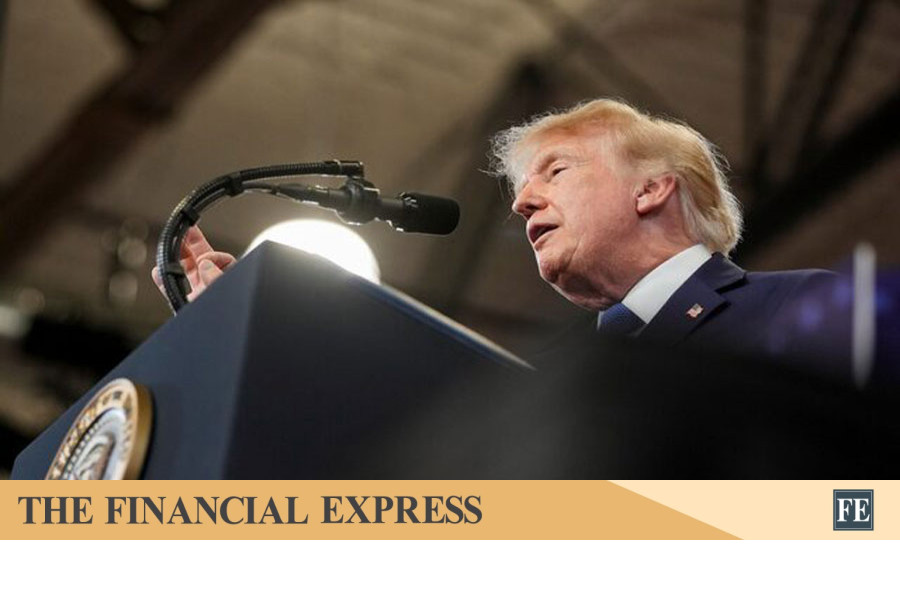
US President Donald Trump delivers remarks at David S. Mack Center for Training and Intelligence in Garden City, New York, US, August 14, 2026. Source: REUTERS/Ken Cedeno

US President Donald Trump on Friday vowed to hit Iran hard economically, a day after Treasury Secretary Scott Bessent said that Washington would impose measures on Tehran that have "never been seen" as soon as next week.

The United States, United Nations and European Union have applied sanctions, implemented trade embargoes and frozen assets since the late 1970s over Iran's nuclear program, human rights violations and support for militant groups.

Since the Iran war began in February, Washington has levied additional maritime, energy and financial sanctions and started a naval blockade.

Data from the US Treasury Department's Office of Foreign Assets Control (OFAC) shows the agency has imposed sanctions on more than 1,000 people, vessels and aircraft since Trump began his second term.

Recent measures have targeted Iran's shadow oil fleet; shipping insurers; entities and people enabling Iran's acquisition of weapons; and digital exchanges, freezing an estimated $500 billion in Iran-linked cryptocurrency.

Experts say the Trump administration also can try these options:

SANCTIONS ON CHINESE 'TEAPOT' REFINERS

Chinese independent refineries known as "teapots" account for a quarter of Chinese refinery capacity. They operate with narrow and sometimes negative profit margins.

China buys more than 80 per cent of Iran's shipped oil, according to 2025 data from analytics firm Kpler. Independent refiners absorb much of this trade, exposing them to so-called secondary measures ⁠that penalize entities helping a primary sanctions target.

Past US sanctions have deterred larger independent refiners from buying Iranian oil. But the independent refineries are somewhat immune since they have little exposure to the US financial system, sanctions experts say.

SANCTIONS ON CHINESE BANKS

OFAC has imposed secondary sanctions on smaller China- and Hong Kong-based entities accused of processing billions of dollars in Iranian oil and helping to fund weapons procurement.

Treasury has warned two larger Chinese banks they could face secondary sanctions if Iranian funds were found moving through their systems, but has stopped short of designating them.

Hitting those two banks, which US officials have not publicly identified, or imposing other sanctions could have a chilling effect on bigger financial institutions, sanctions experts said, although they warned it could also trigger retaliatory actions by Beijing.

Trump administration officials have sought to play down tensions between Washington and Beijing ahead of an expected meeting between Trump and President Xi Jinping later this year. They worry that China could curtail exports of critical minerals that are essential to advanced technology production at a time when the US and Western allies are still trying to develop their own supplies.

'WHACK-A-MOLE'

The United States could continue targeting Iranian individuals and entities, as well ⁠as others in China and the Gulf, that are helping Tehran evade sanctions to collect revenues for its war effort.

Treasury recently issued sanctions against firms that are springing up to facilitate Iran's trading of oil revenue for imports. But such measures amount to a "whack-a-mole" approach that has not altered Iran's behavior, said Brett Erickson, managing principal of Obsidian Risk Advisors, noting that Tehran simply creates new entities to replace them.

Miad Maleki, a sanctions expert with the Foundation for Defense of Democracies, said Bessent was likely signaling a sharpened enforcement push against oil shippers, purchasers and currency exchangers who help Iran pay for its imports.

Further aviation sanctions were also possible, aimed ⁠at degrading Iran's ability to move trade now that the US has blockaded shipping via the Strait of Hormuz, he added.

LAND BLOCKADE

Some US and Israeli officials have floated the prospect of a land blockade, which would require assistance from Iran's neighbors: Iraq, Turkey, Pakistan, Afghanistan, Turkmenistan, Azerbaijan and Armenia.

The Trump administration has varying degrees of closeness with all those countries except Afghanistan, but that border is mountainous and extremely difficult to patrol anyway.

Trump may ⁠have leverage over Pakistan, which recently sought a $10 billion currency swap line from Treasury, and Turkey, which is seeking to rejoin the US F-35 warplane program.

A land blockade could increase pressure on the Iranian people by halting their imports of food, energy and textiles, but experts say such a move would be difficult to execute and might not result in protests or internal pressure.

SECONDARY TARIFFS

Trump has repeatedly ⁠threatened tariffs on goods from countries that do business with Iran, although the Supreme Court struck down the legal basis for such taxes.

The Senate passed a sweeping Russia sanctions bill last week that included new Iran sanctions and would give Trump new tariff powers that he could potentially use against countries that aid Iran's commerce and weapons procurement.

That legislation must still pass the US House of Representatives, which could prove challenging given widespread concerns among Democrats and some Republicans about the tariff measures.​
 

Strait of Hormuz be closed, opened under Iran's command: Deputy Foreign Minister

AFP
Tehran

1786924326639.webp

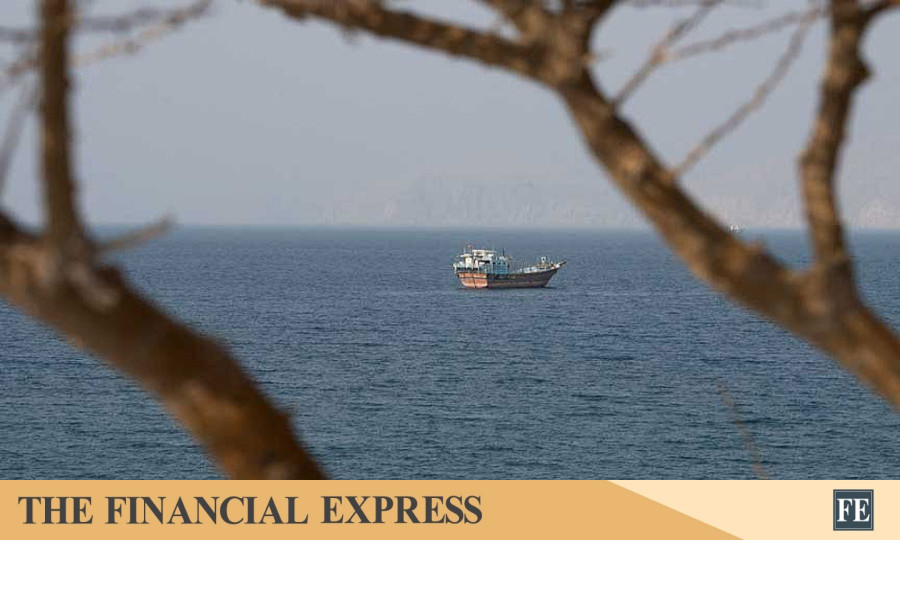
The Strait of Hormuz Reuters file photo

Iran on Saturday fired back at US President Donald Trump's claim that he would soon declare the Strait of Hormuz part of US territory, saying the crucial energy waterway it has blockaded "will remain Iranian".

Trump has repeatedly said the strait, which Tehran effectively closed at the start of the Middle East war in late February, is under US control -- an assertion the Islamic republic denies.

"The Strait of Hormuz has been Iranian, is Iranian, and will remain Iranian," Iranian Deputy Foreign Minister Kazem Gharibabadi said on X.

"This strait will only be closed and opened under Iran's command."

Trump told a political rally in New York state on Friday that after the US defeats Iran, "pretty soon I'll be declaring the Hormuz Strait a territory of the United States".

"It's true," he added.

An unnamed White House official later clarified that Trump was joking, the Wall Street Journal reported.

Last week, a top Iranian official laid out a laundry list of conditions for reopening the strait, including an end to the "war and aggression against Iran and its allies in Lebanon, Palestine, Yemen, and Iraq".

Mohammad Bagher Zolghadr also demanded the end of crippling sanctions, the release of frozen assets and compensation for wartime damage.

Ongoing attacks

As diplomacy stalls between the decades-long foes, attacks in the Hormuz strait have continued, highlighting the continued risks to regional shipping.

United Arab Emirates' state-owned oil giant ADNOC said Saturday one of its vessels came under attack the night before.

On Friday the Gulf nation blamed Iran for other attacks on two vessels linked to ADNOC as they passed through the strait.

Such attacks led to the collapse of an April ceasefire between the United States and Iran.

As Iran throttles traffic in Hormuz, its Houthi allies in Yemen have also declared a parallel maritime blockade on Saudi ports in the Red Sea, the oil-exporting giant's only other maritime route.

A June deal between Washington and Tehran -- meant to serve as a jumping-off point for negotiations on a permanent settlement -- had said Iran and Oman would hash out future arrangements for the strait in discussion with other Gulf countries and "in line with the applicable international law".

Before the war, Hormuz carried around a fifth of the world's oil and LNG exports, and prices have repeatedly surged since the dispute over the waterway erupted, piling economic and political pressure on Washington.

Iran wants to control the strait and charge tolls, powers it did not exercise before the war and a development that the US would fiercely oppose.

The closure of Hormuz has driven up prices for American voters, creating a political headache for Trump as November's midterm elections near.

US Vice President JD Vance said this week that Washington's top priority in the Iran war was keeping energy prices low for Americans, with preventing Tehran from acquiring a nuclear weapon ranking second.

Tehran signalled last week that it had agreed with Oman a route for ships to transit the strait and were finalising arrangements to jointly manage the waterway.

The US has imposed its own retaliatory blockade of Iranian ports in an attempt to cripple its economy.

"We have the blockade. No ships get through unless we want them to," Trump said to a cheering crowd of supporters on Friday.​
 

Iran offers reward for killing US soldiers
Agence France-Presse . Tehran, Iran 16 August, 2026, 23:41

1786925820875.webp


Iran’s military announced on Sunday that it was offering a bounty equivalent to $30,000 for killing or capturing US soldiers, with the reward doubled if carried out by a woman.

Army chief Amir Hatami said the plan had been drawn up following a ‘large number of requests’ to participate, according to the IRNA state news agency.

There has been no known deployment of US ground forces in Iran during the Middle East war, with the exception of a rescue mission in April for a downed American airman.

Hatami did not provide any details on where or when the killing or capturing of US soldiers was expected to take place.

‘Anyone who kills or captures and hands over an invading American military personnel will receive a reward equivalent to $30,000 or 5 billion tomans from the Islamic Republic of Iran’s Army,’ Hatami said, using an informal unit equivalent to 10,000 Iranian rials.

‘Courageous Iranian women who carry out such an action will receive double the reward,’ he added.

Hatami repeated Iran’s call for the US to leave the Middle East, and said ‘they no longer have permission to enter the Persian Gulf, the Gulf of Oman or the Strait of Hormuz’.

The war between Tehran and Washington began on February 28 when the United States and Israel attacked Iran.

Just over a month into the war, the US launched a massive rescue operation to retrieve the weapon systems officer of an F-15 jet, involving around 200 US troops and more than 170 aircraft racing to find the airman ahead of Iranian forces.

During the rescue, Iranian troops damaged an A-10 ground attack aircraft which was ditched over friendly territory. The US also reportedly abandoned and destroyed aircraft used during the mission including a C-130 transport plane.

Days before, the pilot of the F-15 was rescued by a helicopter crew in a smaller operation.

The war was later paused by an April ceasefire after nearly 40 days of fighting, followed by a June framework for peace talks that later collapsed.

Iran and the United States have since traded fire sporadically, with fighting mainly centred in southern Iran and around the Strait of Hormuz.

Indirect contact between the two sides via mediators has continued with little sign of any diplomatic breakthrough. Iran has also set out a list of demands for reopening the strait, including war damages.

The number of US military personnel killed since the start of the war stands at 17, with the most recent deaths in July. They have all been killed outside of Iran, in countries including Jordan and Iraq.​
 

Iran threatens to go on offensive in Strait of Hormuz if diplomacy with US fails


1787009913488.webp

A vessel near the Strait of Hormuz, as seen from Musandam, Oman, Aug 17, 2026. Source: REUTERS/Stringer

Iran has decided to shift its policy from defensive to "fully offensive" due to the deadlock in efforts to agree a permanent end to its war with the United States, a senior Iranian official told Reuters on Monday.

Progress towards peace talks and a resumption of oil tanker traffic through the strategic Strait of Hormuz has ground to a halt, with no sign that the warring parties are moving towards ending the conflict that the US and Israel launched on Feb 28.

"Iranian entities must be prepared to escalate tensions in the Strait of Hormuz and wider region, as Iran will be ready to make decisions and take action on difficult decisions," the Iranian official said, adding that Tehran would conduct a "timely and precise" military attack to break the US naval blockade if diplomacy failed.

There was no immediate response to those comments from Washington, but US President Donald Trump said in a phone interview with Fox News on Monday that Iran "should put up the white flag of surrender".

Throughout the conflict, Trump has alternated between threats of escalation and assertions that a peace deal is imminent.

Trump Threatens To Bomb Oman

Monday marked the day by which Iran and the United States were expected to reach a final deal under a memorandum of understanding agreed in June and aimed at ending the war.

Signed on Jun 17, the MoU set out a 60-day timeframe, extendable by mutual consent, by which Washington and Tehran should reach a broader agreement on issues including limiting Tehran's nuclear programme and lifting US sanctions.

That interim deal, which declared the "immediate and permanent termination of military operations on all fronts", quickly unravelled, however, due to a dispute over control of the Strait of Hormuz, the narrow waterway through which a fifth of global oil and liquefied natural gas flowed before the war.

Tehran said point 5 of the MoU gave it the right to manage the strait, which it shares with Oman, while Washington rejected that interpretation. Hostilities resumed as Tehran began firing on vessels it said were trying to sail through the waterway on an unapproved route.

Trump said on Jul 7 that the pact was "over". Tehran has repeatedly accused Washington of consistently violating its commitments.

"Within the short period of a few weeks set by Iran, all the agreement's provisions must be implemented by the US This is a precondition for further negotiations with the US," the Iranian official told Reuters, adding that mediators would share Tehran's deadline with Washington and regional states.

Tehran has separately been negotiating an agreement with Oman over management of the strait, seen as a key component of a wider deal, and says they are close to agreement, although progress has been slow.

"If Oman gets in the way, we'll bomb the *&*&*&*& out of them," Trump told Fox.

There was no immediate comment from Oman.

Houthi Attacks Raise Fears Of Wider War

Thousands of people have been killed in the conflict, mainly in Iran and Lebanon, since the US and Israel launched attacks on Iran at the end of February. Iran has struck US assets and infrastructure in countries including Oman, Jordan, Kuwait, Israel, the United Arab Emirates and Saudi Arabia.

Both Iran and the United States have stepped up rhetoric over the past week.

Trump warned Americans in a speech at a rally on Friday to prepare for continued high fuel prices as a result of the war, while also saying that "after we finish defeating Iran ... pretty soon I'll be declaring the Hormuz Strait a territory of the United States".

Earlier on Monday, Trump posted on his Truth Social platform: "The number one Goal is, and always will be, that Iran cannot have, in any way, shape, or form, a Nuclear Weapon", repeating one of his stated rationales for the war.

Benchmark Brent crude oil futures have surged since the start of the war in February, hitting a peak of $126 a barrel, roughly 75 percent above pre-war levels, with choppy trade reflecting concerns over disruptions to Gulf oil supplies and shifting signals on peace talks.

Brent crude rose slightly on Monday, to around $89 a barrel.

Attacks by Iran-backed Houthis in Yemen have also renewed concerns about a widening regional war and the economic fallout it could bring.

In the latest incident, the Houthis attacked what they called a Saudi military ship and four escort vessels in the Bab el-Mandeb Strait with missiles, according to the group’s military spokesperson Yahya Saree on Telegram on Monday. The strait is a strategic chokepoint connecting the Red Sea with the Gulf of Aden and an important international shipping route.

There was no immediate confirmation from Saudi authorities.​
 

Latest Posts

Back