[🇧🇩] Bangladesh Railway

[🇧🇩] Bangladesh Railway
97
6K
More threads by Saif

G Bangladesh Defense

Govt should change obsolete railway law to better services

THE state of the Bangladesh Railway’s legal framework is concerning. A New Age report says that efforts by successive governments to amends the 136-year-old British-era railway law with a view to improving passenger services, safety and preventing fraud have remained stalled for seven years without any tangible progress. Railways ministry officials say that the Railway Act 1890 needs to be revised to reflect technological advancement, incorporate provisions against digital fraud and update fines for various offences, many of which have become outdated and ineffective. They also say that the proposed reform would provide for harsher punishments for offences, improve passenger services and address allegations of underhand ticket sales by dishonest railway employees despite the introduction of online ticketing. The government has initiated a fresh review of the draft amendment to the law prepared during the previous administration after deciding that the earlier draft was inadequate. Officials, however, have indicated that the process of finalising the legislation will require further reviews and consultations and could still take several years. The proposed law with 157 sections is expected to replace the existing law and incorporate modern provisions aimed at better protection of passengers and railway property.

The prolonged failure to update the law has implications that extend far beyond an outdated statute. A legal framework that does not keep pace with technological and operational changes weakens the state’s ability to prevent emerging forms of fraud, hold offenders accountable and protect passenger rights. The introduction of online ticketing was expected to improve transparency. Yet, studies find that mismanagement, corruption and procedural weaknesses continue to undermine service quality and public confidence, indicating that technological innovation alone cannot overcome institutional shortcomings. The reported resistance of vested interests to stronger penalties further suggests that the reform process is constrained by institutional interests rather than guided by passenger welfare. Such resistance should reinforce, rather than weaken, the government’s resolve to enact meaningful reforms. The Anti-Corruption Commission earlier identified corruption in at least 10 areas of the Bangladesh Railway, including ticket sales, procurement, recruitment and land management, and recommended measures to improve accountability. The proposed legislation should, therefore, be accompanied by transparent implementation rules, digital audit mechanisms, regular independent oversight and defined accountability for officials responsible for enforcing the law. The new law is, otherwise, unlikely to deliver the institutional transformation necessary to improve governance, curb corruption and restore public confidence.

The government should, therefore, expedite the amendment process and ensure that the new law is accompanied by robust enforcement mechanisms, independent oversight and institutional accountability instead of allowing it to remain another delayed legal exercise. Legal reform will have little practical value if the institutions entrusted with implementing it continue to operate under the same culture of impunity that has impeded efficient railway services.​
 

Fast-tracking railway's latest master plan

1787354097109.webp


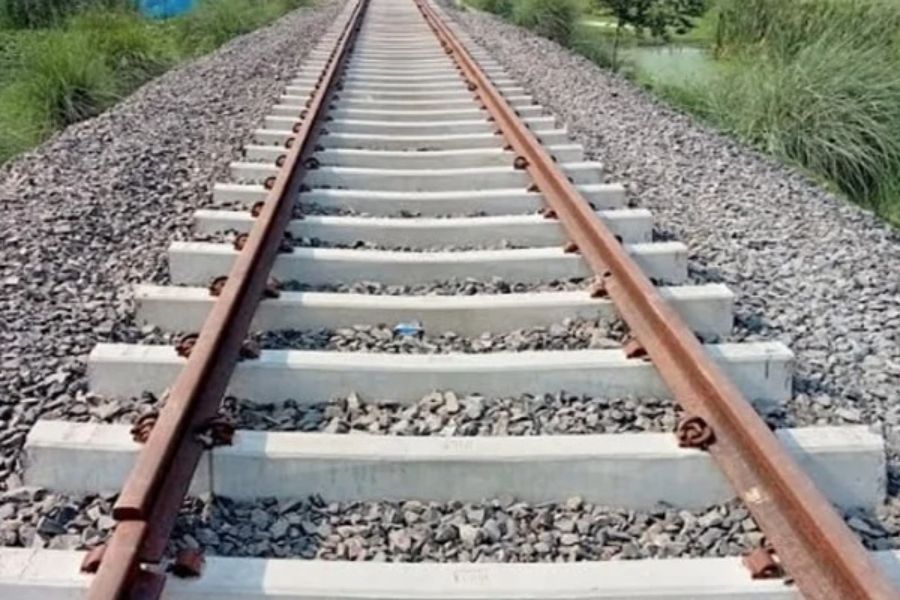
The Bangladesh Railway (BR), one of the oldest public transport systems in the country, has remained for far too long a neglected sector despite the railway emerging globally as the most modern, efficient and rapidly developing mode of land-based mass transport. Against this backdrop, the report that the BR has drafted its third master plan, envisaging an investment of around Tk2.9 trillion by 2060, is no doubt a development worth noting. The draft, prepared reportedly with BR's own resources, proposes 118 civil projects focusing on demand-based track development, electrification, unification of the mixed-gauge network and expansion of railway services to 10 more districts. Priority schemes include the Bogura-Sirajganj, Joydebpur-Ishwardi, Akhaura-Sylhet and Tongi-Bhairab dual-gauge double lines. What is more, the plan is expected to integrate track development with procurement of coaches and locomotives, maintenance facilities, workshops and manpower development. This is important because railway development cannot simply mean laying new tracks while trains, skilled hands and maintenance facilities remain in short supply.

Indeed, Bangladesh's experience with railway planning has not always been an enviable one. The first master plan, approved in 2013, envisaged 235 projects, while its revised version, approved in 2019, proposed 215 projects to be completed by 2045. Some important schemes including the Padma Bridge rail link and the Dohazari-Cox's Bazar line have since been completed, yet many projects under the existing plan are unlikely to be implemented within its stipulated period. Meanwhile, the country now has around 3,400 kilometres of rail network, but shortages of locomotives, coaches and operational facilities have often prevented the infrastructure already built from being utilised fully. More significantly, railway's share in freight movement remains below 5.0 per cent, though the government's transport strategy reportedly aims to raise it to at least 20 per cent. Small wonder that expansion of tracks alone has failed to transform the BR into a dependable passenger and freight carrier a densely-populated and fast-urbanizing economy needs. The third master plan should, therefore, learn from the mismatch between physical expansion and actual service delivery.

At this point, however, the government needs to distinguish between what can be delivered now and what necessarily belongs to the longer horizon. Projects capable of improving the quality, frequency and reliability of train services within the tenure of the incumbent government should be identified and put on the fast track. Issues like double-tracking congested corridors, completing missing links, modernising signalling, procuring adequate locomotives and carriages, introducing electric traction on suitable busy routes and so on are hardly ambitions that should remain on paper for decades. In particular, the proposed electrification of the Narayanganj-Dhaka-Joydebpur corridor and its extension towards Chattogram deserves serious attention. The point is that people should be able to experience visible improvement in railway service during the present government's term. Otherwise, another long list of projects extending to 2060 may end up becoming yet another catalogue of aspirations whose deadlines are repeatedly shifted and costs revised.

Long-term planning should not be confined to catching up with what other countries have achieved. Notably, high-speed rail is expanding rapidly, with over 56,000 kilometres in operation globally, and Bangladesh cannot indefinitely remain outside that transition. In fact, there is history of earlier moves to explore a high-speed railway between Dhaka and Chattogram. Even if today's fiscal realities do not permit immediate construction of such an expensive system, the third master plan should reserve corridors, undertake feasibility studies, protect land and create infrastructure standards compatible with high-speed trains. For a small, densely populated country where major economic centres are separated by manageable distances, faster rail can change the geography of travel, business and regional development. But visions for 2060 will have value only if today's basic railway is first made efficient, safe and reliable. So, the government would do well to act fast on achievable railway modernisation projects while laying the infrastructural groundwork for the high-speed railway in the future.​
 

US Ambassador highlights American engineering in Bangladesh’s railway connectivity

Staff Correspondent
Published: 01 Sep 2026, 20: 30

1788306978772.webp

US Embassy in Dhaka

US Ambassador Brent T Christensen visited Bangladesh Railway’s Central Locomotive Workshop in Parbatipur, where Bangladeshi technicians maintain American-made locomotives supporting passenger and freight transportation across the country.

The US Embassy in Dhaka said this in a press release sent to the media by US Mission spokesperson Poornima Rai on Tuesday.

1788307008930.webp

US Embassy in Dhaka

Ambassador Christensen toured the workshop, viewed a locomotive manufactured by US company Progress Rail, and met the Bangladeshi railway professionals who maintain the locomotives.

He then traveled by train to Saidpur, spoke with passengers, and visited the historic Saidpur Railway Workshop and Museum.

1788307041006.webp

US Embassy in Dhaka

Bangladesh Railway’s purchase of 40 Progress Rail locomotives demonstrates how US exports and technology can support Bangladesh’s infrastructure and development priorities.

The visit highlighted the practical and enduring value of expanded trade and commercial cooperation between the United States and Bangladesh.​
 

Bangladesh Railway plans first electric train project worth Tk 38.23b

Project likely to be placed before the ECNEC today


1789533602353.webp


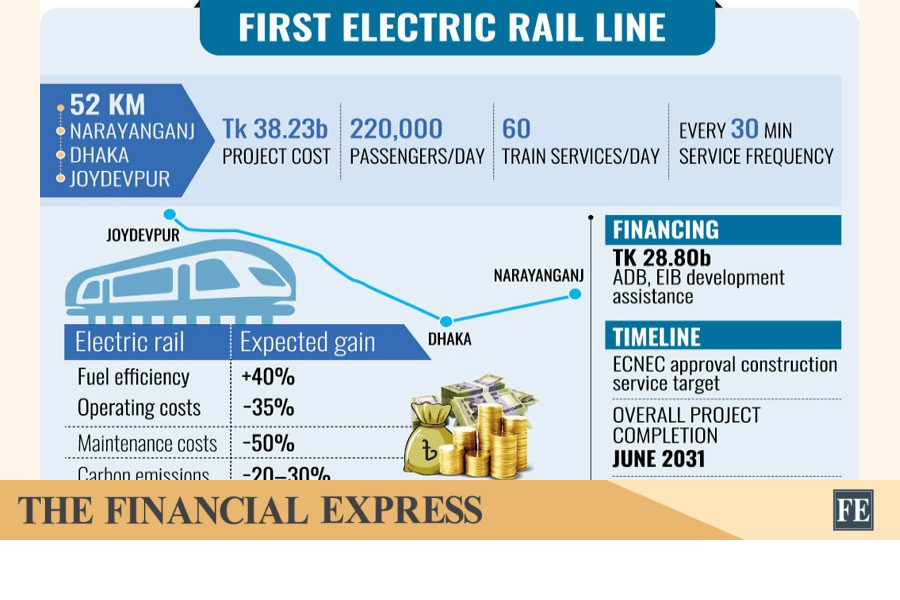
Bangladesh Railway is set to take its first major step towards electrifying the country's rail network with a Tk38.23-billion project to build an electric train line connecting Narayanganj, Dhaka and Joydevpur.

Upon its completion, the project aims to run 60 daily services every 30 minutes and carry around 220,000 passengers a day on the 52-kilometre route, BR officials said.

Each of the trains will carry up to 3,600 passengers, with five-car EMUs (Electric Multiple Units) plying the route, they said.

Two sets of EMUs will operate every 30 minutes from 6:00am to midnight, the BR said.

The project is likely to be placed before the ECNEC (Executive Committee of the National Economic Council) today (Wednesday) for approval.

"It will be our first initiative to build an electric train line in Bangladesh. If the ECNEC approves the project, we will go ahead with constructing the railway line," said a senior official at the Ministry of Railways (MoR).

He said the train would be a commuter service carrying thousands of passengers daily between Narayanganj, Dhaka and Joydevpur.

Dhaka is one of the busiest cities in the world and suffers from massive traffic gridlock. The proposed electric train will operate at a higher speed than conventional trains.

According to the BR, a workshop for electric trains and EMUs will be constructed somewhere between Joydevpur and Mouchak in Gazipur.

According to the BR project proposal, the Asian Development Bank (ADB) and the European Investment Bank (EIB) will provide Tk28.80 billion in development assistance.

The project is scheduled to be implemented by June 2031, BR officials said.

Electric trains offer 40 per cent greater fuel efficiency and are expected to reduce operating costs by 35 per cent and maintenance costs by up to 50 per cent compared with current levels. Additionally, carbon emissions are expected to decrease by 20 to 30 per cent.

Initially, the service will operate across three districts, with plans also in place to introduce electric trains on the Dhaka-Chittagong route.

The Development Project Proposal (DPP) states that electric trains will bring significant changes to the economy and transport sector.

Electric trains can accelerate and decelerate much faster than diesel engines, allowing them to reach top speeds quickly after departing from stations.

Consequently, travel time on the Narayanganj-Dhaka-Joydevpur route is expected to be cut by more than half.

Bangladesh Railway currently uses diesel-electric traction. Official documents say the proposed electric system will be roughly 40 per cent more fuel-efficient and allow significantly higher operating speeds.

Indian Railways has electrified 99.6 per cent of its broad-gauge network, completing one of the world's largest infrastructure transformation programmes in a decade.

Switzerland is the first country to have 100 per cent electric train lines across the country.​
 

Three more trains to be handed over to private management to increase revenue

Sujan Ghose
Chattogram

1790381496020.webp

Bangladesh Railway File photo.

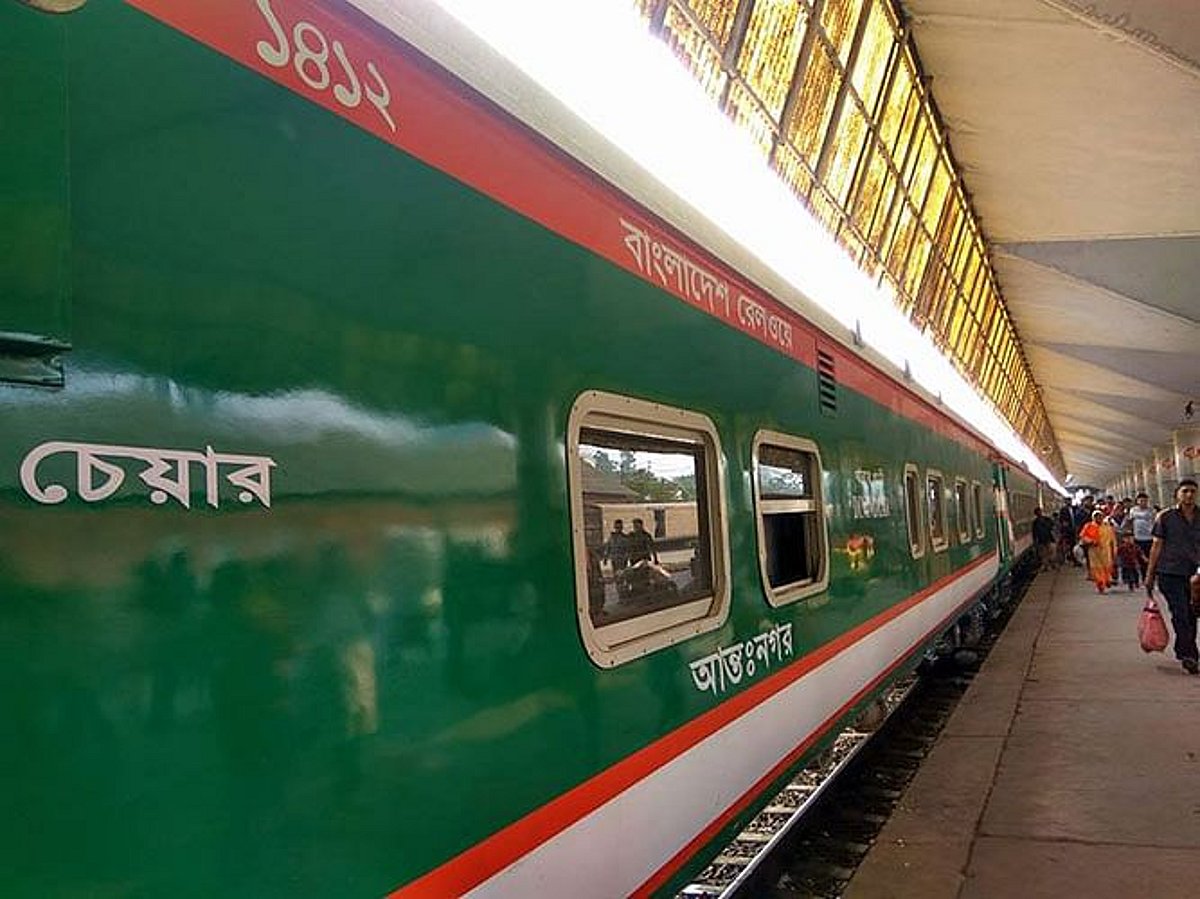
Railway Eastern Zone has taken an initiative to hand over the commercial operations of three more trains to private management to increase revenue. The trains are the Jaria Local on the Mymensingh–Jaria Jhajhaingail route, Narayanganj Commuter on the Dhaka–Narayanganj route and Narsingdi Commuter on the Dhaka–Narsingdi route.

At present, eight trains in the Eastern Zone are operated under private management. With the addition of the three new trains, the number will rise to 11.

Railway officials say that because of a shortage of manpower, tickets cannot be checked regularly for all passengers. Many people board trains without tickets. Others buy tickets for shorter distances but travel to destinations farther away.

Against this backdrop, the three trains are being considered for private management. Officials expect this to make ticket sales, ticket inspection and fare collection more effective.

Sujit Kumar Biswas, chief commercial manager of Railway Eastern Zone, told Prothom Alo that the railway expects to earn more revenue from the three trains once they are placed under private management.

The eight trains currently operating under private management in the Eastern Zone are Karnaphuli Commuter on the Dhaka–Chattogram route, Sagarika Commuter on the Chattogram–Chandpur route, Balaka Commuter on the Dhaka–Jaria Jhajhaingail route, Titas Commuter on the Dhaka–Akhaura route, Titas Commuter on the Dhaka–Brahmanbaria route, Mahua Commuter on the Dhaka–Mohanganj route, Jamalpur Commuter on the Dhaka–Dewanganj Bazar route and Dewanganj Commuter.

Decision taken for six trains, three for now

According to railway sources, a decision was taken in April this year to place six trains under private management to improve passenger services and increase revenue.

Besides Jaria Local, Narayanganj Commuter and Narsingdi Commuter, the list included Samatat Express on the Noakhali–Laksam route, Noakhali Express on the Noakhali–Dhaka route and Nazirhat Local on the Chattogram–Nazirhat route.

However, sources in Railway Eastern Zone said only three trains are being handed over to private management for now. Samatat Express and Noakhali Express are currently out of service because of a shortage of locomotives.

Nazirhat Local, meanwhile, is not being handed over to private management at this stage because an initiative has been taken to upgrade its coaches. Once the upgrade is complete, the train is also planned to be placed under private management.

The Jaria Local, which is being considered for private management for now, operates eight times a day (four pairs), Narayanganj Commuter 16 times (eight pairs) and Narsingdi Commuter twice (one pair). Railway recently published a tender notice to appoint private contractors to handle the commercial operations of the three trains. Tender forms can be collected until 5 October, and the deadline for submitting bids is 6 October.

Ticket inspection difficult

Railway officials say passenger turnover is high on local and commuter trains. These trains operate over short distances and stop at many stations along the way. As a result, large numbers of passengers board and get off at each station. Adequate manpower is needed to check their tickets and manage passengers.

However, the railway has been facing a manpower shortage for a long time. In particular, because of shortages in the commercial department, including ticket examiners, it is not possible to check tickets regularly on all trains.

As a result, passengers can sometimes board trains without buying tickets at the station. Others travel to destinations farther away after buying tickets for only part of the journey. This causes revenue losses for the railway. Railway officials believe that assigning responsibility for ticket sales and inspection, fare collection and record-keeping to private companies could help reduce the number of passengers travelling without tickets.

Three trains generate nearly Tk 45 million

According to railway data, Narayanganj Commuter, Narsingdi Commuter and Jaria Local generated Tk 44.4 million in revenue in the latest 2025–26 fiscal year. During the period, the three trains carried 1.095 million passengers. Railway officials expect these trains to generate more revenue after being placed under private management.

According to railway data, the eight trains whose commercial operations are currently being managed privately generated Tk 105.1 million in revenue when they were last operated under government management. After being placed under private management, they generated Tk 263.3 million in the 2024–25 fiscal year. That means revenue increased by Tk 158.2 million.​
 

Increase carriages for freight compared to passengers in Railways: JS committee


1791157566876.webp


A parliamentary committee has recommended increasing the number of freight carriages compared with passenger carriages to boost Bangladesh Railway’s revenue and help turn the sector into a profitable one.

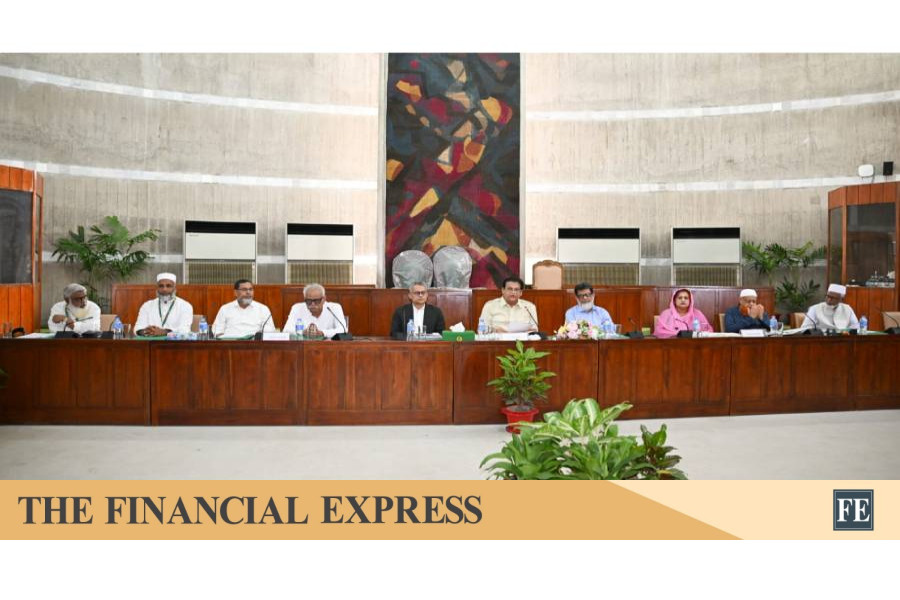
The recommendation was made at a meeting of the Parliamentary Standing Committee on the Ministry of Railways held at the Jatiya Sangsad on Sunday, according to a press release issued by the Parliament Secretariat after the meeting.

The committee directed the Ministry of Railways to increase freight carriages to raise the railway’s income. It also recommended increasing revenue through the export of cargo from Bangladesh by rail.

The committee further advised taking necessary measures to transform the railway sector from a loss-making sector into a profitable one.

At the meeting, officials presented information on Bangladesh Railway’s existing digital services, initiatives to manufacture locomotives according to specified requirements and increase their number, and measures taken by the ministry to stop ticket black-marketing.

The progress of the proposed Panchagarh-Cox’s Bazar railway line was also discussed at the meeting.

The meeting was chaired by committee chairman Mohammad Ali Asgar.

Railways Minister Sheikh Rabiul Alam, State Minister Habibur Rashid, and committee members Abdul Mohit Talukdar, Israt Sultana Elen Bhutto, Md Abu Said Chand, Md Robiul Awal, Mizanur Rahman, Muhammad Azizur Rahman and Golam Rabbani attended the meeting.​
 

Elevated chord line to cut Dhaka-Ctg rail distance by 80km


1791933464691.webp


The government plans to construct an 81-kilometre elevated railway line from Shyampur in Dhaka to Cumilla to shorten the Dhaka-Chattogram rail distance by 80 kilometres and reduce travel time by around 1.5 to two hours.

Prime Minister's Information and Broadcasting Adviser Dr Zahed Ur Rahman disclosed the plan at the weekly press briefing at the Press Information Department (PID) on Tuesday..

The proposed double-track broad-gauge railway line will have a maximum design speed of 160 kilometres per hour and an operational speed of 140 kilometres per hour. It will also include provisions for operating high-speed electric trains in the future, reports BSS.

The initial estimated cost of the fully elevated railway project is Tk 83,901 crore, while construction is expected to take four years after the completion of land acquisition.

The elevated structure is expected to save around 322 acres of land. An initial proposal for the project was submitted to the Ministry of Railways on October 5.

The briefing also revealed that data collection has begun nationwide to develop a central database covering an estimated 4.45 crore families by December under the Family Card programme.

The database will incorporate near-field communication (NFC) and quick response (QR) code technologies to facilitate women's empowerment and strengthen social protection.

The government has allocated Tk 14,500 crore for the programme in the 2026-27 fiscal year, including Tk 12,300 crore for direct allowances.

Another 40 lakh women heads of households will be brought under the programme during the current fiscal year, with the government aiming to cover all eligible household heads within three years.

Senior Deputy Principal Information Officer Most. Mobassera Kadery and officials from the relevant ministries attended the briefing.​
 

Privatisation fails to cut railway losses, improve services
Part-1 of railway stories

Shahin Akhter . Dhaka


1792197234341.webp


Bangladesh Railway began privatising some of its services more than three decades ago in an effort to improve passenger services and reduce losses.

However, services have remained poor or deteriorated in many areas, while the state-run railway continues to incur mounting losses despite repeated fare increases and substantial government budget allocations.

Over the past three decades, the authorities have raised the railway’s base fare on three occasions, increasing it nearly two and a half times, while the railway’s losses have risen over 16-fold over the same period.

Experts and governance advocates say the experience exposed serious weaknesses in railway management, including lack of accountability, professional inefficiency, inadequate supervision, and alleged corruption and monopoly by some private companies.

The railway introduced a computerised ticketing and reservation system with a private company in 1994. In 1997, it began leasing out commercial operations of passenger trains, initially on the Dhaka-Narayanganj route.

Currently, five private companies operate 32 of Bangladesh Railway’s 285 local, mail and commuter trains.

They sell tickets at railway-fixed fares, while the railway provides locomotives, coaches, tracks, platforms, ticket counters, signalling infrastructure and locomotive drivers.

Among Bangladesh Railway’s various services, onboard services and cleaning, catering, fibre-optic telecommunications and train tracking have been fully privatised, with private operators using railway infrastructure.

The railway has also begun discussions on amending the Railways Act, 1890. A proposed Section 38 deals with track-access agreements involving private companies, joint ventures and foreign railway companies or administrations.

Railways state minister Habibur Rashid told New Age on October 4 that the government planned to allow private companies to hire railway tracks to operate newly purchased passenger and freight trains by the end of the year.

Outsourcing begins

The railway introduced computerised ticketing and reservation under a build-operate-transfer arrangement with Technohaven Company Ltd on March 21, 1994.

Former railway director general Tafajjal Hossain said outsourcing was introduced to improve services following recommendations from stakeholders, development partners and civil society.

Another former DG, Shamsuzzaman, said recruitment was suspended in 1984 for several years. Manpower shortages and operational problems contributed to losses and prompted the railway to lease trains to private companies, he said.

A former senior railway official, however, alleged that leasing was also encouraged by pressure from business groups linked to road transport, donors and other vested interests seeking to weaken the railway.

Train leasing

The 32 trains are operated by SR Trading, TM Trading, LR Trading, NL Trading and SA Trading, selected through competitive bidding.

Railway data show that before private management, the railway earned Tk 15.77 crore a year from the trains, including the Dewanganj, Karnaphuli, Mohua, Jamalpur, Titas, Turag, Sagarika, Balaka and Padmarag commuters, Mohananda and Nakshikatha expresses, Rocket Mail, Chilahati Express, and Rajshahi commuter and local trains.

Under private management, the railway receives Tk 41.88 crore a year, excluding income the companies retain after paying travelling ticket examiners and booking assistants. This is around 165 per cent increase in railway receipts.

Transparency International Bangladesh executive director Iftekharuzzaman said state-owned enterprises in Bangladesh rarely become profitable through reform or outsourcing alone.

‘Concrete evidence shows that private companies operating partial services are turning a good profit; otherwise, they would not be regularly paying millions of taka annually,’ he said.

He said this indicated inefficiency, corruption or neglect among state personnel and increased the financial burden on the state and the public. ‘Ultimately, this privatisation initiative serves as clear proof of the state entity’s operational failure,’ he said.

Privatisation has also failed to stem the railway’s losses.

Bangladesh Railway information books show that net operating income of Tk 5.02 crore in FY1969-70 turned into a loss of Tk 110.33 crore in FY1989-90. The loss reached Tk 2,072.52 crore in FY2023-24.

According to the draft Railway Master Plan 2026-2060, prepared by Bangladesh Railway in July, its operating expenditure increased from Tk 1,808.30 crore in 2015 to Tk 3,546.29 crore in 2024, an increase of about 96 per cent.

In contrast, railway’s operating income increased from Tk 1,060.82 crore in 2015 to Tk 1,473.77 crore in 2024, an increase of about 39 per cent.

Over nine years between FY2015-2016 and FY2023-2024, the railway incurred a cumulative net operating loss of Tk 15,918 crore despite Tk 1,38,251 crore in government budget allocations.

A base-fare system was introduced in 1988, when the unit fare was Tk 0.16. It rose to Tk 0.24 in 1992, Tk 0.36 in 2012 and Tk 0.39 in 2016.

Fares increased by 50 to 115 per cent on October 1, 2012, and by an average of 7.23 per cent on February 20, 2016.

In December 2025, the eastern zone revised pontage charges for the first time in nearly 43 years, raising fares by Tk 5 to Tk 226 per ticket.

The income of the private companies has nearly tripled from using railway resources while the railway continues to incur losses.

Questions over operators

Questions have also been raised about the companies operating the trains. According to addresses supplied by the railway, SR Trading, LR Trading, NL Trading and TM Trading had an office at 78 Motijheel Commercial Area. Another address given for TM Trading was 110 Shantinagar.

During a visit on August 30, only SR Trading’s nameplate was found at the Motijheel address, and staff declined to comment.

No office was found at the Shantinagar address, which was a residential building.

Railway officials said the companies were owned by Salauddin Ripon of Madaripur, who contested the 2024 national election from Barishal-5 as an independent candidate and was defeated.

A senior railway commercial official said Ripon first obtained a train-operation contract through an open tender in 2012 and continued through extensions.

In 2023, he sought a 273-day extension, arguing that train services had remained suspended for that period during the Covid-19 pandemic. After the request was rejected and fresh tenders were invited, he filed seven cases against Bangladesh Railway under the names of SR Trading, NL Trading and TM Trading, and secured stay orders.

Railway senior law officer Shakhawat Hossain Chowdhury said seven cases concerning commuter trains were pending in the High Court.

‘The cases are ongoing and at the hearing stage. We hope they will be resolved quickly,’ he said.

Ripon could not be reached for comment.

Ticketing and onboard services

Online ticket sales were introduced in 2007, with Computer Network Systems Ltd operating the computerised system until March 2022.

On February 15, 2022, the railway signed a five-year contract with the Shohoz-Synesis-Vincen JV to manage the Bangladesh Railway Integrated Ticketing System.

Passengers have repeatedly complained of technical problems and the black-market sale of tickets, particularly AC-class tickets.

Under the agreement, the JV gets Tk 0.25 in commission or service charge for each offline intercity ticket sold at counters.

For each online intercity ticket, Shohoz gets Tk 20, which is distributed among VAT, banks, payment gateways and ticketing service providers such as bKash and Nagad. Shohoz’s commission is Tk 6.50 of this amount.

Shohoz director (tickets) Shakil Jowad Rahim said about 25 per cent of tickets were sold online when the JV started work, while now all tickets are open to online and counter sales at the same time.

He said the JV had set up offices at stations, monitors and a GPS system, and distributed pause machines on trains as per the contract.

The railway said in a written statement that the JV was investing in its own management to develop the software, hardware and server maintenance systems needed to run the IT infrastructure.

The railway first leased out onboard services of Subarna Express on the Dhaka-Chattogram route on April 14, 1998. Cleaning services for all intercity trains were handed to caterers on January 1, 1999.

Passengers and railway officials alleged that some private stewards collect money from passengers travelling without tickets instead of depositing it with the railway.

A senior eastern-zone official was recently transferred to the western zone, allegedly after taking strict action against onboard and cleaning services on routes including Dhaka-Chattogram.

Additional director general (operation) Mohammad Nazmul Islam said catering services had been under private management from the beginning, though the railway provides limited catering on some trains.

Passengers have long complained about poor-quality food.

In June 2024, railway police arrested three catering employees over allegations of raping a female passenger aboard the Udayan Express on the Sylhet-Chattogram route.

The railway leased its fibre-optic telecommunications system to a private company on September 17, 1997. The Train Tracking and Monitoring System was launched on January 16, 2014, with support from Malaysia-based Suncrops.

‘Privatisation exposes failure’

According to TIB’s ‘Corruption in Service Sectors: National Household Survey 2025’, released in June, Around 34.6 per cent of surveyed households reported experiencing corruption, including bribery, while obtaining railway services.

Iftekharuzzaman called for an investigation into why profitable opportunities were being squandered and whether outsourcing followed open and fair competition or involved irregularities and collusion with railway insiders.

‘While privatisation was intended to reduce losses, structural problems such as single-track infrastructure and professional corruption continue to hinder progress,’ said professor Md Shamsul Hoque of Bangladesh University of Engineering and Technology.

‘Railway management lacks both the capacity to deliver quality services directly and the oversight capability to enforce standards on private vendors,’ he said, calling for institutional reforms and greater transparency to prevent the railway from becoming a permanent financial liability.

Md Mozammel Hoque Chowdhury, secretary general of the Passenger Welfare Association of Bangladesh, said outsourcing catering, ticketing and commuter train operations had failed to improve passengers’ experience.

In a written statement, state minister Habibur Rashid said the private sector was given responsibility for operating trains commercially on certain routes to improve passenger service and reduce operating costs.

‘However, we are seriously reviewing whether the expected goals in terms of service and revenue have been achieved in the long experience of three decades,’ the statement read.

It said that if the desired service was not maintained as per the contract and the railway’s economic interests were not protected, the contracts would be re-evaluated.

The statement described the issue of multiple trains being leased anonymously under a single organisation, exerting monopoly influence, as very sensitive.

The authorities concerned have been instructed to investigate whether any irregularities, syndicate or anonymous ownership were involved in the contract process, it said, adding that appropriate action would be taken if any were found.​
 
Back
Top