[🇧🇩] Banking System in Bangladesh

[🇧🇩] Banking System in Bangladesh
407
16K
More threads by Saif

G Bangladesh Defense

Can Bangladesh finally fix its NPL problem?

Mamun Rashid

1785021949250.webp


Bangladesh Bank has unveiled an 18-month roadmap to tackle mounting non-performing loans (NPLs) and restore banking stability. The plan combines stronger supervision, loan restructuring, faster recovery of distressed assets, legal reforms, capital restoration, and the new Bank Resolution and Deposit Protection Acts. It also introduces a much-debated one-time settlement scheme, under which borrowers repay only the principal while accumulated interest may be fully waived.

The announcement has drawn cautious optimism, but it revives a familiar question: is this a genuine break from the past, or another attempt to defer a deeper problem?

Our banking history offers reason for caution. Over the past decade, policymakers have leaned repeatedly on rescheduling, forbearance, and special repayment or restructuring facilities to contain defaults. In 2019, the then finance minister, an accountant, pledged that NPLs would not rise "by even a single penny".

Instead, they climbed to nearly Tk 5.9 lakh crore – almost a third of total outstanding loans. If we include the written-off amount, the number would be much higher. Rather than resolving the crisis, successive policies largely delayed the recognition of losses and masked the true health of banks.

Banking crises rarely emerge overnight. They accumulate from weak governance, political interference, and poor credit discipline. When borrowers expect endless restructuring regardless of repayment behaviour, financial discipline erodes; when banks cannot enforce prudent lending, bad loans mature into a systemic risk.

The 2024 political transition marked an important shift, as Bangladesh Bank initiated Asset Quality Reviews (AQRs), exposed troubled banks’ true condition, identified capital shortfalls, and began exploring consolidation. The new roadmap appears to build on those reforms rather than reverse them.

The most debated element is the complete interest waiver. There is some logic to it – not every defaulter is wilful, and many businesses have struggled through economic shocks, rising energy costs, and financing costs. A realistic path back into the formal system could revive recovery and productive investment.

Yet a question remains: banks mostly lend depositors’ savings, apart from their meagre equity. If interest income is waived, who absorbs the loss – shareholders, depositors, or taxpayers? If weak banks eventually need recapitalisation, today’s relief becomes tomorrow’s fiscal burden. Cleaning up balance sheets is necessary, but not at the cost of long-term financial stability.

International experience shows successful reform never rests on a single instrument. After the Asian financial crisis, South Korea’s asset management company (KAMCO) purchased distressed loans, restructured viable assets, and restored confidence. Malaysia’s Danaharta played a similar role, acquiring troubled assets and disposing of unviable ones under a strong legal framework. Both governments recovered a substantial share of the public resources deployed. Carlyle, from the USA, played a significant role in cleaning up toxic assets in some Chinese banks after the Asian meltdown.

Not every such initiative has succeeded. Similar efforts in Indonesia and Nigeria were undermined by political interference and drawn-out legal processes. The lesson is simple: an asset management company is no cure by itself. It works only within a broader reform agenda – independent supervision, efficient courts, transparent governance, and the will to pursue influential defaulters without favour.

This is directly relevant as our central bank moves to establish its own AMC. Its success will hinge less on legal creation than on operational independence and freedom from political interference.

Encouragingly, the ADB, IMF, and World Bank have tied support to measurable improvements in banking governance. External pressure cannot replace domestic leadership, but it does raise the cost of complacency.

Bangladesh’s banking sector stands at a critical juncture. Success will depend not on ambition but on the credibility of execution. If political considerations override financial discipline, this too will join a long list of missed opportunities. But if policymakers recognise losses honestly and enforce accountability without exception, this roadmap could yet become the country’s most meaningful banking reform in decades.

Reducing NPLs is not merely about repairing balance sheets; it is about restoring public trust, protecting depositors’ savings, and safeguarding long-term growth. The real test will not be whether reported NPLs fall over the next 18 months, but whether the institutional failures behind the crisis are finally addressed.

Mamun Rashid is an economic analyst and chairman at Financial Excellence Ltd.​
 

Islamic, 4th-gen banks buckle under NPL, liquidity crises

Star Business Report

1785196567823.webp


Full-fledged Islamic banks and fourth-generation private commercial banks are facing mounting pressure from rising default loans and worsening liquidity shortages, making them the most vulnerable segments of the country’s banking sector, according to Bangladesh Bank.

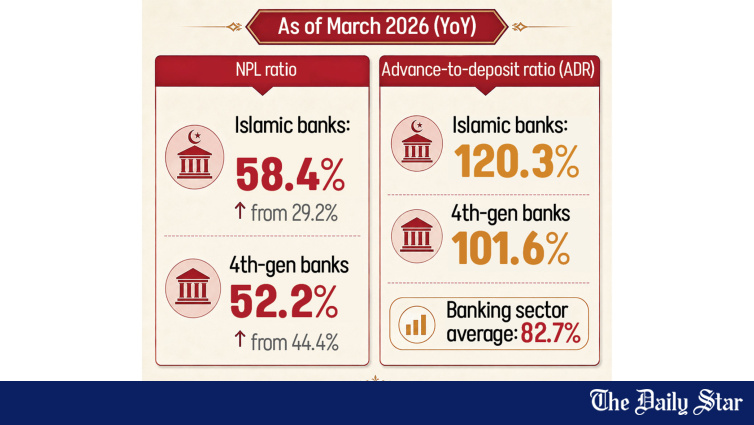
The central bank’s latest Banking Sector Update shows that the non-performing loan (NPL) ratio of full-fledged Islamic banks surged to 58.4 percent in March 2026, up from 29.2 percent a year earlier.

Tap here to add The Daily Star as a trusted source google-preferred-source-badge
Fourth-generation private commercial banks -- the nine banks established in 2013 -- recorded the second-highest NPL ratio at 52.2 percent, compared with 44.4 percent in March 2025.

The report said both groups are under severe liquidity pressure due to aggressive lending and elevated credit risk.

Full-fledged Islamic banks remained heavily exposed, with their Advances-to-Deposit Ratio (ADR) climbing to 120.3 percent in March 2026. The average ADR of fourth-generation banks stood at 101.6 percent, with several lenders posting ratios above 100 percent.

Bangladesh Bank said the elevated ADRs reflect aggressive lending by fourth-generation banks as they rapidly expanded their loan portfolios. The ADRs of both groups were well above the banking sector average of 82.7 percent, raising concerns over liquidity risk.

The report noted that Islamic banks have long struggled with structural weaknesses, including limited liquidity management tools and rapid credit expansion.

Last year, the government merged five troubled Islamic banks -- First Security, Global, Social Islami, Union and EXIM Bank -- to form Sammilito Islami Bank PLC after they suffered acute liquidity shortages and alleged loan irregularities linked to the S Alam Group and Nazrul Islam Mazumder.

According to the report, the sharp increase in bad loans at these banks points to weak credit discipline and possible governance failures.

While the overall banking sector reduced its ADR to strengthen liquidity, Islamic and fourth-generation banks remained highly exposed despite relatively slow deposit growth.

Other banking segments performed comparatively better.

Second-generation private commercial banks maintained an NPL ratio of 19.2 percent. Foreign commercial banks remained in a stronger position, with an NPL ratio of 6.3 percent and an ADR of 53.4 percent, enabling them to maintain comfortable liquidity buffers.

Bangladesh Bank warned that aggressive lending and rising default loans at Islamic and fourth-generation banks pose a significant risk to the stability of the banking sector.

It said urgent measures are needed to reduce NPLs and bring ADRs under control. Without corrective action, the existing weaknesses could evolve into broader systemic risks, threatening financial stability and economic growth.​
 

Q1 green financing by banks dips 22pc
Staff Correspondent 31 July, 2026, 00:20

1785455035751.webp


Green financing by banks fell by around 22 per cent in the January-March quarter compared with the previous quarter, according to Bangladesh Bank’s latest Quarterly Review Report on Sustainable Finance. Diasporacommunity news

Banks disbursed Tk 4,662.66 crore in green finance during January-March 2026, down from Tk 5,990.83 crore in the October-December quarter and Tk 7,070.45 crore in the June 2025 quarter.

Green finance covers projects such as renewable energy, waste management, energy efficiency and environment-friendly establishments.

Non-bank financial institutions, or finance companies, recorded a sharper fall.

Their green financing dropped to Tk 534.04 crore in the reporting quarter from Tk 989.86 crore in December, a decline of about 46 per cent.

Green finance made up 12.22 per cent of banks’ total term loan disbursement during the quarter, against a target of 5 per cent set by the central bank.

Bangladesh’s private sector credit growth stood at 4.98 per cent in May, well below historical trend, and banks have been sitting on unusually large surplus funds which points to general caution in lending.

Default loans surged to Tk 5.89 lakh crore at the end of March 2026 and distressed assets hit near Tk 11 lakh crore which also made it difficult for banks to lend fresh loans.

Moreover, some good performing banks hold ample liquidity, but they found it lucrative to invest in risk-free government treasury bonds.

Sustainable finance, a broader category that includes green finance along with sustainable agriculture, sustainable financing for cottage, micro, small and medium enterprises (CMSME), and socially responsible lending, accounted for 34.35 per cent of total loan disbursement, compared with the 40 per cent target Bangladesh Bank has set for banks and finance companies from 2025 onward.

Forty-two banks out of 61 and 10 finance companies out of 34 disbursed green finance during the quarter, the report said.

A wider set of institutions, 56 banks out of 61 and 11 finance companies out of 34, had exposure to sustainable finance.

Unlike green finance, sustainable finance disbursement by banks rose in the quarter.

Banks disbursed Tk 97,558 crore in sustainable finance, up from Tk 81,124 crore in December, though still below the Tk 138,395 crore recorded in June 2025.

Finance companies’ sustainable finance disbursement slipped marginally to Tk 2,498 crore from Tk 2,621 crore in December.

Within sustainable finance, other sustainable-linked finance held the largest share at about 42 per cent, followed by sustainable CMSME financing at around 37 per cent.

The outstanding balance of sustainable finance across banks and finance companies stood at Tk 4,15,983 crore as of March 31, of which banks accounted for Tk 3,92,125 crore.

Outstanding green finance alone stood at Tk 81,055 crore, with energy and resource efficiency projects making up the largest portion at Tk 33,919 crore.

Banks recovered Tk 49,723 crore and rescheduled Tk 3,660 crore of their sustainable finance loans during the quarter.

Finance companies recovered Tk 2,654 crore and rescheduled Tk 64 crore.

The Climate Risk Fund, which banks and finance companies must maintain under Bangladesh Bank rules, saw utilisation of just Tk 4.95 crore during the quarter, split between four events and eight projects. Diasporacommunity news

On environmental and social risk management, 48 banks and 10 finance companies carried out risk ratings on 2,11,953 projects during the quarter, of which 1,95,559 rated projects were financed for a total of Tk 1,78,995 crore.

Bangladesh Bank introduced the Sustainable Finance Policy in December 2020 and updated it in 2023, requiring all scheduled banks and finance companies to set up dedicated sustainable finance units and meet prescribed disbursement targets.​
 

17 banks to give Tk 41,000cr to revive sick businesses
Mostafizur Rahman 16 August, 2026, 22:55

1786925653698.webp

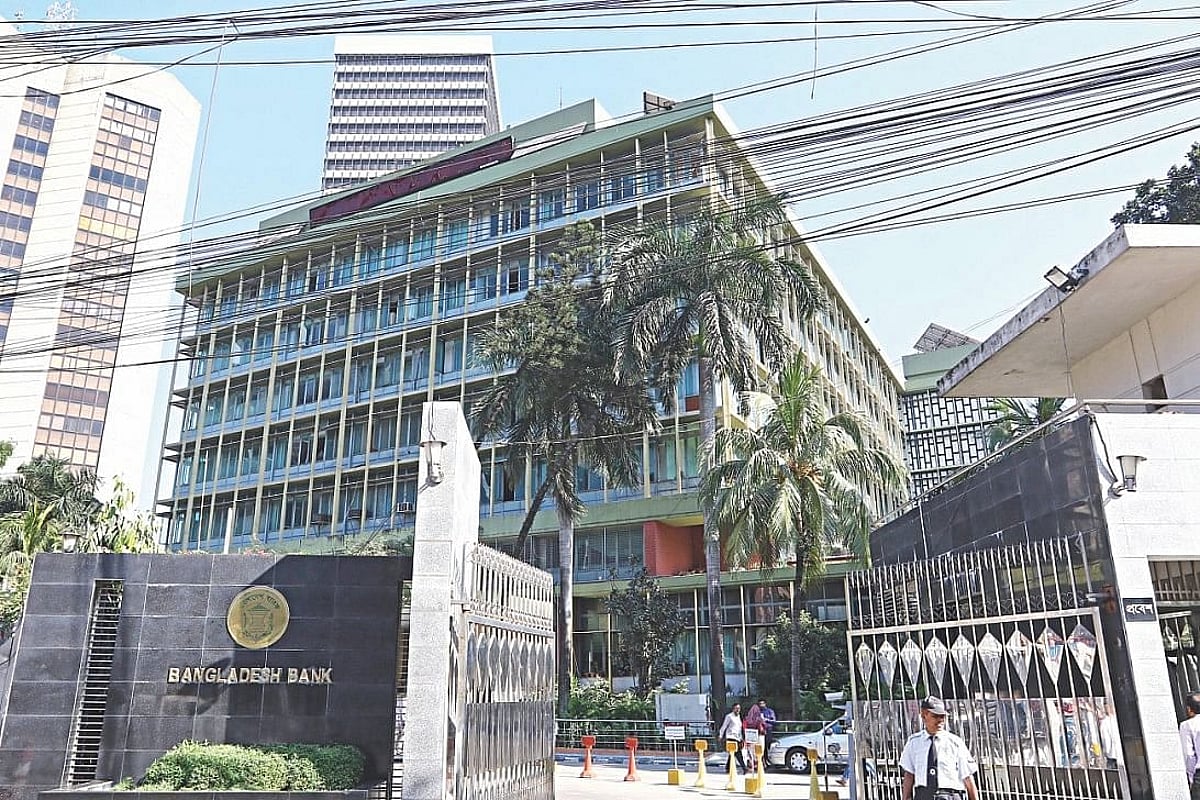
A file photo shows a man walking past the headquarters of the Bangladesh Bank at Motijheel in the capital. | New Age photo

Some 17 banks have agreed to provide Tk 41,000 crore to revive sick companies under the Bangladesh Bank’s Tk 60,000 crore stimulus package aimed at reviving closed factories and restoring private-sector investment.

The banks are Sonali Bank, Agrani Bank, Rupali Bank, BRAC Bank, City Bank, Pubali Bank, Eastern Bank, Jamuna Bank, Dutch-Bangla Bank, Mutual Trust Bank, Uttara Bank, Prime Bank, Bank Asia, NCC Bank, Mercantile Bank, Trust Bank and Southeast Bank, according to Bangladesh Bank officials.

The central bank will collect the Tk 41,000 crore from these banks and provide the funds to about 37 banks for onward lending to eligible sick companies after they meet the Bangladesh Bank’s conditions.

The arrangement is designed to channel surplus funds held by relatively stronger banks to lenders that will identify and finance viable distressed businesses.

BB officials said that the participating banks had sufficient excess liquidity to provide the funds.

Banks receiving the money will have to carefully assess borrowers before approving loans. They must ensure that the selected companies meet the Bangladesh Bank’s eligibility requirements, use the funds for the approved purposes and have realistic prospects of resuming or expanding operations, they said.

The lending banks will also have to monitor the companies regularly to ensure that the money is not diverted and that the businesses are actually being revived, they added.

To strengthen monitoring, the Bangladesh Bank plans to introduce a digital dashboard through which participating banks will regularly report the amount disbursed and how the funds are being used.

The initiative comes as private-sector credit growth has weakened sharply. It fell to a historic low of 4.47 per cent year-on-year in June amid tight monetary conditions, high loan defaults, weak business confidence and sluggish investment.

Banks’ surplus liquidity also crossed Tk 4 lakh crore in June, creating an opportunity to channel idle funds into productive businesses.

Mutual Trust Bank managing director and chief executive officer Syed Mahbubur Rahman told New Age that banks providing their surplus funds to the Bangladesh Bank would face limited risk because the central bank would subsequently provide the money to other banks for lending to sick companies.

Investment opportunities are limited now, so it is also attractive for banks to place their surplus funds with the central bank at a good return, he said.

He said that the initiative was positive, but its success would depend largely on the banks distributing the funds.

How the banks select the companies and whom they lend to will be very important, he said, adding that the recovery of businesses could take time because of continuing problems with utilities and other operating conditions.

The Bangladesh Bank launched the Tk 60,000 crore package on May 23 to reopen closed industrial and service-sector units, expand agricultural production, support small businesses, diversify exports and revive economic activity.

Of the package, Tk 41,000 crore will come from commercial banks’ own funds. Another Tk 19,000 crore will be provided by the Bangladesh Bank through refinancing schemes.

The government will provide a 6 per cent interest subsidy, allowing eligible borrowers to obtain loans at 7 per cent interest.

Under the Tk 41,000 crore component, Tk 20,000 crore has been earmarked for reopening closed industrial and service units, Tk 10,000 crore for agriculture and rural activities, Tk 5,000 crore for cottage, micro, small and medium enterprises, and Tk 3,000 crore each for export diversification and developing northern Bangladesh as an agricultural hub.

Under the separate Tk 19,000 crore refinancing scheme, the Bangladesh Bank will provide funds to banks at 4 per cent interest for onward lending.

Bangladesh Bank governor Mostaqur Rahman at a press conference on May 23 said that the programme aimed to create 25 lakh direct and indirect jobs by reviving productive sectors and increasing private investment.

He said that the banking sector had been weakened by widespread irregularities and diversion of funds in previous years and the stimulus programme was intended to restore business and trade activity, increase productivity and exports and support economic growth.​
 

Govt sets five-year plan to clean up banking sector

It puts bad-loan recovery at the top of the agenda

Rejaul Karim Byron and Ahsan Habib

1787182102347.webp


The government has set out a five-year plan to clean up the banking sector, with a focus on recovering bad loans, tightening supervision, improving governance and restoring depositor confidence.

The plan comes as banks grapple with record non-performing loans (NPLs), weak governance, political interference and lending to politically connected businesses. These problems have eroded both capital and profitability of many banks, with state-owned lenders particularly exposed.

By December last year, NPLs in the country’s banking sector reached Tk 5.57 lakh crore, equivalent to 30.6 percent of total loans, according to official data.

Over the same period, banks’ return on equity fell from 9.42 percent in 2016 to minus 16.11 percent in 2025.

The five-year framework, titled “Five-Year Strategic Framework for Reform and Development (July 2026-June 2031)”, was prepared by the General Economics Division of the Planning Ministry and approved by the National Economic Council on May 18. It was released yesterday.

The government will roll out the reforms in three overlapping phases.

Those are containing immediate risks in the first year, rebuilding banks over the next two years and pursuing deeper reforms in years three to five.

FIRST YEAR: CONTAIN THE DAMAGE

The first year will focus on high-risk banks, bad loans and depositor protection.

Operational autonomy of the Bangladesh Bank will be enforced on an interim basis, while high-risk banks will face stricter supervision and regulatory action.

The central bank will identify willful defaulters and take legal action against them. It will also enforce stricter loan classification and provisioning rules to prevent bad loans from piling up.

The government will apply fit-and-proper criteria to bank boards and senior management and restructure boards that fail to meet the requirements.

The Deposit Protection Fund will be made operational. The government will strengthen the capital position of merged banks and begin reimbursing depositors, while interim arrangements will be introduced to repay depositors of distressed banks.

The immediate priority will be to enforce rules, address governance failures, recover bad loans, protect depositors and maintain liquidity.

NEXT, REBUILDING BANKS

Over the next two years, the government plans to strengthen governance, risk management and loan recovery while building stronger financial safety nets.

The central bank will receive full operational autonomy, with risk-based supervision and stress testing introduced.

Loan rescheduling will be tightened, large borrowers will face closer monitoring, and banks will have to comply more strictly with lending rules. Board appointment procedures will also be standardised, with limits on board tenure and family representation.

Banks will have to disclose financial data at the individual bank level and follow reporting standards aligned with Basel III -- a global regulatory framework.

DEEPER REFORMS IN FINAL PHASE

The final phase will focus on making banks more efficient and competitive while reducing risks to the wider financial system.

The plan calls for stronger governance, greater transparency, better data systems and stronger supervisory capacity at the Bangladesh Bank. Legal and institutional changes will also be introduced to strengthen its operational independence and bring regulations closer to international standards.

The government plans to improve the recovery of bad loans through specialised financial tribunals, stronger legal enforcement and faster resolution mechanisms.

The plan also proposes a fully functioning deposit protection system, including the pay-box model, to protect depositors and strengthen market discipline.

BANKS MUST FIX THEIR BALANCE SHEETS

The framework makes clear that simply increasing credit will not solve the banking sector’s problems.

Banks must first repair their balance sheets through restructuring, disciplined write-offs and faster recovery of defaulted loans. Then they can expand lending safely to small and medium-sized enterprises, agriculture and productive industries.

The plan also identifies political interference as a major problem.

Weak board oversight, preferential lending and limited accountability have contributed to poor risk management and the buildup of bad loans, it says.

WHO WILL OVERSEE THE REFORMS?

The Bangladesh Bank will lead regulatory and supervisory reforms, while the Financial Institutions Division will coordinate legal and policy changes involving state-owned banks and other government-owned financial institutions.

Progress will be measured against indicators covering capital adequacy, asset quality, liquidity, governance, depositor confidence and transparency.

The central bank will conduct annual reviews, with a mid-term assessment in FY2028 to measure progress and recommend changes.

The government says the reforms are urgent as Bangladesh prepares for LDC graduation, which could reduce access to concessional financing and external liquidity support and increase reliance on the domestic financial system.

The bigger challenge, however, will be implementation.​
 

A legal weapon against NPL menace

There is something profoundly unsettling about the fact that Bangladesh now needs a new legal arsenal to deal with non-performing loans (NPLs) that should have been contained by normal banking discipline. The proposed Distressed Asset Management Act (DAMA) 2026 and amendments to the Money Loan Court Act are, therefore, welcome, but they also represent an uncomfortable reality: the banking system has allowed the problem of bad loans to grow far beyond the management capacity of its existing institutions. The scale of bad loans is staggering. Classified loans stood at Tk 6.06 trillion at the end of the 4th quarter of fiscal year 2026, equivalent to 32.78 per cent of total outstanding bank credit. In other words, roughly one in every three taka lent by the banking system had entered a troubled territory. Even more revealing is the broader definition of distressed assets --- including defaulted, written-off, rescheduled and court-stayed loans --- which reached nearly Tk 11 trillion, or about 60 per cent of outstanding loans, at the end of 2025.

Under the circumstances, the government's move to equip itself with stronger legal instruments is thus both necessary and overdue. The proposed Distressed Asset Management Act, together with amendments to the Money Loan Court Act, seeks to turn loan recovery from a slow, cumbersome process into a more dynamic mechanism. More importantly, DAMA envisages a formal market in which distressed loans can be bought and sold, allowing private firms to acquire bad loans, take possession of mortgaged assets and, where necessary, assume control of indebted companies.

There is indeed logic behind such an approach. Once bad loans remain trapped on banks' balance sheets, their ability to extend fresh credit is diminished, capital is impaired and the entire financial system becomes less efficient. A functioning distressed-asset market could, in principle, give banks an avenue to clean, at least partially, their balance sheets while allowing specialised investors to recover value from assets that banks themselves may be unable to manage effectively. The proposed Distressed Asset Management Unit (DAMU) under the Bangladesh Bank, and a specialised enforcement taskforce, could further strengthen this process. The proposal to settle Money Loan Court cases within six months and introduce mechanisms for appeals, auctions and recovery officers also points to an effort to address one of the most persistent weaknesses of the system involving the extraordinary delay between default, litigation and recovery.

In view of the wrongs facing the banking industry, one may find it easy to be convinced that legislation alone will correct the system. Bangladesh's NPL problem did not emerge simply because recovery laws were inadequate. It also grew out of politically connected lending, absence of due diligence, regulatory lapses and wilful default. The proposed law should be seen not only as an instrument for recovering old loans but also as a larger effort to prevent creation of new bad loans. Ultimately, success of the DAMA will be measured not by how efficiently it recovers yesterday's bad loans, but how successfully it prepares ground for sound borrowing practices for tomorrow.​
 

Agent banking accounts rise to 27.22m in June


1789253238292.webp


The number of accounts opened through agent banking in Bangladesh rose to 27.22 million at the end of June 2026, marking a 2.77 percent increase from the previous quarter, according to a Bangladesh Bank report.

The Quarterly Report on Agent Banking, April-June 2026, said 30 banks were providing agent banking services through 20,597 outlets operated by 15,424 agents as of June 30.

The number of agents increased by 1.58 percent and outlets by 1.27 percent during the quarter.

Of the total 27,224,256 agent banking accounts, 13,558,918, or around 50 percent, belonged to female customers, while 23,027,755 accounts, or 85 percent, were held by customers in rural areas.

The report said the growing number of accounts reflected rising demand for agent banking services among different segments of the population. Female-owned accounts increased by 3.06 percent during the quarter, surpassing male-owned accounts.

Deposits held through agent banking also continued to rise. The cumulative deposit reached Tk 519,072.92 million at the end of June, up 1.96 percent from the previous quarter and 13.82 percent from a year earlier.

Lending through agent banking recorded stronger growth, with cumulative loan disbursement reaching Tk 408,703.97 million. The amount increased by 8.26 percent during the quarter and 40.89 percent year-on-year.

The loan-to-deposit ratio rose to 78.74 percent in June from 74.16 percent in March, indicating increasing momentum in loan disbursement through agent outlets. Twenty-three of the 30 banks engaged in agent banking were involved in lending activities.

Rural customers received Tk 262,263.99 million, or 64.17 percent, of the total loans disbursed through agent banking. However, women accounted for only Tk 52,002.06 million, or 12.72 percent, of total lending, indicating significant scope for increasing women’s access to credit.

Agent banking also continued to play a major role in distributing inward remittances. The cumulative amount of inward remittances disbursed through agents reached Tk 2,149,041.57 million at the end of June, up 1.76 percent from the previous quarter and 16.87 percent year-on-year.

Rural beneficiaries received 90.44 percent of the total inward remittances distributed through agent banking, highlighting the channel’s importance in bringing remittance money to people outside major urban centres.

The report said agent banking was contributing significantly to financial inclusion by providing banking services to underserved populations, particularly in rural areas.

It noted that the increasing lending-to-deposit ratio indicated growing availability of finance for entrepreneurship through agent outlets. Bangladesh Bank is encouraging banks to facilitate CMSME and women entrepreneurship loans and refinance schemes for marginalised people through agent banking.

Meanwhile, female participation in agent banking as entrepreneurs is also increasing. As of June 2026, 28 banks were offering services through 2,106 female-owned outlets operated by 1,776 female-owned agents.

The report said female-owned outlets accounted for 10.22 percent of the country’s total agent banking outlets and had 2.34 million accounts, including 1.94 million accounts in rural areas.

Bangladesh Bank introduced agent banking in 2013 to provide an alternative delivery channel for banking services, particularly to people living in geographically remote areas. Customers can use the outlets for deposits, loans, remittances, payments and government social safety-net benefits.​
 

What lies behind Bangladesh Bank’s huge profit?

Shawkat Hossain


1789428597186.webp

Bangladesh Bank headquarters Prothom Alo

When the financial sector is beset by multiple crises, the Bangladesh Bank’s net profit of more than Tk 260 billion raises fresh questions. Does the central bank’s record profit reflect weaknesses in the financial sector, or is it a sign of economic strength? Shawkat Hossain writes about the central bank’s profit and the financial sector.

When the financial sector is beset by multiple crises, the Bangladesh Bank’s net profit of more than Tk 260 billion raises new questions. Does the central bank’s record profit reflect weaknesses in the financial sector, or is it a sign of economic strength? Shawkat Hossain writes about the central bank’s profit and the financial sector.

At a time when bad news is coming from all directions about the country’s financial sector, a surprising piece of information has emerged about Bangladesh Bank. The country’s central bank made a net profit of more than Tk 260 billion in the 2025–26 fiscal year.

Its profit increased by about 15 per cent from the previous fiscal year. Bangladesh Bank is not a commercial enterprise. So how did it make such a large profit? Is this evidence of a healthy economy?

How much did Bangladesh Bank’s profit increase?

In the 2025–26 fiscal year, Bangladesh Bank’s gross profit stood at Tk 350.16 billion. Its expenditure during the year was Tk 89.93 billion. As a result, its net profit stood at Tk 260.23 billion. In the previous fiscal year, its net profit was Tk 226.20 billion.

Of this profit, Bangladesh Bank transferred Tk 259.77 billion to the government treasury. In other words, the government received almost the entire net profit. At the same time, a decision has been taken to provide the central bank’s officers and employees with an incentive bonus equivalent to six months’ basic salary.

Interestingly, although Bangladesh Bank’s income increased, part of it came from the weakness of the banking sector. If banks were stronger and better governed, they would not have needed such large amounts of emergency liquidity support.
Why did profit increase this time?

According to preliminary information, three main factors contributed to the increase in Bangladesh Bank’s profit in the 2025–26 fiscal year.

First, several weak banks in the country became dependent on Bangladesh Bank’s liquidity support to return depositors’ money and keep their day-to-day transactions running.

The central bank provided these banks with large amounts of money through repo, the Standing Lending Facility and special liquidity support. The interest earned on this lending was one of Bangladesh Bank’s main sources of income.

Interestingly, although Bangladesh Bank’s income increased, part of it came from the weakness of the banking sector. If banks were stronger and better governed, they would not have needed such large amounts of emergency liquidity support.

Second, Bangladesh Bank pursued a contractionary monetary policy to control inflation. As policy interest rates remained high for most of the year, banks had to pay higher interest on money borrowed from the central bank.

1789428693746.webp

Shawkat Hossain Prothom Alo

As a result, Bangladesh Bank’s income from lending and liquidity support increased. The central bank also earned interest from loans to the government and investments in government Treasury bills and bonds. Because of shortfalls in revenue collection and foreign financing, the government had to borrow more from the banking system.

At the same time, interest rates on government securities were also high. In other words, the interest-rate policy pursued to combat high inflation also helped increase Bangladesh Bank’s profit.

Third, Bangladesh Bank invests a large portion of its foreign exchange reserves in deposits with the central and commercial banks of various countries, foreign government bonds and other safe short-term financial assets. As international interest rates remained higher than in previous years, these investments also generated good returns.

What are Bangladesh Bank’s responsibilities?

The Bangladesh Bank Order, 1972 sets out six principal functions of the central bank. These include formulating and implementing monetary policy; formulating and implementing policies for intervention in the foreign exchange market; advising the government on the interrelationship between monetary, fiscal and exchange-rate policies and the economic effects of these policies; holding and managing Bangladesh’s official foreign exchange reserves; establishing and regulating a safe and efficient payments system, including the issuance of banknotes; and regulating and supervising banking companies and financial institutions.

Why profit is not a measure of success

The central bank’s principal responsibilities are to control inflation and maintain financial stability. Its success therefore should not be judged by the size of its profit or loss. The real question is whether a policy is serving the national interest and achieving its intended objectives.

A central bank’s profit can increase even as an economy faces growing crises. When policy interest rates are raised to curb inflation, the central bank earns more interest from loans to commercial banks. It can also earn money by selling dollars to prevent a depreciation of the domestic currency.

Again, when banks facing liquidity shortages borrow more, the central bank’s interest income increases. In other words, higher profit is not always a sign of a healthy economy; it may reflect high inflation, pressure on the currency or weaknesses in the banking sector.

Conversely, the central bank’s profit may decline, or it may even incur losses, because of measures taken to maintain economic and financial stability—such as providing funds at low interest rates, intervening in the foreign exchange market or taking on risky assets from distressed banks. But if such measures protect price and financial stability, they cannot be considered failures simply because they result in losses.

Let us now look at the experience of the central banks of several other countries.

Foreign assets are India’s main source of income

The Reserve Bank of India (RBI), recorded total income of around 4.28 trillion Indian rupees in the 2025–26 fiscal year, up 26 per cent from the previous fiscal year. However, it transferred 2.86 trillion rupees to the central government.

A large portion of the RBI’s income came from foreign assets.

Returns on investments in foreign government securities, foreign exchange transactions and income from domestic government bonds all increased. Pressure on the rupee has also been rising.

To counter this pressure, the RBI sold dollars in the market. Some of those dollars had earlier been purchased at relatively lower rupee rates. Selling them later at higher rupee rates generated a profit.

India, however, did not transfer the entire amount of its income to the government. Around 1.09 trillion rupees was transferred to the contingency fund, or an emergency risk reserve. The value of a central bank’s assets can fall rapidly when foreign exchange rates, gold prices, interest rates or the market value of government bonds change. To manage these risks, the RBI strengthened its own financial capacity before transferring the surplus to the government.

Higher interest rates boost profit in Pakistan

The State Bank of Pakistan made a net profit of 1.99 trillion Pakistani rupees in the 2025–26 fiscal year. Of this, 1.932 trillion rupees was given to the federal government. In other words, the government received around 97 per cent of the net profit.

However, the profit of Pakistan’s central bank declined by around 20 per cent from the previous fiscal year. At one point, the policy interest rate had risen to 22 per cent as the country sought to control inflation and meet the conditions of its IMF programme. Commercial banks were major buyers of government Treasury bills and Pakistan Investment Bonds.

When they needed liquidity, they pledged these securities with the central bank and borrowed through Repurchase Agreement (repo) and open market operations. High interest rates and the large volume of liquidity provided caused the State Bank’s interest income to rise as well.

Later, as inflation declined, the policy rate was gradually reduced to 11.5 per cent. This caused the central bank’s interest income and profit to decline as well. Therefore, the decline in profit cannot be directly described as a failure; rather, the fall in inflation made it possible to reduce interest rates. However, the profit of Pakistan’s central bank was one of the government’s major sources of non-tax revenue.

In Sri Lanka, lower profit but greater capacity

Sri Lanka’s example is different from those of Bangladesh, India and Pakistan. In 2025, the Central Bank of Sri Lanka made a net profit of 193.1 billion Sri Lankan rupees. Its profit declined by 29.7 per cent from the previous year.

One of the main reasons for the decline was lower net income from foreign currency assets. At the same time, net income from domestic currency assets also declined. The economy and markets are gradually returning to normal. As a result, income from the unusually high interest rates, exchange-rate movements and revaluation gains seen during the crisis period has declined.

Despite the fall in profit, the Central Bank of Sri Lanka’s financial capacity did not weaken. Rather, its foreign exchange reserves and total assets increased, while its equity almost doubled.

At the same time, the outstanding amount of funds obtained through a swap arrangement with the Reserve Bank of India declined, reducing pressure to repay foreign currency liabilities. In other words, a decline in profit does not necessarily mean that a central bank’s financial position has deteriorated; its capital, reserves, assets and liabilities must also be taken into consideration.

Although Sri Lanka’s central bank made a substantial profit, the government received only around 22 per cent of the total profit. The rest was retained to offset previous losses, build reserves, manage market risks and strengthen the central bank’s capital.

Profits in four countries, but different meanings

In Bangladesh, profit increased mainly because of interest earned on funds provided to distressed banks and the government, as well as income from investments of reserve assets.

In India, income increased from foreign assets, dollar sales and government bonds. In Pakistan, high policy interest rates and liquidity provided to banks boosted profit; after interest rates were lowered, profit also declined. In Sri Lanka, profit fell, but reserves, capital and financial capacity increased.

In other words, high profit is not definitive evidence of economic strength, just as low profit is not definitive evidence of weakness.

There are also differences in how profits are distributed. Bangladesh and Pakistan transferred almost their entire net profits to their respective governments, whereas Sri Lanka transferred around 22 per cent. India retained a large amount in its risk reserve before transferring the surplus to the government.

In Bangladesh, however, it is necessary to maintain adequate reserves to absorb future losses against the large volume of lending provided to weak banks. Therefore, before transferring almost the entire profit to the government, the central bank’s capital and its capacity to absorb credit risks should have been assessed.

The government is already facing a substantial shortfall in revenue collection. Receiving almost the entire amount of Bangladesh Bank’s profit will therefore provide the government with some relief.

The real measure of success

It is not unusual for a central bank to make a profit. Maintaining financial strength is also essential to a central bank’s independence and effectiveness. But profit is not its ultimate objective.

Bangladesh Bank’s success should be judged by whether inflation has been reduced and stabilised; whether excessive volatility in the exchange rate has declined; whether the dependence of weak banks on the central bank has decreased; how secure depositors’ money is; whether non-performing loans and banking fraud have come under control; and whether foreign exchange reserves are sufficiently safe and usable.

So the real question is not simply how much profit Bangladesh Bank has made. What matters is where the profit has come from, what risks lie behind it, how much represents genuine income and how much is accounting profit, and how the money has been distributed among the government, risk reserves and the central bank’s own capital.

*Shawkat Hossain is Head of Online at Prothom Alo​
 

Latest Posts

Back