Bangladesh Defense
Saif
Senior Member
- Jan 24, 2024
- 21,680
- 9,794
- Nation

- Residence
- Axis Group

Gas troubles to ease by this evening
Gas-supply situation across Bangladesh will improve by Tuesday evening, Prime Minister Tarique Rahman said Monday while rolling out short-and long-term remedies for gas-power crises during a meeting with business leaders. He sought support from all concerned in carrying out the government-br
Gas troubles to ease by this evening
Prime Minister rolls out plans during meet with business leaders for short-and long-term solution to gas, power crises
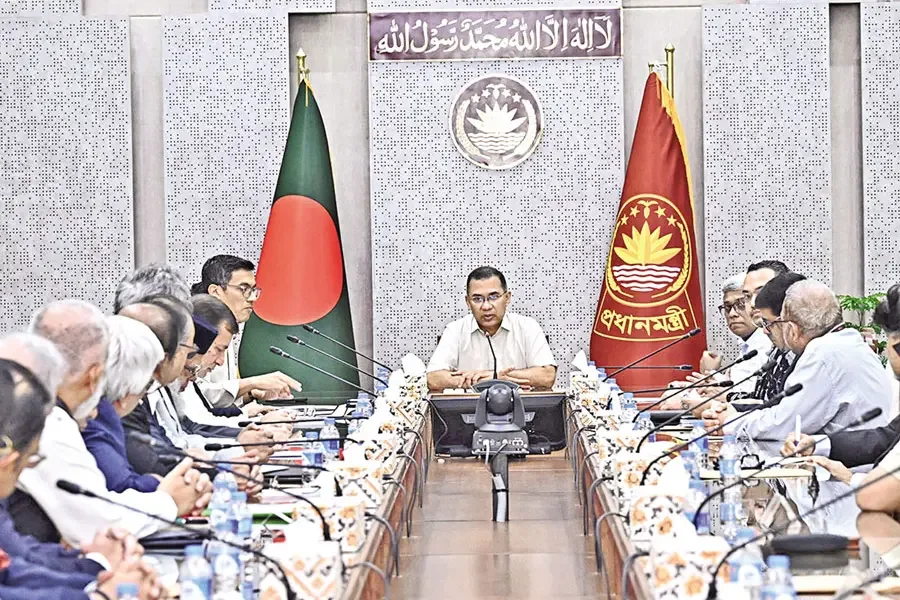
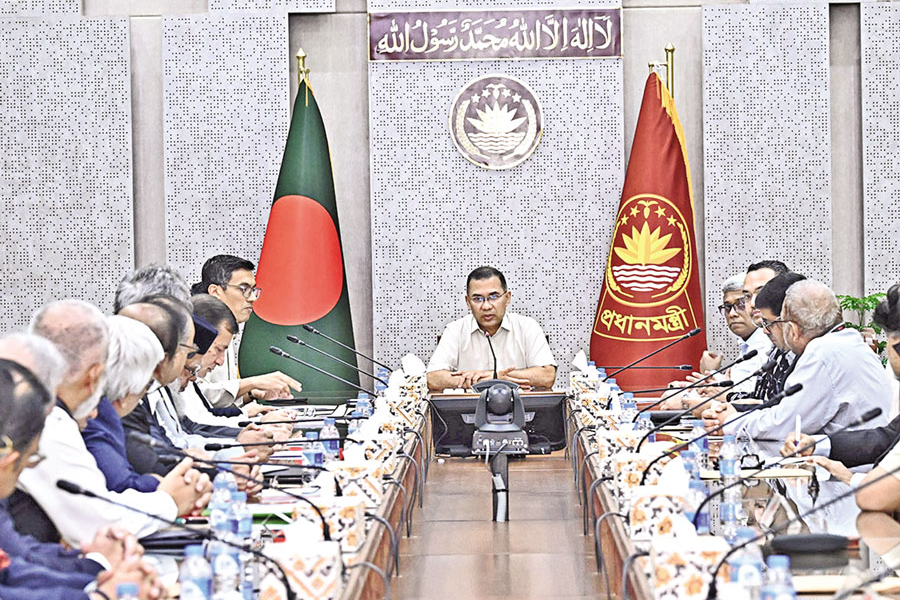
Prime Minister Tarique Rahman presides over a meeting on challenges and future roadmap of the power and energy sector at the secretariat in the capital on Monday. — PID
Gas-supply situation across Bangladesh will improve by Tuesday evening, Prime Minister Tarique Rahman said Monday while rolling out short-and long-term remedies for gas-power crises during a meeting with business leaders.
He sought support from all concerned in carrying out the government-broached comprehensive power-and-energy roadmap to boost power and natural-gas supply and ensure the country's future energy security.
The masterplan comprises installing more floating storage and regasification units (FSRUs) and land-based LNG terminals, expediting oil-and gas explorations, building more coal-fired power plants and boosting renewable-energy installations.
State Minister for the Ministry of Power, Energy and Mineral Resources (MPEMR) Aninda Islam Amit presented a detailed plan titled 'Challenges and Future Roadmap for Bangladesh's Power and Energy Sector' during the meeting at the Prime Minister's Office in the Secretariat, with Tarique Rahman chairing the session.
Assuring the immediate relief from gas crunch facing industries and households, the premier explained that the recent gas shortage stemmed from an accident at one of the country's two floating LNG terminals, which disrupted supply to industries, power plants, households, and other gas-guzzling consumers.
"We hope, Inshallah, from tomorrow evening, gas supply will be restored to the condition it was one and a half months ago," he said.
He also said the construction of the country's third floating LNG terminal will be completed within the next two years.
"Energy crisis is an inherited problem," he said, adding: "The government has identified the problems, developed plans, and is now in the implementation phase."
"Planning and execution take time. These challenges were passed on to us, and solving them requires patience and cooperation," said the head of government.
He stressed that uninterrupted energy supply is essential for Bangladesh to achieve its target of becoming a $1.0-trillion economy by 2034.
The Prime Minister appealed to the business community to remain patient and supportive as the government works to stabilise power-and energy supply.
"When businesses suffer, the entire economy suffers. Resolving power and energy crisis is not just about industry-it is about national growth," he noted.
He also called on the media to play a constructive role by clearly communicating government plans to the public.
"If the media understands our objectives, they can present them accurately to the people, avoiding confusion and misinformation," Rahman explained, adding that transparency is central to his government's approach.
"We are not hiding the problems. We are openly discussing them and explaining how we plan to solve them. There is no reason for despair."
The Prime Minister warns that political instability could undermine economic progress. He urged all stakeholders to allow the government to complete its planned initiatives during its tenure.
"The people will decide who governs, but whichever government is in power should be given the chance to implement its plans," he told his business audience.
In his presentation the MPEMR state minister clearly explained a roadmap to businessmen and media representatives on how the government will reduce the gap between electricity demand and supply by 2030.
By 2030, there will be no gap between demand and supply, he said, adding that the government aims to raise power-generation capacity to 20,500megawatts by 2027, 22,500MWs by 2028, 26,500MWs by 2029 and 31,300MWs by 2030.
Mr Amit attributed the recent crisis primarily to the war between the US and Iran, saying that around 70 per cent of Bangladesh's liquefied natural gas (LNG) comes from the Middle East through the now-troubled Strait of Hormuz.
The accident at the Maheshkhali FSRU facility subsequently aggravated the situation, he said.
The current dismal power-and energy situation is an outcome of wrong policies, indecision and a lack of proper planning by the previous Awami League government, he said.
The state minister also alleged that the previous government had provided special advantages to certain quarters through the now-defunct Quick Enhancement of Electricity and Energy Supply (Special Provisions) Act 2010.
He also opined that the accident at the FSRU, which triggered gas crisis, led to an escalation in electricity demand as the commoners went for electric stoves for cooking.
Electricity-driven three-wheelers, locally named Banglar Tesla, are also consuming around 3,000-4,000MW electricity, he said.
Electricity demand increased by 17 per cent to 18,178 MWs this September compared to 15,271 MWs in September 2025.
Country's overall gas supply fell to around 2,300 million cubic feet per day (mmcfd) in September 2026 due to the FSRU accident from 2,607mmcfd in September 2025.
The government plans to raise available generation capacity by 3,000-4,000MWs from rooftop solar systems with a cost of Tk 10.50 per unit.
The planned generation mix by 2030 includes 6,000MWs from coal-fired plants, 6,000MW s from gas-fired plants, 4,000MWs from liquid-fuel plants, 3,000-4,000MWs from rooftop solar and 2,500MWs through electricity imports, the MPEMR state minister said.
A new 195MW gas-fired power plant will be installed in Bhola island to utilise the tapped gas, he told the meet.
The government has reduced government expenditure by around Tk 5.0 billion annually by reducing tariffs of some 19 power plants after reviewing their power- purchase agreements (PPAs), he said, adding that discussions are underway with another 51 power plants to cut the tariff rates.
Mr Amit said the industries that have already applied for gas connections would receive those connections by 2030.
The government is also discussing the possibility of importing gas from neighbouring Myanmar, he said.
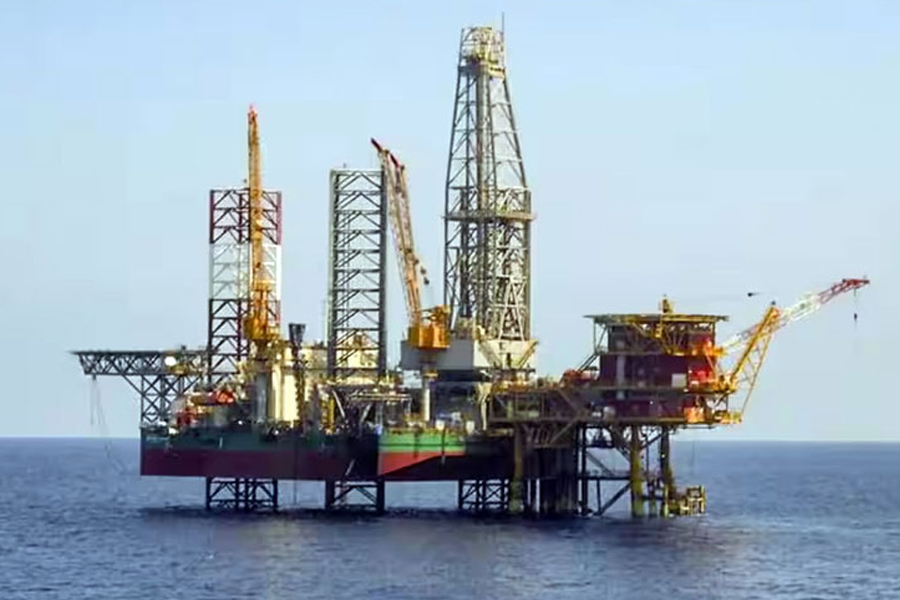
To boost domestic gas exploration, two rigs will be procured for state-owned Bangladesh Petroleum Exploration and Production Company (Bapex).
Foreign exploration companies are also being encouraged to work jointly with Bapex in exploring new gas reserves.
He also defended Bangladesh's fuel prices, saying that the country still has some of the lowest fuel prices in the world. While Bangladesh increased the price of diesel by 15 per cent, Myanmar raised it by 71.9 per cent and Pakistan by 40 per cent.
The government has planned to build new coal-fired power plants at Payra and Matarbari, and Barapukuria with the capacities of 1,320MWs, 1,320MWs, and 300MWs respectively.
It also has planned to modernise the transmission and distribution network to improve the reliability of power supply and reduce system losses.
"The government has also planned to utilise local coal utilising environment- friendly modern technologies taking into account the local people's concerns," he told function.
Smart prepaid meters will be introduced to reduce system losses and eliminate irregular or "ghost" bills, while electricity imports through regional cooperation will be expanded.
Prime Minister Tarique Rahman's Gulshan residence will be fully solar-dependent from next week, said the MPEMR state minister responding to a set of queries from the media.
Commerce Minister Khondaker Abdul Muktadir, PM's Finance Adviser Rashed Al Mahmud Titumir and Education Adviser Mahdi Amin as well as top business leaders also spoke at the problem-shooting meeting.
Among the business figures who spoke were President of the International Chamber and Commerce (ICC) - Bangladesh Mahbubur Rahman and Administrator of the Federation of Bangladesh Chambers of Commerce & Industry (FBCCI) Md Fazlul Haq. Senior journalists and TV commentators also spoke.
Prime Minister rolls out plans during meet with business leaders for short-and long-term solution to gas, power crises
Prime Minister Tarique Rahman presides over a meeting on challenges and future roadmap of the power and energy sector at the secretariat in the capital on Monday. — PID
Gas-supply situation across Bangladesh will improve by Tuesday evening, Prime Minister Tarique Rahman said Monday while rolling out short-and long-term remedies for gas-power crises during a meeting with business leaders.
He sought support from all concerned in carrying out the government-broached comprehensive power-and-energy roadmap to boost power and natural-gas supply and ensure the country's future energy security.
The masterplan comprises installing more floating storage and regasification units (FSRUs) and land-based LNG terminals, expediting oil-and gas explorations, building more coal-fired power plants and boosting renewable-energy installations.
State Minister for the Ministry of Power, Energy and Mineral Resources (MPEMR) Aninda Islam Amit presented a detailed plan titled 'Challenges and Future Roadmap for Bangladesh's Power and Energy Sector' during the meeting at the Prime Minister's Office in the Secretariat, with Tarique Rahman chairing the session.
Assuring the immediate relief from gas crunch facing industries and households, the premier explained that the recent gas shortage stemmed from an accident at one of the country's two floating LNG terminals, which disrupted supply to industries, power plants, households, and other gas-guzzling consumers.
"We hope, Inshallah, from tomorrow evening, gas supply will be restored to the condition it was one and a half months ago," he said.
He also said the construction of the country's third floating LNG terminal will be completed within the next two years.
"Energy crisis is an inherited problem," he said, adding: "The government has identified the problems, developed plans, and is now in the implementation phase."
"Planning and execution take time. These challenges were passed on to us, and solving them requires patience and cooperation," said the head of government.
He stressed that uninterrupted energy supply is essential for Bangladesh to achieve its target of becoming a $1.0-trillion economy by 2034.
The Prime Minister appealed to the business community to remain patient and supportive as the government works to stabilise power-and energy supply.
"When businesses suffer, the entire economy suffers. Resolving power and energy crisis is not just about industry-it is about national growth," he noted.
He also called on the media to play a constructive role by clearly communicating government plans to the public.
"If the media understands our objectives, they can present them accurately to the people, avoiding confusion and misinformation," Rahman explained, adding that transparency is central to his government's approach.
"We are not hiding the problems. We are openly discussing them and explaining how we plan to solve them. There is no reason for despair."
The Prime Minister warns that political instability could undermine economic progress. He urged all stakeholders to allow the government to complete its planned initiatives during its tenure.
"The people will decide who governs, but whichever government is in power should be given the chance to implement its plans," he told his business audience.
In his presentation the MPEMR state minister clearly explained a roadmap to businessmen and media representatives on how the government will reduce the gap between electricity demand and supply by 2030.
By 2030, there will be no gap between demand and supply, he said, adding that the government aims to raise power-generation capacity to 20,500megawatts by 2027, 22,500MWs by 2028, 26,500MWs by 2029 and 31,300MWs by 2030.
Mr Amit attributed the recent crisis primarily to the war between the US and Iran, saying that around 70 per cent of Bangladesh's liquefied natural gas (LNG) comes from the Middle East through the now-troubled Strait of Hormuz.
The accident at the Maheshkhali FSRU facility subsequently aggravated the situation, he said.
The current dismal power-and energy situation is an outcome of wrong policies, indecision and a lack of proper planning by the previous Awami League government, he said.
The state minister also alleged that the previous government had provided special advantages to certain quarters through the now-defunct Quick Enhancement of Electricity and Energy Supply (Special Provisions) Act 2010.
He also opined that the accident at the FSRU, which triggered gas crisis, led to an escalation in electricity demand as the commoners went for electric stoves for cooking.
Electricity-driven three-wheelers, locally named Banglar Tesla, are also consuming around 3,000-4,000MW electricity, he said.
Electricity demand increased by 17 per cent to 18,178 MWs this September compared to 15,271 MWs in September 2025.
Country's overall gas supply fell to around 2,300 million cubic feet per day (mmcfd) in September 2026 due to the FSRU accident from 2,607mmcfd in September 2025.
The government plans to raise available generation capacity by 3,000-4,000MWs from rooftop solar systems with a cost of Tk 10.50 per unit.
The planned generation mix by 2030 includes 6,000MWs from coal-fired plants, 6,000MW s from gas-fired plants, 4,000MWs from liquid-fuel plants, 3,000-4,000MWs from rooftop solar and 2,500MWs through electricity imports, the MPEMR state minister said.
A new 195MW gas-fired power plant will be installed in Bhola island to utilise the tapped gas, he told the meet.
The government has reduced government expenditure by around Tk 5.0 billion annually by reducing tariffs of some 19 power plants after reviewing their power- purchase agreements (PPAs), he said, adding that discussions are underway with another 51 power plants to cut the tariff rates.
Mr Amit said the industries that have already applied for gas connections would receive those connections by 2030.
The government is also discussing the possibility of importing gas from neighbouring Myanmar, he said.
To boost domestic gas exploration, two rigs will be procured for state-owned Bangladesh Petroleum Exploration and Production Company (Bapex).
Foreign exploration companies are also being encouraged to work jointly with Bapex in exploring new gas reserves.
He also defended Bangladesh's fuel prices, saying that the country still has some of the lowest fuel prices in the world. While Bangladesh increased the price of diesel by 15 per cent, Myanmar raised it by 71.9 per cent and Pakistan by 40 per cent.
The government has planned to build new coal-fired power plants at Payra and Matarbari, and Barapukuria with the capacities of 1,320MWs, 1,320MWs, and 300MWs respectively.
It also has planned to modernise the transmission and distribution network to improve the reliability of power supply and reduce system losses.
"The government has also planned to utilise local coal utilising environment- friendly modern technologies taking into account the local people's concerns," he told function.
Smart prepaid meters will be introduced to reduce system losses and eliminate irregular or "ghost" bills, while electricity imports through regional cooperation will be expanded.
Prime Minister Tarique Rahman's Gulshan residence will be fully solar-dependent from next week, said the MPEMR state minister responding to a set of queries from the media.
Commerce Minister Khondaker Abdul Muktadir, PM's Finance Adviser Rashed Al Mahmud Titumir and Education Adviser Mahdi Amin as well as top business leaders also spoke at the problem-shooting meeting.
Among the business figures who spoke were President of the International Chamber and Commerce (ICC) - Bangladesh Mahbubur Rahman and Administrator of the Federation of Bangladesh Chambers of Commerce & Industry (FBCCI) Md Fazlul Haq. Senior journalists and TV commentators also spoke.