Home Login Watch Videos Wars

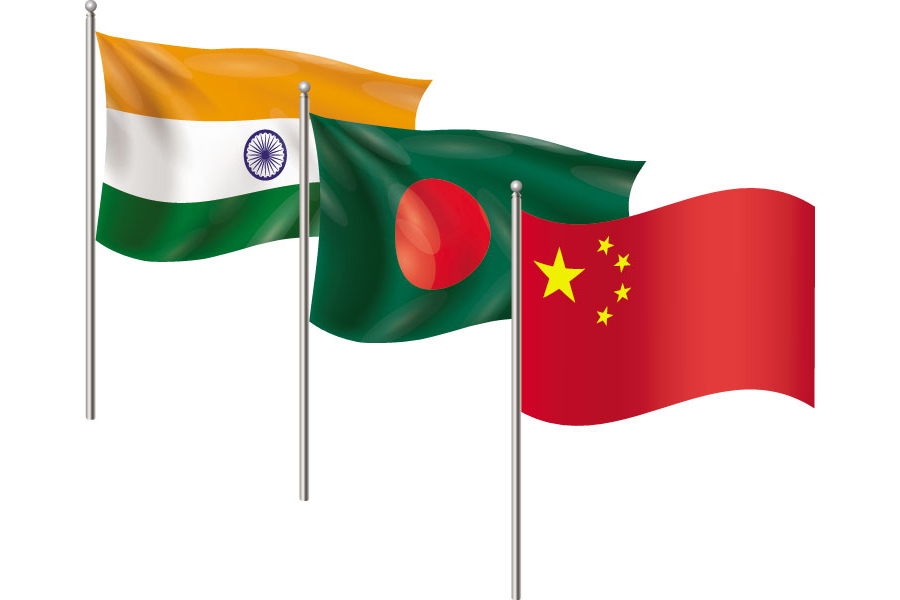
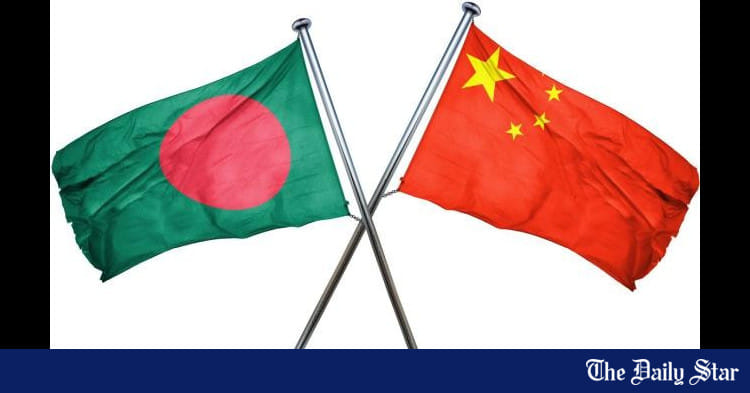
[🇧🇩] China is a Time Tested Friend and a Strategic Partner of Bangladesh

[🇧🇩] China is a Time Tested Friend and a Strategic Partner of Bangladesh
258
10K
More threads by Saif

G Bangladesh Defense
Even during Hasina's regime, China was a huge economic partner. You should read up on it.

This article is written from an Indian perspective,


Indian industrial investments in Bangladesh are non-existent, that gap is filled by China for the lion's share. Talking about non-local investments. Local conglomerates are the majority of investors in local projects.

True to some extent.
 
Analyze

Analyze Post

Add your ideas here:
Highlight Cite Fact Check Respond

Dhaka has to balance ties with, India, China, US
Says Adviser Touhid

1735428998564.webp

Md Touhid Hossain

Dhaka needs to strike a balance in its perusal of relations with India, China, and the US, because Bangladesh has interests to protect and is not a major player in the global arena, Foreign Adviser Touhid Hossain said yesterday.

Despite tensions India maintains trade relations with China and the US, he said in his address to a national dialogue organised by the Forum for Bangladesh Studies at the Krishibid Institute Bangladesh in the capital.

This is why Bangladesh needs to maintain good relations with all three countries, he said.

In the past, the interests of a particular group, especially the interests of the group's leader, have been given priority over the interests of the state, he said.

"For political parties, staying in or attaining power becomes paramount. As a result, they often deviate from the fundamental principles. It then becomes the responsibility of the general public to ensure that such deviations do not occur.

"When the interests of the people are prioritised in a democratic society, safeguarding the interests of the state becomes easier."

While discussing the Rohingya crisis, he referred to a recent meeting in Bangkok, saying, "I told them in no uncertain terms that peace and order will not be possible in Myanmar, and consequently in the region, unless the Rohingyas lodged in Bangladesh can return to their homes with security and rights."

Former ambassador M Humayun Kabir said, "The foreign policy of this country has become regime-centric. Whenever a party takes charge, they formulate the policy in the interest of staying in power. This is why we have not been able to establish a consistent foreign policy."

BNP leader Amir Khasru Mahmud Chowdhury said, "We need to develop a national security architecture to address our security concerns.

"In addition, it is essential to define the role of our intelligence agencies. We must move away from practices like keeping citizens under constant surveillance or labelling individuals as fundamentalists and victimising them without justification.

"We need to rethink our approach to Myanmar and review our policies. Our army should be equipped and prepared for the 21st-century battlefield."

Obaidul Haque, associate professor of international relations at Dhaka University, said a National Security Council was necessary.

Ganosamhati Andolon leader Zonayed Saki said that Bangladesh's foreign policy over the past 15 years has been a policy focused on protecting the regime. National security was not a priority.

"What is needed is a policy that focuses on safeguarding security. Without building internal political unity, we will not be able to protect national interests and security."

Arif Sohel, member secretary of the Student Against Discrimination, said that staying under the shelter of great powers was Awami League's habit. "Our stance is clear: we will remain independent for as long as we live. We must curb religious extremism and protect our borders. These will become crucial in the days ahead."

Akhter Hossain, member secretary of the Jatiya Nagorik Committee, said that Bangladesh's interests used to be overlooked in favour of India's. "We demand that the agreements made with India in the past be disclosed. We want to see whether these agreements have protected Bangladesh's interests."

Former State Minister for Education ANM Ehsanul Haque Milon, Lt. Col. (retd) Didarul Alam, and Tahsin Riaz, of the Jatiya Nagorik Committee, also spoke at the programme moderated by Shafqat Munir.​
 
Analyze

Analyze Post

Add your ideas here:
Highlight Cite Fact Check Respond

Writing chapters of friendship between China and Bangladesh
Bangladesh China relations

1735780766888.webp

Photo: Collected

As the new year begins, everything takes on a new look. In the year 2025, the China-Bangladesh relationship will usher in its 50th year of dynamic development. At the start of the new year, I would like to extend my New Year greetings and best wishes to all the people of Bangladesh. I wish the nation of Bangladesh prosperity and stability, and the people happiness and health.

In 2024, the world witnessed further transformation and instability, marked by protracted and intensified geopolitical conflicts, repeated attempts to decouple and sever supply chains, and the rapid rise of the Global South. It has become all the more clear where the once-in-a-century transformations are heading. In 2024, China acted on the blueprint drawn up at the Third Plenary Session of the 20th Central Committee of the Communist Party of China and made big strides in comprehensively deepening reform. Marking the 75th anniversary of its founding, China carried forward its great cause of national development and pressed ahead with Chinese modernisation with vigour and determination. In 2024, facing a critical juncture in history, we upheld fundamental principles while breaking new ground in diplomacy, and we responded to a fast-changing landscape with composure and confidence. Our diplomatic efforts have helped foster a favourable external environment for China's high-quality development and provided much-needed stability to a turbulent world.

China has always been an important member of the Global South. We have been committed to promoting unity and revitalisation of the Global South, promoting the cause of global development, and ensuring no country is left behind on the path to modernisation. President Xi Jinping called for more open and inclusive Global South cooperation and announced eight measures in support of Global South cooperation. We have made substantive progress in promoting high-quality Belt and Road cooperation in light of the urgent needs of many countries. With 155 countries joining the big family of Belt and Road cooperation, this road to happiness is growing ever broader. Given the widening development deficit, President Xi Jinping announced at the G20 Summit China's eight actions to support global development, which include strengthening cooperation with other countries in key areas such as poverty reduction, food security, and scientific and technological innovation.

Over the past year, a remarkable new chapter has been written in head-of-state diplomacy, which has steered the trend of the times toward peace, development, and win-win cooperation. Breakthroughs have been made in building a community with a shared future for mankind, which has shaped the historical trend toward a shared future and greater solidarity in our global village. We have provided new opportunities for the world with Chinese modernisation, which has promoted the development trend of modernisation in countries around the world. China's cooperation with other developing countries has set a fine example, which has reinforced the trend of uniting for strength within the Global South. China has made new progress in pursuing all-round diplomacy, which has built up the trend toward a new type of international relations.

Facing the future, China will continue to bear in mind the larger picture, shoulder responsibilities for the greater good, and advance the right and just cause. We will continue to hold high the banner of peace, development, cooperation, and mutual benefit, and do our best to promote world peace, tranquillity, and the common progress of humanity.

HE Xi Jinping, General Secretary of the Communist Party of China, points out that China and Bangladesh are friendly neighbours who know each other well. Since the establishment of diplomatic ties, the two countries have always respected and supported each other, treated each other as equals, and cooperated for win-win results, setting an example of friendly exchanges and mutually beneficial cooperation between countries, especially among Global South countries. Honourable Chief Adviser Prof Muhammad Yunus said that Bangladesh and he himself have forged long-standing friendly ties with China. This year, under the guidance of the top leadership of the two sides, and with the firm support of the two peoples, China-Bangladesh relations have continued to develop, and the profound friendship between the peoples has grown even stronger. This year, the China-Bangladesh relationship withstood the test of drastic political changes in Bangladesh, maintained the momentum of development, and demonstrated great resilience and vitality.

Mutual respect and trust are the solid foundation of the China-Bangladesh relationship. As the Bangladeshi proverb says, "Friendship is not a rope, but a bond of hearts," true friendship is not based on external constraints, but on an inner connection. China has always supported Bangladesh in pursuing an independent foreign policy, following a path of development in line with its national conditions, safeguarding national sovereignty, independence, and territorial integrity, and opposing any external interference. China respects the development path independently chosen by the Bangladeshi people and pursues a policy of friendship and good neighbourliness towards all Bangladeshi people. No matter how the domestic situation in Bangladesh may evolve, the core of the China-Bangladesh relationship, which is based on mutual respect, equality, and mutual benefit, will not change; the foundation of friendship between the two peoples will not change; and the determination of the two governments and people of all sectors in the two countries to support and promote the development of bilateral relations will not change. China sincerely hopes that, under the guidance of the interim government led by Honourable Chief Adviser Prof Muhammad Yunus, the reforms will proceed, the political situation will stabilise, the economy will flourish, and people's livelihoods will continue to improve.

Mutual benefit is the strong driving force for the China-Bangladesh relationship. China is the largest trading partner of Bangladesh. The China-Bangladesh relationship has been elevated to a new historical height of comprehensive strategic cooperative partnership. Under the new circumstances, jointly advancing high-quality Belt and Road cooperation is even more opportune, and the room for further developing the comprehensive strategic cooperative partnership is even broader. Since the establishment of the interim government, 12 Chinese enterprises have invested a total of $210 million in Bangladesh. China will provide 1 billion yuan of grants to Bangladesh for livelihood projects agreed upon by both sides. The total amount of foreign direct investment (FDI) to Bangladesh declined by 8.8 percent, but the FDI from China experienced a remarkable threefold increase compared to the previous fiscal year. China has pledged further expansion of its opening up to Bangladesh and will continue to provide Bangladesh with zero-tariff treatment for 100 percent of its taxable items before it graduates from the category of least developed countries. China will import fresh mangoes from Bangladesh and vigorously engage in practical cooperation with Bangladesh in the fields of photovoltaics, agriculture, low-carbon development, and so forth. These pragmatic initiatives fully reflect the firm support of the Chinese government for the Bangladesh interim government, and will certainly contribute to the economic and social development of the country and benefit the people of the two countries.

Mutual assistance is the warm bond of the China-Bangladesh relationship. At the request of the interim government, China dispatched a National Emergency Medical Rescue Team to Bangladesh to provide humanitarian and emergency assistance to those injured during the July-August movement. It was the first medical rescue team dispatched by a foreign government since the formation of the interim government. When Bangladesh was struggling against floods and dengue fever, China was the first to lend a helping hand by visiting the affected areas and providing Bangladesh with life-saving equipment and facilities in response to the floods. At present, direct flights between the two capitals have been launched and operated, with as many as 58 flights per week between the two countries, which can accommodate more than 11,000 passengers. The flights substantially facilitated the exchange of personnel between both sides. Currently, there are nearly 15,000 Bangladeshi students studying in China, building a solid bridge for cultural and academic exchanges between the two countries. Teachers at the two Confucius Institutes and one Confucius Classroom in Bangladesh have taught nearly 3,000 students in the past year. This has further strengthened people-to-people exchanges, laying the foundation for the friendly relations between the two countries.

The year 2025 marks the 50th anniversary of the establishment of the China-Bangladesh diplomatic relationship and the China-Bangladesh Year of People-to-People Exchanges. China will work together with Bangladesh and stay committed to the principles of mutual respect, mutual support, equality, and win-win cooperation. China stands ready to work with Bangladesh to support each other on issues concerning core interests such as sovereignty, security, and development, to strengthen cooperation and collaboration under the United Nations and other multilateral institutions, advocate the common values of humanity, and promote the building of a community with a shared future for mankind.

China will continue to maintain high-level exchanges and friendly cooperation between political parties, strengthen coordination of policies and synergy between development strategies, carry out more exchanges of experience on governance, and optimise cooperation mechanisms at all levels and in all fields. China supports Bangladesh in becoming a BRICS partner country and playing a more active role in regional organisations such as the South Asian Association for Regional Cooperation and the Bay of Bengal Initiative for Multi-Sectoral Technical and Economic Cooperation. We will also continue efforts for the political settlement of the Rohingya crisis.

China will continue to work with Bangladesh on the path to modernisation, promote the implementation of the eight major steps to support high-quality Belt and Road cooperation, and carry out the construction of major landmark projects and "small and beautiful" livelihood programmes. China will also strengthen cooperation with Bangladesh in photovoltaics, water resources, poverty alleviation, green and low-carbon development, and explore specific measures to promote the implementation of the vision of "three zeroes." We will encourage more Chinese companies to invest in manufacturing industries and promote the integrated development of the industrial chain and supply chain between the two countries.

China will continue to enhance friendly cooperation in such fields as culture, education, tourism, sports, health, youth, women, media, and think tanks. We will take a series of practical measures to facilitate cross-border travel and form a new pattern of non-governmental exchanges. By doing so, the friendship between our two peoples will be further strengthened, bringing more tangible benefits to the peoples, and making the China-Bangladesh comprehensive strategic cooperative partnership deeper and more substantive.

Yao Wen is the Chinese ambassador to Bangladesh.

Views expressed in this article are the author's own.​
 
Analyze

Analyze Post

Add your ideas here:
Highlight Cite Fact Check Respond

Touhid-Wang meeting on 21 January: Issues to gain priority
Bangladesh needs to proceed with caution since China is laying emphasis on geopolitics. It is undeniable that the West, the US in particular, has expansive support and cooperation for the present government. So it would not be prudent for Bangladesh to take any such step that may go against the country's interests
Raheed Ejaz
Dhaka
Published: 06 Jan 2025, 15: 22

1736216410641.webp

Touhid Hossain (L) and Wang Li

A minister-level meeting is to be with China after the change of political backdrop following the student-people's uprising in Bangladesh. Foreign advisor Md Touhid Hossain will meeting with Chinese foreign minister Wang Yi on 21 January in Beijing. This will be the first bilateral meeting of the foreign advisor with any country after the interim government led by Professor Muhammad Yunus took over power.

Diplomatic sources of Dhaka and Beijing tell Prothom Alo, Touhid Hossain will leave on 20 January for a four-day visit to Beijing. On the sidelines of the foreign minister level visit, he will also exchange views with senior leaders of the Communist Party in two important cities of China. He will also speak at two research institutions in Beijing and Shanghai.

Wang Yi sent a letter to Touhid Hossain towards the beginning of December inviting him to visit Beijing. Touhid Hossain replied to Wang Yi in the last week of December, accepting the invitation to visit China.

Several senior officials of the foreign ministry informed this correspondent that as the formal meeting will be held in Beijing, so the agenda of the meeting will be proposed by China. Bangladesh will then respond to the proposal and the matter will be finalised. However, the meeting will give priority to strengthening economic ties in the future, with the inclusion of business, investment, infrastructure development and more.

China may also bring forward the development projects signed during the past government in Bangladesh, which have not progressed. China will also place importance on signing an MoU to attach Bangladesh it its Global Development Initiative (GDI).

Another official said that during preparatory discussions regarding the visit, Chinese officials hinted that Beijing would focus in GDI and the pending projects.

Bangladesh and China are to commemorate 50 years of diplomatic relations this year. In this backdrop, various initiatives will be discussed including exchange visits at various levels.

Speaking to Prothom Alo, Touhid Hossain said, "I will be visit Beijing on 20 January at the invitation of the Chinese foreign minister Wang Yi. Alongside formal meetings, there may be several other discussions. The agenda of the meeting, events and other details are likely to be finalised within the next couple of days."

China's special interest in geopolitics

According to diplomatic experts, while there are to be discussions on taking bilateral relations ahead, China also has special interest in geopolitics. China particularly wants to use the changed political circumstances in Bangladesh to forge close ties with the administration here. It is playing attention to take opportunity of these crossroads leading to democracy in Bangladesh. Bangladesh's relations with neighbouring India are fraught with tension since the political changeover. China wants to use this opportunity to build closer relations with Bangladesh.

For some years now China has been pouring investment into South Asian countries in order to tackle the US in the region. After Professor Yunus took over in August, 12 companies of China have invested USD 210 million in Bangladesh. Through these investments, China is sending out the message that it will continue to extend all-out support to the interim government.

According to international affairs analysts, Bangladesh needs to proceed with caution since China is laying emphasis on geopolitics. It is undeniable that the West, the US in particular, has expansive support and cooperation for the present government. So it would not be prudent for Bangladesh to take any such step that may go against the country's interests. It is no secret that the US in not at ease with the strained Bangladesh-India relations and Bangladesh's proximity with China.

A senior-level policymaker of the government, on condition of anonymity, said the government is paying special attention to the foreign advisor's China visit. Several friendly countries are paying particular attention to this visit and so the government will not take any hasty decision that may complicate the country's international relations.​
 
Analyze

Analyze Post

Add your ideas here:
Highlight Cite Fact Check Respond

Leveraging ties with China to influence India
Serajul I Bhuiyan

Published :
Jan 12, 2025 00:10
Updated :
Jan 12, 2025 00:10

1736641658417.webp


Bangladesh’s geopolitical location within South Asia is at the very heart of an unfolding intricate geopolitical competition between two regional giants, namely China and India. An emerging economy with vital sea routes, major river systems, and growing markets, Bangladesh has become a strategically important country far beyond its borders. Its ever-growing economic, political, and security links with China have opened new diplomatic avenues in recent years, hence providing a unique opportunity to reshape its bilateral negotiations with India.

From the issues of water-sharing agreements related to the Ganges and Teesta Rivers, passing through trade imbalances up to regional connectivity projects, Bangladesh would be in a more advantageous position towards pressing for equative solutions once strategically aligned with China. Stronger relations will enable Bangladesh to increase its bargaining leverage and persuade India to be more cooperative and flexible on unresolved bilateral issues.

As Henry Kissinger once said, “Control of geography means control of destiny.” In the case of Bangladesh, its geographical reality is a prized player in South Asia’s strategic landscape-a position that could, if used correctly, redefine its relations both with India and China. This article, presented in two parts, explores how Bangladesh can use its growing ties with China to secure its national interests while navigating the geopolitical complexities of South Asia.

Why Timing is Everything: The current global geopolitical environment provides a perfect opportunity for Bangladesh to establish itself as a regional powerbroker. With China’s BRI reaching out across Asia and India trying to hold its influence in South Asia, Bangladesh has become a key focal point in the strategic competition. This rivalry offers Dhaka a diplomatic window to strengthen its foreign policy through balanced engagement with both nations.

As the former U.S. Secretary of State Madeleine Albright once said, “What matters is how well we use the cards we’ve been dealt.” For Bangladesh, leveraging its geographic and economic significance can turn diplomatic challenges into actionable opportunities, setting a model for balanced international relations in a rapidly evolving world.

Setting the Stage: India has always looked upon the rise of Chinese influence in South Asia with a degree of skepticism and views its growing relationships with countries such as Bangladesh, Sri Lanka, and Nepal as part of its “String of Pearls” strategy aimed at the encirclement of India. This perception has indeed been one of the drivers that have compelled India to increase its diplomatic outreach and economic engagements with Bangladesh, particularly in areas where Chinese influence has grown the most.

By aligning itself strategically with China, Bangladesh’s bargaining position in crucial issues like the sharing of waters, trade, connectivity, and security with India turns stronger. Thus, India, while needing to retain its regional pre-eminence and contain the growth in Chinese clout, will have to agree to better terms in bilateral agreements that Dhaka can wrench.

This article is a two-part series on how Bangladesh can use its relationship with China to break a number of longstanding impasses with India while enhancing its strategic and economic future in South Asia. In this part of the article, we cover the following issues:

Strategic Leverage Through China’s Regional Influence: China’s growing geopolitical influence over South Asia through BRI, GDI, and GSI has amplified the level of Indian unease over the fast-fleeting leverages over Bangladesh. India perceives this growing relationship between Beijing and Dhaka as part of a Chinese policy aimed at containing India within its “String of Pearls”: securing key infrastructure and strategic outposts in South Asia with the aim of encircling India. It is this budding rivalry that provides an important bargaining chip to Bangladesh in negotiating various issues with India.

Application to Bilateral Issues: Ganges Water Agreement and Teesta Water Sharing. Bangladesh and India have more than 50 transboundary rivers, and agreements on the sharing of their waters have been a recurring issue. The Ganges Water Treaty of 1996 was a path-breaking agreement, but its implementation has more often than not been mired in controversy due to the scarcity of water during the dry seasons. At the same time, the Teesta River issue, so vital to Bangladesh’s agrarian economy, has been unresolved for over a decade. Despite numerous diplomatic engagements, an internal consensus has eluded India because of opposition by the West Bengal state government, and the deadlock has dragged on.

The unresolved water-sharing disputes put at risk millions of livelihoods in Bangladesh, making it imperative for Dhaka to seek alternative means of diplomatic pressure. In this context, China’s upstream control over major South Asian rivers such as the Brahmaputra offers a geopolitical counterbalance that is simply too tempting for Bangladesh to resist.

China as Strategic Leverage. With China’s vast experience in managing transboundary rivers-including but not limited to the Mekong, Brahmaputra, and Yangtze-it exercises enormous influence within the region on issues of water politics. Greater cooperation over water could extend to or be pushed through Chinese technical help with flood control, building of dams, and river navigation, all of which will make India uncomfortable with loss of the high strategic elbowroom.

If Bangladesh secures water infrastructure development projects from China, there is a likelihood of India feeling certain pressure to fast-track the long-pending Teesta water-sharing agreement for fear of allowing Bangladesh to further slip into China’s strategic orbit. Using China’s expertise in water diplomacy might, at a time of increasing shortage and regional competition, turn Bangladesh into a vital water management partner in South Asia.

Incentives for India at the Diplomatic Level. Balancing China’s intensifying relations with Bangladesh, India can be more cooperative and pragmatic by giving favorable terms in the water-sharing agreement and broader infrastructure cooperation. Measures that may be taken include the following:

Expedite the Teesta Agreement. India should push for finalizing the Teesta water-sharing agreement to remove one of the most important contentious bilateral issues between the two neighbors.

Go for Multilateral Water Diplomacy. India may agree to trilateral water-sharing talks involving China in order to avoid further marginalization with respect to regional water diplomacy.

More Investment in Water Infrastructure: India can propose new projects of water management with more investment in the construction of dams, flood management systems, and irrigation networks in order to outpace Chinese-funded projects in Bangladesh.

Regional and Strategic Implications: Water disputes in South Asia also have wider geopolitical implications: “Fierce competition for freshwater may well become a source of conflict in the future.”-Kofi Annan, former UN Secretary-General. If India delays the right pace for an equitable water-sharing agreement, China’s growing influence in the management of water might introduce irreversible changes in the geopolitics of South Asia, binding India to rapid and pragmatic measures.

Window of Opportunity for Equitable Solutions: Bangladesh’s growing partnership with China brings both pressure and opportunity for India to resolve long-standing water-sharing disputes. In this respect, India should reconsider its water diplomacy strategy and approach Bangladesh with much more urgency and flexibility. As the former Indian Prime Minister Atal Bihari Vajpayee once said, “You can change friends but not neighbors.” Resolving water-sharing disputes would guarantee Bangladesh’s long-term need for water and foster a relationship of mutual trust and regional stability.

Economic Bargaining Through Chinese: Investments China has emerged as the largest trading partner of Bangladesh, investing billions of dollars in strategic infrastructure projects like the Padma Bridge, Payra Deep-Sea Port, and various industrial zones. Such Chinese-aided initiatives speed up economic development for Bangladesh on one hand and strengthen its bargaining leverage in trade negotiations with India on the other, against its current huge trade surplus with that country.

Diversification of Trade Partnerships and Reduction of Economic Dependency. Bangladesh always runs a constant trade deficit with India since its imports far outweigh exports. The dominant position of India in the import market of Bangladesh has been a contentious issue, both economically as well as politically, for quite a long time now. In this backdrop, closer trade relations with China would allow Bangladesh to reduce dependence on Indian goods through diversification of its imports.

The strong manufacturing base in China creates a wide range of products available for Bangladesh, from consumer goods to industrial machinery, serving as bargaining chips with which it may negotiate better trade terms with India. Also, China’s Belt and Road Initiative promises to create superior trade routes to Bangladesh by circumventing Indian-controlled transit corridors.

Incentivising Bilateral Trade Negotiations. The threat of losing out on market dominance to China might coerce India into renegotiating its trade agreements with Bangladesh through the following means: (a) Reduction in Tariffs. Tariffs on Bangladeshi textiles, jute, and agro-products can come down. (b) Removing Trade Barriers. Reduce nontariff barriers to have smooth customs procedures and thereby allow trade to flourish. (c) Market Access Expansion. India may provide greater market access to the northeastern markets where Bangladeshi products enjoy proximity competitiveness.

Competitive Trade Environment. As Nobel Laureate Amartya Sen once said, “Trade is an engine of development.” Greater economic competition between India and China for influence over Bangladesh could imply more foreign direct investment, improvement in trade infrastructure, and opening of new markets to Bangladeshi exporters.

More importantly, India’s proactive economic engagement in the urge to balance China might reshape the regional trade landscape to the benefit of Bangladesh and its trading partners. This could mean a surge in economic independence and geopolitical standing of Bangladesh in South Asia.

Strategic Power for the Future of Bangladesh: In essence strengthening its ties with China would, therefore, reshape the Bangladesh regional diplomacy, in such a way as to use the leverages of both economic and geopolitical compulsions in trying to push India toward more cooperative and mutually advantageous bilateral negotiations. The Ganges and Teesta water-sharing agreements, trade imbalances, and regional connectivity remain outstanding issues between the two countries; here lies a promising direction through which Bangladesh can strike favorable terms with India.

This would, therefore, be an implication of such an approach to pursue a balanced foreign policy but carefully calibrated for interests from both China and India while safeguarding sovereignty and economic futures. Thus, as Bangladesh positions itself to act as the bridge between two contending powers, geographic vulnerability should emerge as a source of strategic strength, with its bright promise to rise as the premier regional powerbroker of South Asia.

As former U.S. Secretary of State Henry Kissinger so aptly put it, “The task of the leader is to get his people from where they are to where they have not been.” Bangladesh has the chance, through bold and visionary leadership, to transcend its historic challenges in today’s rapidly changing world. With foresight in diplomacy and strategic partnerships, it can reinvent its role for the region in such a way that long-standing disputes become milestones of progress toward securing a future marked with stability, prosperity, and global relevance.

Dr Serajul I Bhuiyan is a Professor and Former Chair, Department of Journalism and Mass Communications, Savannah State University, Georgia, USA. He did his MBA and Ph.D. from USA universities.​
 
Analyze

Analyze Post

Add your ideas here:
Highlight Cite Fact Check Respond

Members Online

No members online now.

Latest Posts

Back
PKDefense
G
O
 
H
O
M
E