Donate ☕
[🇨🇳] - China----News & Views | Page 4 | PKDefense

[🇨🇳] China----News & Views

⤵︎
Reply (Scroll)
Press space to scroll through posts
G   Chinese Defense
[🇨🇳] China----News & Views
54
3K
More threads by Saif


Tesla to build first grid-scale power plant in China
AFP 21 June, 2025, 22:31

Tesla announced Friday that it signed an agreement to build its first grid-scale energy storage power station project in mainland China.

The project will help with the flexible adjustment of grid resources, and ‘effectively solve pressures relating to urban power supply,’ Tesla said in a post to the Chinese social media platform Weibo.

‘After completion, this project is expected to become the largest grid-side energy storage project in China,’ Tesla added.

Such energy storage systems help to enhance stability in the electricity grid at a time when there are greater supplies of solar and wind power.

Chinese media outlet Yicai reported that Tesla Shanghai, Shanghai authorities and China Kangfu International Leasing Co. held a signing ceremony Friday for the project. It added that the deal involved investments of 4 billion yuan ($560 million).

The contract comes at a moment of tension between Washington and Beijing, with the two sides yet to hash out a long-term trade agreement following tariffs announced by President Donald Trump.​
 
Analyze

Analyze Post

Add your ideas here:
Highlight Cite Fact Check Respond

Defence meet in China unable to adopt joint statement
Says Indian foreign ministry

Defence ministers of the Shanghai Cooperation Organisation (SCO) meeting in China were unable to adopt a joint statement at the end of their talks due to a lack of consensus on referring to "terrorism", the Indian foreign ministry said yesterday.

"Certain members, member countries, could not reach consensus on certain issues and hence the document could not be finalised on our side," Indian foreign ministry spokesperson Randhir Jaiswal told reporters at a weekly media briefing.

"India wanted concerns on terrorism reflected in the document, which was not acceptable to one particular country and therefore the statement was not adopted," he said, without naming the country.

Indian media reported that New Delhi had refused to sign the document after it omitted reference to the April 22 attack on Hindu tourists in Indian Kashmir, in which 26 people were killed.

India refused to sign document after it omitted reference to the attack on tourists in Indian Kashmir

India blamed Pakistan for the attack but Islamabad rejected the accusation. The attack led to the worst fighting in decades between the nuclear-armed neighbours after India struck what it called "terrorist infrastructure" in Pakistan and Pakistani Kashmir.

Pakistan denied that the targets had anything to do with "terrorism" and that they were civilian facilities.

The foreign ministries of China and Pakistan did not immediately respond to a request for comment on India's statement.

Earlier yesterday, when asked about the joint statement, a Chinese defence ministry spokesperson said the meeting had "achieved successful results", without elaborating.​
 
Analyze

Analyze Post

Add your ideas here:
Highlight Cite Fact Check Respond

China’s humanoid robots outshine human footballers, draw crowds with AI-driven matches

AP
Published :
Jun 29, 2025 13:08
Updated :
Jun 29, 2025 13:08

1751242584199.webp


While China’s national men’s football team continues to disappoint on the international stage, humanoid robots are capturing attention in Beijing — not for their athletic skills, but for the cutting-edge AI technology behind them.

On Saturday night, four teams of humanoid robots competed in fully autonomous 3-on-3 football matches, powered entirely by artificial intelligence. The event, promoted as the first of its kind in China, also served as a preview for the upcoming World Humanoid Robot Games, scheduled to be held in Beijing.

Organizers highlighted that the robots played the matches without any human control, relying solely on AI-based strategies and decision-making.

Outfitted with sophisticated visual sensors, the robots could track the ball and maneuver around the field with surprising agility. They were even programmed to pick themselves up after falling. Still, in a display of realism, some robots had to be carried off on stretchers after toppling over during play.

China is ramping up efforts to advance AI-driven humanoid robots, using sports such as marathons, boxing, and football as testing grounds to refine their performance in real-world scenarios.

Cheng Hao, founder and CEO of Booster Robotics—the company that provided the robot players—described sports competitions as ideal environments to develop the complex interaction between hardware, software, and AI algorithms.

Cheng also underlined the importance of safety, especially with future plans for human-robot matches.

“In the future, we might organize football games between robots and humans. For that to happen, we must guarantee absolute safety,” Cheng explained. “These matches wouldn’t focus on winning or losing but would allow for real offensive and defensive interactions. That’s how we can build public trust and show that robots are safe.”

Booster Robotics supplied the hardware for all four university teams, while the universities themselves developed the AI algorithms for perception, game strategy, formations, and passing — considering variables such as speed, force, and direction, according to Cheng.

In the final, Tsinghua University’s THU Robotics defeated the China Agricultural University’s Mountain Sea team with a 5-3 scoreline to claim the championship.

Tsinghua supporter Mr. Wu cheered his team’s victory but also praised the competition.
“THU performed really well,” he said. “But the Mountain Sea team from Agricultural University also exceeded expectations. It was a thrilling match.”

China’s men’s football team, meanwhile, has only qualified for the World Cup once and has already been eliminated from next year’s tournament in Canada, Mexico, and the United States.​
 
Analyze

Analyze Post

Add your ideas here:
Highlight Cite Fact Check Respond

Six university students drown in China mine accident

REUTERS
Published :
Jul 24, 2025 21:32
Updated :
Jul 24, 2025 21:32

1753401790054.webp


Six university students drowned while on a field visit to a mine owned by Shanghai-listed Zhongjin Gold Corp in northern China's Inner Mongolia region on Wednesday. Photo : Collected

Six university students drowned on Wednesday while on a field visit to a copper molybdenum mine in northern China owned by Shanghai-listed Zhongjin Gold Corp, according to a stock exchange filing on Thursday.

The students from Northeastern University in Shenyang fell into a flotation cell - a piece of mining equipment that uses a liquid solution to extract copper from crushed ore - after protective grates collapsed.

A teacher was also hurt in the accident at the mine located in China's Inner Mongolia region, according to the filing from Zhongjin Gold, a subsidiary of state-owned China National Gold Group Co.

The company said it activated an emergency plan and reported the incident to the relevant departments of the local government.

The operator of the mine, a subsidiary of Zhongjin Gold, halted production, the company said in another stock exchange filing later on Thursday.

Shares of Zhongjin Gold closed down 4.4% on Thursday.

Such field visits have been organised for years and the incident was unexpected, said a teacher from Northeastern University, according to a social media account belonging to Henan Radio and Television.

The university sent staff to the site to manage the incident, the teacher said.​
 
Analyze

Analyze Post

Add your ideas here:
Highlight Cite Fact Check Respond

China proposes new global AI cooperation organisation

REUTERS
Published :
Jul 26, 2025 15:32
Updated :
Jul 26, 2025 15:32

1753577106876.webp

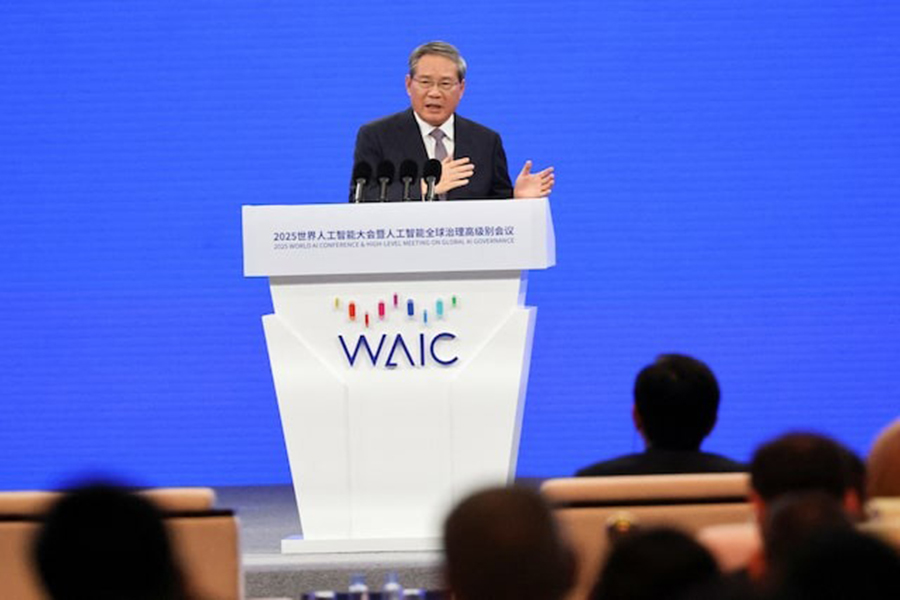
Chinese Premier Li Qiang speaks during the opening ceremony of World Artificial Intelligence Conference in Shanghai, China on July 26, 2025 — Reuters photo

China said on Saturday it wanted to create an organisation to foster global cooperation on artificial intelligence, positioning itself as an alternative to the US as the two vie for influence over the transformative technology.

China wants to help coordinate global efforts to regulate fast-evolving AI technology and share the country's advances, Premier Li Qiang told the annual World Artificial Intelligence Conference in Shanghai.

President Donald Trump's administration on Wednesday released an AI blueprint aiming to vastly expand US AI exports to allies in a bid to maintain the American edge over China in the critical technology.

Li did not name the United States but appeared to refer to Washington's efforts to stymie China's advances in AI, warning that the technology risked becoming the "exclusive game" of a few countries and companies.

China wants AI to be openly shared and for all countries and companies to have equal rights to use it, Li said, adding that Beijing was willing to share its development experience and products with other countries, particularly the "Global South". The Global South refers to developing, emerging or lower-income countries, mostly in the southern hemisphere.

How to regulate AI's growing risks was another concern, Li said, adding that bottlenecks included an insufficient supply of AI chips and restrictions on talent exchange.

"Overall global AI governance is still fragmented. Countries have great differences particularly in terms of areas such as regulatory concepts, institutional rules," he said. "We should strengthen coordination to form a global AI governance framework that has broad consensus as soon as possible."

SHANGHAI HEADQUARTERS

The three-day Shanghai conference brings together industry leaders and policymakers at a time of escalating technological competition between China and the United States - the world's two largest economies - with AI emerging as a key battleground.

Washington has imposed export restrictions on advanced technology to China, including the most high-end AI chips made by companies such as Nvidia and chipmaking equipment, citing concerns that the technology could enhance China's military capabilities.

Despite these restrictions, China has continued making AI breakthroughs that have drawn close scrutiny from US officials.

China's Vice Foreign Minister Ma Zhaoxu told a roundtable of representatives from over 30 countries, including Russia, South Africa, Qatar, South Korea and Germany, that China wanted the organisation to promote pragmatic cooperation in AI and was considering putting its headquarters in Shanghai.

The foreign ministry released online an action plan for global AI governance, inviting governments, international organisations, enterprises and research institutions to work together and promote international exchanges including through a cross-border open source community.

The government-sponsored AI conference typically attracts major industry players, government officials, researchers and investors.

Saturday's speakers included Anne Bouverot, the French president's special envoy for AI, computer scientist Geoffrey Hinton, known as "the Godfather of AI", and former Google CEO Eric Schmidt.

Tesla CEO Elon Musk, who has in past years regularly appeared at the opening ceremony in person or by video, did not speak this year.

Besides forums, the conference features exhibitions where companies demonstrate their latest innovations.

This year, more than 800 companies are participating, showcasing more than 3,000 high-tech products, 40 large language models, 50 AI-powered devices and 60 intelligent robots, according to organisers.

The exhibition features predominantly Chinese companies, including tech giants Huawei and Alibaba and startups such as humanoid robot maker Unitree. Western participants include Tesla, Alphabet and Amazon.​
 
Analyze

Analyze Post

Add your ideas here:
Highlight Cite Fact Check Respond

China urges global consensus on AI security, dev
Agence France-Presse . Shanghai, China 26 July, 2025, 22:30

China’s prime minister Li Qiang warned Saturday that artificial intelligence development must be weighed against the security risks, saying global consensus was urgently needed even as the tech race between Beijing and Washington shows no sign of abating.

His remarks came just days after US president Donald Trump unveiled an aggressive low-regulation strategy aimed at cementing US dominance in the fast-moving field, promising to ‘remove red tape and onerous regulation’ that could hinder private sector AI development.

Opening the World AI Conference in Shanghai on Saturday, Li emphasised the need for governance and open-source development, announcing the establishment of a Chinese-led body for international AI cooperation.

‘The risks and challenges brought by artificial intelligence have drawn widespread attention... How to find a balance between development and security urgently requires further consensus from the entire society,’ the premier said.

Li said China would ‘actively promote’ the development of open-source AI, adding Beijing was willing to share advances with other countries, particularly developing ones.

‘If we engage in technological monopolies, controls and blockage, artificial intelligence will become the preserve of a few countries and a few enterprises,’ he said.

‘Only by adhering to openness, sharing and fairness in access to intelligence can more countries and groups benefit from [AI].’

The premier highlighted ‘insufficient supply of computing power and chips’ as a bottleneck.

Washington has expanded its efforts in recent years to curb exports of state-of-the-art chips to China, concerned that these can be used to advance Beijing’s military systems and erode US tech dominance.

For its part, China has made AI a pillar of its plans for technological self-reliance, with the government pledging a raft of measures to boost the sector.

In January, Chinese startup DeepSeek unveiled an AI model that performed as well as top US systems despite using less powerful chips.

At a time when AI is being integrated across virtually all industries, its uses have raised major ethical questions, from the spread of misinformation to its impact on employment, or the potential loss of technological control.

In a speech at WAIC on Saturday, Nobel Prize-winning physicist Geoffrey Hinton compared the situation to keeping ‘a very cute tiger cub as a pet’.

‘To survive’, he said, you need to ensure you can train it not to kill you when it grows up.

In a video message played at the WAIC opening ceremony, UN secretary-general Antonio Guterres said AI governance would be ‘a defining test of international cooperation’.

The ceremony also saw the French president’s AI envoy, Anne Bouverot, underscore the ‘an urgent need’ for global action.

At an AI summit in Paris in February, 58 countries including China, France and India—as well as the European Union and African Union Commission—called for enhanced coordination on AI governance.

But the United States warned against ‘excessive regulation’, and alongside the United Kingdom, refused to sign the summit’s appeal for an ‘open’, ‘inclusive’ and ‘ethical’ AI.​
 
Analyze

Analyze Post

Add your ideas here:
Highlight Cite Fact Check Respond

Shanghai grapples with twin threats of tropical cyclone, tsunami

Published :
Jul 30, 2025 11:46
Updated :
Jul 30, 2025 11:46

1753924251290.webp

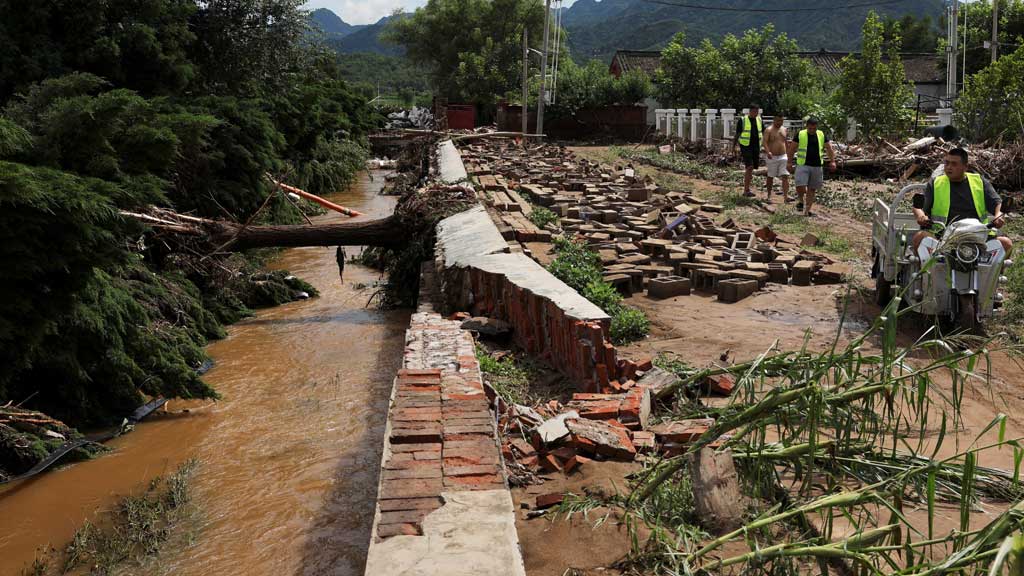
Men walk past fallen trees and damaged corn plants, after heavy rainfall flooded the area in Miyun district of Beijing, China Jul 29, 2025. REUTERS

Shanghai relocated more than 280,000 people, halted hundreds of flights and ferry services and imposed speed limits on roads and railways on Wednesday as a tropical storm whipped eastern China with gales and heavy rain.

Co-May's landfall in the port city of Zhoushan in Zhejiang province in the early hours of Wednesday was soon followed by warnings of a tsunami set off by a powerful earthquake off Russia's far east, raising concerns of larger-than-expected storm surges along the Chinese coast.

While the winds from Co-May were weaker than those generated by typhoons, the Chinese financial hub and other cities in the Yangtze River delta have taken no chances.

At least 640 flights could be cancelled at Shanghai's two main airports on Wednesday, including 410 at Pudong and 230 at Hongqiao, authorities said.

All ferry services in Shanghai had been cancelled since Wednesday morning, and drivers were told to drive under 60 kph (37 mph) on highways, local media reported.

Shanghai's Disneyland and Legoland remained open. But some rides and performances would be suspended at Legoland due to weather conditions, the park said.

Airports in nearby cities Ningbo, Wenzhou and Hangzhou also saw flight cancellations and diversions. As of Wednesday morning, more than 75 percent of Wednesday's flights at Zhoushan had been cancelled.

Some train services in the region were temporarily suspended with others operated under restricted speeds, state media said.

Shanghai is rarely subject to direct hits from strong typhoons that generally make landfall further south in China. The most significant typhoon in recent years that landed directly in Shanghai was Bebinca last year, the most powerful tropical cyclone to hit China's financial capital since 1949.

Co-May made landfall in Zhoushan in the early hours of Wednesday with maximum sustained wind speeds near its centre of 23 metres per second (83 kph). Forecasters expect Co-May to make another landfall closer to Shanghai later on Wednesday.

The storm coincided with a tsunami triggered by a magnitude 8.8 earthquake off Russia's Kamchatka Peninsula on Wednesday, about 4,000 km (2,500 miles) from Shanghai.

China's National Marine Environmental Forecasting Center said the tsunami was expected to have a "disastrous impact" on some parts of China's coast, including Shanghai and Zhoushan.

The natural resources ministry also issued tsunami warnings for the two cities, which could be hit by waves of up to 1 metre in height in the early evening.

Warnings of waves of up to 3 metres have been declared along Japan's Pacific coast due to the tsunami.

Tsunamis generated by earthquakes are capable of travelling thousands of kilometres across vast oceans without loss of power.​
 
Analyze

Analyze Post

Add your ideas here:
Highlight Cite Fact Check Respond

Electric vehicle prowess helps China’s flying car sector take off

1764554075100.webp

A flying car is displayed during the 21st Shanghai International Automobile Industry Exhibition in Shanghai. Competition is heating up among global tech giants over the future of aerial mobility, with Tesla CEO Elon Musk teasing the debut of a flying car prototype within weeks. Photo: AFP/FILE

A worker in white gloves inspects the propellers of a boxy two-seater aircraft fresh off the assembly line at a Chinese factory trialling the mass production of flying cars.

Globally, technical and regulatory challenges have prevented the much-hyped flying car sector from getting off the ground.

But Chinese companies are building on rapid development of drones and electric vehicles (EVs) in the world's second-largest economy, while harnessing government support for the futuristic inventions.

"China has the potential to establish a competitive edge" for flying cars, said Zhang Yangjun, a professor at Tsinghua University's School of Vehicle and Mobility.

"Future competition will increasingly hinge upon cost control and supply-chain efficiency, and these are areas where China holds clear advantages," he told AFP.

At the brightly lit factory in the southern industrial heartland of Guangzhou, logistics robots zip around ferrying unfinished parts.

The lightweight six-propeller aircraft under construction take off vertically and fit into a large car, to create the "Land Aircraft Carrier" -- a modular flying vehicle made by Aridge, an arm of Chinese EV maker XPeng.

The flying part is stored and charged in a wheeled on-land vehicle dubbed "the mothership".

At full capacity, the Aridge factory can churn out one every 30 minutes. It began its trial production phase in early November and the company plans to start deliveries next year, saying it has had more than 7,000 pre-orders.

But there is a long way to go before flying cars are whizzing through the air every day.

"Regulations, the consumer's comfort with this product, and also how you manage airspaces, your supply chains, all need to catch up gradually," Michael Du, vice president of Aridge, told reporters at a recent event.

Competition is heating up among global tech giants over the future of aerial mobility, with Tesla CEO Elon Musk teasing the debut of a flying car prototype within weeks.

"If you took all the James Bond cars and combined them, it's crazier than that," Musk told the Joe Rogan Experience podcast.

American aviation pioneer Glenn Curtiss debuted the first flying car prototype in 1917.

But successful designs have only become possible in recent years as electric motors and high-performance batteries have advanced.

Major players in the sector have conducted manned test flights, including California-based companies Joby and Archer, as well as Aridge, EHang and Volant in China.

This year EHang became the world's first flying car company to be fully approved for commercial operation, something Aridge has yet to achieve.

EHang plans to introduce an air taxi service, priced similarly to a premium road taxi, within three years.

"Flying cars remain at an early developmental stage," said Zhang, who edited a white paper on China's flying car industry.

He still sees the sector as worthy of long-term endeavour, and authorities agree.

Beijing has named the "low-altitude economy" -- flying cars, drones and air taxis -- as a strategic field for the next five years, seeking to accelerate their development.

Provincial governments from Guangdong to Sichuan have pledged to loosen restrictions.

A Boston Consulting Group report said China's flying car market is approaching "a critical inflection point", and predicted it will be worth $41 billion by 2040.

However, the sector has struggled to find viable business models elsewhere, with several high-profile insolvencies in Europe, and leading US players burning through cash with plans for mass production yet to materialise.

Direct comparisons between the sector in China and other international markets is tricky.

But "in terms of the EV supply chain, China is far in the lead", said Brandon Wang, a Beijing-based investor whose portfolio includes AI, robotics and flying cars.

Flying cars can use EV parts once they are certified for aviation use, which may help Chinese companies scale up.

China also has an "engineer dividend" that allows its companies to quickly solve technical issues in the production process, Wang added.​
 
Analyze

Analyze Post

Add your ideas here:
Highlight Cite Fact Check Respond

China’s rare earths El Dorado gives strategic edge
Agence France-Presse . Ganzhou 21 December, 2025, 23:25

Buried in the reddish soil of southern China lies latent power: one of the largest clusters of crucial rare earths is mined around the clock by a secretive and heavily guarded industry.

The hills of Jiangxi province are home to most of China’s rare earth mines, with the materials used in a wide range of products including smartphones and missile guidance technology.

The flourishing industry is closely protected by Chinese authorities and media access is seldom granted.

In a rare visit to the region last month, AFP journalists were trailed and monitored by minders who declined to identify themselves. Companies did not accept requests for interviews.

Business has been booming: the number of rare earth processing points in China observed by the US Geological Survey jumped from 117 in 2010 to 2,057 by 2017. Most of the 3,085 nationwide recorded by the USGS today are clustered in the hills of Jiangxi.

Locals there told AFP that one rare earths mine was maintaining near-constant operations.

‘It’s busy 24 hours a day, seven days a week,’ a resident in the town of Banshi said.

Nearby, construction work was getting started for the day on a vast new industrial park housing facilities including rare earth processing sites.

The bustling mining region is the result of a decades-long push by Beijing to build up its might in the strategic sector.

Those efforts paid off this year, with a tentative truce in a trade war with the United States reached when China relaxed stringent export controls on rare earths.

Washington is now racing to establish alternative supply chains, but experts warn such efforts will take years.

In a sign of deepening concern among other Western governments, the European Union announced new measures this month to reduce the bloc’s dependence on China for securing the critical minerals.

The bloc said it would earmark nearly three billion euros ($3.5 billion) to support projects in mining, refining and recycling vital materials, and proposed the creation of an EU supply hub -- the European Centre for Critical Raw Materials.

‘The Middle East has oil, China has rare earths,’ former Chinese leader Deng Xiaoping said in a 1992 speech.

Since then, China has taken advantage of its natural reserves -- the largest of any country -- to dominate processing and innovation in the field.

The country’s rare earths industry is concentrated in two main hubs.

One is the Inner Mongolia region’s Bayan Obo mining district on the edge of the Gobi Desert, which is rich in ‘light’ rare earths used for magnets in everyday items.

The other hub, around the city of Ganzhou in Jiangxi, specialises in ‘heavy’ rare earths -- harder to extract but more valuable because of their use in heat-resistant magnets, fighter jet engines, missile guidance systems and lasers.

The rugged hills surrounding Ganzhou are home to the world’s largest mining and processing operations of the strategic ‘heavy’ elements, including dysprosium, yttrium and terbium.

And in the county-level district of Longnan alone, USGS counted 886 such locations, accounting for 31.5 per cent of Jiangxi’s total.

An AFP team in Longnan saw rows of large rare earths processing plants in an industrial district adjacent to that dense smattering of extraction sites.

Heavy rare earths are formed over millions of years, as rainfall weathers igneous rocks, breaking them down and leaving elements concentrated near the surface.

Jiangxi’s gentle slopes, high rainfall and natural stone make it a prime location for such elements.

Mining methods in the region have evolved throughout the decades.

Authorities have criticised highly destructive approaches and cracked down on what they call ‘chaotic extraction’ since the early 2010s.

One method -- termed ‘moving mountains’ -- was described in 2015 by China’s top industry and technology regulator as ‘first cutting down trees, then clearing weeds and finally stripping away the topsoil, causing irreparable damage’.

Unlicensed mining has been drastically reduced over time.

Large signs in rural areas now warn against illegal extraction of rare earth resources. Others offer cash rewards for reporting such actions.

The industry has been largely consolidated into two huge state-owned companies.

On a Ganzhou street dubbed ‘Rare Earth Avenue’, construction workers bustled to complete a sprawling new headquarters for one of those giants, China Rare Earth Group.

But the province’s hills still bear the scars of bygone mining practices, with bare patches of red soil visible where vegetation has struggled to regrow.​
 
Analyze

Analyze Post

Add your ideas here:
Highlight Cite Fact Check Respond
Why is China not standing by Iran and Venezuela?

The Venezuela and Iran models clearly show that Trump is seeking to remove the governments of countries close to China in the Middle East and South America through open aggression. Yet why China is not standing by its geopolitical “friends” is written by Altaf Parvez.

Altaf Parvez
Published: 12 Jan 2026, 17: 08

1768266623975.webp


After "Operation Absolute Resolve” in Venezuela, it appears that US President Trump has now set his sights on Iran. China purchases large amounts of fuel oil from both countries. By installing potential puppet governments in Venezuela and Iran, Trump aims to push China into an energy and trade crisis as well. For a long time, one of the United States’ key objectives has been to economically contain China. This time, that strategy is taking on a new form—by weakening China’s economic partners.

In the face of danger confronting its “friendly” states, what will the People’s Republic of China do now? Can Xi Jinping stop Trump? If so, how? And is China even willing to play such a role?

Selective aggression against China’s allies

By now, almost everyone agrees that Trump’s aggression against Venezuela is primarily aimed at controlling the country’s oil resources. China is the main buyer and consumer of Venezuelan oil. By December 2024, China’s daily appetite for fuel oil stood at around 16 million barrels. The rise in demand in the global oil market has largely been driven by China. Between 2013 and 2023, 60 per cent of the growth in global oil demand was attributable to China.


However, as China has begun to seek alternative energy sources, its demand for crude oil is declining. By prioritizing environmentally friendly production systems, China has also been reducing its dependence on fossil fuels. Moreover, the expansion of the services sector, as opposed to manufacturing, is causing shifts in its energy demand.

Even so, China remains the world’s leading consumer of fossil oil. It imports 50–60 per cent of the mineral oil it needs, producing the rest domestically. Although it ranks 14th globally in oil reserves, it is the second-largest consumer. As a result, China is still a major importer in this sector. China has been purchasing a portion of its required fossil oil from Venezuela.

1768266807112.webp

The United States abducted Nicolas Maduro after launching an attack in Caracas. Reuters

China’s stakes in Venezuela and US pressure

Although Venezuela is not China’s largest oil source, it is still an important one. From Venezuela’s perspective, China is a major buyer of its oil and has also been a significant financial supporter. China had extended nearly $10 billion in advance loans for oil purchases. US aggression has not only disrupted China’s fuel supply but also frozen those loans.

Venezuela possesses one of the world’s largest crude oil reserves, but due to US economic sanctions, it could not extract or sell oil at full capacity, causing ongoing economic hardship. China has taken Venezuelan oil in exchange for loans. Additionally, China has $18 billion in investments in Venezuela, which are now at risk. Specialised refineries in China had been built to process the unique type of crude oil from Venezuela; these facilities are now facing both technical and financial difficulties.

China also imports oil from Russia and Iran, which are similarly under US sanctions. Like Venezuela, China is the top destination for much of Iran’s oil exports. A major reason for US hostility toward Venezuela and Iran is China. These sanctions and aggressive measures aim to create difficulties for China’s economic growth. By disrupting oil supplies, freezing loans to friendly countries, and targeting China’s global trade networks, the US seeks to put additional pressure on Beijing.

Should China retreat from South America?

Over the past decades, China has expanded its global influence through trade and credit. In the last twenty years, it became the main trading partner for South America, with significant investments across most countries in the region. Just last year, a summit of South American nations was held in Beijing, where Xi Jinping announced several new billion-dollar investments. Economic projects have increased the number of Chinese nationals in Brazil, Cuba, Paraguay, Peru, and Venezuela. The volume of cargo shipped from China to the region has grown fivefold from 2005 to 2024, while imports from the region have increased sixfold.

In 2024, Beijing signed free trade agreements with Chile, Costa Rica, Ecuador, Nicaragua, and Peru. At least 20 countries in the region are connected to China’s “Belt and Road Initiative,” and Chinese banks have extended at least $120 billion in loans to these countries since 2005. These developments have prompted the US to significantly adjust its foreign policy.

Historically, Washington has used various pretexts to overthrow governments worldwide, often secretly or semi-secretly, when those governments sought to operate independently. The models of Venezuela and Iran show that Trump now aims to openly remove governments closely allied with China in the Middle East and South America.
Trump’s advisors have indicated that they do not want any Chinese presence in the Western Hemisphere; the region must remain fully submissive to US interests. The “National Security Strategy” announced in 2025 reflects this approach. Similarly, the US aims to shape the Middle East through Israel. Any government in these regions deemed “opposed to American interests” could face intervention by organisations like the CIA or Delta Force.

Geopolitical commentators are calling this a modern, renewed version of the United States’ old “Monroe Doctrine.” Nearly two centuries ago, President James Monroe spoke of regarding South America as a kind of colonial sphere. Under Trump, this new neo-colonial ambition is now taking shape as a completely new world order.

As part of this objective, Iran was targeted after Venezuela. Due to a lack of political freedom and an authoritarian government, many Iranian cities have long experienced anger and protests. The US sanctions, combined with Israel’s attacks last year, have worsened Iran’s economic situation. The local currency has plummeted, fueling widespread public dissatisfaction. Protests have erupted on the streets across the country this week.

1768266693321.webp

Protests have spread across Iran. Iran has accused the United States of fueling these demonstrations. AFP

Taking advantage of this opportunity, the United States and Israel are attempting to bring the exiled heirs of the Shah, who was overthrown in 1979, back to power. Encouraged by the US, a civil war has already erupted in the country. Through this, the Trump administration aims to seize Iran’s oil resources, much like it did in Venezuela.

This would mean gaining control over two of the three countries with the largest oil reserves in the world. The third country, Saudi Arabia, is already governed by Washington’s long-standing allies. If the Iran operation succeeds, the US would be able to easily control the oil market, prices, and distribution.


What will China do now?

Naturally, the question arises: what will China do now? The world has observed that during the US attack on Iran last June (Operation Midnight Hammer), China did not firmly stand by Tehran. Similarly, in Syria, Libya, and Venezuela, Beijing neither established effective resistance against US interventions—whether covert or overt—nor has it wanted to. Russia’s role has been similar. So, will Trump’s ongoing aggressive military and economic programmes continue unchecked? In such an insecure world, what protection do smaller nations have?

At present, China appears to be avoiding any direct involvement in wars, choosing instead to focus entirely on achieving technological superiority. Beijing believes that renewable energy and artificial intelligence will transform the world in unimaginable ways. Through technology, China hopes to gradually undermine the United States’ global dominance, which has been built on longstanding military and financial structures, primarily via peaceful means. China also believes that artificial intelligence will soon significantly enhance its military capabilities.

Last year’s India-Pakistan conflict provided some practical validation of China’s assumptions. During that conflict, Pakistan successfully employed Chinese satellite jamming technology against Indian fighter jets obtained from France, surprising the Western world. However, the US’s ability to carry out a coordinated land, sea, and air operation in Venezuela to abduct Maduro remains a major demonstration of its military and intelligence capabilities. Similarly, Delta Force eliminated Iran’s General Qasem Soleimani and Al-Qaeda leader Osama bin Laden.

Washington’s military and intelligence capacity allows it to take aggressive actions in multiple regions against multiple powers simultaneously. Yet, while these operations highlight the US’s military superiority, they do not necessarily guarantee global leadership or directly halt China’s economic and technological rise. Even Trump’s widely publicised tariff war starting January last year did not succeed in fully containing China.

For these reasons, US policymakers have now adopted a more overt strategy to target China’s strategic positions. But from China’s perspective, in most past cases where the US has intervened abroad, Washington has struggled to exit conflicts with an image of clear success. In every engagement, it has had to rely continuously on its own “agents.” Now, it may also have to bear the cost of such “support” to control resources in these countries.

Starting a war or intervention is relatively easy, but exiting it can become extremely difficult—a lesson illustrated by Russia’s four-year-old campaign in Ukraine. China is likely extremely cautious about engaging directly in conflicts based on such experiences. Yet, the question remains: can China protect smaller nations seeking independence from US aggression, or provide any practical assurance?

Experience in Syria, Iran, and Venezuela suggests the answer is negative. Neither China nor present-day Russia has made any principled commitment to stand by “friendly” nations under attack. Their public position is limited to strong words of condemnation and official statements. China is also particularly cautious not to jeopardise its access to US markets. While the competition between China and the United States over market expansion and resource acquisition appears intense, the differences in political and economic principles are not as vast. In fact, Beijing has no intention of using the Maduro abduction as a reason to block Trump’s upcoming visit to China in April.

Reflections on the global situation

“Operation Absolute Resolve” in Venezuela is clearly the result of a long-standing secret plan. However, it remains uncertain whether China was fully aware of these plans, whether it provided Venezuela with the necessary support to resist the aggression, or whether “friendly” countries can expect any such assistance from China in the future. Some even argue that the narrative of China ending the US-centered world order is itself a mindset created by Washington, aimed at legitimising its aggressive policies at home.

In such a situation, as the world enters a new, brutal future, what can the people of small nations do to safeguard their resources and sovereignty? Citizens of these countries face a stark reality: without a principled global alliance that is democratic, pluralistic, and respects non-interference in other nations’ internal affairs, it is extremely difficult to resist aggressive powers like Trump. Yet, at present, no such anti-imperialist global solidarity exists. This is reminiscent of the situation described by Antonio Gramsci in Mussolini’s fascist prisons: “The old is dying, but the new cannot be born; this is the time of the monster.”

Today, everywhere, the “monster” is simultaneously accuser, judge, and police. It is truly an age of uncertainty—what the Greeks called an interregnum. It is also a time to investigate the causes and drivers behind the campaigns through which America sought to eliminate socialist systems from the world 35 years ago, particularly regarding the provision of energy resources and other support.

#Altaf Parvez is a researcher on history​
 
Analyze

Analyze Post

Add your ideas here:
Highlight Cite Fact Check Respond

Members Online

Latest Posts

Latest Posts

Post