Bangladesh Defense
Saif
Senior Member
- Joined
- Jan 24, 2024
- Messages
- 20,762
- Likes
- 9,684
- Nation

- Residence
- Axis Group


Corruption: draining the nation
MORE than a quarter century ago, in 1998, the Fiscal Affairs Department of the International Monetary Fund launched a Working Paper...
 www.newagebd.net
Corruption: draining the nation
Published: 00:00, Mar 02,2024

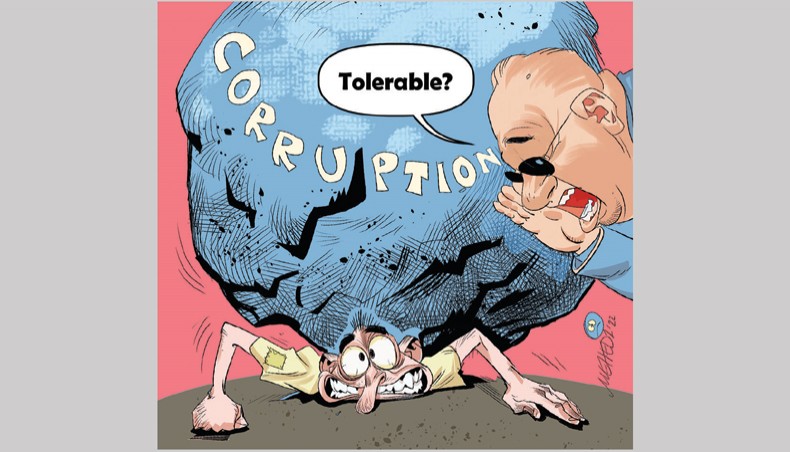

— New Age/Mehedi Haque
A culture of confrontational politics between political parties has weakened, beyond imagination, the rule of law and has led to the complete politicisation of all major state institutions, including the judiciary and bureaucracy, writes Humayun Kabir
MORE than a quarter century ago, in 1998, the Fiscal Affairs Department of the International Monetary Fund launched a Working Paper, written by Vito Tanzi, entitled ‘Corruption Around the World: Causes, Consequences, Scope and Cures’. In the abstract of the paper, Tanzi wrote, ‘…the fight against corruption may not be cheap and cannot be independent from the reform of the state. If certain reforms are not made, corruption is likely to continue to be a problem regardless of actions directly aimed at curtailing it.’ In this essay, we will focus on corruption history and trends in Bangladesh, explore options to contain corruption, and challenge the impunity with which it is treated. More than anything else, we ought to see how this menace has become a serious threat to our democracy and diminished our rightful place as a civilised nation. This scourge may explode before long, destabilising our economic and social lives and thereby rendering us empty from the inside.
At the outset, we must remember that it is not possible to measure corruption, but it is possible to measure perceptions of corruption. Also, actions can be taken to reduce corruption, but the fight against it cannot be seen independently from the need to reform the role of the state. Tanzi, in his paper, highlighted that a ‘certain role of the state almost inevitably creates a fertile ground for corruption.’
Bangladesh, over time, has shown all those symptoms to have taken hold at every level of society. It is generally accepted that corruption in Bangladesh is the most widespread pandemic today.
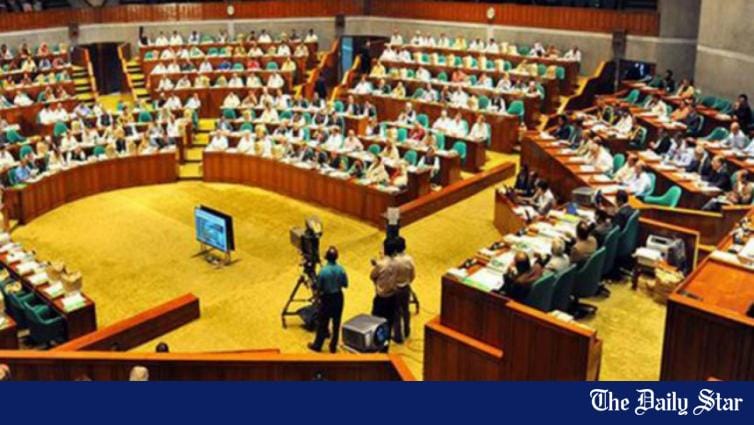
At a workshop on corruption held in Dhaka eight years ago, it was noted that ‘politics in Bangladesh can be characterised as a battle between established elites over state resources.’ Nothing could be a bigger truth than that. A culture of confrontational politics between political parties has weakened, beyond imagination, the rule of law and has led to the complete politicisation of all major state institutions, dare I say, including the judiciary and bureaucracy. As well, the powerful, resource-rich business interests, most of whom are also members of parliament, have increasingly taken over the parliament and the control of the political parties. It does not take a genius to fathom that even if we claim to have a relatively strong legal framework to deal with corruption, weak implementation (due to poor quality bureaucrats) and political interference and patronage undermine efforts in Bangladesh. Transparency International Bangladesh contextualised the situation of ongoing battles between parties over state resources by saying,’ the winner takes it all, and the game is played by the use of force and resorting to violence. Staying in power or capturing it is the only option, and hence election only under such terms would ensure victory.’
TI has also noted, and quite correctly by any standard of measure, that conflicts between and within political parties’ spill over into the public sector, impeding reform of state structures, progressive policy making and the development of an enabling environment for strong leadership at different levels of government. At the same time, while scoring very poorly consistently on the TI Corruption Perception Index, Bangladesh has recorded moderate to good progress on other indicators of socio-economic development, leading many observers to speak of a ‘Bangladesh Paradox’. It has long been argued that there is a strong connection between governance, ethics, integrity and corruption, all of which are the product of a complex interplay of political, economic, social and even psychological factors and forces. In the case of Bangladesh, it is argued that there exists an integrity-governance-corruption nexus, as a result of which virtually all the organs of government have become pervaded by corruption.
In all the major ranking institutions over the past decade, Bangladesh routinely finds itself among the most corrupt countries in the world. These reports emphasised that corruption is pervasive at all levels of society, and such practices go with impunity. They note that the Code of Criminal Procedure, the Prevention of Corruption Act, the Penal Code, and the Money Laundering Prevention Act criminalise attempted corruption, extortion, active and passive bribery, bribery of foreign public officials, money laundering and using public resources for private gains. Nevertheless, the fact remains that our anti-corruption legislation and all other national instruments aimed at containing corruption are inadequately enforced.
It is common knowledge, and many believe by heart that if a vigorous investigation is mounted against corruption in the public sector, we will find that huge amounts of public money have been swindled from the sector through malpractices and corruption. Shameful as it looks, it is to be admitted that Bangladesh has dropped two notches in the Corruption Perception Index 2023 of TI and now ranks 10th from the bottom. In Asia, only Afghanistan is worse than Bangladesh, and Pakistan, Sri Lanka, Nepal, India, the Maldives and Bhutan are all better placed than Bangladesh. And we share the spot with Iran, Lebanon, Zimbabwe and the CAR in Africa.
In this regard, the TI has observed that non-fulfilment of the government’s commitment to zero tolerance against corruption, intensified corruption in the public sector, and no effective action against money laundering were among the reasons that left Bangladesh facing a ‘very serious corruption problem.’ I must also point out against this fact the response from the Awami League general secretary as follows: ‘Corruption is found more or less around the world, but the way Bangladesh is being blamed is not fair at all.’ It would be relevant to point out that 105 of 180 countries scored below the global average, which means 80 per cent of the global population lives with a ‘very serious corruption problem.’
Rather than boldly facing the problem of corruption and dealing with it squarely, the Awami League general secretary has said in public that the government does not pay any heed to the CPI report. He said the TIB is the BNP’s (opposition party) agent, and it says whatever the BNP says. However, in September 2023, the then-planning minister of Bangladesh told the parliament that corruption had increased in many areas. His is the single honest voice from the Treasury Bench of the Parliament recently heard.
The Citizens’ Platform’s survey showed that nearly 70 per cent of youths described corruption and nepotism as the main obstacles to the country’s development. Quoting media reports, a newspaper ascribed a statement by an opposition political leader that, from 2009 until 2023, around Tk 900 billion has been looted. The news report added more such open loot from Islami Bank, with an alleged amount of Tk 300 billion. Global Financial Integrity reported that wealth is being syphoned out of the country by means of mis-invoicing the price of import and export products. In just nine years (2009–2018), Bangladesh lost $74 billion by means of money laundering. On September 11, 2023, Dhaka newspapers, quoting the CID, reported that by means of ‘Hundi’, TK 750 billion was laundered out of the country each year. In May 2023, the Global Rating Agency Moody’s downgraded Bangladesh’s credit rating from Ba3 to B1. A report from Bangladesh Bank said that surplus liquidity in the banking sector had fallen to TK 39.09 billion from TK 234.35 billion in 2022.
In July 2022, the Centre for Policy Dialogue, in partnership with the World Economic Forum, conducted a survey in which 64.6 per cent of the respondents’ said corruption was the biggest obstacle to doing business in the country, as they had to bribe even for tax payments, licences and utilities. It was revealed that though corruption remains the most problematic factor for doing business for most enterprises, the severity of its impact has gradually spread to other structural and newly emergent issues. Thus, 2022 and 2023 signified a situation of government instability, crime, and rampant theft. This survey concludes that rapid and sustained inflation, the debt crisis, and severe commodity price shocks remain the top three risks for Bangladesh in the near-term future. Similarly, it concludes that the cost-of-living crisis, unemployment at 41 per cent, and the livelihood crisis are the top three societal risks. All these symptoms are already in full play today in the economy of Bangladesh.
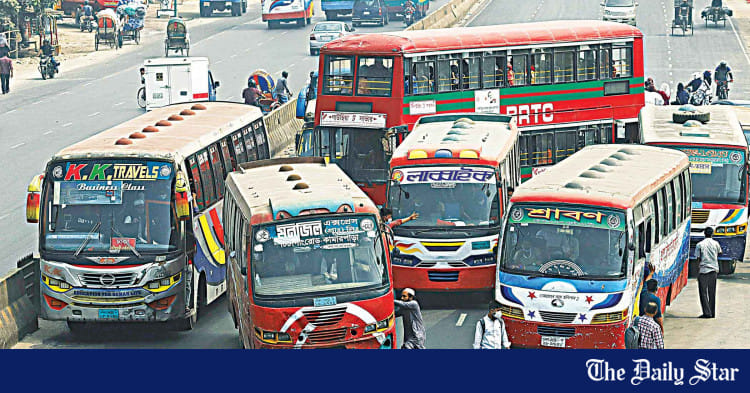
Is it possible to pinpoint the main public-sector institutions and agencies that have proven susceptible to rampant corruption? Analysts and researchers have concluded that bribery, rent-seeking and inappropriate use of public funds, excessive lobbying, long delays in services, pilfering, irresponsible conduct from government officials, and excessive bureaucratic intemperance and mindset have made public sector departments like law enforcement, water supply, electricity, gas supply, education, health, transportation, issuance of passports, and land records services susceptible to corruption. A total lack of accountability appears to have been a cause for this susceptibility to corruption.
The impact of corruption on the poor and ordinary citizens is profound. In Bangladesh, corruption hinders proper allocation of resources, weakens public services, reduces productivity, worsens poverty, marginalises the poor and helps create social unrest and discord. We now know that while corruption affects everyone, poorer sections of society suffer more acutely. A TIB study showed that the cost of petty corruption was estimated to be nearly 5 per cent of average annual household expenditure. For the well-to-do it is 1.3 per cent. Sadly, studies have concluded that despite the existence of a reasonably sound legal framework, the implementation and enforcement of legislation are largely inadequate, and a culture of non-compliance generally prevails.
It should also be highlighted that media, both print and on-air sources, have, at best, a mixed role in reporting on corruption. From time to time, in responding to allegations of corruption at the top of the government, the Prime Minister makes statements against corruption and frequently invokes the zero-tolerance policy. It is necessary to do so. But occasionally, as the situation demands, this policy should be seen to be applied too. That is what leadership in a democracy does. After all, what is needed for zero tolerance to yield a concrete result is a comprehensive, target-oriented national anti-corruption strategy to be developed by experts and stakeholders, and for this to be strictly enforced and independently monitored in the short, medium and long run.
In the end, it is necessary to make a forceful case for the Anti-Corruption Commission to be made totally independent from the administration and be empowered to investigate corruption without fear or intervention from any quarter. It must grasp the fact that corruption is a termite that shatters and paralyses the systems upon which countries run and develop. Its infamous nickname as a toothless tiger must be done away with. A corruption-free Bangladesh has remained a dream that has eluded its people for five decades. As its rightful citizens, we all now have to say: enough is enough.
In the end, the following measures are recommended for the government and our people to consider as seriously as possible. For anti-corruption intervention to have a sustained impact, it needs to either be feasible within the current system or sufficiently alter the system.
A full compliance with adhering to the norms and practices of the United Nations Convention against Corruption, to which Bangladesh is a signatory, must be ensured. Collective efforts must emanate from the national authority.
A renewed full-scale inquiry should be undertaken as a priority to identify various types of corruption, their effects and levels of harm, who are involved in the chain, what the drivers are, and how these factors interact.
There are international bodies that have developed specific tools and resources to tackle corruption. The examples are: UNDP’s Capacity Assessment of Anti-Corruption Agencies; USAID’s Anti-Corruption Assessment Handbook; and GIZ’s Guidelines for Integrating Anti-Corruption into the Planning and Implementation of Technical Assistance Projects. This will help avoid reinventing the wheel.
All targeted reform efforts need to employ a holistic approach and be linked to wider national plans.
A combination of top-down and bottom-up approaches to anti-corruption may be the most sustainable path to reform. Singapore and Botswana are the best models of top-down policy success. The Republic of Korea is the example to be followed for the bottom-up approach.
Lastly, the government should study and follow the World Development Report 2017 (World Bank), which recommends reshaping the policy arena to expand the set of policies that can be feasibly implemented.
Humayun Kabir is a former senior official of the United Nations.
— New Age/Mehedi Haque
A culture of confrontational politics between political parties has weakened, beyond imagination, the rule of law and has led to the complete politicisation of all major state institutions, including the judiciary and bureaucracy, writes Humayun Kabir
MORE than a quarter century ago, in 1998, the Fiscal Affairs Department of the International Monetary Fund launched a Working Paper, written by Vito Tanzi, entitled ‘Corruption Around the World: Causes, Consequences, Scope and Cures’. In the abstract of the paper, Tanzi wrote, ‘…the fight against corruption may not be cheap and cannot be independent from the reform of the state. If certain reforms are not made, corruption is likely to continue to be a problem regardless of actions directly aimed at curtailing it.’ In this essay, we will focus on corruption history and trends in Bangladesh, explore options to contain corruption, and challenge the impunity with which it is treated. More than anything else, we ought to see how this menace has become a serious threat to our democracy and diminished our rightful place as a civilised nation. This scourge may explode before long, destabilising our economic and social lives and thereby rendering us empty from the inside.
At the outset, we must remember that it is not possible to measure corruption, but it is possible to measure perceptions of corruption. Also, actions can be taken to reduce corruption, but the fight against it cannot be seen independently from the need to reform the role of the state. Tanzi, in his paper, highlighted that a ‘certain role of the state almost inevitably creates a fertile ground for corruption.’
Bangladesh, over time, has shown all those symptoms to have taken hold at every level of society. It is generally accepted that corruption in Bangladesh is the most widespread pandemic today.
At a workshop on corruption held in Dhaka eight years ago, it was noted that ‘politics in Bangladesh can be characterised as a battle between established elites over state resources.’ Nothing could be a bigger truth than that. A culture of confrontational politics between political parties has weakened, beyond imagination, the rule of law and has led to the complete politicisation of all major state institutions, dare I say, including the judiciary and bureaucracy. As well, the powerful, resource-rich business interests, most of whom are also members of parliament, have increasingly taken over the parliament and the control of the political parties. It does not take a genius to fathom that even if we claim to have a relatively strong legal framework to deal with corruption, weak implementation (due to poor quality bureaucrats) and political interference and patronage undermine efforts in Bangladesh. Transparency International Bangladesh contextualised the situation of ongoing battles between parties over state resources by saying,’ the winner takes it all, and the game is played by the use of force and resorting to violence. Staying in power or capturing it is the only option, and hence election only under such terms would ensure victory.’
TI has also noted, and quite correctly by any standard of measure, that conflicts between and within political parties’ spill over into the public sector, impeding reform of state structures, progressive policy making and the development of an enabling environment for strong leadership at different levels of government. At the same time, while scoring very poorly consistently on the TI Corruption Perception Index, Bangladesh has recorded moderate to good progress on other indicators of socio-economic development, leading many observers to speak of a ‘Bangladesh Paradox’. It has long been argued that there is a strong connection between governance, ethics, integrity and corruption, all of which are the product of a complex interplay of political, economic, social and even psychological factors and forces. In the case of Bangladesh, it is argued that there exists an integrity-governance-corruption nexus, as a result of which virtually all the organs of government have become pervaded by corruption.
In all the major ranking institutions over the past decade, Bangladesh routinely finds itself among the most corrupt countries in the world. These reports emphasised that corruption is pervasive at all levels of society, and such practices go with impunity. They note that the Code of Criminal Procedure, the Prevention of Corruption Act, the Penal Code, and the Money Laundering Prevention Act criminalise attempted corruption, extortion, active and passive bribery, bribery of foreign public officials, money laundering and using public resources for private gains. Nevertheless, the fact remains that our anti-corruption legislation and all other national instruments aimed at containing corruption are inadequately enforced.
It is common knowledge, and many believe by heart that if a vigorous investigation is mounted against corruption in the public sector, we will find that huge amounts of public money have been swindled from the sector through malpractices and corruption. Shameful as it looks, it is to be admitted that Bangladesh has dropped two notches in the Corruption Perception Index 2023 of TI and now ranks 10th from the bottom. In Asia, only Afghanistan is worse than Bangladesh, and Pakistan, Sri Lanka, Nepal, India, the Maldives and Bhutan are all better placed than Bangladesh. And we share the spot with Iran, Lebanon, Zimbabwe and the CAR in Africa.
In this regard, the TI has observed that non-fulfilment of the government’s commitment to zero tolerance against corruption, intensified corruption in the public sector, and no effective action against money laundering were among the reasons that left Bangladesh facing a ‘very serious corruption problem.’ I must also point out against this fact the response from the Awami League general secretary as follows: ‘Corruption is found more or less around the world, but the way Bangladesh is being blamed is not fair at all.’ It would be relevant to point out that 105 of 180 countries scored below the global average, which means 80 per cent of the global population lives with a ‘very serious corruption problem.’
Rather than boldly facing the problem of corruption and dealing with it squarely, the Awami League general secretary has said in public that the government does not pay any heed to the CPI report. He said the TIB is the BNP’s (opposition party) agent, and it says whatever the BNP says. However, in September 2023, the then-planning minister of Bangladesh told the parliament that corruption had increased in many areas. His is the single honest voice from the Treasury Bench of the Parliament recently heard.
The Citizens’ Platform’s survey showed that nearly 70 per cent of youths described corruption and nepotism as the main obstacles to the country’s development. Quoting media reports, a newspaper ascribed a statement by an opposition political leader that, from 2009 until 2023, around Tk 900 billion has been looted. The news report added more such open loot from Islami Bank, with an alleged amount of Tk 300 billion. Global Financial Integrity reported that wealth is being syphoned out of the country by means of mis-invoicing the price of import and export products. In just nine years (2009–2018), Bangladesh lost $74 billion by means of money laundering. On September 11, 2023, Dhaka newspapers, quoting the CID, reported that by means of ‘Hundi’, TK 750 billion was laundered out of the country each year. In May 2023, the Global Rating Agency Moody’s downgraded Bangladesh’s credit rating from Ba3 to B1. A report from Bangladesh Bank said that surplus liquidity in the banking sector had fallen to TK 39.09 billion from TK 234.35 billion in 2022.
In July 2022, the Centre for Policy Dialogue, in partnership with the World Economic Forum, conducted a survey in which 64.6 per cent of the respondents’ said corruption was the biggest obstacle to doing business in the country, as they had to bribe even for tax payments, licences and utilities. It was revealed that though corruption remains the most problematic factor for doing business for most enterprises, the severity of its impact has gradually spread to other structural and newly emergent issues. Thus, 2022 and 2023 signified a situation of government instability, crime, and rampant theft. This survey concludes that rapid and sustained inflation, the debt crisis, and severe commodity price shocks remain the top three risks for Bangladesh in the near-term future. Similarly, it concludes that the cost-of-living crisis, unemployment at 41 per cent, and the livelihood crisis are the top three societal risks. All these symptoms are already in full play today in the economy of Bangladesh.
Is it possible to pinpoint the main public-sector institutions and agencies that have proven susceptible to rampant corruption? Analysts and researchers have concluded that bribery, rent-seeking and inappropriate use of public funds, excessive lobbying, long delays in services, pilfering, irresponsible conduct from government officials, and excessive bureaucratic intemperance and mindset have made public sector departments like law enforcement, water supply, electricity, gas supply, education, health, transportation, issuance of passports, and land records services susceptible to corruption. A total lack of accountability appears to have been a cause for this susceptibility to corruption.
The impact of corruption on the poor and ordinary citizens is profound. In Bangladesh, corruption hinders proper allocation of resources, weakens public services, reduces productivity, worsens poverty, marginalises the poor and helps create social unrest and discord. We now know that while corruption affects everyone, poorer sections of society suffer more acutely. A TIB study showed that the cost of petty corruption was estimated to be nearly 5 per cent of average annual household expenditure. For the well-to-do it is 1.3 per cent. Sadly, studies have concluded that despite the existence of a reasonably sound legal framework, the implementation and enforcement of legislation are largely inadequate, and a culture of non-compliance generally prevails.
It should also be highlighted that media, both print and on-air sources, have, at best, a mixed role in reporting on corruption. From time to time, in responding to allegations of corruption at the top of the government, the Prime Minister makes statements against corruption and frequently invokes the zero-tolerance policy. It is necessary to do so. But occasionally, as the situation demands, this policy should be seen to be applied too. That is what leadership in a democracy does. After all, what is needed for zero tolerance to yield a concrete result is a comprehensive, target-oriented national anti-corruption strategy to be developed by experts and stakeholders, and for this to be strictly enforced and independently monitored in the short, medium and long run.
In the end, it is necessary to make a forceful case for the Anti-Corruption Commission to be made totally independent from the administration and be empowered to investigate corruption without fear or intervention from any quarter. It must grasp the fact that corruption is a termite that shatters and paralyses the systems upon which countries run and develop. Its infamous nickname as a toothless tiger must be done away with. A corruption-free Bangladesh has remained a dream that has eluded its people for five decades. As its rightful citizens, we all now have to say: enough is enough.
In the end, the following measures are recommended for the government and our people to consider as seriously as possible. For anti-corruption intervention to have a sustained impact, it needs to either be feasible within the current system or sufficiently alter the system.
A full compliance with adhering to the norms and practices of the United Nations Convention against Corruption, to which Bangladesh is a signatory, must be ensured. Collective efforts must emanate from the national authority.
A renewed full-scale inquiry should be undertaken as a priority to identify various types of corruption, their effects and levels of harm, who are involved in the chain, what the drivers are, and how these factors interact.
There are international bodies that have developed specific tools and resources to tackle corruption. The examples are: UNDP’s Capacity Assessment of Anti-Corruption Agencies; USAID’s Anti-Corruption Assessment Handbook; and GIZ’s Guidelines for Integrating Anti-Corruption into the Planning and Implementation of Technical Assistance Projects. This will help avoid reinventing the wheel.
All targeted reform efforts need to employ a holistic approach and be linked to wider national plans.
A combination of top-down and bottom-up approaches to anti-corruption may be the most sustainable path to reform. Singapore and Botswana are the best models of top-down policy success. The Republic of Korea is the example to be followed for the bottom-up approach.
Lastly, the government should study and follow the World Development Report 2017 (World Bank), which recommends reshaping the policy arena to expand the set of policies that can be feasibly implemented.
Humayun Kabir is a former senior official of the United Nations.