How DRDO’s recent scramjet test puts India firmly in the hypersonic weapons race
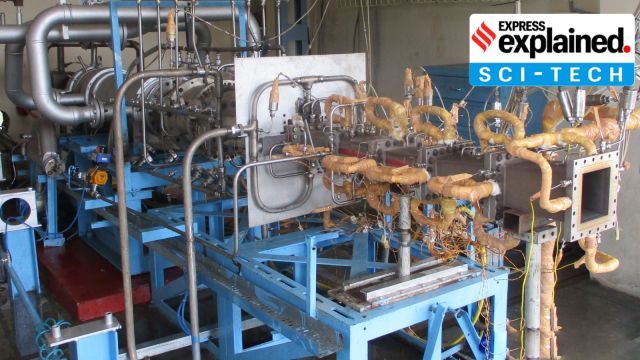
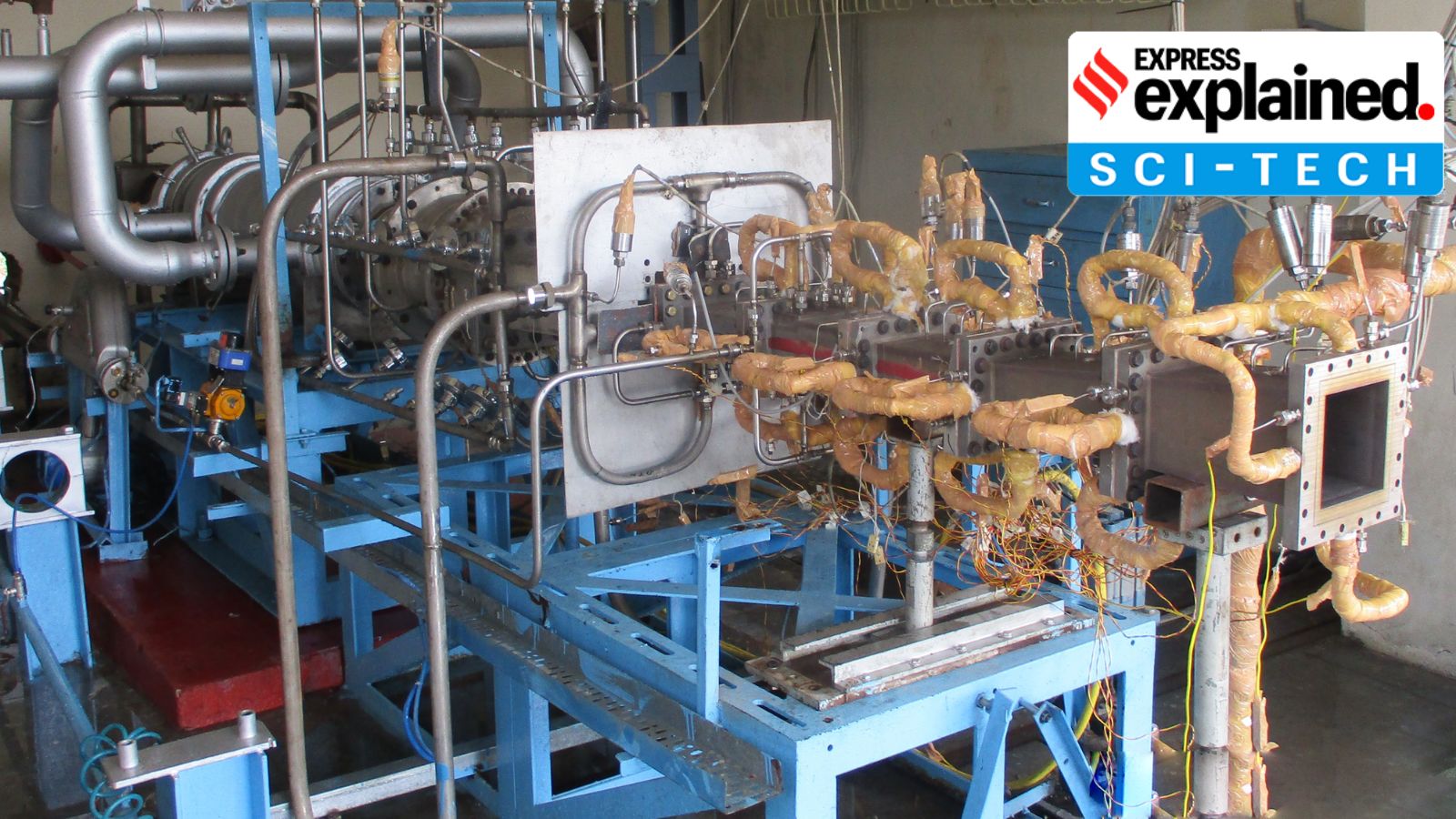
DRDL recently demonstrated a successful ground test of the Active Cooled Scramjet Combustor for 120 seconds for the first time in India, achieving a major milestone.
Written by
Sushant Kulkarni
Pune | Updated: January 24, 2025 05:26 IST
Scramjets efficiently operate at hypersonic speeds and allow supersonic combustion. (Photo - PIB)
The Defence Research and Development Organisation (DRDO)
recently demonstrated the scramjet combustor ground test for 120 seconds for the first time in India. The Ministry of Defence (MoD) has called it a crucial milestone in developing next-generation hypersonic missiles.
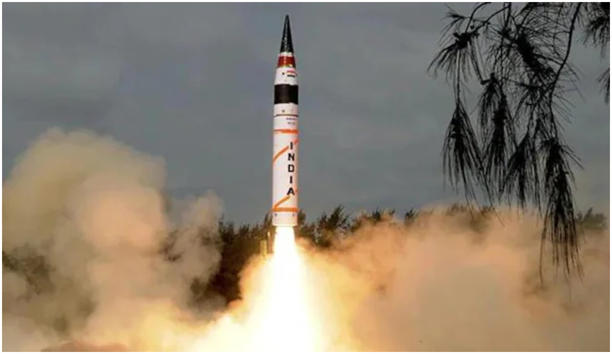
Hypersonic missiles are a class of advanced weaponry that travel at speeds greater than ‘Mach 5’ – five times the speed of sound.
We look at the journey of developing hypersonic technologies in India, and its strategic significance amidst a global race among military powers to develop these weapons.
Advertisement
The scramjet engine and its hypersonic abilities
Ramjets are air-breathing jet engines that use the vehicle’s forward motion to compress inflowing air for combustion without a rotating compressor. The fuel is injected into the combustion chamber where it mixes with the hot compressed air and ignites. A ramjet-powered vehicle requires an assisted take-off like a rocket assist to accelerate it to a speed where it begins to produce thrust.
Ramjets work most efficiently at supersonic speeds around Mach 3, three times the speed of sound. However, the ramjet efficiency reduces once the vehicle reaches hypersonic speeds – above Mach 5.

This is where the Supersonic Combustion Ramjet or Scramjet engine comes in. It efficiently operates at hypersonic speeds and allows supersonic combustion.
The fundamental change in a scramjet is that the air does not slow down in its combustion chamber but stays supersonic throughout the engine. This makes the design, development and operation of the scramjet far more challenging.
The 120-second scramjet ground test
The latest test, the date of which was not specified by the MoD, is a result of extensive work by the Defence Research and Development Laboratory (DRDL), a
Hyderabad-based facility of DRDO. The facility has been working towards developing a long-duration Supersonic Combustion Ramjet or Scramjet-powered Hypersonic technology.
Also Read |
What is Stargate, Trump’s $500-billion bid for global leadership in AI?
DRDL recently demonstrated a successful ground test of the Active Cooled Scramjet Combustor for 120 seconds for the first time in India, achieving a major milestone. The MoD said that the ground test of the scramjet combustor showcased several notable achievements, demonstrating its potential for operational use in Hypersonic vehicles like successful ignition and stable combustion.
The scramjet combustor incorporates an innovative flame stabilisation technique that holds continuous flame inside the combustor with an air speed of over 1.5 kilometres per second. The DRDO scientists explored many novel and promising ignition and flame-holding techniques over multiple ground tests, before arriving at the Scramjet Engine configuration.
Regarding the specialised fuel for the system, the MoD credited an indigenous endothermic scramjet fuel jointly developed for the first time by DRDL and its industry partners for this breakthrough. The fuel offers dual benefits of significant cooling improvement and ease of ignition.
Another key achievement amidst the development of hypersonic technologies is the development of Thermal Barrier Coating (TBC) which is designed to withstand extreme temperatures encountered during hypersonic flight. A new advanced ceramic TBC with high thermal resistance, capable of operating beyond the melting point of steel, has been jointly developed by DRDL and the Department of Science and Technology (DST).
Development of hypersonic technologies in India
The DRDO, the Indian Space Research Organisation (
ISRO) and their partners in academia and industry have been working on hypersonic engines and other technologies required for hypersonic systems for over two decades.
An important development in ISRO’s Air Breathing Propulsion Project occurred on August 28, 2016, when a successful flight testing of its Scramjet was held. This first experimental mission of ISRO’s Scramjet Engine was successfully conducted from Satish Dhawan Space Centre SHAR, Sriharikota.
Another experimental flight for the demonstration of Air Breathing Propulsion Technology on July 22, 2024. The propulsion systems were symmetrically mounted on either side of a Rohini Sounding rocket. ISRO’s focus is now on the Hypersonic Air Breathing Vehicle with Air Integration Systems (HAVA) project and the development of critical technologies.
ISRO also plans to use scramjet technology for its future vehicles as scramjet engines do not have to carry oxygen as oxidise. Thus rockets fitted with scramjet engines will be able to carry heavier satellites.
The DRDO started developing the hypersonic engine and its related systems in the early 2000s. On September 7, 2020, DRDO successfully demonstrated the hypersonic air-breathing scramjet technology with the flight test of the Hypersonic Technology Demonstration Vehicle (HSTDV) from Dr APJ Abdul Kalam Launch Complex at Wheeler Island, off the coast of
Odisha.
Also Read |
How ISRO’s maiden satellite docking exercise was aided by favourable space weather
In December 2020, the DRDO inaugurated the advanced Hypersonic Wind Tunnel (HWT) test facility in Hyderabad. It is a pressure vacuum-driven enclosed free jet facility that can simulate Mach 5 to 12 speeds. After the US and Russia, India became the third country in 2020 to have such a large facility in size and operating capability.
In February 2024, India’s first Hypervelocity Expansion Tunnel Test Facility was successfully established and tested by the Indian Institute of Technology, Kanpur (IITK). This achievement put India in a handful of countries with this advanced hypersonic testing capability. The development of the facility was supported by the Fund for Improvement in S&T Infrastructure (FIST) of the Department of Science & Technology (DST).
The strategic significance of hypersonic weapons
Hypersonic weapons have the potential to beat the existing Air Defence Systems of major military powers worldwide, and can deliver rapid, high-impact strikes. Several nations including the USA, Russia, India and China are actively pursuing Hypersonic technology and have demonstrated various levels of development.
In August 2021, China tested a nuclear-capable hypersonic glide vehicle that circled the globe before speeding towards its target, as reported by
Financial Times in October of that year. The
FT report cited five people familiar with the test who said the Chinese military launched a rocket carrying a hypersonic glide vehicle which flew through low-orbit space before cruising downward to its target. The test demonstrated an advanced space capability and caught US intelligence by surprise, the report had said.
The US is said to have conducted the first successful test of scramjet engines in 2002 followed by Russia, European Agency, Japan and then China. The reason for the race in the hypersonic domain is that they enhance the ability of the armed forces to negotiate even the most advanced missile defence systems and hit targets with minimal warning. Their manoeuvrability and very high speeds make interception extremely difficult, giving a decisive strategic advantage in offensive operations.
Want to go beyond the news and understand the headlines? Subscribe to Explained by The Indian Express
Among various hypersonic technology projects that the DRDO has undertaken are Aero acoustic studies for hypersonic vehicles, Frequency Selective Surface (FSS) applications using artificial intelligence, Thermal barrier coatings, Reaction Control Systems for Hypersonic Glide Vehicles, and endothermic fuels for high-temperature applications.
DRDL recently demonstrated a successful ground test of the Active Cooled Scramjet Combustor for 120 seconds for the first time in India, achieving a major milestone.

indianexpress.com
 Indian Defense



 Related video: BrahMos: India's supersonic edge in modern warfare (India Today)

