[🇧🇩] India's Water Terrorism Against Bangladesh

Quick Reply ✓ Posted!
[🇧🇩] India's Water Terrorism Against Bangladesh
321
16K
More threads by Saif

G Bangladesh Defense

Sharing water from common rivers
Published :
Sep 24, 2024 22:07
Updated :
Sep 24, 2024 22:07

1727227160126.webp

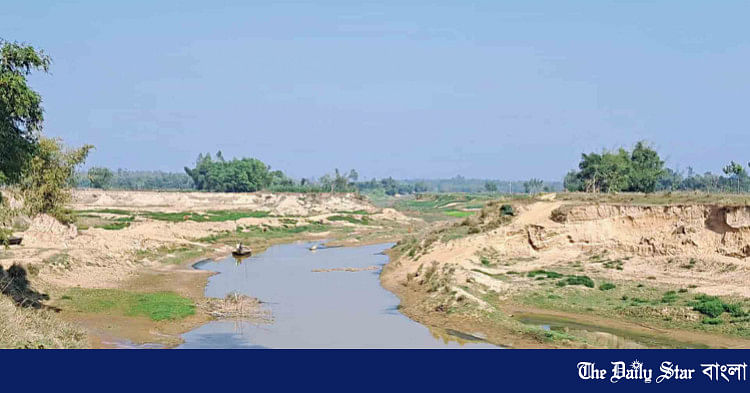
File photo used for representational purpose only

With some 54 rivers flowing down from upstream India through Bangladesh to the Bay of Bengal, the question of management and sharing of the water from these rivers between the two neighbours cannot be overstated. The late August flash floods caused by incessant rain and sudden onrush of waters from upstream state of Tripura in India that devastated the eastern, southeastern and northeastern districts of the country are a stark reminder of the danger a downstream country is exposed to in absence of river water management agreement with a country lying upstream. So far as the information sharing agreement with India is concerned, there was some misunderstanding. The two sides have contrary versions. What really happened should be made public. It is encouraging that the adviser to the environment, forest, climate change and water resources ministry during her recent visit to the flood-damaged eastern and north-eastern districts stressed urgent action on river water management between Bangladesh and India. Also, as a bulwark against future floods, the government, she further noted, was planning construction of embankments at strategic locations downstream. These are welcome decisions long time coming.

That the interim government has finally decided to take up the issue of water sharing from common rivers with India as a co-sharer, not a favour-seeker, is only expected of a self-respecting, sovereign co-basin country. Hopefully, the interim government will follow through with the promise in the future. Talking of the management and sharing of water from transboundary rivers, to date, only one long-term river water management treaty, the Ganges Water Sharing Treaty (GWST), exists between the two countries. But the GWST signed in 1996, too, is going to expire in 2026. So, it is imperative that the interim government start taking preparations for reviewing and renegotiating the treaty for Ganges water sharing after 1996. It is better, if a modified Ganges water sharing deal could be struck in which all the co-basin countries Nepal, Bangladesh and India are involved.

At the same time, Bangladesh should strongly pursue the stalled Teesta water sharing treaty. The irony is, the Teesta water sharing talks hit a dead end at a time when India's most friendly government of deposed Sheikh Hasina was in office in Bangladesh. Whereas, during the military regime in 1983, the two countries could reach a provisional agreement to share Teesta water during the lean pre-monsoon period. Under that agreement, Bangladesh would get 36 per cent of the water, while India would get 39 per cent, and the rest 25 per cent water would be left unallocated. Though the agreement was to expire in 1985, it was extended till 1987. Since then, no further progress on reviving the treaty was reported. However, a Teesta water deal set to be inked by the then-Indian prime minister Manmohan Singh during his Dhaka visit in 2011 was torpedoed by what was said to be India's internal politics. Let India's internal politics be the way it is. But that must not be a reason for depriving Bangladesh of its fair share of a transboundary river.

So, Bangladesh should activate the Joint Rivers Commission (JRC) to continue discussion on sharing waters from transboundary rivers including the Teesta with India. At the same time, it should also involve, if necessary, relevant international forums to get its legitimate share of water from the transboundary rivers between India and Bangladesh.​
 
‘পানির ন্যায্য হিস্যা নিশ্চিতে ভারতের সঙ্গে শিগগিরই বৈঠক’


বাংলাদেশের আন্তঃসীমান্ত ১০ নদীর ৪টির নিরাপদ প্রবাহ পথ নষ্ট হয়েছে
বাকি ছয়টি নদীর বিষয়েও সতর্ক করেছেন গবেষকরা।

1727397209331.webp

হালদা নদী। ছবি: স্টার

বাংলাদেশ বদ্বীপের ১০টি নদীর মধ্যে চারটি তার নিরাপদ প্রবাহ পথ (সেফ অপারেটিং স্পেস-এসওএস) অতিক্রম করেছে, যে কারণে বেশির ভাগ নদীর প্রবাহ উল্লেখযোগ্য পরিবর্তিত হয়েছে বলে আন্তর্জাতিক এক গবেষণায় উঠে এসেছে।

বাকি ছয়টি নদীর বিষয়েও সতর্ক করেছেন গবেষকরা।

ইউনিভার্সিটি অব গ্লাসগোর নেতৃত্বে বাংলাদেশ ইউনিভার্সিটি অব প্রফেশনালস, বঙ্গবন্ধু শেখ মুজিবুর রহমান কৃষি বিশ্ববিদ্যালয় এবং রিভারাইন পিপল যৌথভাবে এই গবেষণাটি সম্পন্ন করেছে।

গতকাল বুধবার গ্লাসগো বিশ্ববিদ্যালয়ের ওয়েবসাইটে 'স্টাডি টু এনহ্যান্স ওয়াটার সিকিউরিটি অ্যান্ড ক্লাইমেট রেসিলিয়েন্স ইন দ্য বাংলাদেশ ডেল্টা' শিরোনামে এই গবেষণার প্রতিবেদন প্রকাশিত হয়।

এতে বলা হয়, বাংলাদেশ বদ্বীপের প্রধান নদীগুলোর নিরাপদ প্রবাহ পথ সংজ্ঞায়িত করার এটিই প্রথম আন্তর্জাতিক গবেষণা, যা বৈশ্বিক জলবায়ু পরিবর্তনে বিশ্বের সবচেয়ে ঝুঁকিপূর্ণ বদ্বীপগুলোর একটির স্থিতিস্থাপকতা বাড়াতে সহায়তা করবে।

প্রতিবেদনে জানানো হয়, এই গবেষণার মূল্যবান বৈজ্ঞানিক তথ্য-উপাত্ত আন্তঃসীমান্ত পানি সম্পর্কিত বিজ্ঞান ও নীতিমালা সম্পর্কে জানাবে এবং বাংলাদেশ ও দক্ষিণ এশিয়ার টেকসই উন্নয়ন লক্ষ্যমাত্রা (এসডিজি) অর্জনে অবদান রাখবে।

জার্নাল এনভায়রনমেন্টাল রিসার্চ লেটারসে এই গবেষণার ফলাফল প্রকাশিত হয়েছে।

গবেষণার নেতৃত্বে ছিলেন ইউনিভার্সিটি অব গ্লাসগোর স্কুল অব সোশ্যাল অ্যান্ড এনভায়রনমেন্টাল সাসটেইনেবিলিটির গবেষক ড. মো. সারোয়ার হোসেন।

তিনি বলেন, 'জলবায়ু পরিবর্তনের প্রেক্ষাপটে এসডিজি অর্জনের জন্য সব টেকসই উন্নয়ন লক্ষ্যমাত্রায় (এসডিজি) পানির অবদান গুরুত্বপূর্ণ। এটি একটি বড় চ্যালেঞ্জ তৈরি করেছে, কারণ বৈশ্বিক জনসংখ্যার প্রায় ৪০ শতাংশ পানির ঘাটতিতে থাকেন, যার মধ্যে বাংলাদেশও আছে, যা বৃহত্তম, সর্বাধিক জনবহুল এবং জলবায়ু-ঝুঁকিপূর্ণ বদ্বীপগুলোর একটি।'

'যদিও বাংলাদেশকে নদীর দেশ বলা হয়, তবে বাংলাদেশের নদীগুলোর আন্তঃসীমান্ত প্রকৃতি মূলত পানি নিরাপত্তার জন্য ঝুঁকি তৈরি করে, যা বৈশ্বিক জলবায়ু পরিবর্তনের কারণে আরও বেড়েছে। অতএব পানি নিরাপত্তার চ্যালেঞ্জগুলোকে না উৎরাতে পারলে এবং আন্তঃসীমান্ত পানি বিরোধ মীমাংসা না করলে বাংলাদেশ বদ্বীপে জলবায়ু পরিবর্তনের ধাক্কা সামলে নেওয়ার সক্ষমতা বাড়ার সম্ভাবনা নেই। যা এখন খুব প্রয়োজন', যোগ করেন তিনি।

গবেষণায় বাংলাদেশ বদ্বীপের সামাজিক-বাস্তুসংস্থান ব্যবস্থায় নিরাপদ প্রবাহ পথের মধ্যে নদী প্রবাহ বজায় রাখার জন্য ন্যায্য এবং ন্যায়সঙ্গত চুক্তি, পরিবেশগত পুনরুদ্ধার এবং প্রযুক্তিগত সমাধানগুলোর প্রয়োজনীয়তা তুলে ধরা হয়েছে। এ ছাড়া, এতে ১৯৯৬ সালে গঙ্গা পানিবণ্টন চুক্তি সই হওয়া সত্ত্বেও গঙ্গা নদীর নিরাপদ প্রবাহ পথ বজায় রাখার ক্ষেত্রে চ্যালেঞ্জগুলোও প্রকাশ করা হয়েছে।

গবেষণায় দেখা গেছে, বেশ কয়েকটি নদীর প্রবাহ তার নিরাপদ প্রবাহ পথ অতিক্রম করেছে, যা চিহ্নিত করে যে, বিদ্যমান ব্যবস্থাপনা এবং চুক্তিগুলো পানির টেকসই ব্যবস্থাপনা নিশ্চিতের জন্য যথেষ্ট নয়।

আন্তঃসীমান্ত নদী প্রবাহের ক্রমহ্রাসমান প্রবণতা মোকাবিলায় মেকং নদী কমিশন ও সিন্ধু জল চুক্তির মতো সাফল্যের গল্পগুলো গঙ্গা নদীর জন্য নেপাল এবং যমুনা নদীর জন্য চীন ও ভুটানসহ ভারতের সঙ্গে দ্বিপাক্ষিক এবং বহুপাক্ষিক চুক্তির জন্য গৃহীত হতে পারে বলে গবেষণায় সুপারিশ করা হয়েছে।​
 

India's hydropower projects, power corridor, and our concerns

1727743029658.webp

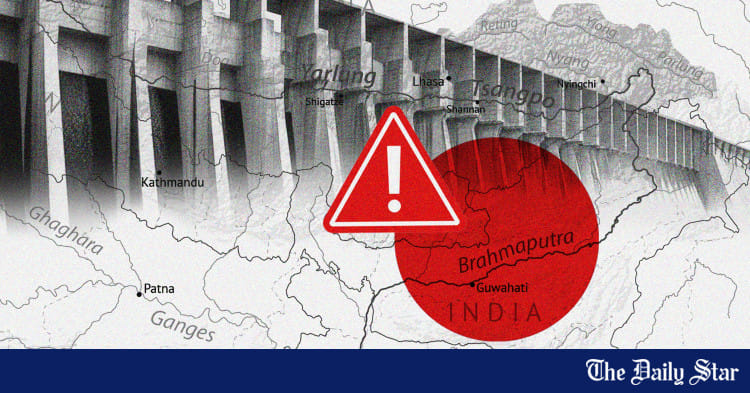
There is a serious lack of information in Bangladesh regarding the danger of the hydropower projects in Arunachal Pradesh, India. VISUAL: ANWAR SOHEL

India has recently decided to invest $1 billion to expedite the construction of 12 hydropower projects upstream of the Brahmaputra River in the northeastern state of Arunachal Pradesh. A couple of months ago, the federal finance ministry approved up to 750 crore rupees ($89.85 million) as financial assistance to each hydropower project in the state. Earlier in August 2023, the state government of Arunachal Pradesh signed a memorandum of agreement (MoA) with three central state-owned power companies to generate a total of 11,517 megawatts (MW) of electricity through these projects. Of these 12 projects, five projects of 2,620MW total capacity were allocated to the North Eastern Electric Power Corporation Limited (NEEPCO), five projects of 5,097MW capacity to Satluj Jal Vidyut Nigam Ltd (SJVN), and two projects of 3,800MW capacity to the National Hydroelectric Power Corporation Ltd (NHPC).

These hydroelectric projects with reservoirs of varying capacities will be built on different tributaries of Siang, Dibang and Subansiri rivers, which themselves are major tributaries of the Brahmaputra. For example, the 1,000MW Naying hydroelectric power project with a reservoir capacity of 82 million cubic metres is planned on the Siyom River, which is a major tributary of the Siang. The 680MW Attunli hydroelectric power project with a reservoir capacity of 13.96 million cubic metres will be built on the Tangon River which is a tributary of the Dibang. And the 1,800MW Kamala hydroelectric power project with a reservoir capacity of 623.58 million cubic metres is planned on the Kamala River, a tributary of the Subansiri.

Not only these 12 projects, the total hydropower potential of Arunachal Pradesh is estimated to be over 57,000MW, as per the central electricity authority of the state. To tap into this hydropower potential, India's plan is to construct at least 135 hydroelectric power projects on different tributaries of Brahmaputra River.

If so many hydropower projects are constructed by building dams upstream of the Brahmaputra, it will intensify water shortage in Bangladesh during the dry season, while during monsoon, opening the dams will increase the risk of flash floods. According to a study by the US-based Center for Naval Analyses (CNA), the Brahmaputra provides 75 percent of river water in Bangladesh during the dry season. Bangladesh is already getting 25 percent less than the required water from the Brahmaputra and facing human security pressure, which will be magnified by building dams upstream and water diversion activities.

Regrettably, there is a serious lack of information in Bangladesh regarding the danger of these hydroelectric projects. Moreover, arrangements are being made to facilitate transmission of the electricity generated from these power plant projects from the northeastern part to the northern, western and southern regions of India through Bangladesh. This huge amount of electricity cannot be used in the northeastern region of India due to a lack of demand, and it is also inconvenient for strategic and technical reasons to transmit this electricity through the narrow Siliguri Corridor in West Bengal. As the parliamentary standing committee on energy of 15th Lok Sabha explained, availability of power transmission corridors through the Chicken's Neck area is limited due to the requirement of space for habitation, railways, roads, oil and gas pipelines, communication links, etc and is gradually getting constricted.

For this reason, the Indian government has been pressuring Bangladesh for a long time to approve the construction of a power transmission corridor from northeast India through Bangladesh to other parts of the country. To this end, discussions have been going on for a long time in the meetings of Bangladesh-India Joint Working Group (JWG) and Joint Steering Committee (JSC). At last, at the 22nd meeting of the JWG on July 19—less than three weeks before the Hasina regime fell—the Bangladesh side agreed to start the work to construct a 765kV transmission line from India's Katihar, Bihar to Barnagar, Assam through Bangladesh's Parbatipur, to be completed by 2028.

According to the meeting, the Bangladesh and Indian segments of the cross-border transmission line are supposed to be installed by the respective countries. The Power Grid Bangladesh PLC is set to prepare a technical proposal on the compatibility in equipment design, quality assurance, financial support, and matching completion within six months.

This decision was made despite the fact that technical experts in Bangladesh had raised a number of serious concerns regarding the benefit and impact of installing this interconnection line for Bangladesh in the previous JWG meetings. For example, in the 18th JWG meeting on March 7, 2020, Bangladesh mentioned that the country did not have any additional power import requirement at that time and in the future till 2030 that could justify the construction of the interconnection line. In the 19th JWG meeting on January 21, 2021, Bangladesh expressed concern that this transmission system might be used to evacuate hydropower from northeast India in the future, and Bangladesh being a lower riparian country, the issue also needs to be discussed by the Joint River Commission (JRC) Bangladesh and India. The Bangladesh side also raised the issue of security and the operation and maintenance of the line. Bangladesh proposed to sign a data-sharing agreement in order to get different kinds of information to conduct comprehensive feasibility study, hydrological and water modelling studies, and environmental and social impact assessments.

But, at the higher-level 19th JSC meeting on January 23, 2021, India denied the relation of any specific hydroelectric power project with the Katihar-Parbatipur-Barnagar transmission line and said no riparian issues were involved with the proposed transmission system. Thus the issue of data-sharing and hydrological and water modelling studies involving the Joint River Commission were dropped from the agenda, and it was decided that Bangladesh would carry out its due diligence about social and environmental impact inside its territory, as undertaken for other transmission lines, and evaluation of legal and technical aspects of the projects will be continued parallelly.

Although India refuted the relation of the transmission line with the hydropower projects in Arunachal, it is obvious that transmission through Bangladesh would be a practical necessity for the utilisation of the huge power generated in the Indian state. That's why it would be suicidal for Bangladesh to allow India to transmit the power generated by damming the Brahmaputra river system.

In this context, the interim government of Bangladesh currently has two major responsibilities. First, it should protest India's unilateral decisions to construct 12 hydroelectric power projects on the upstream of Brahmaputra basin and take the necessary diplomatic steps to deter India from moving forward. Secondly, it should cancel the approval of the Katihar-Parbatipur-Barnagar transmission line project immediately so it cannot be used by India to evacuate the hydropower generated by damming the Brahmaputra.

Kallol Mustafa is an engineer and writer who focuses on power, energy, environment and development economics.​
 

India’s river linking project puts Sunderbans in peril
Mostofa Sarwar 14 November, 2024, 23:10

1731633427369.webp

New Age

Unlike Steinbeck’s defamed ‘salt-water-eating bushes’ of the Sea of Cortez, the Sunderbans is an excellent forest treasure for Bangladesh, India’s West Bengal, and the rest of the world. In 1997, UNESCO awarded the Sunderbans the accolade ‘A World Heritage Site,’ with the obvious implication that everything should be done to preserve this incredible wonder of nature, the world’s largest continuous mangrove stand. A decade ago, the part of the Sunderbans that belongs to West Bengal earned the same honour. The Sunderbans is a fascinating interface where the ocean and continent intermingle. If implemented, India’s National River Linking Project will perhaps annihilate this unique treasure with its diverse plant and animal species, including mangroves and Royal Bengal Tigers.

The Sunderbans, named after its dominant mangrove, Sundari is one of the first government-managed mangrove forests in the world. It is located at the lower Ganges delta. This is the largest delta in the world, formed by the outpouring of sediments over many million years by the Ganges, the Brahmaputra, and the Meghna Rivers. The delta building continues to have the world’s largest sediment load, almost one billion tonnes annually. The Sunderbans occupies 10,277 square kilometres of land and water. The eastern 60 per cent is in Bangladesh, and the rest is in the West Bengal Province of India. Approximately one-third of this magnificent forest has distributaries, brackish marshes, and tidal estuaries. The Sunderbans is a protective barrier against coastal erosion, cyclonic storms, and tidal surges. It produces incredible amounts of food, building materials, and fuel for the surrounding communities. Many species of mammals, reptiles, birds, fishes, etc, inhabit this majestic forest. This forest is the largest remaining habitat of the celebrated Royal Bengal Tiger, which is now an endangered species.

The Sunderbans can be divided, based on salinity and plant ecology, into three zones, with overall dominance of the Sundari in the freshwater zone in the northeastern part, Gewa in the mild saltwater zone in the middle, and Goran in the saltwater zone near the coastline. All three prominent mangroves and another species, Nipa Palm, locally known as Golpata, grow throughout the forest, but their concentration and height depend on salinity. The Sunderbans has a wide variety of biota supported by a complex and dynamic eco-environment, the main sustenance of this system being the flow of freshwater by the distributaries of the Ganges-Brahmaputra-Meghna Rivers.

Imagine a world 70 million years ago, when the Indian tectonic plate was almost at the end of its arduous odyssey from the supercontinent, Pangea. Formidable dinosaurs were about to become extinct, and tigers, including other carnivores, began evolving from animals called miacids. After a long evolution, modern-day tigers have evolved in Asia, and early tiger fossils dating 500 thousand years BP have been found in China and Siberia. Almost 65 million years ago, mangroves appeared in the Indo-Malayan realm. Mangroves (dispersing through the ocean water) and tigers (roaming through the primordial land) took many million years to come to their present being in the Sunderbans. Human intervention in the form of India’s National River Linking Project threatens to undo this incredible crafting of evolution and destroy this superb ecosystem. Would it not also be a travesty against human dignity and a despicable act of infinite proportion?

The Sunderbans has undergone significant changes during the last 500 years because the Ganges changed its course three times. Before the 16th century, the trunk stream of the Ganges was the Bhagirathi and the Hooghly, the Bhairab being the main delta-building spill river. In the 16th century, joining the Brahmaputra, the Ganges changed its principal channel to the Madaripur Course (Arial Khan River). From 1830s to 1840s, the last course change took place. The Padma (combined Ganges-Brahmaputra) and Meghna joined to form the present trunk stream, Meghna, the main delta-building river. Meandering and changing course by a river are common in flat topography. However, this eastward shifting of the Ganges is due to the uplifting of the western Sunderbans relative to the global sea level. What is the cause of this uplifting? This is a natural process far beyond the domain of human intervention, and the leading cause is the isostatic imbalance of the Himalayan mountains and the Indian tectonic plate. This shifting has been responsible for the silting of rivers in the western Sunderbans and an increase in freshwater flow down the rivers in the Bangladesh part of the Sunderbans. Remember, this has been a natural process, not a man-made one. Nevertheless, this is a suitable model to assess the impact of freshwater flow on the Sunderbans’ plant ecology.

The Farakka Barrage across the Ganges, located roughly 18 kilometres from the Bangladesh border, became operational in 1975. Diverting the water flow to the Bhagirathi-Hooghly distributaries of West Bengal, India, has reduced the freshwater flow in the lower reaches of the Ganges through Bangladesh. This has led to the salinity intrusion a few hundred kilometres upstream during the dry season, changing the salinity regime of the Sunderbans. The immediate casualty is the Sundari mangrove trees of the Sunderbans. It is reported with depressing anguish from several places of less saline northeastern Sunderbans, where Sundari achieves its maximum height, that this majestic tree is dying with the blight, starting at its top. In several places, with the worsening freshwater flow to the forest due to India’s diversion at Farakka Barrage, the golpata and other plant species are also being affected. The monsoon flood overflow cannot stop this pitiful decay of Sundari and other plants because the damage inflicted during the dry season is irreversible. Sundari’s progressive rot directly correlates to the eco-environmental change of the Sunderbans due to India’s water withdrawal at the Farakka point. Similar effects have been experienced in other countries like Pakistan and Vietnam. This damage is not stopping at Sundari but will ultimately extend its deadly tentacles to this forest’s entire biota.

Now, one can see the immensity of the impending doom if India’s National River Linking Project, envisioned by former prime minister Atal Bihari Vajpayee in 2002, is executed. This project will divert vast amounts of water from the rivers of Bangladesh. The already existing problems of the Sunderbans caused by Farakka Barrage will increase many-fold. The killer bite to Bangladesh’s agriculture, forestry, fishery, public health, livelihood, environment, and wildlife by this National River Linking project would be many magnitudes higher than that of the Farakka Barrage. According to this stupendous plan (with a price tag of more than $168 billion), India would dig 30 links connecting major rivers, including the Ganges, Brahmaputra, and the southern rivers of the Deccan Peninsula, and divert about 200 billion cubic meters of water per year for irrigating the arid western states and semi-arid southern states. This project involves diverting one-third of the water from the Ganges and Brahmaputra — all at a colossal cost to Bangladesh. The Indian province of West Bengal will not be spared as a collateral victim.

If the world community does not stop this naive and dangerous Indian plan, the enchanting Sundari-mangrove, the awesome Royal Bengal Tiger, and other beautiful species — nature’s incredible craftsmanship through many million years — will be lost in oblivion.

Dr Mostofa Sarwar, a scientist and poet, is a professor emeritus at the University of New Orleans. He was dean, provost, and vice-chancellor of Delgado Community College and served as a visiting professor and adjunct faculty member at the University of Pennsylvania.​
 

Hold another long march to intensify demand for right to river water: Dr. Moyeen Khan
UNB
Published :
Dec 05, 2024 20:19
Updated :
Dec 05, 2024 20:19

1733450089005.webp


BNP Standing Committee member Dr. Abdul Moyeen Khan has proposed organising another long march to create public awareness about protecting the people of Bangladesh from the environmental disaster caused by lack of access to river water.

He made the suggestion while addressing a memorial meeting organised to mark the first death anniversary of former International Farakka Committee Chairman Atiqur Rahman Salu on Thursday.

Speaking as chief guest, Dr. Moyeen said, “There are 54 common rivers to which we do not have due rights. If we cannot remedy this, a disaster will occur—disrupting the livelihood of one-third of the population.”

He emphasised that a solution must be sought not only by Bangladesh but also by the 1.5 billion people in neighboring India, highlighting the friendship between the people of the two countries, which was proven during the Liberation War.

The meeting, chaired by International Farakka Committee Chairman Syed Tipu Sultan and moderated by Coordinator Mostafa Kamal Majumdar, was also addressed by Jatiya Party (Jafar) Chairman Mostafa Jamal Haider, International Farakka Committee Bangladesh President Professor Jasim Uddin Ahmad, Revolutionary Workers Party General Secretary Saiful Haque, BNP leader and former MP Zahiruddin Swapan, International Farakka Committee Bangladesh Vice President Dr. Nazma Ahmed, prominent businessman FK Md. Emdad Khan, and BFUJ General Secretary Quader Gani Chowdhury, among others.

At the beginning of the program, a report was presented on the life and works of Atiqur Rahman Salu, followed by a prayer for the salvation of his soul.

Dr. Moyeen Khan praised Salu for his historic contributions, saying, “Atiqur Rahman Salu created history, but did we honour him while he was alive?” He recalled Salu’s leadership in organizing the ‘Second Farakka Long March’ in Chilmari.

Dr. Moyeen described Salu as a patriot, noting his call for the establishment of a democratic Bangladesh and his participation in the Kagmari Conference.

He praised Salu for taking the initiative to prevent environmental harm and highlighted his efforts in advocating for the protection of river water.

Dr. Moyeen also said that the aspiration of the people of Bangladesh is to have free elections every five years.

He expressed concern that the new generation has not been able to experience this democratic right. “If given a choice between wealth and prosperity or freedom, the people will choose freedom first,” he said.

He emphasised the importance of unity, stating that it should be unity in diversity, not in the style of the BKSAL regime.

He said that, while the nation has crossed one step toward democracy by removing tyranny, the second step is free elections, which would lead to the formation of a democratic government.

He also mentioned that the responsibility of transitioning to democracy lies with the Interim Government, urging them to not fail in this duty. “We have three tools—politics, diplomacy, and information and communication technology—that we can use to establish democracy if we use them wisely,” he added.

Mostafa Jamal Haider recalled that Atiqur Rahman Salu was the first to speak of an independent democratic Bangladesh. He referenced a meeting held at Paltan Maidan on February 22, 1970, where Salu, along with leaders like Kazi Zafar, Dr. Mahbubullah, and Mostafa Jamal Haider, was sentenced under martial law for their speeches.

Haider also called for the current IFC leadership to build a strong movement for the right to river water, just as Salu had done.

Professor Jasim Uddin Ahmad highlighted Salu’s continuous efforts for the sovereignty and independence of Bangladesh until his death. He also discussed the environmental impact on the Sundarbans due to the withdrawal of Ganga water, urging national unity to present Bangladesh’s viewpoint in a strong manner on this issue.

Saiful Haque, General Secretary of the Revolutionary Workers Party, criticized the neglect of Bangladesh’s demand for river water over the past 15-16 years, while India’s demands have been consistently accepted. He lamented the concessions made to India, such as granting transit rights, while Bangladesh’s sovereignty and independence have been compromised. He also mentioned the ongoing border killings and how Bangladesh’s interests have been sacrificed to appease India.

Zahiruddin Swapan recalled his political journey alongside Atiqur Rahman Salu, expressing confidence that Salu’s struggle for river water rights would ultimately be successful.​
 

Hold another long march to intensify demand for right to river water: Dr. Moyeen Khan
UNB
Published :
Dec 05, 2024 20:19
Updated :
Dec 05, 2024 20:19

View attachment 11392

BNP Standing Committee member Dr. Abdul Moyeen Khan has proposed organising another long march to create public awareness about protecting the people of Bangladesh from the environmental disaster caused by lack of access to river water.

He made the suggestion while addressing a memorial meeting organised to mark the first death anniversary of former International Farakka Committee Chairman Atiqur Rahman Salu on Thursday.

Speaking as chief guest, Dr. Moyeen said, “There are 54 common rivers to which we do not have due rights. If we cannot remedy this, a disaster will occur—disrupting the livelihood of one-third of the population.”

He emphasised that a solution must be sought not only by Bangladesh but also by the 1.5 billion people in neighboring India, highlighting the friendship between the people of the two countries, which was proven during the Liberation War.

The meeting, chaired by International Farakka Committee Chairman Syed Tipu Sultan and moderated by Coordinator Mostafa Kamal Majumdar, was also addressed by Jatiya Party (Jafar) Chairman Mostafa Jamal Haider, International Farakka Committee Bangladesh President Professor Jasim Uddin Ahmad, Revolutionary Workers Party General Secretary Saiful Haque, BNP leader and former MP Zahiruddin Swapan, International Farakka Committee Bangladesh Vice President Dr. Nazma Ahmed, prominent businessman FK Md. Emdad Khan, and BFUJ General Secretary Quader Gani Chowdhury, among others.

At the beginning of the program, a report was presented on the life and works of Atiqur Rahman Salu, followed by a prayer for the salvation of his soul.

Dr. Moyeen Khan praised Salu for his historic contributions, saying, “Atiqur Rahman Salu created history, but did we honour him while he was alive?” He recalled Salu’s leadership in organizing the ‘Second Farakka Long March’ in Chilmari.

Dr. Moyeen described Salu as a patriot, noting his call for the establishment of a democratic Bangladesh and his participation in the Kagmari Conference.

He praised Salu for taking the initiative to prevent environmental harm and highlighted his efforts in advocating for the protection of river water.

Dr. Moyeen also said that the aspiration of the people of Bangladesh is to have free elections every five years.

He expressed concern that the new generation has not been able to experience this democratic right. “If given a choice between wealth and prosperity or freedom, the people will choose freedom first,” he said.

He emphasised the importance of unity, stating that it should be unity in diversity, not in the style of the BKSAL regime.

He said that, while the nation has crossed one step toward democracy by removing tyranny, the second step is free elections, which would lead to the formation of a democratic government.

He also mentioned that the responsibility of transitioning to democracy lies with the Interim Government, urging them to not fail in this duty. “We have three tools—politics, diplomacy, and information and communication technology—that we can use to establish democracy if we use them wisely,” he added.

Mostafa Jamal Haider recalled that Atiqur Rahman Salu was the first to speak of an independent democratic Bangladesh. He referenced a meeting held at Paltan Maidan on February 22, 1970, where Salu, along with leaders like Kazi Zafar, Dr. Mahbubullah, and Mostafa Jamal Haider, was sentenced under martial law for their speeches.

Haider also called for the current IFC leadership to build a strong movement for the right to river water, just as Salu had done.

Professor Jasim Uddin Ahmad highlighted Salu’s continuous efforts for the sovereignty and independence of Bangladesh until his death. He also discussed the environmental impact on the Sundarbans due to the withdrawal of Ganga water, urging national unity to present Bangladesh’s viewpoint in a strong manner on this issue.

Saiful Haque, General Secretary of the Revolutionary Workers Party, criticized the neglect of Bangladesh’s demand for river water over the past 15-16 years, while India’s demands have been consistently accepted. He lamented the concessions made to India, such as granting transit rights, while Bangladesh’s sovereignty and independence have been compromised. He also mentioned the ongoing border killings and how Bangladesh’s interests have been sacrificed to appease India.

Zahiruddin Swapan recalled his political journey alongside Atiqur Rahman Salu, expressing confidence that Salu’s struggle for river water rights would ultimately be successful.​

What right does BD have on river water. Whatever India gives is out of pure goodwill. Now BD has taken the path of Provoking India. IF BD has any right, they can certainly go to international court to claim their right. There is nothing wrong in it.
 
What right does BD have on river water. Whatever India gives is out of pure goodwill. Now BD has taken the path of Provoking India. IF BD has any right, they can certainly go to international court to claim their right. There is nothing wrong in it.
Common rivers between Bangladesh and India are international rivers. Bangladesh has equal rights to the water of all international rivers. We should have gone to the International court but since India is not a signatory to international law, we refrained from going to the international court.
 
Last edited:
Most of Bangladesh will be under water soon. Then they will have all the water they need.

Machine gun nests and land mined borders with attack dogs will do the rest.

Boat people for posterity.

Maybe if they make it to Pakistan, they will have a home?

@Lulldapull @Dogun18 @Mainerik @Dalit1982 ???
A good chunk of India will also be under water due to climate change/greenhouse effect. 17% of our total land will be inundated by 2050 if we don't take precautionary measures like constructing dykes. As far as I know Bangladesh has made a delta plan to mitigate the effect of climate change/greenhouse effect.
 
A good chunk of India will also be under water due to climate change/greenhouse effect. 17% of our total land will be inundated by 2050 if we don't take precautionary measures like constructing dykes. As far as I know Bangladesh has made a delta plan to mitigate the effect of climate change/greenhouse effect.

Don't worry about India.

Start working on those boats with lungi windsails.
 
What right does BD have on river water. Whatever India gives is out of pure goodwill. Now BD has taken the path of Provoking India. IF BD has any right, they can certainly go to international court to claim their right. There is nothing wrong in it.

That is already happening. There was a joint river commission. However it is no longer enforceable or active.

 
Guys please avoid use of slurs, especially nationalistic slurs which are against the rules of the forum.
 
Please note that all the Indians are doing here is reflecting the hate they receive.

There will be no back stepping.

You could always ban us.
 

Padma, Ganges: Combined water measurement begins

1735690357337.webp

Photo: Sheikh Mehedi Morshed

Bangladesh and India are set to start measuring the water level in the Padma and Ganges rivers today as per the Ganges Water Sharing Treaty 1996.

A two-member Indian team comprising of India's Central Water Commission Executive Engineer Muttath Leo Franklin and Assistant Director Ritesh Kumar will begin measurement of the water in the 3,500 feet upstream of Hardinge Bridge point of the Padma.

A two-member team of Bangladesh led by Pabna Hydrology Executive Engineer Md Rezaul Karim will start the water measurement at the Farakka point in India.

Md Jahedul Islam, acting executive engineer of the regional hydrology department in Pabna, said, "Starting from tomorrow [today], both teams will continue monitoring of the water level until May 31."

"We have already given letters to the Pabna superintendent of police office and the Kushtia superintendent of police office for taking necessary security measures ahead of the joint monitoring work," he said.​
 

‘Dam’ disregard deepens downstream discontent
Simon Mohsin 09 January, 2025, 00:00

1736382851728.webp

The Brahmaputra Basin. | Institute for Water Modelling

WATER disputes between nations frequently emerge from managing shared hydrological resources, mainly when an upstream riparian state exerts control over the source and implements large-scale infrastructural initiatives that may disrupt downstream flow dynamics. India’s extensive hydropower projects on the River Brahmaputra and its tributaries in Arunachal Pradesh have prompted legitimate concern in Bangladesh, a downstream riparian state.

Bangladesh fears that these developments could critically undermine its water security, with potential repercussions for environmental stability and social cohesion. While the objectives of India’s energy generation and flood mitigation strategies are not inherently flawed, such undertakings necessitate an elevated level of responsibility and proactive consultation to maintain regional hydro-political equilibrium. Bangladesh’s concern about India’s upstream hydropower projects on the Brahmaputra is multifaceted, primarily related to water security and environmental impact. According to a US-based Centre for Naval Analyses study, the Brahmaputra supplies 75 per cent of Bangladesh’s river water during the dry season, a critical resource for its agriculture and security. However, Bangladesh already faces a 25 per cent deficit in its required water intake. This situation could worsen because of India’s dam-building activities and water diversion projects upstream.

The water-sharing dynamics between India and Bangladesh have for long been marked by tension, particularly surrounding the Teesta waters accord, which has become a pivotal point of dispute. Despite extensive negotiations, a formal agreement regarding the River Teesta, a vital resource for the agriculture-dependent north of Bangladesh, remains elusive. Under the administration of Sheikh Hasina, there was a period of relative stability in Bangladesh-India relations, with significant expectations for the finalisation of the Teesta accord. However, various political obstacles, especially at the regional level in India, have hindered progress, exacerbating Bangladesh’s apprehension regarding India’s overall water-sharing commitments across transboundary river systems.

After the recent change in government in Dhaka, the future of the collaborative spirit that characterised Hasina’s regime remains in doubt, albeit somewhat uneven. The new leadership in Bangladesh might take a more cautious and assertive approach, particularly concerning the Brahmaputra hydropower projects and the ongoing Teesta issue. Rebuilding the strong bilateral ties developed under Hasina’s administration could be slow, necessitating careful diplomacy. For India, balancing its energy ambitions with Bangladesh’s water security concern will be vital in deciding whether this shared resource will become a source of cooperation or conflict again. There are already signs that India could be jeopardising its relationship with Bangladesh, especially with narratives of unchecked sectarian violence emerging since Sheikh Hasina’s departure. These discussions tend to overlook Hasina’s manipulation of the Hindu minority and the fact that much of the post-uprising violence has been more politically motivated.

In a move to boost the region’s energy capacity, India has recently taken significant steps to advance its hydropower ambitions in the northeastern state of Arunachal Pradesh. It committed $1 billion to expedite the construction of 12 hydropower projects on tributaries of the Brahmaputra. This large-scale initiative underscores India’s commitment to developing its hydropower potential as part of its broader energy security and sustainability strategy.

The 12 projects form only a tiny part of India’s larger vision for Arunachal Pradesh, which has an estimated hydropower potential of more than 57,000MW. The projects are strategically planned on various tributaries of major rivers. India’s investment in hydropower development, particularly in its northeastern regions, aims at harnessing the Brahmaputra’s hydropower potential, estimated at more than 57,000MW. These projects also serve as a geopolitical statement, reinforcing India’s sovereignty over regions that China has intermittently laid claim to. While India’s motivations are clear, the unilateral approach to these projects has raised eyebrows. As these dams are built on a river that flows into Bangladesh, the downstream impact causes a grave concern.

Beyond water shortage, Bangladesh also faces the heightened risk of flash floods. India’s release of stored water from its dams could cause flooding in densely populated, low-lying areas, a situation that Bangladesh has been victim to annually. The broader ecological impact, such as disruption to local ecosystems and biodiversity and potential displacement of communities, adds to Bangladesh’s concern. Moreover, despite the northeastern region’s limited demand, India’s plans to transmit electricity generated from these hydropower projects through Bangladesh have sparked further controversy. The Siliguri corridor, the chicken’s neck, poses technical challenges because of the infrastructure, adding strain to Bangladesh’s infrastructure and security. Bangladesh’s installed power generation capacity stands at 28,166MW while the maximum demand recorded by the Power Development Board in 2024 was 17,200MW. This indicates that the power sector has a surplus generation capacity of 38.9 per cent. It raises questions about the necessity of such transmission lines, creating an additional layer of diplomatic tension between the two countries.

International water law, underpinned by principles such as equitable and reasonable use and not to cause significant harm, calls for cooperation between riparian states. Bangladesh has consistently advocated using established diplomatic frameworks, like the Joint River Commission, to resolve water-sharing disputes and ensure that its interests are considered. However, India’s unilateral decisions on the Brahmaputra have been perceived as dismissive of this collaborative approach, intensifying concerns in Dhaka. As the upper riparian state, India carries more significant responsibility. Given the shared nature of the Brahmaputra, India should adopt a more consultative stance, engaging with Bangladesh to placate its concern and actively incorporate them into project planning. A holistic, sustainable approach to managing the river’s resources could benefit both nations, provided trust and transparency are prioritised.

While water security is a pressing issue, it is inextricably linked to broader geopolitical dynamics in South Asia. India’s position as the upper riparian state gives it considerable leverage over its neighbours. Treaties, such as the Indus Waters Treaty of 1960 between India and Pakistan, exemplify how water can become both a tool of diplomacy and a potential source of conflict. Although the treaty has held for decades, India’s recent moves to renegotiate specific key provisions point to the enduring complexities of such agreements. India’s move to renegotiate parts of the Indus Waters Treaty with Pakistan signals its shifting approach to water diplomacy. This renegotiation, driven by geopolitical tensions, raises concern about other regional water-sharing agreements, including those with Bangladesh. If the precedent set by the Indus treaty holds, future agreements might increasingly be influenced by regional power dynamics rather than mutual necessity.

In the context of the Brahmaputra, long-term treaties between India and Bangladesh should not be treated as diplomatic bargaining chips. While geopolitical realities cannot be ignored, essential resources like water must not be used as leverage in negotiations concerning trade, border disputes or broader regional security issues. Stable water-sharing agreements are fundamental to peace and cooperation and must withstand transient political and diplomatic fluctuations.

Water disputes are not new in South Asia. Still, their importance has increased as resource demand grows alongside environmental degradation and climate change. As the upper riparian state, India must acknowledge Bangladesh’s legitimate concern. Transparent dialogue, mutual respect and a commitment to sustainable development can transform water from a source of conflict into an avenue for cooperation in South Asia. India and Bangladesh can ensure long-term stability in a region fraught with challenges by fostering trust and creating inclusive frameworks for managing shared rivers.

On the same note, Bangladesh faces a dual threat as China, another riparian state, is also building a dam on the Brahmaputra portions that fall within the Chinese borders. On November 30, 2020, China’s major hydropower project on the Brahmaputra, River Yarlung Zangbo, in Tibet raised concern in India and Bangladesh as the river flows through the two countries. The dam will be built at a massive gorge in the Himalayan reaches. The Brahmaputra makes a massive U-turn to flow into Arunachal Pradesh and then to Bangladesh. The project is raising concerns in riparian states such as India and Bangladesh. India’s 12 projects are likely to have geopolitical and geostrategic implications on countering China’s efforts. Nevertheless, both the countries need to consider the impact of their respective projects on Bangladesh. In contrast, Bangladesh needs to reinforce its diplomatic efforts through all available avenues to ensure that the country can mitigate the ensuing effects of these projects.

Simon Mohsin is a political and international affairs analyst.​
 
India has disproportionately benefited from Bangladesh. Yunus govt is balancing that

India has disproportionately benefited from Bangladesh. Yunus govt is balancing that
I read with great interest ThePrint Editor-in-Chief Shekhar Gupta’s latest National Interest column, an open letter to Dr Muhammad Yunus, the Chief Adviser to Bangladesh’s interim government. Before responding to the article, I want to clarify my personal and professional association with Dr Yunus.
Remarkable Dash Cams

Expert MarketRemarkable Dash Cams
Ad

My association with him began in 2014 when I first met him, and it deepened in 2016 when I invited him to deliver a Nobel Laureate Lecture at Kuwait University. On both occasions, I had the privilege of interviewing him for Kuwait Times and producing a four-part documentary on his incredible journey and the global impact of his work. These interactions allowed me to see Yunus as an accomplished intellectual and a compassionate leader deeply committed to humanitarian values.
Dr Muhammad Yunus is admired by political and business leaders across the world for his unparalleled contributions to social and economic development. He represents a unique combination of intellectual brilliance and unshakeable moral integrity. His leadership is deeply anchored in the principles of dignity and empowerment for marginalised groups. His ideals transcend boundaries, bringing new dimensions to solving some of the world’s biggest problems.
Gluten Free Bread

Sponsored CollectionsGluten Free Bread
Ad

Dear Shekhar Gupta, your open letter to Yunus was thought-provoking and reflected a fine grasp of the complex socio-political terrain of South Asia. However, many of your assertions deserve closer and more balanced examination, particularly regarding Bangladesh’s political trajectory, its relationship with India, and the overwhelming support Yunus commands from diverse communities. With this in mind, I address these points to provide a more holistic view based on personal experience and wider context.
  1. India’s hegemonic influence on Bangladesh​

You have portrayed India as a friendly and helpful neighbour, but this does not consider the deep-seated feeling in Bangladesh about India gaining disproportionately from the bilateral relationship. Indeed, during Sheikh Hasina’s rule, India has enjoyed certain privileges, including:
  • One-sided beneficial trade and connectivity: Bangladesh provides India access to the northeastern states through its territory, allows transit routes, and imports Indian goods when the trade is heavily skewed toward India.
  • Water-sharing agreements: The long-overdue Teesta River water-sharing agreement has still not been settled, which also creates discontent among Bangladeshis over India’s exploitative reluctance.
  • Border killings: The continuing border incidents with the Border Security Force (BSF) have resulted in heavy losses, adding to anti-India sentiment.
While India has played a role in Bangladesh’s liberation and development, its perceived disregard for equitable reciprocity undermines the goodwill between the two nations.
Our MotionSense® Technology Is Specially Designed To Keep You Fresh And Odor-Free.

Degree®Our MotionSense® Technology Is Specially Designed To Keep You Fresh And Odor-Free.
Ad

  1. Sheikh Hasina’s alignment with Indian interests​

Your assertion that Hasina was deeply unpopular is supported by her administration’s association with alleged electoral manipulation and suppression of dissent. However, it is crucial to understand why her government’s overt alignment with Indian interests exacerbated public dissatisfaction:
  • Perception of dependency: Many Bangladeshis believe Hasina’s policies excessively prioritised Indian interests at the expense of national sovereignty.
  • Energy agreements and FDI: Controversial agreements granting Indian companies access to Bangladesh’s energy sector often lacked transparency, further alienating the populace. In this context, Prof. Yunus’s leadership has been hailed as a breath of fresh air, promising a more balanced and self-reliant Bangladesh.
  1. Overwhelming public support for Yunus​

Your labeling of Yunus as an “accidental leader” totally underestimates the organic, grassroots support that he enjoys from Bangladeshis on the ground.
  • Champion of empowerment: Yunus founded Grameen Bank and thus changed the course of millions of lives, many of them marginal women, by providing microfinance. His initiatives have earned him respect from all quarters.
  • Symbol of integrity: He signifies integrity and transparency in a political landscape full of corruption and cronyism. His international stature and status as a Nobel laureate raise his profile as a unifying figure. Yunus’ popularity is premised on people’s aspiration for governance, which is committed to safeguarding Bangladesh’s interests without adopting an adversarial approach toward her neighbours.
  1. India-Bangladesh relations: A call for equitability​

Your suggestion that anti-India feelings are being exploited as a political tool by Yunus’s government deserves scrutiny. While forging constructive ties with India is necessary, it is equally important to address the genuine grievances of the Bangladeshi people:
  • Mutual respect and reciprocity: Bangladesh seeks a partnership based on mutual benefit, whereby India acknowledges and addresses its concerns rather than expecting unconditional allegiance.
  • Cultural sensitivity: India must approach Bangladesh with respect for its sovereignty and avoid actions perceived as hegemonic, ensuring that the relationship is built on equal footing.
Yunus’ leadership offers an opportunity to reset and reframe this bilateral relationship, emphasising cooperation while safeguarding Bangladesh’s interests.
Also read: Bangladesh is becoming a security threat to India. Yunus govt is stoking anti-India politics

  1. A Vision for the future​

Your apprehensions regarding Yunus’ long-term goals and governance are understandable. Yet, his priorities, as stated, include restoring democratic institutions, free and fair elections, and a transparent governance framework that upholds the principles of accountability. Unlike power-hungry leaders, Yunus has repeatedly emphasised the need for reform of institutions rather than feeding individual ambitions.
I want to take up the appeal that Bangladesh should try to maintain a cooperative relationship with India as a good neighbour. Though I am in principle agreeable to such fostering of amicable ties, I cannot get rid of the question: on what foundational basis is such a relationship to be built? It is befitting to reflect upon why India has not been able to maintain cordial relations with most of its neighbours in the SAARC region, including Sri Lanka, Maldives, Nepal, Pakistan, Afghanistan, and even Bhutan. The common thread through these strained relationships is India’s perceived “big brother” approach and hegemonistic tendencies that often create an imbalance in mutual respect and equitable cooperation. Otherwise, without a resolution of these issues, no goodwill can last.
Finally, Bangladesh’s journey under Yunus has reached a point where his leadership is a prelude to balanced diplomacy, democratic restoration, and national self-reliance. For India, the most important neighbour, this juncture provides an opportunity for consolidating the relationship through genuine cooperation and not a threat to her interests.
Your letter to Yunus reminds me that history, politics, and diplomacy are in a balancing act. Let us hope all the stakeholders come forward to help create a future where mutual respect and shared prosperity define the region.
Serajul I. Bhuiyan is a Professor and former Chair, the Department of Journalism and Mass Communications, Savannah State University, Savannah, Georgia, USA. Views are personal.
(Edited by Ratan Priya)
  • headphone stoped
  • 4​
    1​
  • share
  • more

Live Mint

Follow
111.1K Followers

Donald Trump's inauguration: Invitation sent to XI, prominent tech leaders; is PM Modi attending? Check list here​

Story by Sanchari Ghosh
• 4h • 2 min read

Trump's Inauguration: Tech and Business Leaders Set to Attend January 20 Event

Trump's Inauguration: Tech and Business Leaders Set to Attend January 20 Event
As Donald Trump will take oath as the 47th President of the United States on January 20, several prominent personalities, including politicians, tech leaders, business leaders, and other prominent leaders, will attend his inauguration event. Check the full list here:

Prominent tech leaders invited: who are attending?​

According to sources close to the organisers, Meta Platforms Inc CEO Mark Zuckerberg plans to attend the event.
OpenAI Chief Executive Officer Sam Altman is also likely to attend. In addition to Altman, OpenAI President Greg Brockman and Chief Product Officer Kevin Weil will also attend the inauguration, according to a company spokesperson.
Trump said at a press conference last month that Google CEO Sundar Pichai and Google co-founder Sergey Brin met with him at Mar-a-Lago, though Google has not confirmed the meeting.
Uber Technologies Inc CEO Dara Khosrowshahi will attend some of the surrounding festivities, according to the company. Uber also plans to host an inauguration party in Washington with Elon Musk’s X social media firm and The Free Press, a media company.
Coinbase Global Inc CEO Brian Armstrong has been invited to events around the inaugural, including a presidential dinner, the company said.
During his first term, Trump clashed with Silicon Valley on issues such as immigration and online content moderation. He was not on best terms with executives such as Zuckerberg and Amazon.com Inc founder Jeff Bezos.
Expand article logo
Continue reading

However, recently, both Meta and Amazon pledged to donate $1 million to Trump’s inauguration fund. Zuckerberg and Bezos have also dined with Trump at Mar-a-Lago. Altman, meanwhile, personally donated $1 million to Trump’s inauguration fund after having previously given money to President Joe Biden’s 2024 reelection campaign.
Related video: Donald Trump’s Inauguration: EAM Jaishankar to Join Meloni, Javier Milei in Grand Celebrations (Oneindia (Video))
Play Video
BB1jPEck.img
Oneindia (Video)​
Donald Trump’s Inauguration: EAM Jaishankar to Join Meloni, Javier Milei in Grand Celebrations​
Unmute
0​
View on WatchView on Watch

Invites sent to world leaders: Is PM Modi attending?​

Leadgen logo
Live Mint​
Mint PremiumInvest Smart: Insights by Experts, Curated & Interactive
Subscribe Now
Live MintVisit Live Mint

Indian stock market falls in 6 of 9 sessions in January: How should you rejig your portfolio now?
OnePlus 13 vs iPhone 16: Which latest flagship smartphone you should buy
Republic Day 2025: Is it the 76th or 77th Republic Day on 26 January? Know here

Sponsored Content​

More for You​


India has disproportionately benefited from Bangladesh. Yunus govt is balancing that​

Opinion by Serajul Bhuiyan
• 6h • 5 min read

1736766199150.webp


India has disproportionately benefited from Bangladesh. Yunus govt is balancing that

India has disproportionately benefited from Bangladesh. Yunus govt is balancing that
I read with great interest ThePrint Editor-in-Chief Shekhar Gupta’s latest National Interest column, an open letter to Dr Muhammad Yunus, the Chief Adviser to Bangladesh’s interim government. Before responding to the article, I want to clarify my personal and professional association with Dr Yunus.

Birthday Gift Baskets


Sponsored CollectionsBirthday Gift Baskets

Ad


My association with him began in 2014 when I first met him, and it deepened in 2016 when I invited him to deliver a Nobel Laureate Lecture at Kuwait University. On both occasions, I had the privilege of interviewing him for Kuwait Times and producing a four-part documentary on his incredible journey and the global impact of his work. These interactions allowed me to see Yunus as an accomplished intellectual and a compassionate leader deeply committed to humanitarian values.

Dr Muhammad Yunus is admired by political and business leaders across the world for his unparalleled contributions to social and economic development. He represents a unique combination of intellectual brilliance and unshakeable moral integrity. His leadership is deeply anchored in the principles of dignity and empowerment for marginalised groups. His ideals transcend boundaries, bringing new dimensions to solving some of the world’s biggest problems.


Attachments

  • 1736766199159.webp
    1736766199159.webp
    72 bytes · Views: 48

India has disproportionately benefited from Bangladesh. Yunus govt is balancing that​

Opinion by Serajul Bhuiyan
• 6h • 5 min read

View attachment 12955

India has disproportionately benefited from Bangladesh. Yunus govt is balancing that

India has disproportionately benefited from Bangladesh. Yunus govt is balancing that
I read with great interest ThePrint Editor-in-Chief Shekhar Gupta’s latest National Interest column, an open letter to Dr Muhammad Yunus, the Chief Adviser to Bangladesh’s interim government. Before responding to the article, I want to clarify my personal and professional association with Dr Yunus.

Birthday Gift Baskets


Sponsored CollectionsBirthday Gift Baskets

Ad


My association with him began in 2014 when I first met him, and it deepened in 2016 when I invited him to deliver a Nobel Laureate Lecture at Kuwait University. On both occasions, I had the privilege of interviewing him for Kuwait Times and producing a four-part documentary on his incredible journey and the global impact of his work. These interactions allowed me to see Yunus as an accomplished intellectual and a compassionate leader deeply committed to humanitarian values.

Dr Muhammad Yunus is admired by political and business leaders across the world for his unparalleled contributions to social and economic development. He represents a unique combination of intellectual brilliance and unshakeable moral integrity. His leadership is deeply anchored in the principles of dignity and empowerment for marginalised groups. His ideals transcend boundaries, bringing new dimensions to solving some of the world’s biggest problems.


Now BD should intensify BOYCOTT India campaign. They should learn from Pakistan. They boycotted Indian goods at government level. It is a different matter that they end up buying Indian goods via UAE. There is a time for BD to show courage and officially ban all imports from India.
 

PKDefense Forums: Country-by-Country Military Discussions

Log In Register to Post
Videos
Back