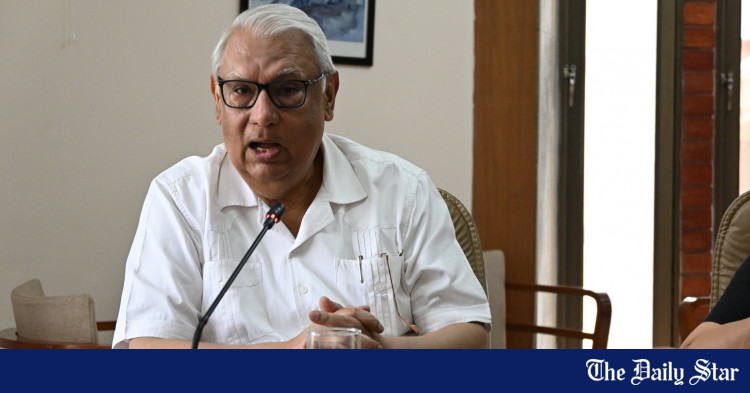
Says ex-Indian high commissioner Pinak Ranjan Chakravarty on Hasina's downfall
www.thedailystar.net
'If you’re in power for 15 years, you feel all is well'
Says ex-Indian high commissioner Pinak Ranjan Chakravarty on Hasina's downfall
Photo: Facebook/Unofficial: Diplomats of India
Former Indian High Commissioner to Bangladesh Pinak Ranjan Chakravarty discussed a range of issues from India-Bangladesh ties under Sheikh Hasina's regime, her downfall, and her presence in India with Shubhajit Roy, diplomatic affairs editor of The Indian Express.
On what the Hasina govt meant for Bangladesh
Chakravarty said Bangladesh became one of the fastest-growing economies in Asia, and had a stable relationship with India.
Indian investments were made in Bangladesh, and the countries developed energy connectivity, railway, and transport links, and trade grew to almost $18 billion.
Bangladeshis also were the largest set of tourists to India.
On the negative side, there were allegations of elections not being free and fair, he said.
The BNP boycotted the polls and the Jamaat-e-Islami was banned as a political organisation and a party.
Hasina also banned the Jamaat's student wing, the Islamic Chhatra Shibir.
Additionally, she instituted the International War Crimes Tribunal, for Jamaat leaders who were pro-Pakistan in 1971. Those leaders were convicted and hanged; that created bad blood.
Later, BNP Chairperson Khaleda Zia was convicted of corruption. Such domestic developments gave the feeling that Sheikh Hasina was becoming increasingly authoritarian, Chakravarty said.
India had no role to play in those things; they were entirely domestic, he added.
On India's relationship with Bangladesh govt under Hasina
India's problems with the previous BNP-Jamaat government were over security issues and their ties with Pakistan's Inter-services Intelligence (ISI).
The BNP has always been a little right-wing and pro-Pakistan. Jamaat, of course, has always been very pro-Pakistan, although they now claim that they are different. The BNP, too, claims they have changed, said the former envoy.
Festive offer
When Hasina came to power in 2009, she said they would not allow Bangladesh soil to be used against Indian security interests, which was something she lived up to, Chakravarty said.
The United Liberation Front of Asom (ULFA) Assam insurgency leaders were handed over to India. She ensured the insurgents' camps were uprooted and handed over, said the report.
"I remember how Hasina first told me that she needed electricity from India. That is how the project began for connecting the grids," he said.
"Today, we provide almost 1,200 megawatts. We also planned the Numaligarh refinery pipeline to northern Bangladesh, to provide diesel and petroleum products."
On the dissatisfaction with the economy, especially among the youth
"I think people welcomed the economic growth until the Ukraine war broke out and the energy and food prices went sky high," said Chakravarty.
Further, Bangladesh's growth was probably not equitable. The jobs created were insufficient and a younger generation was entering the economy. That's why the anti-quota agitation came in since quotas blocked employment in the government.
Later, with the elections, the new voters felt that they were not getting a choice, said the Indian Express report.
On how the anti-quota agitation grew
Chakravarty said he believed the agitation would have stopped after the Supreme Court judgement, which reduced the quota to only 7 percent.
More than 300 people died during those agitations. The protesters returned with a nine-point demand. They wanted the resignation of ministers, the police commissioner, and so on.
"Now, why they did that is a mystery. And my view is that there were other influences at work there -- mostly foreign and some internal. Since Hasina obviously did not agree to sack her ministers they went on a rampage again. And this time, I think, it was a very well-oiled machine backing them," the former high commissioner said.
"Why did it turn so political, with the march to Dhaka and demands for the PM's resignation? That is also a question. I would say that ultimately it was the army that unseated her by saying that, no, we can't protect you. We will not fire on these protesters," he added.
On whether India saw this coming
"Did we know about the things happening in Bangladesh? Of course, we knew. But the question is whether Sheikh Hasina anticipated her downfall. My sense is that she didn't, maybe if you stay for 15 years in power, then you feel that everything is okay," said Chakravarty.
On the interim govt led by Yunus
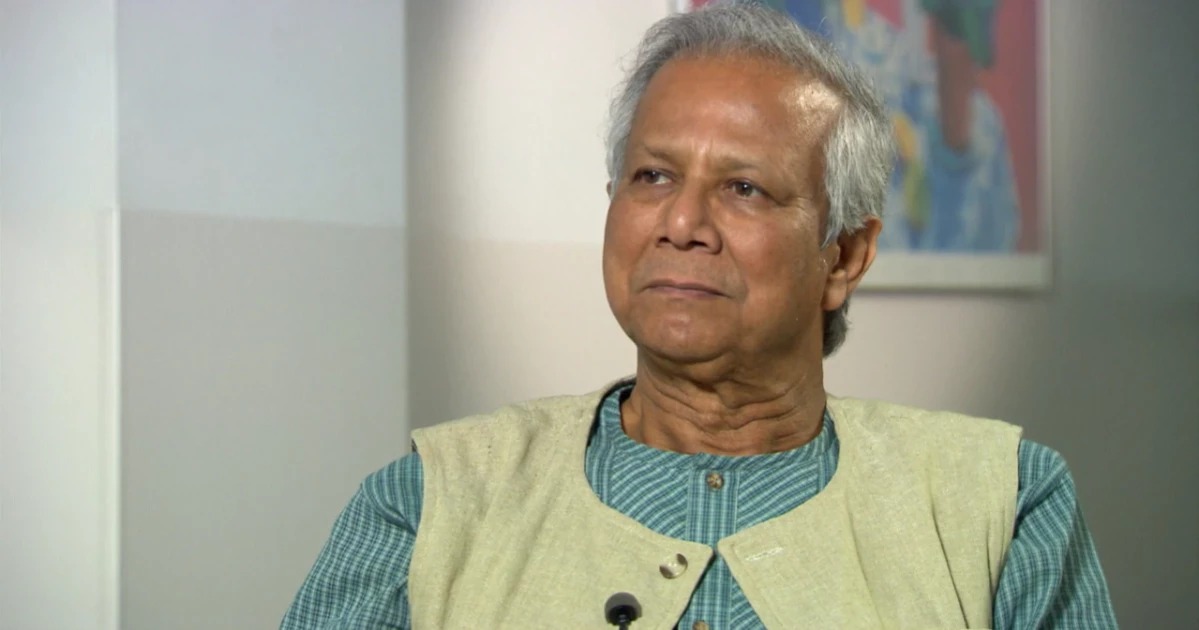
"It comprises different kinds of people. There is a leader of the far-right group Hefazat-e-Islam Bangladesh. Then there are BNP sympathisers. And then, of course, Professor Yunus is there. He's a big, internationally-known figure. I would say he's very anti-Hasina and she has slammed several legal cases against him, for things such as embezzlement," Chakravarty said.
"My worry is, will they (different sections) be able to work together? All of them could pull the government in different directions," he said.
There are two student leaders in the advisory council and apparently, there are two student appointees in every ministry to oversee what it does. Of course, some indicators are there, said the report.
"For example, Prof Yunus has said we must revive the South Asian Association for Regional Cooperation (Saarc). He has also reportedly said that he would want Bangladesh to join The Association of Southeast Asian Nations (Asean)," he said.
"But ultimately, reality will bite. Things are still all over the place. Hindus were also attacked, unfortunately, they are seen as Awami League supporters."
In 2001, when the BNP-Jamaat government came to power, the same thing happened, said the former envoy.
On Sheikh Hasina's presence in India
"Hasina has been here before, from 1975 to '81, when her whole family was murdered as part of a political plot. She's back again. Does she have a future as a political leader of the Awami League (AL)? I would say we cannot dismiss the possibility that the AL reorganises, they are not a party that will disappear," said Chakravarty.
"They will participate in the next elections. Would Hasina then go back? She'll have to face cases and inquiries, and they might put her in jail. It's what was done to Khaleda Zia, and revenge politics is very much possible. But will the AL produce a new leader? These are all possibilities.
"Whether Hasina will continue to stay here is her choice. I don't think the government of India is going to push her out," Chakravarty concluded.
Indian high commissioner to Bangladesh Pranay Verma on Sunday met with foreign secretary Md Jashim Uddin to discuss ways to enhance bilateral relations in various sectors.
Indian high commissioner to Bangladesh Pranay Verma and Bangladesh’s foreign secretary Md Jashim Uddin discuss ways to enhance bilateral relations on Sunday. | BSS photo
Indian high commissioner to Bangladesh Pranay Verma on Sunday met with foreign secretary Md Jashim Uddin to discuss ways to enhance bilateral relations in various sectors.
The meeting, held at the foreign ministry in Dhaka, focused on advancing mutual cooperation in line with the shared aspirations of both Bangladesh and India for peace, security, and development.
‘The meeting was more about how we can take forward our relations in the coming days,’ said the Indian envoy to media after the meeting.
Both sides emphasised the importance of reinvigorating regular bilateral mechanisms to address key issues, he added.
Responding to a question, Pranay Verma said that they did not specifically talk about the issue related to ousted prime minister Sheikh Hasina.
Regarding the next round of Foreign Office Consultations between India and Bangladesh, the high commissioner noted that the issue was a subject of their discussions.
The previous FOC was held in New Delhi on November 23, 2022. On October 2, the Indian high commissioner met with foreign affairs adviser Md Touhid Hossain where they also addressed a range of bilateral matters.
I believe one of the most important bi-lateral issues to be discussed is cross-border trade and how to reduce Indian customs NTBs (Non Tariff Barriers) which are fictitious and enforced without due cause, in contravention of WTO rules. We need to close the yawning 90 to 10 trade deficit affecting this trade right now, which has existed for at least the last five decades, currently amounting to almost twenty Billion dollars a year officially and probably twice as much when smuggling is considered.
To say that a large portion of India's export economy runs on Bangladesh trade will not be untrue.
In my opinion, we should enforce WTO rules more rigorously and enforce our own tit-for-tat NTBs, if Indian administration continues in this path of blowing off WTO rules.
We literally have NOTHING to lose.
The rest of our trading partners i.e. Pakistan, Malaysia, Indonesia, Turkey and China have a lot more to gain.
Indian news outlet - The Wire - in its recent article highlights how a successful Bangladesh, under Chief Adviser Professor Muhmmad Yunus, is more likely to be a strong ally of India than a failing one, reports BSS. Vinod Khosla, a businessman and venture capitalist, wrote the opinion released in
thefinancialexpress.com.bd
Bangladesh's success under interim Chief Yunus could strengthen ties with India: The Wire
FE ONLINE DESK
Published :
Oct 29, 2024 14:07
Updated :
Oct 29, 2024 14:07
Indian news outlet - The Wire - in its recent article highlights how a successful Bangladesh, under Chief Adviser Professor Muhmmad Yunus, is more likely to be a strong ally of India than a failing one, reports BSS.
Vinod Khosla, a businessman and venture capitalist, wrote the opinion released in The Wire on October 27.
Following is the full text of the full article.
As a proud American and son of India, I look with hope at the exciting possibilities surrounding Professor Muhammad Yunus's leadership of Bangladesh. Three days after Prime Minister Sheikh Hasina fled the country on August 5, Yunus was sworn in as Bangladesh's interim government head.
Yunus, whom I consider a friend and have known for decades, accepted that post at the insistence of the student leaders who were at the forefront of the student-led struggle.
I am an entrepreneurship zealot, a believer in the power of ideas, and passionate about sustainability and impact. I am in awe of what Yunus has accomplished in his life. I work to bring life-enhancing technology to the world through my investments. Yunus, through endless experimentation and tinkering, has developed a series of institutional success models for reducing poverty, improving health care and education outcomes, and combating climate change.
For example, in 1996, Yunus succeeded in putting cell phones in the hands of hundreds of thousands of poor women in rural villages in Bangladesh, allowing them to generate income as village cell phone ladies. I am passionate about protecting our environment. Yunus founded a company that, beginning in 1995, has installed 1.8 million solar home systems and 1 million clean cook stoves, again almost exclusively in rural Bangladesh.
That doesn't even include the creation of Grameen Bank that has cumulatively made US$39 billion in small, mostly income-generating loans to more than 10 million poor women that became a model for similar efforts in India and many other countries.
But now, Yunus has turned his attention to a new challenge, leading the eighth largest country in the world by population, a nation of more than 170 million people. This is a country with about half the population of the United States all in a land mass equal to the U.S. state of Illinois.
There are people throughout Bangladesh and around the world who are batting for Yunus's success. I am one of them. But there are others who want him and the interim government he leads to fail and are spreading false narratives about what is going on under his leadership. So I would like to share my perspectives about his values, his approach, and his early results.
In his first two months in office, he got the police to return to work, which improved the law and order situation, took tangible steps to protect minorities such as Hindus, worked to improve relations with India, suggested that the regional powers reinvigorate SAARC, and made progress on bringing stability to the banking and financial sectors in Bangladesh (which were in disarray when he took office).
He also represented Bangladesh effectively at the UN General Assembly, and had more than 50 productive meetings with global leaders while
he was in New York.
In his work in this role, I have seen him applying the same values and approach that I have seen him use throughout his career: building a national consensus on key issues, experimenting to determine what works best, inspiring fellow citizens (especially youth) to get involved in practical and constructive ways, treating all people with respect regardless of their religion, gender, or ethnicity, and being pragmatic as well as energetic (despite being 84 years old).
But there are many challenges. Leading a government can be many times more difficult than running a suite of social businesses and nonprofits. People aligned with the prior government that lost power wants his efforts to fail. The party that has been out of power for years wants a quick return. But I believe Yunus is up to the job.
In September, I joined 198 global leaders including 92 Nobel laureates in a letter to the people of Bangladesh and people of goodwill around the world.
"We are excited to see Professor Yunus finally free to work for the uplift of the entire country, especially the most marginalisd, a calling he has pursued with great vigor and success across six decades (sic)."
His early successes in this role augur well for the future of Bangladesh, and a successful Bangladesh is more likely to be a strong ally of India than a failing one. We should all be rooting for Yunus to continuing making progress in this important interim role, because Bangladesh reaching its potential is in India's best interest.

 Bangladesh Defense