Home Watch Videos Wars Movies Login

[🇧🇩] Insurgencies in Myanmar. Implications for Bangladesh

Latest Posts Countries Wars Q&A

[🇧🇩] Insurgencies in Myanmar. Implications for Bangladesh
395
15K
More threads by Saif

G Bangladesh Defense

Prevent a repeat of Rohingya atrocities
International community should play a more active role

1724629174035.webp


We are deeply concerned that the United Nations has stated the Myanmar conflict is becoming so volatile that the atrocities of 2017 may be repeated against the Rohingyas. The UN human rights chief Volker Turk expressed concern on Friday, saying that the situation across Myanmar, particularly in Rakhine, has sharply deteriorated recently. Additionally, reports suggest that hundreds of civilians have been killed while trying to flee the fighting.

Exactly seven years ago today, the second phase of the Rohingya genocide had started. It is estimated that between August 25 and September 24, 2017, at least 6,700 Rohingya were killed. Despite the Myanmar government dismissing these findings as exaggerations, the UN found evidence of widespread human rights violations, including extrajudicial killings, summary executions, gang rapes, the arson of Rohingya villages, businesses and schools, among other horrific atrocities. Currently, a case is ongoing at the International Court of Justice (ICJ), accusing Myanmar of abetting genocide against the Rohingya ethnic group.

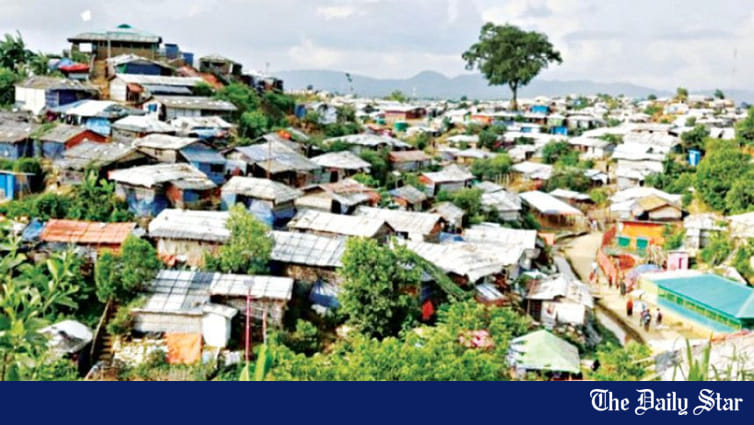
Following the events of 2017, an estimated 750,000 Rohingyas fled from Myanmar into Bangladesh and took shelter in various refugee camps. Despite repeated dialogues between Myanmar and Bangladesh for the safe repatriation of these Rohingyas back to their homeland, we have seen little to no progress made over the years. With clashes between the Arakan Army and Myanmar's ruling junta worsening, the possibility of further destabilisation in the region due to the ongoing situation in Myanmar seems to be rising rapidly.

Reportedly, thousands of Rohingyas have already been forced to flee again on foot, with the Arakan Army herding them repeatedly into locations that offer scant safe haven. Finding themselves trapped between the military and its allies and the Arakan Army, many of them are again looking to cross into Bangladesh. Given that Bangladesh is already overwhelmed with its own issues, as well as struggling to continue providing support to the Rohingya that had earlier sought shelter within its territories, the influx of even more Rohingya into Bangladesh could prove disastrous.

The burden of supporting the Rohingya—on humanitarian grounds, and rightly so—has been massive on Bangladesh. As such, we invite the international community to be more active in solving the Myanmar crisis so that this burden can be lifted and the region can regain some of its lost stability. We hope that every influential member of the international community, including the collective West, China and India, will urgently respond to this call.​
 
Analyze

Analyze Post

Add your ideas here:
Highlight Cite Respond

Don’t let the Rohingya return to uncertainty
Safety and dignity in Myanmar must be ensured in repatriation talks

1724629328575.webp


We are glad to finally see some positive development in the repatriation process of Rohingya refugees living in squalid refugee camps in Bangladesh. Through China's mediation, Myanmar officials agreed to take back their forcibly displaced nationals during a meeting with a Bangladesh delegation earlier this week, according to a report in this daily. Bangladesh and Myanmar are now discussing the repatriation of 3,000 Rohingya refugees by December. This development is indeed big and timely, given the worsening humanitarian crisis that the Rohingya refugees face today. The agreement to let the Rohingya visit Myanmar for a second time as a confidence-building measure is also a prudent move.

However, one cannot help but feel a little apprehensive about Myanmar's reassurances regarding Rohingya repatriation. After Bangladesh and Myanmar signed the repatriation agreement back in 2017, attempts were made in 2018 and 2019, but they failed because the Rohingya, with memories of the atrocities inflicted upon them still fresh in their minds, did not feel safe going back. The Rohingya fled Rakhine to escape a military crackdown that the UN has termed an act of "ethnic cleansing." Given that the same military junta runs Myanmar today, we cannot help but sympathise with the Rohingya's lack of confidence. There is also the issue of the Rohingya's full recognition as Myanmar citizens – something the country's government has yet to commit to.

But there is no alternative to repatriation – as the Rohingya themselves have been saying. Since the latest and largest exodus in 2017, Bangladesh has been hosting more than 1.2 million Rohingya refugees with its limited resources and help from the international community. But recent global events have diverted the international community's attention away from this crisis, which has caused a severe setback in aid supply. Earlier this year, the World Food Programme (WFP) had to slash the food assistance for the Rohingya twice as there were not enough funds. In the camps, the Rohingya have no access to education, crime rates are on the rise, and in a desperate attempt to find a better life outside of the camps, some refugees have even gone on deadly sea voyages in the past few years.

We have to listen to what the Rohingya want, and all they want are their basic rights restored, recognition as Myanmar's citizens, and a safe and dignified life back in their homeland. We appreciate what China has done to get the ball rolling on Rohingya repatriation, but now the rest of the international community must also step in. Let the humanitarian agencies, who have been working on the ground since the beginning of this crisis, get involved in the process. Together with the international community and the humanitarian agencies, Myanmar must work with Bangladesh to come up with a viable plan that will ensure that the Rohingya get what they deserve.​
 
Analyze

Analyze Post

Add your ideas here:
Highlight Cite Respond

Rohingya must be repatriated to their original villages
Myanmar must not backtrack on its promise

1724629429422.webp


We are disappointed by the comments made by the Myanmar delegation who recently visited the Cox's Bazar refugee camps to verify the Rohingya's identities. The delegation was also there to brief the Rohingya about the repatriation process, citizenship procedures and other facilities. When the refugees reiterated their demand to return to their original homes—not to the villages or camps set up for them in Rakhine—the delegates apparently could not make any such commitment. Reportedly, all they could say was that they would discuss the matter with the higher authorities in Naypyidaw. We are surprised at their answer at a time when all arrangements are underway to start the repatriation process by sending the first batch of Rohingya—some 3,000 of them—to Myanmar by December this year.

Over the past few months, we witnessed some encouraging developments regarding the repatriation of Rohingya refugees to their homeland in Myanmar. China's initiative to mediate the process with Myanmar was particularly commendable, after years of foot-dragging by the international community to resolve the crisis. And after Chinese Special Envoy on Myanmar Deng Xijun hinted in early August that Myanmar may take back the Rohingya living in Cox's Bazar to their own villages in North Maungdaw and nearby places—instead of any camps or "model villages" that the Myanmar authorities had planned earlier—we were hopeful about the safe and dignified return of the Rohingya refugees, who have been living in squalid camps for the last six years.

Reportedly, in September, Myanmar agreed to allow international volunteers, including those from the UN, China and ASEAN countries, to take part in humanitarian assistance during the repatriation process. It also agreed to let the Rohingya visit Myanmar for a second time as a confidence-building measure.

But now we have learnt that Myanmar is planning to repatriate the Rohingya to 20 model villages on a pilot basis. This is unacceptable; the Rohingyas themselves have made this clear time and again. They have also demanded their citizenship and voting rights upon their return. Therefore, we would like to remind the Myanmar authorities that they cannot just backtrack on their promise of repatriating the Rohingya to their original villages. If they do so, it may result in another failed repatriation effort.​
 
Analyze

Analyze Post

Add your ideas here:
Highlight Cite Respond
Will Rakhine breakaway from Myanmar?

বাংলাদেশ-মিয়ানমার সীমান্তে অস্থিরতা বৃদ্ধির শঙ্কা


Analyze

Analyze Post

Add your ideas here:
Highlight Cite Respond

Experts sound alarm on new Rohingya crackdown in Myanmar
AFP Cox's Bazar, Bangladesh
Published: 27 Aug 2024, 18: 42

1724809061692.webp

Rohingya refugees gather to mark the seventh anniversary of their fleeing from neighbouring Myanmar to escape a military crackdown in 2017, during heavy monsoon rains in Cox's Bazar, Bangladesh, on 25 August 2024 Reuters

The persecuted and stateless Rohingya minority is caught in a new violent crackdown in Myanmar, with children among those killed, two reports from influential expert groups warned Tuesday.

Hundreds of thousands of Rohingya fled Myanmar for neighbouring Bangladesh in 2017 during a crackdown by the military that is now the subject of a United Nations genocide court case.

But around 600,000 remain in the country's western state of Rakhine, where they have found themselves in the middle of an escalating conflict between junta-run Myanmar's armed forces and the rebel Arakan Army.

The situation has been inflamed further by the Myanmar military's forced recruitment of Rohingya to battle the rebel group, including reportedly more than 2,000 from Bangladeshi refugee camps.

Watchdog Fortify Rights said its interviews with eyewitnesses established that the Arakan Army had this month launched a drone and mortar attack on Rohingya civilians.

The bombardment killed more than 100 Rohingya men, women and children on the border with Bangladesh, Fortify Rights said.

"The fact that the AA first sent a surveillance drone before launching the massive attack shows clearly that the group intentionally attacked a civilian crowd," the group said.

The Arakan Army denied responsibility for the assault in an 7 August statement and again through its political wing 10 days later.

The International Crisis Group think tank said that many Rohingya on the ground blamed the rebel group for the attack, along with other acts of violence and persecution.

"The combination of words and alleged deeds have fuelled polarisation and driven greater numbers of Rohingya to volunteer for the military or armed groups," it said.

'Moral duty'

The reports come days after the UN Human Rights Office said it had information showing the Myanmar military and the Arakan Army had both committed serious abuses against the Rohingya.

They included extrajudicial killings, abductions, forced recruitment, indiscriminate bombardments of villages and arson attacks.

"Recurrence of the crimes and horrors of the past must be prevented as a moral duty," UN rights chief Volker Turk said.

The Arakan Army, which says it is fighting for more autonomy for the ethnic Rakhine population in Myanmar, has made steady territorial advances this year near the Bangladeshi border.

Bangladesh is home to around one million Rohingya refugees, most of whom fled the 2017 crackdown.

Further complicating the security situation for Rohingya there was the ousting this month of autocratic ruler Sheikh Hasina, who fled to India.

Hasina was replaced by Nobel laureate Muhammad Yunus, who is leading an interim government ahead of expected elections.

He pledged to continue to support Bangladesh's population of Rohingya refugees, but said his country needed "the sustained efforts of the international community" to do so.​
 
Analyze

Analyze Post

Add your ideas here:
Highlight Cite Respond

Will there ever be a sustainable solution of the Rohingya crisis?
Muhammad Zamir
Published :
Sep 01, 2024 21:47
Updated :
Sep 01, 2024 21:47

1725236863184.webp

Photo taken on Sept. 12, 2017 shows Rohingya refugees arriving by boat at Shah Parir Dwip on the Bangladesh side of the Naf River after fleeing violence in Myanmar Photo : Agency

On Aug. 25, 2017, hundreds of thousands of refugees started crossing the border between Myanmar and Bangladesh, entering Bangladesh on foot and by boats amid indiscriminate killings and other acts of violence in Myanmar's Rakhine state. Those fleeing attacks and violence in the 2017 exodus joined around 300,000 people already in Bangladesh from previous waves of displacement, effectively forming the world's largest refugee camp. Six years later, about half a million Rohingya refugee children are living in exile from their home country.

This was not the first time that such a situation evolved in Bangladesh. We watched a similar scenario that had evolved in 1977 and 1992 and had led to tens of thousands of Rohingyas seeking sanctuary in the south eastern Districts of Bangladesh bordering Myanmar. In 1979 and 1992, some quarter-million Rohingya refugees were repatriated within a year of arrival.

In February, 2024, growing apprehension was palpable in Bangladesh as the civil war in neighbouring Myanmar inched closer to its border, with two deaths reported when stray shells from Myanmar landed in a village in the hilly Bandarban District. Aware of the rising threat, Bangladesh placed security forces on high alert along its 270-mile frontier with Myanmar's restive Rakhine state, with particular focus on the Naf River that serves as a natural boundary.

Historically known as Arakan, Myanmar's Rakhine state was the site of a brutal military crackdown in 2017 that drove more than 1 million ethnic Rohingyas to seek refuge in Bangladesh. Initially welcoming them with open arms, Bangladesh has since grown restless over their prolonged presence.

Current Foreign Affairs Adviser in the Bangladesh Interim Government Touhid Hossain made an interesting observation at that time regarding their repatriation. He noted that one of the existing challenges pertaining to their repatriation came from the fact that although Myanmar's ruling military junta had approved to take back the displaced Rohingyas, it had not agreed to grant them citizenship. Such a situation was not acceptable to the Rohingya refugees as they refused to return to their country under a military junta they distrust. Until the conditions are in place in Myanmar that would allow Rohingya families to return home with basic rights - safety from violence, citizenship, free movement, health and education - they are stuck as refugees or internally displaced persons living in overcrowded and sometimes dangerous conditions.

Currently, a grim picture continues to present itself in the extensive Rohingya camps in coastal Cox's Bazar, the southernmost district of Bangladesh. The sounds of gunfire and explosions in Rakhine resonate within the makeshift shelters, underscoring the reality of the situation.

The Arakan Army, a predominantly non-Rohingya rebel group fighting for an autonomous Rakhine state, launched a significant offensive last October, coordinating with other ethnic armed groups to place immense pressure on Myanmar's ruling military, known as the Tatmadaw. Reports have since suggested that the Tatmadaw has retaliated with artillery bombardments causing civilian casualties, including Rohingyas in Rakhine. The death of villagers caused by stray shelling and the entry of more than 200 members of Myanmar's border police force, many of them wounded, taking refuge in Bangladesh also created further apprehension within Bangladesh. This led to worries that the conflict might spill over into Bangladesh.

Many analysts took that opportunity to reiterate that armed groups and any new influx of refugees would no longer be welcome in Bangladesh, which has grappled with displaced Rohingyas three times in four decades.

Since 2017, Dhaka's diplomatic efforts have been stalled by the absence of safety guarantees and denial of citizenship, while broad international condemnation of Myanmar's military as perpetrators of genocide has failed to soften the junta's stance. Even Dhaka's efforts to have China broker a deal with the Tatmadaw have yet to produce results.

Adviser Hossain, however, remains hopeful that negotiations involving the pro-democracy National Unity Government (NUG) formed by elements of the ousted civilian government, could play a significant role in resolving the crisis. He also sees the Arakan Army as a key player in the process. It may also be noted that on the eve of the coup's third anniversary, the NUG has reiterated its commitment to ending the military's political rule and transitioning the country back to civilian governance through negotiations. That potentially leaves the door open for talks, provided Myanmar's military accepts the NUG's political objectives. Hossain also believes that both the NUG and the Arakan Army could be pivotal in resolving the Rohingya crisis, pointing out that the NUG has already recognized the Rohingyas as citizens and promised them security and rights. He has also called for Bangladesh to establish an informal channel of communication with the groups.

However, analysts and strategists have observed at different times that a further complication of the crisis has been created because of the geopolitical rivalry between India and China. Beijing's US Dollar 7.3 billion effort to create a Bay of Bengal deep-sea port in Kyaukphyu on the Rakhine coast, which has been in development since 2010, is being perceived with anxiety by India. This feeling has been generated because India knows that completion of such a port is expected to give China strategic access to the Indian Ocean, allowing it to bypass the narrow Strait of Malacca through which some 80 per cent of its oil imports now arrive from the Middle East.

Meanwhile, India's development of a port in Sittwe got underway in 2023. It is the first node of a US Dollar 484 million project aimed at connecting greater India with its landlocked northeast through western Myanmar's Rakhine and Chin states, bypassing Bangladesh.

Amid those challenges, Bangladesh is left to manage a delicate balancing act while hoping for a resolution to the Rohingya crisis and a peaceful resolution to the conflict on its border with Myanmar.

Working with the government of Bangladesh and partners, UNICEF has been helping to provide water and sanitation including the establishment of diarrhea treatment centres, health services for children and pregnant women, support for access to education, including establishing learning centres. Their efforts in this regard have been critical for creating, protecting and promoting respect for the rights and dignity of the Rohingya refugees. UNICEF hopes that their efforts to provide educational opportunities to the Rohingya refugees will ensure that the refugees are equipped and ready to return to a life of dignity in their homeland.

H. Tameesuddin Co-Secretary General of Asia Pacific Refugee Rights Network has correctly observed, "one of the most glaring failures of the international community has been its inability to act promptly during the peak of the genocide in 2017. The absence of emergency intake or resettlement programmes at that critical time was a damning indictment of the global response to the Rohingya crisis. Over the years, the Rohingya crisis has become a stark example of the consequences of prolonged and systematic persecution. The Rohingya community, both in Myanmar and in the diaspora, has faced unimaginable hardships. The response from the international community, including regional bodies like the Association of Southeast Asian Nations (ASEAN), has also been woefully inadequate. While emergency aid has been provided, long-term solutions have been conspicuously absent".

Beth Van Shaack, Special Ambassador to the U.S. Department of Foreign Affairs, was recently interviewed at the Washington DC Metropolitan Foreign Affairs Department. It is interesting to note that B.V. Shaack referred to the existing number of lawsuits filed in many courts against the way the Rohingya people have been treated. There has been reference to contravention of international law including the Genocide Convention. There has also been reference to the fact that although investigations are ongoing, the ICC International Criminal Court has not yet been able to issue an arrest warrant. Reference has also been made to the fact that a case was filed against Myanmar by Gambia in the United Nations International Court of Justice (ICJ) but nothing has emerged from it.

Consequently, many strategic analysts have observed that although the issue of human rights is reiterated by the United Nations and most countries like the United States, United Kingdom, the EU, necessary measures are not undertaken to ensure its implementation.

This month marks seven years since the military operations in Myanmar drove 700,000 people across the border into Bangladesh. Despite the world saying "never again", we are witnessing killings, destruction and displacement in the Rakhine State.

Parties to the armed conflict are issuing statements denying responsibility for attacks against the Rohingya and others, acting as though they are powerless to protect them. This stretches the bounds of credulity. Despite repeated warnings and calls for action, the ongoing violence also underscores the prevailing sense of impunity and the persistent challenges in ensuring protection of civilians in accordance with international law.

The UN Secretary-General has called on all parties to the conflict in Myanmar to end the violence and ensure the protection of civilians in accordance with applicable international human rights standards and international humanitarian law. He has also renewed his appeal to strengthen regional protection efforts to provide access to conflict-affected communities and further support host countries, including through the 2024 Joint Response Plan for the Rohingya Humanitarian Crisis.

Bangladesh, however, will continue to wait, but nothing seems to be on the cards in the near future.

Muhammad Zamir, a former Ambassador, is an analyst specialised in foreign affairs, right to information and good governance.​
 
Analyze

Analyze Post

Add your ideas here:
Highlight Cite Respond

'8,000 Rohingyas entered Bangladesh in recent weeks'
Says foreign adviser

1725406754429.webp

A Rohingya camp. File photo

Foreign Adviser Md Touhid Hossain has said around 8,000 Rohingyas have entered Bangladesh in recent weeks, as tens of thousands were displaced amid intensified conflicts between the Arakan Army and Myanmar military.

"I have information that some 8,000 Rohingyas entered Bangladesh. In a day or two, we will have serious discussions on how to prevent fresh influx," he told reporters at the foreign ministry today.

Some 7,50,000 Rohingyas fled to Bangladesh after the brutal military campaign against them in Myanmar's Rakhine State since August 2017.

Now, over a million Rohingyas are sheltered in the refugee camps, creating a range of challenges for Bangladesh.

The Arakan Army now controls most of the Rakhine State. Battles between the Arakan Army and Myanmar junta in early August forced the displacement of thousands of the remaining 6,00,000 Rohingya residing in the state.

Several thousands of Rohingyas also took shelter along the Naf River bordering Bangladesh, and there were reports of Rohingyas entering Bangladesh, but no confirmed figure was known until it was disclosed today.

"Various forces are there [along the border]. We cannot deny that there is corruption there," the adviser said in response to how Rohingyas could enter despite border security forces being there.

"We will try to prevent any fresh Rohingya influx. We cannot give shelter to new Rohingyas as it is beyond our capacity," he added.

Asked about sealing the border, Hossain said it is difficult to seal any border as there are various forces, as well as interests of locals. However, the government will try to seal the border.

He said he will meet the home adviser and also discuss the matter at the council of advisers in a day or two.

Asked if he supports the notion that Bangladesh needs to establish contact with the Arakan Army, Hossain said, "It is not the issue of my personal affair, but a state matter."

In the aftermath of August 5, there have been a series of attacks against minority groups, mostly Hindus. The Indian High Commission also drastically reduced the number of visas being issued to Bangladesh.

Asked if there's any enmity growing between Dhaka and New Delhi, Hossain said it is now an abnormal time and abnormal things happen in such time.

"The situation is getting normal and will be more stable in a few days. Then, we will see how things evolve," he added.

Hossain also informed the media that Chief Adviser Prof Muhammad Yunus will be attending the UN General Assembly for five days starting from September 22.​
 
Analyze

Analyze Post

Add your ideas here:
Highlight Cite Respond

Explosions in Myanmar again, Rohingyas enter afresh
Our Correspondent . Cox’s Bazar 09 September, 2024, 00:05

The people in bordering areas of Teknaf upazila in Cox’s Bazar district had to pass sleepless night after midnight past Saturday as panic gripped them due to the sounds of gunshots and bomb explosions in Myanmar territory.

Meanwhile, Rohingyas were again entering Bangladesh fleeing conflict in Myanmar, officials said.

Locals said that explosions could be heard at night in Sadar, Sabrang Shahpari union and some border points of Teknaf upazila.

A hand grenade was found in a floating bag in the Naf River of Teknaf Sunday morning. It was found by local fishermen who handed it over to the members of Border Guard Bangladesh.

Teknaf-2 BGB battalion commanding officer Lieutenant Colonel Mohiuddin Ahmed confirmed the news.

He said that local fishermen saw a bag floating on the Naf River at Sabrang Point in the morning.

‘When they opened the bag, they found a grenade inside it. The fishermen informed the matter to BGB members. A team of BGB reached the spot and took the grenade under their custody. There is no specific information about the grenade’s manufacturing country and how the bag came to the river, he added.

The hand grenade has been kept in the BGB battalion office, said the official.

Ukhia Upazila Nirbahi Officer Tanveer Hossain and Teknaf UNO Adnan Chowdhury separately said that some new Rohingya families had taken shelter in different camps of the upazilas.

‘A large number of Rohingyas were sent back to Myanmar from the Naf River during the infiltration. Patrolling along the Naf River and the border has been strengthened to prevent infiltration,’ Teknaf UNO, however, said.

Main Uddin, assistant superintendent of police of 16 Armed Police Battalion said that, Some Rohingyas had entered the camps.

Teknaf-2 BGB battalion commanding officer Lieutenant colonel Mohiuddin Ahmed said that, they were resisting the attempts of Rohingyas to enter Bangladesh.

Additional Refugee Relief and Repatriation Commissioner Md Shamsud Douza said that 8,000 Rohingyas had entered Bangladesh after the fall of the Awami League government on August 5.

Foreign adviser Md Touhid Hossain said that Bangladesh was already hosting 12 lakh Rohingya people and it could not afford even a single more from Myanmar.​
 
Analyze

Analyze Post

Add your ideas here:
Highlight Cite Respond

Members Online

No members online now.
Back
 
G
O
 
H
O
M
E