Bangladesh Defense
Saif
Senior Member
- Jan 24, 2024
- 21,138
- 9,688
- Nation

- Residence
- Axis Group

Sea aid unloaded in Gaza as truce efforts revived
Efforts towards a truce in the Israel-Hamas war appeared to rekindle on Saturday after a new proposal from the Palestinian militant group which also called...
 www.newagebd.net
Sea aid unloaded in Gaza as truce efforts revived
Agence France-Presse . Palestine | Published: 00:36, Mar 17,2024

Efforts towards a truce in the Israel-Hamas war appeared to rekindle on Saturday after a new proposal from the Palestinian militant group which also called for more aid into Gaza, where the first food shipment by sea reached shore.
Israel said it would send a delegation to Qatar for another round of talks on a possible deal. It also advanced plans for a military operation in Rafah, where most of Gaza’s population has sought refuge from more than five months of war and deprivation.
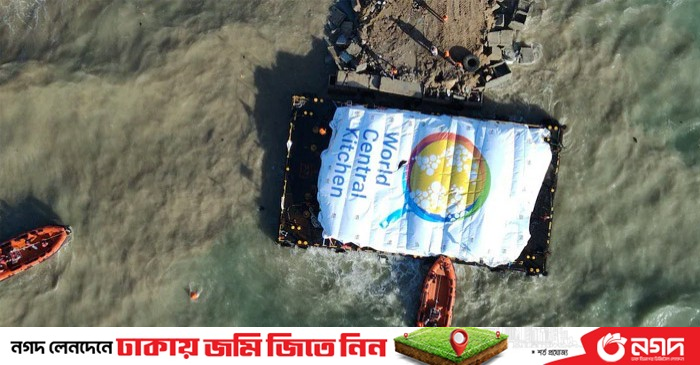
The US charity World Central Kitchen on Saturday said its team had finished unloading almost 200 tonnes of food, the first shipment to arrive on a new maritime aid corridor from Cyprus.
‘All cargo was offloaded and is being readied for distribution in Gaza,’ WCK said in a statement. WCK’s partner, the Open Arms vessel which towed the aid on a barge, had sailed from Larnaca port on Tuesday.
The United Nations has reported particular difficulty in accessing the besieged Gaza Strip’s north for deliveries of food and other aid.
Residents say they have resorted to eating wild plants and animal fodder, and some have stormed the few aid trucks that have made it through.
‘Doctors are reporting that they no longer see normal-sized babies,’ Dominic Allen, of the United Nations Population Fund, said after visiting Gaza’s north.
With the situation increasingly dire, donors have turned to the air and sea.
Multiple nations have begun daily aid airdrops over Gaza. Germany’s air force said on Saturday it successfully made its first delivery over north Gaza. The new maritime corridor is to be complemented by a temporary pier which United States troops are on their way to build.
But air and sea missions are no alternative to land deliveries, UN officials and aid groups say. Humanitarians have cited Israeli restrictions as among the obstacles they face.
The health ministry in Hamas-ruled Gaza said at least 63 people had been killed over the previous 24 hours.
Earlier Saturday, ministry spokesman Ashraf al-Qudra reported 36 deaths from a strike on a house sheltering displaced people in Nuseirat, central Gaza.
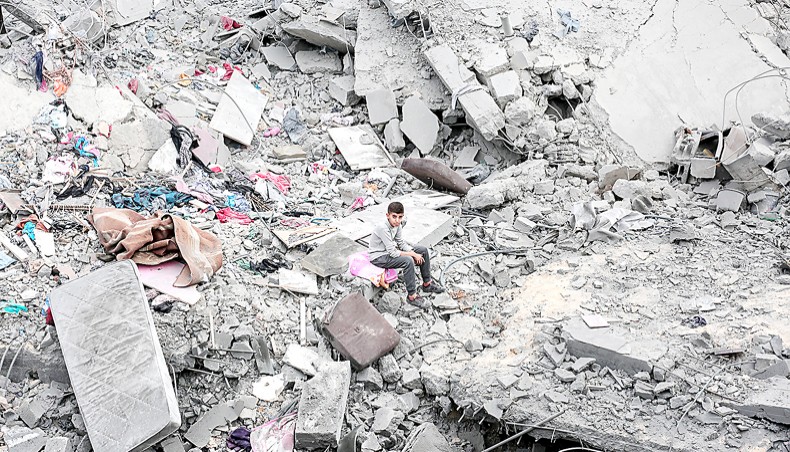
AFPTV images showed a building blown apart. Yussef Tabatibi, lifting concrete blocks among the rubble, said residents were trying to recover the dead with only their bare hands.
‘What should we do? God help us,’ he said.
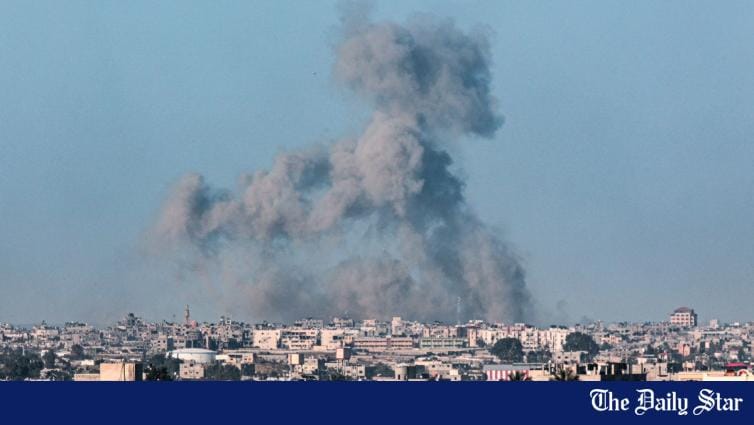
Witnesses reported air strikes and fighting in the southern Gaza Strip’s main city Khan Yunis as well as areas of the north.
In negotiations aimed at securing a truce and hostage deal, Hamas has put forward a new proposal for a six-week ceasefire and the exchange of about 42 Israeli hostages for Palestinian prisoners held by Israel, an official from the Islamist group told AFP.
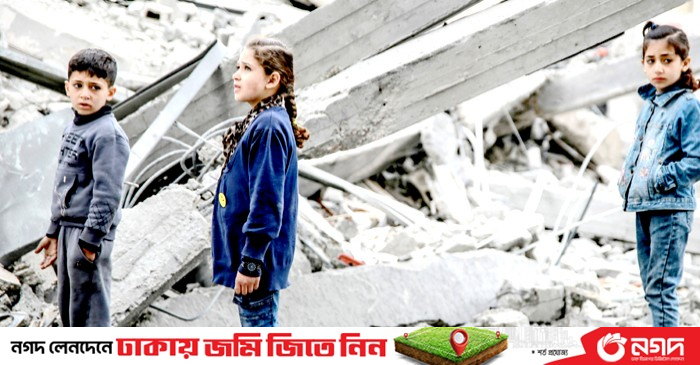
Israel has carried out relentless bombardment and a ground invasion that has killed at least 31,553 people in Gaza, most of them women and children.
Until Friday Hamas had insisted no further hostages would be exchanged without a permanent ceasefire and Israeli withdrawal from Gaza.
Now the militants are saying that, during a six-week truce, Israeli forces would need to pull out of ‘all cities and populated areas’ in Gaza, according to the Hamas official.
The Hamas proposal also calls for ramped up humanitarian aid, the official added.
Israel has so far rejected withdrawing troops from Gaza, saying such a move would amount to victory for Hamas.
Prime Minister Benjamin Netanyahu’s office said Israel would send a delegation to Qatar for another round of talks on securing the hostages’ release.
Israel did not attend earlier negotiations in Cairo which failed to secure a truce for the Muslim fasting month of Ramadan which began last Monday.
Washington’s Secretary of State Antony Blinken on Friday acknowledged ‘a counter-proposal’ from Hamas and said, ‘we’re working intensively with Israel, with Qatar, with Egypt, to bridge the remaining gaps and to try to reach an agreement.’
The United States, which provides Israel with billions of dollars in military assistance, has grown increasingly critical of Netanyahu over his handling of the war but has not supported an immediate and permanent ceasefire.
Irish prime minister Leo Varadkar, who favours such a measure, said after meeting US President Joe Biden in Washington that ‘none of us like to see American weapons being used in the way they are’ which, he said, ‘is not self-defence.’
Biden praised unusually critical comments by US Senate leader Chuck Schumer, who had described Netanyahu as one of several ‘major obstacles’ to peace.
‘I think he expressed serious concern shared not only by him, but by many Americans,’ Biden said.
Netanyahu’s office said on Friday he had approved the military’s plan for an operation against Hamas in Rafah, where around 1.5 million people are sheltered, many in rough tents near the Egyptian border.
There were no details or a timeline for the long-threatened operation which Washington says it could not support without a ‘credible, achievable, executable plan’ to shelter the civilians there.
World Central Kitchen founder Jose Andres said the first seaborne aid to reach Gaza is the equivalent of 12 trucks but ‘we could bring thousands of tons a week.’
Prior to the war a daily average of around 500 trucks entered Gaza, the UN has said, but the current number is far below that.
Agence France-Presse . Palestine | Published: 00:36, Mar 17,2024
Efforts towards a truce in the Israel-Hamas war appeared to rekindle on Saturday after a new proposal from the Palestinian militant group which also called for more aid into Gaza, where the first food shipment by sea reached shore.
Israel said it would send a delegation to Qatar for another round of talks on a possible deal. It also advanced plans for a military operation in Rafah, where most of Gaza’s population has sought refuge from more than five months of war and deprivation.
The US charity World Central Kitchen on Saturday said its team had finished unloading almost 200 tonnes of food, the first shipment to arrive on a new maritime aid corridor from Cyprus.
‘All cargo was offloaded and is being readied for distribution in Gaza,’ WCK said in a statement. WCK’s partner, the Open Arms vessel which towed the aid on a barge, had sailed from Larnaca port on Tuesday.
The United Nations has reported particular difficulty in accessing the besieged Gaza Strip’s north for deliveries of food and other aid.
Residents say they have resorted to eating wild plants and animal fodder, and some have stormed the few aid trucks that have made it through.
‘Doctors are reporting that they no longer see normal-sized babies,’ Dominic Allen, of the United Nations Population Fund, said after visiting Gaza’s north.
With the situation increasingly dire, donors have turned to the air and sea.
Multiple nations have begun daily aid airdrops over Gaza. Germany’s air force said on Saturday it successfully made its first delivery over north Gaza. The new maritime corridor is to be complemented by a temporary pier which United States troops are on their way to build.
But air and sea missions are no alternative to land deliveries, UN officials and aid groups say. Humanitarians have cited Israeli restrictions as among the obstacles they face.
The health ministry in Hamas-ruled Gaza said at least 63 people had been killed over the previous 24 hours.
Earlier Saturday, ministry spokesman Ashraf al-Qudra reported 36 deaths from a strike on a house sheltering displaced people in Nuseirat, central Gaza.
AFPTV images showed a building blown apart. Yussef Tabatibi, lifting concrete blocks among the rubble, said residents were trying to recover the dead with only their bare hands.
‘What should we do? God help us,’ he said.
Witnesses reported air strikes and fighting in the southern Gaza Strip’s main city Khan Yunis as well as areas of the north.
In negotiations aimed at securing a truce and hostage deal, Hamas has put forward a new proposal for a six-week ceasefire and the exchange of about 42 Israeli hostages for Palestinian prisoners held by Israel, an official from the Islamist group told AFP.
Israel has carried out relentless bombardment and a ground invasion that has killed at least 31,553 people in Gaza, most of them women and children.
Until Friday Hamas had insisted no further hostages would be exchanged without a permanent ceasefire and Israeli withdrawal from Gaza.
Now the militants are saying that, during a six-week truce, Israeli forces would need to pull out of ‘all cities and populated areas’ in Gaza, according to the Hamas official.
The Hamas proposal also calls for ramped up humanitarian aid, the official added.
Israel has so far rejected withdrawing troops from Gaza, saying such a move would amount to victory for Hamas.
Prime Minister Benjamin Netanyahu’s office said Israel would send a delegation to Qatar for another round of talks on securing the hostages’ release.
Israel did not attend earlier negotiations in Cairo which failed to secure a truce for the Muslim fasting month of Ramadan which began last Monday.
Washington’s Secretary of State Antony Blinken on Friday acknowledged ‘a counter-proposal’ from Hamas and said, ‘we’re working intensively with Israel, with Qatar, with Egypt, to bridge the remaining gaps and to try to reach an agreement.’
The United States, which provides Israel with billions of dollars in military assistance, has grown increasingly critical of Netanyahu over his handling of the war but has not supported an immediate and permanent ceasefire.
Irish prime minister Leo Varadkar, who favours such a measure, said after meeting US President Joe Biden in Washington that ‘none of us like to see American weapons being used in the way they are’ which, he said, ‘is not self-defence.’
Biden praised unusually critical comments by US Senate leader Chuck Schumer, who had described Netanyahu as one of several ‘major obstacles’ to peace.
‘I think he expressed serious concern shared not only by him, but by many Americans,’ Biden said.
Netanyahu’s office said on Friday he had approved the military’s plan for an operation against Hamas in Rafah, where around 1.5 million people are sheltered, many in rough tents near the Egyptian border.
There were no details or a timeline for the long-threatened operation which Washington says it could not support without a ‘credible, achievable, executable plan’ to shelter the civilians there.
World Central Kitchen founder Jose Andres said the first seaborne aid to reach Gaza is the equivalent of 12 trucks but ‘we could bring thousands of tons a week.’
Prior to the war a daily average of around 500 trucks entered Gaza, the UN has said, but the current number is far below that.