Bangladesh Defense
Saif
Senior Member
- Jan 24, 2024
- 21,040
- 9,686
- Nation

- Residence
- Axis Group


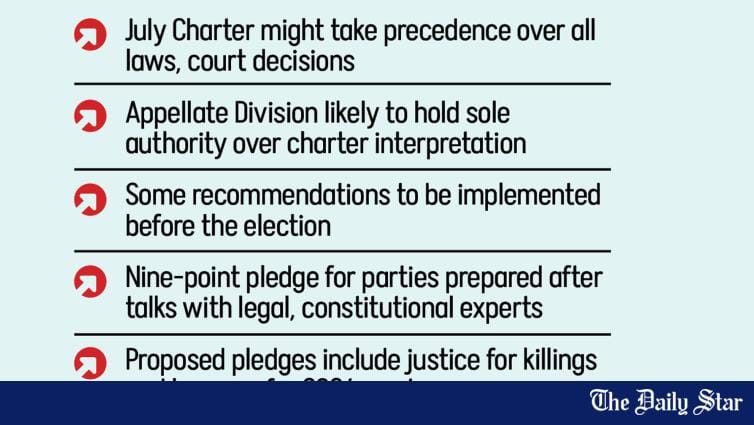
Parties divided over ways of July Charter implementation
Major political parties were divided on Wednesday over the procedures of implementation of the the July National Charter 2025...
 www.newagebd.net
Parties divided over ways of July Charter implementation
Staff Correspondent 30 July, 2025, 23:54
Major political parties were divided on Wednesday over the procedures of implementation of the the July National Charter 2025.
The Bangladesh Jamaat-e-Islami and National Citizen Party, among some parties, demanded legitimising the charter before the upcoming national elections.
The Bangladesh Nationalist Party, among some others, on the other hand, recommended that the charter should be considered as a ‘social treaty’ that would oblige the signatory parties to rectify in the next parliament and start implementation.
The parties shared their opinions while speaking at the National Consensus Commission’s dialogue session at the Foreign Service Academy in Dhaka.
The session was also scheduled for discussing on topics including women’s representation, election and power of the president, composition of the upper house, the state’s fundamental principles, appointment of key constitutional and statutory bodies and the citizens’ basic rights.
The parties, however, could only discuss the women’s representation issue but failed to reach a broader consensus.
Regarding the women’s representation in the parliament, the NCC proposed an amendment to Article 65(3), binding parties to field seven per cent of their nominations from women, a gradual increase of women’s nominations at a five per cent rate each election till the total number of reserved seats reaches 100. Until then, the NCC recommended maintaining the existing 50 reserved women’s seats.
BNP’s standing committee member Salahuddin Ahmed suggested a 5 per cent reservation for women candidates among contestants for 300 seats in the 13th parliament.
This reservation would gradually increase to 10 per cent from the 14th parliament.
Such an increment was proposed to equip parties to field 100 women candidates, at which point an amendment would omit the existing 50 reserved seats, he said.
NCP’s member secretary Akhter Hossen reiterated his party’s support for direct elections for 100 reserved women›s seats.
He also raised concerns about the implementation of the draft July Charter.
Jamaat›s nayeb-e-amir Syed Abdullah Mohammed Taher opposed the BNP and requested parties to find alternative methods to increase the number of reserved seats to 100.
Regarding the draft of the July Charter, Taher asked who would be responsible for implementing the charter and how it would gain legal standing.
He proposed to use either the Legal Framework Order, or a referendum, or a proclamation by the chief adviser, to be ratified by the next parliament.
In response, the NCC’s vice-chair Ali Riaz clarified that a final decision on this significant matter would follow guidance from the commission chief, Professor Muhammad Yunus.
Liberal Democratic Party secretary general Redwan Ahmed suggested that either an ordinance or a proclamation could provide the necessary legal framework for the proposals.
Meanwhile, Bangladesh Jatiya Samajtantrik Dal-Jasod’s presidium member Mushtuq Husain expressed deep frustration over the NCC’s proposal, noting that political parties have consistently failed to uphold the women’s contribution in the July uprising.
Communist Party of Bangladesh’s general secretary Ruhin Hossain Prince shared his disappointment and advocated for direct elections to fill the 100 reserved seats.
Islami Andolan Bangladesh’s presidium member Ashraf Ali Akon pushed for a proportional representation system based on shared votes for 100 reserved seats.
Nagorik Oikko›s organising secretary Sakib Anwar recommended that the proposed 5 per cent reservation be made obligatory.
Ahmed Abdul Kader of Khelafat Majlis stated that his party would not support the proposal unless it included a clause ensuring a vote-based proportional representation system for 100 reserved seats.
Ali Riaz reiterated the commission’s principled stance on gradually increasing women’s representation to 100 reserved seats.
Ganosamhati Andolan’s chief coordinator Zonayed Saki recommended making 15 per cent women’s representation mandatory from the 14th national election.
Jamaat’s Hamidur urged flexibility in setting the percentage, but the NCC vice-chair rejected this request.
At about 9:20pm, Ali Riaz, while briefing the journalists, said that a majority of the party agreed that women’s reserved seats should be gradually increased from 50 to 100. Some parties recommended proportional representation, and some voted for direct elections.
He said that most of the parties agreed to make a call for contesting parties to nominate women candidates, at least five per cent of their total nominees in the next national election, and a 10 per cent increment in each of the following elections, and continue this until women›s representation in the parliament touched a minimum 33 per cent.
At that time, he said, a constitutional amendment would omit the reserved women’s seats. ‘Parties may express their reservations.’
Earlier, the NCC vice-chair said the dialogue session would conclude today.
He said that today’s session would cover discussions on the election and power of the president, the composition of the upper house, proportional representation in the lower house, and other unresolved issues.
The NCP and Gano Adhikar Parishad, however, requested the NCC to extend the period of the dialogue to finalise the charter and its implementation procedures.
As part of finalising the July Charter, the NCC sent the list of reform proposals agreed by the majority of the parties during the first round of dialogue held between March 20 and May 19.
The list featured 62 reform points, mentioning the number of parties that agreed to the points.
Staff Correspondent 30 July, 2025, 23:54
Major political parties were divided on Wednesday over the procedures of implementation of the the July National Charter 2025.
The Bangladesh Jamaat-e-Islami and National Citizen Party, among some parties, demanded legitimising the charter before the upcoming national elections.
The Bangladesh Nationalist Party, among some others, on the other hand, recommended that the charter should be considered as a ‘social treaty’ that would oblige the signatory parties to rectify in the next parliament and start implementation.
The parties shared their opinions while speaking at the National Consensus Commission’s dialogue session at the Foreign Service Academy in Dhaka.
The session was also scheduled for discussing on topics including women’s representation, election and power of the president, composition of the upper house, the state’s fundamental principles, appointment of key constitutional and statutory bodies and the citizens’ basic rights.
The parties, however, could only discuss the women’s representation issue but failed to reach a broader consensus.
Regarding the women’s representation in the parliament, the NCC proposed an amendment to Article 65(3), binding parties to field seven per cent of their nominations from women, a gradual increase of women’s nominations at a five per cent rate each election till the total number of reserved seats reaches 100. Until then, the NCC recommended maintaining the existing 50 reserved women’s seats.
BNP’s standing committee member Salahuddin Ahmed suggested a 5 per cent reservation for women candidates among contestants for 300 seats in the 13th parliament.
This reservation would gradually increase to 10 per cent from the 14th parliament.
Such an increment was proposed to equip parties to field 100 women candidates, at which point an amendment would omit the existing 50 reserved seats, he said.
NCP’s member secretary Akhter Hossen reiterated his party’s support for direct elections for 100 reserved women›s seats.
He also raised concerns about the implementation of the draft July Charter.
Jamaat›s nayeb-e-amir Syed Abdullah Mohammed Taher opposed the BNP and requested parties to find alternative methods to increase the number of reserved seats to 100.
Regarding the draft of the July Charter, Taher asked who would be responsible for implementing the charter and how it would gain legal standing.
He proposed to use either the Legal Framework Order, or a referendum, or a proclamation by the chief adviser, to be ratified by the next parliament.
In response, the NCC’s vice-chair Ali Riaz clarified that a final decision on this significant matter would follow guidance from the commission chief, Professor Muhammad Yunus.
Liberal Democratic Party secretary general Redwan Ahmed suggested that either an ordinance or a proclamation could provide the necessary legal framework for the proposals.
Meanwhile, Bangladesh Jatiya Samajtantrik Dal-Jasod’s presidium member Mushtuq Husain expressed deep frustration over the NCC’s proposal, noting that political parties have consistently failed to uphold the women’s contribution in the July uprising.
Communist Party of Bangladesh’s general secretary Ruhin Hossain Prince shared his disappointment and advocated for direct elections to fill the 100 reserved seats.
Islami Andolan Bangladesh’s presidium member Ashraf Ali Akon pushed for a proportional representation system based on shared votes for 100 reserved seats.
Nagorik Oikko›s organising secretary Sakib Anwar recommended that the proposed 5 per cent reservation be made obligatory.
Ahmed Abdul Kader of Khelafat Majlis stated that his party would not support the proposal unless it included a clause ensuring a vote-based proportional representation system for 100 reserved seats.
Ali Riaz reiterated the commission’s principled stance on gradually increasing women’s representation to 100 reserved seats.
Ganosamhati Andolan’s chief coordinator Zonayed Saki recommended making 15 per cent women’s representation mandatory from the 14th national election.
Jamaat’s Hamidur urged flexibility in setting the percentage, but the NCC vice-chair rejected this request.
At about 9:20pm, Ali Riaz, while briefing the journalists, said that a majority of the party agreed that women’s reserved seats should be gradually increased from 50 to 100. Some parties recommended proportional representation, and some voted for direct elections.
He said that most of the parties agreed to make a call for contesting parties to nominate women candidates, at least five per cent of their total nominees in the next national election, and a 10 per cent increment in each of the following elections, and continue this until women›s representation in the parliament touched a minimum 33 per cent.
At that time, he said, a constitutional amendment would omit the reserved women’s seats. ‘Parties may express their reservations.’
Earlier, the NCC vice-chair said the dialogue session would conclude today.
He said that today’s session would cover discussions on the election and power of the president, the composition of the upper house, proportional representation in the lower house, and other unresolved issues.
The NCP and Gano Adhikar Parishad, however, requested the NCC to extend the period of the dialogue to finalise the charter and its implementation procedures.
As part of finalising the July Charter, the NCC sent the list of reform proposals agreed by the majority of the parties during the first round of dialogue held between March 20 and May 19.
The list featured 62 reform points, mentioning the number of parties that agreed to the points.