[🇧🇩] Monitoring Bangladesh's Economy

[🇧🇩] Monitoring Bangladesh's Economy
1K
31K
More threads by Saif

G Bangladesh Defense

Govt sees early signs of economic recovery

Report to UN claims stabilisation and improving indicators, but economists highlight inflation, unemployment, weak investment and mounting debt concerns.

1764036057078.webp


The government has painted a relatively stable picture of the economy in a report to the United Nations, saying early signs of recovery appeared in the middle of this year.

Some economists, however, remain critical of key macro indicators and say that the outlook is far from assured.

Google News LinkFor all latest news, follow The Daily Star's Google News channel.
"The complacent views shown in the report are not consistent with the facts," said Zahid Hussain, former lead economist of the World Bank Dhaka office.

He said that of the three major macroeconomic factors, foreign exchange, inflation and financial distress, only foreign exchange shows improvement. Inflation and financial distress continue to pose serious concerns.

Submitted early this month to the United Nations Committee for Development Policy (UN-CDP), the annual report itself acknowledged several challenges highlighted by economists.

Even so, it argued that the macroeconomic performance of Bangladesh is "unique" compared to countries where regime change occurred through violent overthrow or mass uprising.

Drawing comparisons with Sri Lanka and Indonesia, the finance ministry report claimed that several economic indicators in those countries failed to recover after government changeovers, unlike the development trajectory of Bangladesh.

It said those economies saw sharp declines in output and foreign direct investment, along with rising inflation, while Bangladesh maintained positive output and FDI growth and reported declining inflation.

"As a result, Bangladesh could avoid any significant development setbacks," said the report, continuing the narrative of the past four years ahead of the country's scheduled graduation from the least developed country club next year.

Indonesia saw its poverty rate jump from around 15 percent to 33 percent within a year after the changeover, while around 26 percent of the population in Sri Lanka lived in poverty in 2023, a year after the violent fall of the regime, according to the report.

In support of the claim of "early signs of recovery" by mid-2025, the report cited higher GDP growth, easing inflation, a stabilised exchange rate and improvements in foreign exchange reserves and the balance of payments.

The government attributed these gains to measures such as the introduction of a pegged exchange rate system, market-based interest rates, reduced subsidies and rationalised public expenditure. A temporary freeze on non-essential spending also created fiscal space for priority sectors, including health, agriculture and social protection.

The report highlighted a 12.5 percent rise in the Dhaka Stock Exchange Broad Index (DSEX) in July as evidence of growing investor confidence. It ranked third among major global market performers that month. The index gained 605 points to close at 5,443, the highest level in nine and a half months.

However, Hussain dismissed the stock market surge as short-lived.

"The rising trend of stock market indicators was temporary, and the surge in the DSEX index did not last long," said the economist. "So, it cannot be said that investor confidence is restored only with this indicator. The daily trading at the Dhaka Stock Exchange is also showing a downward trend."

Growth figures also challenge the somewhat upbeat narrative of the report.

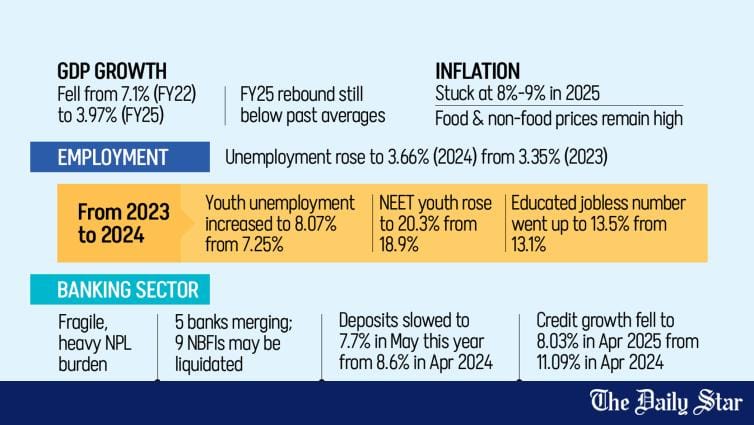
Real GDP growth has declined since FY22, dropping from 7.1 percent to a provisional 3.97 percent in FY25.

After a strong rebound in FY21 to FY22 driven by manufacturing and exports, growth slowed due to rising inflation, foreign exchange shortages and weaker private investment, the report mentioned.

It said the sharper decline reflects continued macroeconomic pressures, subdued demand and slower external trade, indicating a period of adjustment after years of expansion.

According to the report, quarterly data showed modest gains. In the first quarter of FY25, agricultural output grew by only 0.76 percent, while industry and services expanded by 2.44 percent and 2.41 percent.

Bangladesh is still struggling to manage the high inflationary pressure following the outbreak of the Russia-Ukraine war.

Although the general rate eased from 9.05 percent in May 2025 to 8.48 percent in June this year, it hovered around 8 percent in subsequent months.

"Although the inflation is not in double digits now, it is still high in Bangladesh," said Hussain.

Meanwhile, employment also offers little comfort.

Unemployment rose to 3.66 percent in 2024 from 3.35 percent in 2023. Youth unemployment increased to 8.07 percent and the share of NEET (Not in Education, Employment, or Training) youth climbed to 20.3 percent. Educated joblessness also increased to 13.5 percent from 13.1 percent.

Hussain said poverty is growing due to stagnant employment and declining welfare conditions.

The report said that the International Monetary Fund (IMF) in 2023 categorised Bangladesh as a "low risk" country in terms of debt distress, but a recent staff mission indicated the risk may be elevated to "medium" due to evolving domestic conditions.

Moreover, the report said energy shortages continue to hamper the industry. The government is also struggling to revive the banking sector, weighed down by a massive volume of non-performing loans (NPLs).

Hussain said the central bank has not published updated NPL data since March this year, and the level remains high. Private sector credit growth is weakening due to monetary tightening.

Selim Raihan, an economics professor at Dhaka University, said inflation has fallen sharply in many countries but remains elevated in Bangladesh.

He also said investor confidence has not improved, pointing to one of the lowest private sector credit growth rates in the region.

"There are many uncertainties in the economy, such as politics, employment and economics. The government could have become more critical in portraying the country's economy in the annual report to show the real picture. But it opted for a rosy picture," he commented.

M Masrur Reaz, chairman of Policy Exchange Bangladesh, said it is true that the economy was in a crisis situation and that some indicators, such as foreign exchange reserves, are now improving.

"However, it is still a far cry to say the economy is doing well, even if some bounce back has taken place. Employment has decreased, the poverty rate is rising, private sector credit growth is falling, debt obligations are increasing, and energy imports are growing to meet demand."

"We are not in a comfort zone now," said Reaz.​
 

Economy trapped in vicious cycle of high interest rates, weak growth: Dr Zaidi Sattar

FE ONLINE REPORT
Published :
Nov 27, 2025 17:35
Updated :
Nov 27, 2025 17:35

1764292054968.webp


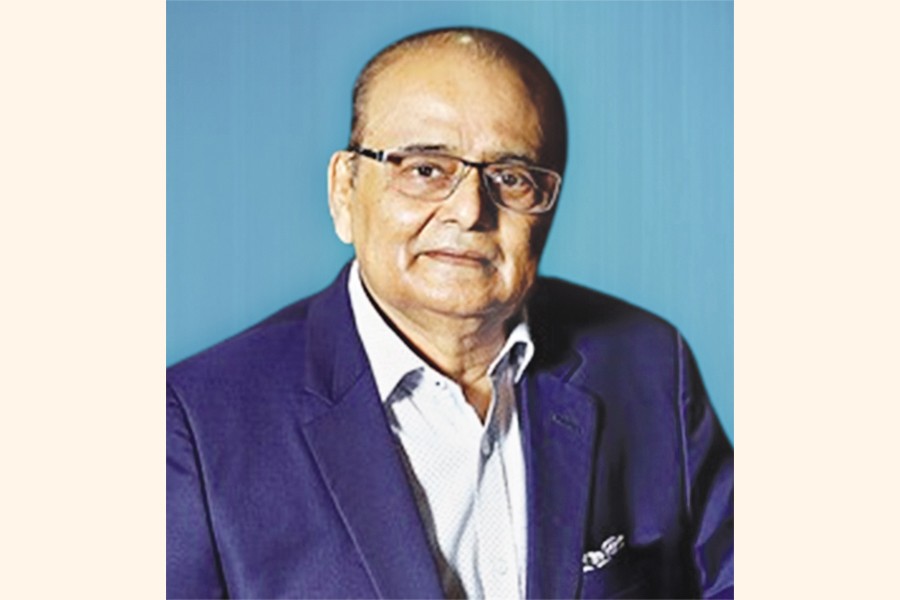
Bangladesh’s economy has slipped into a vicious circle of high interest rates, persistent inflation, weak investment and slowing GDP growth, making it increasingly difficult to break out of the cycle, said Dr Zaidi Sattar, Chairman of the Policy Research Institute of Bangladesh (PRI).

Speaking on Thursday, he said Bangladesh should examine how other countries responded to the 1997 Asian financial crisis and the 2008–09 global financial crisis to identify practical policy options for addressing the current macroeconomic stress.

The eminent economist made the remarks while speaking at an event at the PRI office in Dhaka to launch the October issue of Monthly Macroeconomic Insights (MMI), published under the Centre for Macroeconomic Analysis (CMEA) of PRI.

Anwar-ul-Alam Chowdhury, President of the Bangladesh Chamber of Industries (BCI), attended the programme as chief guest, while Dr Ashikur Rahman, Principal Economist at PRI, presented the keynote.

Dr Ashikur Rahman said the economy continues to face elevated inflation alongside deep-seated problems in the banking sector. The policy response—raising the policy rate and aggressively tightening liquidity—has helped bring inflation down to a 39-month low, he noted.

Even so, he warned that inflation could pick up again in the coming months as public expenditure rises, consumer spending strengthens and possible supply-chain disruptions emerge.

He said that deposit growth has returned to an upward trajectory, with deposits rising over the past two months and averaging around 10 per cent, and added that depositors confidence rebuild following incremental reforms in the banking sector by the interim government.

However, private-sector credit growth has slipped to a multi-year low as political uncertainty, financial-sector vulnerabilities and global instability have kept investors on the sidelines, he said.

“This restraint is visible in capital-machinery imports,” he said, pointing out that imports fell by 10.92 per cent in the July–September period of the current fiscal year, after dropping 20 per cent in the previous year.

Anwar-ul-Alam Chowdhury said the economy is “bleeding,” adding that the current government “basically does not care about the business community,” a situation he described as “very unfortunate.”

He said industries, particularly in the manufacturing sector, are under severe strain due to high inflation, rising interest rates and an energy crisis, with power generation dropping by 42–45 per cent.

“We must address the employment challenge, make industry more competitive and diversify our industrial base if we are to create sustainable jobs,” he said.​
 

Why Bangladesh fails to diversify its exports

SYED MUHAMMED SHOWAIB
Published :
Nov 28, 2025 23:23
Updated :
Nov 28, 2025 23:23

1764378483830.webp


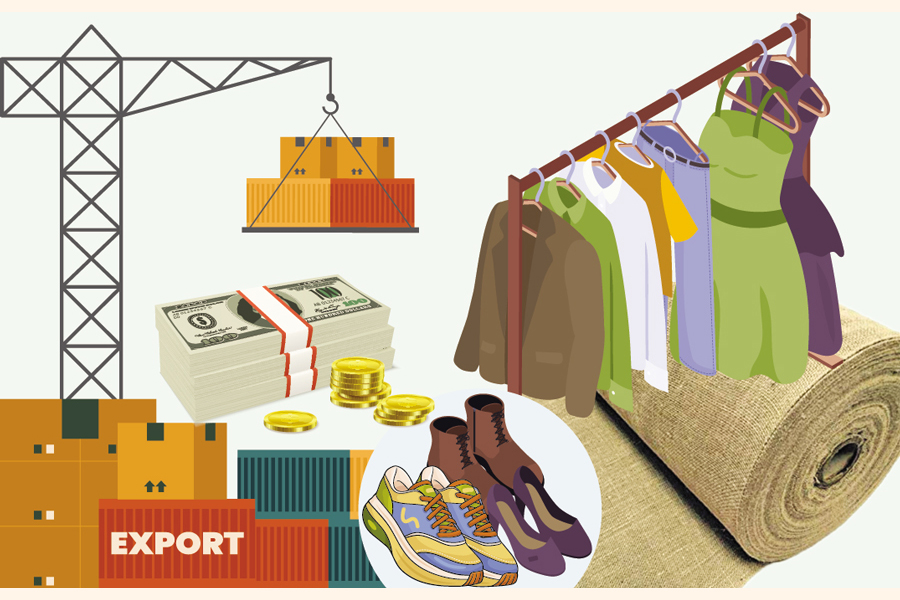
It is never wise to put all eggs in one basket where a single misstep can cause them all to break. A nation's "basket" is its export profile and over-reliance on a single sector makes it vulnerable to volatile global demand. Yet despite decades of discussion and repeated calls for diversification, Bangladesh's export structure has shifted very little since it first entered global markets. The decline of jute and jute goods from their once-dominant position did not trigger any meaningful broadening of the export base either. Instead, export concentration simply shifted to a narrow set of new products. Today, a handful of goods make up most of the export basket and a limited number of markets continue to absorb the bulk of what Bangladesh sends abroad.

Over the past few decades, readymade garments came to define Bangladesh's export identity and it still influences where Bangladeshi products can reach. While some nations have moved away from apparel manufacturing and now import from Bangladesh, many others still produce their own garments and have limited demand for our supplies. But because the garment sector already guarantees a dependable global market, they draw most of the focus, leaving other exportable products without the push they need to grow. Until new products establish themselves, the expansion of destinations will continue to be limited. It is in this context that the recent gains in a few non-traditional sectors should be judged. Rather than signalling a sudden transformation, these trends highlight how long Bangladesh has waited for industries beyond apparel to gain a solid foothold. The toy industry and the wider plastics sector provide examples of what might have emerged much earlier and on a much bigger scale had there been sustained investment and consistent policy commitment.

Recent figures show that toy exports could grow more than eightfold within the next five years, a pace that would have seemed unthinkable not long ago. In 2022-2023, toys from Bangladesh reached 88 countries and earned more than US$75 million. Projections now suggest that by 2030 this amount could climb to nearly $470 million. If Bangladesh stays on this path, it could even break into the ranks of the world's top 30 toy exporters soon. At home, plastics now serve a massive domestic market worth Tk 400 billion. The industry contributes about Tk 35 billion in annual revenue and supports nearly 5,000 factories, most of which are small and medium enterprises that form the backbone of our local economy. This goes to show that there are industries in Bangladesh with genuine potential, ready to grow if given the right support.

That said, the success of toys and plastic, impressive as it is, doesn't change the fact that they remain isolated examples within an export basket still heavily dominated by one sector. The clearest evidence of this is that readymade garments continue to account for more than 82 per cent of export earnings. Policymakers and business leaders have acknowledged the need for a broader product base and more diverse destinations but this shift has not taken place. Businesses have simply responded to the incentives and market conditions in front of them, and those conditions have kept garments at the centre of the export earnings.

This overconcentration doesn't stop with products but it extends to markets as well. Nearly two thirds still go to Europe and the United States for reasons understandable. According to the Export Promotion Bureau, 44 per cent of all exports go to the European Union alone because tariff-free and quota-free access is still available for least developed countries. Even as Bangladesh achieved a record $48 billion in exports last year, the share going to these two markets declined only slightly from 65 per cent to 62 per cent over three years. Taken together, these trends show how firmly set our reliance has become. A few emerging sectors, promising as they are, cannot change this underlying vulnerability. Without real diversification, Bangladesh will continue to depend on a small and fragile group of markets which keeps the economy exposed in ways that have persisted for years.

Thus far, the range of exportable goods remains critically narrow, which is why non-apparel products have struggled to gain significant traction in new markets. When the list of products is small, the list of markets naturally stays small too, no matter how often diversification is discussed. This basic issue also explains why cash incentives for non-traditional exports have yielded only modest results. Today, these incentives cover more than 40 products, with garment exporters receiving an additional two per cent for shipments beyond the main markets of Europe, North America and the UK. Yet analysts are far from unanimous on how effective these measures really are. Because garments dominate the export structure so heavily, most of the incentives inevitably end up in that single sector. Many experts argue that support should instead target specific products and specific destinations where progress can be clearly tracked, rather than being shaped by pressure from powerful industry groups.

Outside the garment sector, most industries face a different set of challenges. Many struggle to meet international quality and certification standards while weak domestic testing and accreditation systems slow down market entry and drive up costs. High logistics expenses, chronic congestion and inefficient transport networks further weaken competitiveness. On top of that, the absence of free trade agreements blocks access to lower tariff rates in potential new markets. These barriers must be removed.

The journey towards a more diverse export economy is challenging but it cannot be avoided. If Bangladesh wants lasting economic stability, the vision of diversification must move beyond rhetoric and translate into decisive action. The rise of the toy industry is a proof that steady effort can pay off. Applying the same commitment to other promising sectors is the surest way to build a balanced and resilient export future.​
 

Beyond readymade garments industry
Next frontier of Bangladesh's export diversification


Serajul I Bhuiyan
Published :
Nov 27, 2025 23:53
Updated :
Nov 27, 2025 23:57

1764379084271.webp


There are always points in the economic development of countries where the roadmap for the future becomes distinctly visible once the driving engine, which for so long propelled success to dizzying heights, is no longer commensurate with ambitions born out of success. Bangladesh has finally reached that juncture in its economic development. For over four decades, its success story has remained its readymade garments (RMG) industry, which has emerged as a success saga for so long that it has made Bangladesh into the second-largest supplier to the global fashion stores. However, no country that has ambitions to reach trillion dollars can bank on its second-largest contributor to its export revenue to contribute above 80 per cent to its revenue streams.

A NATION AT AN EXPORT CROSSROADS:

The success in Bangladesh's exports has long had its roots in its RMG industry. Units multiplied exponentially, global buyers poured in, and for countless numbers of countrywomen, doors to empowerment swung wide in welcome. However, it has also created a new kind of vulnerability for Bangladesh vulnerability to overdependence on its RMG industry. The problem with any industry that contributes so greatly to country exports is that any adverse shock whether global recession, supply-chain disruptions, or geopolitical tensions can impact the entire country.

Economists are warning that Bangladesh has now reached the point where single-sector approach growth is no longer possible. The future of the garments industry is undergoing tremendous change due to automation, nearshoring, government regulations on climate change, and sharp competition from other countries such as Vietnam, Turkey, and Ethiopia. It is no longer possible for Bangladesh to fashion its way to middle-class global status.

The opportunity exists. Today, Bangladesh has youth, technology, entrepreneurship, and geographic linkages between South Asia, Southeast Asia, and the Bay of Bengal on its side. Now, the challenge lies in ensuring that these factors are leveraged for Diversified Export on behalf of Bangladesh.

PHARMACEUTICAL SECTOR - THE BEHIND-THE-SCENES GIANT: This industry has remained largely overshadowed by the dominance of garments in public rhetoric but is perhaps second to none in terms of its promise for Bangladesh as a high-value industry since their independence. Currently, local pharmaceutical companies are meeting the entire country's demand, in addition to supplying more than 150 countries in Asia, Africa, and Latin America.

This experience in making generics, taking advantage of the World Trade Organization (WTO) Trade-Related Aspects of Intellectual Property Rights (TRIPS) exemption for Least Developed Countries (LDCs), has provided Bangladesh with a fantastic foundation. With Bangladesh poised to graduate and move out of its LDC status, pharmaceuticals' ability to develop advanced formulation, biologics, vaccine development research, or API manufacturing will provide assistance in upgrading pharmaceuticals to a multi-billion-dollar industry via its global markets.

As observed by industry analysts, with rising demand for cheaper drugs in the global arena, especially within the developing countries, Bangladesh has emerging opportunities for its competitive advantage, which is its ability to provide quality generic drugs at cheaper rates. However, to effectively exploit this opportunity, modifications in regulatory matters and emphasis on global acceptance for quality certification are essential.

The export councils are also of the view that "if a holistic approach can be adopted whereby tax incentives for API production, streamlined approval schedules for drugs, and brand-building campaigns for 'Made in Bangladesh Pharma' are provided, then this industry can emerge as one of its biggest earners of foreign exchange by 2035. This is a new frontier that Bangladesh cannot miss."

LEATHER & LIGHT ENGINEERING -- EXTENDING MANUFACTURING OUTSIDE THE CONVENTION: The leathers industry remains one of the most underrated sectors for exports for Bangladesh. For many years, it has struggled with issues of compliance, environment, and delays in relocation. However, the opportunity in this sector is enormous. One thing that international buyers always mention is that products such as leathers and footwear from Bangladesh are on par with international standards, but environmental certification creates hurdles for entry into higher markets.

Effective and full implementation of the Savar Tannery Industrial Estate could change the face of the industry overnight. With efficient treatment facilities for effluent, common certification, and environmental observance, it will not be difficult for the Bangladesh leather goods industry to rake in additional revenue to the tune of US$5 to $7 billion every year. It is important to ensure that they are confident about the entire observance structure.

Light engineering is also a bright spot. This industry does not get the attention that it deserves, but it has great prospects to emerge as the backbone of a diversified manufacturing economy. The Bangladeshi companies are already making parts for bicycles, automobiles, agricultural machinery, and home appliances. With proper policy assistance in terms of lower import duties on basic materials, special zones for precision engineering, and technical education in precision machining, this country can emerge as a Tier-2 supplier to global companies.

Vietnam, Thailand, and Malaysia exploit this approach to the fullest. Bangladesh has every opportunity to pursue this approach too by creating avenues for SMEs to innovate, grow, and gain access to international buyers.

INFORMATION TECHNOLOGY SERVICES -- THE DIGITAL FRONTIER THAT AWAITS TAKEOFF: One of the most underutilised national resources for Bangladesh is its ICT talent. With over 650,000 freelance ICT professionals, coupled with thousands of new ICT graduates annually, Bangladesh has emerged as one of the top providers of online talents in the global marketplace. This is only a fraction of its full potential.

Information technology services relating to software development, security, cloud services, AI services, and BPO services have emerged as new areas for global exports. Nations such as Vietnam and the Philippines are banking on their youth to generate billions in revenue in terms of information technology exports. Bangladesh has this opportunity too, but for that, right investments are required.

Three are always emphasised. First, the country needs to develop its national approach to skills acceleration to teach children the skills that are most needed by the global environment, including cloud technology, AI, mobile development, and data analytics.

Second, Bangladesh must develop top-class global technology infrastructure to include always-on broadband and qualified data centers that give global clients assurance and confidence in terms of security and reliability.

Third, Bangladesh must develop its global brand to enable it to emerge as a secure outsourcing location, which entails both publicity and improvement in standards.If this happens, IT services can emerge as one of the country's biggest earners of foreign exchange within a decade, making not only its economy but also its workforce diverse.

AGRO-PROCESSING -- WHERE RURAL PROSPERITY AND WORLD DEMAND MEET: Agricultural products are key to Bangladesh, but its agricultural export growth has remained well below its actual potential. Agro-processing acts as a 'connecting link' between local farmers and global supply chains. Various products including shrimp, ice-cubed fish, processed fruits, spices, juice, 'ready to eat' products, and 'halal products' also find substantial markets abroad.

However, inconsistencies in supply chains restrict its ability to participate effectively in niche markets. Cold storage facilities are insufficient, certification for food safety is distributed over various government agencies, and its inability to provide integrated logistics increases its reliance on costly exports. This makes Bangladesh sell their products raw or processed to only tap into a very limited portion of international value addition.

Agricultural economists recommend that for Bangladesh, it is essential to develop countrywide cold chains between farmers, processors, and exporters. This will itself decrease post-harvest losses to a substantial extent and enhance overall exports. Moreover, contract farming arrangements where input supplies and training are also provided to farmers can ensure quality.

The demand for halal, organic, and sustainably produced food products is escalating exponentially. Bangladesh, with its original fit in this domain, ought to be at the forefront in the global halal food market. It has tremendous potential to emerge as a multi-billion-dollar industry for agro-processing, concurrently lifting up agricultural livelihoods and countrywide food industries.

THE POLICY IMPERATIVE: No industry can grow in an environment where policies are not favorable. Economists repeatedly stress that Bangladesh needs to introduce a new type of incentive structure one that favors added-value, R&D, and adherence rather than added numbers.

The incentives for cash support need to focus on research, development skills, green manufacturing, and sophistication in exports. An enterprise into biologics (a broad category of medicines derived from living organisms that are used to treat a variety of diseases, including cancer, autoimmune disorders, and diabetes) or AI or engaged with global environmental standards in its leather manufacturing practices needs to be treated separately in terms of incentives rather than on par with other traders in low-value goods.

Infrastructural deficiencies are also important areas where Bangladesh needs to fill its gaps. The World Bank estimates that Bangladesh is losing between 7-8 per cent of its probable export value in terms of delays in ports, customs, and expensive logistics. It has become essential to opt for modernization. Automated customs and inland container depots, roads, and port management technology are essential areas where Bangladesh needs to focus on making these priorities for the country.

Finally, it is essential for Bangladesh to integrate into regional trade thoroughly. The BBIN Initiative, BIMSTEC, and BCIM corridors are massive opportunities for reducing costs and getting new markets. In addition to this, countries like South Korea, Singapore, and Indonesia are also interested in investments in sectors including energy and agriculture.

Picture this: Bangladeshi drugs are quickly distributed to Nepal, agro-processed products are delivered to India within hours, not days, and IT firms are able to work in perfect synergy with Bhutan and Sri Lanka. This is no fanciful notion but rather the reality that will soon greet our wake-up calls.

THE NEXT DECADE WILL DEFINE BANGLADESH'S ECONOMIC DESTINY: The era of single-engine growth is coming to an end. RMG will always remain a pivot for the country's exporting economy, but it must not continue to remain its only pivot. The global economy is undergoing transition, and so must Bangladesh. It is a moment in history for the country where its demography, technology, entrepreneurship, and cooperation in the region are aligning in favor of our growth trajectory.

If Bangladesh is to take advantage of this opportunity, it needs to act with boldness, with certainty, and with relentless efforts on reform. Export diversification is not just a policy or an approach it is a and a catalyst for sustained.

As Bangladesh seizes this opportunity, it has every chance to develop its own export environment, which is broader, smarter, greener, and more innovative than anything that has ever existed in this country or anywhere else in its history. The next installment in the Bangladesh growth saga must be written not by one industry but by many that are on the rise.

The day to emerge out from RMG is not in the far-off distance.It is now.

Dr Serajul I Bhuiyan is a professor of journalism and mass communications at Savannah State University, Savannah, Georgia, USA.​
 

Global trade moderation and Bangladesh

Asjadul Kibria
Published :
Nov 29, 2025 23:12
Updated :
Nov 29, 2025 23:49

1764465890877.webp


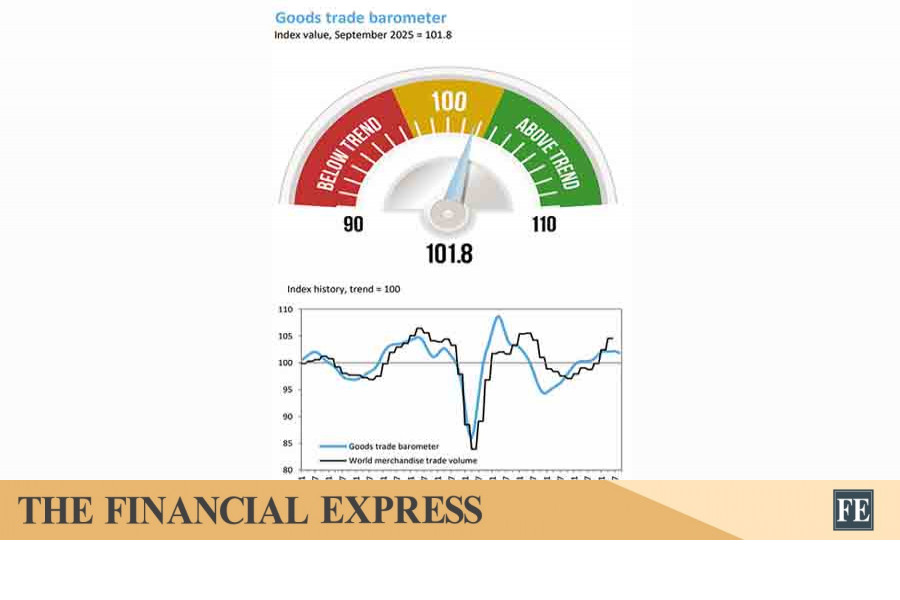
The calendar year 2025 is now set to enter its final month tomorrow. In other words, just a month from now, the world will see the start of another year. The annual stock-taking of global economic performance is already underway, although only relevant data for the first three quarters (January-September) is available. In this connection, the World Trade Organization (WTO) released the latest Goods Trade Barometer on Friday last. The barometer is a composite leading indicator for global trade that provides real-time information on the course of trade in goods relative to recent trends. Usually, the barometer predicts trade developments two to three months ahead. The latest barometer indicates a possible development of global trade in the last quarter of the current year.

The key message of the latest WTO Goods Trade Barometer is that global goods trade growth is set to moderate in the last quarter, leading to slower growth in the last half of the year. The surge in global trade in the first half was mainly driven by frontloading of imports ahead of expected tariff hikes and by rising demand for AI-related products, according to the barometer index analysis. The overall barometer index fell to 101.8 in September, down from 102.2 in June and below the quarterly trade volume index, which reflects actual merchandise trade developments.

There are six component indices of the barometer, and all are above their standard baseline value of 100 except for the agricultural raw materials index (98.0), which has been in contraction since the start of the year.

The indices for air freight (102.7) and container shipping (101.7) remain above trend. Nevertheless, these two indices have declined over the last three months, indicating a slowdown in global goods transportation. In other words, trade volume is likely to go through a downtrend in the coming days. The WTO last month predicted that merchandise trade, in terms of volume, may register 2.4 per cent growth in 2025 and 0.5 per cent in 2026. The slower growth projection is driven by higher tariffs and trade policy uncertainty in the second half of 2025 and in 2026.

The indices for automotive products (103.0) and electronic components (102.0) remained constant over the same period. It also indicates moderate growth prospects. Finally, the new export orders index (102.3) surpassed the baseline value of 100 in the second quarter, after some volatility at the end of 2024 and the start of 2025.

So, the overall reading of the indices suggests a moderation in global merchandise trade growth this year.

Earlier last month, the UN Trade and Development (UNCTAD) in its global trade update showed that the world trade expanded by about $500 billion in the first half of 2025, despite volatility, policy shifts and persistent geopolitical tensions. "Momentum remained strong into the third quarter, even as growth patterns varied across regions and sectors," it added.

UNCTAD also said that the trade growth continued in the third quarter, with goods expected to expand by about 2.5 per cent quarter over quarter and services accelerating sharply to around 4 per cent. As full data for the third quarter trade were not available at the time of releasing the UNCTAD update, the UN organisation issued a nowcast, a forecast of what is immediately expected, for the third quarter. It also said that barring major adverse shocks in the final months of 2025, global trade is projected to surpass its 2024 record levels. Last year, the value of global merchandise trade stood at US$24.5 trillion, posting modest growth of 2 per cent over 2023.

UNCTAD was of the view that despite turbulence from shifting US trade policy, global trade dynamics have so far shown limited disruption. However, uncertainty over future policy remains a key risk. "Geopolitical instability also continues to weigh on trade, with persistent conflicts that could further disrupt regional dynamics and heighten concerns over energy and food security," it added in its October update report.

The moderation of the global trade in goods will also impact countries like Bangladesh as their exports are dependent on the movement of the global market. Already, the country's trade in goods registered a modest 2 per cent growth in the first nine months of the current year over the previous year. Statistics available with Bangladesh Bank showed that total trade in the January-September period of 2025 stood at $82.79 billion, which was $81.14 billion in the same period of 2024.

The official statistics also showed that merchandise exports of the country increased by 4.74 per cent in the first nine months of the current year, whereas the imports remained almost the same, reflecting weak domestic demand.

As the country enters the election-centric political business cycle, weak domestic demand will persist for a couple of months before and after the election in February of the next year. While the import is correlated with domestic demand, the export is linked to the international market, which has already become somewhat volatile due to Trump's tariff policy.

The US President initially imposed a 35 per cent reciprocal tariff on Bangladesh, which later fell to 20 per cent after hectic negotiations with several commercial offers to the US. The new tariff rate comes into effect in August, and the primary impact will be visible by the end of the year.

As China is the leading trade partner, mainly because it is the largest source of imports in Bangladesh, despite a decline in domestic demand, total imports from China will post moderate growth by the end of the year.

Overall, Bangladesh is going to witness a year of sluggish trade in goods which will have some negative impact on the growth of country's gross domestic product (GDP).​
 

Beyond apparel: How Bangladesh can develop new exports

1764553888415.webp

A key to diversifying Bangladesh's export basket lies in replicating the success of the apparel industry. FILE VISUAL: SHAIKH SULTANA JAHAN BADHON

Bangladesh urgently needs to diversify its economy. The country has a limited ability to produce and export sophisticated goods. It ranks low (128th out of 145 countries) on the Economic Complexity Index, which measures the diversity of a country's exports. Except for some petroleum-based economies, the country is one of the most narrowly concentrated economies in Asia. Exports remain largely focused on the apparel sector, which constitutes over 80 percent of exports. The apparel industry earns $40 billion in exports, while no other sector brings in more than $1 billion in an economy worth nearly half a trillion dollars.

Historically, Bangladesh has shown its ability to diversify its export base. In the late 1970s, goods made from jute fibre accounted for around 70 percent of total merchandise exports when the apparel industry's share was less than four percent. The share of the apparel industry increased to 75 percent in the early 2000s, a remarkable feat in transforming an agrarian economy towards a labour-intensive, export-oriented manufacturing country. This success led to export concentration in the apparel sector.

The rise of the apparel industry reduced the share of traditional exports like jute and leather, which have stagnated at around one billion dollars for decades. With over 85 percent of the labour force in informal jobs, Bangladesh needs job-centric and export-driven manufacturing growth to diversify its economy and create more formal employment.

A key to diversifying Bangladesh's export basket lies in replicating the success of the apparel industry. Partnerships were crucial to the apparel sector's stellar success. In the late 1970s, a Bangladeshi apparel manufacturing company, Desh Garments, created a joint venture with the Republic of Korea's Daewoo Corporation, combining local cheap and trainable labour with its foreign counterpart's technological expertise and market access. More than one hundred Bangladeshi technical staff were trained at Daewoo's factory for six months, enabling the transfer of essential technical expertise and contributing to the development of the apparel sector. Some of these workers later became entrepreneurs.

To be a major player in chip manufacturing, the Indian conglomerate Tata is sending hundreds of staff overseas to its technical partner for training in semiconductor fabrication. Training and technology transfer occur most efficiently and effectively when both parties in a partnership have a shared business interest. Partnerships—government-government, private-private, or public-private—are vital for sector development in developing economies.

For instance, Chile was historically known as a copper exporter. Its transformation into a global seafood exporter, thanks to the Japan-Chile Salmon Project, is an example of a successful partnership. This project transferred advanced aquaculture technologies and provided crucial market access, with public-private partnerships making the knowledge widely available.

To bring economic diversification to fruition, Bangladesh's government and development partners can focus on developing partnerships based on sound economics and honest intentions. This is a crucial element in the country's diversification efforts. Bangladesh's world-class non-governmental organisations can unite communities, disseminate technologies, and train the workforce. This is a unique advantage for Bangladesh which is not currently used in the economic diversification initiatives.

Governments and their development partners often work with many industries at once to address shared policy or regulatory challenges. While this broad approach has benefits, it can make it harder to scale up emerging industries. Focusing resources on a few key sectors, backed by a long-term plan with clear goals, is usually more effective.

Development finance institutions can assist. They have experience in developing partnerships by managing geopolitical challenges, ensuring equitable returns, supporting public-private cooperation, and above all, supporting economic benefits. They should focus on one sector at a time, providing comprehensive support across the value chain to mobilise investments and achieve measurable export goals.

The country needs to diversify into new sectors and simultaneously strengthen the apparel industry through innovative products and access to new markets. With approximately five percent of global export share, Bangladesh's apparel industry continues to present growth opportunities. The country can diversify its economy by replicating the apparel industry's successful model of international partnerships, technical training, and targeted long-term planning.

Bangladesh's economic diversification has remained a goal rather than an outcome for decades. A focused approach built on transparent partnerships and targeted industrial development can convert these long-discussed possibilities into real progress. International partnerships, targeted training, and long-term planning offer a practical path to developing new industries and expanding the country's economic base.

Bidyut Kumar Saha is lead investment officer at ADB Bangladesh Resident Mission.

Chandan Sapkota is public management economist at ADB Sectors Department.​
 

Remittances cross $13 billion in first 5 months of fiscal

Published :
Dec 01, 2025 21:00
Updated :
Dec 01, 2025 21:00

1764637678601.webp


Bangladesh received its highest monthly remittance inflow of the current fiscal year FY 2025-26, crossing US $2.88 billion November.

This substantial inflow translates to an average daily remittance of approximately $96.3 million. In the five month of the current fiscal year Bangladeshi expatriates sent $13.03 billion remittance while it was $11.7 billion in the previous fiscal year, UNB reports.

According to updated data released by the Bangladesh Bank on Monday, the remittance flow in November saw a significant increase of 31.37 percent compared to the previous month of October.

The total remittance figure for November stands at $2.88. Of this amount, state-owned banks received $587.76 million as remittance, specialized banks handled $298.95 million, and the largest share, around $2.0 billion, came through private banks. Foreign banks accounted for the remaining $5.94 million.

The central bank also provided a weekly breakdown, showing consistent high flow throughout the month, with the largest weekly amount of $768.48 million arriving between November 9 and 15, and the smallest being $43.18 million on November 1st.

The November figure significantly surpasses the inflows of the preceding months of the current fiscal year: October saw $2.56 billion, September recorded $2.68 billion, while August and July inflows were $2.42 billion and $2.47 billion, respectively.

This robust performance follows the record-breaking remittance year of FY2024-25, where expatriates sent $30.32 billion, marking the highest annual inflow in the country's history so far.​
 

Striking a balance between growth and job creation

Published :
Dec 02, 2025 22:19
Updated :
Dec 02, 2025 22:19

1764724065186.webp


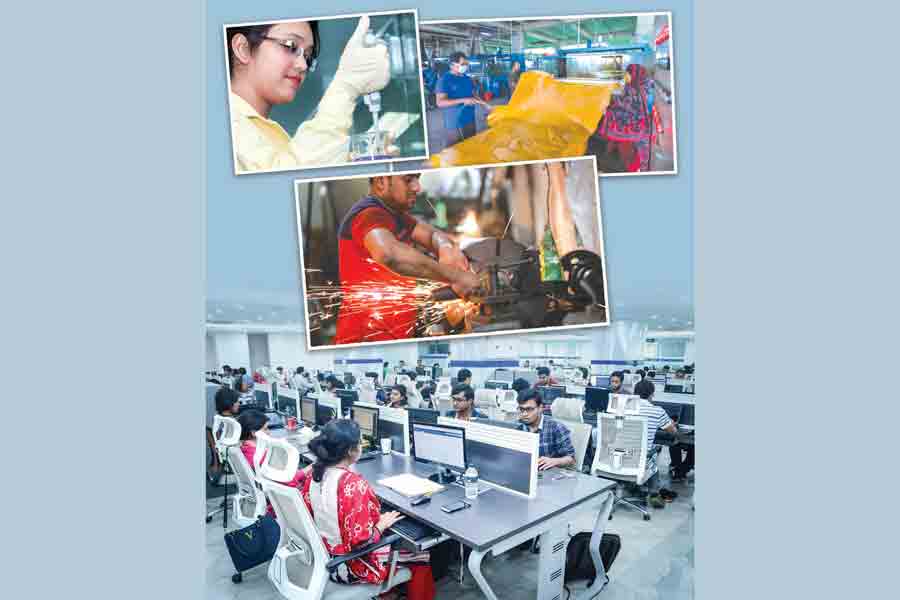
Over the past one and a half decades, the term Gross Domestic Product or GDP became synonymous with development and the state-owned statistical agency and other official documents would occasionally come up with various data showing how the economy was on an ever-rising growth trajectory. Obviously, those were projected as the measure of the nation's development. Even the international development partners were convinced of those growth narratives and would praise the then-government for its success story of economic growth. Against this backdrop, economists have of late been coming up with research data that are unravelling the mismatch between growth, for instance, in the manufacturing sector and the rising rate of unemployment. Presented at a recently held discussion event styled "Beyond Jobless Growth: Towards an Employment-Centred Policy Framework for Bangladesh Through a Post-Neoliberal Lens", some study findings showed that the manufacturing sector despite recording an impressive annual rate of growth at around 10 per cent between 2013 and 2023, had shed 1.4 million jobs during that period. How can one explain this glaring mismatch between growth and unemployment at the same time?

It was found that in the export-oriented garment industry, fewer workers produced more value in terms of export earnings than before. In 2013, for instance, the industry required 220 workers to produce goods worth US$1.0 million in terms of export earnings. However, a decade later in 2024, the same amount of goods and matching export earnings could be generated by 94 workers. That was definitely good news for the investors who achieved such success through adoption of modern technology that increased productivity of the industry manifold, but at a cost. While one cannot deny the industry's higher level of productivity and earnings that go with it, but at the same time it creates a fresh crisis for the policymakers resulting from the massive job cuts. How can these dichotomous developments in the macro-economy be reconciled? Growth is no doubt a priority before the investors in the manufacturing industries such as the export-driven ones, but the question that would also arise at the same time is, growth for whom? And this issue is especially problematic for a country where about 3.0 million people are entering the job market annually. So, creating jobs for the fresh millions joining the workforce every year should be the topmost priority before the government as well as the development thinkers.

Unsurprisingly, some experts at the said discussion event blamed the deepening employment crisis on what they termed disproportionate focus on a single industrial sector, namely, the Readymade Garment (RMG). This, no doubt, created an imbalance affecting the rest of the economy. For when the RMG-led manufacturing has been experiencing significant rise in terms of growth, the agriculture that absorbs the overwhelming proportion of the growing workforce went through a decline as its contribution to the GDP fell markedly from its previous level. This calls for incentivising more agro-based industries including the start-ups in the sector. That may help reduce the job loss on a massive scale like the manufacturing sector suffered over the last one decade.

Overall, it is time for a rethink on the part of both the government and the economic expert about getting the priorities for growth and employment right. While the economists are rightly blaming government policies and explaining the existing economic realities through different terminologies such as 'triangle of vicious cycles' and so on, the real challenge would be to come up with the correct guidelines for the policymakers and the businesses to follow. It goes without saying that the right model for the economic growth should be the one that creates more jobs and ensures growth at the same time.​
 

Latest Posts

Back