[🇧🇩] Monitoring Bangladesh's Economy

[🇧🇩] Monitoring Bangladesh's Economy
1K
33K
More threads by Saif

G Bangladesh Defense

Breaking new ground in market diversification
US stays BD’s top export destination, new markets expanding
Netherlands, Sweden, Mexico among those showing robust growth


Jasim Uddin
Published :
Jul 05, 2025 08:11
Updated :
Jul 05, 2025 08:11

1751758694449.webp


Bangladesh is breaking new ground in market diversification with robust trade growth elsewhere while the United States stays as its single-largest export destination with a 14.38-percent annualised growth in the just-past fiscal year.

Non-traditional markets like the Netherlands, Sweden and Mexico, meanwhile, showed robust growth, according to data from the Export Promotion Bureau (EPB) -- indication that much-envisaged market diversification shows promise.

According to the latest data on top 20 export destinations, exports to the United States totalled $8.69 billion during the past July-June period, up from $7.60 billion a year earlier.

The US accounted for over 18 per cent of Bangladesh's total export earnings of $48.28 billion in FY25.

Germany and the United Kingdom followed as the second-and third-largest export destinations, receiving $5.29 billion and $4.62 billion worth of goods respectively. Exports to Germany grew by 9.11 per cent while to the UK by 3.23 per cent.

Among the fastest-growing markets, the Netherlands stood out with a 21.72-percent year-on-year growth, reaching $2.35 billion. Sweden and Mexico also recorded impressive growth rates of 15.66 per cent and 15.45 per cent respectively, indicating growing diversification in Bangladesh's export destinations.

India, another emerging destination, imported $1.76 billion worth of goods, up by 12.43 per cent year on year. Meanwhile, exports to Canada and Belgium increased by 11.26 per cent and 10.72 per cent respectively.

However, in top 20 destinations, exports to some emerging markets declined in the last fiscal year. Earnings from China dropped by 2.92 per cent to $694.49 million, while exports to Russia plummeted by 10.24 per cent to $353.96 million. Exports to South Korea also slipped, by 5.89 per cent, although export to Korea registered a big growth in FY24.

The EPB data suggest that while Bangladesh continues to rely heavily on traditional markets in North America and Europe, its outreach to newer or previously smaller markets is gaining traction.

As per the data, renaming countries, calculated under 'others' category comprising non-major markets, grew by 8.30 per cent and accounted for over $7.18 billion in exports.

In general, all destinations excepting the European Union, the United States, Canada, and the United Kingdom are considered non-traditional markets.

Exporters and policymakers view this diversification as critical for reducing dependency on a few key markets and ensuring resilience amid global economic shifts.

In such trade transition, small markets become second-largest collective bloc.

In addition to strong gains in traditional destinations, Bangladesh's exports to 'other markets' -- those outside the top 20 trading partners -- grew by 8.30 per cent year on year, totalling $7.18 billion in FY 2024-25, up from $6.64 billion in FY24.

This group accounted for nearly 15 per cent of total exports, underscoring the country's strategic pivot toward new regions across Africa, Latin America, Southeast Asia, and the Middle East.

The other markets contributed roughly 14.88 per cent to Bangladesh's total exports in FY25 -- making it the second-largest collective bloc, after the US.

Trade experts say this growth validates government incentives under the Export Policy 2021-2024, which aims to reduce overdependence on North America and Western Europe by encouraging market exploration in underrepresented regions.

Talking with The Financial Express, Dr M. Masrur Reaz, Chairman and CEO of Policy Exchange Bangladesh, said exports to Russia declined due to the ongoing war.

He further explains that "trade and financial mechanisms with Russia have been disrupted due to sanctions on a large portion of Russian banks and financial institutions".

Dr Reaz also mentions that China is currently experiencing deflationary pressure, with local manufacturers offering their products at very low prices to domestic consumers. "As a result, exports to China may be affected."

He notes that local Chinese producers are now more competitive than those from other countries.

Bangladesh Garment Manufacturers and Exporters Association (BGMEA) President Mahmud Hasan Khan Babu details their efforts for both market and product diversification for the biggest export earner of the country to navigate possible headwinds.

About non-traditional markets he says, "There are some issues in the non-traditional markets, which is why we sometimes see a good growth, in some cases see a decline."

He has emphasized the need to work seriously on boosting exports to non-traditional markets as part of their broader goal to diversify export destinations.

"We are also working on product diversification," he added.

Babu also mentions that there is a good number of work orders in hand, which indicates that apparel exports have the potential to grow further.

However, he notes that cashing in on this opportunity depends on the smooth supply of gas and electricity, alongside cooperation from government agencies and supportive policies.​
 

Free Trade Zone to be set up in Ctg

Our Correspondent
Published :
Jul 06, 2025 08:30
Updated :
Jul 06, 2025 08:30

1751844810825.webp


The government is considering developing a Free Trade Zone (FTZ) on 400 acres of land near southern part of the Karnaphuli Tunnel in Anwara upazila in the port city.

According to experts, the establishment of FTZ is believed to be a game changer in the country's economy. Foreign companies can set up factories here and take their products abroad. They will be free from bureaucratic red tape in Bangladesh and can utilize the labour force of Bangladesh. This zone provides a win-win deal for both investors and Bangladesh.

Sources said the interim government has announced plans to establish a FTZ in the country, aligning with the growing global trend of trade liberalisation and investment facilitation.

Following the decision of the government, Bangladesh Economic Zones Authority (BEZA) on April 21 formed a national committee to conduct a feasibility study on it.

On May 8, Chairman of Bangladesh Investment Development Authority (BIDA) and Executive Chairman of BEZA Chowdhury Ashik Mahmud Bin Harun visited the potential site for the FTZ at Anwara upazila in Chattogram.

He said that the site has initially been chosen due to its proximity to both the port and the airport, which makes it logistically strategic.​
 

GDP growth notches 4.86pc during January-March of FY25

Published :
Jul 07, 2025 23:14
Updated :
Jul 07, 2025 23:14

1751930261081.webp


Bangladesh's economy grew by 4.86 per cent during the January to March quarter of the last fiscal year (FY25), buoyed by a rebound in industry and services.

Industrial output rose by 6.91 per cent during the three-month period of FY25, up from 4.55 per cent during the same period of the previous year FY24, BSS reports citing the latest provisional data released by the Bangladesh Bureau of Statistics (BBS).

The services sector, which makes up over half of the economy, grew by 5.88 per cent in the 3rd quarter of FY25, compared with 4.31 per cent in the same quarter of the previous year.

The agriculture sector, however, saw a slow growth as it stood at 2.42 per cent during this January-March period of FY25, down from the previous year's figure for the same quarter.

According to provisional estimates, growth in the first and second quarters of the last fiscal year (FY25) was 1.96% and 4.48% respectively, while in the previous fiscal year (FY24) it was 5.87% and 4.47%.​
 

Inflation rate comes down to 8.48pc in June, lowest in 35 months

Special Correspondent Dhaka
Published: 07 Jul 2025, 18: 59

1751933262809.webp


The general point-to-point inflation rate in July 2021 came down at 5.36 percentage points Prothom Alo file photo

The inflation rate in June came down to 8.48 per cent, which is the lowest in the past 35 months.

The rate was 7.48 per cent in July 2022. Since then the inflation rate started soaring until coming down last June.

At the same time, June was the fourth consecutive month to record downward inflation rate.

This was revealed in a data the Bangladesh Bureau of Statistics (BBS) published around 5:00 pm today, Monday.

According to the BBS, the food inflation rate in June was 7.39 per cent while the rate for non-food items was 9.37 per cent.

Analysts consider inflation like tax.

Meanwhile, chief adviser’s press secretary Shafiqul Alam in a social media post today writes, “The inflation rate has been coming down fast due to the thoughtful policy-strategies of the interim government. According to the data of June (2025), point-to-point inflation rate stands at 8.48 per cent, which is 2 percentage points less than August 2024.”

Shafiqul Alam further writes, “Food inflation rate has come down significantly and stands at 7.39 per cent which is lowest in the last two years. Non-food inflation rate has also started decreasing. It will come down fast in the coming months.”

According to the BBS, the overall inflation rate in March was 9.35 per cent. Since then, the rate has been continuously decreasing every month.​
 

Forex reserves dip below $30b after ACU payment

FE REPORT
Published :
Jul 09, 2025 00:37
Updated :
Jul 09, 2025 00:37

1752017588676.webp


The country's gross foreign- exchange (forex) reserves have fallen below the $30-billion mark following the payment of $2.02 billion in import bills through the Asian Clearing Union (ACU), according to Bangladesh Bank (BB).

After this significant settlement, Bangladesh's gross forex reserves stood at $29.53 billion based on BB's calculation and $24.45 billion as per the International Monetary Fund (IMF) methodology, as of 7 July 2025.

The current members of the ACU include Bangladesh, Bhutan, India, Iran, Myanmar, Nepal, Pakistan, Sri Lanka, and the Maldives. However, Sri Lanka withdrew from the union in October 2022 due to its own reserve crisis.

Under the ACU mechanism, member countries settle their import-export payment obligations every two months.​
 

Record remittance inflow boosts forex reserves
BSS Dhaka
Published: 08 Jul 2025, 22: 40

1752019745636.webp


Within just eleven months of the interim government, Bangladesh's foreign currency reserves have gone up from less than US$20 billion in 2024 to over $31 billion by June, 2025, indicating that the country is now going well through an economic recovery phase.

During this period, the record inflow of remittances into the country's national reserves is substantially contributing to the stability of institutions, easing of the liquidity crisis, and to some other activities.

Economists and experts observed that the record inflow of remittances has been an important bellwether of Bangladesh's economic recovery.

According to the Bangladesh Bank (BB) latest data, the country's gross reserves have risen to $31.72 billion by 2 July 2025.

However, as per the International Monetary Fund (IMF) methodology under the Balance of Payments and International Investment Position Manual (BPM6), Bangladesh's net reserves currently stand at $26.67 billion.

The surge came after a significant increase in remittance inflows, which reached $30.33 billion in the outgoing fiscal year 2024-25 (FY25), marking the highest amount ever received in a single fiscal year in the country's history.

This figure reflects a 26.80 percent increase compared to the $23.91 billion received in the previous fiscal year (FY24).

This surpasses the earlier record of $24.77 billion received in FY 2020-21 during the Covid-19 pandemic, when remittances spiked due to restrictions on informal hundi channels and the introduction of incentive bonds.

A record $3.29 billion in remittances came through the banking channel in March 2025, the highest in a single month in the country's history.

In continuation of this, more than $2 billion remittances have arrived in the country each month of the last fiscal year (FY25).

Talking to BSS, a senior official of the central bank said that the reserves are rising due to the declining trend in money laundering, with a good flow of expatriate income and high growth in exports.

"Almost eleven months ago, the Interim Government came to power, promising to bring changes across the board. A number of policy measures have been taken to reform the national economy, organizations, administration, and thus establishing a strong system of fostering public spirit," he said.

He added the dollar exchange rate has remained stable at around Tk 122 for a long time which is also a positive aspect.

"The main reason for the decline in the dollar price is the increase in supply. The supply of dollars is now at its best over the last two years," he noted.

The Bangladesh Bank official said several factors contributed to the sudden surge of remittances in Bangladesh.

"While the government took a range of initiatives to tackle price manipulation under the capital market, defying the norm, surging exports reaching a staggering amount of $48 billion which has also contributed to this rise," he mentioned.

He said the non-residents or the Bangladeshi expatriates also felt motivated to send remittances legally through the banking channel.

Renowned economist Dr Zahid Hussain said the surge in remittances has played a crucial role in replenishing the reserves, providing much-needed relief to the economy.

"Due to the dollar crisis, Bangladesh economy faced a lot of problems. It was difficult to open letter of credit (LC) for banks. Now everything is gradually becoming normal," he added.

After taking office, Dr Zahid, also the former lead economist of the World Bank Dhaka office, mentioned that the interim government started to restore regulations in the banking sector, supported the distressed institutions from falling further and took initiatives to bring back
the laundered money from abroad.

The government has advanced a lot in freeing the banking sector from the clutch of a business conglomerate, he said.

"We're going towards a more or less stable condition, but I won't say the crisis is over," he added.

Deputy Managing Director (DMD) of the Premier Bank PLC Abdul Quaium Chowdhury said since August, 2024, remittances have consistently increased, providing the interim government a respite amid the rapid depletion of foreign exchange reserves.

This has evolved as a critical economic relief for a nation that is currently suffering from macroeconomic strains, he added.​
 

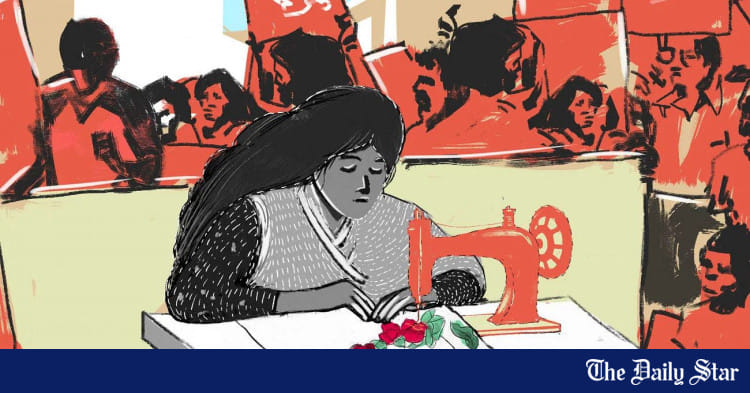
Bangladesh's growth depends on women's economic empowerment

1752021994398.webp

FILE ILLUSTRATION: ANWAR SOHEL

There are three major aspects of women's empowerment—social, political and economic—and all three are equally important. It is widely recognised that economically empowering women can help achieve developmental goals such as economic growth, increased productivity and the reduction of household poverty. To achieve economic empowerment, women must be given decision-making power and control over financial resources in the form of loans and grants, as well as other factors of production such as land, training, technological support, employment opportunities and market access.

It has been widely demonstrated that women's economic empowerment contributes to GDP growth and a more equitable society. Women's contributions to family income benefit children's health and education, thereby helping to build human capital and facilitate movement out of poverty. In Bangladesh, although significant progress has been made, women still lag behind in most economic indicators such as business skills, digital literacy, employment, earnings, and access to productive assets (land, capital and machinery). In addition, social barriers such as the high rate of early marriage and early pregnancy discourage many young women from seeking training and employment or competing with their male counterparts in business ventures.

According to the Labour Force Survey (LFS) 2022, only 42.5 percent of working-age women in Bangladesh participate in the labour force, compared to 81.3 percent of men. Although women's labour force participation increased from 36.3 percent in the LFS 2017, it remained half that of men in 2022. Around 16.5 percent of adolescent girls aged 15 to 24 years are unemployed—twice the rate experienced by adolescent boys in the same age group. A significant wage gap also exists between male and female workers.

According to World Bank data, about 21 percent of Bangladeshi women are engaged in the fields of science, technology, engineering and mathematics (STEM), compared to 43 percent in India, 41 percent in Sri Lanka, and 37 percent in Indonesia. As per the Global System for Mobile Communications Consumer Survey 2023, a gender gap of 20 percent exists in mobile ownership and a 40 percent gap in mobile internet adoption in Bangladesh—higher than in India and Indonesia. In addition, 68 percent of women in Bangladesh own mobile phones compared to 85 percent of men, and the gender disparity is even more pronounced in smartphone ownership.

Experience from most developed countries shows that with economic development, poverty levels fall and gender inequality is reduced. This typically occurs as women take advantage of a growing economy by engaging in diverse economic activities. Governments increase budget allocations for health and education and introduce various incentives to encourage women's participation in productive sectors. Although a similar trend is observed in Bangladesh, the pace of economic empowerment remains slower than expected due to the factors explained below.

The Bangladesh government allocates a substantial amount of resources for women in the annual budget. According to the Gender Budget Report 2024-2025, the government allocated Tk 271,818 crore—representing 34.11 percent of the total budget and 4.86 percent of GDP—towards women's empowerment and development, including social safety net programmes. However, many economists argue that the gender budget is not properly monitored, making it difficult to assess the impact of these expenditures on women each year. Particularly concerning is that the overall education and health budgets have consistently remained low over the years in Bangladesh—1.7 percent of GDP for education and 0.75 percent for health—thus failing to improve the quality of education and healthcare service delivery in the country. By contrast, the education budget in EU countries averages about 4.7 percent of GDP in 2025, with the highest allocations in Sweden (7.1 percent) and Denmark (6.4 percent). The average government expenditure on health in EU countries was 7.3 percent of GDP in 2023, rising to 12 percent in Germany and France, and over 10 percent in Austria, Belgium, Sweden and Portugal. These comparisons highlight the inadequacies of public spending on health and education in Bangladesh.

In Bangladesh, microfinance institutions (MFIs) play a significant role in economically and socially empowering women. By 2023, as many as 731 MFIs certified by the Microcredit Regulatory Authority had benefitted over 40.86 million members, around 90 percent of whom are women. These MFIs disbursed a total of Tk 2,500 billion in soft loans to their members for undertaking small and medium enterprises. They also provide various services such as basic education, training, maternal health and technical support. According to World Bank estimates, microfinance lifted about five million people out of poverty between 2000 and 2020.

In terms of quantitative estimates, the coverage of disadvantaged women under government and NGO programmes may appear impressive but remains insufficient. Various structural weaknesses persist in these programmes. One of the key areas where women continue to lag behind is in financial inclusion. There are gender gaps and exclusions in financial literacy and numeracy, access to finance, and digital financing, all of which prevent women from fully benefiting from available financial services in Bangladesh.

Data shows that around 65 percent of women remain unbanked, only 7 percent of registered small and medium-sized borrowers are women, and the gender gap in mobile phone ownership is approximately 30 percent. These barriers limit women's access to adequate finance and hinder the achievement of true economic empowerment. Although several banks now offer female-friendly financial products, these require greater promotion, trust-building, and improvements in women's financial literacy. However, this alone will not address the root challenge faced by poor women who lack assets and income and who are therefore likely to remain unbankable—reliant solely on small-scale NGO loans.

To expedite women's economic empowerment and ensure inclusive economic growth, certain practical steps are necessary. These include taking bold decisions to increase sustainable investment in health, education, and skills development to reach 10 percent of GDP, alongside establishing proper monitoring systems, gender-disaggregated databases, and evaluation mechanisms to ensure accountability; promoting women's employment in suitable service and industrial enterprises such as leather, food processing, toy-making, sustainable energy solutions, and cottage industries; adopting stronger policy measures to expand access to soft loans for building women-friendly enterprises and providing inclusive financial literacy training; creating special industrial zones for female entrepreneurs and promoting both local and export market opportunities; prioritising women's access to industrial land, financial resources, and vocational training, as well as creating decent work opportunities; and last but not least, taking critical steps to reduce early marriage and early pregnancy in the country.

We need to accelerate efforts in these areas to enable the large and potentially productive population of working-age young women to participate meaningfully in the economy and help raise Bangladesh's stagnating growth rate.

Dr Nawshad Ahmed, a retired UN official, is an economist and urban planner. He is currently working as an independent consultant​
 

BB set to relax monetary policy, ease interest rates

Published :
Jul 09, 2025 12:53
Updated :
Jul 09, 2025 12:54

1752107400279.webp


Bangladesh Bank will unveil its new monetary policy by the end of July, signalling a shift from its current contractionary stance in a bid to spur economic growth while still reining in inflation.

Sources indicate the central bank is preparing modest adjustments to the policy interest rate under International Monetary Fund (IMF) guidance.

Business leaders are, however, pinning their hopes on a more investment-friendly regime of lower lending rates and continued political stability, according to a UNB report.

Monetary policy is the primary lever for steering a nation’s economic course, fostering development, taming inflation and regulating money supply over a given period.

For the first half of the current fiscal year, Bangladesh Bank is fine-tuning its strategy to strike a delicate balance between curbing inflation and reviving private investment.

Business leaders have long argued that the prevailing tight policy has dampened investment, a situation worsened by recent political uncertainty.

DCCI President Taskin Ahmed said, "We hope the upcoming monetary policy will be more business-friendly and geared towards increasing credit flow. We are looking for a more lenient monetary policy, particularly hoping for a reduction in the interest rates that have risen significantly.”

To contain soaring consumer prices, the central bank previously raised its policy rate from 8.5 per cent to 10 per cent. Although the move helped ease inflation, it also choked off investment momentum.

Acknowledging this, policymakers now appear inclined to soften their approach.

Bangladesh Bank spokesperson Arif Hossain Khan said, "If we continue with a contractionary policy, it won't be investment-friendly. We have already achieved two of our three key factors, and while we haven't fully controlled inflation, we have managed to reduce it somewhat. Considering this, this time around, we might see a slightly different approach; it may not be as contractionary.”

Economists warn that inflation cannot be curbed solely through monetary tightening.

"Inflation is not solely caused by the money supply. Bangladesh's inflation, for instance, won't just come down if the Bangladesh Bank increases the policy rate. To control inflation, we also need to manage the supply chain effectively," said Masrur Reaz, Chairman of the Policy Exchange Bangladesh, a research organisation.

Analysts agree that bolstering the supply chain is pivotal, though implementing such reforms remains a formidable challenge.

Exchange-rate pressures, taka depreciation and elevated borrowing costs have combined to depress private-sector credit growth, currently languishing below 8 per cent.

The resulting drag on industrial output and economic activity has prompted the central bank to contemplate a more accommodating policy stance, according to insiders.

The new policy, due later this month, will reveal how far Bangladesh Bank is prepared to go in loosening the purse strings without letting inflation flare again, officials said.​
 

Latest Posts

Back