New Tweets

[🇧🇩] Monitoring Bangladesh's Economy

G Bangladesh Defense
[🇧🇩] Monitoring Bangladesh's Economy
1K
30K
More threads by Saif


Illicit money flow, rampant corruption plagued economy
Staff Correspondent 01 December, 2024, 17:05

1733098635873.webp

Bangladesh interim government chief adviser Professor Muhammad Yunus speaks at the programme organised to hand over a white paper on the country's economy at the chief adviser office in Dhaka on Sunday. | CA press wing

The country lost $16 billion annually on an average between 2009 and 2023 because of the illicit fund flow amid systemic tax evasion, misuse of exemptions, and poorly managed public finances under the authoritarian Awami League regime ousted amid a mass uprising on August 5.

The illicit financial outflows are more than double the combined value of net foreign aid and Foreign Direct Invest, according to the White Paper on the State of Bangladesh Economy, submitted to chief adviser Muhammad Yunus on Sunday by a 12-member committee headed by economist Debapriya Bhattacharya.

The white paper, underscoring the significant fiscal opportunities lost to corruption, stated that halving tax exemptions could double education funding and triple health allocations.

Income tax exemptions were granted to selected large conglomerates, including Summit Group for its Liquefied Natural Gas terminal and 15 power plants, S Alam Group for its coal-based power plants and BEXIMCO Group for its Sukuk Bond, according to the white paper.

The white paper also highlighted that $14–24 billion was lost to political extortion, bribery, and inflated budgets with the annual development programme projects worth $60 billion in the past 15 years.

Chief adviser’s press secretary Shafiqul Alam in a briefing on the day said that the chief adviser was stunned by the plundering of public money during the AL regime.

Calling the white paper an autopsy of misappropriation of public funds by the authoritarian regime, he said that the interim government would start meetings with international agencies including the Federal Bureau of Investigation of the United States from December 10 to bring back the stolen assets.

On August 29, the white paper committee was appointed after the interim government assumed power on August 8, three days after deposed prime minister Shekh Hasina fled to India on August 5.

Exploring the overall economy left behind by the AL regime in 23 chapters, the 385-page white paper revealed that protracted periods of deceptive data, lax financial management, reckless macroeconomic management, public finance pilferage, and external sector imbalances had created deep wounds in the economy.

The deceptive economic outcome indicators, coupled with serious institutional flaws in sectors like banking, non-banking financial institutions, capital market and the energy sector are linked to the launch of overpriced mega projects and the huge outflow of illicit finance, said the white paper.

The white paper showed that the lack of democratic accountability from the fraudulent national elections of 2014, 2018 and 2024 shaped the authoritarian government that promoted collusion between the ruling politicians, a section of the bureaucrats and certain business elites for its sustainability.

It also said that the unholy alliance eroded institutional integrity of legislature, executive and the judiciary and paralyzed the non-state actors like media, civil society and private sectors, through intimidation, self-censorship and cooption leading to the rise of the oligarchs who ruled the political governance and economic management.

‘Consequently, the government lost its policy sovereignty. These oligarchs influenced and manipulated key facets of the economy to serve their vested interests, concealed by an illusory development narrative sustained by inflated and misleading data,’ said the paper.

Identifying two dozen channels of corruption, the paper puts the banking sector on top of the most corruption-ravaged sector, followed by physical infrastructure and energy and power while information and communication technology was also identified as one of the most corruption-affected sectors by its operational and technological novelty.

The banking sector crises have deepened due to politically influenced lending practices overburdened with distressed assets of Tk 6.75 lakh crore as of June 2024, equivalent to the cost of constructing 14 Dhaka metro rail systems or 24 Padma Bridges, according to the paper.

‘The S Alam Group alone took about Tk 2 lakh crore from the banks,’ said the white paper.

The paper also said that manipulated domestic production figures and understated demand for key commodities, such as rice, edible oil, and wheat, had destabilised markets while erratic and politically influenced procurement policies benefited powerful business groups and exacerbated consumer hardships due to almost double-digit inflation over the past two years.

The paper identified that Tk 13.4 lakh crore had been funnelled through hundi transactions in the past decade by recruiting agencies for visa purchases — an amount four times the cost of constructing Dhaka metro rail between Uttara and Motijheel.

The paper classified 73 per cent of social safety net beneficiaries as non-poor until 2022.

Receiving the white paper, the chief adviser thanked the committee for doing a landmark, saying it should be published once it is finalised and be taught in textbooks in national college and university curriculum according to the press wing of the chief adviser.

Committee member Mustafizur Rahman said that they examined seven large projects costing over Tk 10,000 crore each and found that the initial estimate of Tk 1,14,000 crore was revised to Tk 1,95,000 crore, recording 70 per cent increase by adding many components, showing an inflated land price, and manipulating the purchase.

This happened without analysing the cost benefit, he said, adding that total expenses on 29 large projects were $87 billion, or Tk 7,80,000 crore.

Committee member AK Enamul Haque said that in the past 15 years over Tk 7,00,000 crore was spent on the ADP, and 40 per cent of the money was plundered by bureaucrats.

M Tamim, another member of the committee, said that $30 billion was invested on power generation, and if the kickback was considered 10 per cent, the amount would be at least $3 billion.​
 
Analyze

Analyze Post

Add your ideas here:
Highlight Cite Respond
  • Like (+1)
Reactions: Bilal9

A possible game-changer for BD's sustainable growth
Jasim Uddin Haroon
Published :
Dec 02, 2024 00:57
Updated :
Dec 02, 2024 00:57

1733100963764.webp


Amid the ongoing foreign exchange volatility, local businesses could attract substantial capital through "foreign private equity funds", offering a lifeline to the crisis while fostering sustainable growth.

Launched in 2020, the foreign private equity fund BMA, supported by globally renowned institutions, such as British International Investment (BII), Dutch development bank FMO, and Norway's Norfund, focuses on high-potential sectors, including manufacturing, agriculture, food, and financial services.

BMA distinguishes itself as the only private equity fund exclusively mandated to invest in Bangladesh.

Traditionally, local corporate entities rely on banks, the capital market, or foreign loans for financing. However, foreign loans often come with high variable interest rates, restrictive conditions, and short-term repayment schedules, posing challenges for sustainable growth.

Private equity provides a viable alternative by injecting long-term capital into businesses, helping them streamline operations, drive growth, and enhance compliance with environmental, social, and governance (ESG) standards.

"We can invest between $10 million and $25 million in a single company and are open to investing in diversified sectors," said Khalid Quadir, managing partner of BMA.

He emphasised the untapped potential in Bangladesh's agricultural sector, which boasts an annual turnover exceeding $40 billion.

Quadir identified the light engineering sector as particularly promising. "This sector has the potential to replicate China's success in manufacturing and innovation, positioning Bangladesh as a mini China," he said.

BMA has already demonstrated this strategy through its investment in ACI Motors, a market leader in agricultural mechanisation and automotive.

The fund focuses on investing in compliant and well-governed companies like ACI Motors to create jobs and drive sustainable growth.

A notable success story is Japanese conglomerate Mitsui & Co's recent acquisition of a substantial stake in ACI Motors.

"Such investments bring global confidence, as major players feel reassured when they see foreign investments have already been established," Quadir said. He also emphasised BMA had facilitated a conducive partnership within ACI Motors for new global players to join in. He believes this could be a replicable model for other aspiring businesses.

ACI Motors assembles and distributes branded agrarian machinery, including products from Japan's Yanmar, motorcycles from Yamaha, and commercial vehicles from China's Foton.

Despite its potential, the country faces multiple hurdles to attract large foreign capital infusion. Many local corporations struggle with poor governance and outdated operational frameworks.

Regulatory inefficiencies, particularly at the Bangladesh Securities and Exchange Commission (BSEC), also deter private equity investments. For instance, initial public offerings (IPOs), a common exit strategy for such private equity funds, face lengthy delays.

Private equity funds often resort to alternative exit strategies, such as selling stakes to foreign entrepreneurs or local sponsors. Typically, they aim to exit within five years. But in Bangladesh, these investments often remain tied up for over a decade due to regulatory delays.

To attract more private equity investments, Bangladesh must implement regulatory reforms to enable smoother exits for investors.

As the country transitions from a developing economy to a middle-income one, fostering technology-driven industries will be crucial to maintaining competitiveness.

"With improved compliance, governance, and sustainability, Bangladesh can draw even greater foreign direct investment and private equity funding," said Dr M Masrur Reaz, chairman and CEO of Policy Exchange of Bangladesh, a private think tank.

He emphasised such investments were vital for local businesses in this critical period.​
 
Analyze

Analyze Post

Add your ideas here:
Highlight Cite Respond
  • Like (+1)
Reactions: Bilal9

An anatomy of the current economic situation in Bangladesh

1733208267637.webp

VISUAL:STAR

The economy of Bangladesh is at such a critical juncture, struggling with both long-standing structural problems and newly emerging issues. Though exports and remittances have shown improvement in recent times, continuing macroeconomic instability, high inflation, and political unrest continue to shake the prospects for sustainable growth and recovery. These imperative challenges now require well-coordinated strategies and overall reform initiatives that will stabilise the economy on the pathway of resilient and sustainable growth.

Macroeconomic instability and persistent inflation

Despite the expected recovery, the incidence of macroeconomic instability remains high, denting confidence. Inflation is still at a high level, shredding real incomes and further increasing financial vulnerability among the population. For more than two years, monetary policy has periodically resorted to raising interest rates to combat inflation. Though since May 2022 until now, Bangladesh Bank has hiked the repo rate by 11 times, the impact remains marginal. In the context of persistently high inflation for more than two years and the resulting erosion of real incomes, the effectiveness of controlling inflation through demand contraction via higher interest rates has come under scrutiny. Such a rise in interest rates without much success in lowering inflation may take a toll on private investment and thus weaken the prospects of economic recovery. On the other hand, the recent move by Bangladesh Bank to infuse Tk 22,500 crore in liquidity support to six crisis-hit banks through money printing is also unlikely to ease inflationary pressures. The most important issue in inflation control is the need for coordination among monetary policy, fiscal policy, and the management of the domestic market, which is lacking. While taxes and duties on essential imports need to be lowered on time, equally important is the effective regulation of anti-competitive practices in the market and addressing bottlenecks in the value chain.

The political economy of law and order

The economic uncertainty is being exacerbated by a deteriorating law and order situation. The increase in political conflicts and social unrest surely points to an unstable environment that scares away investment and dampens economic activities. Resultant insecurity disrupts supply chains, and labour productivity, and increases the cost of doing business. Despite repeated emphasis by top policymakers on restoring law and order, significant progress remains elusive.

Labour unrest in different sectors including the garment sector is very critical. Especially for the RMG, the unsettled disputes regarding wages, benefits and working conditions may impact the reputation of the sector and its export competitiveness. Preferential market access threatened by graduation from LDC status in 2026 might further squeeze the profit margins of exporters already suffering from operational disruptions.

However, export and remittance inflows have been doing reasonably well in recent months. But to sustain this growth, the political and economic environment should remain stable. The ongoing political conflicts and social unrest are so critical that gains would easily be lost because of uncertainty that keeps buyers and investors away from the Bangladeshi market.

The uncertain path of reform initiatives

While the interim government has expressed a strong commitment to initiating reforms in critical economic and political domains, the success of these efforts hinges on building an effective consensus among key stakeholders, including competing political forces and the bureaucracy. For instance, addressing high levels of non-performing loans and weak governance is essential to restructuring the banking sector and restoring financial stability. Similarly, reforms in taxation are crucial to increasing revenue generation and reducing reliance on foreign borrowing.

However, without consensus among stakeholders, the reform agenda risks becoming fragmented and contested, with limited progress in core areas like taxation, the banking sector, public expenditure, and institutional governance. Moreover, entrenched interest groups wielding significant power may resist these changes, further undermining the reform process. This lack of cohesion and resistance may hamper economic recovery, deepen public disillusionment with governance, and erode trust in the system.

A path to economic recovery and sustained growth

Given the current economic and political landscape, the following measures are essential to place Bangladesh on a sustainable growth path:

First, coherence in monetary policy, fiscal measures, and market regulation should be enhanced. An empowered coordination body can ensure that the policies for inflation control cover both demand and supply-side factors. Second, reforms of critical economic, political, administrative, and judicial domains are very important to nurture good governance and restore the people's confidence. Openness and participation in policymaking processes can build consensus and reduce resistance. The interim government should present the roadmaps for the reforms in these critical domains and invite stakeholders to share their opinions.

Third, there is a need to stem the deterioration in the law-and-order situation by building a dialogue between political and social groups. Also, there should be a clear roadmap to the elections (both national and local) so that a conflict-less environment can be created in which economic activities can thrive. Fourth, policymakers should help the negotiation between labour groups and employers to end disputes and adhere to international labour standards, incentives for innovation, and diversification of the sectors so that they can meet challenges after LDC graduation.

Fifth, there is a need to decrease the dependence on RMG and remittances by helping other potential export sectors grow. This will require addressing the sector-specific problems as well as reducing the high cost of doing business. Finally, vulnerable groups must be cushioned against inflationary pressures through targeted subsidies and social safety nets. This would help maintain domestic consumption and prevent sharp increases in the level of poverty.

Bangladesh stands at its crossroads, where the pace of its economic future may well depend upon how boldly and effectively current challenges will be met by policymakers. Economic instability currently interplays in a political battle with particularly weak governance. Instead of quick fixes, a multisectoral approach that underpins reforms, stability, and inclusivity is needed to usher in sustainable development. The time to begin churning this process is now because the costs of inaction are too high for a country whose task of securing its economic future remains at the top of the agenda.

Dr Selim Raihan is professor at the Department of Economics in the University of Dhaka and executive director of South Asian Network on Economic Modeling (SANEM).​
 
Analyze

Analyze Post

Add your ideas here:
Highlight Cite Respond

$6 billion foreign loan commitments may come by June: finance adviser
The commitments will come from multiple sources, including World Bank, IMF, ADB, Opec

1733272164758.webp


The government expects to get new loan commitments worth $6 billion for reform activities from the development partners within next June, Finance Adviser Salehuddin Ahmed said today.

They will come from multiple development partners, including the World Bank, International Monetary Fund, the Asian Development Bank and the Organization of the Petroleum Exporting Countries (Opec), he said.

The adviser shared the information with journalists after a meeting with an IMF mission at his office in the capital.

The mission, led by its chief Chris Papadakis, came to Bangladesh to review the country's performance and compliance with structural reform conditions that the IMF attached for the fourth tranche of the $4.7 billion loan.

The government will seek extra fund as it is going through a reform process in many sectors like banking, which will require additional spending, the adviser said.

It may take time to disburse the fund, as it is not possible to release the entire amount within a year, he said.

However, the commitments may come by June this year, he added.

Earlier in August after taking charge of the country, the interim government had said it would seek $3 billion of additional loan from the IMF.

In October, Ahmed discussed the new IMF loan on the sidelines of the annual meetings of the IMF and the World Bank Group held in Washington in late October this year.

In today's meeting, the mission wanted to know what strategies the government has taken and will take to improve the country's economic situation, the adviser said.

He also mentioned today's scheduled meeting of the mission with the Bangladesh Bank governor, during which the delegation sought to know what steps had been taken to reform the banking sector.​
 
Analyze

Analyze Post

Add your ideas here:
Highlight Cite Respond

Bangladesh ‘sleepwalked’ into middle-income trap
White paper asserts

Bangladesh, mired in data fog, has "sleepwalked" into the middle-income trap according to the white paper on the state of the country's economy.

The term refers to a situation where a country experiences rapid economic growth and moves from a low-income economy to middle-income status but then struggles to make the leap to high-income status.

"We said earlier that Bangladesh is at risk of falling into the middle-income trap. But it has already happened. We have tried to explain it with data in the white paper," Zahid Hussain, a key member of the white paper panel, said at a press conference on Monday, a day after the committee handed over the final report to Chief Adviser Prof Muhammad Yunus.

Addressing the same event, Debapriya Bhattacharya, who led the white paper panel, supported Hussain's claim.

A major reason was the practice of inflating official data, which meant the country did not have any idea about the path it was truly on

As for how the country had fallen into this trap, the white paper identified "stasis in structural reforms, reform reversals, institutional decadence, global adversities, and a growing gulf between the reality on the ground and the perceptions of policymakers".

Other factors that it mentioned were employment remaining concentrated in low-productivity agriculture and informal activities, ubiquitous resource misallocations, and the slipping competitiveness of the economy.

Another major reason was the practice of inflating official data, which meant the country did not have any idea about the path it was truly on.

For example, according to the white paper, Bangladesh's economic growth has been overstated since 1995.

The remarks were made at a time when Bangladesh's overall economy is facing significant challenges, exacerbated by persistent inflation and a banking sector crisis brought on by a massive amount of non-performing loans, poor governance, and a severe liquidity crunch.

Simultaneously, slow infrastructure development and inefficiencies plague the development industry while political unpredictability and low business confidence prevent investment from growing in the country.

Unemployment is also increasing, particularly among youth, as the economy fails to generate adequate quality employment opportunities.

These issues have pushed Bangladesh into the middle-income trap, according to industry insiders.

The World Bank defines the "middle-income trap" as a situation where middle-income countries face challenges to economic growth, innovation, and wage competition.

In the World Bank's 2024 World Development Report, the middle-income trap was described as a period of slow growth and a decline in productivity gains.

It is a situation where a country is unable to compete with low-wage countries and high-income countries, is prone to premature slowdowns in development, and relies on policies based on superficial measures of economic efficiency.

The multinational lender added that middle-income countries face geopolitical challenges, demographic challenges, environmental challenges, competition from low-wage countries, and competition from high-income countries.

According to the white paper panel, the only way to break free of this shackle is to increase the total factor productivity, which measures how much output can be produced from a certain amount of inputs, particularly labour productivity.

"Education and skill of the labour force are the key to enhancing labour productivity and sustaining higher growth," it said.

Zahid Hussain, a former lead economist at the World Bank's Dhaka office, said the big concern now is finding a way out of the trap.

"I think there are three exits. One is macroeconomic stability, the second is policy reform and the third is institutional accountability. There are no other exits."

According to experts and economic analysts, if Bangladesh falls into the middle-income trap, it will be unlikely to achieve its goal of becoming a developed nation by 2041.

At the end of 2023, there were 108 countries, including China, Brazil, Türkiye and India, stuck in the "middle-income trap", according to the World Bank. The countries are home to 6 billion people.​
 
Analyze

Analyze Post

Add your ideas here:
Highlight Cite Respond

IMF begins talks on fresh loans
Interim govt expects $6b budget support by next June

1733273725027.webp

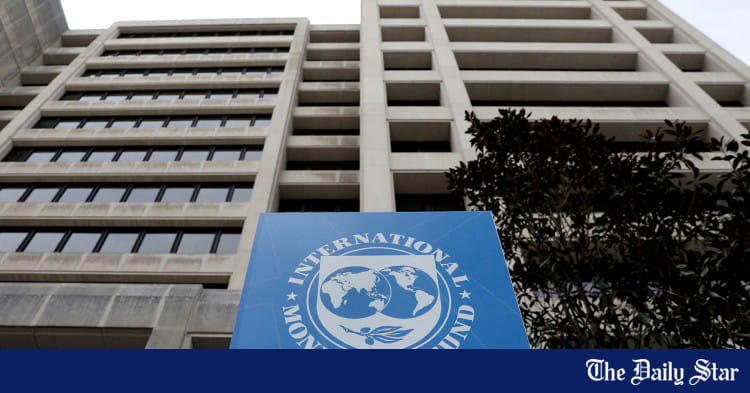
The International Monetary Fund (IMF) headquarters building is seen in Washington, U.S., April 8, 2019. REUTERS

The third review mission of International Monetary Fund (IMF) yesterday entered into discussions with the interim government of Bangladesh regarding potential conditions for a fresh $3 billion loan.

The IMF mission, whose primary task is to assess the country's progress in meeting its criteria for releasing the fourth tranche of a $4.7 billion loan, will continue the discussions until December 17.

The IMF mission led by Chris Papadakis held separate meetings with Finance Adviser Salehuddin Ahmed and Bangladesh Bank Governor Ahsan H Mansur alongside other senior officials.

"We discussed the disbursal of the existing loan package and also sought extra funds. As the government is going for many reforms, it will need more money," Ahmed said after the meeting.

But other than financing reforms, particularly in the banking sector and revenue collection, the funds will also be needed to address any deficit in the country's current account and foreign exchange reserve.

Having already sought funds for its reform activities, the government is expecting a total commitment of $6 billion from the World Bank, IMF, OPEC Fund and others by next June, he added.

After taking office in August, the interim government said it would seek an additional $3 billion loan from the IMF to reduce the existing pressure on the foreign exchange reserves.

On the last week of September, an IMF mission came to take stock of the country's economic situation and what it requires to recover.

In October, Bangladesh opened discussions with the IMF regarding the new loan in a sideline meeting when Ahmed visited Washington to attend the annual meeting of the World Bank and IMF.

Following this discussion, the mission came to Bangladesh to review the country's performance and compliance with structural reform conditions for the fourth tranche of the $4.7 billion loan.

The finance adviser informed that the mission came to observe the country's condition in terms of revenue collection, its fiscal deficit, GDP growth, and inflation.

"They want to know what strategies the government has taken and will take. The mission also will meet with the central bank to see what steps were taken to reform the banking sector," he said.

Ahmed also informed that the government had argued that stability has returned to the banking sector in part.

"Already, the foreign exchange rate is not fluctuating heavily like in previous months," he said.

Besides, even a troubled lender like Islami Bank is starting to perform well even though it initially needed liquidity support.

"So, all other the banks will also soon become financially stable," he hoped.

Regarding the economic situation, Ahmed said inward remittance was at a satisfactory level and export growth was not low either.

Furthermore, Ahmed said although imports are still low, they have been increasing lately, with the interim government working to raise the inadequate level of capital machinery imports.

"Whatever measure we take will be good for the country in the long run. Besides, we will not take any whimsical steps that the next government cannot follow," he said.

"The IMF will give some targets (for the new loan) and we will try to fulfil them," Ahmed added.

The IMF mission expressed satisfaction about the reform activities of Bangladesh Bank but is concerned about the stubbornly high inflation rate, according to central bank officials present at the meeting.

The central bank officials told the IMF mission that the policy rate has been increased twice and inflation has not been tamed. Still, they expect it will at least relieve some of the inflationary pressure.

"The IMF mission said the policy rate could be increased further if inflation does not come under control," said a Bangladesh Bank official on condition of anonymity.

The multilateral lender approved the $4.7 billion loan in January 2023. Bangladesh has already received $2.3 billion of the total amount in three tranches.

Of the $2.3 billion received so far, $1.1 billion arrived as the third tranche in June this year.​
 
Analyze

Analyze Post

Add your ideas here:
Highlight Cite Respond

Gen Z: Shaping the future of business

1733274249505.webp


Generation Z, popularly known as Gen Z, is a term used to represent people born between the late 1990s and early 2000s. This demographic cohort presently accounts for approximately 30 percent of the global population. It is estimated that Gen Z will account for 27 percent of the global workforce by 2025.

The situation in Bangladesh is no different. It is a young country with a median age of around 28 years. Individuals aged 10 to 24 years, which includes a substantial portion of Gen Z, make up about 30 percent of the country's total population.

As this generation comes of age and enters the workforce and consumer markets, their distinct characteristics, values, and behaviours will significantly influence how businesses operate and engage with customers. Gen Z exhibits certain attributes that differentiate them from previous generations, such as Millennials, Generation X, and Baby Boomers. Understanding these attributes is crucial for businesses.

This generation is overwhelmingly tech-savvy; highly proficient in using technology and digital tools for communication, entertainment, education and shopping. This digital fluency shapes their preferences for instant access to information and services.

As this generation grew up at the peak of globalisation, they are very inclusive and value diversity. Gen Z is genuinely concerned about social issues like climate change, racism, inequality, etc. They tend to be very pragmatic and realistic as they have experienced economic uncertainty, political instability and global crises.

This generation appreciates collaboration and teamwork but authenticity and self-expression do matter to them as well. While they have relatively shorter attention spans caused by social media, it is because of the internet and social media that they are exposed to different cultures, ideas and lifestyles, leading to a broader understanding of global issues and a desire for interconnectedness.

This cohort prefers to spend money on travel, events and activities that enrich their experiences rather than on traditional consumer goods. Mental health is a foremost concern for them.

Organisations need to understand and adapt to Gen Z's preferences to thrive in an increasingly competitive landscape. Businesses need to invest in social media marketing, influencer collaborations and interactive content to effectively reach and engage this generation. Companies have to develop sustainable products, prioritise ethical sourcing and create offerings that align with the social issues important to this generation.

Organisations that connect with this cohort emotionally and demonstrate a commitment to their values will foster loyalty. Companies have to embrace technology to meet the expectations of this tech-savvy generation. Flexible work arrangements, mental health support and professional development opportunities are some of the critical topics to attract and retain this group.

Some global companies have already adapted their business strategies, marketing approaches and product offerings to align with the values and preferences of Gen Z. For example, Nike has incorporated sustainable practices into its production processes, creating eco-friendly product lines like the "Move to Zero" initiative, which aims to reduce waste and carbon emissions. Starbucks engages with Gen Z through its social media presence, promoting causes like racial equality. Netflix has adapted its content strategy to cater to Gen Z's diverse tastes and preferences. The streaming service produces original content that reflects the experiences and challenges faced by this generation, such as shows addressing mental health, social justice, and identity.

Bangladeshi businesses should gear up to understand and adapt to these characteristics of Gen Z for engaging effectively with this influential cohort as they continue to shape the business.

The author is chairman and managing director of BASF Bangladesh Limited​
 
Analyze

Analyze Post

Add your ideas here:
Highlight Cite Respond

IMF asks to raise tax-GDP ratio by 0.6 percentage points

1733358427311.webp


The International Monetary Fund (IMF) has asked to increase the tax to GDP ratio by 0.6 percentage points by the end of this fiscal year to make up for last fiscal year's revenue collection shortfall.

Last fiscal year, the ratio stood at 7.3 percent.

As per conditions of an existing loan of the Washington-based lender, the ratio was supposed to be increased by 0.5 percentage points every year.

"But the IMF asked to raise the ratio…for the current fiscal year to mitigate last year's shortfall… It will definitely create an extra burden on us," said a top official of the National Board of Revenue (NBR) yesterday.

The issue was raised during a scheduled closed-door meeting between an IMF delegation and NBR officials at the tax authority's Agargaon headquarters in Dhaka.

This is the third IMF delegation arriving with the primary task of assessing the country's progress in meeting the criteria for the release of a fourth tranche of the $4.7 billion loan.

The multilateral lender approved the $4.7 billion loan in January 2023. Bangladesh has already received $2.3 billion in three tranches.

The IMF mission's discussions with the interim government of Bangladesh began on Tuesday, incorporating potential conditions for a fresh $3 billion loan. The discussions are to continue until December 17.

The delegation asked why the NBR failed to meet the IMF's revenue collection target for the previous fiscal year and sought to know about the measures taken to increase revenue collections, according to the official.

The tax authority logged overall receipts of Tk 382,562 crore in fiscal year 2023-24, falling short of its revised target by Tk 27,438 crore.

"We explained our real situation to them and informed of what we have done in recent times, including measures to increase tax return submissions," said the official.

The multilateral lender laid emphasis on revenue mobilisation, especially for the fact that Bangladesh witnessed a one percent year-on-year drop in revenue collection in the first four months of this fiscal year.

The tax authority collected Tk 101,281 crore in the July-October period, falling short of the target by Tk 30,831 crore.

The target for the entirety of fiscal year 2024-25 has been set at Tk 480,000 crore.

The NBR official further said the mission had enquired about the tax expenditures and various reform measures, including automation of the taxation system and e-return filing.

"We have been asked to reduce tax exemptions in a rational way," the official added.

The IMF team also agreed to extend their assistance for automation.

Besides, the mission also discussed the status of medium and long-term revenue collection strategies, measures to strengthen tax administration governance and plans to separate the tax administration from the tax policymaking department.​
 
Analyze

Analyze Post

Add your ideas here:
Highlight Cite Respond

Latest Posts

Back
PKDefense - Recommended Toggle