โ˜• Support Us โ˜•
[๐Ÿ‡ง๐Ÿ‡ฉ] - Monitoring Bangladesh's Economy | Page 89 | PKDefense

[๐Ÿ‡ง๐Ÿ‡ฉ] Monitoring Bangladesh's Economy

Reply (Scroll)
Press space to scroll through posts
G Bangladesh Defense
[๐Ÿ‡ง๐Ÿ‡ฉ] Monitoring Bangladesh's Economy
884
23K
More threads by Saif


Target eight sectors to repair macroeconomic fault lines

Economic review urges long-term institution-building, not short-term numbers

1766023358532.webp


The country's largest employer, agriculture, is stuck at low value-addition, presenting a litmus test for the nation's diversification push for future growth ahead of its graduation from the least developed country club next year.

In number, the farming sector in Bangladesh employs 44 percent of the workforce, while 75 percent of the produce remains unprocessed, according to an economic review.

It says on top of farming, the government should focus on seven other sectors, such as readymade garment, automotive industry, electronics, light engineering, IT-based freelancing, semiconductor industry, and human capital.

The authorities should adopt an approach emphasising fixing long-standing macroeconomic wounds and laying the groundwork for the future, according to the review by UCB Asset Management released yesterday.

According to the report, ready-made garment is the backbone of Bangladesh's economy, but it must move into man-made fibres and higher-value segments.

Besides, the country risks being trapped in low-value labour unless it climbs the ladder to semiconductor and IT freelancing.

The asset manager argues that the way forward lies not in chasing headline numbers, but in rebuilding institutions, restoring confidence and strategically diversifying the productive base of the economy.

Opportunities in automobiles, electronics assembly and light engineering are highlighted as realistic next steps, building on existing capabilities and domestic demand.

These sectors, if supported by targeted incentives, quality certification systems and skills development, could integrate Bangladesh more deeply into regional and global supply chains, the report said.

In the automotive industry, the government can consider strengthening backward linkages and developing supply chains for electric vehicles by adopting supporting incentives.

In powering an electronics assembly boom, the country can take lessons from Vietnam's long-term and predictable tax policy in supporting industry, research and development, and human capital development.

There is immense potential in the light engineering sector, but it needs industry-focused vocational training and improved backward linkages.

Apart from these, the report described remittances as the "oxygen" of the economy for its contribution to external stability. Expanding skill-linked overseas employment and offering more attractive, transparent investment options for expatriates are seen as ways to sustain and deepen this vital flow while strengthening foreign exchange buffers.

Underlying all these sectoral strategies is what the report calls a virtuous institutional cycle: building people to build institutions. Investing in education, healthcare and skills is presented not just as a social priority, but as the foundation for stronger governance, higher productivity and inclusive growth.

"Fifty-four years of independence, the country has come a long way and yet the real question remains -- have we, as a nation, done justice to the immense potential this country had to offer?" said S M Rashedul Hasan, managing director and CEO of the asset management company.

"The answer is mostly 'No'," he added.

Only by empowering citizens to demand and uphold accountable institutions, the report says, can Bangladesh escape extractive systems and realise its full potential.​
 

14pc growth of remittance inflow till Dec 17

BSS
Published :
Dec 18, 2025 21:39
Updated :
Dec 18, 2025 21:40

1766104241189.webp


Inflow of remittances witnessed a year-on-year growth of 14 percent reaching US$2007 million in the seventh days of December, according to the latest data of Bangladesh Bank (BB) issued.

Last year, during the same period, the countryโ€™s remittance inflow was $1,760 million.

During the July to Dec 17, 2025 of the current fiscal year, expatriates sent remittances of $15,045 million, which was $12,898 million during the same period of the previous fiscal year.​
 

Bangladesh lags behind in GVC-related trade

Asjadul Kibria
Published :
Dec 20, 2025 23:03
Updated :
Dec 20, 2025 23:46

1766278823849.webp


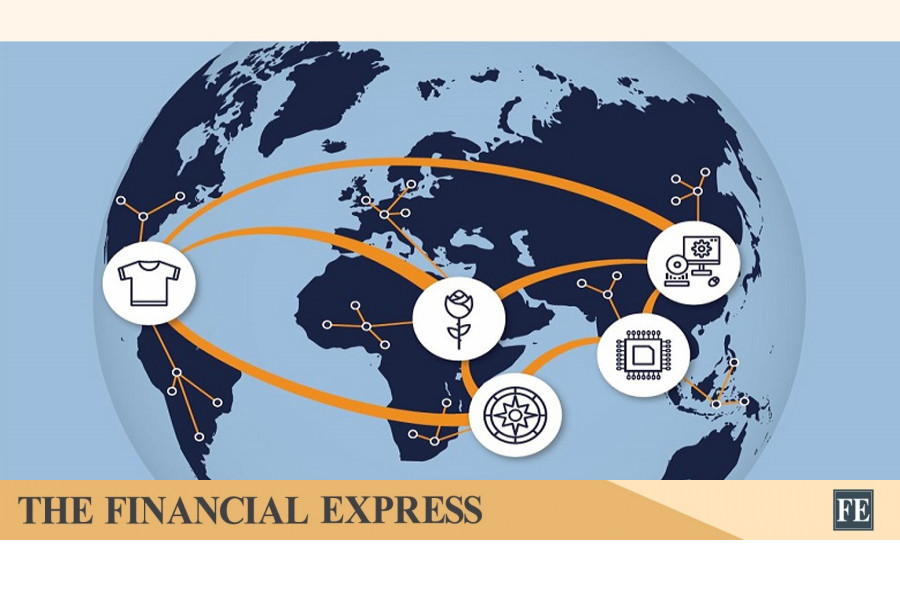
Over the past thirty years, Global Value Chains (GVCs) have played a critical role in international trade and growth. Many countries have tried to increase their participation in GVCs to stay competitive in production and trade. As a result, GVC-related trade has become a key focus of trade policy. GVC-related trade measures the value of exports that cross multiple borders, whereas traditional trade measures exports between just two countries. In 2023, GVC-related trade fell by 5.35 per cent, while traditional trade rose by 0.18 per cent. In 2024, both grew, by 3.87 per cent and 4.6 per cent respectively. Still, the share of GVC-related trade in total trade dropped from a high of 48 per cent in 2022 to 46.3 per cent in 2024.

GVCs involve sharing production across countries, where different tasks and activities are done in different places. The United Nations Industrial Development Organization (UNIDO) explains that a global value chain covers all steps like design, production, marketing, distribution, and customer support, divided among many firms and workers in different countries. In the past, companies mostly made products in one country. Now, a finished product is often made and assembled in several countries, with each stage adding value (World Bank). This makes labels like 'Made in Bangladesh' or 'Made in Vietnam' less meaningful. For example, a T-shirt made in Bangladesh might use fabric from China, cotton from the United States (US), and buttons from India. Even though the T-shirt is shipped to the European Union (EU) as a finished product from Bangladesh, it includes value added in three other countries. This is an example of GVC trade.

However, Bangladesh still lags behind most countries in GVC-related trade, according to the Global Value Chain Development Report 2025. The report published last week jointly by the University of International Business and Economics, the Asian Development Bank (ADB), the Institute of Developing Economies-Japan External Trade Organization, the World Economic Forum (WEF), and the World Trade Organization (WTO). This fifth edition looks at how GVCs are changing due to new technology, the shift to greener practices, and changing global politics.

The report found that services now play a bigger role than goods in GVC participation. This shows that services, especially those delivered digitally like finance, telecommunications, and IT, have been more resilient after the pandemic. The shift highlights the growing importance of services in global trade and how they are less affected by physical supply chain problems.

The report lists 19 countries, including Bangladesh, as low-GVC traders. Other countries in this group are Bhutan, the Maldives, Nepal, Sri Lanka, Cyprus, Estonia, Latvia, Malta, Brunei Darussalam, Cambodia, and the Lao PDR. In 2010, these economies made up 0.69 per cent of global gross exports and 0.66 per cent of GVC-related exports. By 2024, these shares increased to 1.26 per cent and 1.24 per cent.

The report also showed that high- and upper-middle-income GVC traders mostly export value-added goods to other high-income GVC traders. In contrast, low GVC traders send their exports to a wider range of destinations, with their top ten markets spread across high, upper middle, and lower middle GVC traders.

A key finding is that while high-value chain trading economies still make up most of global GVC-related trade, their combined share fell from 76 per cent in 2010 to 63.6 per cent in 2024. This shows that more economies are gradually joining GVCs.

Between 1995 and 2022, as the report noted, production has become more focused in technologically advanced, regionally connected hubs. Many countries that joined GVCs later, including Bangladesh, remain on the edge of global production networks. During this time, Bangladesh's participation in both backward and forward GVCs grew by less than two per cent.

Two years ago, a joint report by the Asian Development Bank and the Islamic Development Bank Institute found that Bangladesh's GVC participation rates are lower than most other economies. From 2000 to 2021, Bangladesh's trade-based total GVC participation ranged from 22.6 per cent to 26.01 per cent, much lower than the world average of 40.6 per cent to 46.0 per cent. The report, titled Transforming Bangladesh's Participation in Trade and Global Value Chains, stated, "Bangladesh only fared better than Pakistan in trade-based total GVC participation rate and ranked last based on production-based GVC forward participation rate."

In Bangladesh, the textiles and clothing sector leads both export production and GVC participation, which limits export diversification. The sector also shows low levels of forward and backward linkages. This means the domestic economy captures little added value, and local sectors play a small role in supporting production. Such heavy focus on textiles brings risks to the economy.

The ADB-IsDBI report pointed out that moving out of Least Developed Country (LDC) status, higher wages, and changing global trends are key risks. The report added, "Thus, diversification into the other sectors to supplement RMG manufacturing will be important in the economy's thrust to promote export-led growth."

According to the WTO Global Value Chains Sectoral Profiles, the foreign value-added content in Bangladesh's textile and clothing sector stood at around 21 per cent on average in between 2017 and 2022. The 'value added' means the increase in value that is created at each stage of the production of a good or services. So, it is the difference between the cost of inputs (raw materials, labour) and the selling price of the product.

The net export earnings of the ready-made garments (RMG) also reflect the use of foreign content. Bangladesh Bank, in its latest Quarterly Review of RMG, showed that the import value of raw materials (raw cotton, synthetic/viscose fibre, synthetic/mixed yarn, cotton yarn & textile fabrics and accessories for garments) was US$ 3.83billion in July-September of FY26, accounting for 38.66 per cent of total RMG export earnings. So, net exports from the sector stood at US$ 6.09 billion in the period under review.

The ADB-IsDBI report suggested that Bangladesh could diversify its exports by joining more GVCs. This would let the country focus on specific tasks within value chains, without needing to invest heavily in building entire chains at home. With LDC graduation coming up in November, the country's post-graduation plans should take this advice seriously.​
 

Returns on Savings Certificates may be slightly reduced from 1 January

Special Correspondent Dhaka
Published: 22 Dec 2025, 14: 58

1766451425115.webp


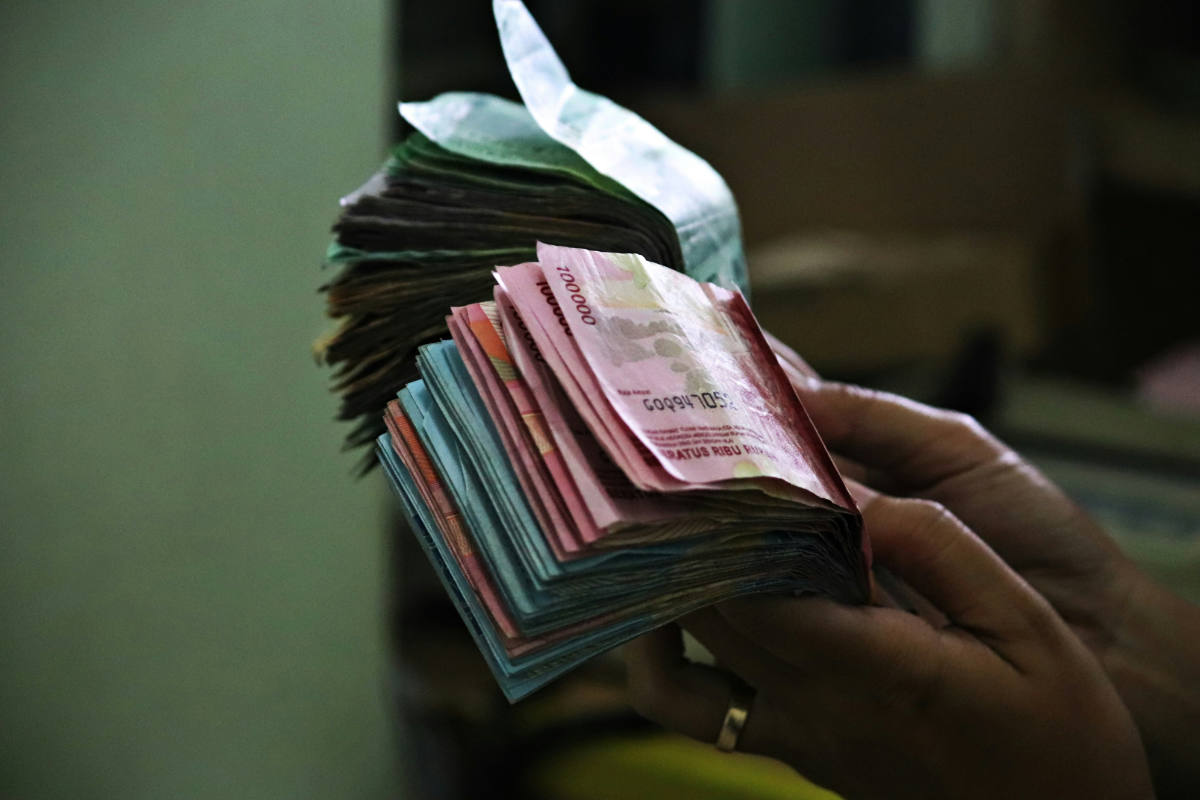
After six months, the interest rates on the savings certificates, Sanchoy Patra, are set to be reduced once again. For the next six-month period starting 1 January, the Finance Division of the Ministry of Finance has prepared a proposal to fix new rates. The division recently submitted a summary of the proposal to Finance Advisor Salehuddin Ahmedโ€™s office for approval.

Once the finance advisor gives his approval, the Finance Division will forward it to the Internal Resources Division (IRD) of the Ministry of Finance, which will then issue a circular. This was learned yesterday, Sunday, from Finance Division sources.

Finance Advisor Salehuddin Ahmed told Prothom Alo Sunday night, โ€œThe proposal has not yet reached me. However, from the bankersโ€™ side there is a demand to slightly reduce the returns on savings certificates in the interest of private-sector credit growth. We will take a decision considering the overall interest.โ€

At present, the highest return on savings certificates is 11.98 per cent and the lowest is 9.72 per cent. Under the new proposal, these rates may be reduced by an average of 0.5 percentage points. However, for smaller investments the return rate will remain comparatively higher, similar to the current structure, while larger investments will earn lower returns. Investments of Tk 750,000 or less will receive higher returns, while investments above Tk 750,000 will receive lower returns.

On 30 June, the government decided to regularly fix the returns on savings certificates as part of its revenue and debt management strategy. At that time, after slightly reducing the average return rate, it was announced that the rates would be reviewed again after six months. That six-month period will be completed on 31 December.

IRD Secretary Md. Abdur Rahman Khan told Prothom Alo yesterday, โ€œI cannot say whether the return rates will go up or down. The entire matter is now being handled by the Finance Division. Once we receive its recommendation, we will issue the circular.โ€

Among all types of savings certificates under the National Savings Directorate, the Family Savings Certificate is the most popular. For this certificate, the return rate upon maturity of the five-year term is 11.93 per cent for investments below Tk 750,000, and 11.80 per cent for investments above Tk 750,000. Before 1 July, these rates were above 12 per cent.

Currently, for the Pensioner Savings Certificate, the return rate upon maturity is 11.98 per cent for investments below Tk 750,000 and 11.80 per cent for investments above that amount. For the five-year Bangladesh Savings Certificate, the return rate upon maturity is 11.83 per cent for investments below Tk 750,000 and 11.80 per cent for investments above Tk 750,000. For the quarterly profit-based savings certificate, the return rate upon maturity is 11.82 per cent for investments below Tk 750,000 and 11.77 per cent for investments above that amount.

In addition, for time-deposit accounts at the Post Office Savings Bank, the return rate upon completion of a three-year term is 11.82 per cent for investments below Tk 750,000 and 11.77 per cent for investments above Tk 750,000. It has been learned that there will be no change in the return rates for Wage Earners Development Bonds, US Dollar Premium Bonds, US Dollar Investment Bonds, and Post Office Savings Bank general accounts.

Meanwhile, Abdul Hai Sarkar, chairman of the Bangladesh Association of Banks (BAB), the organisation of private bank sponsors, said that when returns on savings certificates are high, savings naturally flow into government funds. If the rates are reduced slightly, those funds will move to banks, which would help boost private-sector credit growth. However, given the countryโ€™s current overall situation, demand for loans is already low. Inability to lend to the private sector also becomes a kind of burden for the banking sector.

Sources at the National Savings Directorate said that in the first four months of the current 2025โ€“26 fiscal year (Julyโ€“October), the government took net borrowing of Tk 2,369 crore from savings certificate sales. In the 2024โ€“25 fiscal year, net borrowing was negative by about Tk 6,000 crore. As of the end of last October, the governmentโ€™s outstanding debt from savings certificates stood at Tk 341,000 crore.​
 
Most people in South Asia are also clueless about the fact that Debt-to-GDP ratio in Bangladesh is quite low (the lowest among the large three South Asian economies).

The debt-to-GDP ratio for Bangladesh is approximately 40.3% in Bangladesh and 80.4% in India, which has the highest in South Asia, their economy is leveraged to the hilt. These ratios indicate the proportion of a country's debt compared to its economic output, with higher percentages suggesting greater debt levels relative to the economy. The more your debt, the higher the expense to borrow money from overseas banks. This higher ratio in India also may raise concerns about fiscal sustainability and the ability to meet future debt obligations.

This indicates Bangladesh has far more room to borrow internationally (and grow its economy) - than countries like India, for whom borrowing can become rather expensive. Bangladesh situation typically will allow for greater fiscal flexibility and can enhance investor confidence. That is why I am confident that GDP growth in Bangladesh will lead South Asia once we are past the current instability period.


Members Online

Latest Posts

Latest Posts