Home Watch Videos Wars Login

[🇧🇩] Monitoring Bangladesh's Economy

[🇧🇩] Monitoring Bangladesh's Economy
959
25K
More threads by Saif

G Bangladesh Defense

Why Phillips Curve fails in Bangladesh

Abdullah A Dewan
Published :
Jan 28, 2026 23:08
Updated :
Jan 28, 2026 23:08

1769646962701.webp


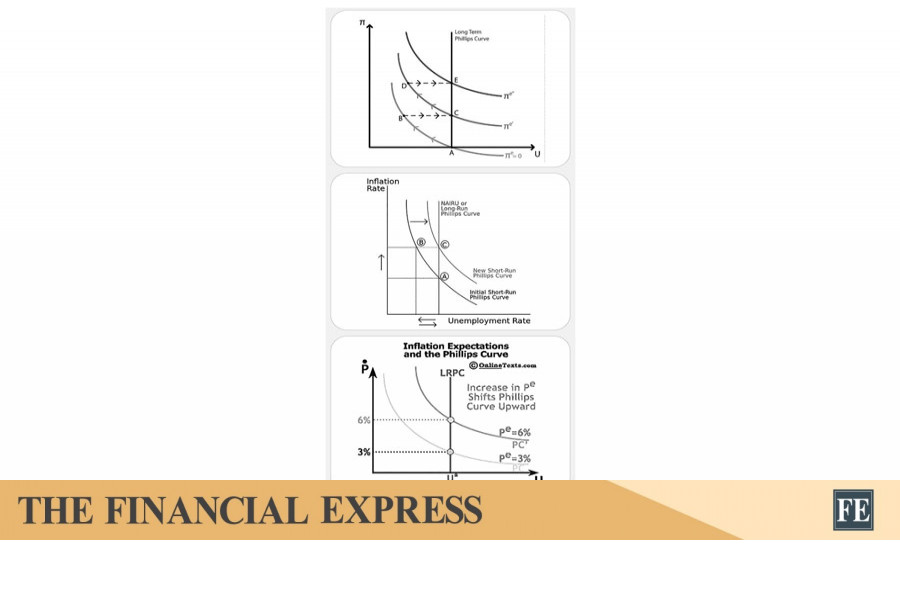
In simple terms, the Phillips Curve proposes a trade-off: when an economy grows rapidly and jobs become plentiful, prices tend to rise faster; when unemployment is high, inflation tends to slow. In other words, a country may tolerate some inflation to achieve more employment or accept higher unemployment to stabilize prices. Developed in the context of relatively well-functioning market economies, this idea once shaped how governments thought about growth, inflation, and stabilization policy.

The Phillips Curve was never conceived as a mathematical law. It began as an empirical observation-a mid-20th-century British pattern linking unemployment to wage growth under specific institutional conditions. Only later was this relationship incorporated into formal macroeconomic models. As an empirical regularity rather than a universal rule, the Phillips relationship is inherently context dependent. Where labour markets are informal, price formation is distorted by non-market forces, and inflation is driven by external shocks or organized rent extraction-as in Bangladesh-the pattern has no reason to appear.

Time and technology have further weakened the relationship. Identified in the late 1950s, the curve emerged in an era of nationally bounded economies, strong trade unions, limited capital mobility, and stable industrial employment. Globalisation, automation, financialisation, and fragmented labour markets have since altered how wages, prices, and employment interact. Even in advanced economies, inflation has become less responsive to labour-market tightness as global supply chains, imported inflation, productivity shocks, and market concentration dilute wage-price transmission. In Bangladesh-marked by informality, external price pass-through, and non-market power-the structural distance from the original Phillips context is even greater.

Crucially, the Phillips Curve applies to economies where market forces dominate wage and price formation and non-market frictions remain limited. It is best treated here as a theoretical benchmark, not an empirical description of Bangladesh's inflation-employment dynamics.

In modern macroeconomics, this benchmark is formalized through the inflation-expectations-augmented Phillips Curve. In this framework, the short-run relationship between inflation and unemployment depends critically on expected inflation. Temporary demand expansion may reduce unemployment only so long as inflation expectations remain unchanged. Once workers and firms revise their expectations upward, inflation rises without delivering lasting employment gains, and unemployment returns to its natural rate. The long-run Phillips Curve is therefore vertical, reflecting the reality that inflation cannot permanently buy jobs. This expectations channel-central to policy credibility in advanced economies-already presumes functioning labour markets, coherent price signals, and institutional trust. Where these conditions fail, the Phillips mechanism does not merely weaken; it loses its operational meaning.

The logic behind the Phillips Curve is straightforward. When jobs are abundant, workers gain bargaining power, wages rise, firms face higher costs, and prices increase. When unemployment is high, wage pressure eases and inflation slows. For this mechanism to function, wages and prices must be set primarily through decentralized market interactions rather than administrative controls, cartel power, political interference, or coercive extraction. Once non-market forces dominate price formation, the inflation-unemployment trade-off collapses.

In Bangladesh, the Phillips Curve has never matured into a durable macroeconomic reality. It has appeared briefly and conditionally. Over the past twelve months, even under an interim government ostensibly freed from partisan compulsions, the curve has remained conspicuously absent. The reasons are not technical; they are structural, political, and institutional.

Bangladesh's macroeconomic history shows that the Phillips mechanism requires conditions the country rarely enjoys simultaneously. Inflation must be predominantly demand-pull rather than imported or supply driven. Labour markets must transmit tightness into wages. Monetary policy must credibly anchor expectations. Historically, none has held consistently. The only episode faintly resembling a Phillips-type relationship occurred in the mid-1990s, when growth accelerated, exchange-rate stability limited imported inflation, and food prices were subdued. Even then, the relationship was fragile. Floods, external shocks, and structural bottlenecks quickly overwhelmed it. Inflation resumed its familiar pattern-driven not by overheating labor markets but by food, fuel, logistics, and currency pressures.

The deeper reason lies in the nature of employment itself. Bangladesh's unemployment rate has always been a statistical mirage. With more than four-fifths of the workforce informal, open unemployment is neither a meaningful measure of slack nor a reliable transmitter of macroeconomic pressure. Underemployment absorbs shocks silently. Workers adjust hours, intensity, and survival strategies rather than bargain for higher wages. The Phillips Curve presumes a wage-price spiral; Bangladesh experiences a price-shock spiral instead.

Against this background, the failure of the interim government over the last year to engineer even a weak Phillips-type outcome should not surprise. Inflation remained elevated while employment conditions failed to improve meaningfully. Crucially, this inflation was not the kind policy stimulus could trade off against unemployment. It was driven by exchange-rate depreciation, global commodity pass-through, energy pricing adjustments, and-most corrosively-domestic market distortions rooted in corruption and extortion.

Here political economy matters more than textbook macroeconomics. Bangladesh's price formation mechanism is not competitive in the classical sense. Key commodity markets-rice, edible oil, onions, construction materials, transport services-are dominated by entrenched syndicates. These syndicates do not merely exploit shortages; they manufacture them. Hoarding, coordinated supply withholding, and price leadership ensure that even when global prices soften or domestic production improves, retail prices remain sticky upward. Inflation is therefore not a signal of excess demand; it is a tax imposed by organised rent-seeking.

The interim government inherited this architecture but lacked the coercive, institutional, and political capital to dismantle it. Administrative orders, moral suasion, and sporadic enforcement cannot break syndicates embedded in party financing, local power structures, and bureaucratic collusion. As long as extortion networks extract rents at wholesale markets, transport nodes, ports, and distribution chains, inflation remains structurally decoupled from employment conditions.

Monetary policy is equally constrained. Tightening credit in such an environment does not primarily suppress excess demand; it raises costs for small firms, traders, and consumers while leaving syndicate pricing power intact. Higher interest rates are passed on to consumers. Employment weakens, inflation persists, and the trade-off collapses. This is not a Phillips Curve failure of calibration; it is a failure of transmission. Fiscal policy offers no better lever. Spending restraint does little to cool food- and fuel-driven inflation, while expansion risks widening deficits without improving employment quality.

Corruption compounds the problem by distorting expectations. In a credible Phillips framework, workers, firms, and policymakers share beliefs about future inflation. In Bangladesh, expectations are unanchored because economic outcomes are routinely overridden by non-economic forces: toll extortion, selective impunity, and political interference. When prices rise, households do not interpret it as overheating; they interpret it as organized extraction. Such expectations harden inflation rather than soften it, rendering demand management ineffective.

What governs Bangladesh's inflation-employment dynamics is not a trade-off but a hierarchy. Prices respond less to labor-market conditions than to control over economic chokepoints-ports, transport corridors, wholesale markets, energy pricing, and regulatory discretion. Inflation rises not when workers gain bargaining power, but when syndicates exercise it. Employment expands not by tightening labour markets, but by dispersing risk across informality. In such a system, inflation is detached from prosperity and employment from productivity.

The past year reinforces a sobering conclusion. Bangladesh does not fail to achieve the Phillips Curve because policymakers misunderstand macroeconomics. It fails because the economy's institutional wiring does not allow the curve to exist. Inflation is not the price of prosperity; it is the symptom of governance failure. The Phillips Curve in Bangladesh is not merely weak; it is structurally displaced. It flickers briefly under benign conditions, then disappears under corruption, informality, and political capture. The interim government did not fail to bend the curve; it confronted an economy where the curve was never designed to function.

Dr. Abdullah A. Dewan, Professor Emeritus of Economics, Eastern Michigan University (USA); former physicist and nuclear engineer, Bangladesh Atomic Energy Commission (BAEC).​
 
Analyze

Analyze Post

Add your ideas here:
Highlight Cite Fact Check Respond

The EU-India trade deal: What implications for Bangladesh
The deal that changes the competitive landscape
29 January 2026, 11:46 AM
UPDATED 29 January 2026, 13:30 PM

By Abdur Razzaque

1769737032538.webp


Dubbed the “mother of all trade deals,” the EU–India free trade agreement, concluded after more than two decades of negotiation, appears to be the most consequential for Bangladesh among recent trade deals involving other countries. The agreement delivers market access gains for India in those sectors that have long underpinned Bangladesh’s export success in Europe, notably textiles, apparel, leather, and footwear.


With Bangladesh set to graduate from LDC status in November 2026, and its preferential access to the EU market expected to erode after a three-year transition period, the timing of this deal could not be more unsettling. While trade agreements of other countries lie beyond Bangladesh’s control, this one demands utmost seriousness in assessing how competitive conditions would reshape in its most important export destination, and what that implies for preparedness, policy priorities, and the sustainability of an export model built largely on preferential margins rather than enduring competitiveness.

A twist of irony: from advantage to disadvantage


For decades, Indian exports of garments, textiles, leather, and footwear entered the EU facing substantial tariffs. The EU–India FTA dismantles this constraint almost entirely. For instance, it would slash duties on footwear from 17 percent to zero, and apparel and textiles from 9–12 percent to zero, substantially strengthening India’s competitiveness.

By leveraging LDC duty-free access while competitors such as India and Vietnam continued to face tariffs, Bangladesh was able to expand its share of the EU apparel market at a remarkable pace. As China’s share of EU apparel imports declined from 45 percent in 2010 to 28 percent in 2025, Bangladesh’s share rose sharply from about 7 percent to 21 percent.

This shift is particularly striking given that, in 2005, Bangladesh and India held almost identical market shares in the EU, but over the next two decades Bangladesh would be able to increase its share by three-fold as against India’s declining to 5 percent. During the same period, Vietnam’s share rose from 1 percent to converge with India’s before being further buoyed by the EU–Vietnam FTA that entered into force in 2020. Bangladesh’s rise was driven not only by tariff advantages but also by favourable EU rules of origin for LDCs, notably the single transformation rule.

Therefore, in a twist of irony, the very advantages of preferential margins that once propelled Bangladesh’s rapid ascent in the EU market are now eroding, just as key competitors secure permanent duty-free access through free trade agreements. Moreover, given the safeguard provisions embedded in the EU’s Generalised System of Preferences, there is a genuine risk that even if Bangladesh qualifies for GSP+ after graduation, its garment exports could still face full MFN tariffs, fundamentally altering the competitive balance in the EU market.

EU FTAs typically require double transformation for garments, a challenge for countries with weak backward linkages. While such requirements seem to have constrained Vietnam, they pose little difficulty for India, which has a deep and integrated textile base. This structural advantage is reinforced by India’s explicit export strategy. The Indian government has set an ambitious target of $100 billion in textile and apparel exports by 2030, from currently around $40 billion, and backed it with a layered policy framework that combines output-linked subsidies, export rebate schemes that refund embedded taxes, input-side support, and extensive infrastructure and logistics investments. These measures reflect a sustained commitment to building competitiveness, scale, and upgrading capacity.

External developments further intensify the challenge. With US reciprocal tariffs constraining India’s export prospects, Indian exporters are likely to redirect efforts toward alternative markets. The EU–India FTA facilitates this shift, intensifying competition in Europe, with Bangladesh among those most exposed.

What the numbers tell us?

The structure of exports to the EU differs sharply between India and Bangladesh. In 2024, India exported about $80 billion worth of goods to the EU from a diversified basket dominated by engineering goods, chemicals, minerals, pharmaceuticals, and agricultural products, with textiles and apparel accounting for less than 10 percent. Bangladesh’s exports, by contrast, amounted to about $21.4 billion in FY25, more than 90 percent of which came from garments. Such concentration leaves Bangladesh particularly vulnerable to shocks in a single sector, with limited scope to offset losses through diversification.

Quantitative modelling exercises undertaken by Research and Policy Integration for Development (RAPID) reinforce these concerns. Partial equilibrium estimates, when the impact is assessed separately for individual products at the HS 6-digit level, suggest that, with Bangladesh’s continuing LDC preferences, its garment exports would decline by $190 million due to EU-India FTA, with marginal losses in textiles and footwear. The picture changes dramatically once LDC graduation is factored in. When erosion of LDC preferences is combined with India’s duty-free access, Bangladesh’s garment exports are estimated to fall by more than $5.7 billion.

General equilibrium simulations using the GTAP model point in the same direction. In the scenario where Bangladesh faces post-LDC MFN tariffs, while competitors such as India and Vietnam enjoy duty-free access, Bangladesh’s exports are found to decline by 36.5 percent.
Even under a less severe scenario, where post-LDC Bangladesh retains duty-free access but faces stricter rules of origin such as double-stage transformation, exports are still projected to fall by around 16 percent.

It must be noted that these model-based estimates inevitably rely on simplifying assumptions and abstract from important real-world constraints such as adjustment frictions and buyer–supplier relationships. Even so, they provide valuable insight into the direction and relative magnitude of competitiveness pressures Bangladesh is likely to face.
Beyond tariffs: the new sources of advantage for India

It is so easy to overlook the competitive implications of the EU–India agreement that extend well beyond the headline issue of tariffs and rules of origin. Provisions on customs facilitation, regulatory cooperation, and standards alignment are expected to reduce transaction costs, improve predictability, and shorten lead times. For Indian exporters, these measures reinforce existing strengths, including stronger backward linkages and a growing ecosystem of logistics and compliance services, deepening integration into European value chains. The agreement also needs to be viewed alongside the EU’s tightening regulatory regime under instruments such as CBAM and the Corporate Sustainability Due Diligence Directive. While formally non-discriminatory, compliance capacity matters. India’s institutional readiness and regulatory cooperation with the EU may ease adaptation, whereas for Bangladesh rising compliance costs and weaker preparedness risk translating into higher effective trade barriers.

What options does Bangladesh really have?

The first foremost priority is to address the uncertainty surrounding post-graduation market access to the EU. Securing duty-free access for garments under GSP+, alongside workable rules of origin, should be treated as an urgent trade priority. Despite being identified in the Smooth Transition Strategy, progress on engagement with the EU remains limited. The UK’s recent relaxation of rules of origin for garments under its Developing Countries Trading Scheme offers a precedent Bangladesh should actively leverage.

Beyond market access, export competitiveness must be elevated to a national economic priority. This requires coordinated reforms across trade policy, energy pricing and reliability, logistics and ports, access to finance, skills development, and regulatory capacity.

At present, the most visible policy action has been the withdrawal of export subsidies, driven largely by fiscal constraints and packaged as a move toward WTO compliance. While compliance with international rules is necessary, it should not lead to a passive retreat from export support. Expanding WTO-compliant mechanisms for export financing, technology upgrading, and compliance support is essential.

Persistent governance failures also continue to impose avoidable costs. Unresolved issues such as the Savar CETP, unreliable energy supplies, congested ports, and inefficient customs procedures directly undermine competitiveness. At the same time, non-price competitiveness related to sustainability and due diligence is receiving limited policy attention, despite its growing importance. Addressing these challenges will require state investment alongside private sector initiatives.

Finally, sustaining export growth without significantly higher foreign direct investment will be difficult. Targeted incentives for FDI into man-made fibres, leather, footwear, and other export-oriented sectors, supported by predictable policies and serviced industrial land, are critical for export competitiveness.

What is most troubling, however, is the persistence of inertia. As competition intensifies and preferential margins erode with the approach of LDC graduation, the reform agenda remains largely confined to paperwork. Even from the time of the previous regime there has been no shortage of reports and recommendations on building export competitiveness, however, the key results have yet to materialise. In a dynamic world, such inaction can yield anything but competitive strength.

The author is an economist who also serves as Chairman of Research and Policy Integration for Development (RAPID), a think tank, based in Dhaka.​
 
Analyze

Analyze Post

Add your ideas here:
Highlight Cite Fact Check Respond

Designing tax reform that works


Published :
Feb 01, 2026 00:11
Updated :
Feb 01, 2026 00:11

1769906475244.webp


Tax policy in Bangladesh has long been driven by what is easiest to collect rather than what is fair or efficient. High trade taxes and transaction-based levies have filled revenue gaps left by weak income assessment and limited information. This has created a system where compliance is often more a matter of circumstance than choice, and where distortions encourage tax evasion and the expansion of the informal economy. The National Taskforce for Tax Reform has now proposed moving away from this convenience-driven approach, advocating for simplified rates, updated asset valuations and integrated digital databases to track income and property. With the stated goal of lifting the tax-to-GDP ratio significantly by 2035, the taskforce has highlighted critical weaknesses including a narrow tax base, reliance on manual administration and valuation problems that encourage avoidance. Many of its proposals, particularly those aimed at simplification and broadening the base, are grounded in sound economic logic and global best practice. Nevertheless, giving effect to these proposals would demand a level of administrative competence and institutional coordination that previous efforts have failed to achieve.

Property taxation is a good place to see both the promise and the pitfalls of the taskforce approach. High transaction taxes on property have long encouraged buyers and sellers to understate values in deeds, resulting in significant revenue loss. Lowering these taxes makes intuitive sense, as reasonable taxes reduce the temptation to cheat and could curb evasion. But this reform cannot stand alone. Official prices of land and flats remain outdated and crude, often bearing little resemblance to actual market prices. Even within the same mouza, land values can vary sharply depending on location, road access and development potential. This very disparity is why updating these valuations is essential, but the process must be conducted with careful transparency and regular revisions. Without such diligence, honest taxpayers may face unfair burdens while sophisticated evaders find new ways to exploit the inconsistencies.

Perhaps the most forward-looking recommendation is the creation of a digitally integrated database linking land registration, city corporation records and tax information. In principle, this could change the culture of tax compliance altogether. Cross-referencing data from electricity bills, land registries and city taxes could finally bring many hidden parts of the economy into the light. The existing use of vehicle registration data by tax officials already shows how information sharing can nudge collections upward. Extending this model across public agencies could improve the assessment of rental income, professional earnings and wealth transfers that currently escape scrutiny. Still, digital integration is not a magic wand. Without clear protocols and accountability, mismatched or outdated records could lead to harassment of compliant taxpayers and erode trust. Accordingly, building analytical capacity within tax offices would be just as important as building databases.

The more contentious proposals, including inheritance tax and lower trade taxes, also demand a balanced reading. An inheritance tax addresses a genuine gap in the existing system, as large transfers of accumulated wealth currently pass untaxed and with little scrutiny. A well-designed inheritance tax could enhance fairness and modestly expand the tax base, particularly if paired with sensible exemptions and thresholds. Similarly, the plan to reduce trade tax aligns Bangladesh with regional norms and could improve export competitiveness. But the current reliance on high trade taxes exists for a reason. Tax authorities often struggle to assess actual income and sales within the domestic economy, making source-based trade taxes a simpler, more reliable revenue stream. Reducing these rates without a parallel and decisive strengthening of income assessment and evasion detection risks creating serious revenue shortfalls, potentially doing more harm than good.​
 

Analyze Post

Add your ideas here:
Highlight Cite Respond

GDP growth in election years

Asjadul Kibria
Published :
Feb 01, 2026 00:10
Updated :
Feb 01, 2026 00:10

1769906596624.webp


The current fiscal year is an election year, with polls scheduled for February 12. A key question is how the economy will respond to the election in terms of Gross Domestic Product (GDP) growth. As the economy has entered the Political Business Cycle (PBC), the impact of this cycle on growth needs review.

Since William Nordhaus introduced the PBC concept in 1975, many economists have reviewed and extended the theory in various contexts. Simply put, political business cycles are cycles in macroeconomic variables such as output, unemployment, and inflation, induced by the electoral cycle. The impacts of elections on GDP growth, the job market, and price stability are reflected in the PBC. Two major models of the PBC have emerged: the opportunistic and the partisan.

In Bangladesh, the discussion of the political business cycle first emerged more than a decade ago, before the 12th national elections in 2024. An analysis titled 'Bangladesh Economy in FY2014: Three Months after the Budget, Three Months before the Elections', prepared and released by the Centre for Policy Dialogue (CPD) in October 2013, also discussed in detail the prevalence of the political business cycle in Bangladesh. It said: "A large number of countries around the world experience the impact of the political business cycle on GDP growth. Bangladesh has also witnessed a fall in real GDP growth during the election years. This is also because Bangladesh tends to experience significant violence during periods of political transition."

Dr Zaihd Hussain, the then-lead economist of the World Bank in Bangladesh, also explained the topic in an analytical note titled 'Economic growth and elections in Bangladesh' in 2013. He showed that almost every election followed a period of political impasse over how the poll would be held. So, every election year during the period under review was marked by uncertainty regarding the holding of elections and the peaceful transfer of power, street agitation, strikes and violence. All these disruptions ultimately reduce economic growth in election years. So, GDP growth also declined in FY96, FY01 and FY09. The economist, however, added that the 2009 election was not preceded by strikes or violence, which showed a 'perverse relation between election and growth.'

Around 13 years later, many things have changed in the country. The extent to which political business cycles prevail and their impact requires in-depth research. What is clear is that GDP growth usually declines in election years, or more precisely, in fiscal years with elections.

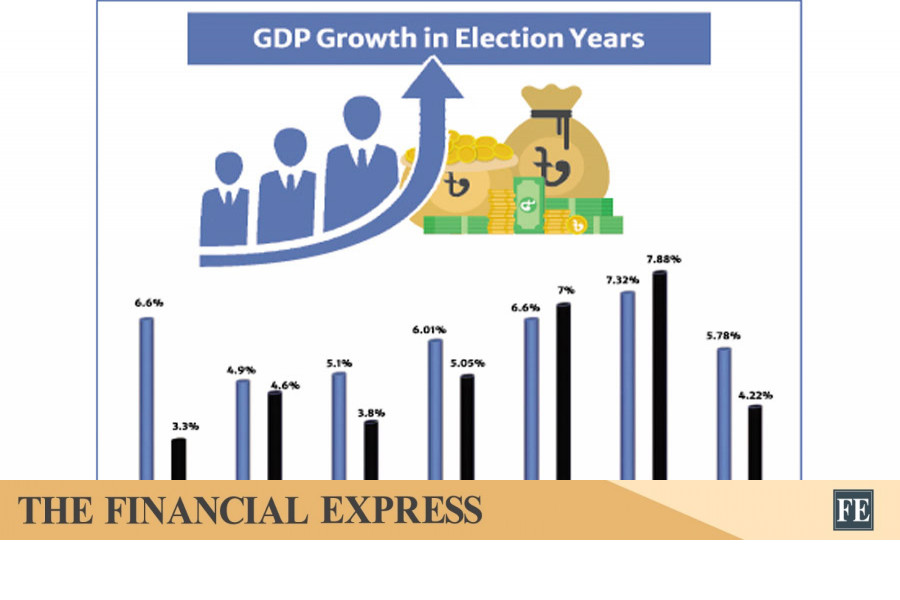
Over the last three and a half decades, Bangladesh has held nine general elections. GDP growth in election years decreased on five occasions and increased on two. Since the 6th and 7th national polls were held within four months and in the same fiscal year (FY96), these polls are counted once for growth analysis.

It is notable that the last three elections in Bangladesh were highly contentious due to massive irregularities and manipulations by the Hasina-led authoritarian governments. Instead of ensuring level playing fields for all the political parties, the tyrant Hasina unleashed a reign of terror and fear, marginalising the dissenting voices. In this process, she had ensured her stay in power in the name of being 're-elected in popular votes.'

Statistics showed that GDP growth consistently declined in the four election years until 2009. The declines in FY91 and FY96 were largely driven by political conflicts and pre-poll violence. This was not the case in FY01, when the country saw less violence. The decline in FY09 followed pre-poll uncertainties under the army-backed caretaker governments. Still, the common trend was a decline in growth during election years.

The rate of GDP growth increased in FY14 and FY19 to 7.00 per cent and 7.88 per cent respectively, following the 10th and 11th national polls. These two elections were controversial, as mentioned earlier. Since both elections were held in the middle of the fiscal years, one may argue that they reduced due to uncertainty about power transfer before the fiscal years ended.

The 12th national election was also widely disputed, which re-elected Hasina for the fifth time as prime minister and for the fourth time in a row. Things, however, changed significantly within seven months of since her re-election. Student-led mass uprising forced the tyrant to step down, leave the country and take shelter in New Delhi on August 5 2024. Before that, the repressive regime killed at least 1,400 people and injured some 20,000, making the uprising bloody.

The Yunus-led interim government took charge three days later and began work to restore normalcy. The disruption of economic activities during the month-long mass uprising continued for several months. This led to a further decline in GDP growth, to 3.97 per cent in FY25 from 4.22 per cent in FY24. As FY24 was an election year, it also saw a decline in growth from FY23, when GDP expanded at 5.78 per cent.

Projections indicate that GDP growth will increase modestly in the current fiscal year (FY26), which is also an election year, compared with FY25. If this happens, it will be the third time in the last three and a half decades that growth exceeded the previous year's rate. Since the election is taking place in an environment where a major political party is barred from competing due to its decade-long misdeeds in power, the situation remains fluid.

In fact, the upcoming election will be held at a critical juncture in Bangladesh's history to restore democratic transition. The economy's response in the post-election period will largely depend on the quality of the election.​
 
Analyze

Analyze Post

Add your ideas here:
Highlight Cite Fact Check Respond

Remittance inflows exceed $3b for two consecutive months before election

bdnews24.com
Published :
Feb 01, 2026 20:14
Updated :
Feb 01, 2026 20:14

1769992937149.webp


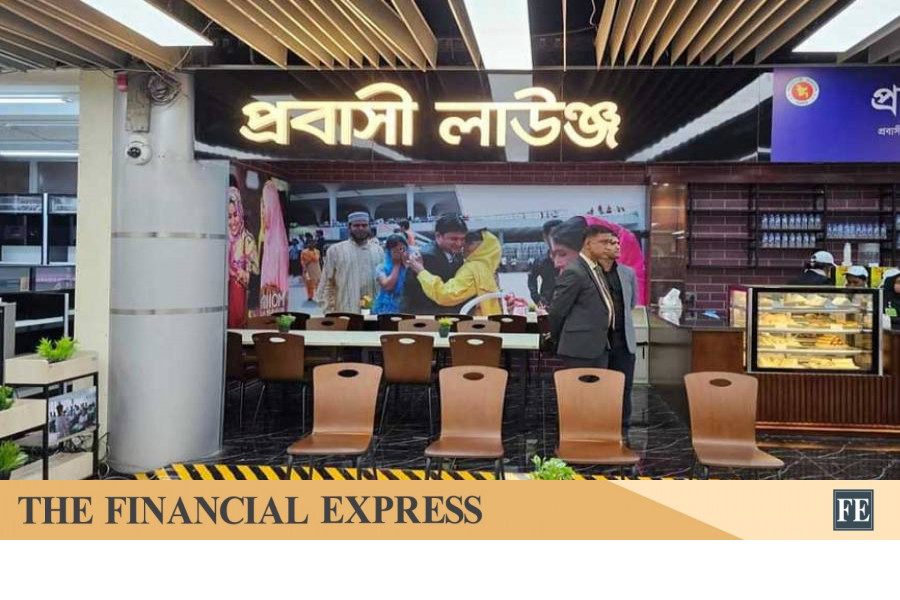
Remittance inflows have crossed $3 billion for a second consecutive month with the parliamentary election looming, with expatriates sending $3.17 billion in January.

On Sunday, the latest Bangladesh Bank report showed remittance receipts in January were up 45.1 percent from a year earlier.

In January last year, inflows stood at $2.18 billion.

The strong performance followed December’s inflows of $3.22 billion sent through formal banking channels, extending a sustained upward trend in remittances over the past two months.​
 
Analyze

Analyze Post

Add your ideas here:
Highlight Cite Fact Check Respond

Foreign debt servicing rises to $7.09b


By Ahsan Habib and Rejaul Karim Byron

1769995008975.webp

Photo: Collected

Foreign debt servicing by the government and its guaranteed loans rose 17 percent to $7.09 billion at the end of June in the last fiscal year.

The amount ate up around 76 percent of the total grants and loans of $9.3 billion that Bangladesh received in the fiscal year (FY) 2024-25.

Of the total repayment, $5 billion was principal, including $2.6 billion in state-guaranteed loans taken by public agencies. For example, Bangladesh paid $1.41 billion to settle crude oil import bills. The remaining $2.08 billion went to interest payments, according to data from the Economic Relations Division (ERD).

This marks another year of rising debt servicing costs for Bangladesh, which have more than doubled over the last five years. The government repaid $6.08 billion in principal and service charges to foreign lenders in FY24, double the $3.3 billion paid in FY21. Debt servicing crossed the $1 billion mark for the first time in FY13.

At the end of FY25, Bangladesh’s foreign debt stock stood at $87.3 billion. Of this, $77.28 billion was government debt, while the rest was government-guaranteed debt taken by public sector agencies.

The debt stock rose around 12 percent from the previous year. External debt accounted for 18.99 percent of the country’s Gross Domestic Product, well below the 40 percent threshold.

Mustafa K Mujeri, executive director of the Institute for Inclusive Finance and Development (InM), said the rise in debt repayment reflects the end of the grace period for some foreign loans, many of which are in their final stages.

He added that many loans are not soft loans but hard loans with high interest rates and short grace periods, which will increase repayment pressure in the near future.

Mujeri, a former director general of the Bangladesh Institute of Development Studies, said the previous government borrowed heavily to fund large projects, and borrowing continued under the current government. With many projects now at their final stages, principal repayments have begun, pushing up debt servicing costs.

He added that significant budgetary support in recent years, provided to help the country recover from the coronavirus pandemic, has also increased loan repayments.

Global interest rate increases are another factor, although the ERD said interest rate risk is limited because most external loans are obtained at concessionary fixed rates.

Citing the World Bank’s classification, the ERD said that all indicators remain below threshold levels, categorising Bangladesh as a “less indebted” country.

However, Mujeri stressed that the government needs to strengthen its loan repayment capacity.​
 
Analyze

Analyze Post

Add your ideas here:
Highlight Cite Fact Check Respond

Interim government leaving economy in 'satisfactory and stable' state: Finance Adviser

UNB
Published :
Feb 03, 2026 19:41
Updated :
Feb 03, 2026 19:41

1770166021331.webp


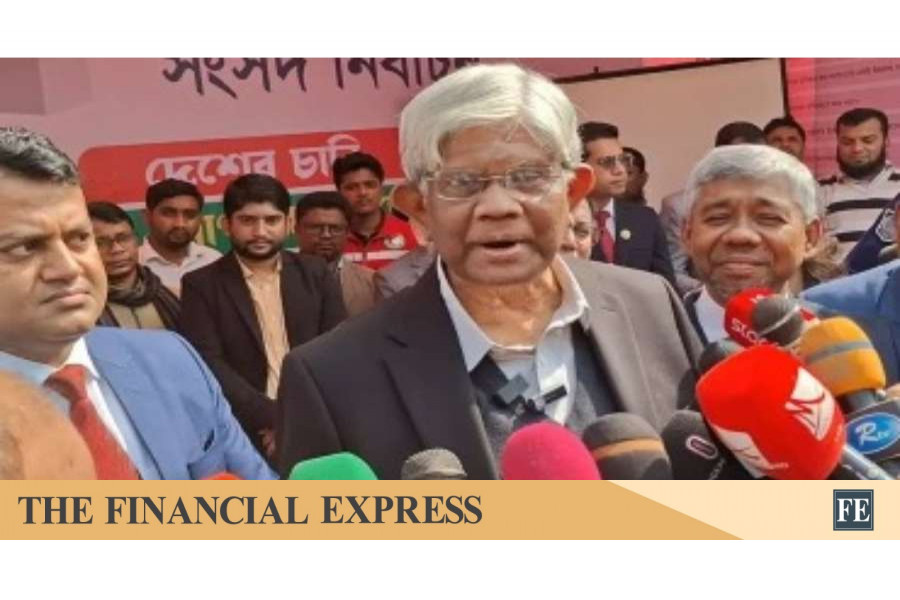
Finance Adviser Dr Salehuddin Ahmed on Sunday said the current interim government would leave Bangladesh’s economy in a “satisfactory and stable” position for the next elected government, though he acknowledged that significant challenges remain ahead.

“I believe we are leaving the economy in a satisfactory place. The next government will not face major difficulties in continuing from here. The situation is stable now — not shaky like before,” he said.

Speaking to reporters after the Government Purchase meeting at the Secretariat, Dr Salehuddin said the economy is no longer in a fragile or unstable condition, unlike earlier periods, and that the foundations have been stabilised to allow future governments to move forward.

Responding to questions on whether the government had taken on record levels of debt, the finance adviser said while borrowing had increased, a substantial amount of external debt had also been repaid.

“Yes, borrowing increased, but we also repaid around six billion dollars in external debt. Debt repayment is equally important,” he said, adding that many large, expensive infrastructure projects were deliberately avoided.

“We did not go for costly mega projects like tunnels or projects worth thousands of crores through loans. That is why public debt pressure did not worsen further,” he said.

He admitted that employment generation remained one of the government’s biggest challenges, largely because job creation requires sustained support for small and medium industries.

“Our major challenge was employment. For that, small and medium enterprises are essential. But we did not have enough fiscal space. Large factories are not labour-intensive, and they come with many complexities,” he explained.

Addressing concerns over contradictory statements about future economic risks, Dr Salehuddin clarified that while the economy is stable, reforms need to be consolidated and carried forward carefully.

“What we have done is not a one-off solution. To take it forward, it needs to be strengthened further. That itself is a big challenge,” he said, noting that access to concessional foreign aid has declined, making future financing more difficult.

He stressed that reforms require time, cooperation and procedural discipline, which are often difficult in Bangladesh’s complex administrative system.

“Reform is not just about speeches. It requires process, cooperation and patience. Inside the system, procedures are extremely complicated. Without cooperation, it becomes very difficult,” he said.

Highlighting governance reforms, the finance adviser said the government has made significant progress in digitising land records and khatian maps, making services cheaper and more accessible to citizens.

“Porcha and land records are being digitised. Now people can get services for Tk20, which earlier cost Tk500. We are expanding digital access nationwide,” he said.

He described the initiative as one of the most fundamental service delivery reforms, reducing harassment and improving transparency.

Dr Salehuddin also confirmed that the government is preparing to face international arbitration over alleged financial disputes and money laundering allegations involving business interests linked to S Alam Group.

He said a case has been filed at the International Centre for Settlement of Investment Disputes (ICSID), a World Bank-affiliated arbitration body, following complaints lodged by the concerned party.

“They have gone for arbitration at the World Bank forum. We have received notice and must respond. This is a very serious matter involving a large amount of money,” he said.

The government has decided to engage international legal counsel to contest the case, he added.

“We will engage a legal firm. This is not a simple issue. Legal preparation is essential,” he said, though he declined to disclose the name of the firm at this stage.

A government team is expected to visit Washington, DC, to deal with the arbitration process, he said.

On power sector reforms, the finance adviser said electricity tariffs are being rationalised rather than increased arbitrarily.

“This is tariff restructuring, not a price hike. Money is being adjusted from one segment to another. It will not affect electricity supply,” he said, adding that efficiency issues at power plants such as Ashuganj are also under review.

Dr Salehuddin said despite criticism, many fundamental reforms had been undertaken, even if they were not always visible.

“People say nothing has been done because they only look for visible projects. But many fundamental procedural reforms have taken place. If someone does not want to see, they will not see,” he remarked.​
 
Analyze

Analyze Post

Add your ideas here:
Highlight Cite Fact Check Respond

Three Ps hold the key to economic progress

Md Shafiul Alam
Published :
Jan 31, 2026 08:34
Updated :
Jan 31, 2026 08:34

1770166467526.webp


Economic development and good governance depend not merely on the availability of resources, but on how efficiently, transparently, and effectively those resources are planned, managed, and utilized.

In this context, the three Ps-Public Financial Management (PFM), Project Management (PM), and Public Procurement Management (PPM)-form the backbone of an effective public sector delivery system. These three interrelated domains hold the key to fiscal discipline, value for money, and sustainable economic growth. The concept, definitions, and features of the three Ps demonstrate how their integrated application can significantly accelerate economic progress.

However, to ensure transparency and accountability, accounts and audit should function as separate entities, which is unfortunately not the case in the country at present.

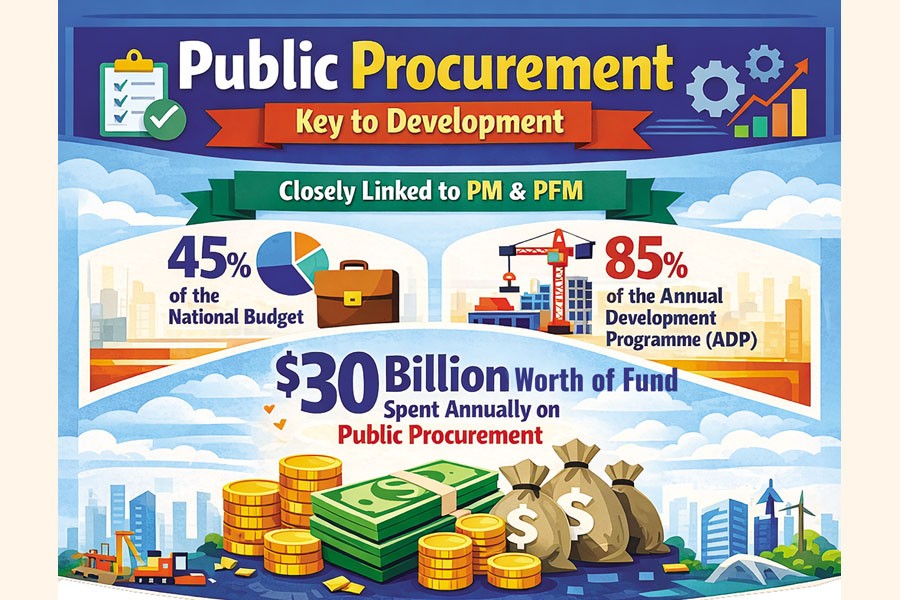
Public procurement is closely linked to both PM and PFM. It accounts for about 45 percent of the national budget and nearly 85 percent of the Annual Development Programme (ADP). An amount equivalent to approximately 30 billion US dollars is spent on public procurement every year. Public procurement constitutes the major component of most development projects. Therefore, the efficient and timely implementation of any project largely depends on the effective and efficient execution of public procurement.

Such a large volume of expenditure inevitably involves public financial management, which requires careful, professional, and efficient handling.

On average, there are about 1,300 projects under the ADP each year. Ironically, project directors (PDs) often lack adequate training, expertise, and experience in the three Ps. The government has identified this capacity gap as a major obstacle to the efficient and effective implementation of projects. Therefore, PDs need to be equipped with the necessary skills in all three areas. Combined and integrated training on the three Ps for PDs before their assignment has become a demand of the time.

1. Public Financial Management (PFM)

Public Financial Management refers to the system through which the government mobilizes, allocates, spends, and accounts for public resources to achieve policy objectives and deliver public services effectively.

Key features of PFM include budget formulation aligned with national priorities, fiscal discipline and macroeconomic stability, efficient allocation of resources, financial accountability and transparency, and robust audit, reporting, and oversight mechanisms.

Relevance to the Economy

Strong PFM ensures that scarce public resources are used prudently, leakages are minimized, and public confidence in state institutions is enhanced. In Bangladesh, effective PFM is critical for maintaining fiscal sustainability and achieving desired development outcomes.

2. Project Management (PM)

Project Management is the systematic application of knowledge, skills, tools, and techniques to plan, execute, monitor, and complete projects within defined scope, time, cost, and quality parameters.

Key features include clear project planning and design, time and cost control, risk identification and mitigation, performance monitoring and evaluation, and outcome- and results-based management.

Relevance to the Economy

Poor project management leads to cost overruns, delays, and suboptimal outcomes-challenges frequently observed in large public infrastructure projects. Strong PM capacity ensures that development projects deliver intended benefits on time, contributing to productivity, employment generation, and improved public services. Effective PM is therefore essential for maximizing returns on public investment.

3. Public Procurement Management (PPM)

Public Procurement Management involves the process of acquiring goods, works, and services by public entities in a manner that ensures value for money, fairness, transparency, and competition.

Key features include open and competitive bidding processes, legal and regulatory compliance, transparency and accountability, value for money and life-cycle costing, and the adoption of e-GP and sustainable procurement practices.

Relevance to the Economy

Public procurement is the single largest channel of public spending in Bangladesh. Efficient PPM reduces corruption risks, ensures quality infrastructure and services, and supports private sector growth. The introduction of electronic Government Procurement (e-GP) and the move toward Sustainable Public Procurement (SPP) have further strengthened governance and efficiency in this critical area.

Inter-linkages among the three Ps

The three Ps are not isolated silos; rather, they are deeply interconnected. PFM provides the financial framework and budgetary discipline, PM ensures that funded projects are implemented effectively, and PPM translates project needs into contracts and delivers outputs.

Weakness in any one of these areas undermines the others. Conversely, strong integration among the Three Ps creates a virtuous cycle of efficiency, accountability, and development impact.

How Skills and Performance in the three Ps Drive Economic Progress

Enhanced skills and strong performance in PFM, PM, and PPM can deliver multiple macro- and microeconomic benefits for Bangladesh, including:

• Improved quality of public investment

• Faster and more cost-effective

infrastructure delivery

• Reduced waste, delays, and corruption

• Increased investor and development

partner confidence

• Stronger private sector participation

and job creation

• Accelerated achievement of national

development goals and the SDGs

The Three Ps-Public Financial Management, Project Management, and Public Procurement Management-collectively form the engine of effective public service delivery and economic transformation. Strengthening institutional capacity and professional skills in these areas is not merely a technical necessity but also a strategic imperative for Bangladesh's journey toward sustainable growth, good governance, and upper-middle-income status.

The writer is a senior journalist​
 
Analyze

Analyze Post

Add your ideas here:
Highlight Cite Fact Check Respond

Members Online

No members online now.

Latest Posts

Back
 
G
O
 
H
O
M
E