Home Watch Videos Wars Movies Login

[🇧🇩] Monitoring Bangladesh's Economy

[🇧🇩] Monitoring Bangladesh's Economy
967
26K
More threads by Saif

G Bangladesh Defense

Bangladesh export sector faces global economic headwinds, domestic challenges: Experts

UNB
Published :
Feb 05, 2026 13:15
Updated :
Feb 05, 2026 13:15

1770276839774.webp


Bangladesh's export sector is navigating a difficult transition as weak global demand coincides with domestic political and economic pressures. However, a sharp rebound in recent months is raising hopes of stabilisation.

Export earnings in the first seven months of the current fiscal year (FY26) fell 1.93% year-on-year to $28.41 billion, according to data from the Export Promotion Bureau (EPB), down from $28.96 billion in the same period a year earlier.

The decline reflects sluggish demand in major Western markets and disruptions linked to political change at home.

Yet December and January figures point to a potential turning point.

Exports in January 2026 reached $4.41 billion, only 0.5% lower than a year earlier, but up 11.22% from December's $3.96 billion, signalling renewed momentum.

"Exports in the last two months show a shining future as global trade conditions are gradually improving," said Dr Zahid Hussain, former lead economist at the World Bank's Dhaka office.

He noted that exporters continue to face domestic challenges, including uninterrupted energy supply and labour unrest, which remain critical constraints for the manufacturing sector.

At the same time, global trade remains unsettled by geopolitical tensions and trade policy uncertainty, including the impact of US President Donald Trump's trade war.

Major global suppliers have adopted a wait-and-see approach as consumers in the United States and the European Union struggle with high living costs and job losses.

The ready-made garments (RMG) sector has once again emerged as the backbone of Bangladesh's export performance. RMG earnings rose 11.77% year-on-year to $22.98 billion during July-January, accounting for about 81% of total exports.

Sustained global demand and improved factory efficiency helped the sector offset weakness elsewhere.

Other export segments showed mixed results. Leather and leather goods, jute and home textiles recorded improvements in January, while agro-processed products and frozen fish lagged behind, failing to match the apparel sector's growth.

The United States remained Bangladesh's largest export destination, with earnings of $5.21 billion in the July-January period, up 1.64%. Germany ranked second with $2.85 billion, followed by the United Kingdom at $2.77 billion.

Economists attribute the overall export dip to several factors. Slowing consumption and high inflation in Europe during the latter half of 2025 dampened demand for non-essential goods.

Domestically, a massive student-led movement and a subsequent change in government in mid-2024 disrupted supply chains through factory closures, transport strikes and port congestion, with spillover effects into the current fiscal year.

Energy shortages also weighed heavily on production. Persistent gas and electricity constraints in late 2025 raised costs and hurt competitiveness, particularly for small and medium-sized exporters.

In addition, a strong post-pandemic rebound in FY25 created a high comparison base, making current performance appear weaker.

Analysts say the recent month-on-month rebound could mark a turning point. With the exchange rate stabilised at around Tk 122 per dollar and continued momentum in RMG and leather, export performance for the full fiscal year could end stronger than early data suggested.

Still, longer-term risks remain. "Depending on a single product, it is very difficult to increase exports," said Dr M Masrur Reaz, chairman and founder of Policy Exchange Bangladesh.

He warned that Bangladesh must accelerate product diversification, particularly as apparel exports face tariff challenges in the US market.

Rising living costs in Western economies are reshaping consumer behaviour and limiting purchasing power, he added, reinforcing the need for innovation and a broader export base to ensure sustainable growth.​
 
Analyze

Analyze Post

Add your ideas here:
Highlight Cite Respond

‘Strong institutions key amid economic uncertainties’

FE REPORT
Published :
Feb 05, 2026 10:00
Updated :
Feb 05, 2026 10:00

1770277157687.webp


Bangladesh urgently needs competent and resilient institutions to navigate mounting global and domestic pressures, including geopolitical tensions and the imminent challenges of graduating from least developed country (LDC) status, prominent businessman Mahbubur Rahman has said.

At a time of heightened uncertainty, strong institutions are essential to absorb shocks, manage economic transitions and sustain policy credibility beyond political cycles, he noted, stressing that institutional strength will be decisive in safeguarding long-term stability and growth.

Despite Bangladesh's economic progress over the past couple of decades, the global environment has changed in ways that now pose fresh challenges for the country, said Mr Rahman, who is also the president of the International Chamber of Commerce, Bangladesh (ICCB).

Mr Rahman made the remarks while speaking at a seminar titled 'Election, Politics & Economy of Bangladesh: The Way Forward', organised by the Institute for Democracy & Human Rights (IDHR) of Millennium University and held at a city hotel on Tuesday.

ICCB Vice-President and Ha-Meem Group Chairman A K Azad, Policy Research Institute Chairman Dr Zaidi Sattar, eminent lawyer Shahdeen Malik, and Executive Director of Khan Foundation and Chairperson of the Board of Trustees of Millennium University Rokhsana Khondoker were also present.

Junior Research Fellow at the University of Oxford Dr Mahreen Khan and World Bank Research Analyst and Programme Coordinator Nausheen Khan spoke as keynote speakers.

In his speech, the ICCB president also outlined key expectations from the upcoming government. Businesses can adapt to policy changes, but they struggle with uncertainty.

Emphasising institutional independence, Mr Rahman said key economic institutions, such as the central bank, regulatory authorities and the judiciary, must operate independently.

"Investor confidence depends not on personalities, but on systems," he added.

Economic reforms are effective when they are inclusive, which requires sustained engagement among policymakers, political leaders, businesses, labour representatives and civil society.

Elections should not interrupt this process; rather, they should reinforce and deepen dialogue. Transparent governance reduces corruption, while a free media improves accountability.

Bangladesh's future would not be determined by elections alone, nor by economic policies in isolation. The future government would work closely with all stakeholders, including the business community, to address upcoming challenges and ensure sustainable growth and development, he added.
 
Analyze

Analyze Post

Add your ideas here:
Highlight Cite Respond

8 local, foreign businesses join billion-dollar club

1770279243698.webp
 
Analyze

Analyze Post

Add your ideas here:
Highlight Cite Respond

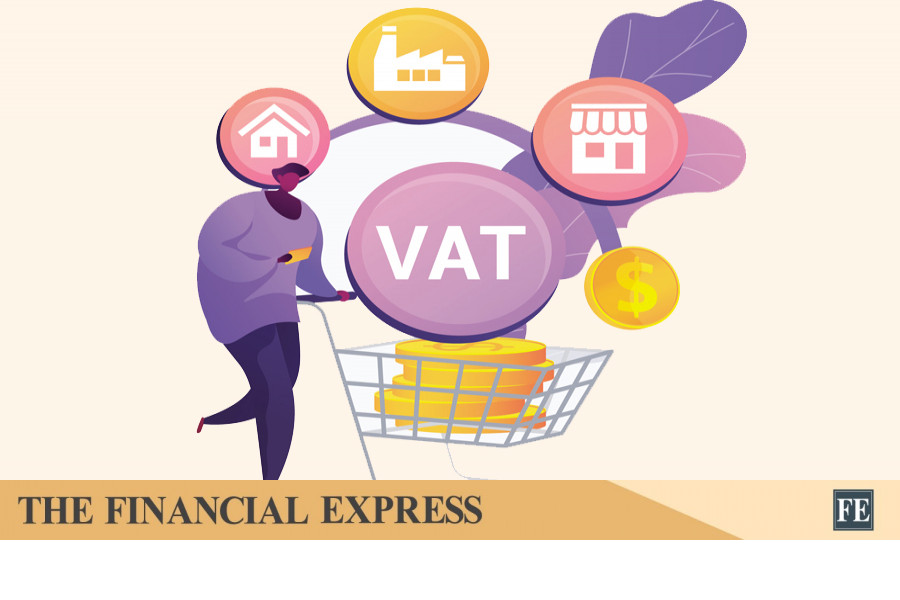
Rethinking VAT reform in Bangladesh

The case for prioritising sales data

Md. Abdur Rouf
Published :
Feb 04, 2026 23:34
Updated :
Feb 04, 2026 23:34

1770339254387.webp


Having worked in the VAT management system for nearly three decades since 1995, I have had the opportunity to observe numerous policy initiatives and administrative reforms. Despite these efforts, Bangladesh continues to have one of the lowest tax-GDP ratios in the world, a reality that clearly fails to justify many of the measures undertaken over the years. The fundamental reason for this outcome is that reforms were not implemented with proper prioritisation. Consequently, VAT has not been collected in line with the true potential of the economy.

To understand why VAT collection remains below the potential, it is necessary to identify the core problem accurately. The most critical weakness in the VAT management system is not the number of registered entities but the absence of a reliable mechanism for recording sales data. Proper recording of sales data should, therefore, be treated as the highest priority. If sales data are accurately captured, the scope for VAT evasion is virtually eliminated. At the same time, reliable sales data facilitate income tax collection and the preparation of accurate financial accounts. If VAT, income tax, and accounting systems were aligned through proper sales data recording, the impact on the economy would be transformative.

At present, substantial time and manpower are devoted to VAT registration, maintenance of purchase and sales registers, submission of VAT returns, and related compliance activities. However, these processes have not been implemented flawlessly, and the expected outcomes have not been achieved. In contrast, even if one function-namely, proper maintenance of sales records-was carried out effectively, VAT collection would have increased dramatically. Compliance should never be treated as an end in itself; it is meaningful only insofar as it ensures correct VAT collection.

This point becomes clearer when we consider two hypothetical scenarios. In the first scenario, there is no VAT registration, no purchase and sales registers, and no VAT return submission, yet all sales data of all entities are preserved in a central server in real time. In such a system, the correct amount of VAT could be easily assessed and collected solely on the basis of sales data. In the second scenario, all entities are registered, registers are maintained, and VAT returns are submitted, but widespread VAT evasion continues and the correct amount of VAT is not collected. From the perspective of revenue mobilisation, the first scenario is far superior.

A closer examination of the VAT landscape confirms this idea. The real problem in Bangladesh's VAT system is not non-registration. Almost all manufacturers, importers, exporters, large traders, and large service providers are already registered. The entities that remain outside the VAT net are mainly medium and small traders and service providers with relatively low turnover, whose customers are largely members of the general public. Evidence of VAT evasion, however, is frequently visible among registered entities, for example at restaurant counters where sales are often underreported.

In terms of revenue contribution, only about 5 per cent of total VAT is collected at the trading stage, while approximately 50 per cent is collected at the manufacturing stage and about 40 per cent at the service stage. Discrepancies between turnover declared in VAT returns and figures reported in audited financial statements are commonly observed even among large entities. This clearly indicates that the preservation of accurate sales records, rather than the expansion of registration among small traders, should be the primary focus of VAT administration.

Current data further reinforce this argument. About 58 per cent of total VAT is paid by only 109 entities registered under the Large Taxpayers Unit (LTU), VAT Commissionerate. On this basis, it can reasonably be concluded that the top 1,000 entities contribute around 90 per cent of total VAT. As of November 2025, there are approximately 645,000 VAT registrations, meaning that the remaining 644,000 entities together contribute only 10 per cent of total VAT. Of these, 100,000 entities account for just 1.55 per cent of VAT revenue. Even if another 100,000 entities were brought under the VAT net, the increase would be negligible.

By contrast, the economy has the potential for nearly a 200 per cent increase in VAT collection. This potential cannot be realised simply by registering more small shopkeepers and service providers. Instead, if the sales data of the top 25,000 entities were accurately recorded, VAT collection could realistically be doubled.

Despite this reality, special registration campaigns continue to be emphasised. Under such campaigns, VAT registration is often forcibly granted based on minimal information such as name, address, and nature of business. These entities are later required to submit registration forms, trade licences, TINs, rental agreements, and bank certificates to regularise their status. Only after scrutiny and the issuance of an ID and password in the e-VAT system can VAT returns be submitted online. Experience shows that most forcibly registered entities never appear for regularisation. Even among those that do, many fail to submit VAT returns. Those who submit returns often file zero returns or pay negligible amounts of VAT, making little difference to overall VAT collection.

Over time, the number of VAT returns submitted becomes disproportionately low compared to the number of registered entities, necessitating deregistration drives. From registration to deregistration, the administrative workload of VAT offices increases significantly, yet the number of entities paying substantial VAT does not rise. This is because most newly registered entities are small or medium traders and service providers with limited VAT liabilities. Organic growth in VAT registration is therefore sufficient. What is urgently needed is a targeted effort to ensure proper recording of sales data, which would increase the number of entities contributing meaningful amounts of VAT.

Historical experience supports this conclusion. When VAT was introduced in Bangladesh in 1991, a large number of registrations were issued through special campaigns. Eventually, it was found that while there were around 700,000 registered entities, only about 35,000 VAT returns were submitted. Investigations revealed that most non-filers were non-existent entities. Consequently, extensive deregistration activities were undertaken during 1997-98. This experience clearly demonstrates that VAT collection cannot be significantly increased merely by expanding registration numbers; accurate sales data preservation is far more effective.

A similar pattern appears to exist in income tax administration. Currently, there are about 13 million TIN holders in Bangladesh. A large number do not file returns. Among those who do file, many submit zero returns, and among those who pay tax, many pay only the minimum amount. This raises an important question: has the number of taxpayers paying substantial income tax increased in proportion to the rise in TIN registrations?

Recognising the importance of sales data, efforts to record it began in 2004 with the introduction of Electronic Cash Registers (ECRs), followed by VAT software and Electronic Fiscal Devices (EFDs). However, none of these initiatives succeeded. More recently, an API-based, machine-less approach has been introduced, but it too has yet to demonstrate sufficient promise. Over the past 21 years, no visible progress has been achieved in the systematic recording of sales data. This underscores the need to place sales data recording at the very top of the priority list in VAT management.

There are differing opinions regarding the appropriate information technology model for recording sales data. In my view, it is sufficient to capture a limited set of invoice information-such as the names of buyer and seller, item details, price, and VAT amount-in a central server on a real-time basis. Such a model would require less financial investment, less manpower, and less technological complexity.

In an era of rapid technological advancement, recording all sales data in real time is not a difficult task. It is far less complex than the systems operated by global technology companies or even those used in Bangladesh's telecom and banking sectors. This can be achieved using domestic financing, local technology, and existing human resources; what is required is a clear policy decision and strong initiative. During the 1980s, the proposal to introduce a National Identity Card was widely considered impossible, yet it was later successfully implemented and now supports numerous administrative functions. Proper sales data recording can similarly support multiple objectives, including the accurate collection of VAT and income tax.

Recently, 131,000 VAT registrations were issued under a special campaign. An objective assessment of how many of these newly registered entities submit VAT returns and how much VAT they actually pay would provide valuable guidance for future policy decisions. VAT collection cannot be significantly increased by registering small shopkeepers and service providers alone. The number of entities paying substantial VAT does not rise through such measures, as most new registrations involve entities with minimal contribution to total VAT revenue.

In conclusion, the core problem in Bangladesh's VAT management system is not insufficient number of VAT registrations, but the widespread concealment of sales by registered entities. Capturing sales records on a real-time basis would enable the collection of the correct amount of VAT, strengthen income tax administration, and improve the quality of financial reporting. Therefore, ensuring proper sales data recording must be given the highest importance and the topmost priority in the VAT management system of Bangladesh.

Dr. Md. Abdur Rouf is a VAT Specialist who is Chairman of International VAT Training Institute.​
 
Analyze

Analyze Post

Add your ideas here:
Highlight Cite Respond

Will FDI surge after election?

Asjadul Kibria
Published :
Feb 07, 2026 22:34
Updated :
Feb 07, 2026 22:34

1770511010824.webp


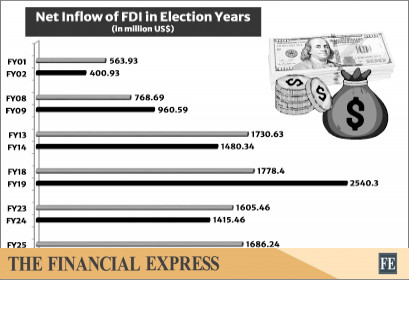
Notwithstanding various efforts and policy supports, inflow of foreign direct investment (FDI) in Bangladesh is still nominal. The annual average net inflow of FDI stood at $1.60 billion in the last 10 years which is less than one per cent of the country's gross domestic product (GDP). Like many key economic indicators, the repressive regime of Hasina also inflated the FDI statistics to mislead people about the success in relation to economic advancement. That's why, at one stage, annual inflow of FDI was reported to cross $3 billion level. The net FDI in terms of balance of payments (BoP), however, never crossed $2 billion level except FY19.

After the fall of the authoritarian regime on August 5 in 2024 due to student-led mass uprising, Bangladesh Bank revised the FDI data in order to comply with the International Monetary Fund (IMF)'s updated version of BoP estimation guideline. As a result, the amount of net inflow of FDI declined sharply compared to the data reported on the basis of half-yearly survey. Though the process of revision started in FY15, it gained momentum two years ago. Due to revision, the real scenario of FDI turns out to be disappointing. For instance, net FDI was $3249.68 million in FY23, as per the survey-based reporting. The latest revision has made it $1605.40 million.

Now that the national elections is going to take place on Thursday, everything has become the poll-centric. There is also speculation that the inflow of FDI might go up after the election. Empirical data showed that inflow of FDI declined in the election years on three occasions and increased on two occasions in the last two and a half decades. [Due to lack of adequate data on FDI in the early 1990s, FDI situation during the national elections (5th) in 1991 and 1996 (6th and 7th within 100 days) has not been taken into consideration.]

Statistics available with Bangladesh Bank showed that net inflow of FDI in FY02 declined to $400.98 million from $563.93 million in FY01. The eight national elections took place on October 1 in 2001 which was also the first day of the second quarter of FY02. The decline in FDI by around 29 per cent was disappointing for the newly elected Khaleda-led government at that time.

The FDI jumped by around 25 per cent in FY09, the year when ninth national elections took place. The date was December 29 in 2008. Net inflow of FDI reached at $960.59 million in FY09 from $768.69 million in FY08. The surge in FDI was a confidence booster for the newly elected Hasina-led government.

The 10th general elections took place on January 5 in 2014, at the middle of the FY14 and it was a highly controversial one. Hasina re-elected as the prime minister in 2014. For the foreign investor reacted negatively, as net FDI declined by 14.50 per cent to $1480.3 million in FY14 from $1730.6 million in FY13.

The 11th general elections was far more disputed as ballot boxes at a large number of polling booths across the country allegedly were stuffed with fake ballots in night before the day of election, December 30 in 2018. Through the heavily rigged and manipulated elections, tyrant Hasina was re-elected. Net FDI surged by 42.85 per cent in FY19 to $2540.30 million from $1778.40 million in FY18. The big surge in FDI at that time also raised questions aplenty as allegation of data manipulation by the government surfaced.

Finally, during the 12th national elections on January 7 in 2024, also at the middle of the FY24, net inflow of FDI declined. The FDI dropped by 11 per cent to $1415.46 million in FY24 from $1605.46 million in FY23. Though Hasina got re-elected through massive vote engineering, her repressive regime survived for six months after the election. Student-led mass uprising compelled her to step down and flee to New Delhi on August 5 in 2024.

After Yunus-led interim government assumed the power, it has stepped up a number of reform measures in various sectors. One of the measures is checking and revising the flaws of the economic indicators. Under the initiative, Bangladesh Bank has revised the of FDI data in line with the internationally updated calculation method with a calculation that covered the FY20 and latter years. As a result, a significantly lower amount of FDI has been recorded in contrast with the previously reported data up to FY23.

As the current fiscal year (FY26) is the election year, there is an indication that the net FDI will finally lower than $1686.24 million in FY25. During the first quarter (July-September) of FY26, net inflow of FDI recorded at $315.09 million. As per the balance of payments (BoP) table, net inflow of FDI in the first five months (July-November) of the current fiscal year estimated to $651 million.

Meanwhile, global FDI increased by 14 per cent last year to an estimated $1.6 trillion, according to UN Trade and Development (UNCTAD).

According to the latest Global Investment Trends Monitor, released by the UNCTAD in the last month, FDI flows to developed economies jumped 43 per cent to $728 billion. European Union alone recorded a 56 per cent jump. By contrast, FDI flows to developing economies dropped by two per cent to $877 billion, accounting for around 55 per cent of the global FDI.

"Lower-income countries were hit the hardest, with three quarters of least developed countries experiencing stagnant or declining inflows," said the investment monitor report.

For Bangladesh, the observation is not fully applicable as the country witnessed a big jump in FDI in the first nine months of 2025. During the January-September period of the last year, the net inflow of FDI stood at $ 1,406.59 million, compared with $ 1,270.39 million in January-December 2024. The main reason is the resumption of normal economic activities, which was seriously disrupted during the July mass uprising.

Nevertheless, comparisons between calendar and fiscal years can sometimes create confusion. This article focuses on the fiscal year to examine the impact of the election on FDI and finds that a decline in FDI in an election year is normal, while a rise is an exception. Foreign investors generally follow a wait-and-see policy to monitor election-centric political developments and the early moves of the newly elected government. The existing multinational entities (MNEs) continue their regular operations without injecting fresh capital or expanding their commercial activities. FDI may rebound in the next fiscal year provided that the newly elected government ensures socio-political stability in the post-election period.​
 
Analyze

Analyze Post

Add your ideas here:
Highlight Cite Respond

Monetary policy decisions under political constraints
A macroeconomic exploration

Sayera Younus
Published :
Feb 07, 2026 22:44
Updated :
Feb 07, 2026 22:44

1770511180559.webp


1770511209916.webp


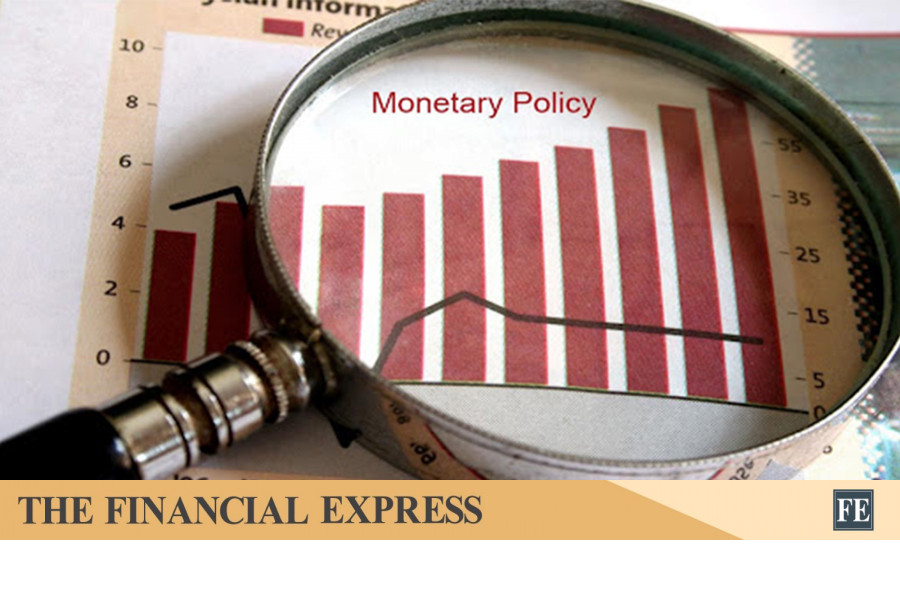
Bangladesh Bank is scheduled to announce its monetary policy stance for the second half of FY26 on Monday (February 9, 2026), amid persistent inflationary pressures and weakening momentum in the real sector. Advisers to the interim government have been pressing for a reduction in the policy rate, contending that the central bank's rate has had limited effectiveness in curbing inflation. They argue that maintaining a high rate constrains investment and hamper economic growth, and therefore advocate for a downward adjustment. The key question, however, is whether the central bank will prioritise growth by cutting rates or maintain its current stance to safeguard price stability. A detailed assessment of the macroeconomic conditions suggests that the monetary policy decision will hinge on the delicate balance between inflation control and growth support, as the two objectives remain closely intertwined and closely related with domestic and global macroeconomic scenario.

MACROECONOMIC SCENARIO: Bangladesh's macroeconomic environment is characterised by the coexistence of high inflation and slowing growth, producing a challenging stagflation like setting for monetary policy. At the same time, gross domestic product (GDP) growth has slowed sharply falling to 2.58 per cent in Q1 FY26, while private sector credit growth remains weak at around 6 per cent, indicating persistent demand softness and constrained lending conditions. The exchange rate at BDT 122.34/USD reflects relative stability but remains vulnerable to rising import pressures and uneven external flows. Compounding these challenges, the financial system continues to be burdened by very high NPLs (35.73 per cent), which weaken monetary transmission and keep banks risk averse. Export performance remains moderate, and the slowing growth trajectory underscores the structural tensions between inflation control and growth support. Together, these factors suggest that while inflation is easing, the overall macro financial landscape remains fragile and requires a cautious, data driven approach to policy easing.

In fact, Bangladesh's inflation remains high, hovering around 8-8.5 per cent in late 2025, driven mainly by food price pressures, rising utility costs, and imported inflation from global commodity markets. Non-food inflation (housing, communication, services) has also surged, reflecting both supply-side shocks and domestic demand recovery. Food inflation rose to 7.7 per cent in December 2025, up from 7.36 per cent in November. Staple items like rice, edible oil, and vegetables have seen persistent price hikes due to supply chain disruptions and import dependence. Seasonal factors and global commodity volatility amplify food price swings.

The Bangladesh Bank raised its policy rate multiple times in 2024 and 2025 to combat inflation above 8 per cent. While this helped moderate demand, imported inflation from global oil and food prices limited its effectiveness. Raising the policy rate is a powerful tool to reduce inflation by curbing demand and stabilising expectations, but in Bangladesh's case, imported inflation and supply-side shocks mean monetary policy alone cannot fully control price pressures.

Bangladesh Bank's 10 per cent policy rate is necessary but insufficient. Inflation in 2024-25 remained above 8 per cent because supply-side shocks (food, energy, currency depreciation) outweighed demand-side tightening. Without fiscal discipline and structural reforms, monetary policy risks slowing growth without fully controlling inflation. Bangladesh needs a coordinated anti-inflation strategy monetary tightening to curb demand, fiscal restraint to avoid overheating, and structural reforms to tackle supply shocks. Only this integrated approach can sustainably bring inflation down to the 6-7 per cent range.

Inflation, although gradually moderating to 8.49 per cent point to point and 8.77 per cent on a 12 month average basis, remains well above the comfort range, limiting the central bank's ability to ease policy without risking renewed price pressures.

1770511270657.webp


1770511284147.webp


Below is a brief assessment covering real sector, monetary sector, external sector, fiscal trends, and financial stability (based on macroeconomic indicators as of 01 February 2026)

Real sector: sluggish growth, improving industry. GDP growth has slowed from 4.22 per cent (FY24) to 3.97 per cent (FY25), and the provisional Q1 FY26 estimate of 2.58 per cent signals continuing demand-side weakness. Manufacturing IIP shows a modest rebound: 8.43 per cent growth in November 2025 after contraction last year, suggesting early signs of industrial recovery.

Monetary sector: tight conditions, slow credit growth. Reserve Money (RM) grew 9.22 per cent, above its target, partly due to FX intervention and liquidity injections. Broad Money (M2) grew 9.55 per cent, consistent with moderate monetary expansion. Net Foreign Assets (NFA) increased sharply by 29.28 per cent, driven by selective rebuilding of reserves and improved remittance inflows. Private sector credit growth remained weak at 6.10 per cent, well below the target (10 per cent), indicating tight financial conditions and cautious investment sentiment. Call money rate remains high: 9.9 per cent, reflecting continued liquidity stress implying that the monetary stance remains tight; funding costs are high; private credit recovery remains fragile.

External sector: mixed signals. Exports grew modestly by 7.72 per cent (FY25) but slowed in FY26 (0.62 per cent for July-Nov). Imports increased by 6.08 per cent in July-Nov FY26, indicating some revival of domestic demand.

Remittances & balance of payments. Remittances continue strong: 17.07 per cent growth, a crucial support for external stability. Current account moved back into deficit of US$ 0.70 billion (July-Nov FY26). Overall balance improved to US$ 0.77 billion, reflecting financial inflows.

Foreign exchange reserves & exchange rate. Reserves stand at US$ 28.68 billion (as per BPM6), an improvement from FY25 but still below FY24 levels. The interbank taka depreciated slightly to US$ 122.34 from $118 in FY24. External sector stability is improving but remains vulnerable, with reserves recovering slowly and BoP gains relying on remittances rather than exports.

Fiscal sector: revenue improving, savings tools reviving. NBR revenue increased by 14.19 per cent in Jul-Dec FY26, a strong recovery. Government expenditure remains modest but steady. National Savings Certificates recorded positive net sales (Tk 24.61 billion) after a negative FY25, indicating renewed household reliance on safer savings instruments. Fiscal pressure is easing due to stronger revenue, but higher savings certificate sales may raise future interest liabilities.

Financial stability: alarming NPL surge.: Gross NPL ratio jumped from 12.56 per cent (FY24) to 35.73 per cent (Sept 2025). Net NPL surged to 26.40 per cent, reflecting weakening asset quality and inadequate provisioning. This is the most severe risk area. Banking sector vulnerabilities could constrain credit growth, raise interest rates, and impede recovery.

Capital market: mild improvement. DSE index shows slight upward movement compared to FY25. Market capitalisation stable around Tk 6626 billion. Equity markets remain shallow but show signs of gradual stabilisation.

Overall assessment. The macroeconomic environment shows a mix of stabilization and persistent vulnerabilities: (1) Inflation decelerating but still high; (2) Industrial production recovering; (3) Reserves improving modestly; (4) Revenue collection strong; (5) GDP growth subdued; (6) Private credit growth weak; (7) Banking sector NPL levels dangerously high; and (8) Exports losing momentum.

The economy appears to be in a slow stability phase, but banking sector risks and external vulnerabilities remain the biggest concerns.

HOW BANGLADESH BANK IMPLEMENT MONETARY POLICY: Monetary policy implementation refers to how the central bank uses its tools to achieve macroeconomic objectives such as price stability, exchange rate stability, financial stability, and supporting growth. The Bangladesh Bank's shift (since July 2023) toward an interest rate targeting framework makes these tools especially important. Here is a breakdown of key monetary policy tools, how they are implemented, and how they relate to the latest indicators.

Bangladesh Bank implements monetary policy through a combination of interest rate tools, liquidity operations, money supply management, and exchange rate intervention. Policy rates-Repo (10 per cent), SDF (8.50 per cent), and SLF (11.50 per cent) form the core of its framework, guiding overall market interest rates and anchoring inflation expectations. By keeping the repo rate high (raised from 8.5 per cent to 10 per cent), BB aims to contain elevated inflation (8.77 per cent 12 month average; 8.49 per cent point to point) and slow credit growth, which has already fallen to 6.10 per cent. Liquidity is actively managed through repo auctions, reverse repo/SDF operations, OMOs, and SLF borrowing. These operations address stresses in the money market, where reserve money growth has exceeded target (9.22 per cent), SLR excess liquidity is high (Tk 3212.55 billion), but CRR excess reserves remain low. Together, these measures stabilise interbank transactions, maintain payment system integrity, and prevent excess volatility in call money rates (currently 9.9 per cent). BB also manages monetary aggregates M2 grew 9.55 per cent, NFA surged 29.28 per cent, and NDA increased 6.75 per cent to ensure broad financial stability.

Complementing its domestic tools, Bangladesh Bank deploys exchange rate management and credit regulation instruments to reinforce macroeconomic stability. It buys and sells USD to stabilize the taka, coordinates with banks under L/C pressure, and intervenes depending on balance of payments conditions. These actions have stabilised the exchange rate around Tk 122.34 per USD and helped rebuild reserves to US$ 28.68 billion. On the credit side, BB regulates lending across public and private sectors, enforces sectoral guidelines, and applies risk based supervision critical in the context of very high NPLs (35.73 per cent). A tight monetary stance, stricter loan classification, and targeted incentives (such as strong agricultural disbursement at 41.26 per cent of the target) aim to curb risky lending while supporting priority sectors. Since 2023, the interest rate corridor system SDF as floor, repo as policy rate, SLF as ceiling has improved policy transmission and ensured predictable short term rate movements. Finally, BB's forward guidance measures, including quarterly policy statements and weekly indicators, help shape market expectations during periods of high inflation, exchange rate pressure, and financial sector stress.

Model based forecast of inflation shows that inflation continued to decline fall below 8 per cent in April-May 2026. Although inflation has fallen from last year's peak, both the 12 month average (8.77 per cent) and point to point rate (8.49 per cent) remain well above the tolerance threshold, making premature easing risky. A rate cut before inflation clearly moves toward the mid 7 per cent range, which could destabilise expectations and trigger renewed price pressures, especially given the slow disinflation trend. At the same time, weak private credit growth (6.10 per cent), soft GDP performance (3.97 per cent in FY25 and 2.58 per cent in Q1 FY26), and subdued domestic demand justify the expectation of moderate easing once inflation demonstrates durable improvement.

However, several upside risks could derail this easing path, foremost among them the possibility of persistent or re accelerating inflation. External cost pressures such as rising global fuel and food prices combined with domestic supply disruptions or faster broad money growth (already 9.55 per cent), could push inflation back above the 8-9 per cent range. Under such conditions, Bangladesh Bank would need to delay rate cuts and might even consider a mild tightening of 25 bps to defend price stability. External vulnerabilities also pose significant risks: while the taka is currently stable at 122.34 per USD and reserves have risen to US$28.68 billion, rising imports, weak export momentum, or a slowdown in remittance growth could trigger depreciation. If the exchange rate weakens, the Bank will be compelled to maintain the repo at 10 per cent throughout the forecast period or implement modest hikes to contain imported inflation.

Domestic financial sector fragilities further limit the scope for monetary easing. The extraordinarily high gross NPL ratio (35.73 per cent) indicates systemic stress that weakens monetary transmission meaning that even if policy rates are cut, banks may remain too risk averse to expand lending. This reduces the effectiveness of easing and may force the central bank to rely more on liquidity operations rather than policy rate changes. In addition, growth could weaken more severely than anticipated, as recent industrial improvements (8.43 per cent IIP growth in Nov 2025) may prove temporary, and high interest rates could suppress investment further. If credit conditions tighten due to NPL driven rationing, the economy may decelerate faster, prompting calls for earlier or deeper rate cuts. Thus, the policy outlook is shaped by a delicate balance: elevated inflation and financial sector fragility argue for caution, while persistent growth weakness pressures the Bank toward eventual but carefully calibrated easing.

Finally, growth risks continue to influence the monetary policy outlook, particularly if economic activity weakens further. A sharper than expected slowdown could compel Bangladesh Bank (BB) to ease earlier than currently projected, possibly shifting the first rate cut to late FY26 instead of FY27 Q1. Under such conditions, rate reductions may also be deeper, exceeding 50 basis points. These downside growth risks tilt the overall policy stance toward a more dovish bias, increasing the likelihood of earlier or more aggressive monetary accommodation.

Fiscal dynamics pose another significant risk to the forecast. While government borrowing declined in FY25, several indicators such as positive net National Savings Certificate (NSC) sales of Tk 24.61 billion in the first half of FY26 suggest potential pressures ahead. High NSC returns can attract household savings away from banks, tightening liquidity and pushing market rates upward. If fiscal slippage intensifies or domestic borrowing rises, banks may face higher liquidity needs, which would elevate deposit and lending rates and undermine the effectiveness of any planned monetary easing.

Global economic conditions also add considerable uncertainty. A resurgence of global inflation, higher oil prices, or renewed tightening by major central banks like the Federal Reserve or the European Central Bank could transmit adverse effects to Bangladesh. These shocks would raise import costs, put pressure on foreign exchange reserves, and potentially trigger capital outflows, especially given currently subdued foreign direct investment FDI inflows of only US$ 0.65 billion during July-November of FY26. In such a scenario, BB may be forced to delay easing and, if external pressure intensifies, might even consider tightening to stabilise the exchange rate.

Liquidity constraints and transmission challenges present a final layer of risk. Current indicators such as the call money rate hovering around 9.90 per cent and low excess CRR reserves of only Tk71.61 billion signal an already tight liquidity environment. Further tightening could act as de facto monetary restraint, even without changes to the policy rate. To manage these conditions, BB may need to rely more on open-market operations rather than rate cuts, resulting in a shallower easing cycle. Consequently, policy accommodation in FY27 could be limited to only 25 basis points, delaying the expected normalization path.

Given these intersecting pressures, the baseline expectation is for a "hold then ease" trajectory. Over the next two policy cycles, the central bank is likely to keep the repo rate unchanged at 10.00 per cent to prevent inflation from re accelerating or destabilizing the exchange rate, which has stayed broadly steady at roughly 122.34 BDT/USD. If disinflation progresses steadily toward the mid 7 per cent range and external stability persist, a cautious easing phase may emerge in the second half of the forecast horizon. In such a scenario, repo could be trimmed by 25-50 bps, with symmetric downward adjustments to SLF and SDF to maintain corridor integrity and support a delicate recovery in credit demand.

Alternative scenarios hinge on how inflation, FX conditions, and growth evolve. A hawkish adjustment becomes plausible if inflation stalls above current levels, imported inflation rises through currency depreciation, or external balances deteriorate as imports outpace export and remittance growth. Should these pressures materialize, modest tightening raising the repo to 10.25-10.50 per cent may be warranted, though structural banking vulnerabilities make aggressive hikes unlikely. Conversely, a dovish path would be triggered if growth weakens beyond current projections, private credit slows further, or NPL driven financial fragility threatens lending capacity, provided that inflation continues a firm downward trend.

Across all scenarios, the central bank's guiding principle is to safeguard price stability without undermining financial stability or the early signs of recovery. High NPLs and sluggish credit growth inherently limit both the potency and desirability of sharp policy moves. As a result, future rate decisions will rely heavily on incoming inflation data, exchange rate behaviour, and the evolution of banking sector risks. The most probable outcome remains a steady policy stance in the short term, followed by calibrated easing later conditional on sustained disinflation and continued external stability.

Dr Sayera Younus is Senior Researcher, Centre for Policy Dialogue (CPD).​
 
Analyze

Analyze Post

Add your ideas here:
Highlight Cite Respond

Private sector growth slows in January
PMI eases to 53.9 as expansion continues across key sectors


FE REPORT
Published :
Feb 09, 2026 08:42
Updated :
Feb 09, 2026 08:42

1770684131244.webp


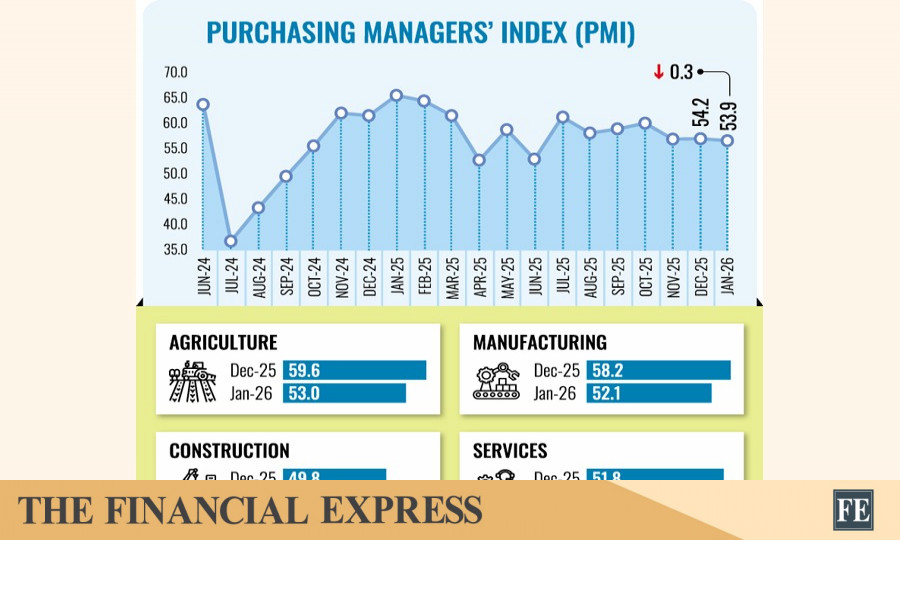
Private sector activity continued to expand in January, albeit at a slower pace, as the Purchasing Managers' Index (PMI) eased to 53.9 from the previous month.

The moderation signals sustained growth momentum, though at a more measured rate amid softer global conditions.

Released on Sunday, the latest PMI reading showed expansion across agriculture, manufacturing and services, while construction returned to growth after contracting in December, underscoring a broadly resilient domestic economy.

Agriculture recorded its fifth consecutive month of expansion, although momentum weakened.

New business and overall activity continued to grow, but employment and input costs declined. Order backlogs in the agricultural sector also remained in contraction, albeit at a slower pace.

The manufacturing stayed in expansion for the 17th straight month, though growth softened compared to December last.

New orders, factory output, imports, input prices and supplier delivery times all increased, even as export receipts remained subdued.

Of concern, new export orders, input purchases, finished goods inventories and employment declined, while order backlogs returned to expansion.

The construction sector moved back into expansion after contracting in the previous month. Growth was recorded in new business, construction activity and input costs, while employment and order backlogs continued to fall.

The services sector, which contributes more than 50 per cent to GDP, marked its 16th consecutive month of expansion, with activity accelerating in January.

New business, overall activity, employment, input costs and order backlogs all posted gains.

"Overall, the latest PMI readings indicate that the economy experienced slower expansion, with weak global supply chain recovery and cautious order placement weighing on manufacturing exports," said Dr M Masrur Reaz, Chairman and Chief Executive Officer of Policy Exchange Bangladesh.

"The agriculture sector also showed signs of slowdown following the late autumn paddy harvests," he added.

However, Dr Reaz noted that continued expansion in the future business index across all key sectors points to sustained optimism in the period ahead, particularly following the elections.​
 
Analyze

Analyze Post

Add your ideas here:
Highlight Cite Respond

Forex reserve crosses $34b after 3 years
Staff Correspondent 10 February, 2026, 00:30

1770687109246.webp


Bangladesh’s gross foreign exchange reserve has crossed $34 billion after more three years amid increased remittance and dollar buying by the central bank.

According to Bangladesh Bank, foreign exchange reserve reached $34.06 billion on February 9.

The figure marked highest after October, 2022 when it was at $35.8 billion.

Foreign exchange reserves, calculated under IMF guidelines, stood at $29.47 billion on February 9.

The central bank has so far bought $4,728 million in the 2025-26 financial year as of February 9.

The dollar buying began on July 13, 2025 with an initial purchase of $202 million and continued in several rounds through early January 2026.

BB officials said that intervention became necessary as the dollar began to weaken due to excess supply in the interbank market.

Since the Bangladesh Bank started buying dollars, the exchange rate has remained largely steady at around Tk 123 a dollar. Before the intervention, the rate had dropped to Tk 119.5 on July 12.

Since March 2025, the pace of taka depreciation has slowed, supported by strong remittance and export receipts.

Against this backdrop, the central bank shifted its focus to rebuilding reserves through sustained dollar purchases.

Meanwhile, remittance inflow and export earnings soared in current months.

Remittance inflows surged by 21.8 per cent to $19.43 billion in the July-January period of FY26.

Bangladesh Bank data showed that during seven months of FY26, remittances increased to the level from that of $15.96 billion in the corresponding period of the previous financial year.

Monthly inflows have remained above $2 billion since August 2024, supported by improved official exchange rates and government incentives.

The BB follows the IMF’s Balance of Payments and International Investment Position Manual, 6th edition (BPM6), for calculating gross and net international reserves.

The interbank exchange rate stabilized at Tk 122 a dollar as BB continued purchasing dollars from the banking sector to halt sharp fall of the green-back rate.

The exchange rate was Tk 86 a dollar in January 2022 and Tk 94.7 in July 2022.​
 
Analyze

Analyze Post

Add your ideas here:
Highlight Cite Respond

Members Online

Latest Posts

Back
 
G
O
 
H
O
M
E