Bangladesh Defense
Saif
Senior Member
- Jan 24, 2024
- 21,077
- 9,688
- Nation

- Residence
- Axis Group

Revitalising manufacturing sector
In a developing economy, employment in the industrial and service sectors typically grows faster than in agriculture. The industrial sector, as the main driver of economic growth, absorbs surplus rural labour and boosts productivity through mechanisation, scale, and technological upgrading. This pr
Revitalising manufacturing sector
Atiqul Kabir Tuhin
Published :
Apr 30, 2026 00:23
Updated :
Apr 30, 2026 00:23
In a developing economy, employment in the industrial and service sectors typically grows faster than in agriculture. The industrial sector, as the main driver of economic growth, absorbs surplus rural labour and boosts productivity through mechanisation, scale, and technological upgrading. This process, widely recognised in Development Economics as structural transformation, has historically powered the transition of economies from low- to middle-income status. However, the opposite pattern is now being observed in the country's labour market. Employment in agriculture has increased significantly in recent years, a trend that economists argue runs counter to the expected trajectory of development.
Concerns over this reversal were highlighted at the recent annual economists' conference organised by the South Asian Network on Economic Modeling (SANEM). According to a research paper presented by Nazmus Sadat Khan, Senior Economist at the World Bank, agricultural employment declined between 2010 and 2017 in line with rising GDP and standard structural transformation patterns. However, between 2017 and 2024, this trend reversed: employment in agriculture increased markedly, while both industrial and service sector employment contracted.
Declining employment in the industrial sector is not good news for a country on the verge of graduating from Least Developed Country (LDC) status. Economists note that Bangladesh is still far from reaching the saturation point of employment generation. As a lower middle-income economy, the share of industrial employment should continue to expand until full middle-income status is achieved. The current slowdown in industrial job creation, therefore, points to deeper structural weaknesses, reflecting waning dynamism and a pattern of jobless growth.
According to the research, around 43 per cent of new employment over the past decade has come from agriculture, forestry and fisheries. One of the key drivers behind this shift appears to be the fallout from the Covid-19 pandemic, which disrupted urban labour markets and forced many workers to return to rural areas after losing their jobs. A significant proportion of these returnees have taken refuge in subsistence agriculture or informal farm-related activities. At the same time, some young people have entered agricultural subsectors such as livestock, poultry, and fisheries-either due to a lack of meaningful employment opportunities or driven by entrepreneurial ambition. However, agriculture appears to be functioning as a fallback option, raising concerns about widespread disguised unemployment.
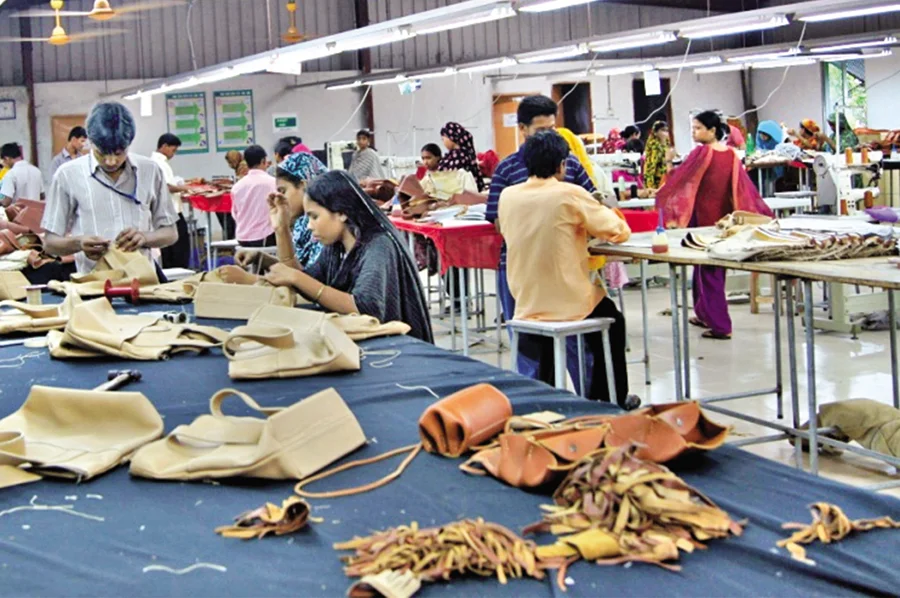
Automation may also be contributing to the weakening job prospects in the industrial sector. As factories adopt advanced machinery, digital production systems, and efficiency-driven technologies to remain competitive, the demand for low-skilled labour is gradually declining. While such technological upgrading enhances productivity, reduces lead times, and improves compliance with international standards, it also limits the sector's capacity to absorb large numbers of unskilled and semi-skilled workers. This suggests that future employment growth in industry will be more skill-intensive, underscoring the need for investment in human capital and technical training.
However, the most significant constraint on industrial job creation is neither the expansion of agriculture nor the advance of automation, but the persistent lack of new investment. Weak private sector investment in industrial production has been the main reason for the slowdown in employment generation. Consequently, industrial growth has been on a gradual decline since 2020-21, falling to just 1.27 per cent in the second quarter of FY2025-26.
The sector has, in fact, been battered by a series of internal and external shocks. From the Covid-19 pandemic and the Russia-Ukraine war to domestic political instability and ongoing tensions in the Middle East, each has disrupted supply chains, increased input costs and eroded investor confidence. During the tenure of the interim government, more than a hundred factories reportedly ceased operations due to labour unrest, politically motivated attacks, and a sharp rise in bank lending rates-all of which have heightened the cost of doing business. Although the restoration of a political government raised hopes for renewed investment, fresh geopolitical tensions and a persistent energy crisis have continued to weigh heavily on the investment climate.
The result is a prolonged period of industrial stagnation, which is not only affecting job creation but also spilling over into the broader economy. GDP growth slipped to 3.03 per cent in the second quarter of the current fiscal year, underscoring how subdued industrial performance is dragging down overall economic momentum.
Many argue that the root of this structural imbalance can be traced back to the early 1990s, when Bangladesh adopted a liberalised market framework and reoriented policies in ways that often favoured the service sector. Over time, this allowed low-entry, low-productivity service activities to expand rapidly, while manufacturing struggled to remain competitive. According to the 2024 economic census by the Bangladesh Bureau of Statistics (BBS), industrial enterprises now account for just 10 per cent of all businesses, down from more than 12 per cent two decades ago. In contrast, service-sector businesses dominate, comprising more than 90 per cent of economic units. The expansion of service sector will continue to drive economic growth, but an economy without a robust manufacturing base risks becoming consumption-driven rather than production- and innovation-driven.
Reversing this trend will require a coherent industrial strategy - one that places manufacturing at the centre of economic transformation. Government policy needs to offer targeted incentives to diversify industrial output beyond the RMG sector. Small and medium enterprises (SMEs) deserve priority as key engines of job creation. Besides, promoting agro-based and agriculture-linked industries can further facilitate the gradual movement of surplus labour into higher-value activities. At the same time, the authorities should focus on attracting foreign direct investment in manufacturing, particularly in sectors with strong potential for technology transfer, value addition and export diversification. Overall, if Bangladesh is to build a resilient, production-oriented economic base, it must realign its industrial and investment policies in favour of manufacturing.
Atiqul Kabir Tuhin
Published :
Apr 30, 2026 00:23
Updated :
Apr 30, 2026 00:23
In a developing economy, employment in the industrial and service sectors typically grows faster than in agriculture. The industrial sector, as the main driver of economic growth, absorbs surplus rural labour and boosts productivity through mechanisation, scale, and technological upgrading. This process, widely recognised in Development Economics as structural transformation, has historically powered the transition of economies from low- to middle-income status. However, the opposite pattern is now being observed in the country's labour market. Employment in agriculture has increased significantly in recent years, a trend that economists argue runs counter to the expected trajectory of development.
Concerns over this reversal were highlighted at the recent annual economists' conference organised by the South Asian Network on Economic Modeling (SANEM). According to a research paper presented by Nazmus Sadat Khan, Senior Economist at the World Bank, agricultural employment declined between 2010 and 2017 in line with rising GDP and standard structural transformation patterns. However, between 2017 and 2024, this trend reversed: employment in agriculture increased markedly, while both industrial and service sector employment contracted.
Declining employment in the industrial sector is not good news for a country on the verge of graduating from Least Developed Country (LDC) status. Economists note that Bangladesh is still far from reaching the saturation point of employment generation. As a lower middle-income economy, the share of industrial employment should continue to expand until full middle-income status is achieved. The current slowdown in industrial job creation, therefore, points to deeper structural weaknesses, reflecting waning dynamism and a pattern of jobless growth.
According to the research, around 43 per cent of new employment over the past decade has come from agriculture, forestry and fisheries. One of the key drivers behind this shift appears to be the fallout from the Covid-19 pandemic, which disrupted urban labour markets and forced many workers to return to rural areas after losing their jobs. A significant proportion of these returnees have taken refuge in subsistence agriculture or informal farm-related activities. At the same time, some young people have entered agricultural subsectors such as livestock, poultry, and fisheries-either due to a lack of meaningful employment opportunities or driven by entrepreneurial ambition. However, agriculture appears to be functioning as a fallback option, raising concerns about widespread disguised unemployment.
Automation may also be contributing to the weakening job prospects in the industrial sector. As factories adopt advanced machinery, digital production systems, and efficiency-driven technologies to remain competitive, the demand for low-skilled labour is gradually declining. While such technological upgrading enhances productivity, reduces lead times, and improves compliance with international standards, it also limits the sector's capacity to absorb large numbers of unskilled and semi-skilled workers. This suggests that future employment growth in industry will be more skill-intensive, underscoring the need for investment in human capital and technical training.
However, the most significant constraint on industrial job creation is neither the expansion of agriculture nor the advance of automation, but the persistent lack of new investment. Weak private sector investment in industrial production has been the main reason for the slowdown in employment generation. Consequently, industrial growth has been on a gradual decline since 2020-21, falling to just 1.27 per cent in the second quarter of FY2025-26.
The sector has, in fact, been battered by a series of internal and external shocks. From the Covid-19 pandemic and the Russia-Ukraine war to domestic political instability and ongoing tensions in the Middle East, each has disrupted supply chains, increased input costs and eroded investor confidence. During the tenure of the interim government, more than a hundred factories reportedly ceased operations due to labour unrest, politically motivated attacks, and a sharp rise in bank lending rates-all of which have heightened the cost of doing business. Although the restoration of a political government raised hopes for renewed investment, fresh geopolitical tensions and a persistent energy crisis have continued to weigh heavily on the investment climate.
The result is a prolonged period of industrial stagnation, which is not only affecting job creation but also spilling over into the broader economy. GDP growth slipped to 3.03 per cent in the second quarter of the current fiscal year, underscoring how subdued industrial performance is dragging down overall economic momentum.
Many argue that the root of this structural imbalance can be traced back to the early 1990s, when Bangladesh adopted a liberalised market framework and reoriented policies in ways that often favoured the service sector. Over time, this allowed low-entry, low-productivity service activities to expand rapidly, while manufacturing struggled to remain competitive. According to the 2024 economic census by the Bangladesh Bureau of Statistics (BBS), industrial enterprises now account for just 10 per cent of all businesses, down from more than 12 per cent two decades ago. In contrast, service-sector businesses dominate, comprising more than 90 per cent of economic units. The expansion of service sector will continue to drive economic growth, but an economy without a robust manufacturing base risks becoming consumption-driven rather than production- and innovation-driven.
Reversing this trend will require a coherent industrial strategy - one that places manufacturing at the centre of economic transformation. Government policy needs to offer targeted incentives to diversify industrial output beyond the RMG sector. Small and medium enterprises (SMEs) deserve priority as key engines of job creation. Besides, promoting agro-based and agriculture-linked industries can further facilitate the gradual movement of surplus labour into higher-value activities. At the same time, the authorities should focus on attracting foreign direct investment in manufacturing, particularly in sectors with strong potential for technology transfer, value addition and export diversification. Overall, if Bangladesh is to build a resilient, production-oriented economic base, it must realign its industrial and investment policies in favour of manufacturing.