Home Watch Videos Wars Movies Login

[🇧🇩] New Government (BNP) in Bangladesh After the Polls

Latest Posts Countries Wars Q&A

[🇧🇩] New Government (BNP) in Bangladesh After the Polls
20
77
More threads by Saif

G Bangladesh Defense

BNP names ministers, state ministers in new cabinet, Khalilur, Ishraque, Shama Obaed included

Staff Correspondent Dhaka
Published: 17 Feb 2026, 15: 51

1771375546128.webp


Khalilur Rahman, Ishraque Hossain and Shama Obaed

The Bangladesh Nationalist Party (BNP) winners of the 13th parliament election have taken oath as members of parliament. The members of the new cabinet will take oath this Tuesday afternoon at the South Plaza of the parliament complex.

Among them, 25 will be full ministers and 24 will be state ministers. A new 50-member cabinet is being formed under the leadership of Tarique Rahman.

Who are becoming full ministers

Mirza Fakhrul Islam Alamgir

Amir Khasru Mahmud Chowdhury

Salahuddin Ahmed

Iqbal Hasan Mahmud (Tuku)

Major (retd.) Hafiz Uddin Ahmed

AZM Zahid Hossain

Khalilur Rahman (technocrat)

Abdul Awal Mintoo

Kazi Shah Mofazzal Houssain Kaikobad

Mizanur Rahman Minu

Nitai Roy Chowdhury

Khandaker Abdul Muktadir

Ariful Haque Choudhury

Zahir Uddin Swapon

Mohammad Amin ur Rashid (technocrat)

Afroza Khanam (Rita)

Shahid Uddin Chowdhury Anee

Asadul Habib Dulu

Md Asaduzzaman

Zakaria Taher

Dipen Dewan

ANM Ehshanul Hoque Milon

Sardar Sakhawat Hossain (Bakul)

Fakir Mahbub Anam (Swapan)

Sheikh Rabiul Alam

Who are becoming state ministers

M Rashiduzzaman Millat

Anindya Islam Amit

Md Shariful Alam

Shama Obaed Islam

Sultan Salahuddin Tuku

Kaiser Kamal

Farhad Hossain Azad

Aminul Haque (technocrat)

Mir Mohammad Helal Uddin

Habibur Rashid

Md Rajib Ahsan

Md Abdul Bari

Mir Shahe Alam

Junaid Saki

Ishraq Hossain

Farzana Sharmin

Sheikh Faridul Islam

Nurul Haque

Yaser Khan Chowdhury

AK Iqbal Hossain

MA Muhit

Ahmed Sohel Manzur

Bobby Hajjaj

Ali Newaz Mahmud Khaiyam​
 
Analyze

Analyze Post

Add your ideas here:
Highlight Cite Respond

Who gets which ministry? Inside BNP’s cabinet line-up

Full structure of ministers and state ministers revealed informally by party; gazette still pending

1771376098963.webp

Photo: BNP/ Facebook page

Although the Cabinet Division typically issues a gazette allocating portfolios shortly after the swearing-in ceremony, no such notification has been published as of 10:00 pm on Tuesday.

However, the Bangladesh Nationalist Party (BNP) has confirmed that ministerial responsibilities had already been informally finalised, outlining the structure of the new cabinet.

According to a post on the party’s verified Facebook page, Secretary General Mirza Fakhrul Islam Alamgir has been assigned the Ministry of Local Government, Rural Development and Cooperatives.

Standing Committee member Amir Khosru Mahmud Chowdhury has been entrusted with the Finance and Planning Ministry.

Salahuddin Ahmed has been given the Ministry of Home Affairs, while Iqbal Hasan Mahmud will oversee Power, Energy and Mineral Resources.

Major (retd) Hafiz Uddin Ahmed will head Liberation War Affairs, and AZM Zahid Hossain has been placed in charge of Women and Children Affairs and Social Welfare.

Technocrat Dr Khalilur Rahman has been assigned Ministry of Foreign Affairs, while Abdul Awal Mintoo will lead Environment, Forest and Climate Change.

Kazi Shah Mofazzal Hossain Kaikobad will oversee Religious Affairs, Mizanur Rahman Minu Land, and Nitai Roy Chowdhury Cultural Affairs.

Khandaker Abdul Muktadir has been given Commerce, Industries, Jute and Textile, while Ariful Haque Chowdhury will handle Labour and Employment alongside Expatriate Welfare and Overseas Employment.

Zahir Uddin Swapon will lead Information and Broadcasting. Technocrat Mohammad Amin Ur Rashid has been assigned Agriculture, Fisheries and Food.

Afroza Khanam Rita will oversee Civil Aviation and Tourism, Shahid Uddin Chowdhury Anee Water Resources, and Asadul Habib Dulu Disaster Management and Relief.

Md Asaduzzaman will lead Law, Justice and Parliamentary Affairs, while Zakaria Taher will oversee Housing and Public Works.

Dipen Dewan has been assigned Chattogram Hill Tracts Affairs, ANM Ehsanul Hoque Milon Education, and Sarder Md Sakhawat Hossain Health and Family Welfare.

Fakir Mahbub Anam will oversee Post and Telecommunications alongside Science and ICT, while Sheikh Rabiul Alam will supervise Road Transport, Railways and Shipping.

State Ministers

A total of 24 state ministers have also been allocated portfolios.

M Rashiduzzaman Millat will serve in Civil Aviation, Anindya Islam Amit in Power and Energy, and Shariful Alam in Commerce, Industries, Textile and Jute.

Shama Obaed Islam has been assigned Foreign Affairs, Sultan Salahuddin Tuku Agriculture, Fisheries and Food, and Barrister Kaiser Kamal Land.

Farhad Hossain Azad will serve in Water Resources, while technocrat Md Aminul Haq has been assigned Youth and Sports.

Mir Mohammad Helal Uddin will oversee Chattogram Hill Tracts Affairs, Md Abdul Bari Public Administration, and Mir Shahe Alam Local Government.

Zonayed Saki has been assigned Finance and Planning, Ishraque Hossain Liberation War Affairs, and Farzana Sharmin Women and Children Affairs and Social Welfare.

Shaikh Faridul Islam will assist in Environment, Religious Affairs and Law, while Nurul Haque Nur will serve in Labour and Expatriate Welfare.

Yasser Khan Chowdhury has been assigned Information, M Iqbal Hossain Disaster Management, and MA Muhith Health, Post and Telecommunications, and Science and ICT.

Ahammad Sohel Manjur will serve in Housing and Public Works, Bobby Hajjaj in Education and Primary and Mass Education, and Ali Newaz Mahmud Khaiyam in Cultural Affairs.

Habibur Rashid Habib will assist in Road Transport and Bridges, Railways and Shipping, while Rajib Ahsan has also been assigned responsibilities in Road Transport and Bridges.

The formal structure of the cabinet is expected to be confirmed once the Cabinet Division issues the official gazette.​
 
Analyze

Analyze Post

Add your ideas here:
Highlight Cite Respond

BNP’s economic test
1771377819535.webp


JOBLESS growth defined much of Bangladesh’s recent past. Output expanded on paper, yet secure employment did not keep pace. That paradox unfolded under an increasingly authoritarian order that, by the end, relied more on coercion than consent. The fall of that regime came at a grave human cost. Hundreds lost their lives in the turmoil that preceded transition. The political rupture was not abstract; it was paid for in blood and public anger. When the dictatorship was finally overthrown, expectations rose quickly. Citizens, particularly the young, anticipated a free and credible election. They wanted representatives who would not merely inherit the state but redirect it.Political party merchandise

The election arrived. Voters delivered a mandate to the alliance led by the Bangladesh Nationalist Party. The result closed one chapter and opened another. Yet winning office and governing effectively are not the same. The new administration confronts economic constraints that are structural, not rhetorical. Inflation remains stubborn. Private investment is subdued. External balances are fragile. This article examines several of those challenges, considers how far they are addressed in the BNP’s manifesto and suggests areas where clarity and policy depth are urgently required.

Restoring sustainable growth is the first test. The manifesto speaks of creating a conducive environment for private investment, removing policy and structural barriers and accelerating inclusive development. These aims are uncontroversial. The difficulty lies in their vagueness. Incentives for investment are promised, yet no detailed framework is set out. Which taxes will be reduced? Which regulatory burdens will be lifted? Which sectors will receive priority? Broad declarations may reassure supporters, but markets respond to specifics.Cultural exchange programs

Structural barriers to trade are another unresolved matter. Bangladesh’s export, import and industrial policies contain layers of restrictions built over decades. Many were introduced for defensible reasons: revenue protection, infant industry support or balance-of-payments management. However, reform requires identifying which provisions now hinder competitiveness. The manifesto does not specify which clauses will be revised or repealed. Nor does it explain how trade liberalisation would be sequenced to avoid fiscal shocks.

The document refers to the pursuit of free trade agreements. Again, the language remains general. It does not clarify whether Bangladesh will seek entry into particular trade blocs or renegotiate existing arrangements. The operation of the South Asian Free Trade Area, especially in relation to India, illustrates the complexity. Persistent trade deficits, long sensitive lists and non-tariff barriers have limited the agreement’s effectiveness. Without confronting these constraints directly, the promise of expanded regional trade risks remaining aspirational.

Tariff rationalisation is conspicuously absent from the manifesto’s priorities. Yet tariff reform is central to export competitiveness and integration into global value chains. Likewise, deregulation is mentioned without identifying concrete statutes to amend. Reducing red tape is a worthy aim. However, without legislative detail, the pledge becomes difficult to measure.

The commitment to establishing a national single window at the Bangladesh Investment Development Authority raises similar concerns. Bangladesh already operates one-stop service mechanisms, albeit imperfectly. The interim administration’s launch of the BanglaBiz digital portal in September 2025 was designed to consolidate such services. Repackaging existing initiatives as fresh commitments risks eroding credibility. Reform should focus on functionality, interoperability and accountability, not branding.

Profit repatriation for foreign investors is another example. Bangladesh already permits 100 per cent repatriation of profits in principle. The constraint has been foreign exchange liquidity, not legal prohibition. Strengthening reserve management and stabilising the currency would address investor anxiety more effectively than reiterating existing entitlements.

Sectoral strategy is also thin. The manifesto offers little detail on fisheries, agro-processing or emerging services. Strategic bilateral arrangements, including selective market access agreements, could diversify exports. Yet such proposals require careful negotiation and environmental safeguards. They cannot be reduced to headline gestures.

More pressing still are inflation and employment. Price pressures erode household purchasing power. Jobless growth undermines social stability. The manifesto promises employment generation and investment promotion but does not set a specific inflation target or outline a coherent anti-inflation strategy. Effective disinflation demands coordination between monetary tightening, prudent fiscal management and supply-side measures to ease bottlenecks. Simply affirming that monetary and fiscal policy will be ‘integrated’ adds little; such coordination is standard macroeconomic practice.

Investor confidence depends heavily on policy continuity. Businesses hesitate when regulatory direction shifts with each political cycle. The manifesto does not commit explicitly to preserving stable tax and regulatory frameworks beyond partisan timelines. That omission matters in an economy where private capital formation is already weak.

Tax justice presents another gap. Corporate income tax rates remain comparatively high and sectoral flat rates can be inequitable. Graduated structures could ease burdens on smaller enterprises while preserving revenue. The manifesto does not address these distributional questions. Nor does it specify a ceiling for corporate taxation that might anchor expectations.

At the same time, expanded social safety net commitments will exert pressure on the national budget. Without new financing instruments, development expenditure may be squeezed. Bangladesh has yet to make significant use of securitisation or inflation-protected government securities comparable to Treasury Inflation-Protected Securities elsewhere. Such instruments could broaden the domestic investor base and provide hedges against inflation. The manifesto is silent on these possibilities. There is also no clear pledge to establish a commodity exchange or derivatives market, both of which could deepen financial infrastructure.

Taken together, the economic programme appears conventional. Its language is reassuring but rarely operational. If governance proceeds strictly within the manifesto’s contours, structural transformation may be limited. Yet a democratically elected administration does offer one advantage: legitimacy. Political stability, if preserved, can improve growth prospects even in the absence of radical reform.

Hope alone, however, cannot substitute for policy precision. The electorate did not mobilise simply to change faces at the top. It sought institutional renewal and economic direction. Whether the BNP will refine its agenda into a coherent, measurable reform strategy remains uncertain. The coming months will reveal whether the promise of democratic transition translates into substantive economic change, or whether jobless growth continues under a different banner.Political party merchandise

Md Kamrul Bari is an adjunct faculty member at UCSI University Bangladesh Branch Campus, United International University and Canadian University of Bangladesh.​
 
Analyze

Analyze Post

Add your ideas here:
Highlight Cite Respond

PM TARIQUE SETS STRONG TONE OF HIS GOVT IN MAIDEN ADDRESS

Govt determined to break all syndicates of misdeeds

Bangladesh to be made safe haven for all with equal rights


FE Desk
Published :
Feb 19, 2026 00:51
Updated :
Feb 19, 2026 00:51

1771460752530.webp


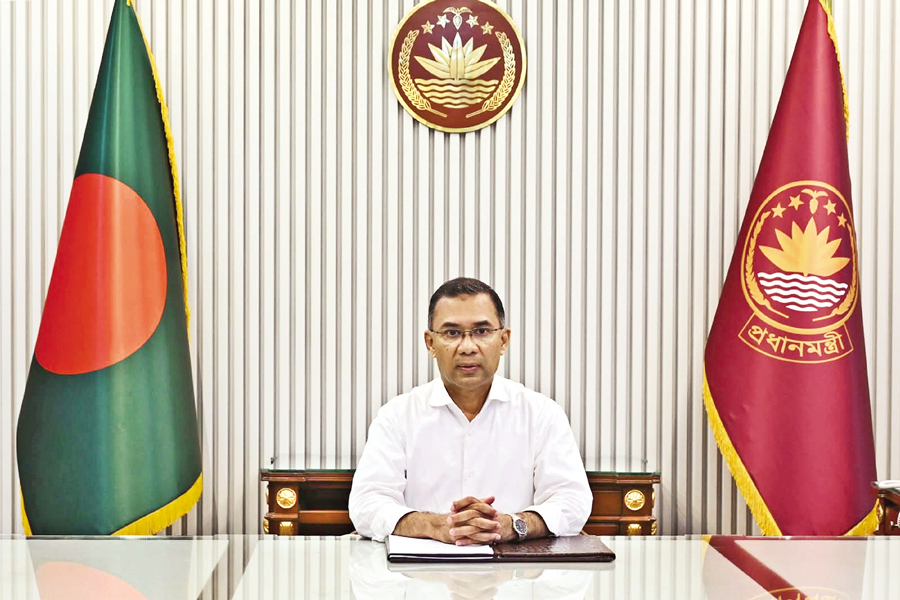
Prime Minister Tarique Rahman delivers his televised address to the nation on Wednesday.— Photo: Collected

Prime Minister Tarique Rahman sets a strong tone of his government in his maiden address on Wednesday night with a vow that all syndicates of irregularities and misdeeds will be dismantled.


"Our government is determined to break all syndicates of irregularities and corruption," he said, after the newly elected government began functioning earlier in the day.

The Bangladesh Nationalist Party (BNP) chairman, who steered his party into state power after return from 18 years in exile, pronounced his pledge that Bangladesh will be made a "safe haven for all with equal rights".

He made a call for businesses not to turn the holy Ramadan into a "month of profiteering" as the government set price control one of its priorities.

The new premier sent in a strong message of crackdown on gambling and abuse of drugs.

UNB adds: Prime Minister Tarique urged traders to exercise restraint in the market as the holy month of Ramadan is set to begin across the country Thursday, warning against profiteering that could increase public suffering.

In his televised address to the nation, the Prime Minister reminded that Ramadan is a month of self-purification and stressed that its true spirit must be reflected in economic behaviour as well.

"If we truly understand the essence of self-purification, there should be no increase in people's suffering during this month," he said.


Observing that a tendency to make excessive profits is often noticed among some businesses during Ramadan, Tarique Rahman called upon traders not to treat the sacred month as an opportunity for higher profit.

He urged businesspeople to remain cautious so that the prices of essential commodities do not go beyond the reach of ordinary citizens.

The Prime Minister said the current government's stance towards traders -- small, medium or large -- is simple and clear: it intends to take necessary steps while protecting the interests of both businesspeople and consumers.


Tarique said the government is ready to listen to any suggestions or complaints from stakeholders regarding measures that could help keep the market situation stable and safeguard the interests of buyers and sellers alike.

"This government belongs to all -- buyers and sellers. This government is yours. You have entrusted it with the responsibility of running the state through your votes. You are the strength of this government."

Referring to the government's political mandate, he said the administration assumed office with a commitment to uphold the rights of the people and dismantle mafia syndicates, following the fall of such a syndicate at the cost of thousands of lives.

The BNP government is determined to break all syndicates involved in irregularities and corruption in every sector, he said, expressing hope that this pledge would be fulfilled.

Extending his greetings to the nation on the occasion of the holy month, the Prime Minister said Ramadan is a time for spiritual reflection, discipline and responsibility.

About the needs of fasting Muslims, he said worshippers expect uninterrupted gas, water and electricity supply during iftar, tarawih and sehri, and mentioned that he has already instructed the relevant authorities to ensure smooth supply during these periods.


Emphasising austerity, the Prime Minister said preventing waste and practising restraint are part of a Muslim's faith. Avoiding unnecessary or excessive use of gas, electricity and water in offices and courts is also an act of worship, he added.

Before calling upon government and private officials and the general public to practise austerity, the Prime Minister said he sought to set an example by encouraging ministers and BNP Members of Parliament to do so first.

The Prime Minister said the newly elected government's top priority is restoring peace and security through stronger law enforcement and anti-corruption measures, pledging that all citizens, regardless of their vote, will enjoy equal rights.

"As the head of government, I would like to draw the attention of the people of the country to one important matter -- whether you voted for the BNP, did not vote for it to allow forming the new government, or did not vote at all, you all have equal rights to this government," he said in a televised address to the nation.

Tarique said the BNP government believes that political views, religious beliefs and ideologies may differ, but the state belongs to all.

As a citizen of Bangladesh, he said, the rights of all Bangladeshis are also equal.


The Prime Minister said the new government has begun its journey amid a fragile economy battered by corruption and misrule during what he described as a period of fascism, along with weak governance structures and a deteriorating law-and-order situation.

"Restoring peace and security in the minds of the people by improving law and order and strictly controlling corruption is the main priority of our government," he said.

Tarique said the government has identified the spread of gambling and drugs across the country as a major reason behind the deterioration of law and order. "So, law enforcement agencies are taking all necessary strict measures to control gambling and drugs. The government is making its highest efforts to ensure peace and security in public life."

He said every constitutional, government and non-government institution in the country will run according to established rules and regulations. "The rule of law -- not party or political influence or coercion -- will be the final word in running the state."

After taking oath as Prime Minister on Tuesday, he first paid tribute to the martyrs at the National Martyrs' Memorial in Savar on Wednesday morning.

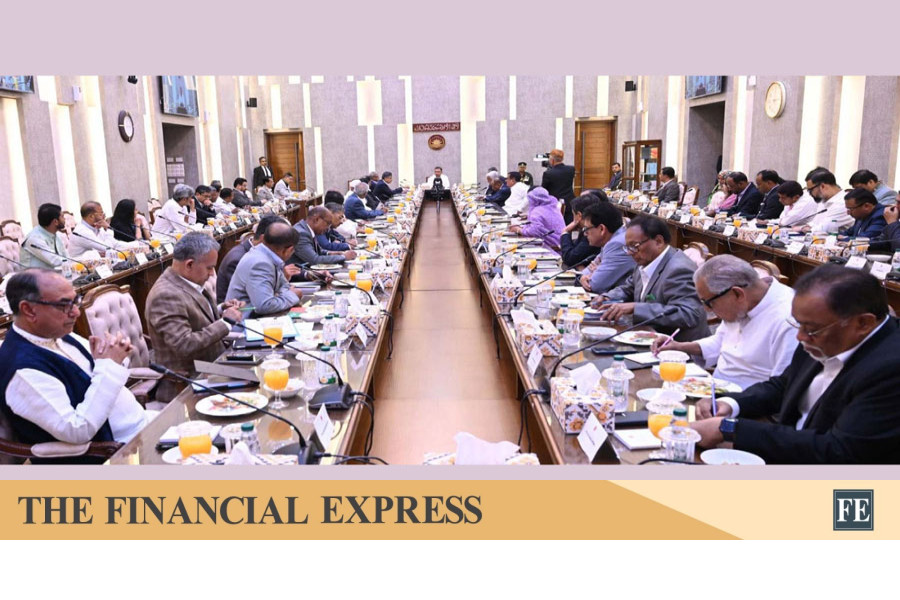
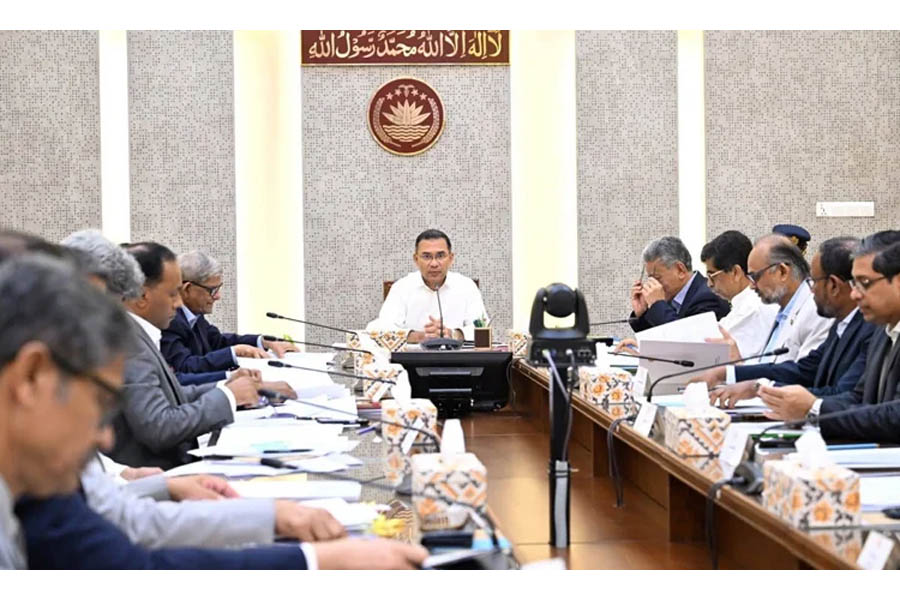
He then visited the graves of former President Ziaur Rahman and former Prime Minister Khaleda Zia at Sher-e-Bangla Nagar, worked at the Secretariat, and chaired a Cabinet meeting in the afternoon and continued work until 7:30pm.


Expressing gratitude to the Almighty Allah, Tarique said the country's independence and sovereignty had been protected through the sacrifice of thousands of martyrs.

He said a new government accountable to the people through their votes has begun its journey in a free Bangladesh, and he extended greetings and sincere congratulations to the nation at the start of what he described as the restoration of democracy and people's rights.

Tarique, also the chairman of BNP, said the opportunity to re-establish people's rights, dignity and respect has come because of democracy-loving citizens.

He said the country belongs to everyone -- Muslims, Hindus, Buddhists, Christians, people of all political views, religions and ethnic identities, whether living in the hills or the plains.

The Prime Minister said the government wants to turn the country into a safe homeland for every citizen and aims to build a self-reliant, secure, humane and democratic Bangladesh.

Extending his greetings to the nation on the occasion of the holy month, the Prime Minister said Ramadan is a time for spiritual reflection, discipline and responsibility.

About the needs of fasting Muslims, he said worshippers expect uninterrupted gas, water and electricity supply during iftar, tarawih and sehri, and mentioned that he has already instructed the relevant authorities to ensure smooth supply during these periods.

Emphasising austerity, the Prime Minister said preventing waste and practising restraint are part of a Muslim's faith. Avoiding unnecessary or excessive use of gas, electricity and water in offices and courts is also an act of worship, he added.

At the first meeting of the BNP parliamentary party, he said, it was decided that no BNP MP will import tax-free cars or take plot allocations using government privileges.

Tarique said he earlier promised that if given the opportunity to govern, the BNP would follow the ideals of justice exemplified by the Prophet, adding that these parliamentary decisions reflect that principle.

He said traffic congestion in divisional cities, especially the capital Dhaka, is almost uncontrollable, causing immense public suffering in daily life.

The Prime Minister stressed that without reducing public hardship in various sectors, people will not feel relief.

To reduce population pressure in the capital, alternative arrangements are urgently needed, he said, adding that initiatives have been taken to overhaul the nationwide railway system so people can live in their own districts while commuting easily for work and business.

"As part of this plan, the activities of the ministries of railways, shipping, roads and bridges are being reorganised and coordinated. We believe that making the railway communication system across the country easy, affordable and safe will not only reduce people's dependence on city-centred living, but also improve the environment," Tarique said.

He said although the country faces many problems, it also has great potential. "If the large population can be transformed into skilled human resources, it will become a national asset."

The Prime Minister observed the world has entered the era of artificial intelligence through rapid technological progress, and said people must become skilled in at least one field to survive with dignity and prosperity in this competitive world.​
 
Analyze

Analyze Post

Add your ideas here:
Highlight Cite Respond

A new journey on course of democracy

FE
Published :
Feb 19, 2026 01:04
Updated :
Feb 19, 2026 01:04

1771461472673.webp


Bangladesh has got a new government elected by the people in a largely clean and credible election. The Financial Express congratulates the new Prime Minister and the members of his Cabinet. That the people are pinning much hope on the Bangladesh Nationalist Party (BNP) is evident from the fact that it has got absolute majority in the February 12 polls. What, however, the electorates want now is a paradigm shift in governance, which has been dismally poor for decades. On a few occasions in the past, the people were on the cusp of momentous transition only to be disappointed later on. But the dream did not die, it is reignited once again with the political parties agreeing on constitutional reforms in order to pave the way for democracy to cement a strong footing. This is exactly why the referendum on the much-needed reforms was held alongside the parliamentary election. The emphasis is on devolution of power from its existing concentration in the hands of the country's prime minister. Here the objective is to balance power instead of allowing the premier to call the shot alone.

The swearing-in ceremony held at the south plaza of the Jatiya Sangsad on Tuesday last was marked by disagreement over the oath-taking by the people's representatives. When it came to the issue of swearing-in as members of the reform council alongside that of members of parliament (MPs), the ruling party refused to take oath. Its stance is clear: there is no provision under the existing constitution for MPs-elect to take such an oath. Before taking such an oath, this provision has to be incorporated into the constitution. But the opposition Jamaat-e-Islami, the National Citizen Party (NCP) reacted strongly because the July National Charter (Constitution Reform) Implementation Order, 2025, according to them, made it clear it was incumbent on the elected candidates to take an oath as reform council members. The swearing-in ceremony was about to be marred with Jamaat and NCP initially declining to take the oath. However, they took both the oaths ultimately but a big question on the fate of the reform council hangs.

The nation, however, will hope that the contradiction would be resolved as early as possible even if it requires prior amendment to the constitutional provision in question. Preferably it would be done in the first parliamentary session. After all, there is a deadline for completion of the reform to the agreed 48 proposals within 180 working days. All the parties that contested the national polls are signatories to the July national charter and agreed to the 48 reform proposals.

Under the new Prime Minister Tarique Rahman, the ruling party stands at the threshold of a national resurgence. As he has often spoken about inclusive and transparent governance, the democratic history in the making can happen courtesy of his action matching his words. This will need respecting the July charter for constitutional reform. The cabinet he has chosen is a mix of seasoned politicians and new entrants. All members of the cabinet have daunting challenges before them but none more so than the finance and planning minister. There is also a very tough job at hand of the home minister. Amir Khasru Mahmud is a veteran politician and Salahuddin Ahmed is a man of cool head. Hopefully, they will be able to deliver what they are expected of. It is a tough time because of the global turmoil triggered by the US president's various unpredictable moves. So, bringing discipline in the area of law and order is a priority. Forging relations with big powers is also important. Infusing order in internal affairs will be a key to counterbalancing contradictory international relations. Last but not the least taming the soaring inflation will also be a major challenge for the new government.​
 
Analyze

Analyze Post

Add your ideas here:
Highlight Cite Respond

Members Online

Back
 
G
O
 
H
O
M
E