Bangladesh Defense
Saif
Senior Member
- Messages
- 21,724
- Likes
- 9,794
- Nation

- Residence
- Axis Group

PM off to New York to attend 81st UNGA session
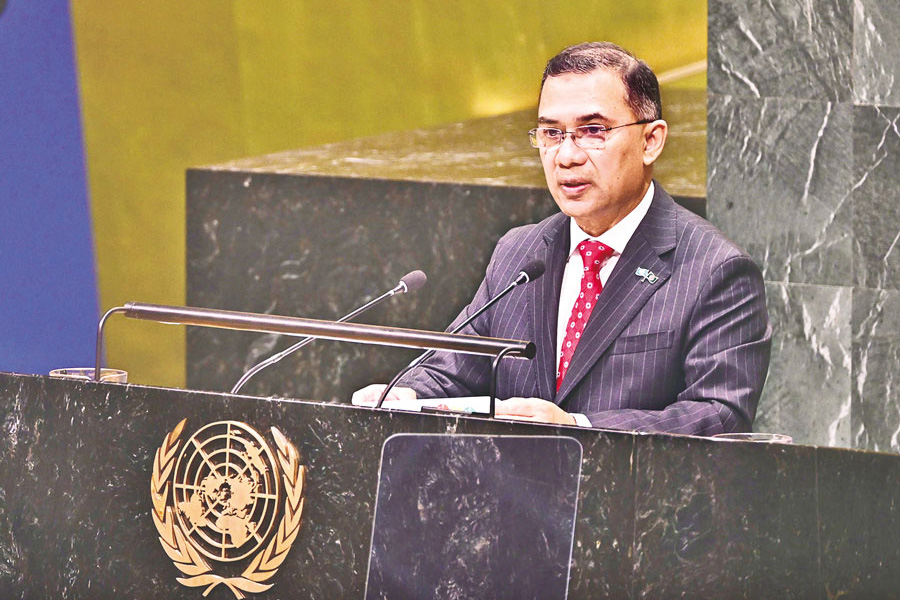
Prime Minister Tarique Rahman Dhaka for New York early this morning (Monday) to attend the 81st session of the United Nations General Assembly (UNGA). “A Turkish Airlines flight carrying the Prime Minister, his wife Dr Zubaida Rahman and other entourage members departed Hazrat Shahjalal Inte
PM off to New York to attend 81st UNGA session
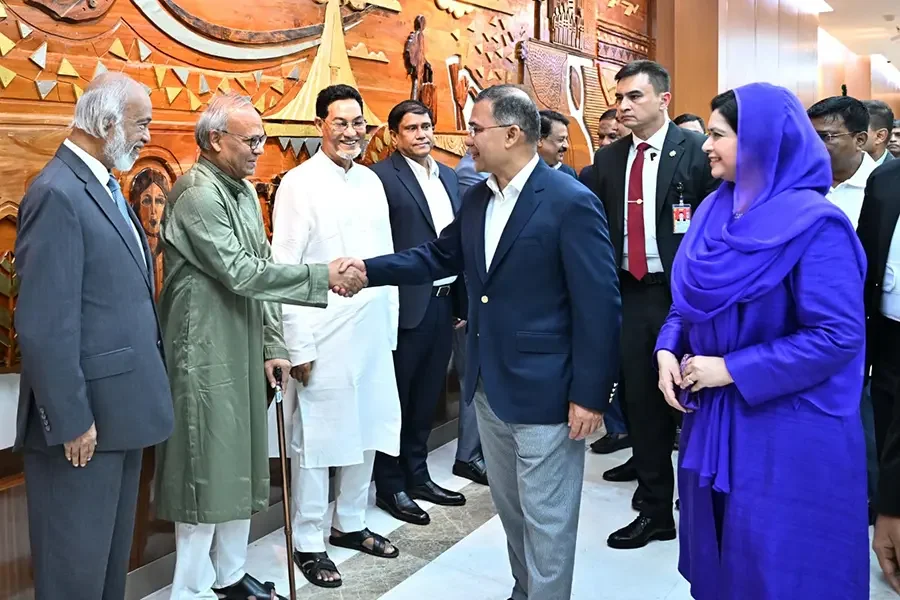
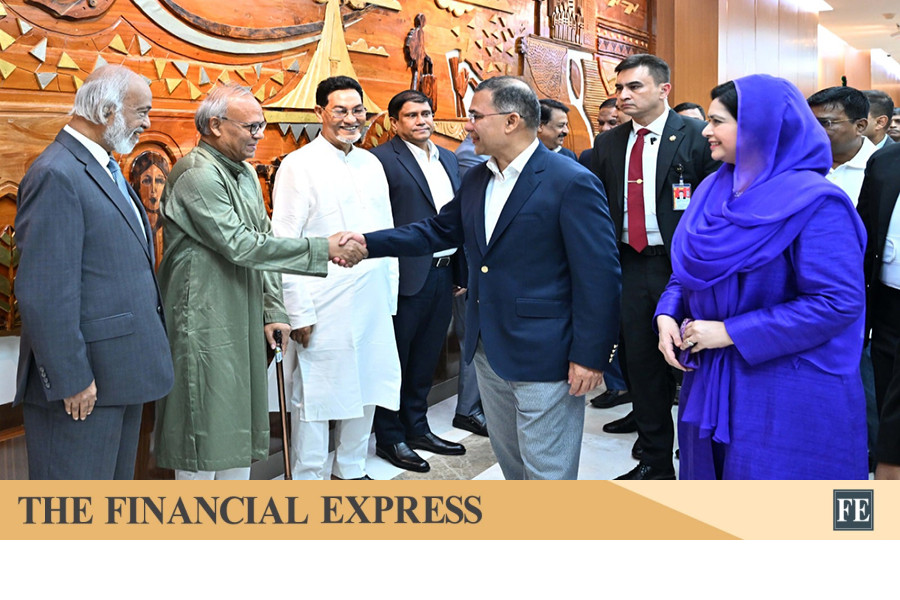
Prime Minister Tarique Rahman leaves Dhaka for New York early Monday to attend the 81st session of the United Nations General Assembly. Photo: PMO
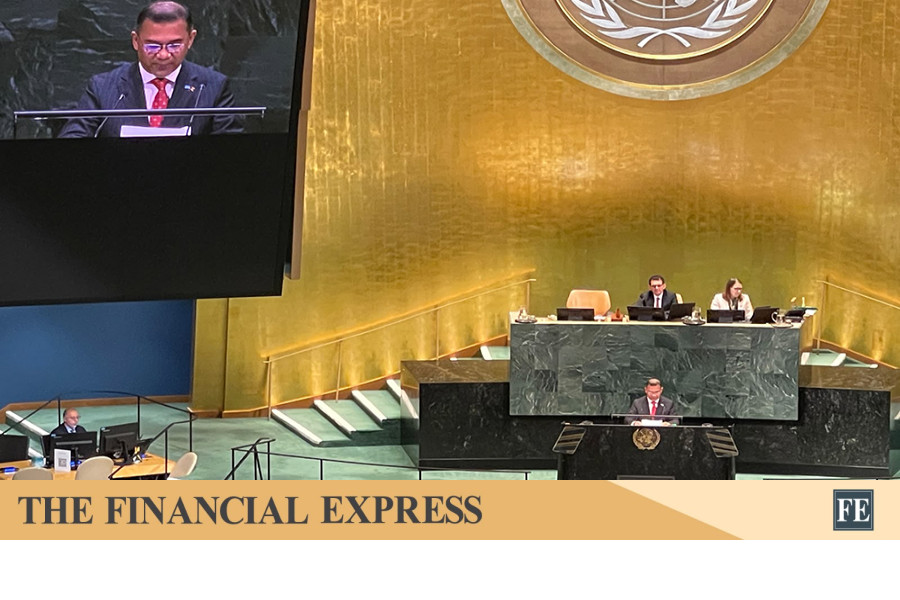
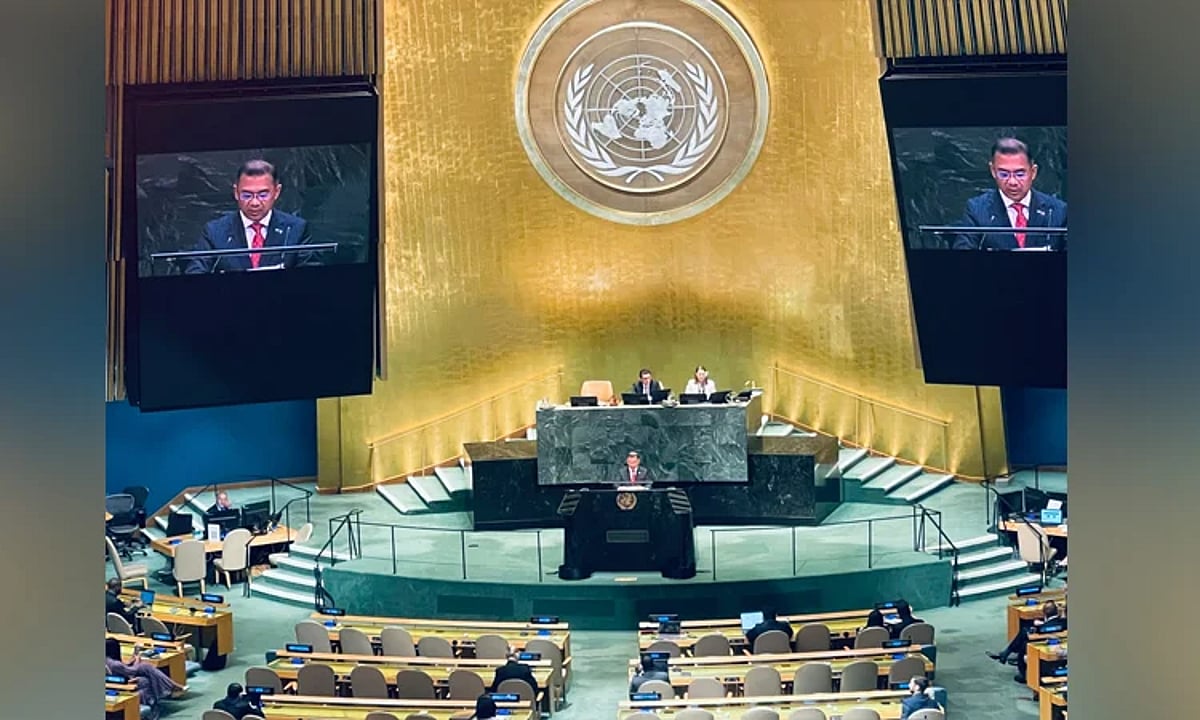
Prime Minister Tarique Rahman Dhaka for New York early this morning (Monday) to attend the 81st session of the United Nations General Assembly (UNGA).
“A Turkish Airlines flight carrying the Prime Minister, his wife Dr Zubaida Rahman and other entourage members departed Hazrat Shahjalal International Airport at 6:05am,” Prime Minister’s Press Secretary AAM Saleh Shibly told BSS.
Meanwhile, Additional Press Secretary Atikur Rahman Ruman said, “The Prime Minister is scheduled to address the UNGA session on September 24 as he is leading a 26-member delegation to New York .”
LGRD and Cooperatives Minister Dr Abdul Moyeen Khan, BNP Acting Secretary General Advocate Ruhul Kabir Rizvi, Chief Whip Nurul Islam Moni, Cabinet Secretary Nasimul Gani and PM's principal secretary ABM Abdus Sattar were present at the Airport to see the Prime Minister off.
After a flight of about eight hours and 45 minutes, the airline's carrier is scheduled to arrive at Istanbul Airport at 11:35am (Turkey time), en route to New Work.
The flight is scheduled to leave for New York at 2:10pm (Turkey Time) and arrive at John F Kennedy (JFK) International Airport at 5:55pm (New York Time) after a two-hour-and-35-minute stopover in Istanbul.
The Prime Minister will be received by Permanent Representative of Bangladesh to the United Nations in New York Irene Zubaida Khan and Bangladesh Ambassador to the United States Tareq Md Ariful Islam at the airport.
A motorcade will then escort him to the Hyatt Grand Central New York, where he will be staying during his visit.
Earlier, Foreign Secretary Asad Alam Siam at a Dhaka press conference, said the Prime Minister will attend a welcome breakfast hosted by UN Secretary-General António Guterres for heads of state and government on September 22.
He will subsequently join other world leaders at the opening of the session and attend a reception hosted by the US President in honour of heads of state and government and their spouses in the evening.
On September 23, the premier will exchange views with representatives of international charitable and humanitarian organisations at a breakfast meeting.
Later, he will address a meeting on tackling the global inequality crisis, jointly organised by Brazil, South Africa, Norway and Spain.
He will also attend a high-level meeting titled "Climate Action and the Just Transition," convened at the initiative of the UN Secretary-General.
On the same day at a side event on the Rohingya crisis, he will seek effective international cooperation to ensure the earliest possible repatriation of the forcibly displaced Rohingyas to Myanmar.
Foreign Secretary Asad Alam Siam said at the climate-related meetings, the Prime Minister will articulate Bangladesh's position as a climate-vulnerable country, with particular emphasis on climate finance, adaptation, technology transfer, loss and damage, and climate justice.
On September 24, the premier will deliver the opening remarks at a high-level meeting on the existential threats posed by sea-level rise. He will also attend two important side events hosted by Bangladesh.
He will address another side event on maternal and newborn health and midwifery as the chief guest on the same day.
Tarique Rahman will highlight the new government's initiatives and future plans for protecting maternal and child health and stress the importance of skilled and professionally trained midwifery services.
On the sidelines of the UNGA, the premier is scheduled to hold bilateral meetings with the Crown Prince of Kuwait and the prime ministers of Croatia, Bhutan, Thailand, Pakistan and Haiti.
The talks are expected to cover political and economic relations, trade and investment, development cooperation, the Rohingya crisis and other issues of mutual interest.
The Prime Minister is also scheduled to meet the UN Secretary-General, the President of the European Council, the President of the World Bank Group, the UN Secretary-General's Special Envoy on Myanmar, and the UN high commissioners for refugees and human rights.
He is also expected to meet the President of the International Peace Institute.
As part of the government's economic diplomacy, the premier will hold meetings with senior representatives of Meta, Wall Street and several other business organisations.
The Prime Minister is scheduled to leave New York for Dhaka from JFK international airport at 11:00pm (New York time) by Emirates flight EK202 on September 25.
Prime Minister Tarique Rahman leaves Dhaka for New York early Monday to attend the 81st session of the United Nations General Assembly. Photo: PMO
Prime Minister Tarique Rahman Dhaka for New York early this morning (Monday) to attend the 81st session of the United Nations General Assembly (UNGA).
“A Turkish Airlines flight carrying the Prime Minister, his wife Dr Zubaida Rahman and other entourage members departed Hazrat Shahjalal International Airport at 6:05am,” Prime Minister’s Press Secretary AAM Saleh Shibly told BSS.
Meanwhile, Additional Press Secretary Atikur Rahman Ruman said, “The Prime Minister is scheduled to address the UNGA session on September 24 as he is leading a 26-member delegation to New York .”
LGRD and Cooperatives Minister Dr Abdul Moyeen Khan, BNP Acting Secretary General Advocate Ruhul Kabir Rizvi, Chief Whip Nurul Islam Moni, Cabinet Secretary Nasimul Gani and PM's principal secretary ABM Abdus Sattar were present at the Airport to see the Prime Minister off.
After a flight of about eight hours and 45 minutes, the airline's carrier is scheduled to arrive at Istanbul Airport at 11:35am (Turkey time), en route to New Work.
The flight is scheduled to leave for New York at 2:10pm (Turkey Time) and arrive at John F Kennedy (JFK) International Airport at 5:55pm (New York Time) after a two-hour-and-35-minute stopover in Istanbul.
The Prime Minister will be received by Permanent Representative of Bangladesh to the United Nations in New York Irene Zubaida Khan and Bangladesh Ambassador to the United States Tareq Md Ariful Islam at the airport.
A motorcade will then escort him to the Hyatt Grand Central New York, where he will be staying during his visit.
Earlier, Foreign Secretary Asad Alam Siam at a Dhaka press conference, said the Prime Minister will attend a welcome breakfast hosted by UN Secretary-General António Guterres for heads of state and government on September 22.
He will subsequently join other world leaders at the opening of the session and attend a reception hosted by the US President in honour of heads of state and government and their spouses in the evening.
On September 23, the premier will exchange views with representatives of international charitable and humanitarian organisations at a breakfast meeting.
Later, he will address a meeting on tackling the global inequality crisis, jointly organised by Brazil, South Africa, Norway and Spain.
He will also attend a high-level meeting titled "Climate Action and the Just Transition," convened at the initiative of the UN Secretary-General.
On the same day at a side event on the Rohingya crisis, he will seek effective international cooperation to ensure the earliest possible repatriation of the forcibly displaced Rohingyas to Myanmar.
Foreign Secretary Asad Alam Siam said at the climate-related meetings, the Prime Minister will articulate Bangladesh's position as a climate-vulnerable country, with particular emphasis on climate finance, adaptation, technology transfer, loss and damage, and climate justice.
On September 24, the premier will deliver the opening remarks at a high-level meeting on the existential threats posed by sea-level rise. He will also attend two important side events hosted by Bangladesh.
He will address another side event on maternal and newborn health and midwifery as the chief guest on the same day.
Tarique Rahman will highlight the new government's initiatives and future plans for protecting maternal and child health and stress the importance of skilled and professionally trained midwifery services.
On the sidelines of the UNGA, the premier is scheduled to hold bilateral meetings with the Crown Prince of Kuwait and the prime ministers of Croatia, Bhutan, Thailand, Pakistan and Haiti.
The talks are expected to cover political and economic relations, trade and investment, development cooperation, the Rohingya crisis and other issues of mutual interest.
The Prime Minister is also scheduled to meet the UN Secretary-General, the President of the European Council, the President of the World Bank Group, the UN Secretary-General's Special Envoy on Myanmar, and the UN high commissioners for refugees and human rights.
He is also expected to meet the President of the International Peace Institute.
As part of the government's economic diplomacy, the premier will hold meetings with senior representatives of Meta, Wall Street and several other business organisations.
The Prime Minister is scheduled to leave New York for Dhaka from JFK international airport at 11:00pm (New York time) by Emirates flight EK202 on September 25.