New Tweets

[πŸ‡§πŸ‡©] New Government (BNP) in Bangladesh

G Bangladesh Defense
[πŸ‡§πŸ‡©] New Government (BNP) in Bangladesh
39
547
More threads by Saif


Democracy gets its House back

FE
Published :
Mar 14, 2026 23:37
Updated :
Mar 14, 2026 23:37

1773533475699.webp


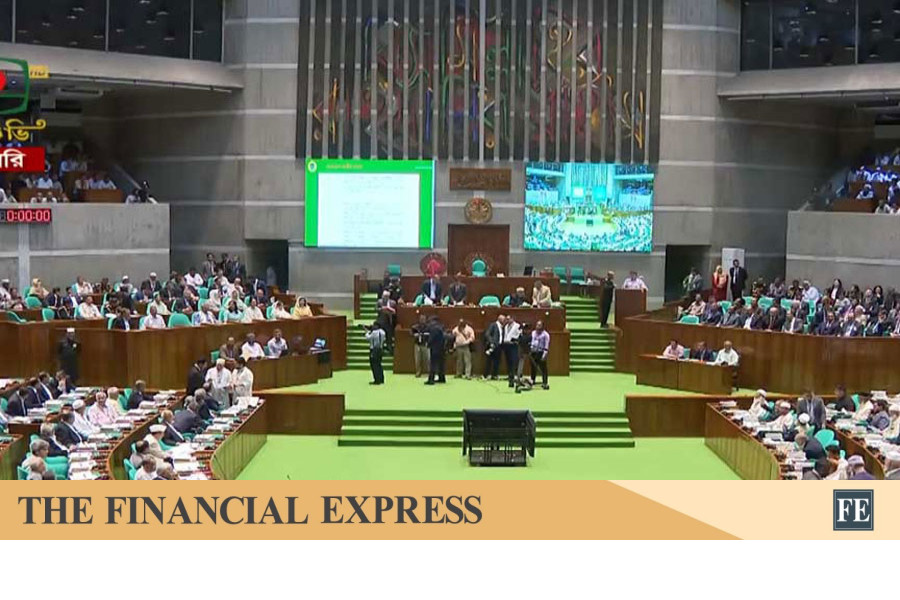
The maiden sitting of the 13th parliament was convened on Thursday after a long and difficult political journey. After fifteen years of authoritarian misrule that reduced successive parliaments to little more than rubber stamps, the country has now returned to a genuinely representative legislature. A transitional period of nearly two years under an interim government followed, serving as necessary, though often trying, passage between a discredited past and the promise of a democratic future. The election that produced the present House was widely expected to return representative politics to its rightful place at the centre of national life. Its first day proceeded through the customary steps that accompany the birth of a new legislature. A new Speaker and Deputy Speaker were elected and sworn in, and the formalities of an inaugural sitting were duly carried out. The chamber now includes an unusually large number of new lawmakers, many entering parliament for the first time. That reality will demand an adjustment period, but it also opens a window to restore the culture of debate and scrutiny that had long withered.

Yet this historic occasion was not without its contradictions and tensions. The opposition Jamaat-e-Islami and its allied parties staged a dramatic walkout during the presidential address chanting slogans, creating a moment of confrontation on what was otherwise a ceremonial day. Their objection was directed at President Mohammed Shahabuddin, whom they branded a collaborator of the deposed regime and labelled a traitor to the July uprising. The difficulty with this position is that the Speaker and Deputy Speaker of the very parliament in which these lawmakers sit both took their oaths of office administered by the same president, as did the Prime Minister himself and the entire cabinet. Home Minister Salahuddin Ahmed put the question plainly when he noted that opposition leaders had themselves engaged with the president on 5th and 6th August during the most critical hours of the political transition and that it was under his authority that the interim arrangement was constituted after all. To participate in a parliament whose entire constitutional architecture rests on oaths administered by the president while simultaneously declaring that president is unfit to address that parliament is not principled protest but rather a selective recognition of legitimacy, which is to say, no coherent principle at all.

Encouragement can nevertheless be drawn from the tone set by the prime minister in his opening remarks. He expressed a clear desire to see parliament function as the centrepiece of national discourse where all arguments and national problems would find resolution. That aspiration resonates deeply with the Bangladeshi public, which has borne the cost of its absence in full. What the country needs from this parliament, and what the Prime Minister's speech implicitly promised, is a legislature that debates with vigour, legislates with care and holds the executive to account with genuine independence.

This chamber inherits 133 ordinances from the interim period requiring parliamentary scrutiny and also carries the burden of institutional reform that demand serious law-making rather than political theatre. The ruling party's two-thirds majority is a democratic mandate of considerable weight but also a temptation toward unilateralism that must be consciously and consistently resisted. The opposition, for its part, must recognise that its role is not to delegitimise the chamber from within but to make it uncomfortable for power to be abused through argument and engagement. After all, Bangladesh has paid too high a price to see its hard-won parliamentary democracy reduced to contradiction and spectacle when so much serious law-making, deliberation and democratic work still lies ahead.​
 
Analyze

Analyze Post

Add your ideas here:
Highlight Cite Respond

Implementing BNP's Poll Manifesto: PMO asks ministries, divisions to make detailed plans

FE REPORT
Published :
Mar 14, 2026 13:11
Updated :
Mar 14, 2026 13:11

1773708082571.webp


The Prime Minister's Office (PMO) has asked all ministries and divisions to prepare detailed implementation plans in line with the election manifesto of the Bangladesh Nationalist Party (BNP)-led government following its victory in the 13th parliamentary election, sources say.

The directive specifically asked ministries to prepare implementation strategies for three different timelines, including the first 180 days of the government, the ongoing 2026-27 fiscal year, and a broader five-year action plan.

To ensure swift execution, ministries have been directed to identify the manifesto pledges relevant to their respective jurisdictions and prepare a comprehensive list along with an annual implementation roadmap.

In an official directive issued from the PMO, ministries have been instructed to formulate short-, medium-, and long-term action plans to implement the pledges made in the party's electoral manifesto.

According to the document, the 13th Jatiya Sangsad election held on February 12, 2026, resulted in a decisive victory for the BNP-led alliance, which subsequently formed the government. The manifesto commitments made before the election are now considered national commitments and must be implemented as part of the government's policy agenda.

Officials have also been asked to determine which commitments can be implemented within the government's first 180 days and which initiatives will require longer-term policy and budgetary support.

For the 2026-27 fiscal year, ministries must separately outline programmes that can be implemented within the first 60 days and the remaining 120 days of the fiscal period.

In addition, ministries have been instructed to ensure that necessary allocations are incorporated into the national budget to support the implementation of manifesto pledges over the next five years. Where necessary, new development projects may be proposed, while ongoing projects and programmes may also be restructured to align with the government's policy priorities. The PMO has asked ministries and divisions to review the manifesto in detail and submit their proposed action plans and implementation frameworks to the authorities concerned within three days.​
 
Analyze

Analyze Post

Add your ideas here:
Highlight Cite Respond

Govt must move forward with two-pronged strategy

Fahmida Khatun
Published: 18 Mar 2026, 17: 31

1773881394497.webp


Fahmida Khatun Prothom Alo

In its election manifesto, the BNP presented a range of proposals and plans on the economy and economic reforms. These included specific targets for GDP (gross domestic product) growth, the tax-to-GDP ratio, increased investment, social safety net programmes, a family card scheme, loan waivers for farmers, and investment in small and medium enterprises.

Soon after assuming power, the BNP government took initiatives to implement these plans and began work swiftly. Notably, one of its key promised programmesβ€”the β€œfamily card”—has already begun to be distributed. This suggests that the government had prior preparation in this regard.

It must be remembered that in programmes like the family card, there should be no corruption or nepotism in selecting beneficiaries. These initiatives will require substantial funding, and it remains unclear where that will come from. If the government finances such programmes through bank borrowing, it could fuel inflation and crowd out private sector credit.

Strong reform measures in the economic sector are not yet visible. There can be no delay in this regard. In particular, an immediate decision is needed on reforming the National Board of Revenue (NBR).

The global situation has newly emerged as a major challenge for the government. In particular, instability in the international oil market due to conflict in the Middle East has forced Bangladesh to import fuel at higher prices, creating additional pressure on the economy.

On the one hand, the government is trying to control inflation; on the other, higher fuel import costs are increasing public expenditure and putting pressure on foreign exchange reserves. Bangladesh’s reserves are not at a level where such additional costs can be absorbed smoothly. Therefore, energy conservation, limited use, and expenditure control have become crucial. Reducing energy consumption would lower import costs and ease fiscal pressure.

The government has also taken another important step: delaying Bangladesh’s graduation from the Least Developed Country (LDC) category. It has formally applied to the United Nations in this regard. Experts have long argued that the country was not sufficiently prepared for LDC graduation. The current government has taken a relatively swift decision to move this process forward, which is a notable step.

Overall, the government has taken office at a time when the economy was already under pressure. On top of that, global geopolitical instability has made the situation more complex. In this context, the government must both implement its electoral commitments and manage newly emerging economic challenges.

In my view, the government needs to proceed with a two-pronged strategyβ€”maintaining β€œfire-fighting” measures to address immediate crises, while also implementing medium- and long-term economic reforms, policy planning, and sustainable development strategies.

*Fahmida Khatun is Executive Director at the Centre for Policy Dialogue (CPD)​
 
Analyze

Analyze Post

Add your ideas here:
Highlight Cite Respond

Fakhrul calls first month of Tarique Rahman’s govt a 'big success'

Highlights economic challenges, impact of US-Israel's war on Iran; defends VC appointments

1773881740006.webp

Photo: BNP Media Cell

BNP Secretary General Mirza Fakhrul Islam Alamgir has praised the government’s performance under Prime Minister Tarique Rahman, calling its first month a β€œbig success.”

"We have launched our family card pilot project, then waived Tk 10,000 agricultural loans with interest for farmers, started canal excavation programmes across the country, and started giving monthly honorarium to imams, muazzins, khadems, and other leaders of religious institutions. From Pohela Boishakh, farmer cards will be given,” he said.

Speaking to reporters on Wednesday at the BNP chairperson’s office in Dhaka’s Gulshan, he said the party’s national council is expected to be held β€œwithin this year, soon,” though no specific date has been fixed.

Fakhrul, also local government and rural development minister, acknowledged challenges posed by the Iran war, which has affected oil prices, but said the government has managed the situation without major disruption. β€œParliament has started working. In parliament, 133 ordinances have been placed, and different committees have been formed,” he said.

Fakhrul identified fixing the economy as a major challenge, noting that small business loans have begun to flow.

Citing Bangladesh's population as an asset, he asserted that the economy will keep growing once people's purchasing power increases.

He also defended recent vice-chancellor appointments, saying political governments naturally appoint according to their political view.

"The vice-chancellor appointed at Dhaka University -- if you look at his academic career, he has first-class results throughout. He is qualified and has done a PhD from a good university,” Fakhrul said, explaining the rationale behind the new appointments.

On constitutional reform, he reaffirmed the government's commitment to the July Charter but stressed that discussions must take place in parliament. He described debates, walkouts and tension as β€œthe beauty of parliament.”

β€œBut if threats from the street continue before parliamentary discussion, then the purpose for which we formed parliament will not be properly served," he cautioned.

Fakhrul also highlighted improvements in law and order, saying mob culture is β€œalmost absent” and pledging zero tolerance for corruption.

He confirmed that local government elections will be held this year and emphasised rebuilding institutions damaged under the previous government.

Responding to a question regarding Awami League, the LGRD minister said, β€œIf you look at things from a narrow point of view and stop politics and block democracy, then it will become deformed."

Fakhrul insisted that there hasn't been any obstacle regarding media freedom so far. β€œOur information minister says every day that everything is open, we welcome everything, and no pressure will be created on anyone. If you look neutrally, when BNP has been in power, the media has enjoyed the most freedom.”​
 
Analyze

Analyze Post

Add your ideas here:
Highlight Cite Respond

PM Tarique Rahman chooses Gulshan home over Jamuna

Additional press secretary says prime minister is more comfortable at his private residence; state functions and Eid greetings to be held at Jamuna

1773968129174.webp

Gulshan residence (left) and State Guest House Jamuna. File photo

Prime Minister Tarique Rahman will continue to stay at his private residence in Dhaka’s Gulshan instead of moving to the official residence Jamuna.

β€œPrime Minister Tarique Rahman will stay at his own residence in Gulshan. He is not moving into Jamuna,” PM’s Additional Press Secretary Atikur Rahman Rumon said.

He said the prime minister is more comfortable living in his Gulshan residence, which is smaller than Jamuna.

β€œAfter returning to the country, he moved into this house, and it has been arranged accordingly,” he added.

The previous prime minister's residence at Sher-e-Bangla Nagar was damaged during the mass uprising on August 5, 2024, and was later turned into a museum by the interim government.

During that period, Chief Adviser Professor Muhammad Yunus used the State Guest House Jamuna as his official residence.

After Tarique Rahman took oath as prime minister, the Ministry of Housing and Public Works prepared Jamuna as the official residence for the prime minister.

Rumon said state functions of the prime minister will be held at Jamuna.

β€œTwo Iftar programmes hosted by the prime minister for diplomats and religious leaders have already been held there,” he said.

He said the prime minister will exchange Eid greetings with diplomats, distinguished citizens and people from all walks of life at 10:00am on Eid day at Jamuna.​
 
Analyze

Analyze Post

Add your ideas here:
Highlight Cite Respond

PM calls for collective efforts to build desired Bangladesh

BSS
Dhaka
Published: 21 Mar 2026, 17: 02

1774139293849.webp


Prime Minister Tarique Rahman is speaking to reporters after exchanging Eid greetings with people from all walks of life at the State Guest House Jamuna. BSS

Prime Minister Tarique Rahman on Saturday called for collective efforts, irrespective of party affiliation and opinion to build a Bangladesh that meets people’s expectations.

Speaking to reporters after exchanging Eid greetings with people from all walks of life at the State Guest House Jamuna, he said: β€œWe pray to Allah this Eid that we can build the Bangladesh people aspire to.”

In his address, the Prime Minister, who is also the chairman of the ruling BNP, expressed gratitude to the Almighty Allah for being able to celebrate Eid in the country after many years.

He expressed hope that the people be able to celebrate future Eids in a more peaceful and uninterrupted environment.

Highlighting the government’s commitment to nation-building, he said, β€œThe government will continue its efforts to build the Bangladesh that people aspire to see,” and sought cooperation from all sections of society in this regard.

Putting emphasis on the public support, he said the elected government would be able to move forward with full strength if it receives continued cooperation from the people.

Urging unity, the Prime Minister called upon all to move forward together, setting aside political differences.

On the occasion, he paid deep tribute to the martyrs of the 1971 Liberation War and the 2024 student-people movement.

He wished peace, happiness and prosperity for the people and extended Eid greetings to all.

Earlier, the Prime Minister exchanged greetings with diplomats. He later greeted cabinet members, members of parliament, distinguished citizens, academicians, ulema and mashaikh, artists, writers, senior civil servants, civil society members and people from various strata of society.​
 
Analyze

Analyze Post

Add your ideas here:
Highlight Cite Respond

Govt committed to strengthening democracy: Information minister

UNB
Published :
Mar 24, 2026 22:55
Updated :
Mar 24, 2026 22:55

1774397505564.webp


Information and Broadcasting Minister Zahir Uddin Swapon on Tuesday reaffirmed the government’s commitment to strengthening democratic integrity, stating that the journey toward free and fair elections will continue through the constitutional reinstatement of a non-party, neutral caretaker government system.

Emphasising accountability, he noted that further critical evaluations of the three controversial elections held during the tenure of the Awami League will be undertaken in the interest of democracy.

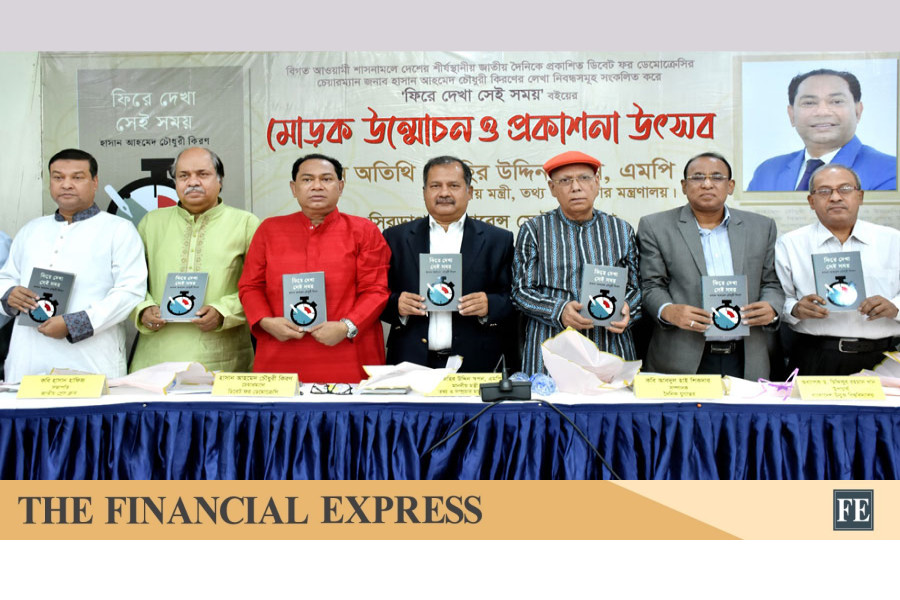
Swapon highlighted the significance of the publication β€œFiree Dekha Sei Somoi”, a compilation of articles by Hasan Ahmed Chowdhury Kiran, describing it as a political β€œantivirus” that could guide future governance.

He said the book would serve as a valuable resource for historians and researchers studying contemporary political developments.

Reflecting on recent history, the Information Minister said the lessons learned by Sheikh Hasina on August 5, 2024, have now become part of the nation’s history.

He said the BNP-led government would continuously apply these lessons to ensure good governance and democratic accountability.

Swapon made these remarks as the chief guest at the unveiling ceremony of β€œFirey Dekha Sei Somoi”, a collection of essays previously published in national dailies.

According to a media release, the book presents a stark and critical portrayal of the past governance under the Awami League, featuring 38 articles addressing themes such as political repression, electoral malpractice, and public dissent.

Speaking at the event, Kiran elaborated on the motivation behind the publication. He claimed that Sheikh Hasina and her administration had operated under the assumption of indefinite political dominance.

However, he said the July Uprising decisively reaffirmed a fundamental democratic principle: that sovereignty ultimately resides with the people.

Kiran contended that although the Constitution of Bangladesh clearly establishes the people as the source of all state power, this principle was not upheld in practice during the previous administration (AL).

Vice-Chancellor of Bangladesh Open University Professor Dr. Siddiqur Rahman Khan, National Press Club President Hasan Hafiz, Daily Jugantor Editor Abdul Hai Sikder, BFUJ Secretary General Kader Gani Chowdhury, and academics, journalists, and public intellectuals were present.​
 
Analyze

Analyze Post

Add your ideas here:
Highlight Cite Respond

An election manifesto, an economic blueprint, and a war

How an economic task force report provides architecture for BNP’s manifesto

KAS Murshid

1774917872570.webp

FILE VISUAL: ANWAR SOHEL

The BNP government has inherited a country at an unusual inflexion point, with a strong electoral mandate, a technically credible reform roadmap, and an international community broadly aligned on what needs to be done. It has also inherited an economy that grew just 3.97 percent in FY2025β€”well below historical averages and far short of the pace needed. Private investment has fallen to 22.48 percent of GDP, the lowest in five years, and barely a fortnight after the election, a war erupted in the Gulf that is already shaking the foundations of Bangladesh’s external account.

It would be worthwhile now to recall BNP’s ambitious 44-page election manifesto, which has already received reasonable executive attention. The manifesto promised a $1 trillion GDP by 2034, a tax-to-GDP ratio of 15 percent by 2035, one crore new jobs, universal Family Cards for four crore marginalised households, a transition from consumption-driven to investment-led growth, etc. These are serious commitments for a turbulent time, and they deserve an equally serious implementation plan.

The good thing is that the plan already exists, ready for execution. The report prepared by the Task Force on Re-strategising the Economy and Mobilising Resources for Equitable and Sustainable Development, submitted to the interim government in January 2025, provided 550 pages of technical architecture across 18 thematic areas. The manifesto and the report can be two halves of a single policy documentβ€”the first supplies the political legitimacy; the second supplies the engineering drawings.

The alignment between the two documents is striking, both identifying revenue mobilisation as foundational. Bangladesh’s tax-to-GDP ratio fell to just 6.8 percent in FY2025β€”among the lowest in the world and less than half the government’s 15 percent target. The task force provides the institutional machinery to close that gap: restructuring the National Board of Revenue (NBR), eliminating tax expenditures estimated to nearly equal actual tax collection, and digitising compliance. Both documents recognise private investment stagnation as the central constraint on growth, and point to regulatory reform and a functional banking sector as the prerequisites for unlocking it. Both endorse a regulatory reform commission to systematically dismantle the bureaucratic obstacles to investment.

But the task force also fills critical gaps the manifesto leaves open. The most glaring is the LDC graduation. Bangladesh, as things stand now, exits LDC status in November 2026. This transition will withdraw preferential trade access currently covering approximately 70 percent of Bangladesh’s global exports. The manifesto, however, does not mention LDC graduation, while the task force makes it the central context for its entire export strategy, recommending urgent trade diplomacy for Generalised Scheme of Preferences Plus (GSP+) equivalents, Free Trade Agreement (FTA) negotiations, and a targeted programme to build non-RMG export champions before the preference window closes.

The banking sector is the second critical gap. The manifesto promises to β€œrestore confidence” in Bangladesh’s banks. But the scale of the problem demands specificity. Non-performing loans (NPLs) peaked at 35.73 percent of total disbursed credit in September 2025β€”the highest in Asia and, by several assessments, the world. The task force’s blueprint to address this challengeβ€”asset quality reviews for all systemically important banks, an asset management company to handle NPL portfolios, and operationalisation of the Bank Resolution Ordinance 2025, which was already passed by the interim government, pending parliamentary approvalβ€”gives the new government a ready-made programme. The question is about political will, as banking sector reform requires imposing real losses on powerful borrowers who have used political connections for years to roll over non-performing obligations.

Now layer the Iran war onto this. Bangladesh imports 95 percent of its oil and gas needs. When the Strait of Hormuz was blocked, long queues formed at filling stations within days. The Bangladesh Petroleum Corporation (BPC) introduced formal fuel rationing on March 8, capping motorcycle purchases at two litres per tank. Five of the country’s six fertiliser factories were closed. Power cuts doubled to as many as five hours per day, forcing garment factories onto diesel generators and threatening production in Bangladesh’s most vital export sector. BPC moved quickly to secure emergency diesel shipments from PetroChina, Vitol, and India’s Numaligarh Refinery pipeline. Rationing has since been partially eased ahead of Eid; the immediate crisis appears to be under control, but the structural vulnerability it exposed is not.

Approximately 75 percent of Bangladesh’s overseas workforce is employed across five Gulf states, all directly affected by Iranian strikes, airspace closures, and regional economic disruption. Bangladesh received a record $32.82 billion in remittances in 2025. A sustained Gulf economic contraction could reduce that figure by $4-$7 billion annually, withdrawing the primary income source of millions of rural households and materially worsening the country’s external account. These are not abstract projections. Over 335 flights connecting Bangladesh to the Gulf have already been cancelled, leaving workers stranded and outbound migrants unable to depart despite having spent their savings on recruitment and medical fees.

The war does not invalidate the reform agenda; it sharpens it. Bangladesh’s extreme dependence on Gulf labour markets, identified as a structural vulnerability for years but never addressed seriously, is now an emergency. The government must immediately launch bilateral engagement with Japan, South Korea, and Malaysia to diversify the labour migration pipeline. Emergency solar procurementβ€”targeting 500-1,000 MW of new renewable capacityβ€”should begin now, because the fiscal cost of maintaining fuel-dependent rental power plants is no longer merely wasteful; it is untenable. The task force recommended phasing these out as a medium-term priority. The war makes it an immediate one.

The new government has something most governments do not: a technically rigorous, independently produced reform roadmap covering every dimension of the economic agenda it has promised. The task force report is a gift. A government that formally adopts it as the technical companion to its manifesto sends an unambiguous signal to the IMF, the World Bank, the ADB, and investors that it knows what it is doing and intends to do it properly. True, Bangladesh’s foreign exchange reserves have recovered to $34.06 billionβ€”the strongest position since November 2022. But the breathing room this has allowed is not unlimited.

Bangladesh has navigated Covid, the post-pandemic inflation surge, the Ukraine commodity shock, and the taka depreciation of 2022–2024. It has the institutional resilience, the development partnerships, and now the political mandate to manage the current moment. What it needs is the clarity to prioritiseβ€”LDC graduation first, banking reform in parallel, energy sector restructuring now rather than laterβ€”and the discipline to keep moving through the turbulence.

The window for the first hundred days’ agenda that actually changes the country’s trajectory is short. It must not be wasted.

Dr KAS Murshid is an economist who served as chairman of the Task Force on Re-strategising the Economy and Mobilising Resources for Equitable and Sustainable Development under the interim government.​
 
Analyze

Analyze Post

Add your ideas here:
Highlight Cite Respond

Latest Posts

Back
PKDefense - Recommended Toggle