Bangladesh Defense
Saif
Senior Member
- Jan 24, 2024
- 21,100
- 9,688
- Nation

- Residence
- Axis Group

Govt lays foundation for democratic Bangladesh in first 150 days: PMO
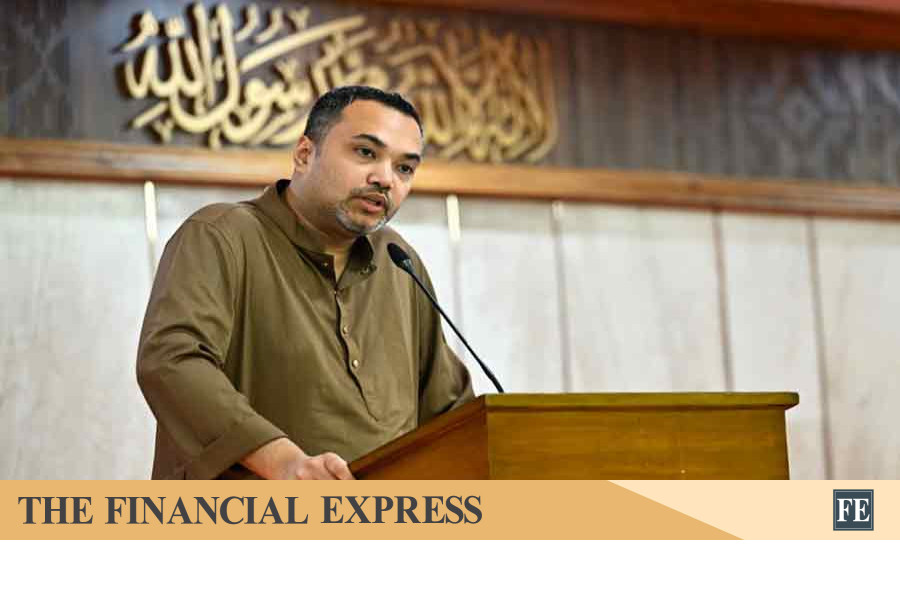
The government has laid a strong foundation for building a democratic, discrimination-free and prosperous Bangladesh during its first 150 days in office by restoring public confidence, rebuilding institutions, stabilising the economy and delivering on key election pledges, Prime Minister's Office (
Govt lays foundation for democratic Bangladesh in first 150 days: PMO
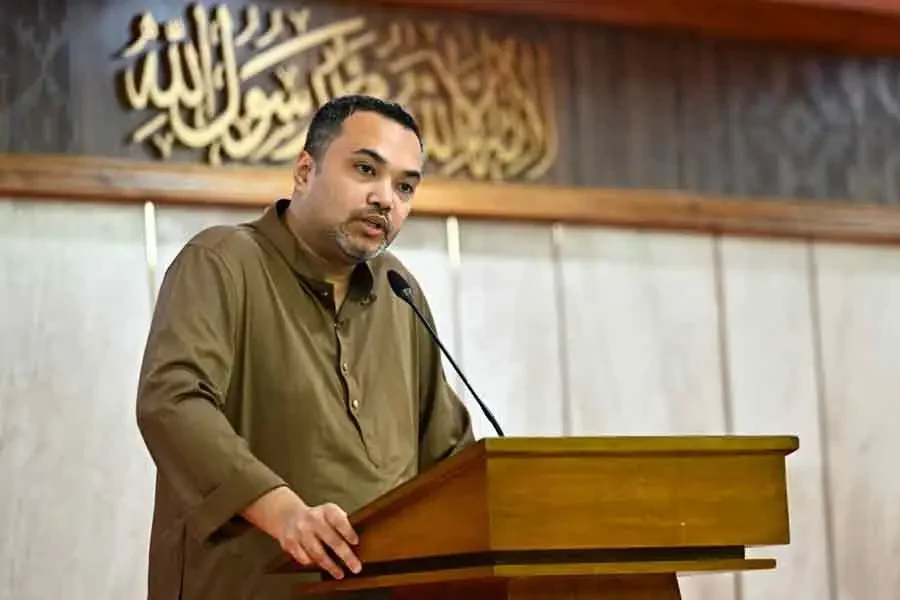
The government has laid a strong foundation for building a democratic, discrimination-free and prosperous Bangladesh during its first 150 days in office by restoring public confidence, rebuilding institutions, stabilising the economy and delivering on key election pledges, Prime Minister's Office (PMO) Spokesperson Mahdi Amin said on Saturday.
Addressing a press conference at the PMO to mark the government's first five months in office, he said the administration, led by Prime Minister Tarique Rahman had achieved "multi-dimensional and unprecedented successes" despite inheriting what he described as a devastated economy, weakened institutions and a dysfunctional governance system.
"The government's achievements over the past five months have opened a new chapter in Bangladesh's political history and paved the way for building a humane, discrimination-free, secure, merit-based, prosperous and self-reliant Bangladesh," Mahdi said.
He said after assuming office through a direct mandate from the people, the government gave top priority to rebuilding democratic institutions, restoring economic stability and strengthening good governance.
The spokesperson said the government's achievements can broadly be grouped into five areas: earning people's trust and confidence, protecting the interests of all sections of society in line with the election manifesto, successfully addressing immediate challenges, safeguarding national sovereignty and democratic freedoms, and providing statesmanlike leadership.
He said effective measures to control inflation, restore discipline in the financial sector, recover laundered money and ensure transparent, cost-effective implementation of development projects had reinforced the government's commitment to good governance.
The PMO spokesperson also highlighted ongoing efforts to rehabilitate flood victims and rebuild the health and education sectors, which he said had been severely damaged over the previous 17 years.
Among the major achievements, he said, were the swift disposal of several high-profile criminal cases, including the verdict in the Ramisa rape and murder case within 19 days and another child rape case in Meherpur within 29 working days.
Mahdi said courts had also delivered verdicts in 10 death reference and appeal cases under the Women and Children Repression Prevention Act within a month on a priority basis.
He said law enforcement agencies arrested Mozzaffar Hossain, a convicted killer in the assassination case of former President Ziaur Rahman, after he had remained absconding for 45 years.
Mahdi said initiatives had also been taken to bring back several other fugitives, including former Inspector General of Police Benazir Ahmed, through Interpol.
The spokesperson said Parliament passed 94 reform-related bills within its first 25 working days, transforming ordinances promulgated by the interim government into law, while legislation relating to the July-August mass uprising and counter-terrorism had also been enacted.
Highlighting economic indicators, Mahadi said inflation had fallen to 8.71 percent while foreign exchange reserves stood at US$36.58 billion.
He said remittance inflows had reached record levels, including US$3.75 billion in March, reflecting growing confidence among overseas Bangladeshis.
The spokesperson said the government had withdrawn monthly charges on prepaid electricity meters to provide relief to consumers and announced plans to upgrade upazila hospitals to 101-bed facilities alongside establishing primary healthcare units in every union and urban ward.
He said the government planned to expand ICU services, pathology facilities and emergency care at upazila hospitals while launching door-to-door health screening programmes.
Mahdi said a nationwide programme to plant 25 crore trees over the next five years had been launched, while 250 environment-friendly electric buses would initially be introduced in Dhaka.
He also noted the introduction of AI-based traffic management in key areas of the capital, automated cargo release at Chattogram Port and plans to relocate four inter-district bus terminals outside Dhaka to ease traffic congestion.
The spokesperson said implementation of the government's election pledges had already begun through the rollout of Family Cards, Farmers' Cards and Sports Cards, while a pilot Probashi Card programme would be launched soon.
He said the government had also declared 2026-27 as the Nazrul Year, banned the use of the Prime Minister's photographs on government banners and festoons, expanded scholarships for students and introduced several education and youth-focused initiatives, including a nationwide primary school football tournament involving 22 lakh students and startup competitions for secondary and higher secondary students.
Mahdi said the government had also prioritised strengthening the armed forces, noting that Prime Minister Tarique Rahman regularly attended military exercises, shared meals with soldiers at field camps and worked to boost their morale.
Describing the Prime Minister's leadership style as people-centred, Mahdi said Tarique Rahman had deliberately rejected a lavish lifestyle and excessive protocol.
"He has shown through his actions that he represents people of every profession, religion, ethnicity and community. He is truly the Prime Minister of the people," he said.
Mahdi said the government's first 150 days had demonstrated that even after inheriting a "devastated state", meaningful reforms and visible progress were possible with public support and political commitment.
"Over the past 150 days, the government has not only addressed immediate challenges but also laid a solid foundation for a democratic, discrimination-free and prosperous Bangladesh," he said.
Mahdi said the government took office at a difficult time following what he called years of authoritarian rule, inherited a weakened state structure and fragile economy, and immediately prioritised rebuilding democratic institutions, restoring public confidence and improving economic stability.
Recalling the July 2024 mass uprising, he paid tribute to those killed during the anti-government movement, including Abu Sayed, Wasim Akram and Farhan Faiyaz, and said their sacrifices paved the way for democratic change.
The spokesperson also remembered BNP leaders and activists who, he said, had suffered enforced disappearances, killings and political persecution over the previous 16 years.
He said the government considers public confidence its greatest strength and remains committed to ensuring transparency, accountability, freedom of expression, protection of human rights and the rule of law.
The spokesperson also announced measures to improve education and social welfare, including free education for female students up to honours level, plans to provide free school uniforms and environmentally friendly jute school bags to disadvantaged students, expansion of smart classrooms and free Wi-Fi in educational institutions, nutritious mid-day meals, and four new textbooks focusing on sports, culture, vocational education and joyful learning from the 2027 academic year.
He said the government had also initiated a Tk 500 crore startup fund for young entrepreneurs, planned to establish sports villages in all 64 districts and announced support for students seeking higher education abroad through bank-backed education loans.
Reviewing the government's response to immediate challenges, the spokesperson said effective market monitoring had kept prices of essential commodities stable during Ramadan and Eid, while illegal cattle imports during Eid-ul-Azha had been prevented, ensuring fair prices for local farmers.
He said the government unveiled a Tk 9.38 lakh crore national budget within three months and 13 days of taking office based on a "Recovery, Restoration and Reconstruction (3R)" strategy, with increased allocations for education, healthcare and social protection.
According to Mahdi, the government also established a Tk 40,000 crore bank recapitalisation fund, initiated efforts to reopen closed industries, passed the Gambling Prevention Act 2026 to curb online betting and crypto-based gambling, and intensified efforts to recover assets allegedly laundered abroad.
On foreign policy, he said the government adopted a balanced diplomatic approach centred on "Bangladesh First", while restoring Bangladesh's standing internationally.
He said Prime Minister Tarique Rahman's visits to Malaysia and China had strengthened bilateral ties and attracted significant investment commitments.
Mahdi said India resumed visa services for Bangladeshi citizens following diplomatic engagement, while the government restored the "Except Israel" endorsement on Bangladeshi passports as part of its independent foreign policy.
Describing Prime Minister Tarique Rahman's leadership style as people-centred, he said he had broken with traditional VIP culture by reducing protocol, interacting directly with ordinary citizens during district visits and insisting on following normal traffic rules.
He said the Prime Minister had prohibited the use of his personal photographs on government banners and festoons, encouraged children to visit Parliament to learn about democracy, expanded scholarships for students and personally promoted sports, innovation competitions and primary education programmes.
Mahdi also cited the government's disaster response during recent floods, saying relief, rehabilitation and financial support had been provided promptly to affected families, farmers, women entrepreneurs and fishermen.
He said the Prime Minister believes governance must reflect the aspirations of the people and described the government's first five months as laying the foundation for "a democratic, humane, discrimination-free and prosperous Bangladesh."
"Over the past 150 days, the government has not only addressed immediate challenges but also laid a strong foundation for the Bangladesh envisioned by the people," Mahadi said.
Prime Minister's Press Secretary Saleh Shibly also addressed the press conference and said the government is working to decentralise information flow to ensure easier public access to government information from the grassroots to the Prime Minister's Office.
He said district information officers are being further empowered and made more active so that journalists across the country can obtain official information on local developments more quickly and efficiently.
Shibly said the government is gradually implementing its election manifesto as well as the July National Charter signed at the South Plaza of Parliament, adding that the media has been playing a key role in informing people about those initiatives.
He said Prime Minister Tarique Rahman has prioritised improving people's quality of life alongside restoring social and family values, stressing that the Prime Minister believes meaningful governance should be reflected through action rather than rhetoric.
The Press Secretary also urged journalists to give greater prominence to positive social issues that contribute to building a prosperous, value-based and inclusive Bangladesh.
Prime Minister's Additional Press Secretary Atikur Rahman Rumon, Speechwriter Mahfuzur Rahman, Deputy Press Secretaries Jahidul Islam Rony, Suzauddhowla (Suzon Mahmood) and Shahadat Shadhin, Assistant Press Secretaries KM Nazmul Haque, Asrofa Emdad and Abdullah Al Mahmud Shahriar Pamir, among others, were present at the press conference.
The government has laid a strong foundation for building a democratic, discrimination-free and prosperous Bangladesh during its first 150 days in office by restoring public confidence, rebuilding institutions, stabilising the economy and delivering on key election pledges, Prime Minister's Office (PMO) Spokesperson Mahdi Amin said on Saturday.
Addressing a press conference at the PMO to mark the government's first five months in office, he said the administration, led by Prime Minister Tarique Rahman had achieved "multi-dimensional and unprecedented successes" despite inheriting what he described as a devastated economy, weakened institutions and a dysfunctional governance system.
"The government's achievements over the past five months have opened a new chapter in Bangladesh's political history and paved the way for building a humane, discrimination-free, secure, merit-based, prosperous and self-reliant Bangladesh," Mahdi said.
He said after assuming office through a direct mandate from the people, the government gave top priority to rebuilding democratic institutions, restoring economic stability and strengthening good governance.
The spokesperson said the government's achievements can broadly be grouped into five areas: earning people's trust and confidence, protecting the interests of all sections of society in line with the election manifesto, successfully addressing immediate challenges, safeguarding national sovereignty and democratic freedoms, and providing statesmanlike leadership.
He said effective measures to control inflation, restore discipline in the financial sector, recover laundered money and ensure transparent, cost-effective implementation of development projects had reinforced the government's commitment to good governance.
The PMO spokesperson also highlighted ongoing efforts to rehabilitate flood victims and rebuild the health and education sectors, which he said had been severely damaged over the previous 17 years.
Among the major achievements, he said, were the swift disposal of several high-profile criminal cases, including the verdict in the Ramisa rape and murder case within 19 days and another child rape case in Meherpur within 29 working days.
Mahdi said courts had also delivered verdicts in 10 death reference and appeal cases under the Women and Children Repression Prevention Act within a month on a priority basis.
He said law enforcement agencies arrested Mozzaffar Hossain, a convicted killer in the assassination case of former President Ziaur Rahman, after he had remained absconding for 45 years.
Mahdi said initiatives had also been taken to bring back several other fugitives, including former Inspector General of Police Benazir Ahmed, through Interpol.
The spokesperson said Parliament passed 94 reform-related bills within its first 25 working days, transforming ordinances promulgated by the interim government into law, while legislation relating to the July-August mass uprising and counter-terrorism had also been enacted.
Highlighting economic indicators, Mahadi said inflation had fallen to 8.71 percent while foreign exchange reserves stood at US$36.58 billion.
He said remittance inflows had reached record levels, including US$3.75 billion in March, reflecting growing confidence among overseas Bangladeshis.
The spokesperson said the government had withdrawn monthly charges on prepaid electricity meters to provide relief to consumers and announced plans to upgrade upazila hospitals to 101-bed facilities alongside establishing primary healthcare units in every union and urban ward.
He said the government planned to expand ICU services, pathology facilities and emergency care at upazila hospitals while launching door-to-door health screening programmes.
Mahdi said a nationwide programme to plant 25 crore trees over the next five years had been launched, while 250 environment-friendly electric buses would initially be introduced in Dhaka.
He also noted the introduction of AI-based traffic management in key areas of the capital, automated cargo release at Chattogram Port and plans to relocate four inter-district bus terminals outside Dhaka to ease traffic congestion.
The spokesperson said implementation of the government's election pledges had already begun through the rollout of Family Cards, Farmers' Cards and Sports Cards, while a pilot Probashi Card programme would be launched soon.
He said the government had also declared 2026-27 as the Nazrul Year, banned the use of the Prime Minister's photographs on government banners and festoons, expanded scholarships for students and introduced several education and youth-focused initiatives, including a nationwide primary school football tournament involving 22 lakh students and startup competitions for secondary and higher secondary students.
Mahdi said the government had also prioritised strengthening the armed forces, noting that Prime Minister Tarique Rahman regularly attended military exercises, shared meals with soldiers at field camps and worked to boost their morale.
Describing the Prime Minister's leadership style as people-centred, Mahdi said Tarique Rahman had deliberately rejected a lavish lifestyle and excessive protocol.
"He has shown through his actions that he represents people of every profession, religion, ethnicity and community. He is truly the Prime Minister of the people," he said.
Mahdi said the government's first 150 days had demonstrated that even after inheriting a "devastated state", meaningful reforms and visible progress were possible with public support and political commitment.
"Over the past 150 days, the government has not only addressed immediate challenges but also laid a solid foundation for a democratic, discrimination-free and prosperous Bangladesh," he said.
Mahdi said the government took office at a difficult time following what he called years of authoritarian rule, inherited a weakened state structure and fragile economy, and immediately prioritised rebuilding democratic institutions, restoring public confidence and improving economic stability.
Recalling the July 2024 mass uprising, he paid tribute to those killed during the anti-government movement, including Abu Sayed, Wasim Akram and Farhan Faiyaz, and said their sacrifices paved the way for democratic change.
The spokesperson also remembered BNP leaders and activists who, he said, had suffered enforced disappearances, killings and political persecution over the previous 16 years.
He said the government considers public confidence its greatest strength and remains committed to ensuring transparency, accountability, freedom of expression, protection of human rights and the rule of law.
The spokesperson also announced measures to improve education and social welfare, including free education for female students up to honours level, plans to provide free school uniforms and environmentally friendly jute school bags to disadvantaged students, expansion of smart classrooms and free Wi-Fi in educational institutions, nutritious mid-day meals, and four new textbooks focusing on sports, culture, vocational education and joyful learning from the 2027 academic year.
He said the government had also initiated a Tk 500 crore startup fund for young entrepreneurs, planned to establish sports villages in all 64 districts and announced support for students seeking higher education abroad through bank-backed education loans.
Reviewing the government's response to immediate challenges, the spokesperson said effective market monitoring had kept prices of essential commodities stable during Ramadan and Eid, while illegal cattle imports during Eid-ul-Azha had been prevented, ensuring fair prices for local farmers.
He said the government unveiled a Tk 9.38 lakh crore national budget within three months and 13 days of taking office based on a "Recovery, Restoration and Reconstruction (3R)" strategy, with increased allocations for education, healthcare and social protection.
According to Mahdi, the government also established a Tk 40,000 crore bank recapitalisation fund, initiated efforts to reopen closed industries, passed the Gambling Prevention Act 2026 to curb online betting and crypto-based gambling, and intensified efforts to recover assets allegedly laundered abroad.
On foreign policy, he said the government adopted a balanced diplomatic approach centred on "Bangladesh First", while restoring Bangladesh's standing internationally.
He said Prime Minister Tarique Rahman's visits to Malaysia and China had strengthened bilateral ties and attracted significant investment commitments.
Mahdi said India resumed visa services for Bangladeshi citizens following diplomatic engagement, while the government restored the "Except Israel" endorsement on Bangladeshi passports as part of its independent foreign policy.
Describing Prime Minister Tarique Rahman's leadership style as people-centred, he said he had broken with traditional VIP culture by reducing protocol, interacting directly with ordinary citizens during district visits and insisting on following normal traffic rules.
He said the Prime Minister had prohibited the use of his personal photographs on government banners and festoons, encouraged children to visit Parliament to learn about democracy, expanded scholarships for students and personally promoted sports, innovation competitions and primary education programmes.
Mahdi also cited the government's disaster response during recent floods, saying relief, rehabilitation and financial support had been provided promptly to affected families, farmers, women entrepreneurs and fishermen.
He said the Prime Minister believes governance must reflect the aspirations of the people and described the government's first five months as laying the foundation for "a democratic, humane, discrimination-free and prosperous Bangladesh."
"Over the past 150 days, the government has not only addressed immediate challenges but also laid a strong foundation for the Bangladesh envisioned by the people," Mahadi said.
Prime Minister's Press Secretary Saleh Shibly also addressed the press conference and said the government is working to decentralise information flow to ensure easier public access to government information from the grassroots to the Prime Minister's Office.
He said district information officers are being further empowered and made more active so that journalists across the country can obtain official information on local developments more quickly and efficiently.
Shibly said the government is gradually implementing its election manifesto as well as the July National Charter signed at the South Plaza of Parliament, adding that the media has been playing a key role in informing people about those initiatives.
He said Prime Minister Tarique Rahman has prioritised improving people's quality of life alongside restoring social and family values, stressing that the Prime Minister believes meaningful governance should be reflected through action rather than rhetoric.
The Press Secretary also urged journalists to give greater prominence to positive social issues that contribute to building a prosperous, value-based and inclusive Bangladesh.
Prime Minister's Additional Press Secretary Atikur Rahman Rumon, Speechwriter Mahfuzur Rahman, Deputy Press Secretaries Jahidul Islam Rony, Suzauddhowla (Suzon Mahmood) and Shahadat Shadhin, Assistant Press Secretaries KM Nazmul Haque, Asrofa Emdad and Abdullah Al Mahmud Shahriar Pamir, among others, were present at the press conference.