[🇧🇩] Save the Rivers/Forests/Hills-----Save the Environment

[🇧🇩] Save the Rivers/Forests/Hills-----Save the Environment
541
16K
More threads by Saif

G Bangladesh Defense

Govt committed to ensuring best use of climate budget: Rizwana

1734566371999.webp


Environment Adviser Syeda Rizwana Hasan emphasised the government's commitment to ensuring the best use of the climate budget.

Rizwana, also adviser to the Ministry of Water Resources, highlighted several critical issues in climate governance and Bangladesh's priorities.

She was speaking at a seminar titled "Global Climate Negotiation Challenges and Priorities for Bangladesh" organised by the Bangladesh Institute of International and Strategic Studies (BIISS) in the capital today.

The adviser noted that the guidelines for allocating the Climate Change Trust Fund have been updated, with funds distributed more cautiously than ever.

She also stressed that international climate funds must be utilised properly to achieve meaningful outcomes. Ongoing efforts aim to identify priority sectors for climate investments. However, she warned that without reducing carbon emissions, global environmental damage cannot be mitigated, regardless of increased spending.

The adviser highlighted that various initiatives are being implemented to address Bangladesh's environmental challenges.

"We must rethink development strategies. If rivers and canals are filled, how can adaptation efforts succeed? Abandoning a consumerist lifestyle is necessary," she remarked.

She added that a task force has been formed to control air pollution, which will soon begin its activities. Measures are also being taken against polluters, and the use of single-use plastics is being discouraged.

Rizwana called for a focus on enhancing resilience, securing adequate adaptation funding, and ensuring transparency in fulfilling global commitments. She also urged equitable negotiations at global forums to amplify the voices of vulnerable communities and ensure developed nations fulfil their financial and technological commitments.

The seminar featured insights from key speakers, including Ambassador AFM Gousal Azam Sarker, Chairman of BIISS, and Major General Iftekhar Anis, Director General of BIISS.

The seminar brought together policymakers, researchers, climate experts, and diplomats to discuss pressing issues, including inadequate climate finance, slow progress on loss and damage mechanisms, and the need for stronger mitigation targets from major emitters.​
 

Air pollution: Old, polluting buses in Dhaka to be scrapped
Says Environment Adviser Rizwana

1734652269979.webp

Photo: BSS

Old and polluting buses in Dhaka will be scrapped to reduce the air pollution in the capital, Environment Adviser Syeda Rizwana Hasan said today.

"People in Dhaka cannot continue to suffer and die from air pollution. The interests of a few cannot outweigh the health of the entire population. Bus owners must take immediate action," she said at a discussion meeting at the Bidyut Bhaban.

The event focused on strengthening discipline in the transport sector, reducing traffic congestion, and controlling air pollution in Dhaka.

She urged bus owners to take immediate action, noting that a taskforce has been formed to combat air pollution.

The task force will focus on reducing dust, repairing damaged roads, and strictly enforcing laws, she said adding efforts will also be made to cut pollution caused by black smoke, brick kilns, and industrial emissions, aligning with the Air Quality Management Plan.

The Adviser also mentioned plans to declare Ashulia a no-brick-kiln zone as part of measures to control air pollution.

Besides, the National Board of Revenue (NBR) has been approached to lower taxes on air purifiers, while steps will be taken to clear illegal encroachments from sidewalks.

The meeting was chaired by Md Fouzul Kabir Khan, adviser to the Ministry of Road Transport and Bridges, and attended by senior officials, including Brig Gen (retd) Dr M Sakhawat Hossain, adviser to the Ministry of Labor and Employment; Adilur Rahman Khan, adviser to the Ministry of Housing and Public Works; and Md Khuda Baksh Chowdhury, special assistant to the chief adviser, leaders of the Bus Owners Association, City Corporation administrators, and other stakeholders were also present.​
 

CDA builds bamboo fence along Jamal Khan canal

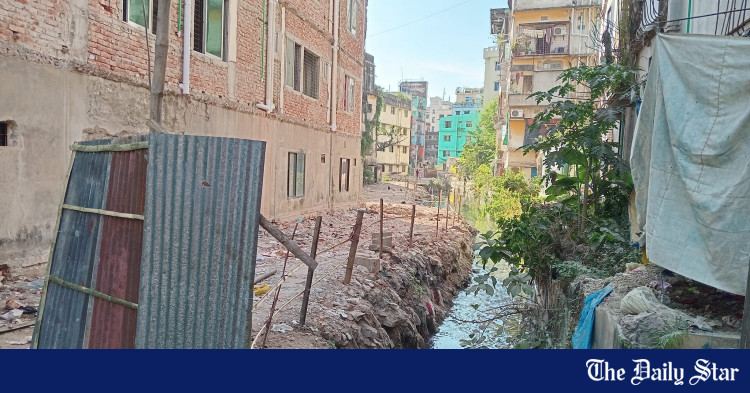
1734653686833.webp

Photo: Star

After seven months, the Chattogram Development Authority started building a bamboo fence along the bank of Jamal Khan canal in the Hem Sen Lane area of the port city.

The move came days after The Daily Star published a report on the issue, "Jamal Khan canal: A deathtrap lies waiting", on its website on Sunday.

According to locals, a portion of three buildings in the area were built occupying the land of the canal.

The CDA started an eviction drive to reclaim the land of the canal in the last week of January. Accordingly, the CDA mobile court dismantled the illegal portion of the buildings in the area during the drives.

CDA has been working in this canal as part of the mega project being implemented to address waterlogging.

According to locals, the work on the Jamal Khan canal stopped in April.

Lt Col Ferdous Ahmed, project director of the CDA mega project, said, "After getting information from your newspaper, I talked to the local sub-contractor of the project and instructed him to secure the exposed bank of the canal with a fence."

On Thursday, it was found that some workers were building a bamboo fence along the canal. However, locals said the fence seemed to be fragile and weak.

Ashraful Islam, a local, said, "It is a good step taken by the CDA authority but the fence seems to be too fragile... I doubt whether the fence can withstand a strong wind."

Asked, Ferdous said the fence was not a permanent solution. "We will start working on the canal very soon."

It is to be noted that at least 11 people were killed and many others injured by falling into unfenced canals and drains in Chattogram since 2017.​
 

Devising ways to obviate decline in green financing
Editorial
Published :
Dec 20, 2024 01:01
Updated :
Dec 20, 2024 01:01

1734656646675.webp


The recent decline in green and sustainable financing by banks and financial institutions (FIs) poses a significant challenge to achieving environmental sustainability. While a handful of private banks have managed to maintain or even exceed their targets in funding green projects, the broader trend reveals a concerning drop in green financing across the banking sector. According to a report carried in the Financial Express (FE), green and sustainable financing witnessed a sharp decline in the third quarter of 2024 due to reduced loan disbursements. During the July-September period, banks contributed Tk 65.85 billion to green financing, marking a 5.64 per cent decrease compared to the previous quarter. Non-bank financial institutions fared even worse, with their contributions plummeting by a staggering 78.64 per cent to Tk 2.12 billion. Furthermore, a central bank report highlighted a contraction in overall sustainable finance, with banks disbursing Tk 1,042.4 billion-an 8.4 per cent drop from the preceding quarter-and FIs disbursing Tk 16.313 billion, down by 45.48 per cent.

Green financing refers to funding projects, industries, businesses, or technologies that prioritise environmental sustainability. In Bangladesh, it encompasses initiatives such as solar power, biogas, hydropower, wind power, waste management and recycling, organic farming, and other renewable energy projects. At its core, green finance is any structured financial activity designed to promote better environmental outcomes. It includes loans, debt instruments, and investments aimed at developing eco-friendly projects or mitigating the environmental impact of traditional ventures. Sustainable finance, which closely aligns with green financing, focuses on conducting business in ways that reduce carbon emissions and environmental footprints. Together, these financing approaches are essential for fostering a greener and more sustainable economy. The sharp decline in green financing can largely be attributed to sluggish business expansion and reduced loan disbursements. Bankers have pointed out that the lack of new business ventures during this period has significantly impacted green and sustainable finance. The slowdown underscores broader economic challenges that are hindering the growth of environment-focused investments.

It may be noted that the central bank has been proactive in encouraging green financing since 2009. It introduced a revolving refinance scheme of Tk 2.0 billion to support products like solar energy, biogas, and effluent treatment plants. Over time, this fund was expanded to Tk 4.0 billion to meet rising demand. In 2016, the Green Transformation Fund (GTF), a long-term refinancing scheme of $200 million, was launched to support sustainable growth in the export-oriented textile and leather sectors. Later, 200 million Euros were added to the fund to strengthen the country's green economy. Despite these efforts, the recent downturn in green financing highlights the need for renewed focus and policy intervention.

The decline in green financing signals a dual challenge: banks face higher risks in disbursing loans, and there is an urgent need to stimulate demand for green projects. To address these issues, policymakers and stakeholders must collaborate to create a more favourable environment for green investments. Banks and FIs need risk-mitigation mechanisms to encourage lending in environmentally sustainable projects. Enhanced guarantees, government subsidies or insurance for green investments could help alleviate concerns about potential defaults.​
 

Dhaka's struggle with air pollution
Shiabur Rahman
Published :
Dec 20, 2024 00:53
Updated :
Dec 20, 2024 00:53

1734656747477.webp


Dhaka is often making headlines for ranking as the most polluted city in the world in the Air Quality Index (AQI). The air quality of the city of around 20 million people remains in the "very unhealthy" and "hazardous" categories around the year, but its pollution level reached catastrophic levels during the winter, leaving the metropolis in a suffocating state. Temperature inversions and increased emissions during the season result in the city's AQI often exceeding 300, far above the safe threshold of 50 in the index, which measures particulate matter (PM2.5 and PM10), nitrogen dioxide, sulfur dioxide, carbon monoxide, and ozone levels.

The main contributors to Dhaka's air pollution are diverse, but they are interconnected. The number of vehicles in the city is increasing with every passing day and has already reached a million to cater to the needs of its burgeoning population. The exhaust from the vehicles, most of which are poorly maintained and lack proper emission controls, is a major source of pollution. Thousands of brick kilns surrounding Dhaka, which use outdated technology, burning coal and other polluting fuels, are another big contributor. According to studies, these kilns contribute nearly 60 per cent of Dhaka's PM2.5 pollution.

The rapid growth in urban population requires the city to construct more and more buildings and other establishments but the construction is not properly regulated. Such unregulated building practices and poorly maintained filthy roads generate massive amounts of dust, factories in and around the city emit pollutants, including particulate matter and toxic gases, while nonstandard waste management practices, such as the open burning of garbage, release harmful chemicals and particulates into air worsening its quality.

The impacts of the air pollution in Dhaka are immense. It not only causes an environmental catastrophe, but also takes a heavy toll on health of people and other animals living here and creates a socio-economic burden. According to the State of Global Air (SoGA) 2024 report, air pollution was responsible for over 235,000 deaths in Bangladesh in 2021, with a significant percentage occurring in Dhaka. Exposure to toxic air exacerbates respiratory diseases such as asthma, and chronic obstructive pulmonary disease (COPD), while long-term exposure causes lung cancer, impairs cognitive development in young population and increases the risk of cardiovascular diseases in older people.

The economic loss of air pollution is staggering. According to the World Bank, Bangladesh's economic losses from air pollution were estimated between 3.9 per cent and 4.4 per cent of the country's gross domestic product (GDP) in 2019.

The government has implemented several initiatives to tackle air pollution. They include introducing compressed natural gas (CNG) for vehicles, promoting cleaner technologies for brick kilns, shifting polluting factories outside the capital, and lately encouraging use of electric vehicles. These efforts, however, have not yielded desired results, mainly due to weak enforcement of regulations, lack of coordination, and limited public awareness. Corruption and lack of accountability often allow polluters to evade regulations here.

Addressing Dhaka's air pollution crisis requires a multi-pronged approach involving government agencies, private sector stakeholders, and civil society. The government needs to strengthen regulatory frameworks and ensure strict enforcement of emissions standards for vehicles and industries, phase out outdated brick kiln technologies, and ban the open burning of waste.

It also requires promoting green urban planning, ensuring more green spaces in the city, introducing dust control measures at construction sites and roads, and replacing dilapidated buses with environment-friendly electric vehicles. Public awareness campaigns are necessary to educate citizens about the causes and consequences of air pollution, and encourage them to participate in initiatives like tree planting and waste management.​
 

Health Hazards caused by environment pollution: Public entities face no action
Rashad Ahamad 21 December, 2024, 00:28

1734740894570.webp

Clockwise: Water without a lid is kept unprotected at a construction site at Gulistan, unprotected waterbody at Gulistan Park, dust covers the main road at Shyampur, water stagnates in potholes at Sayedabad in Dhaka. | New Age photo

Lack of concern about public health among government agencies and inaction of the monitoring agencies continue degrading environment, bringing harmful impact on the city dwellers, particularly the residents of Dhaka city.

In a latest instance, the environment, forest and climate change ministry on December 10 issued a rare warning about the hazardous air pollution in Dhaka and elsewhere in the country, asking people to wear masks while going outdoors.

Not only air pollution, dengue and rampant water pollution are also taking toll on public health for which public agencies are significantly responsible.

But monitoring agencies hardly make public agencies accountable for their environment pollution, although at different times they have imposed penalties on private establishments and businesses for such offences.

Dilapidated roads and road digging for development works by different public agencies remain a constant source for air pollution, particularly in the capital and other cities. At the same time, water gathered in the potholes of the rundown roads and alleyways and also in the dug-up ground provides active breeding grounds for dengue vector Aedes mosquito.

In Dhaka city only, several hundred roads maintained by the South and North Dhaka city corporations remain derelict over the years becoming a source of constant acute air pollution, causing respiratory diseases and other health hazards.

Md Yasin Rana, a resident of Dakkhin Khan under the Dhaka North City Corporation, lamented their terrible suffering, saying that the dust-laden air, caused by the locality’s worn-out roads which had seen no retouch for years, triggered suffocation and itching and other problems in eyes, among other health hazards.

Anower Hossain, a trader having his clothing store around Shait-foot Road in Mirpur, also under Dhaka North City Corporation, also complained about similar health problem, adding that his goods got regularly damaged in the dust.

Burning of waste in the dumping grounds as well as biomass on the premises of different government offices in the capital also are among the active source of air pollution. Instead of managing waste in a fully systematic and safe way, Dhaka South and Dhaka North City Corporations staff burn garbage on road in the two dumping yards in the capital at Amin Bazar and Matuail, polluting air sometimes round the clock, creating choking smoke.

Many of the offices of the public agencies, including public hospitals, Bangladesh Betar, Dhaka Water Supply and Sewerage Authority, Bangladesh Meteorological Department, and forest department, have the leaves and twigs gathered from their premises regularly burnt creating billowing smoke, causing health hazards for the residents around.

Unfit vehicles of the public agencies are also a potential source of air pollution particularly in the capital. Staff buses of Bangladesh Road Transport Corporation, Bangladesh Inland Water Transport Corporation, Bangladesh police, and other agencies are regularly found to release black smoke.

But public agencies and offices have rarely been made accountable for causing air pollution as Department of Environment director Md Ziaul Haque admitted that they had never booked the city corporations for the pollution caused by the dilapidated city roads or at the waste dumping yards or by other government agencies.

But the environment department fined several hundred businesses or individuals for air pollution in the past five years.

On air pollution from biomass burning, Bangladesh Poribesh Andolon joint secretary and Stamford University Bangladesh department of environment professor Ahmad Kamruzzaman Majumder said that burning dead leaves and twigs was a major cause of air pollution in Dhaka city and elsewhere in the country.

But no monitoring agencies have taken any steps to stop biomass burning, a relatively easier step to take, remarked the professor.

A lack of cleanliness and maintenance often makes the premises of different government offices the perfect breeding grounds for dengue carrier Aedes mosquitos.

Data show that the city corporations spent over Tk 200 crore to control dengue in the past three years.

The city authorities, including the two Dhaka city corporations, occasionally conduct mobile courts against Aedes breeding spots and fine businesses and individuals for hosting potential breeding spots. But their own office compounds, along with other public offices, including those of Bangladesh Water Development Board, Civil Aviation Authority, different government educational institutions, national parliament, and even the Secretariat, have been found with potential breeding spots.

Dhaka south city officials said that they had repeatedly asked the government agencies situated in their jurisdiction to keep their premises clean to prevent mosquito breeding. Their call mostly fell on deaf ears, they said.

According to the Directorate General of Health Services data, on Sunday (15 December) at least 548 people died of dengue and over 98,877 people hospitalised with the fever.

Green activist and Waterkeepers Bangladesh coordinator Sharif Jamil said that government institutions had more responsibility than any individuals and corporates to comply with laws and so should face exemplary punishment for seriously polluting environment.

He said that government studies identified public entities like Dhaka WASA and the two city corporations as responsible for 30 per cent of the total pollution in rivers surrounding the capital. But the agencies were never made accountable for their misdeeds.

‘Indemnity to the public agencies has made them desperate to break rules, increasing health hazards,’ he said.

By holding the public agencies accountable, pollution, particularly in the capital and other cities can be substantially reduced, experts observe.​
 

Public entities need to be held accountable for pollution
22 December, 2024, 00:00

THE failure of regulatory agencies to hold the public entities responsible for environmental pollution to account has led to the alarming state of pollution in Dhaka and other cities. Regulatory agencies in their sporadic and largely ineffectual drives often impose penalties on private establishments, businesses and individuals for failing to follow rules but are never heard to make public agencies accountable. But it is the public agencies that are more responsible for environmental pollution. The regulatory authorities have almost never penalised any public agencies for action or inaction that contributes to pollution. The failure of public agencies to follow the Dhaka City Road Digging Rules 2019 is a majorly contributes to air pollution. While there are specific rules as to how, when or which process is to be followed in digging roads, most contractors and the agencies they work for do not follow the rules. The failure in following the rules is believed to be a major contributor to air pollution in Dhaka, which almost every day ranks as one of the worst cities in the world in terms of air pollution. Prolonged and uncoordinated road digging is also a major reason for water stagnation and congestion in the city. Potholes on roads are also the breeding ground for dengue mosquitoes.

What is unfortunate but true is that public agencies are also responsible for air pollution in more ways than counted. Black smoke emitted by unfit vehicles is another major reason for air pollution in Dhaka and other cities and many vehicles run by public agencies are unfit. Staff buses of many public agencies, including the Bangladesh Road Transport Corporation, Bangladesh Inland Water Transport Corporation, the police and other agencies, are regularly found to release black smoke. The failure of the city authorities, meanwhile, to attend to environmental pollution is telling. To mention waste collection only, the city corporations’ failure can hardly be exaggerated. When the corporations cannot collect all waste produced in the city, they burn much of it in dumps, which exacerbate air pollution and pose a threat to public health. Most public agencies, moreover, have a practice of burning biomass on their premises, which also contributes to air pollution. Public agencies, especially the Dhaka Water Supply and Sewerage Authority and the two city corporations, are found to be responsible for 30 per cent of the total pollution in rivers surrounding the capital. A lack of cleanliness and maintenance, moreover, often turns the premises of different government offices into the perfect breeding grounds for dengue vector Aedes mosquitoes. The city authorities occasionally run mobile courts against Aedes breeding spots and penalise businesses and individuals for not destroying potential breeding spots, but potential breeding spots in office compounds of many public offices go unnoticed.

Government institutions have more responsibility than any individuals and corporates to comply with laws and they should face exemplary punishment for polluting the environment. The regulatory authorities should, therefore, hold public agencies responsible to account.​
 

Dhaka’s desperate need for fresh air

1734912057827.webp

Air pollution is not an unfortunate byproduct of development; it is a direct consequence of negligence. ILLUSTRATION : AI GENERATED

This weekend, Dhaka was crowned with the title of one of the unhealthiest air qualities on the planet Earth. With an AQI score of 236 and PM2.5 levels 32 times higher than WHO guidelines, the city's air is not just polluted; it is poison wrapped in the guise of urban progress. Yet, the severity of this crisis seems to hang, much like the smog, in an atmosphere of apathy. Dhaka's descent into hazardous air quality has been decades in the making, fuelled by unchecked industrialisation, reckless urban sprawl, and a systemic failure to prioritise public health. What's most alarming, however, is not the severity of the problem but the sheer inertia in addressing it.

Let us start with the brick kilns, or silent assassins of Dhaka's air. They line the city's outskirts, belching smoke day and night, contributing nearly 58 percent of its particulate matter. For years, the government has mandated the adoption of cleaner technology like zigzag kilns, yet enforcement has been as flimsy as a stack of poorly fired bricks. Bangladesh can no longer afford half-measures. What if every illegal kiln were shut down within six months? What if subsidies were provided for modernising these operations, paired with stringent penalties for noncompliance? The technology exists, as do the success stories—India's rapid shift to cleaner kiln technologies serves as proof.

Vehicles present the next gaping hole in our air quality management. Dhaka's streets are a playground for outdated, poorly maintained cars and diesel-run buses, all spewing black plumes of death into the atmosphere. Take Singapore, a city that once faced similar vehicular chaos. They enforced strict emission standards, introduced congestion pricing, and heavily subsidised public transport. A policy that incentivises electric vehicles and phases out old, polluting ones is no longer a luxury; it is a necessity. This is not about becoming Singapore—it is about realising that clean air is not negotiable.

Then there's construction dust, an ever-present irritant that exacerbates an already dire situation. Any glance at a construction site in Dhaka tells the story: debris flying in every direction, no covers in sight, and zero accountability. Cities like Tokyo have tackled this by enforcing rigorous site regulations—requiring barriers, water sprays, and fines for noncompliance. Dhaka's construction industry must operate with the same discipline, because no skyscraper is worth the respiratory health of millions.

But let's not reduce this to a list of policies. Air pollution is not a technical challenge alone; it is a political and social one. In Dhaka, public health has long been relegated to the back burner, overshadowed by economic imperatives. This mindset must change. Air pollution costs Bangladesh nearly 4.4 percent of its GDP annually. What if we reframed this conversation—not as an environmental crisis but as an economic one?

China, once infamous for its "airpocalypse," offers one of the most striking examples of how policy and political will can transform urban air quality. Beijing's journey from choking smog to significantly cleaner air wasn't easy, nor was it immediate. It took the closure of over a thousand coal plants, strict limits on vehicle emissions, and massive investments in renewable energy. Dhaka can take inspiration from Beijing, by understanding that progress and sustainability are not mutually exclusive.

Closer to home, Delhi's struggle with air pollution mirrors Dhaka's in many ways. Incremental progress has been made through measures like the odd-even vehicle rationing system, temporary bans on construction during peak pollution months, and the introduction of stricter emission standards. These policies are not panaceas, but they represent a shift in mindset—one that Dhaka desperately needs to adopt.

Public pressure must also be utilised. Dhaka's residents, often resigned to enduring the worst, must demand better. Bangladesh's civil society, long a force for social change, must now rise to challenge the very air they breathe. And of course, no solution is viable without accountability. Dhaka has no shortage of environmental regulations; what it lacks is the political will to enforce them. Why aren't violators named and shamed? Why aren't fines levied so high that they deter repeat offenses? Corruption and inefficiency have shielded polluters for too long. It's time for a zero-tolerance approach, one that doesn't flinch in the face of economic or political pressure.

Education and awareness must also play their part. How many Dhaka residents know the difference between PM2.5 and PM10, or understand how air quality impacts their lifespan? South Korea, for instance, has made air quality education a public priority, integrating it into school curriculums and running mass awareness campaigns. Dhaka's citizens deserve the same knowledge—because informed communities are empowered to hold their leaders accountable.

The solutions are not beyond reach, but they require a fundamental shift in priorities. Air pollution is not an unfortunate byproduct of development; it is a direct consequence of negligence. The government must recognise this as a national emergency, not an inconvenient statistic. Industries must be reined in, transport systems overhauled, and urban planning recalibrated with sustainability at its core. Ultimately, Dhaka's air crisis is a test of our collective resolve. Do we have the courage to confront the uncomfortable truths, to make the sacrifices required for cleaner air? Or will we continue to choke on the fumes of our inaction, waiting for the day when even breathing becomes a privilege?

Maisha Islam Monamee is a student at Institute of Business Administration (IBA) at the University of Dhaka and a contributor at The Daily Star.​
 

Latest Posts

Back