Donate ☕
201 Military Defense Forums
[🇧🇩-Navy] - Submarine Warfare | Page 2 | PKDefense
Home Login Forums Wars Watch Videos
Serious discussion on defense, geopolitics, and global security.

[🇧🇩-Navy] Submarine Warfare

Reply (Scroll)
Press space to scroll through posts
G   Bangladesh Defense
[🇧🇩-Navy] Submarine Warfare
24
2K
More threads by Saif

How to force a hostile submarine to surface and surrender?

 
Analyze

Analyze Post

Add your ideas here:
Highlight Cite Fact Check Respond
Procurement of more submarines.
 
Analyze

Analyze Post

Add your ideas here:
Highlight Cite Fact Check Respond
  • Like (+1)
Reactions: Bilal9

Why This Indian Neighbour Decided To Buy 2 Submarines From China
Bangladesh analysts said procurement of the two submarines at a cost of US $203 million reflected the country's growing economic and defence ties with Beijing.
WorldPress Trust of IndiaUpdated: July 13, 2017 7:08 pm IST

Bangladesh Navy commissioned 2 Type 035G-class submarines, also known as Ming-class

1713400571114.webp


Dhaka: Bangladesh Prime Minister Sheikh Hasina today defended her country's decision to buy two submarines worth US $203 million from China saying that the move won't elicit "negative reactions" from other countries as the purpose for it was to safeguard Bangladesh's sovereignty.

Prime Minister Hasina called China a key-development partner and said that Bangladesh purchased two Chinese-made submarines to modernise its defence system by upgrading the navy into a "three-dimensional force".

"I believe that the decision of buying two submarines from China is related to the national interest of Bangladesh, and it won't create any negative reaction in the political arena in the outside world," she told Parliament yesterday.

Ms Hasina's comments came in response to a lawmaker's question about the negative speculation four months after Bangladesh Navy commissioned the two Type 035G-class submarines, also known as Ming-class, naming them as BN Nabajatra and BN Agrajatra.

She said Bangladesh's defence system was further strengthened than before due to induction of the two submarines into the Navy.

The prime minister said the two submarines would make important contributions to safeguarding the country's sovereignty and "besides, it's expected that the two submarines would play a special role in the "Blue Economy" meaning the country's economic uplift.

The conventional diesel electric submarines are equipped with torpedoes and mines.

Bangladesh analysts said procurement of the two submarines at a cost of US $203 million reflected the country's growing economic and defence ties with Beijing.

Ms Hasina announced her plan to procure the Chinese submarines in 2013 when Bangladesh signed a billion-dollar deal with Russia to buy fighter training jets, helicopters and anti-tank missiles.​
 
Analyze

Analyze Post

Add your ideas here:
Highlight Cite Fact Check Respond
  • Like (+1)
Reactions: Bilal9

Submarines lead Bangladesh navy into new waters

1713400724040.webp

One of the submarines Bangladesh procured from China is seen docked at a Chinese naval base - ISPR
Publish : 12 Mar 2017, 12:24 PMUpdate : 13 Mar 2017, 07:17 PM

Prime Minister Sheikh Hasina officially commissioned the Bangladesh Navy's first submarines on Sunday afternoon. With the addition of the Chinese-supplied submarines - – Nabajatra and Joyjatra - the Navy can be considered a "three-dimensional force" for the first time. The Type 035G-class submarines, also known as Ming-class, were reportedly assembled at the Dalian state's Liaonan shipyard.The submarines are a class of diesel-electric submarines used by the People's Liberation Army Navy. They are 76 metres in length and 7.6 metres in width.

The primary weaponry for Type 035G is the Yu-3 torpedo. It uses French-made sonar DUUX-5 unit. The 035G-class is also renowned for its anti-submarine weapon capabilities. They were built with further improvements, especially in terms of noise reduction, weapons, sensors and crew living standards.O35G-Class Submarine The Type 035G, which is frequently used for coastal patrols, will be especially useful since, after settling maritime border disputes with Myanmar and India, Bangladesh now has about 118,813 sq km of maritime territory.

According to an Inter Service Public Relations release, after the submarines arrived at the Chittagong port on December 22 last year, the naval personnel of both the countries completed a sea trial and real training to operate them.china-inventory-copyIn November last year, Bangladesh, seeking to boost its naval power in the Bay of Bengal, paid China a reported $203m for the two submarines. This deal, which reflects the country's growing economic and defence ties with Beijing, intensified the transnational tug of war between India and China to sway Bangladesh towards either of the nations. When Chinese President Xi visited Bangladesh in October last year, 27 deals, amounting to some $25 billion, were signed. This caused Indian authorities to feel some concern. Post-submarine sales, India launched a response by rushing Defence Minister Manohar Parrikar to Bangladesh to ensure long-term cooperation between the nations in matters of defence. India is now willing to offer Bangladesh a $500 million line of credit for the purchase of military hardware.

In 2013, when the government signed a billion-dollar deal with Russia to buy fighter training jets, helicopters and anti-tank missiles, Prime Minister Sheikh Hasina had announced a plan to purchase two submarines. Bangladesh has since been expanding its defence capabilities – building a new airbase close to neighbouring Myanmar, opening several new military cantonments across the country and adding new frigates to its naval fleet.​
 
Analyze

Analyze Post

Add your ideas here:
Highlight Cite Fact Check Respond
  • Like (+1)
Reactions: Bilal9

Bangladesh Navy gets 2 submarines
1714035805629.webp

Chief of Naval Staff Admiral Nizamuddin Ahmed (right) receives two first-ever Chinese submarines at Liaonan Shipyard in China on November 14, 2016. Photo Courtesy: Bangladesh Navy
In order to further intensify surveillance in the Bay and enhance the force's combat capability, Bangladesh Navy today added two submarines in its fleet for the first time in the history.

"With the inclusion of the submarines Bangladesh Navy started journey as the three dimensional force," Chief of Naval Staff Admiral Mohammad Nizamuddin Ahmed said at the handing over ceremony of the submarines at Liaonan shipyard Dalian state, China.

Rear Admiral Liu Zizhu on behalf of the Chinese government handed over the submarines to Ahmed in presence of senior naval officials of both the countries.

The navy chief thanked the Chinese naval force for modernising the submarines and providing related trainings to the Bangladesh Navy personnel.

In the meantime, Navy personnel of both the countries have completed sea-trial and real training to run the submarines, according to an ISPR news release.

Both the submarines are 76 meters in length and 7.6 meters wide and are comprised with torpedo and mines which are capable of attacking both warships and submarines of the enemy side.

The two Type 035 submarines will soon reach Bangladesh and will be added to the naval fleet in the beginning of next year as BNS Nabojatra and BNS Joyjatra.

Contacted, former Navy Chief Vice Admiral Zahir Uddin Ahmed, who initiated the process to add submarines with the force, said, "Today Bangladesh Navy got completeness. It is the beginning to start as the three dimensional force with the inclusion of the submarines."

With the inclusion of the submarines, Bangladesh Navy's capacity in the bay will increase a lot and the country's maritime boundary would be more secured than before, he told The Daily Star. He said the force now must concentrate on developing capacity for the proper use of the submarines by creating a special wing for it.

1714035881948.webp

Bangladesh Navy staff are seen standing one of the two submarines Bangladesh received from China, docked at Liaonan Shipyard in China on November 14, 2016. Photo Courtesy: Bangladesh Navy

The former navy chief also said, "Amidst many limitations we are advancing, keeping in mind Forces' Goal-2030. We hope that we will be able to develop a balanced naval force in the next 10 years."

Both he and the incumbent navy chief expressed deep gratitude to Prime Minister Sheikh Hasina for her bold initiative to modernise the navy by including submarines and other modern components to the force.

The prime minister in 2014 commissioned two frigates bought from China for the naval force. Several warships, patrol crafts and patrol aircrafts were also added to the navy in the last three years.

Prime Minister Sheikh Hasina, last year, spoke of adding the two submarines to the arsenal, in an effort to turn Bangladesh Navy into a three-dimensional force.​
 
Analyze

Analyze Post

Add your ideas here:
Highlight Cite Fact Check Respond
  • Like (+1)
Reactions: Bilal9

New Bangladesh sub base could revive India tensions
Not part of China's 'string of pearls' in Dhaka's view
By ARSHAD MAHMUD
JULY 23, 2019

1714036231028.webp

Bangladeshi Prime Minister Sheikh Hasina speaks in New Delhi. Photo: AFP / Prakash Singh

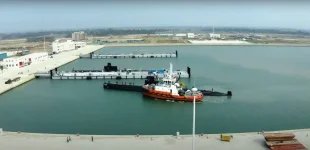
Bangladesh is close to signing an agreement with China aimed at building a permanent base for stationing and servicing the two Chinese submarines it bought for $203 million nearly three years ago.

The proposed base at Pekua, off the coast of Kutubdia Island in southeastern Cox's Bazaar, will be built with Chinese assistance primarily because "we need something permanent for maintenance and berthing of the two submarines," said a retired senior naval official who was involved in the negotiations to buy the submarines. They are now being temporarily housed along the coast in Chittagong.

"It was a logical thing to do," he added, "as China is the country that supplied the submarines and they've the technological know-how and expertise to build the base." He declined to be identified, saying, "It's a very sensitive matter." Indeed, the final agreement is being done in such secrecy that it caught even some veteran defense analysts and security experts by surprise.

"I have no knowledge if Bangladesh is constructing a submarine base in Pekua or for that matter anywhere," retired Air Commodore Ishfaq Ilahi Choudhury, a respected security analyst, told Asia Times. The secrecy, experts say, is apparently intended to avoid the kind of public outcry and negative reaction Bangladesh elicited from the Indian establishment and analysts when it procured the two Chinese submarines in 2016.

Indian concern

Shortly after the news broke and only two weeks after the delivery of the first submarine on October 30, 2016, the then Indian defense minister Manohar Parrikar rushed to Dhaka. Just days later Indian army chief General Bipin Rawat came calling.

The mad rush to Dhaka by such very important Indian officials coupled with angry denunciation by Indian security experts, who called the sale a ploy to increase the Chinese footprint in a friendly neighbor and "part of a strategy meant to encircle India," deeply concerned the government of Sheikh Hasina, considered very friendly to India.

The Hasina administration went out of its way to allay the Indian fear, insisting that Bangladesh, which is deeply indebted to India for its critical support during the country's liberation war against Pakistan in 1971, would not do anything that would harm India's strategic interest.

Sheikh Hasina often called relations between the two countries "extremely cordial and very friendly." She recently doubled down on this characterization at an international forum in China. "It's organic. We have shed blood together for our [Bangladesh's] independence," she said at a World Economic Forum gathering in Dalian during her official visit there earlier this month.

Certainly the hope was that this kind of bold public statement from the Bangladesh leader on top of the expanded military cooperation memorandum of understanding that Dhaka signed with New Delhi in 2017 would convince India that the neighbor would not harbor any nefarious design against its benefactor.

Refurbished old models

The original Indian outcry over the submarines "was far-fetched and had no basis," the former senior naval official told Asia Times.

"They were refurbished old models, bought primarily for training purposes, which helped to boost our navy's morale," he added. It was also a sort of pride for them that Bangladesh became a member of the elite club of 40 countries that have submarines, with North Korea topping the list (86) and Bangladesh the lowest (2), according to Globalfirepower.com.

In his honest opinion, the former navy official said, big defense purchases anywhere in the world are largely driven by corruption of some vested interest group, mostly aligned with the party in power, rather than by any strategic interest.

He also dismissed as unrealistic a reported Indian offer to provide training for Bangladesh navy personnel at its premier submarine academy in Vishakhapatnam.

"It's really impractical and doesn't make any sense for Bangladeshi crews to go to India when they're using Chinese submarines."

However, he hastened to add, there was perhaps another motivation to procure the submarines because Myanmar, Bangladesh's only other neighbor, was also bolstering its navy with Chinese submarines. Given the growing tension with Myanmar over the Rohingya refugee crisis, Bangladesh perhaps felt obliged to go for submarines, he said.

That perhaps explains why the permanent submarine base China is going to build in Bangladesh has not provoked the similar angry reaction from India this time.

Growing Chinese presence

But some analysts still do not see enough justification to build a permanent base. "I do not think it is logistically feasible to construct a submarine base for a couple of submarines, unless one wants to have a whole fleet of those" said Air Commodore Choudhury, the security analyst. "If at all, we might have support facilities in Chittagong itself or may be in Mongla or the upcoming port of Payra in Patuakhali."

India would not be worried on account of a couple of Bangladeshi submarines as such, he further added, "but what worries them is the increasing Chinese military footprint in the region."

Take, for instance, the growing Chinese presence in the Bay of Bengal and the Indian Ocean, which India traditionally viewed as her own backwater, he said. The Chinese are in Sittewe, Myanmar; Hambantota, Sri Lanka; Gwadar, Pakistan; Mombasa, Tanzania; Djibouti and Mauritius.

This is what Indian security experts call a "string of pearls," a noose with which the Chinese are preparing to choke off India's free access to the maritime world.

"Any Chinese buildup in India's neighborhood, including Bangladesh, will be viewed with concern in India," Air Cdr Choudhury added.

'Act of provocation'

This is precisely what worries some Indian military experts and analysts, who voiced deep concerns when the news of the submarine purchase first broke nearly three years ago. And the permanent base agreement could reignite their concern.

"Given Bangladesh's economic situation and the fact that it is surrounded on three sides by India, the acquisition of submarines is not only illogical but actually an act of provocation as far as India is concerned," Arun Prakash, a retired Indian Navy admiral and former service chief, told defensenews.com after the news of the submarine purchase broke in 2016.

"Submarines are offensive weapons of sea denial and their only use would be to pose a threat in being for India and to complicate the latter's maritime security paradigm. Obviously this transfer is a step further in China's strategy of encircling India with its client states," Prakash added.

Some other Indian experts, however, have begged to differ. "No, it is just a good, economical deal Dhaka could not pass up," Bharat Karnad, a research professor at the India-based think tank Center for Policy Research, told defensenews. "But the Modi government will have to ensure it does not fetch Beijing strategic benefits."


Exaggerated fear

Some Bangladesh foreign policy analysts, also, discount the Indian fear as highly exaggerated and not based on current reality.

"It's inconceivable for the Hasina government to do anything that would harm India's security interest in any way," Mohiuddin Ahmed, a senior foreign policy analyst and former diplomat, told Asia times.

"Besides the historical ties between the ruling Awami League and the Indian political establishment, Sheikh Hasina owes a deep personal debt to India for coming to her rescue in her most difficult times," he added.

Indeed, on Aug 15, 1975, Hasina's father, the then-president Sheikh Mujibur Rahman, was overthrown in a military coup. Mujib and most of his family members were assassinated on that night.

Hasina, her two small children and her other sister, Sheikh Rehana, survived the gruesome murders as they were then living in West Germany.

Suddenly stateless and adrift, she found that India was the only country that came to her rescue. New Delhi provided Hasina and her family sanctuary and looked after them for six years until her return from exile in 1981.

For 21 years (1975 to 1996), Hasina first languished in exile and then battled successive military dictators and hostile governments, known for their rabidly anti-Indian stance, for political comeback.

'India biggest beneficiary'

During that period, not only did Indian influence wane considerably but, most worryingly, India's arch-rival Pakistan was openly courted by the successive anti-Indian governments.

It was in 1996, when Hasina came to power, that things began to change for the better for India.

Shortly afterward, in a major strategic move, Hasina ordered dismantling of all the insurgent camps in Chittagong Hill Tracts, from where Indian separatists frequently launched attack inside India's restive northeast.

It was an open secret that Pakistan's Inter-Services Intelligence (ISI) trained and funded the Indian insurgents.

"It was a move that Hasina needed to take to show her gratitude to what India did for her personally and to regain confidence of the Indian establishment about Bangladesh's sincerity in restoring close ties with New Delhi," Ahmed, the former foreign secretary, said.

More significantly, he added, "it was the biggest strategic benefit that India derived out of Hasina's return to power" as it no longer required to fight the insurgency in the northeast.

"It would have been a nightmarish scenario for India to see the revival of another East Pakistan as it became from 1975 to 1996 under the garb of Bangladesh."

Indeed, the entire northeast has become peaceful enough for India to divert its military and financial resources to fight insurgency in Kashmir instead, Ahmed said.​
 
Analyze

Analyze Post

Add your ideas here:
Highlight Cite Fact Check Respond
  • Like (+1)
Reactions: Bilal9

Members Online

⤵︎

Latest Posts

Latest Posts