Home Watch Videos Wars Movies Login

[🇧🇩] Trump's Victory/Tariff/ Bangladesh

[🇧🇩] Trump's Victory/Tariff/ Bangladesh
216
6K
More threads by Saif

G Bangladesh Defense

China to collaborate with BD, EU, others to counter Trump tariff
FE ONLINE REPORT
Published :
Apr 13, 2025 19:20
Updated :
Apr 13, 2025 19:27

1744589171952.webp


China wants to address the challenges of the ‘reciprocal tariff’ imposed by the Trump administration in collaboration with other countries, including Bangladesh and the European Union, said Chinese Ambassador in Dhaka Yao Wen on Sunday.

Terming the US tariff move ‘a crazy’ decision, which jeopardises the international trading order, he said China is looking forward to Bangladesh and others, including the European Union, working together to stop the turmoil and to bring the matter to the right track, to ‘find the right way out’.

“So, let's work together,” the ambassador said while addressing a seminar on ‘Reassessing Sino-Bangla relations: Chief Adviser’s landmark visit’ organised by the China-South Asia Centre for Socio Cultural Studies (CSCSS) of the South Asian Institue of Policy and Governance (SIPG), North South University in the city.

National Security Adviser, and High Representative to the Chief Adviser Khalilur Rahman was the chief guest in the seminar, moderated by Tawfiq M Haque, director of the SIPG.

Referring to the Bangladesh government’s invitation to the Chinese companies for involving in the Teesta River water management project, he said his country has been involved in many game-changing projects in Bangladesh, and now China is ready for the Teesta Project also.

“The relations between Bangladesh and China are not focused on any particular party or government but aim to serve the interests of the people”, the Chinese envoy spelt out.

About the US tariff, he said it has hugely disrupted the current multilateral Free Trade Agreement and is against international law.

But he made it clear China hits back against the US move and imposed increased tariffs against US exports in a similar fashion.

“We'll fight back. We're fighting for free trade. We're fighting for the balance and justice of the world. We're maintaining this current international trade agreement.”

However, he mentioned that China is also for negotiation.

“China is ready if the US wants to talk with us. China will not reject any talk. But talks are possible if they are based on mutual trust. China will not talk to someone. So China will wait and see what the next move taken over by the US."

But until this China continues to fight, not only for themselves but for the world, he said, adding that “We are taking this responsibility”.

Mr Wen emphasised the importance of economic cooperation between Bangladesh and China with a focus on deeper integration and mutual support and described the chief adviser’s visit to China as a milestone, highlighting the political message of mutual support between the two countries.

“The visit is seen as defining the future direction of cooperation, with increased mutual trust and discussions on terror issues. The one China principle is reiterated, opposing independence for Taiwan, and Bangladesh's expected support for China's stance on the issue,” he added.

He noted that the upcoming visit of a delegation from China will focus on educational and healthcare cooperation.

“Next week, the government of Yunnan will visit Bangladesh, and this time they'll do two very important missions for the visit. One is enhanced educational cooperation. The other is on healthcare. So you must be aware that we already opened four hospitals in the province for the treatment of the patients from Bangladesh. The first batch of patients only went there. So, they are encouraged by the treatment provided by these four hospitals. So it is just our first step,” Mr Wen said.

The Chinese delegation’s visit also aims to open more Chinese hospitals in Bangladesh and enhance vocational educational training through collaboration with North South University, he said, adding that Chinese companies plan to establish a regional training centre in Bangladesh to train local labourers for projects in the Middle East and Europe.​
 
Analyze

Analyze Post

Add your ideas here:
Highlight Cite Respond

Commerce ministry-USTR meeting
US wants to know the steps Bangladesh will take

Diplomatic CorrespondentDhaka
Published: 13 Apr 2025, 16: 02

1744590975828.webp


The United States has sought to know what steps Bangladesh would take to remove the tariff and non-tariff barriers to importing the US goods and to reduce the trade deficit.

The United States Trade Representative (USTR) office in a meeting with the commerce ministry of Bangladesh asked to know about Bangladesh’s action plan.

The meeting between USTR and the commerce ministry was held last Wednesday. Officials from both countries attended the virtual meeting.

Commerce secretary Mahbubur Rahman told Prothom Alo Saturday night, “We had the meeting with USTR before President Trump suspended the decision to impose reciprocal tariff for three months. There, we told them about our efforts to remove all the non-tariff barriers.”

“They asked to get an updated picture on the steps from our side, discussed during the last TICFA (Trade and Investment Cooperation Forum Agreement) meeting. A report will be sent to them within a week,” he added.

US President Donald Trump had imposed a reciprocal tariff on the goods from Bangladesh along with 60 other countries and regions of the world. Tariffs were imposed on many countries at a high rate with a minimum tariff rate of 10 per cent. A 37 per cent tariff was imposed on Bangladeshi products.

However, president Trump suspended all the tariffs except for 10 per cent for three months in the early hours of Thursday (Bangladesh time).

Earlier, different countries contacted the Trump administration for discussion and promised to take steps for increasing the import of US products. Trump has imposed higher tariffs on those countries where US exports are low but imports are high.

Chief adviser of the interim government Professor Muhammad Yunus had sent a letter to President Donald Trump on 7 April with the request of suspending the new tariffs for three months.

Meanwhile, commerce adviser Sk Bashir Uddin sent a letter to United States Trade Representative (USTR) Jamieson Greer on the same day. The Bangladesh Embassy in Washington delivered those two letters to the White House and to the USTR office on the same day.

The virtual meeting between the USTR and commerce ministry officials was held on Wednesday, two days after Bangladesh sent those letters.

Diplomatic sources stated that in the context of the two letters from Bangladesh, the US asked to know specifically what steps Bangladesh wants to take to eliminate the trade deficit with the US. To put it in simple words, the US is interested in knowing Bangladesh’s action plan to reduce the trade deficit between the two countries.

The commerce adviser stated in the letter sent to the USTR that 190 items on Bangladesh’s tariff list are duty-free with zero per cent tariff. And, there are plans to add another 100 items to the duty-free list.

The letter also mentioned that Bangladesh has been paying a 15 per cent tariff on all items exported to the US since the US government withdrew the generalised system of preferences (GSP) facility on Bangladeshi goods.

On the other hand there is an average of 6.1 per cent tariff on products imported from the US. Of that, there’s no tariff on importing cotton and only 1 per cent tariff on importing scrap iron, it stated.

It was also stated in the letter that Bangladesh has taken up various reforming initiatives to reduce tariff rates, remove non-tariff barriers and to make mutual trade more profitable. Those initiatives include updating import policies, simplifying the customs procedures, protecting intellectual property rights, trademark and patent protection, and so on.

Meanwhile, Deputy Assistant Secretary in the Bureau of South and Central Asian Affairs (SCA) in the US, Nicole Ann Chulick is arriving in Dhaka next Tuesday on a four-day official visit.

After Donald Trump took oath as the US president on 20 January, Chulick is the first senior-level representative of the US to come to visit Bangladesh.

Several senior officials from the foreign ministry stated that Nicole Ann Chulick will discuss various aspects of the relationship between the two countries with top-level representatives of the interim government during her visit to Bangladesh. The issue of Trump’s reciprocal tariffs is expected to come up in the discussion.

Chulick may discuss the reform process of the interim government and talk especially about US support for the democratic transition.​
 
Analyze

Analyze Post

Add your ideas here:
Highlight Cite Respond

Bangladesh must utilise 90-day US tariff pause
AmCham dialogue told

FE REPORT
Published :
Apr 14, 2025 08:56
Updated :
Apr 14, 2025 08:56

1744672523032.webp


(From left) Md. Fazlul Hoque, former president of BKMEA; John Fay, Commercial Counselor, US Embassy, Dhaka; Syed Nasim Manzur, Managing Director of Apex Footwear Ltd. and President of LFMEAB; Syed Ershad Ahmed, President of AmCham Bangladesh; Mohammad Belal Hossain Chowdhury, Member (VAT Implementation & IT), NBR; Eric M. Walker, Vice President of AmCham Bangladesh; and Al-Mamun M Rashel, Treasurer of AmCham Bangladesh; seen at the AmCham Dialogue held at a city hotel on Sunday.

Bangladesh must take urgent and proactive measures strategically leveraging the 90-day US tariff respite otherwise it might be at risk of losing large volume of seasonal work orders for next holidays.

The county also has to inform the US about the measures it is going to take addressing the concerns related to reduce high import tariffs, how to increase import especially US cotton and strengthening the supply chain by setting up bonded warehouse, protection of intellectual property.

The remarks and suggestions came at a dialogue titled 'US Tariffs-Impact and Way Forward' organised by AmCham (American Chamber of Commerce in Bangladesh) to share the concerns and suggestions regarding the recently imposed US tariffs.

Businesses and exporters also suggested including the private sector in the negotiations process.

Speaking at the dialogue, Syed Nasim Manzur, president, Leathergoods and Footwear Manufacturers & Exporters Association of Bangladesh (LFMEAB), expressed concern over the new US tariffs regime.

"We should not become complacent of 90 days tariff pause. Bangladesh has to inform the US fast what it is going to do."

Along with apparel there are other goods export to the US including footwear and ceramics, he said most of Bangladesh's exportable products are seasonal based on fashion cycle.

When the 90 days tariffs hold come to an end, the season for Christmas holidays work orders-the biggest one-- would start, he said, explaining that if there is no clarity of products price during that time, work orders for Christmas and holidays would not be fixed.

"We will miss the season and loose the cycle. We can't sleep for a day," he, also managing director of Apex Footwear Limited, said warning that they would not survive without the holiday season work orders.

Some of the small and medium-sized factories have already shipments in ports on hold and if the proceeds do not come in, their ability to manage cash flow, wage payment to workers would be disrupted that might create fresh labour unrest in the industrial zones like Ashulia and Gazipur, he noted. While diversification is important he said it's not enough.

He noted the NBR is reviewing tariffs on 20 low-revenue items (Around $100 million) and addressing non-tariff barriers.

Despite challenges, he sees strong potential, with a key USTR meeting set for April 21.

He highlighted non-tariff barriers, including the need for 24/7 customs operations and stronger IPR enforcement.

With the updated Patent Act, he stressed presenting this progress at the upcoming USTR meeting.

A plan is needed to offset a possible 37 per cent tariff, as competitors are already preparing, he said, proposing a weekly progress tracker, led by senior government and supported by the private sector, to monitor key importable and seize this short-term opportunity.

He also stressed that Bangladesh must look "beyond customs duties." While most US importable already enjoy near-zero duties, the reliance on supplementary duties is unsustainable and should be phased out through a clear short- and long-term plan.

US is not only important for single largest export destination but also for its growth as 67 of its economy driven by consumption, he said, adding Bangladesh cannot afford losing the US market.

John Fay, Commercial Counselor, US Embassy Dhaka, said US companies face not only high import duty but the supplementary duties in many cases are also very high especially for IT and cold chain.

Terming 90 days not enough time, he stressed for specific measures engaging the private sector too.

Highlighting the US as Bangladesh's top export market and key investor, AmCham President Syed Ershad Ahmed said the country is contributing capital, technology transfer, and expertise in sectors like insurance, hospitality, and technology.

He acknowledged over 50 years of US-Bangladesh ties and called for reciprocal tariff adjustments and a bilateral agreement to address trade barriers.

Mohammad Belal Hossain Chowdhury, Member (VAT Implementation & IT), NBR, announced that draft legislation for the Central Bonded Warehouse is in progress, aiming to resolve longstanding issues with a solution-focused approach.​
 
Analyze

Analyze Post

Add your ideas here:
Highlight Cite Respond

Trump warns no country 'off the hook' on tariffs
AFP Washington
Published: 14 Apr 2025, 12: 17

1744673791688.webp

US President Donald Trump arrives at the White House in Washington, DC, on 13 April, 2025. Trump returns from a weekend at Mar-a-Lago. AFP

US President Donald Trump warned Sunday that no country would be "getting off the hook" on tariffs, as his administration suggested exemptions seen as favoring China would be short-lived.

The world's two largest economies have been locked in a fast-moving, high-stakes game of brinkmanship since Trump launched a global tariff assault that particularly targeted Chinese imports.

Tit-for-tat exchanges have seen US levies imposed on China rise to 145 per cent, and Beijing setting a retaliatory 125 per cent band on US imports.

The US side had appeared to dial down the pressure slightly on Friday, listing tariff exemptions for smartphones, laptops, semiconductors and other electronic products for which China is a major source.

Trump and some of his top aides said Sunday that the exemptions had been misconstrued and would only be temporary as his team pursued fresh tariffs against many items on the list.

"NOBODY is getting 'off the hook'... especially not China which, by far, treats us the worst!" he posted on his Truth Social platform.

Earlier, Beijing's Commerce Ministry had said Friday's move only "represents a small step" and insisted that the Trump administration should "completely cancel" the whole tariff strategy.

Chinese President Xi Jinping warned Monday -- as he kicked off a tour of Southeast Asia with a visit to manufacturing powerhouse Vietnam -- that protectionism "will lead nowhere".

Writing in an article published in a Vietnamese newspaper, Xi urged the two countries to "resolutely safeguard the multilateral trading system, stable global industrial and supply chains, and open and cooperative international environment."

He also reiterated Beijing's line that a "trade war and tariff war will produce no winner." Asian stock markets rose Monday after Trump's announcement of the tariff exemptions.

Short-lived relief?

Washington's new exemptions will benefit US tech companies such as Nvidia and Dell as well as Apple, which makes iPhones and other premium products in China.

The relief could, however, be short-lived with some of the exempted consumer electronics targeted for upcoming sector-specific tariffs on goods deemed key to US national defense networks.

On Air Force One Sunday, Trump said tariffs on the semiconductors -- which powers any major technology from e-vehicles and iPhones to missile systems -- "will be in place in the not distant future."

"Like we did with steel, like we did with automobiles, like we did with aluminum... we'll be doing that with semiconductors, with chips and numerous other things," he said.

"We want to make our chips and semiconductors and other things in our country," Trump reiterated, adding that he would do the same with "drugs and pharmaceuticals."

The US president said he would announce tariffs rates for semiconductors "over the next week," while his commerce secretary, Howard Lutnick, said they would likely be in place "in a month or two."

The US president sent financial markets into a tailspin earlier this month by announcing sweeping import taxes on dozens of trade partners, only to abruptly announce a 90-day pause for most of them.

China was excluded from the reprieve.

The White House says Trump remains optimistic about securing a deal with China, although administration officials have made it clear they expect Beijing to reach out first.

Trump's trade representative Jamieson Greer told CBS "Face the Nation" on Sunday that "we don't have any plans" for talks between the US president and his Chinese counterpart Xi.

China looks elsewhere

China has sought to present itself as a stable alternative to an erratic Washington, courting countries spooked by the global economic storm.

Besides Vietnam, Xi will also visit Malaysia and Cambodia, seeking to tighten regional trade ties and with plans to meet his three Southeast Asian counterparts.

The fallout from Trump's tariffs -- and subsequent whiplash policy reversals -- has sent particular shockwaves through the US economy, with investors dumping government bonds, the dollar tumbling and consumer confidence plunging.

Adding to the pressure on Trump, Wall Street billionaires -- including a number of his own supporters -- have openly criticized the tariff strategy as damaging and counterproductive.

The White House insists the aggressive policy is bearing fruit, saying dozens of countries have already opened trade negotiations to secure a deal before the 90-day pause ends.

"We're working around the clock, day and night, sharing paper, receiving offers and giving feedback to these countries," Greer told CBS.​
 
Analyze

Analyze Post

Add your ideas here:
Highlight Cite Respond

How to mitigate the impact of Trump’s reciprocal tariffs

1744855530424.webp

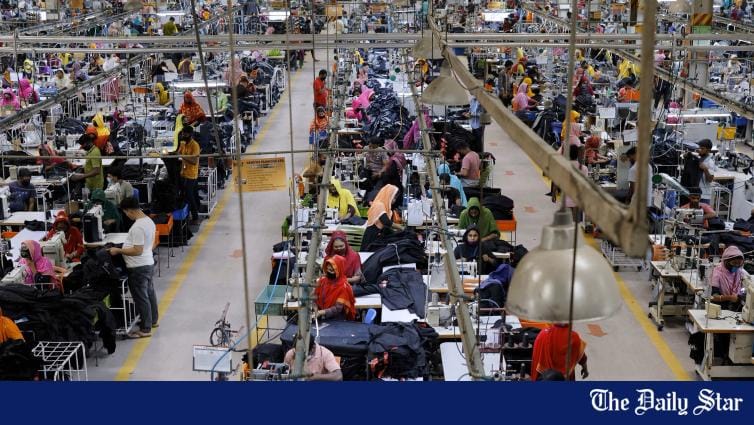
RMG exports, the engine of Bangladesh's external economy, account for more than 85 percent of its exports to the US. FILE PHOTO: REUTERS

The United States government's decision on reciprocal tariffs has sent shockwaves through financial markets and reverberated through economies worldwide. On April 2, the US introduced a sweeping tariff policy, imposing a baseline 10 percent reciprocal tariff on all imports and even higher country-specific tariffs. Bangladesh faced a crippling 37 percent tariff on its exports to the US. This new tariff regime not only sparked a global market crash but also ignited diplomatic and economic turmoil. Of course, a 90-day pause in the tariff decisions was placed within a week.

The market reaction was just one factor among several influencing the temporary change of decision on the tariffs. Growing political concern, both within the US and among international trading partners, has also been an issue. Many industry leaders and governments voiced unease over the economic uncertainty caused by these new tariffs. Concurrently, diplomatic negotiations took place, especially with countries that had avoided retaliatory measures. These combined factors led to the temporary suspension of tariffs on April 9 for more than 75 countries, while maintaining—and in some cases strengthening—the measures specifically directed towards China.

The US decision to impose a 145 percent tariff was met with a retaliatory 125 percent tariff from China on American goods. This tit-for-tat dynamic suggests that what was once a strategic economic rivalry has now spiralled into a trade war with far-reaching global consequences, where collateral damage is inevitable. For smaller export-dependent economies like Bangladesh, which are plugged into global supply chains through their economic activities, the repercussions are significant.

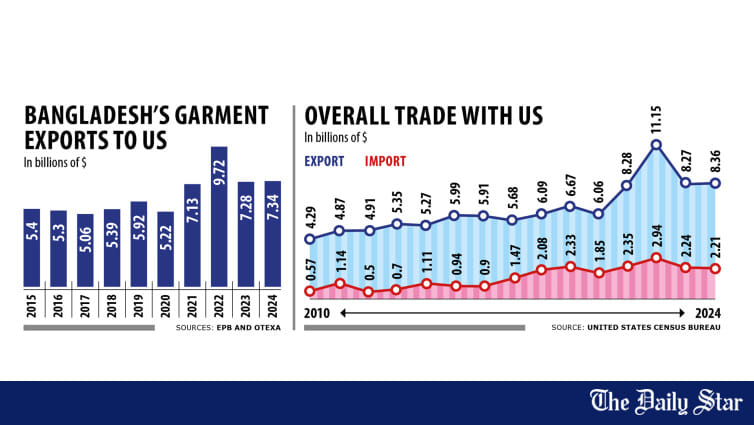
Bangladesh's trade in goods with the US is about $10.6 billion. In 2024, our total goods exports to the US were $8.4 billion, and imports from the US amounted to $2.2 billion. The additional 37 percent reciprocal tariff, if put into effect, presents a threat to Bangladesh's exports, especially its RMG sector, which is its economic lifeblood. RMG exports account for more than 85 percent of the country's exports to the US. Though a Least Developed Country (LDC), Bangladesh has not been allowed duty-free, quota-free (DFQF) market access for its RMG to the US since 2013. The country has already been paying a 15 percent tariff for its RMG products to enter the US market.

The new tariff regime will make Bangladeshi goods significantly more expensive in the US. As a result, US buyers may opt for suppliers from countries not subjected to the same tariff burdens—and Bangladesh risks losing market share in one of its most critical export destinations. The price shock could be absorbed by US buyers and Bangladeshi exporters to shield consumers from high prices. But whether, and by how much, the increased cost will be shared by exporters and importers is uncertain.

The RMG sector is not only the engine of Bangladesh's external economy but also an important source of employment. Therefore, the consequences of these tariffs for the RMG industry cannot be ignored. A reduction in orders from US retailers due to higher prices could force factories to cut back on production. In a labour-intensive industry, this will lead to job losses. Such a reduction could also have social ramifications—from rising unemployment and poverty to increased pressure on public services and social safety nets.

Beyond the direct impact on exporters and workers, high tariffs also threaten to disrupt Bangladesh's macroeconomic stability. Lower export earnings could lead to a widening trade deficit and reduced foreign exchange reserves. Additionally, the anticipated decline in US demand could push Bangladeshi manufacturers to slash profit margins and invest less in innovation, skills, and sustainability measures.

Following the US tariff announcement, the Bangladesh government wrote a letter to the US president on April 7 requesting the US to postpone the implementation of the tariffs for three months. Bangladesh has signalled a willingness to import more US products, including agricultural commodities like cotton, wheat, and soybeans, in an attempt to reduce the existing trade deficit.

One of the unfinished tasks has been developing a robust export sector in Bangladesh through diversification of both export products and markets. Dependency on a single export product is a weak trade strategy, as it is subject to vulnerability from both domestic and external shocks. Product diversification also includes the expansion of items within the RMG industry. Beyond RMG, leather products and pharmaceuticals also have a higher export potential. Diversification of markets will also help buffer against trade shocks to some extent. Moreover, Bangladesh must continue to invest in enhancing the quality and value of its products through improved designs, sustainability certifications, and compliance with international labour and environmental standards to maintain its competitive edge.

Since powerful countries have consistently undermined the rule-based multilateral trading system over the years, the objective of the World Trade Organization (WTO) to promote open and fair trade globally by reducing or eliminating tariffs has been facing challenges. Therefore, WTO member-states have resorted to plurilateral and bilateral trade agreements. Bangladesh is lagging behind in this regard. We should negotiate free trade agreements (FTAs) with our trading partners to prepare a robust trade sector. Countries such as Vietnam and Cambodia, which also export RMG products, have moved far ahead in this regard, enhancing their market access and export competitiveness.

Bangladesh should aggressively pursue FTAs that will offer tariff-free or reduced-tariff access to other markets. Strengthening its presence in regional trade blocs like BIMSTEC and deepening engagement with ASEAN economies could open new pathways for trade growth and regional integration. To achieve these objectives, the government must also align domestic policies with international standards, particularly concerning labour rights and environmental regulations. A thorough review of its tariff structures is also important. This is especially so as the country will graduate from LDC status in November 2026—when it will no longer enjoy non-reciprocity of tariff measures with its trading partners.

As part of trade policy reform, Bangladesh should demonstrate its commitment to fair trade by reducing non-tariff barriers (NTBs) and improving customs facilitation. Capacity-building across industries—via training programmes, technology adoption, and quality assurance mechanisms—will be essential to elevate the country's exports beyond price sensitivity.

The 90-day window is, therefore, an opportunity for Bangladesh to prove its diplomatic agility, economic foresight, and institutional capacity to respond to external shocks. Of course, it will take a long time to implement trade reforms. But if worked on systematically, Bangladesh can turn this challenge into a catalyst for transformation. It can leverage this critical moment for sustainable growth that is less dependent on preferential access and more rooted in innovation, diversification, quality, and productivity.

Dr Fahmida Khatun is executive director at the Centre for Policy Dialogue (CPD). Views expressed in this article are the author's own.​
 
Analyze

Analyze Post

Add your ideas here:
Highlight Cite Respond

Can Bangladesh ride out the wave of US tariffs?
1745024618966.webp


The global trading system, largely unchanged for a century, got a rude awakening on April 2 when US President Donald Trump slapped massive tariffs on imports into his country. The move sent shockwaves through world markets -- because when America sneezes, the global economy catches a cold.

At the heart of the storm is a staggering 145 percent tariff on Chinese goods. For Bangladesh, the hit was smaller but still painful -- a new 37 percent duty on top of existing taxes.

The announcement sent businesses scrambling. Orders froze. Buyers demanded discounts. Stock markets plummeted.

The tariffs were to take effect on the night of April 9. Then, at the eleventh hour, Trump suddenly paused the tariffs for 90 days -- except for China, which remains locked in a trade war with Washington.

However, the 10 percent baseline tariff on all products entering the American market will continue.

WHY NOW?

Trump had promised brutal tariffs during his 2024 campaign, vowing to bring manufacturing back to America. By following through, he aims to revive American manufacturing and boost domestic agricultural sales.

1745024679606.webp


His administration specifically wants to bring back production of high-tech goods like microchips, where China dominates the market.

China's stranglehold on high-tech industries, like semiconductor chips -- a $400 product that takes just hours to make but which the US can't produce cheaply anymore.

But why hit Bangladesh, a country that mostly sells garment items?

Simple: leverage.

Trump knows apparel-exporting nations depend on the US market. By squeezing them, he gains bargaining chips for future deals.

Interestingly, Trump doesn't prioritise mass production sectors like apparel due to their labour-intensive nature. Still, he imposed tariffs on apparel-producing countries like Bangladesh to gain leverage for future negotiations.

WHAT DOES THE HIGH TARIFF MEAN FOR BANGLADESH?

The US has long been Bangladesh's largest export destination, especially for garments, which account for over 90 percent of Bangladesh's exports to the US.

The US buys over $8 billion a year in garments from Bangladesh. But now, with tariffs set to jump from 16.1 percent to 53.5 percent, factory owners are sweating.

1745024725245.webp


Currently, Bangladesh is the third-largest apparel supplier to the US market after China and Vietnam respectively, accounting for around 9.3 percent of total US garment imports of $105 billion in a year, according to official data.

Bangladesh's garment export to the US was recovering from a slowdown over the last two years brought on by the severe fallout of Covid-19, Russia-Ukraine war, and historic inflationary pressure on the Western consumers.

The American government does not allow duty benefits on garment imports except for from 39 African countries under the African Growth and Opportunity Act.

So, Bangladesh does not enjoy duty benefits on garment shipments to the US.

Although the US agreed to allow duty free benefit for 97 percent of goods originated in the least developed countries (LDCs), it kept Bangladeshi garment items in the remaining three percent.

Still, Bangladesh's apparel exports to the US reached $1.5 billion during the January–February period of 2025, up 26.64 percent from $1.18 billion year-on-year, according to the US Office of Textiles and Apparel (OTEXA), a wing of the US Department of Commerce.

In the same timeframe, the US' global apparel imports increased by 11.2 percent to $13.55 billion.

During this time frame, the growth rates for apparel imports from other key countries stood at 8.85 percent for China, 25.70 percent for India, 23.05 percent for Pakistan, and 11.14 percent for Vietnam.

The US imported 23.38 percent more from Bangladesh, 7.25 percent more from Vietnam, 5.78 percent more from China, 31.90 percent more from India, 24.68 percent more from Pakistan compared to January-February 2024. The unit price per piece experienced a positive growth of 2.64 percent for Bangladesh.

There's a twist in the latest tariff shock, though.

China and Vietnam -- Bangladesh's top rivals -- got hit even harder.

If their goods become too expensive for American buyers, Bangladesh could steal market share.

If Trump enforces the full tariff structure after the 90-day pause, countries like China, Vietnam, and Cambodia could lose competitiveness.

However, India and Pakistan -- facing lower tariffs than Bangladesh -- could attract more work orders, causing some buyers to shift from Bangladesh to these nations, along with Egypt, Kenya, and Turkey.

Despite these challenges, trade experts say Bangladesh remains cost-competitive due to its skilled workforce, lower production costs, and large manufacturing capacity.

For example, if international clothing retailers and brands pay $10 for a T-shirt from China or Vietnam, it might cost only $5–$6 from Bangladesh.

GLOBAL PRICE WARS AHEAD?

With higher tariffs pushing China and Vietnam out of the US market, they may focus more on European and Asian markets, sparking fierce price wars. This could affect all major apparel suppliers, including Bangladesh, as global buyers push for lower prices.

If China, Vietnam, Bangladesh, India and Pakistan supply to the same markets, the international clothing retailers and brands will take the opportunity to seek price cuts from the local suppliers.

At the same time, US-based retailers, who pay the tariffs, are negotiating with suppliers in Bangladesh to share the added costs. This pressure could impact profitability for Bangladeshi manufacturers.

CURRENT US-BANGLADESH TRADE OUTLOOK

Historically, the balance of trade between Bangladesh and the US has been heavily tilted towards Bangladesh because of higher garment shipments to American markets, especially woven garments such as trousers and T-shirts.

Last year, Bangladesh exported goods worth $8.36 billion to the US, up from $8.27 billion in 2023, according to data from the United States Bureau of Census.

On the other hand, Bangladesh imported just $2.21 billion worth of goods from the US in 2024, down from $2.24 billion in 2023. Bangladesh mainly imported cotton, soybean seeds, iron and steel products from the USA.

While Trump's tariff strategy aims to protect domestic industries, American consumers could ultimately bear the cost. Since importers pay the tariff and often pass it on to consumers, prices are expected to rise.

As such, major US trade bodies, including the American Apparel and Footwear Association, the United States Fashion Industry Association, and the National Retail Federation, have expressed concern. They warn that higher tariffs may increase living costs, spark inflation, and possibly lead to a recession.

BANGLADESH'S DIPLOMATIC RESPONSE

Bangladesh has already taken steps to address the situation.

Chief Adviser to the interim government Professor Muhammad Yunus sent a letter to Trump seeking a pause for 90 days and Commerce Adviser Sk Bashir Uddin sent another letter to the United States Trade Representative (USTR), the chief trade negotiation body for the American government, offering duty-free benefit to another 100 American goods in addition to the 190 already privy to such benefits.

A team is scheduled to travel to the USA on April 21 to hold negotiations with the USTR for lowering the tariff rates for Bangladesh.

A WINDOW OF OPPORTUNITY?

Like other countries, Bangladesh has also been left to calculate whether this is an opportunity or a threat. So far, analyses show that while the tariffs pose challenges, they may also offer opportunities if Bangladesh plays its cards right

For instance, China may lose a big market share due to the 145 percent tariff.

Bangladesh has a lot of skilled workforce, higher installed capacity, lower prices, lower production cost and lower tariff rates compared with China and Vietnam.

So, losing Chinese and Vietnamese competition could help Bangladesh gain market share -- if it acts strategically.

"It's an opportunity if we can play our cards right. It's a disaster if we don't engage in meaningful economic diplomacy," said Rubana Huq, a former president of Bangladesh Garment Manufacturers and Exporters Association (BGMEA).

"Everything will depend on strong diplomatic moves. Above all, we must connect with the key personnel in the Trump administration, who in this case is Scott Bessent, who has been entrusted by Trump to deal with individual countries. Strategic alignments are needed besides committing to more imports and removal of non-trade barriers," Huq said.

"Let's remember that Vietnam, in spite of reaching out to Trump at the very beginning, is now being viewed as an adversary of the US administration just because there are discourses on regional interests, which have just started in Asia.

"Meanwhile, India is in a comparatively favourable position as they are single-handedly wooing the Trump administration. So, it's about giving the right dose of attention to the US for being the single largest export destination for Bangladesh."

AK Azad, managing director of Ha-Meem Group which exports 90 percent of its products to the US, said Bangladesh should negotiate with the aim of gaining something positive from this game.

Bangladesh should offer a zero-duty rate on the import of American goods. If it does so, then the US may also offer zero-duty benefits on Bangladeshi imports. This will be a huge benefit for Bangladesh from this game, Azad said.

Mohammad Abdur Razzaque, chairman of Research and Policy Integration for Development (RAPID), said if the 145 percent tariff on China is finally fixed, it may present a window of opportunity for Bangladesh.

Since Vietnam has also been facing higher tariffs, the Chinese investment in Vietnam may also be affected. However, it is really difficult to say anything definite because Trump is unpredictable, Razzaque said.

At the same time, Bangladesh's supply side should also be increased and improved.

For instance, 75 percent of Chinese garments exported to the US are composed of man-made fibre-based items, but Bangladesh is not so strong in man-made garment items. If Bangladesh does not invest more in backwards integration of the garment industry, the country may not benefit a lot from this tariff game, he added.​
 
Analyze

Analyze Post

Add your ideas here:
Highlight Cite Respond

Ensuring US market access
Published :
Apr 19, 2025 22:53
Updated :
Apr 19, 2025 22:53

1745105146880.webp


The three-month pause on "reciprocal" tariffs announced by the Trump administration for all countries except China leaves a narrow window for action. While three months is scarcely enough time for any government to negotiate a complex trade deal, this is the timeframe within which Bangladesh must operate. In his letter to the US president Donald Trump, chief adviser Muhammad Yunus had requested the postponement of US tariff measures for this specific duration, a period he said was needed to implement initiatives to increase US exports to Bangladesh. With his wish granted, it is now the government's responsibility to seize this opportunity to protect the largest single-country destination for Bangladesh's goods.

Against this backdrop, the Centre for Policy Dialogue (CPD) recently organised a discussion titled "Trump Reciprocal Tariffs and Bangladesh: Implications and Response" to examine the strategies for responding to the emerging situation. It is already well established that, contrary to its name, the US's reciprocal tariff is not truly reciprocal but rather a unilateral measure aimed at reducing its trade deficit. As noted during the discussion, exports from the US to Bangladesh face an average duty of 6.2 per cent, which drops to 2.2 per cent after rebates, while Bangladeshi products entering the US face tariffs averaging 15.2 percent. Given that the existing tariff structure already favours the United States, any proposition from Bangladesh for further tariff reductions is unlikely to generate reciprocal interest. Some experts at the CPD event suggested that securing a Free Trade Agreement (FTA) with the US could help safeguard Bangladesh's export market. Examples of several developing countries, such as Jordan, which have FTAs with the US, were cited to illustrate the possibility of Bangladesh achieving such an agreement through effective negotiation. However, this policy suggestion misses the mark, as the primary focus of the US tariff measures is to increase its exports to address trade deficits. It is therefore highly improbable that the US would agree to reduce tariffs without this key concern being addressed. It is worth noting that having an FTA did not prevent Jordan from being subjected to 20 per cent reciprocal tariffs as it maintained a trade balance unfavourable to the US.

While pursuing an FTA and activating the Trade and Investment Cooperation Forum Agreement (TICFA) as suggested in the CPD dialogue may be valuable in the long term, the severely limited timeframe within which Bangladesh must find a solution renders this approach less useful. Any viable solution to navigate the current challenge must involve a positive response to the US demand for a more balanced trade relationship. There are indeed measures that Bangladesh can take towards achieving this. For instance, Bangladesh's top imported item is refined petroleum, valued at almost $7 billion per year, primarily sourced from countries with which Bangladesh holds significant trade deficits, including China, India, Malaysia and Singapore. Another major import of Bangladesh is cotton and cotton yarn, procured mainly from China and India. Notably, the United States is the world's leading exporter of both refined petroleum and raw cotton. Rather than importing these crucial items from countries with whom Bangladesh already has substantial trade deficit, redirecting a portion of these imports to the US could be a pragmatic move toward balancing bilateral trade.

For long-term security and resilience, Bangladesh must diversify its export markets to reduce the risks of over-reliance on any single market. However, extraordinary circumstances call for extraordinary measures, and in the short term, redirecting key imports to the US appears to be the most viable option. If pursued deftly, such a strategy could not only help Bangladesh avoid punitive tariffs but also create additional entry points for its products in the US market.​
 
Analyze

Analyze Post

Add your ideas here:
Highlight Cite Respond

US tariff strategy demands smart diplomacy, structural reforms in Bangladesh: Experts
FE ONLINE REPORT
Published :
Apr 20, 2025 20:40
Updated :
Apr 20, 2025 20:40

1745196446423.webp


The United States' evolving reciprocal tariff policy poses both risks and opportunities for Bangladesh, and the country must prepare strategically to appropriate the changing global trade landscape, experts said at a seminar on Sunday.

The seminar titled "Emerging Landscape of Trade: Trump's Tariff Policy and Its Implications for Bangladesh" was organised by DACCA Institute of Research and Analytics, held at the Bishow Shahitto Kendro, in the city.

Dr Kazi Iqbal, Research Director at the Bangladesh Institute of Development Studies (BIDS), chaired the session, while Dr Deen Islam, Associate Professor at Dhaka University, presented the keynote paper.

The paper said that a forward-looking, diversified export strategy—backed by smart diplomacy, structural reforms, and private sector innovation—is essential for Bangladesh to thrive under the new trade regime.

“Being prepared will determine whether Bangladesh is sidelined or elevated in the new trade architecture,” said Dr Islam, stressing that tariff wars, shifting alliances, and non-tariff barriers require both tactical and long-term responses.

Md Mamun-Ur-Rashid Askari, Joint Chief (International Cooperation) at the Tariff Commission, warned of growing trade policy uncertainties.

"Global LDC exports account for only 1.2 per cent of total trade," he said.

Mr Askari pointed to the United States Trade Representative (USTR) report that emphasised non-tariff issues including trade facilitation, subsidies, intellectual property rights, and technical barriers.

“Our export market remains highly concentrated and costly, and trade facilitation could significantly reduce business costs,” he said.

He also expressed concerns over Bangladesh's preparedness for LDC graduation.

“WTO non-compliance issues must be resolved to attract investors,” said Askari, calling for swift implementation of the National Tariff Policy 2023 to address tariff anomalies.

Shams Mahmud, former President of Dhaka Chamber of Commerce and Industry (DCCI), said that Bangladesh might benefit from the shifting of Chinese factories due to the US-China trade tension.

However, he also cautioned that fake products, unregulated digital markets, and undercutting among local firms pose serious threats to sustainability.

Citing the example of Angola, which postponed its graduation due to economic stress, Mahmud argued that Bangladesh’s private sector remains underprepared, especially in adopting green energy and value-added production.

Bangladesh’s weak logistics and infrastructure systems were also flagged as critical bottlenecks.

“A 33 per cent hike in gas prices has further strained industries. Older factories are paying Tk 30 per unit, while new ones are charged Tk 40,” he said.

Yarn imports from India have become difficult due to procedural challenges, it hurts especially 850 SMEs lacking high banking relationships, he said.

He also criticised the slow automation of port operations and air cargo pricing policies, stating that inefficiencies lead to significant financial damage, with shipping delays costing up to $1.0 per kg in exports.

However, he also found a positivity in the US tariff.

“If reciprocal tariffs reduce fuel and commodity prices, it might ease inflationary pressure,” he said.

He also said that the existence of US cotton warehouses in Bangladesh provides certain comparative advantages for local manufacturers.

Dr Kazi Iqbal said that Bangladesh's long-standing relationship with Western buyers—especially in garments—will not dissolve overnight.

A reallocation in terms of imports might be held by the US, which should be tapped, he said.

He said Bangladesh lacks an industrial policy or clear roadmap for manufacturing industries.

India and Brazil have gone far ahead in the automobile industry.

"Bangladesh must eye on the automobile industry through appropriating a comprehensive industrial policy. We have to make our own engines," he said.

He also put emphasis on the bargaining power, domestic manufacturing capabilities, and comprehensive industrial planning to ensure resilience in a shifting global economy.​
 
Analyze

Analyze Post

Add your ideas here:
Highlight Cite Respond

Members Online

No members online now.

Latest Posts

Back
 
G
O
 
H
O
M
E