Home Watch Videos Wars Movies Login

Wars 2022 02/24 Monitoring Russian and Ukraine War.

Wars 2022 02/24 Monitoring Russian and Ukraine War.
636
22K
More threads by PakistanProud

G War Archive

Zelensky postpones Saudi Arabia trip after US-Russia talks
AFP
Ankara, Turkey
Published: 18 Feb 2025, 21: 25

1739927224695.webp

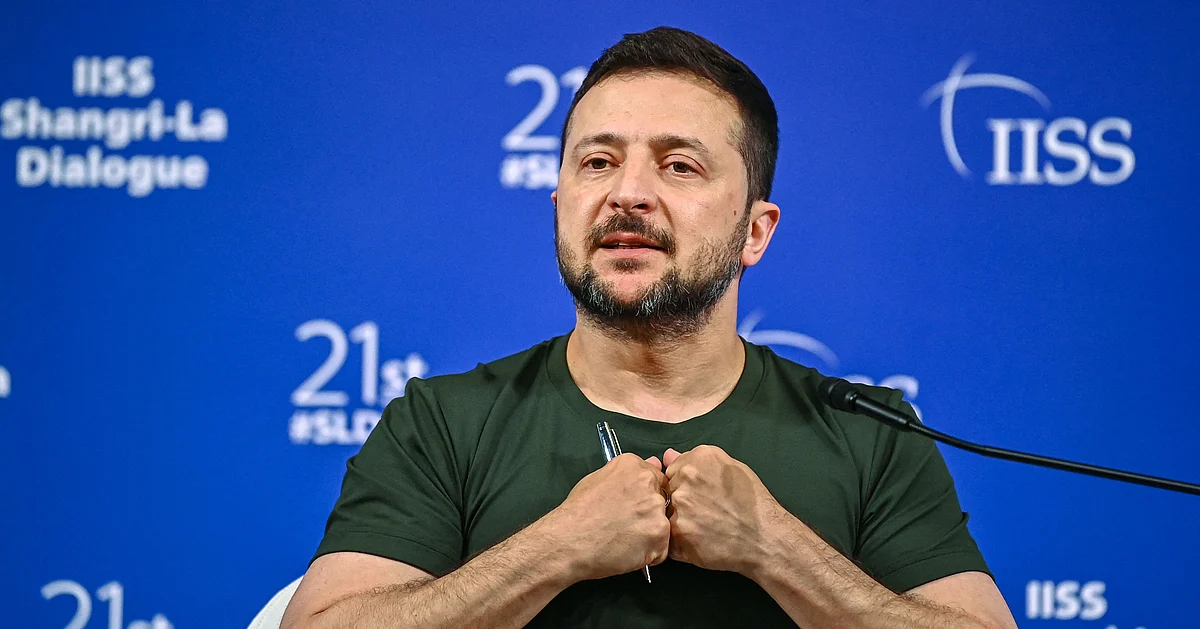
Ukraine’s President Volodymyr Zelensky speaks during the 21st Shangri-La Dialogue summit at the Shangri-La Hotel in Singapore on 2 June, 2024AFP file photo

Volodymyr Zelensky has pushed back his visit to Saudi Arabia, where he was due on Wednesday, after the United States and Russia held their first high-level talks since the Russian invasion of Ukraine there.

During a press conference in Turkey on Tuesday, Zelensky slammed the meeting -- to which he said he was not invited -- and said he had decided to postpone his official visit to the Middle Eastern country until 10 March.​
 
Analyze

Analyze Post

Add your ideas here:
Highlight Cite Respond
Analyze

Analyze Post

Add your ideas here:
Highlight Cite Respond
  • Like (+1)
Reactions: Sharma Ji
Jahil thudd whulld subcontinent military's got no clue whatsoever.

Thudd whulld militarys wouldn't last 2 minutes on the modern battlefield.

Yous can't even hide from drones no more!
 
Analyze

Analyze Post

Add your ideas here:
Highlight Cite Respond
@Sharma Ji

you seeing dis?


I'd like to see how these wire guided ones do in our high altitude mountainous or heavily forested regions where our wars will be fought in the here subcontinent.
 
Analyze

Analyze Post

Add your ideas here:
Highlight Cite Respond
The plains of donbass mostly flatland.. horses for courses waali baat, it all comes down to.

Like wines, you must pair your dishes nicely.. red wine ke saath spicy red meat and spices waala khaana.

White wines ke saath creamy bland goron waala khana..

I mean, you could do a yakhni with a white, or a goshtaba, but not rista, or a mutton korma.. uss me you want the red wine.

like that, kinda..
 
Analyze

Analyze Post

Add your ideas here:
Highlight Cite Respond

Trump tells Zelenskiy to move fast for peace or lose Ukraine

1740005674470.webp

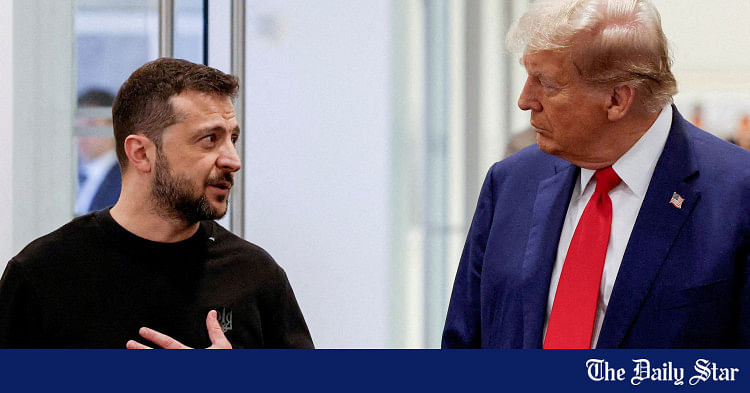
Donald Trump and Volodymyr Zelenskiy meet at Trump Tower in New York City, US, September 27, 2024. File Photo: Reuters/Shannon Stapleton
  • Trump calls Zelenskiy 'a dictator without elections'​
  • Trump speaks after Zelenskiy accuses him of being trapped in Russian disinformation bubble​
  • 'We will defend our right to exist,' Ukraine's foreign minister says in response to Trump​
  • Putin says US-Russia trust is key to any Ukraine peace deal​
  • EU floats plan to boost weapons supplies to Ukraine​

US President Donald Trump on Wednesday denounced Ukrainian President Volodymyr Zelenskiy as "a dictator without elections" and said he had better move fast to secure a peace or he would have no country left.

Trump spoke hours after Zelenskiy hit back at his suggestion that Ukraine was responsible for Russia's 2022 full-scale invasion, saying the US president was trapped in a Russian disinformation bubble.

"A Dictator without Elections, Zelenskiy better move fast or he is not going to have a Country left," Trump wrote on his Truth Social media platform.

In response, Ukrainian Foreign Minister Andrii Sybiha said no one could force his country to give in. "We will defend our right to exist," Sybiha said on X.

German Chancellor Olaf Scholz said Trump calling Zelenskiy a 'dictator' is 'false and dangerous', German newspaper Spiegel reported.

"It is simply wrong and dangerous to deny President Zelenskiy his democratic legitimacy," Scholz said.

Zelenskiy's five-year term was supposed to end in 2024 but presidential and parliamentary elections cannot be held under martial law, which Ukraine imposed in February 2022 in response to Russia's invasion.

Russia has seized some 20% of Ukraine and is slowly but steadily gaining more territory in the east. Moscow said its "special military operation" responded to an existential threat posed by Kyiv's pursuit of NATO membership. Ukraine and the West call Russia's action an imperialist land grab.

Zelenskiy, who met Trump's Ukraine envoy Keith Kellogg in Kyiv on Wednesday, said he would like Trump's team to have "more truth" about Ukraine, a day after Trump said Ukraine "should never have started" the conflict with Russia.

The Ukrainian leader said Trump's assertion that his approval rating was just 4% was Russian disinformation and that any attempt to replace him would fail.

"We have evidence that these figures are being discussed between America and Russia. That is, President Trump ... unfortunately lives in this disinformation space," Zelenskiy told Ukrainian TV.

The latest poll from the Kyiv International Institute of Sociology, from early February, says 57% of Ukrainians trust Zelenskiy.

Less than a month into his presidency, Trump has upended US policy on Ukraine and Russia, ending Washington's bid to isolate Russia over its invasion of Ukraine with a Trump-Putin phone call and talks between senior US and Russian officials.

TRUMP-PUTIN MEETING

Trump said he may meet Putin this month. The Kremlin said such a meeting could take longer to prepare but Russia's sovereign wealth fund said it expected a number of US companies to return to Russia as early as the second quarter.

In Moscow, Putin said on Wednesday that Ukraine would not be barred from peace negotiations but success would depend on raising the level of trust between Moscow and Washington.

Putin, speaking a day after Russia and the US held their first talks on how to end the three-year-old conflict, also said it would take time to set up a summit with Trump, which both men have said they want.

"But we are in such a situation that it is not enough to meet to have tea, coffee, sit and talk about the future," Putin said in televised remarks.

"We need to ensure that our teams prepare issues that are extremely important for both the United States and Russia, including - but not only - on the Ukrainian track, in order to reach solutions acceptable to both sides," he said.

Ukraine and European governments were not invited to Tuesday's talks in the Saudi capital, which magnified their concern that Russia and the United States might cut a deal that ignores their vital security interests.

Putin said no one was excluding Ukraine from talks and that there was therefore no need for a "hysterical" reaction to the US-Russia talks.

Trump says Europe must step up to guarantee any ceasefire deal. Zelenskiy has suggested giving US companies the right to extract valuable minerals in Ukraine in return for US security guarantees, but said Trump was not offering that.

Zelenskiy told a press conference the US had given Ukraine $67 billion in weapons and $31.5 billion in budget support, and that American demands for $500 billion in minerals are "not a serious conversation", and that he could not sell his country.

Kellogg, the US Ukraine envoy said as he arrived in Kyiv that he expected substantial talks as the war approaches its three-year mark. "We understand the need for security guarantees," Kellogg told journalists, saying that part of his mission would be "to sit and listen".

Trump's US policy reversal clashed with allies in the 27-member European Union, whose envoys on Wednesday agreed on a 16th package of sanctions against Russia, including on aluminium and vessels believed to be carrying sanctioned Russian oil.

The EU's diplomatic service has proposed boosting the bloc's military aid for Ukraine, aiming to show continued support for Kyiv, though no quick decision is expected.

The proposal says the main goals would be to supply at least 1.5 million rounds of large-calibre artillery ammunition, as well as air defence systems, missiles for deep precision strikes, and drones.

European officials have been left shocked and flat-footed by the Trump administration's moves on Ukraine in recent days. Chief among their fears: that they can no longer be sure of US military protection and that Trump will do a Ukraine peace deal with Putin that undermines Kyiv and broader European security.

Swedish Prime Minister Ulf Kristersson said on Wednesday that while there was no complete agreement in the EU on how to proceed, "we need to keep a cool head and continue to support Ukraine".​
 
Analyze

Analyze Post

Add your ideas here:
Highlight Cite Respond

Zelensky accuses Trump of living in Russian ‘disinformation’
Agence France-Presse . Kyiv, Ukraine 20 February, 2025, 00:08

1740010195997.webp

Ukrainian president Volodymyr Zelensky. | AFP photo

Ukrainian president Volodymyr Zelensky on Wednesday accused Donald Trump of succumbing to Russian ‘disinformation’, deepening a rift between Kyiv and the new US administration.

Speaking to reporters at a press conference on Tuesday, Trump echoed many of Russia’s talking points on the three-year war in Ukraine, blaming Kyiv for having ‘started’ the fighting and suggesting Zelensky was hugely unpopular.

Trump claimed his Ukrainian counterpart had a minimal approval rating in his country — despite polls showing otherwise.

Zelensky hit back, saying that ‘unfortunately, president Trump, for whom we have great respect as leader of the American people lives in this disinformation space.’

Zelensky’s comments highlighted a growing rift between Ukraine and the Trump administration, which sent officials to meet with Russian negotiators on Tuesday in a high-level meeting in Saudi Arabia that excluded Kyiv.

‘I believe that the United States helped Putin to break out of years of isolation,’ the Ukrainian leader added, in some of his sharpest criticism yet of the new US administration.

Russia has revelled in Trump’s remarks, praising him on Wednesday as the ‘only Western leader’ who understood that ‘dragging Ukraine into NATO’ was a cause of the conflict.

‘He is a completely independent politician,’ Russian foreign minister Sergei Lavrov was quoted as saying by the state-run TASS news agency on Wednesday.

Trump’s special envoy for Ukraine, Keith Kellogg, arrived in the Ukrainian capital on Wednesday morning in what he said was a mission to ‘sit and listen’ to Kyiv’s concerns, after Ukraine chided the US for not being included in the Russian talks.

Trump has upended US foreign policy since taking office last month, making statements that have alarmed even Washington’s closest allies.

His diplomatic overtures towards the Kremlin have alarmed Ukraine, which fears it will be forced to make massive concessions to end the fighting.

In his press conference on Tuesday, Trump suggested that one such concession would be to hold new elections in Ukraine, one of Moscow’s demands for a peace deal.

‘It’s been a long time since we’ve had an election,’ said Trump. ‘That’s not a Russian thing, that’s something coming from me, from other countries.’

Zelensky was elected in 2019 for a five-year term, but has remained leader under martial law imposed following the Russian invasion.

Trump also claimed the Ukrainian leader’s approval rating was ‘at four per cent’.

Zelensky’s popularity has eroded since the war began, but the percentage of Ukrainians who trust him has never dipped below 50 per cent since the invasion, according to the Kyiv International Institute of Sociology.

A telephone poll of 1,000 people by the institute released on Wednesday found that 57 per cent of respondents trusted Zelensky, while 37 per cent said they did not and the rest were undecided.

Borys Filatov, the mayor of the Ukrainian city of Dnipro, appeared to push back at Trump’s comments.

‘We may or may not like Zelensky. We can scold him or we can praise him. We can condemn his actions or applaud them. Because he is OUR President,’ he said.

‘And not a single lying creature in Moscow, Washington, or anywhere else has the right to open their mouths against him.’

Trump’s latest comments are unlikely to allay fears among some European leaders, already worried that Washington will make serious concessions to Moscow and re-write the continent’s security arrangement in a Cold War-style deal.

Ukraine had been working on a deal to give the US access to vast amounts of Ukrainian natural resources in exchange for protection.

But the deal fell through as Ukraine said the draft agreement lacked any security guarantees.

‘I am defending Ukraine, I cannot sell our country. That’s all,’ Zelensky said.

In Paris, France’s president Emmanuel Macron was to host another meeting in Paris on Ukraine on Wednesday. In comments on Tuesday to the French media after the US-Russia talks, he suggested that Trump could restart ‘useful dialogue’ with Putin.

Early on Wednesday, Russian strikes in the southern Ukrainian city of Odesa left tens of thousands of people without power, Zelensky said on social media.

‘At least 1,60,000 Odesa residents are now without heat and electricity,’ he said.

For the past three years, Russia has been targeting Ukraine’s energy infrastructure, as well as its towns and villages.

In Brussels, EU diplomats said member states had on Wednesday agreed a new round of sanctions against Russia. It will be formally adopted by EU foreign ministers on Monday, the third anniversary of Kremlin’s invasion of Ukraine.​
 
Analyze

Analyze Post

Add your ideas here:
Highlight Cite Respond

Trump's Ukraine policy reasserts diplomacy
Syed Badrul Ahsan
Published :
Feb 19, 2025 21:40
Updated :
Feb 19, 2025 21:40

1740011474247.webp


One couldn't have imagined this situation till recently. President Donald Trump, despite the many complaints people have over the nature of his politics in various fields, has dramatically altered conditions where the Russia-Ukraine war is concerned. In the three years since President Vladimir Putin sent Russian troops into Ukraine, diplomacy was conspicuous by its absence.

No effort was expended by the Biden administration or the European Commission or NATO to bring about a negotiated end to the conflict or to engage Moscow in steps toward a rolling back of the situation. Donald Trump is now doing precisely what should have been done in the past three years. In all this time, the West should have exercised diplomatic wisdom but didn't. People like Ursula von der Leyen and Jens Stoltenberg through their abrasive attitude toward Putin only helped to worsen conditions.

It is indeed deplorable that NATO and the West in general paid little heed to Russian concerns about the threats to its security in the form of Ukraine becoming part of NATO. In these three years, the West, led by Washington, went into systematically arming President Volodymyr Zelensky in the belief that Ukraine could beat Russia on the battlefield. That Putin committed a grave error in launching his war against Ukraine is a truth no one denies or looks away from. Both Moscow and Kyiv have paid the price, with thousands of their soldiers dying in battle. Villages and cities in Ukraine have borne the terror engendered by war. Ukrainian drone attacks on Moscow have led to the death of important Russian officials and the destruction of property.

In modern times, it is the nature of politics to identify the aggressor and those aggressed against. It is only proper that nations or leaders responsible for initiating a process of calamity in a region be condemned. But with that also comes the idea that conflicts which break out must not be escalated by the actions of those who condemn such conflicts. In our times, it is of the gravest importance that every move be directed toward a de-escalation of conflict between and among nations. It is a serious offence for states and organisations to provoke an intensification of a conflict that is already affecting lives in the countries involved in the conflict.

In these three years, no effort was expended by the West toward addressing the core issues responsible for the outbreak of the Russia-Ukraine conflict. President Biden, Vice President Kamala Harris, Secretary of State Antony Blinken, as also the leading political figures in Europe went into overdrive to arm Ukraine with the most sophisticated of weapons in the belief that Russia could be punished, that Zelensky needed to be propped up every step of the way. And into that process came the controversial decision by the International Criminal Court (ICC) to impose sanctions on President Putin, thereby restricting his right to travel. The ICC act was a grave mistake and should not have happened. In simple terms, since February 2022, the West went no-holds-barred into presiding over a worsening of the situation. No one was ready or willing to engage the Russians in a dialogue.

And that was a blunder. The European Commission and NATO never demonstrated any inclination for a diplomatic approach to the issue. It is inconceivable that in these times the need for diplomacy was discarded in such cavalier fashion. Every move made in the West, every summit of Western leaders had a target: punish Moscow. It was a replay of regional politics dating back to the times before Metternich, Castlereagh and Talleyrand. Diplomacy is never a means of insulting the enemy but keeping the door open for him to negotiate with those he has offended by his behaviour. On Ukraine, the West believed, naively, that President Putin would bite the dust in the face of its consistent and unwise arming of Ukraine.

Now that President Trump is keen on reversing the situation, through what is obviously dramatic diplomacy on his part, one expects a resolution of the crisis. Secretary of State Marco Rubio and Foreign Minister Sergei Lavrov have met in Riyadh, which is again a breakthrough given that in the recent past, every time Russian's top diplomat rose to address a global gathering of eminent people, representatives of nations opposed to Moscow walked out of the hall. That is no more the situation, though one can't at this point quite fathom the nature of a possible resolution of the conflict in Ukraine. One does expect, though, this Moscow-Washington interaction to continue and in fact deepened through a Putin-Trump summit in the near future.

Moscow has to date given no hint of any concessions it might be willing to come forth with as part of a settlement. It is quite possible, in light of statements by US Vice President JD Vance and Defence Secretary Pete Hegseth, that Ukraine will have little option other than giving up slices of territory already under Russian control to Moscow. More significantly, Moscow will insist --- and Washington appears to agree --- that Ukraine will not be a member of NATO. A chastened NATO has in these past few days appeared to come round to the realisation that Ukraine's NATO ambitions will need to be put aside if the war must be brought to a close.

Ukraine and Europe were not invited to the Riyadh talks, which certainly has them miffed. But for both Trump and Putin, a point of note is that any negotiations on ending the war cannot but ensure that President Zelensky, NATO and the European Commission have seats at the table, the better for a durable peace agreement to be worked out. For the Trump administration, in light of the diplomacy it has initiated on Ukraine, it will be wise to go the whole stretch of the road if the requirement is indeed a total winding down of and closure to the conflict. And, yes, the ICC must move in to lift the sanctions it has imposed on President Putin.

President Trump's decisive action over Ukraine is an encouraging reassertion of diplomacy, a reality which had been put in cold storage in Washington and Brussels and other Western capitals in the last three years. It is an opportunity for the world to draw back from brinkmanship, be the brinkmanship initiated by Moscow or the West. The bridge to conflict resolution is diplomacy. Donald Trump and Vladimir Putin owe it to the world to prove the validity of this statement.​
 
Analyze

Analyze Post

Add your ideas here:
Highlight Cite Respond

Members Online

Latest Posts

Back
 
G
O
 
H
O
M
E