[🇧🇩] Banking System in Bangladesh

[🇧🇩] Banking System in Bangladesh
374
13K
More threads by Saif

G Bangladesh Defense

Undesirable developments at Islami Bank Bangladesh

Published :
Jun 03, 2026 23:29
Updated :
Jun 03, 2026 23:29
1780532514251.webp


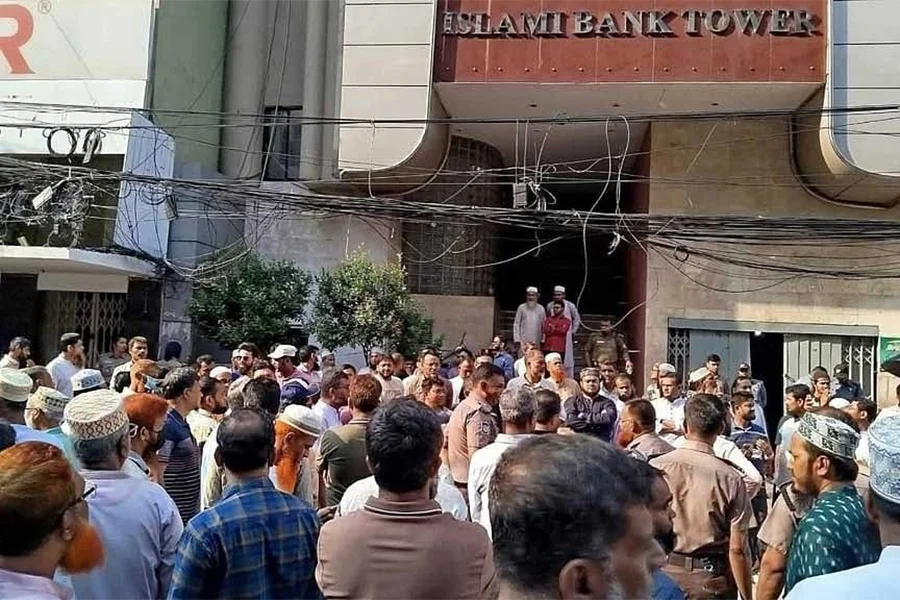
The fracas over appointment of a chairman to the Islami Bank Bangladesh PLC exposes the disconcerting fact that financial institutions in this country are yet to come of age. Why should its customers---if they are really so--- organise a protest rally opposing a new chairman and demanding reinstatement of the outgoing one? If the clientele of a sick bank arranges such a programme over uncertainty of getting their deposited money back, it is quite understandable. But this bank risks no such financial mishaps and therefore depositors should remain unconcerned about any reshuffle at the helm of affairs. In fact, common customers are unlikely to be knowledgeable about the calibre of a top functionary of a bank. The organised protest smells rat. It is intriguing and smacks of some motivated game plan.

The protesters have complained that the newly appointed chairman had connection with notorious money launderer S Alam. This is a serious allegation. Now the question is if there is any truth in this or it is politically motivated to malign the man. The bone of contention here is the section 18A of the Bank Resolution Act,2026. This contains the controversial clause---one that allows former owners and shareholders of distressed or merged banks to reclaim their ownership by initially paying an upfront amount of a minimum of '7.5 per cent of the total funds injected by the government'. The rest '92.5 per cent of the injected fund can be paid over two years at a 10 per cent simple interest rate'. Is there any evidence of using this provision for the appointment of the new chairman? If this has not happened, there is no ground for raising accusing fingers at the appointment of the chairman. He served the Bangladesh Bank and is not known to be a shareholder of the Islami Bank Bangladesh PLC.

This, however, does not exhaust the option of controversy. He can be a political appointee to draw wrath of another contending party. If the management of a bank is politicised, it bodes ill of not just the bank concerned but of the entire banking sector. Ideally banks---nationalised or private---should be developed as financial institutions without any room for political manoeuvre. What devastating consequences political interference with the banking affairs can lead to is best exemplified by the collapse of the five Islami banks now merged together.

Like educational institutions, banks should as well be left alone to be efficiently handled by highly experienced professionals. Institutionalisation of banks is possible only when legal provisions and policies guarantee the required independence of the management. The Bank Resolution Act, 2026 with the 18A clause goes against this banking objectivity or neutrality in both spirit and substance. So, the International Monetary Fund (IMF) has been clamouring not for nothing. A thorough and comprehensive banking reform is well in order now in the interest of institutionalisation of the sector. The undesirable development at the Islami Bank Bangladesh PLC confirms that banking in the country is in a dire need of reform. Governance of banks has to follow the rules of law in order to eliminate once and for all the emergence of future S Alams. The 18A clause of the Bank Resolution Act, 2026 should be struck out.​
 

Currency shocks, governance deficits deepen NPL crisis

Finds CPD study spanning 2015-2025

Star Business Report

1780629520879.webp


Not only wilful defaulters, poor lending practices and undue influence, but also macroeconomic factors have contributed to the rise in bad loans in Bangladesh’s banking sector, according to a new study by the Centre for Policy Dialogue (CPD).

Currency depreciation, high real interest rates and governance deficits are among the key drivers of the bad loan crisis, the organisation said, citing an empirical model based on banking sector data from 2015 to 2025.

The damage intensifies precisely when the banking sector is already under stress, CPD found, analysing data sourced from the Bangladesh Bank, World Bank and the Bangladesh Bureau of Statistics.

The findings were unveiled yesterday at a press briefing on the state of the economy, where Executive Director Fahmida Khatun said the sector has suffered from long-standing weaknesses that official figures continue to understate.

According to the BB, the gross bad loan ratio fell from 35.7 percent in September 2025 to 30.60 percent in December. But CPD said the decline does not reflect genuine recovery.

The think-tank noted that loan rescheduling, restructuring and write-offs -- accounting tools that delay rather than resolve defaults -- were largely responsible for the drop rather than an improvement in banks’ financial health.

These tools have also hidden the real extent of stress in the sector, it said, pointing out that by March this year, the ratio had climbed back to 32.26 percent. “Actual classified loans are higher than reported figures.”

Asset quality reviews of six banks have already found bad loan levels significantly higher than previously disclosed, CPD said, adding that more reviews are underway.

WEAKER TAKA MEANS HIGHER NPLs

The think-tank’s empirical model -- which measures how strongly different factors push NPLs up or down across normal and high-stress conditions -- found currency depreciation to be the most consistent driver of bad loans.

The weaker the taka, the higher the NPLs, and the relationship holds whether the banking sector is healthy or struggling. During high-stress periods, the model shows the effect is roughly 2.5 times stronger than during normal conditions.

High borrowing costs follow a similar pattern. Rising real interest rates show a significant impact on loan quality during periods of elevated stress, compared to normal times. GDP growth works in the opposite direction. Stronger economic activity reduces bad loans by supporting borrowers’ ability to repay.

The effect is sharpest during stress periods, underlining how closely the banking sector’s health is tied to the broader economy.

Fahmida noted that private sector credit growth fell to a record low of 4.72 percent in March, reflecting weak business confidence and high financing costs. High borrowing costs and economic uncertainty have also discouraged companies from making new investments.

The CPD also noted that excess liquidity -- idle funds sitting in banks that are not being lent out -- rose from 43 percent in May 2025 to 55 percent in March 2026. It, however, cautioned against viewing this as a positive development as it essentially means banks are lending less and businesses are borrowing less.

“This indicates weak economic activity rather than a healthy banking sector,” the think-tank commented.

Fahmida noted that the slowdown in economic activity is creating a vicious cycle for the banking sector. As businesses face weaker demand, higher financing costs and lower profitability, their ability to repay loans comes under pressure.

This weakens credit quality and increases the risk of more loans becoming non-performing, she said.

GOVERNANCE QUALITY DAMPENS NPLs UNDER STRESS

The CPD analysis also finds that institutional quality -- stronger oversight, less political interference, more transparent lending decisions -- reduces bad loans most powerfully during periods of financial stress.

During such periods, the model shows governance improvements have a measurable and significant dampening effect on NPLs, while the impact is negligible when conditions are calm.

The overall capital adequacy ratio -- a measure of banks’ financial buffers against losses -- has turned deeply negative, falling to -2.9 percent against an international minimum of 12.5 percent. Specialised banks are in far worse shape, at -87.9 percent as of September 2025.

CPD also raised concerns about recent regulatory relaxations that allow borrowers to reschedule defaulted loans for up to 10 years with only a 2 percent down payment. The think-tank warned the measure could weaken repayment discipline and delay recovery.

The CPD report warned that the bad loan problem is now affecting the wider economy. Weak banks reduce the flow of credit to productive sectors, discourage investment and slow job creation. Rising NPLs also hurt borrowers’ repayment capacity and weaken overall credit quality in the financial system.

To address the crisis, CPD called for stricter enforcement of loan classification rules, stronger bank supervision, better governance and less political interference in lending decisions.

The think-tank also said reforms currently under way, including asset quality reviews, bank mergers, bank resolution measures and proposed legal changes to strengthen governance, should be implemented quickly and effectively.​
 

85% of default loans concentrated in just 15 banks

Md Mehedi Hasan

1780795014109.webp

Visual: Star

Fifteen of the country’s 61 banks accounted for as much as 85 percent of defaulted loans as of March, according to central bank data, highlighting how loan irregularities, fraud and financial scams have become concentrated in a small group of commercial lenders.

Combined non-performing loans (NPLs) in these banks stood at more than Tk 4.99 lakh crore, out of total classified loans of around Tk 5.88 lakh crore across the banking sector, according to Bangladesh Bank (BB) data.

The stressed lenders are Agrani Bank, Janata Bank, Rupali Bank, Sonali Bank, AB Bank, Exim Bank, First Security Islami Bank, Global Islami Bank, Social Islami Bank, Union Bank, Islami Bank Bangladesh, IFIC Bank, National Bank, Padma Bank and Bangladesh Krishi Bank.

They were selected based on both the volume and ratio of defaulted loans.

In terms of volume, Islami Bank Bangladesh has the highest NPLs at Tk 95,629 crore, equivalent to 50.88 percent of its total loans.

The bank was taken over by the S Alam Group in 2017. The controversial conglomerate later extended around 80 percent of the bank’s total loans to its own companies and associated firms, violating banking rules and regulations.

After the fall of the Awami League-led government in August 2024, the bank was freed from the group’s control and is now running under the supervision of BB through a board of independent directors.

The country’s largest shariah-based bank is now facing fresh uncertainty over the appointment of a new chairman.

“A large share of its defaulted loans is linked to the S Alam Group, with recovery remaining minimal,” said Md Altaf Hossain, acting managing director of the bank.

He told The Daily Star that the bank is trying to recover loans from other borrowers, but progress has been limited as even regular customers have become reluctant to repay.

“Under the current circumstances, the bank is prioritising the prevention of deposit withdrawals, while loan recovery efforts have received less attention,” he added.

At Exim Bank, bad loans stood at Tk 36,724 crore in March, representing 68.58 percent of total loans.

The bank was largely influenced by Nazrul Islam Mazumder, chairman of Nassa Group and former chairman of the Bangladesh Association of Banks (BAB). Loan irregularities and weak corporate governance have pushed the lender into a merger process with four other troubled banks.

Among lenders linked to the S Alam Group, First Security Islami Bank reported NPLs of Tk 60,843 crore, or 97.39 percent of total loans.

Global Islami Bank’s NPLs stood at Tk 14,243 crore, or 97.47 percent, while Social Islami Bank reported NPLs of Tk 30,439 crore, or 80 percent. Union Bank recorded NPLs of Tk 27,102 crore, or 97 percent of its loan portfolio.

These banks were heavily influenced by the S Alam Group, which secured a large portion of loans from them.

AB Bank’s NPLs stood at Tk 19,506.79 crore, accounting for 54 percent of total loans, while National Bank reported Tk 24,305 crore, or 57 percent.

Both lenders faced loan irregularities, governance failures and financial scandals during the Awami League government.

IFIC Bank was dominated by Salman F Rahman, vice-chairman of Beximco Group and an influential adviser to ousted prime minister Sheikh Hasina. Its bad loans stood at Tk 28,174 crore in March, equivalent to 63.36 percent of total loans.

Md Mehmood Husain, independent director and current chairman of the bank, said the volume of defaulted loans has not increased significantly, although the ratio has risen.

“We are trying to bring it down. The increase in the ratio of bad loans is mainly due to the lack of loan growth; in fact, the overall loan portfolio is shrinking, which has pushed up the proportion of non-performing loans,” he said.

He added that the ratio is expected to ease somewhat by the end of June, with efforts focused on reducing losses.

At crisis-hit Padma Bank, bad loans stood at Tk 5,026 crore, representing 91 percent of total loans.

Among state-owned lenders, Janata Bank reported the highest volume of bad loans at Tk 74,996 crore, or 67.4 percent of its portfolio. Agrani Bank’s NPLs stood at Tk 28,899 crore, or 40 percent, while Rupali Bank reported Tk 20,319 crore, or 43.37 percent. Sonali Bank recorded Tk 16,242 crore, equivalent to 17.85 percent.

NPLs at Bangladesh Krishi Bank stood at Tk 17,102 crore, or 47 percent of total loans.​
 

How Islamic is Islamic banking?

Miftah Ismail

“Those who gorge themselves on usury behave but as he might behave whom Satan has confounded with his touch; for they say, ‘Buying and selling is but a kind of usury’ — the while God has made buying and selling lawful and usury unlawful. … If, however, [the debtor] is in straitened circumstances, [grant him] a delay until a time of ease… .” — Surah Al-Baqarah, translation by Muhammad Asad.

Islamic banking started in Pakistan in 1979 and by 1985, commercial banks had stopped using the word ‘interest’ and used ‘mark-up’ instead. But with time it was apparent this kind of ‘Islamic’ banking wasn’t really Islamic and was just a name change from ‘interest’ to ‘mark-up’.

Pakistan’s modern Islamic banking began in 2002 when the first new fully Islamic bank started working. Since then Islamic banking has rapidly grown and now there are many Islamic banks. Islamic banks have turned out to be more profitable and there is considerable demand among Pakistanis to conduct their banking as prescribed by Islam.

Islamic banks now have Sharia boards that rule whether any banking facility is Sharia-compatible and the State Bank of Pakistan (SBP) also has a Sharia advisory committee. We have also progressed from merely banking and now the government issues sukuks (long-term bonds backed by assets), we have Islamic leasing, called Ijara, and Islamic insurance, called Takaful.

Next year as we celebrate the silver jubilee of the Islamic banking industry, we should examine how close to Quranic edicts is Islamic banking and whether it has grown closer to Islamic ideals.

One has to say that the difference between Islamic and commercial banks is more in nomenclature and less in substance. Bankers and economists know this but don’t say it in the hope that Islamic banks will eventually inch closer to true Islamic banking. However, it is unfortunate that even after decades this migration is non-existent. Perhaps it’s because ‘Islamic’ banks are more profitable and don’t want to exit a comfortable business model.

A company can borrow from a secular commercial bank running finance for its working capital needs and long-term finance for its project financing needs. From the Islamic bank it will get Musharakah financing or Murabaha and Istisna financing. For an example of Istisna financing assume a company wants a loan for buying cotton. The bank will buy cotton for Rs10 million and sell it to the company for Rs11m with payment due in one year, or for Rs10.5m for payment due in six months. The bank doesn’t actually buy the cotton or sell it to the company. There is, however, paperwork to pretend this has taken place. The profit the bank makes depends entirely on the policy rate set by the SBP. When the policy rate is high, the bank’s profit is also equally high.

In Musharakah financing, the profit an Islamic bank charges the company also depends on the SBP’s policy rate. Typically, if the interest rate charged by commercial banks is two per cent above the SBP’s policy rate, the profit rate required by Islamic banks is also the same. If during the tenor of the loan the policy rate is increased by the SBP, the profit rate is increased by Islamic banks by a similar amount.

Just as commercial banks get their interest from the client whether the company is incurring a profit or a loss, Islamic banks also have no downside when a client loses money. Except for default or restructuring, no Islamic bank has ever made a loss because its borrower was losing money.

This then seems distinct from trade-based, risk-assuming lending that Islam envisions. For instance, a priori people would think that under Islamic banking’s Istisna financing if a company borrows money for buying 1,000 bales of cotton, it should return the money for a 1,000 bales of cotton, no matter what the new price of cotton is. If the value of cotton has increased, the bank will make a profit and if it has decreased, it will lose. But it will not get a fixed interest-based ‘profit’ no matter what happens to cotton prices.

Similarly, under Musharakah financing people would think that if the company is making profits, Islamic banks should also make a profit but not if it’s losing money. Otherwise, it is just like secular banks with Arabic names for loans.

With the current practice of Pakistani Islamic banks, the benefits of having trade-based Islamic banking are lost and banks don’t have an incentive to seek and give loans to companies that have great ideas and products. If the profit is fixed at exactly the rate of interest, like it is in commercial banks, then we lose the barkat of Islamic banking.

Just as commercial banks get their interest from the client whether the company is incurring a profit or a loss, Islamic banks also have no downside when a client loses money. Except for default or restructuring, no Islamic bank has ever made a loss because its borrower was losing money.

Up until last year, the SBP required banks to give a minimum interest to depositors. But Islamic banks objected that giving fixed profits to depositors would violate Islamic principles. However, the same Islamic banks are quite happy to charge their customers fixed profits based on the SBP’s policy rate. This dichotomy meant that customers of Islamic banks were getting less profits on their deposits than those given by commercial banks even as Islamic banks made more profits than others. Islamic banks were increasing people’s cost for being good Muslims. Even today, Islamic banks give lower profits to their depositors. This goes against the Islamic admonition of exploitation.

When a borrower is late in paying loans or interest/ profit, both Islamic and commercial banks charge you penal interest (which is against the ayat I quoted above) but whereas commercial banks keep this profit, Islamic banks give up that profit as charity.

One has to say that the difference between Islamic and commercial banks is more in nomenclature and less in substance. Bankers and economists know this but don’t say it in the hope that Islamic banks will eventually inch closer to true Islamic banking. However, it is unfortunate that even after decades this migration is non-existent. Perhaps it’s because ‘Islamic’ banks are more profitable and don’t want to exit a comfortable business model.

Islamic bankers give the example of eating beef to justify Islamic banks. They say if you eat non-zabiha beef it is wrong but the same beef is halal if slaughtered properly. The example is powerful but not applicable as Islam has not prohibited eating beef, it has just prescribed a way of slaughtering cattle. The prohibition of interest is more like the prohibition of drinking wine. It doesn’t matter whether it is consumed out of a teacup or a wineglass; the prohibition stays. Similarly, while trade is allowed in Islam, interest is prohibited even if you give it Arabic names.

We must endeavour to bring Islamic banking closer to the tenets of Islam — variable profits and risk sharing.

This article was first published under the title “Is Islamic banking Islamic?” in Dawn, an ANN partner of The Daily Star, on June 6, 2026.​
 

Banking sector needs reform commission

Experts say at seminar

Star Business Report

1780878390508.webp

Photo: Collected

Experts, bankers, academics and policymakers yesterday called for the formation of a dedicated reform commission for the banking sector, warning that years of politically backed bank takeovers, weak oversight and regulatory failures have eroded public confidence in the financial system.

The call was made at a seminar titled “Good Governance in the Banking Sector and the Role of the Media”, organised by the Economic Reporters’ Forum (ERF) at its office in Paltan, Dhaka.

Speaking as the chief guest, Information and Broadcasting Minister Zahir Uddin Swapon said the government would bring banking sector reforms under a dedicated commission.

“When commissions have been formed for the media, anti-corruption efforts, and administrative reforms, why should such an important sector be left out? We will certainly do it,” he said.

He added that good governance in the banking sector cannot be achieved without broader reforms in the state and political system. He alleged that economic data had been manipulated in the past to hide the true condition of the economy.

“Without support from the state, it would not have been possible to alter performance-related statistics and information in this way,” he said.

Swapon also stressed the need to reduce the economy’s heavy reliance on bank financing and develop a stronger capital market.

At the seminar, Mohammad Mamdudur Rashid, managing director and CEO of United Commercial Bank (UCB), said the sector is facing multiple challenges due to governance failures, although some banks have continued to perform well.

He added that the industry had also been affected by the Covid-19 pandemic, the Russia-Ukraine war and developments after August 2024.

According to Rashid, accountability and transparency are the two foundations of good governance.

“The ratio of non-performing loans rose from 11 percent to 25 percent mainly because of greater transparency. In 2025, Bangladesh Bank instructed banks to disclose the actual figures, making the true picture visible,” he said.

He also said vested interests and weak ethics contributed to current problems, adding that the media had helped expose irregularities long before they became widely acknowledged. However, he warned that inaccurate reporting could weaken depositor confidence.

Shamsul Huq Zahid, editor of The Financial Express, said Bangladesh has too many banks.

“If the economy needed 15 banks, licenses were issued for around 60. Supervising such a large number of banks has become difficult,” he said, adding that comprehensive reforms are urgently needed.

DEPOSITORS’ HARDSHIP AND REGULATORY CONCERNS

Md Shahidul Islam Zahid, professor and chairman of the Department of Banking and Insurance at the University of Dhaka, said depositors are now being forced to queue up to access their own money, which shows the depth of the sector’s problems.

“We tried to build a strong economy while hiding enormous amounts of dirt under the carpet. The question is: where were the regulators?” he said.

He criticised regulators’ role during politically backed bank takeovers and questioned why Bangladesh Bank did not raise public concerns at the time.

Referring to audit irregularities, he said some banks reported profits that later turned into losses after independent audits.

“In one case, a bank reported a profit of Tk 450 crore in 2023, but an audit later found it had actually incurred a loss of Tk 250 crore. Such manipulation involved top-tier auditors and received regulatory approval,” he said, calling for accountability for all parties involved.

Md Ezazul Islam, director general of the Bangladesh Institute of Bank Management (BIBM), said shareholders provide only about 4 percent of funds in the banking sector, while depositors supply the remaining 96 percent.

“Yet those who own just 4 percent effectively control the banks, while depositors who provide most of the funds are struggling to access their money,” he said.

He called for greater autonomy, transparency and accountability at Bangladesh Bank, urging it to fully use its legal powers.

Sayema Haque Bidisha, professor in the Department of Economics at the University of Dhaka, stressed the need for objective analysis of financial data. She also urged the media to closely monitor how the newly announced Tk 60,000 crore stimulus package is used.

As a special guest, Nurun Nahar, deputy governor of Bangladesh Bank, said most bank funds belong to depositors, who keep their money in banks based on trust.

“When people cannot withdraw their money when needed, a crisis arises,” she said.

She said some borrowers take loans without any intention of repaying them and are identified as wilful defaulters. She stressed the need for regular inspections and effective implementation of inspection reports to prevent irregularities.

She also acknowledged that many banking sector scandals were first exposed through media reports, adding that misuse or embezzlement of public money can never be justified.

Masrur Riyaz, chairman of Policy Exchange Bangladesh, also spoke at the event.

The keynote paper was jointly presented by Obaidullah Rony, special correspondent of Samakal, and Sanaullah Sakib, senior reporter of Prothom Alo.

The seminar was chaired by ERF President Doulot Akter Mala and moderated by ERF General Secretary Abul Kashem.
 

EDITORS’ COUNCIL DISCUSSES WITH REGULATOR FINANCIAL-SECTOR PROBLEMS
Bank Resolution Act provision for ownership return not ‘maintainable’

BB governor tells editors section 18(a) of the law has been recommended to be scrapped

FE REPORT

Published :
Jun 09, 2026 00:17
Updated :
Jun 09, 2026 00:17

1780961729583.webp


The central bank has found the Section 18(a) of the Bank Resolution Act, which provides for ownership return of the merged troubled banks not 'maintainable' and has recommended its deletion.

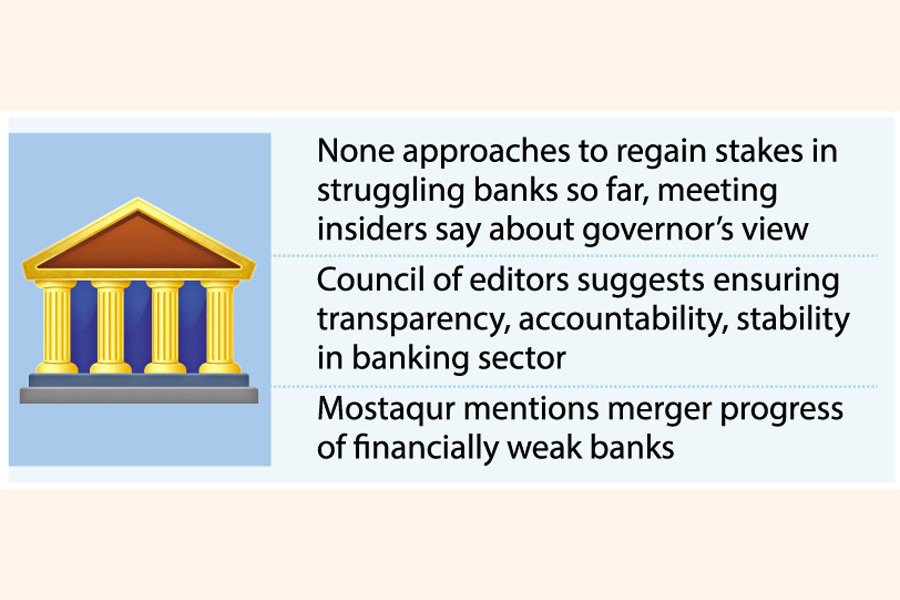
Bangladesh Bank Governor Md Mostaqur Rahman expressed such view Monday as Editors' Council in a meeting with him expressed deep concern over the impugned section of the act and stressed the need for its further scrutiny for the sake of the banking sector.

The apex body of editors of the country's leading print-media outlets raised the concern and also listed other financial-sector problems during the meeting with the BB Governor at the central bank's headquarters in Dhaka.

Explaining reasons for suggesting removal of the section, the BB governor said, " There is no scope for application of the provision. The government has already invested nearly Tk. 520 billion in five merged Islamic banks, namely, Sammilita Islamic Bank. These banks in total have Tk. 1.32 trillion depositors' money, Tk. 320 billion performing loans and Tk. 1.64 trillion non-performing loans. It might be possible to recover Tk.200--Tk.300 billion. Thus. There will be a gap of at least Tk 650 billion. None, it seems, would come to reclaim ownership. Already two months have elapsed since adoption of the law. None has showed interest until now."

Members of the council, led by its president and New Age Editor Nurul Kabir, discussed a range of issues affecting the country's banking sector with the leadership of the banking regulator.

The council members also shared their concerns over the challenges facing the banking sector, particularly the rising volume of non-performing loans, the need to establish good governance in banks, the security of depositors' funds, and the current situation on the foreign- exchange market.

Emerging from the meeting, Nurul Kabir said the governor informed them about various reform initiatives and plans undertaken by the central bank to address the sector's problems and assured them that necessary measures would be taken.

The meeting also discussed the recent instability surrounding Islami Bank Bangladesh PLC as well as issues related to inflation control, investment and employment conditions, and various aspects of the proposed new national budget.

The Editors' Council emphasised the need for effective measures to ensure transparency, accountability and stability in the banking sector.

In a press release, the central bank stated that the BB governor briefed the editors on its ongoing reform agenda aimed at strengthening the country's banking sector. Key issues discussed included the management of non-performing loans (NPLs), governance reforms, oversight on weak banks, foreign-exchange market stability, digital transformation, and measures to ensure overall financial-sector stability.

Governor Mostaqur Rahman updated them on the merger progress of financially weak banks, noting that some administrative and management-related changes have already been completed. "The process is expected to gain a momentum following upgradation of the banks' Core Banking Systems (CBS)."

Addressing the challenge of default loans, the governor informed that the amendment and changes in the existing money loan court to ensure faster settlement of the cases linked to defaulted loans got underway.

"Simultaneously", it says, "the governor told them that distressed-asset- management company act will also be formulated to deal with unrecoverable assets more effectively."

The editors have also been informed that the BB's stolen asset-recovery moves helped freeze laundered assets worth $25 million in the United Kingdom (UK), which will be brought back soon.

Emphasizing the importance of "depoliticizing" the banking sector, the governor said the central bank's reform programme "is focused on ensuring professionalism, accountability, and good governance in bank management and lending practices".

Participants were also informed about regulatory measures taken in several large banks, including Islami Bank Bangladesh PLC, involving board restructuring, management changes, and initiatives aimed at protecting depositors' interests.

The governor also disapproved of the owning of any bank by any political party, saying that people from all walks of life should have confidence in the operations of a bank.

On digital transformation, Mr. Rahman said the central bank was working to build an integrated digital financial ecosystem. Planned initiatives include expanding digital-payment services, introducing AI-based credit-assessment systems, broadening agent-banking services, and implementing the "One Citizen, One Identity, One Wallet" concept to enhance access to digital financial services.

The governor further notes that wider adoption of Bangla QR could accelerate cashless transactions, improve transaction security, and contribute to higher government revenue collection.

In cases where patients require foreign currency exceeding the approved limit for medical treatment abroad, the governor said the regulator is providing approval as quickly as possible upon application through the bank concerned.

"In addition, the interest rate on funds used for bill discounting under the UPAS (Usance Payment at Sight) facility has been reduced, which is expected to help lower the prices of goods," the BB statement says.

Other council members who attended the meeting are Editor of The Financial Express Shamsul Huq Zahid, Editor of Bonik Barta Dewan Hanif Mahmud, Editor of Manabzamin Matiur Rahman Chowdhury, Editor of Prothom Alo Matiur Rahman, Editor of Daily Inqilab AMM Bahauddin, Editor of The Daily Samakal Shahed Mohammad Ali and Editor of Agamir Somoy Mustafa Mamun.​
 

Open banking: a new era for the banking industry in Bangladesh

ASM Ahsan Habib and Sanjoy Pal

Published :
Jun 09, 2026 00:10
Updated :
Jun 09, 2026 00:10

1780962419695.webp


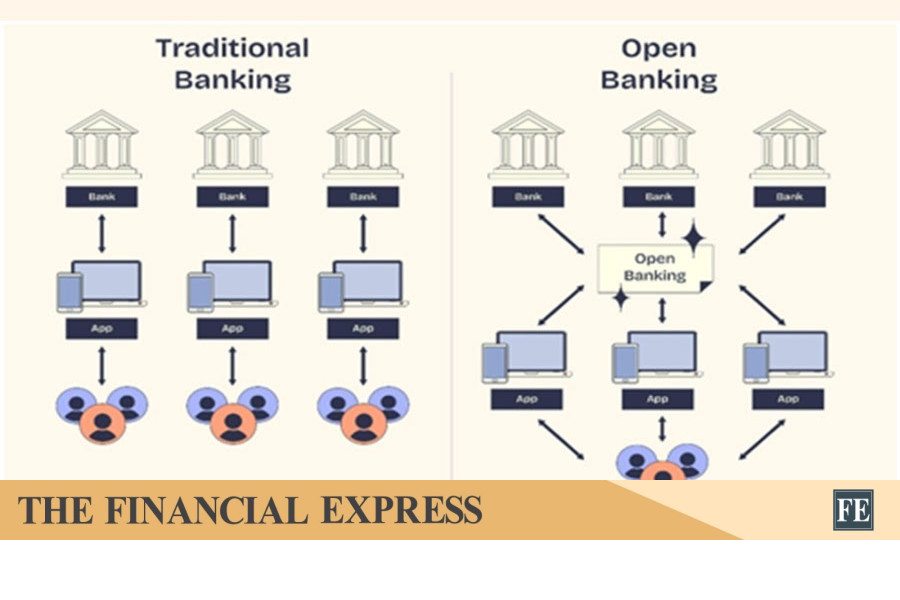
Fintech is revolutionising technology everyday not only in Bangladesh, but also around the world. The embracing of technology drives the financial sector to rethink about the service framework with time and cost efficacy. Banking services are currently going through a paradigm shift from traditional structures to digital transformation. Inclusion of technology in every sphere of service propositions derived from deposit account opening to lending along with bank assurance brings up a new style of advanced banking. Bangladesh is now in a position to be a smart witness to it. The economy demands to be cashless as well as services are assumed to be rendered through technological adoption in all spares of banking, where technological revolution like scoring based digital lending, embedded finance, blended finance, derivatives and digital trade are taking places. Furthermore, the thrive seeks a new model, where Open Banking, a new system to utilise the customer data from third party secured Application Programming Interfaces (APIs) to render financial services in the market. The nation's banking industry has been droning a lot about open banking in recent days. Through strong cooperation between banks, fintechs, and regulators, open banking is on the way to be introduced in Bangladesh very soon. The central bank plans to issue open banking guidelines very soon.So, it is time to understand what open banking actually is, where is its origin, which countries are the pioneers and which countries are practising what type of open banking model etc.

An innovative method of payment and servicemanagement avoiding additional expenses is Open Banking. Open banking as a customer-centric banking, allows a single window across different financial institutes for banking and advisory services within the shortest possible of time.It broadens the area of safely access to any banking information. It aids in comprehending the creditworthiness of customers, their spending patterns and preferences. With this information, businesses may provide goods and services that better meet the needs of their clients. Since the mobile penetration ratio in Bangladesh is high, it is possible to initiate open banking as a system for greater and quicker financial inclusion in the coming days.

The working area of open banking integratesseveral activities like personal finance & budgeting (renowned apps in the world are Revolut, Moneyhub, Emma, Rocket Money, Quicken Simplifi etc.), payment & transfer (renowned apps in the world are Yolt, Stripe, Trustly etc.), data integration and connectivity (platforms includes Plaid, Salt Edge, Yapily etc.), credit scoring and lending (renowned platforms are Finicity, nCino etc.), wealth management and investing (renowned platforms are US based namely Empower,Acorns etc.)

The evolution and progress of Open Banking worldwide emerged when the EU regulations established under the first PSD, which was implemented in 2007, are updated and improved by the revised Payment Services Directive (PSD2). Open banking is getting momentum in many countries around the world. However, countries that are considering to move into open banking system, the question remains whether they should use an already established approach in any country or replicate the European approach! To consider this issue, the country's financial sector infrastructure, the country's market and policy objectives for open banking should be given priority.However, there are currently two types of approaches in open banking: Market-Driven Approach and Regulatory-Driven Approach. In addition, Hybrid or Collaborative Models/Approaches are followed in some countries.

MARKET-DRIVEN APPROACH: Market-driven open banking having no single mandate, is a model of financial innovation where banks voluntarily create APIs (Application Programming Interfaces) to share customer data with authorised third parties forming bilateral agreements, driven by competition and market demand rather than strict government rules, allowing for flexible innovation in services like personal finance apps, but potentially leading to less standardisation than regulatory-led systems like the EU's PSD2. Countries like the US, Japan, India, and Singapore often favour this approach, focusing on flexible, negotiated data access, while regulatory-driven models mandate standardised access.

REGULATORY-DRIVEN APPROACH: Regulatory-driven open banking mandates secure customer data sharing via standardised APIs (Application Programming Interfaces) through government rules, fostering innovation, competition, and consumer protection by creating a level common field for banks and fintechs, exemplified by the EU's PSD2 and the UK's initiative, ensuring unified standards and trust, unlike market-driven models that evolve organically.

HYBRID OR COLLABORATIVE APPROACH: This model of Open Banking is known as the "Middle Ground" approach combining both the above structures, where the government set "rules of the road" and banks & fintechs work together for value added services. This model is followed in Australia, Mexico, Hong Kong.

THE EFFECTIVE APPROACH FOR BANGLADESH: In Bangladesh, Open Banking is in early stage of development. Since there is no concrete data analytics about the population, their credit accessibility, and other personal informamation, the market-driven approach will be a bit challenging to implement as the fintechs are not highly regulated in the financial market and credit bureau is still under process of licensing. The Asian countries following market-driven approaches are Singapore, India. Furthermore, every country needs a regulatory framework to operate the Open Banking platform, so does Bangladesh. Our country can follow the models of Singapore, India etc., as global examples in formulating an open banking framework. For Bangladesh, the effective approach may be the hybrid or collaborative approach, where Bangladesh Bank as a regulator may set the Unified API standards and phased implementation criteria as "rules of the road" and to encourage the bank and fintechs to leveragecommon infrastructure. In addition to this, Bangladesh Bank should open competitive playing fields for fintechs and encourage all the financial institutions to make incentive-based collaboration such as revenue sharing, cost minimisation, data privacy and consent management etc. It will ensure the technological agility for the upcoming financial and banking sectors in Bangladesh.

CHALLENGES AHEAD: A major challenge of open banking is data security and privacy management. The biggest asset of this techno driven world is data, integration of which into every financial platform is challenging. This integration along with digital literacy can strengthen the banking system in large scale.

Therefore, in all respects,Open Banking is a key enabler of a cashless Bangladesh because it promotes digital payments, improves financial inclusion, enhances customer convenience, fosters innovation, reduces costs, and strengthens the country's digital economy. By creating a connected and customer-centric financial ecosystem, open banking can accelerate Bangladesh's transition from a cash-based society to a modern digital economy.

A.S.M. Ahsan Habib is a banker and Certified Digital Finance Practitioner (CDFP). Sanjoy Pal is a Researcher, banker and Visiting Faculty of an institute affiliated with National University, Bangladesh.​
 

Latest Posts

Back