[🇧🇩] Energy Security of Bangladesh

Afghanistan Albania Algeria Andorra Angola Antigua Austria Azerbaijan Bahamas Bahrain Bangladesh Barbados Canada China Egypt Finland Germany India Iran Israel Japan Lebanon North Macedonia Pakistan Palestine Qatar Russia Syria Turkey Ukraine United Kingdom United States Yemen
[🇧🇩] Energy Security of Bangladesh
706
26K
More threads by Saif

G Bangladesh Defense

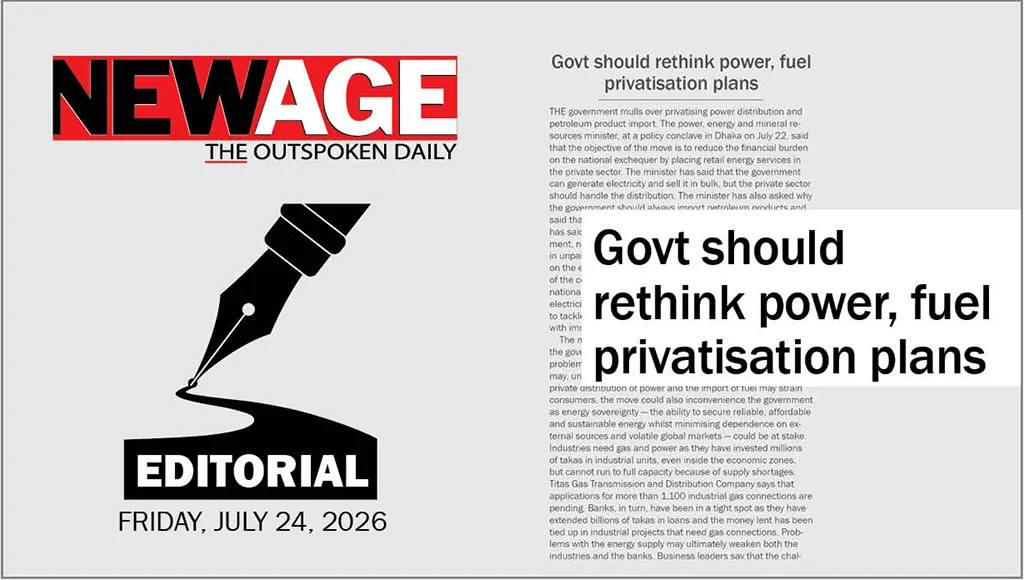
Govt should rethink power, fuel privatisation plans

1784851529426.webp


THE government mulls over privatising power distribution and petroleum product import. The power, energy and mineral resources minister, at a policy conclave in Dhaka on July 22, said that the objective of the move is to reduce the financial burden on the national exchequer by placing retail energy services in the private sector. The minister has said that the government can generate electricity and sell it in bulk, but the private sector should handle the distribution. The minister has also asked why the government should always import petroleum products and said that the private sector should be allowed to do this. He has said that competition will reduce the burden on the government, noting that the government has inherited Tk 670 billion in unpaid electricity bills that have caused a significant burden on the exchequer. The move also appears to be a consequence of the concerns that business leaders, energy experts and international lenders have for long raised over disruption in gas and electricity supply. They have urged the government to intervene to tackle the constraining energy crisis and attract investment with immediate policy reforms.

The move to shift power distribution and fuel import, as the government envisages, may resolve the public side of the problem, but the private handling of the distribution and import may, understandably, further burden consumers. Whilst the private distribution of power and the import of fuel may strain consumers, the move could also inconvenience the government as energy sovereignty — the ability to secure reliable, affordable and sustainable energy whilst minimising dependence on external sources and volatile global markets — could be at stake. Industries need gas and power as they have invested millions of takas in industrial units, even inside the economic zones, but cannot run to full capacity because of supply shortages. Titas Gas Transmission and Distribution Company says that applications for more than 1,100 industrial gas connections are pending. Banks, in turn, have been in a tight spot as they have extended billions of takas in loans and the money lent has been tied up in industrial projects that need gas connections. Problems with the energy supply may ultimately weaken both the industries and the banks. Business leaders say that the challenge for modern manufacturing is no longer only energy availability but the reliability and quality of energy, the lack of which creates a wave of uncertainty and inflates operating costs.

The solution to such a problem is not the privatisation of electricity distribution and fuel import. Policies on the energy mix, greater dependence on renewable energy and the judicious use of energy could offer a resolution. The government should, in such a situation, rethink its decision on the privatisation of electricity distribution and fuel import.​
 

Gas supply to become normal in 10–15 days: Energy minister

Staff Correspondent
Dhaka
Published: 27 Jul 2026, 21: 06

Power, Energy and Mineral Resources Minister Iqbal Hassan Mahmood Tuku speaks at a roundtable titled "Navigating Global Shifts: Fostering Energy Security and Resilience in Bangladesh" at a hotel in Dhaka on 27 July 2026.

1785194820354.webp

Power, Energy and Mineral Resources Minister Iqbal Hassan Mahmood Tuku speaks at a roundtable titled "Navigating Global Shifts: Fostering Energy Security and Resilience in Bangladesh" at a hotel in Dhaka on 27 July 2026. Prothom Alo

Power, Energy and Mineral Resources Minister Iqbal Hassan Mahmood Tuku has said it will take another 10 to 15 days for the gas supply situation to return to normal.

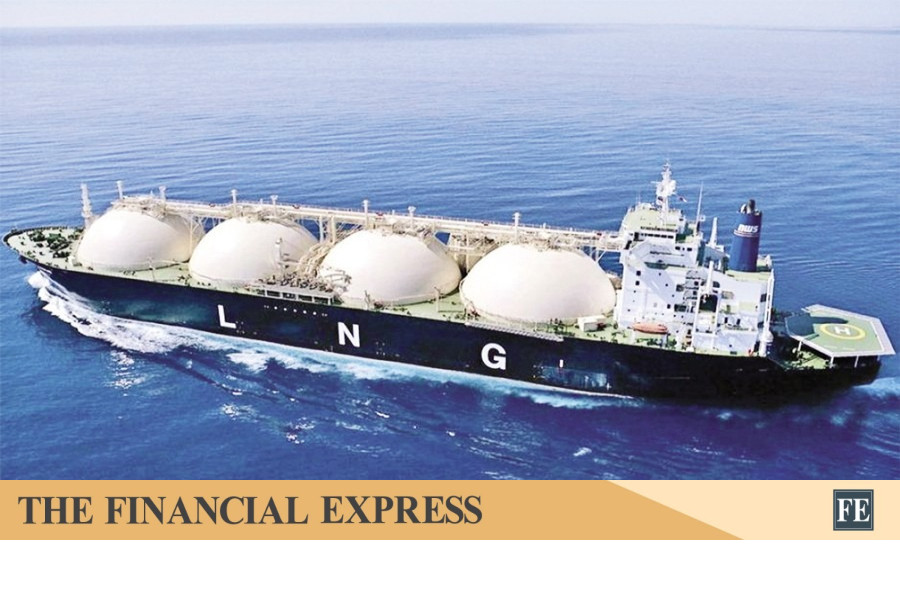
He said the crisis has intensified because the unloading of liquefied natural gas (LNG) has been disrupted following a fire at a floating storage and regasification unit (FSRU).

Iqbal Hassan Mahmood said repair work on the FSRU is currently under way. As a result of the disruption, two LNG cargoes cannot be unloaded.

Consequently, gas pressure has dropped in household kitchens across the country, while power generation has also been affected.

The minister made the remarks on Monday while speaking at a roundtable titled "Navigating Global Shifts: Fostering Energy Security and Resilience in Bangladesh" at a hotel in Dhaka.

The event was organised by the Bangladesh Institute of Peace and Security Studies (BIPSS) and attended by policymakers from the public and private sectors. The discussion was moderated by BIPSS President Major General (retd) ANM Muniruzzaman.

Bangladesh has two floating terminals at Moheshkhali in Cox's Bazar for regasifying imported LNG and supplying it to the national grid. One terminal is operated by the US company Excelerate Energy, while the other is operated by private company Summit.

A fire broke out at the Excelerate Energy terminal last Tuesday, halting gas supply from the facility. Since then, the country's gas crisis has worsened.

Iqbal Hassan Mahmood said Bangladesh now has to rely on imports of LNG, LPG and other fossil fuels as domestic gas production has declined. The prices of imported fuels have also risen abnormally. Over the past six months, the country has had to import nearly $3.65 billion worth of fuel, placing significant pressure on the country's foreign exchange reserves.

1785194871223.webp

With no gas supply at most CNG filling stations, sales have been suspended at some stations, while drivers are waiting for hours at others because of low gas pressure. Long queues of vehicles have formed outside the stations, and many drivers have fallen asleep while waiting. The photo was taken in the Hazaribagh area on 27 July 2026. Sajid Hossain

Referring to the power sector, the energy minister said its main challenge is now financial. During the Awami League government's tenure, around Tk 560 billion in payments to private power plant owners remained outstanding. The government now has to provide subsidies to ensure regular payment of those bills.

Against this backdrop, Iqbal Hassan Mahmood said the government has increased its focus on renewable energy. He said the government recently announced a renewable energy policy with the goal of generating 10,000 megawatts of electricity over the next five years.

He added that negotiations and land allocation processes would be completed by August so that implementation of the programme could begin.

Between 35 and 40 per cent of the country's daily gas supply comes from LNG. The maximum daily supply from LNG is 1.05 billion cubic feet.

According to Petrobangla sources, after the fire at the Excelerate terminal, LNG supply stood at 560 million cubic feet last Thursday. On Sunday, it fell below 500 million cubic feet. As a result, the country's total daily gas supply has dropped to below 2.15 billion cubic feet.

Previously, the authorities had been managing the situation by supplying around 2.7 billion cubic feet of gas per day against a daily demand of 3.8 billion cubic feet.

With LNG supply now falling to less than half of its previous level, all categories of gas consumers have been facing severe difficulties.​
 

Restructuring the energy sector for sustained progress

Sadiq Ahmed

1785196699834.webp

In this photo taken early this year, long queues of vehicles stretch along a Dhaka road as motorists wait to buy fuel amid an oil supply crisis, highlighting the mounting strain on Bangladesh’s energy sector. Rising import costs, supply disruptions and structural weaknesses have exposed the economy’s vulnerability to global energy shocks. Photo: Star/file

Bangladesh is facing major macroeconomic challenges after years of mismanagement. In many cases, these problems have reached a point where major reforms are needed to avert an economic meltdown. One such challenge is the energy sector, where long-standing mismanagement has been compounded by the ongoing US-Iran war. The problems in the energy sector now extend far beyond the sector itself. They have become a threat to macroeconomic stability and can no longer be treated as matters for the Ministry of Power, Energy and Mineral Resources alone. The Ministry of Finance and the Bangladesh Bank must integrate energy sector concerns into the broader macroeconomic framework and coordinate policymaking accordingly.

The spillover effects of the energy crisis on the wider economy are evident from several facts.

First, the energy import bill has risen over the past five years, increasing from $4.3 billion in FY2021 to $11.2 billion in FY2026 because of growing shortages in domestic energy supplies and higher global prices. This pace of growth is unsustainable and could trigger a balance of payments (BoP) crisis.

Second, the energy subsidy bill surged from Tk 142 billion, or 0.4 percent of GDP, in FY2021 to Tk 837 billion, or 1.5 percent of GDP, in FY2025. By comparison, the tax-to-GDP ratio stood at only 6.8 percent in FY2025, meaning energy subsidies alone absorbed around 22 percent of total tax revenue. Such a subsidy burden is clearly unsustainable. Although recent price adjustments have reduced subsidy requirements, rising global energy prices threaten to offset those gains.

Third, energy shortages and higher prices have weakened export competitiveness, disrupted manufacturing and transport services, and contributed to slower GDP growth, weaker export performance and lower private investment. The resulting economic slowdown has also been a major factor behind rising non-performing loans (NPLs) in the banking sector.

The factors behind the current state of the energy sector are numerous and long-standing. They include the dominant role of the public sector in energy production and distribution, poorly managed state-owned energy entities, weak pricing policies, the absence of a credible primary energy strategy, the lack of hard budget constraints, political interference and corruption in energy investment and procurement, particularly in awarding contracts to independent power producers (IPPs), and weak accountability.

Continuing with the crisis management and muddling-through approach of the past is not a sustainable policy option. Instead, the new government has an opportunity to undertake bold reforms that can restructure the energy sector for sustained progress. The challenge is to overhaul the sector rather than make marginal adjustments.

The core reforms should include: (i) deregulating the energy sector to encourage greater private sector participation across the value chain; (ii) corporatising all public energy entities; (iii) renegotiating IPP contracts; (iv) depoliticising energy pricing; (v) imposing hard budget constraints on all public enterprises, including energy entities; and (vi) developing a comprehensive and credible primary energy strategy.

Deregulate the energy sector

Since independence, the energy sector has remained heavily regulated, with the public sector dominating most stages of energy production and distribution. Although private participation has gradually expanded, particularly in electricity generation, the sector continues to be dominated by state-owned enterprises.

While this model may have served the country’s needs in the early years after independence, today’s economy is very different. Bangladesh now has a much stronger private sector operating in an increasingly sophisticated global economy. There is therefore an urgent need to open every stage of the energy value chain to private investment, from oil and gas exploration to imports, refining, distribution, electricity generation and power distribution.

Public sector dominance has reduced efficiency, raised costs, constrained investment and created opportunities for corruption. A vibrant private energy sector operating within a sound regulatory framework, as seen in many upper-middle-income and high-income countries, would improve efficiency, lower costs, attract investment and significantly reduce the need for energy subsidies. The government’s primary role should be to establish an effective regulatory framework while using taxation and subsidies to protect the public interest.

This is the single most important reform needed to put the energy sector on a sustainable footing.

Reform corporate governance in public energy entities

The transition from a state-dominated energy sector to one led mainly by private suppliers will take time. In the meantime, public energy enterprises need urgent governance reforms to improve accountability, efficiency and financial performance.

These reforms should include full corporatisation under professional management, operational independence from government, greater autonomy over procurement, investment, production, sales and employment decisions, and the introduction of hard budget constraints supported by a transparent subsidy policy based on clearly defined social objectives.

Separating government from day-to-day management and investment decisions is essential if corruption is to be reduced.

Renegotiate IPP contracts

Independent power producers have played a vital role in easing electricity shortages and supporting GDP and export growth. However, a combination of overly optimistic demand projections and political interference in contract awards has created severe financial pressures because of excess generation capacity and generous take-or-pay agreements.

The financial position of the power sector is no longer sustainable. IPP contracts should therefore be renegotiated on commercial terms, free from political influence.

Depoliticise energy pricing

Government control over energy pricing has contributed significantly to the weak financial position of energy entities, especially in the power sector, because prices have often been determined by political rather than commercial considerations.

Although Bangladesh has established regulatory commissions for electricity and primary energy, government influence over pricing remains substantial in practice.

A genuinely competitive private energy market will emerge only when pricing decisions are made by an independent regulator applying commercial principles, including production costs and a reasonable return on investment. Such reforms would also strengthen the finances of public energy enterprises. The government could still pursue social or political objectives through taxation and targeted subsidies.

Develop a comprehensive primary energy strategy

The absence of a coherent primary energy strategy has been a major weakness of the sector. In an increasingly interconnected global energy market, where Bangladesh depends heavily on imports, a flexible and forward-looking strategy is essential.

The current approach has been undermined by unreliable estimates of domestic gas reserves, weak policies to develop domestic energy sources, including renewables, inadequate trade policies for imported energy, and limited private investment in energy exploration. The result has been excessive dependence on expensive imported fossil fuels and growing vulnerability to disruptions in LNG supplies.

One of the government’s highest priorities should be to establish an expert group to prepare a comprehensive primary energy strategy. This should explore all potential domestic energy sources and the policies needed to develop them, formulate a trade strategy for energy imports built around strategic partnerships with exporting countries, examine opportunities for regional energy cooperation with a particular focus on hydropower, and identify ways to attract private investment, including joint ventures with foreign investors, in primary energy exploration.

The writer is vice chairperson of the Policy Research Institute of Bangladesh (PRI).​
 

Latest Posts

Back