Home Watch Videos Wars Movies Login

[🇧🇩] Energy Security of Bangladesh

[🇧🇩] Energy Security of Bangladesh
731
26K
More threads by Saif

G Bangladesh Defense

Power crisis is Awami League legacy, not this govt’s fault: Nur

1786576042718.webp


State Minister for Expatriates’ Welfare and Overseas Employment Nurul Haque Nur on Wednesday said the ongoing power and energy crisis cannot be blamed on the present government, describing it as a problem inherited from the previous Awami League government.

“This new government, which has been in power for only six months, did not formulate the energy policy that created this situation. It is now bearing the brunt of the energy policy adopted during the Awami League era,” he said while speaking at a programme organised by the Ex-Forces Association at the Jatiya Press Club.

Nur said the government is repeatedly facing questions from the public over the power and energy situation even though the current crisis was not created by it.

He added that the volatile situation in the Middle East has further intensified pressure on the government.

Cautioning that the crisis will worsen if the opposition takes to the streets instead of cooperating with the government, the state minister said, “If we step away from the negotiating table and take to the streets, the crisis will only deepen. Because of one mistake of ours, Awami League remained in power for 17 years. Such a mistake cannot be repeated.”

He said Bangladesh, under a BNP-led government, will not accept the dominance of any other state. “Prime Minister Tarique Rahman has clearly conveyed a message to Indian High Commissioner to Bangladesh Dinesh Trivedi that Bangladesh will never again become a client state of any other country.”

Nur claimed it was widely known that Sheikh Hasina came to power in 2008 under an “Indian blueprint,” alleging that she was able to stay in power for so long because India wanted her to.

Recalling the role of the Army in the fall of Sheikh Hasina through the mass uprising, he said, “The Army played a key role in the 1971 Liberation War, the 1990 anti-autocracy movement, and the fall of Sheikh Hasina in 2024. Their contribution cannot be denied.”

The state minister also called on the country's intelligence agencies not to turn into partisan bodies, saying they must not become like the intelligence agencies of the Awami League era and must instead work in the interest of the state.​
 
Analyze

Analyze Post

Add your ideas here:
Highlight Cite Respond

Gas crisis: Energy sector suffers from import reliance
  • Daily gas demand stands at 3.8 billion cubic feet; supply on normal days 2.7 billion cubic feet​
  • LNG supplies 1.05 billion cubic feet a day; a newly arrived vessel is yet to be unloaded due to adverse weather conditions​
  • Gas shortages have curtailed power generation, with 3,465MW of load-shedding recorded yesterday​
Mohiuddin
Dhaka

1786577247260.webp

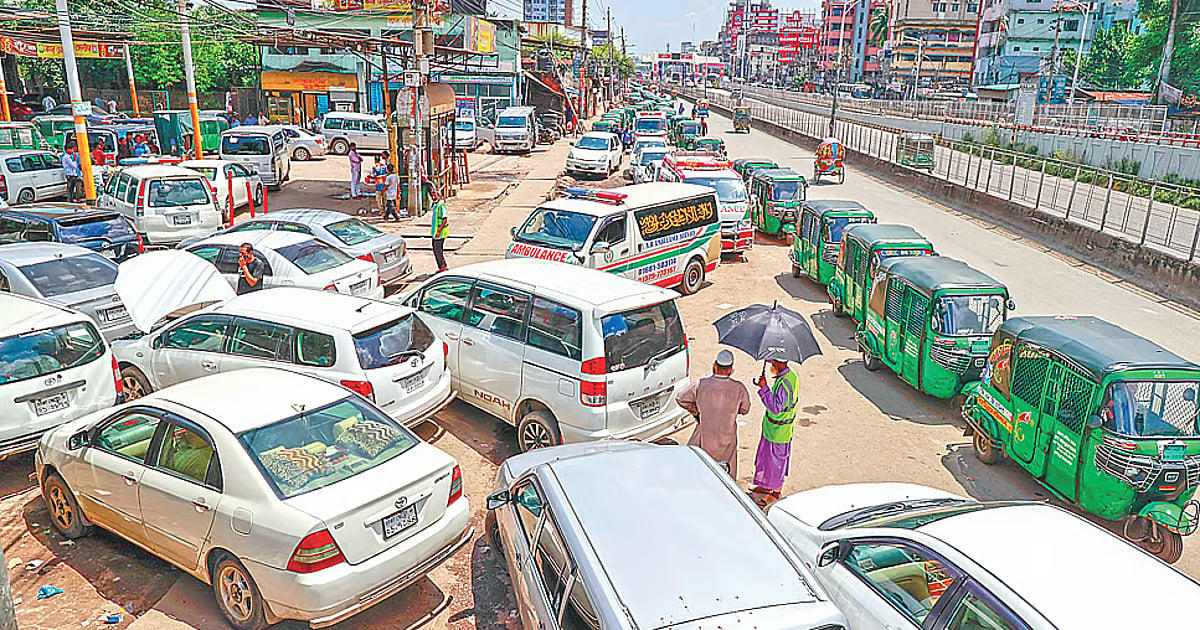
A severe gas shortage has hit the country, disrupting supplies at CNG filling stations. CNG-powered auto-rickshaws, cars and ambulances formed long queues as they waited to refuel in the Jatrabari area of Dhaka in the afternoon on 11 August 2028 Suvra Kanti Das

More than 65 per cent of the energy consumed in the country has to be imported. Imports also account for 9 per cent of electricity generation capacity.

For nearly three weeks, the supply of Liquefied Natural Gas (LNG) has been disrupted, leading to an intensified gas shortage. Power supply from imported electricity has reduced as well, resulting in increased power cuts (load-shedding).

Experts say the country's power and energy sector is suffering precisely due to this reliance on imports.

Sources at the Bangladesh Oil, Gas and Mineral Corporation (Petrobangla) stated that two weeks after LNG supply dropped by half owing to a fire accident, it registered a slight increase last Thursday. However, adverse weather at sea reduced the supply once again from Monday evening, cutting daily gas supply by over 250 million cubic feet.

If marine conditions improve, supply may increase slightly from today, Wednesday, sources added.

Aninda Islam, Minister of State for Power, Energy and Mineral Resources, told Prothom Alo on Tuesday morning that an LNG cargo ship is anchored nearby. Due to adverse weather, the LNG could not be transferred to the terminal. The Energy Division is working with all stakeholders to rapidly boost gas supply.

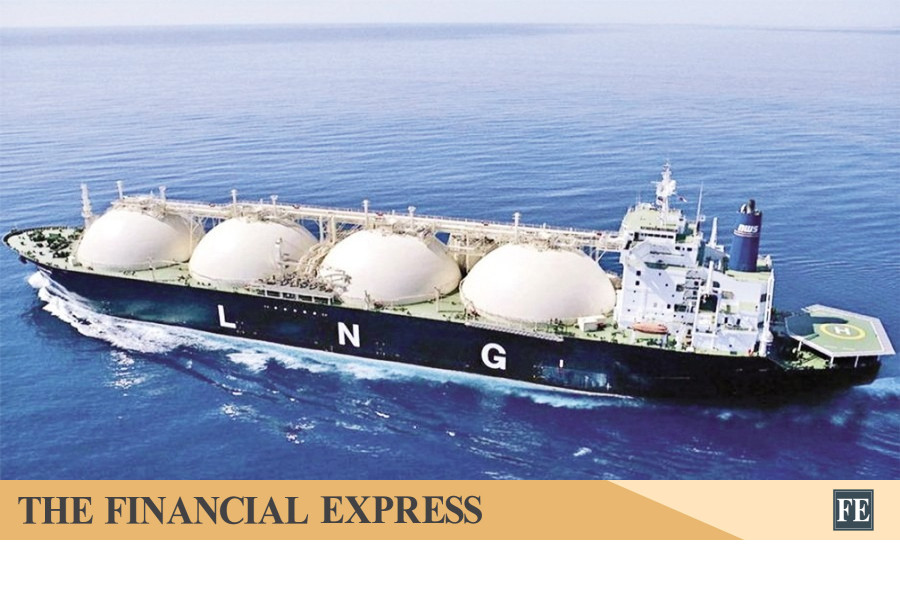
There are two floating terminals in Moheshkhali, Cox’s Bazar, for supplying imported LNG. Among them, the terminal owned by US company Excelerate Energy has a capacity of 600 million cubic feet, while local firm Summit’s terminal has a capacity of 500 million cubic feet.

The national demand for gas stands at 3.8 billion cubic feet per day. Under normal circumstances, the situation is managed by supplying up to 2.7 billion cubic feet, of which 1.05 billion cubic feet comes from LNG.
Following a fire accident on 21 July, Excelerate’s terminal was shut down. This led to a drop in gas supply and worsened the crisis. Production across various sectors—ranging from household cooking stoves to industrial factories and power generation—was disrupted. Long queues of vehicles were also seen at filling stations waiting for CNG.

Stakeholders point out that due to import reliance, any global crisis repeatedly disrupts the country’s energy supply. When the Russia-Ukraine war broke out in 2022, the gas crisis worsened nationwide. As energy supplies dropped, power cuts ensued.

On 28 February, US-Israel strikes took place in Iran, and Iran retaliated by targeting US bases across various Middle Eastern countries. Consequently, the government struggled to maintain the supply of fuel oil domestically.

This time, the gas crisis escalated after a terminal was shut down due to fire. Earlier in 2024, a terminal remained non-operational for nearly three and a half months following damage caused by a cyclone. Whenever adverse weather conditions arise at sea, apprehensions over LNG supply re-emerge. Although a new vessel carrying LNG arrived on Monday, it could not offload at the terminal owing to rough seas.

Petrobangla sources mentioned that Excelerate's terminal has two boilers, each with a capacity of 300 million cubic feet. One of them was damaged in the fire. The undamaged boiler resumed supplying gas last Thursday, and work is currently underway to commission the damaged boiler.

According to the Petrobangla source, once the damaged boiler is ready for operational testing, the running boiler will need to be shut down. During that period, gas supply from Excelerate's terminal will come to a complete halt. Gas supply can resume after being suspended for at least 12 hours, after which supply will gradually normalise. Therefore, Petrobangla intends to carry out this work on a holiday when gas demand is lower.

The nation became import-dependent far too early. Had that not happened, such a severe crisis might have been avoided today. However, financial strain could have been mitigated by curbing corruption and plunder. Moreover, proper import management could have averted the crisis-------M. Shamsul Alam, Energy Adviser, CAB.

Two officials from the Energy Division and Petrobangla stated that Excelerate Energy has been asked to submit an action plan regarding the inspection, testing, and supply restoration. Further decisions will be taken after consulting with the Energy Division. Gas supply from Excelerate will not increase any further this week.

Severe shortage in power and gas supply

The national demand for gas stands at 3.8 billion cubic feet per day. Under normal circumstances, the situation is managed by supplying up to 2.7 billion cubic feet, of which 1.05 billion cubic feet comes from LNG.

Following the shutdown of Excelerate’s terminal, Summit’s terminal supplied LNG beyond its capacity for four consecutive days—supplying up to nearly 570 million cubic feet per day during that period. Since then, it has been supplying 500 million cubic feet daily. However, failing to offload LNG from the new ship, Summit reduced supply after 7:00 pm on Monday.

Sources in gas distribution state utilities said Summit was supplying 200 million cubic feet on Tuesday evening, while Excelerate Energy was supplying 300 million cubic feet. Domestic gas fields contributed around 1.63 billion cubic feet.

In total, gas supply stood at around 2.13 billion cubic feet—the lowest level in the past three weeks. Gas distribution companies are struggling to meet demand. If LNG cannot be offloaded from the new ship today, Wednesday, gas supply will fall even further.

Iqbal Hassan Mahmood, Minister for Power, Energy and Mineral Resources, stated that the government is working towards a long-term solution to the energy crisis.

Speaking on Tuesday at a seminar titled "Energy Sector Crisis: Prospects and Ways Forward", he remarked that the previous Awami League government did not ensure sustainable development. Consequently, the closure of a single LNG terminal has triggered a countrywide gas outcry.

He added that the incumbent government inherited this crisis in the power and energy sector and is actively managing it.

Speaking at the same seminar on Tuesday afternoon, Minister of State for Power, Energy and Mineral Resources Aninda Islam noted a significant gap between electricity demand and supply, as well as in the energy sector.

He affirmed that the government is striving to alleviate public hardship stemming from the energy crisis.

Power cuts persist amid heat

Power cuts did not ease yesterday as electricity generation could not be increased. Data from the Power Development Board (PDB) and Power Grid Bangladesh PLC (PGCB) indicate that highest daily power load-shedding has exceeded 3,000 megawatts over the past few days.

According to the PDB, on Sunday, peak load-shedding reached 3,671 megawatts. It rose to 3,757 megawatts on Monday, before dropping slightly following heavy evening rains. However, it began rising again from Tuesday afternoon, reaching a peak of 3,465 megawatts at 3:00 pm.

PDB officials mentioned that electricity demand rises as temperatures climb, but generation cannot keep pace with demand. Gas shortages have cut power production by nearly 1,500 megawatts. Two major coal-fired power plants are operating below capacity.

The officials further said that caution was being exercised regarding increasing generation from oil-fired power plants due to high costs, as running oil-based plants extensively would increase PDB's financial losses. Petrobangla has been requested to increase gas supply, while coal-fired plants have been directed to maximise production.

Power Division sources stated that coal imports were affected due to outstanding bills owed to power plants, leading to coal shortages at two plants. Adani’s power plant in Jharkhand, India, reduced production on 7 August. Coal supply was disrupted by storms and heavy rain, preventing the plant from maintaining generation levels, though production is expected to increase today.

Experts observe that the previous Awami League government did not prioritise domestic gas exploration and production, leading to a continuous decline in local gas output. LNG imports began in 2018, while electricity imports started in 2013.

According to them, there is no immediate fix for the current energy crisis; imports remain necessary in the short term, but domestic energy sources must be expanded alongside. The current government has placed emphasis on domestic gas exploration, inviting tenders for offshore oil and gas exploration, while initiatives have also been undertaken to boost renewable energy generation.

M. Shamsul Alam, Energy Adviser to the Consumers Association of Bangladesh (CAB), told Prothom Alo that the nation became import-dependent far too early. Had that not happened, such a severe crisis might have been avoided today.

However, financial strain, he said, could have been mitigated by curbing corruption and plunder. Moreover, proper import management could have averted the crisis.

He emphasised the need for cost-effective energy usage aligned with national revenue, warning that generating power from fuel oil instead of importing coal will inevitably drive costs up.​
 
Analyze

Analyze Post

Add your ideas here:
Highlight Cite Respond

The way out of power and energy crisis

M Tamim
Power sector expert

1786662949797.webp

The root cause of the recent energy crisis lies in the shortfall of gas supply. Prothom Alo

The current energy crisis has not suddenly appeared; Petrobangla has been following a gas-import-dependent plan since 2011-12. Gas production from local sources (including Petrobangla and IOC) reached 2,700 million cubic feet in 2016-17 but has now decreased to about 1,500 million cubic feet. This is a major failure of Petrobangla.

The previous Awami League government became increasingly import-dependent without giving adequate importance to gas exploration and production from local sources. A key part of their plan included establishing floating LNG terminals (FSRUs) and land-based regasification plants. It's now evident that neither has been effective as expected.

Currently, we only have two FSRUs in Maheshkhali. Due to infrastructural limitations, we cannot import gas from external sources as needed. On the other hand, the initiatives and plans to increase gas production from local sources over the last 10-11 years have not achieved the desired success.

The question now is, how can we get out of this situation? There is no quick and easy solution to the current crisis. In terms of increasing domestic gas production, a ''BAPEX-only'' policy has been generally followed thus far. We had hoped that relying on BAPEX, production could be maintained up to a certain level. But the reality is that production is decreasing by 100-200 million cubic feet every year.

Effective measures should have been taken earlier to curb this trend of production decline. Now, those initiatives by BAPEX that have not achieved the desired success need to be re-evaluated.

Our planning and analysis, especially technical analyses, are primarily confined within Bapex's internal personnel and capabilities. In this situation, an external third-party opinion is needed swiftly. Specifically, for gas fields where production is consistently declining, leveraging the expertise of international companies as consultants for development and maintaining production should be considered.

Secondly, Chevron has been producing gas very successfully in Bangladesh for a long time. Consideration should be given to how Chevron's capabilities and experience can be utilized to rapidly increase gas supply in the country. They have long-standing local experience and the necessary infrastructure and operational capability.

Even if these initiatives are undertaken now, it may take six months to a year to yield results. Therefore, opportunities for using alternative fuels must be considered immediately to manage the current crisis.

Firstly, the use of LPG in households can be increased. LPG is the most direct alternative fuel to natural gas. However, given that both natural gas and LPG are import-dependent, both exert pressure on foreign exchange. In other words, importing LNG requires foreign exchange and the same pressure applies to importing LPG. The crucial difference is that we already have the necessary infrastructure for LPG import. Currently, we import approximately 1. 5 million tonnes of LPG, whereas the existing infrastructure can support imports of up to 3 million tonnes.

1786662984666.webp


Secondly, the use of autogas as an alternative to CNG in vehicles can be increased. There is also scope to expand the use of LPG in some industries, especially those where energy costs are comparatively lower relative to the total cost of manufactured products. Many industrial entrepreneurs have already started using LPG on their own initiative.

Thirdly, swift and strict measures are needed to stop gas theft. Approximately 200 million cubic feet of gas is stolen daily, primarily through illegal connections. Gas is extremely valuable for us now, yet it continues to be stolen. If gas theft can be stopped, supply to actual users can be slightly increased. However, the problem is so widespread that even after disconnecting illegal connections, they are often quickly reconnected. Therefore, continuous monitoring could keep gas theft to a minimum.

We need a clear plan on which energy will be used in which sector, where, and in what amount. It is essential to create an integrated and realistic picture of future energy demand from battery-operated rickshaws and EV cars to industries and households, and the energy mix for power generation.

The crisis in the energy sector, centered around gas, may find some relief through these measures, but it will not solve the entire crisis. The majority of our gas is used for power production. With the decrease in gas supply, power production is also declining, and load-shedding is increasing. In this situation, it is necessary to maximize the production capacity of coal-based power plants. Additionally, dependence on gas for power generation will further decrease when nuclear power plants are operational.

For long, we've been working within a ''fire-fighting'' approach in the energy sector, trying to solve emergency problems one after another through ad-hoc measures. Therefore, the most crucial work for the medium to long term will be properly determining energy demand.

We need a clear plan on which energy will be used in which sector, where, and in what amount. It is essential to create an integrated and realistic picture of future energy demand from battery-operated rickshaws and EV cars to industries and households, and the energy mix for power generation.

Our approach must be based on a multi-faceted energy mix of renewable energy, coal, gas, and nuclear power. In terms of renewable energy, our primary source is solar power. A clear outline is needed regarding how much solar power can be produced, whether grid-based or off-grid. The government has set a target to produce 10,000 megawatts of solar power by 2030. Achieving even 5,000 megawatts of solar power would be a significant achievement. This target can be met through a combination of grid and rooftop solar power.

We also have our own coal sources, but they aren’t being properly utilized. Despite having the capability to produce 525 megawatts of power in Barapukuria, mainly a 225-megawatt power plant remains operational. The other two face various technical and mechanical issues hindering their operation. Currently, we require 18-20 million tonnes of coal annually, but only about 1 million tonnes can be produced annually from Barapukuria.

Our reliance on imports in the energy sector will continue. Hence, the potential for self-coal production needs to be re-examined. Self-reliance in the energy sector is extremely important for us. Of course, environmental sensitivity must be considered in the use of fuel like coal. However, if environmental issues are overly prioritised at the expense of economic development in a developing country like ours, it could lead to further setbacks, and in reality, even more negative impacts on the environment may occur.

In the long term, we need to move towards regional cooperation in the energy sector. At the establishment of interconnectivity, opportunities to import surplus power generated in Nepal, Bhutan, India, and Myanmar would be created.

There is no alternative to increasing overall efficiency in energy savings. The significant load-shedding during the summer is primarily due to the excessive use of fans and air conditioners. Most air conditioners in our country are not yet equipped with inverter technology. Using inverter-equipped air conditioners and refrigerators could save up to 20 to 40 per cent of electricity.

Above all, the energy crisis cannot be solved through a single measure.These initiatives must be implemented together as part of an integrated action plan. Otherwise, no visible relief can be achieved.

#M Tamim is Vice-Chancellor, Independent University, Bangladesh (IUB)​
 
Analyze

Analyze Post

Add your ideas here:
Highlight Cite Respond

Disruption at second LNG terminal deepens energy crisis
Shahriar Azam 14 August, 2026, 00:43

1786664985682.webp

A long queue of CNG-run vehicles forms in front of a filling station at Jatrabari in Dhaka on Thursday as disruption in gas supply forces drivers to wait in the queue in the hope of getting gas. | Md Saurav

Gas supply from Summit’s floating storage and regasification unit fell to zero on Thursday as bad weather in the Bay of Bengal disrupted its refilling, further worsening Bangladesh’s ongoing energy crisis.

The complete suspension of the gas supply from the Summit terminal was reported at 4:00pm on Thursday.

The Summit FSRU is different from the one, operated by the US-based Excelerate Energy, which was damaged by the fire on July 21, spiralling the energy crisis.

Bangladesh has the capacity to deal with 1,100mmcfd with the two FSRUs. Now, the supply falls to only 300 mmcfd, said Gas Transmission Company Limited officials.

The disruption in the Summit terminal marked a new deterioration in the overall situation as people spent hours in lines at CNG refueling stations to refill their car tanks while autorickshaw drivers blocked a highway protesting the scarcity of gas.

Rupantarita Prakritik Gas Company Limited deputy general manager KM Zahirul Islam told New Age that there was no technical problem with the Summit terminal itself, but adverse sea conditions had prevented the LNG carrier from docking and unloading its cargo.

‘The cargo vessel [with imported LNG] is already there, very close to the terminal, but they cannot berth due to the weather,’ he said on Thursday, adding that the terminal exhausted its remaining LNG stock.

The terminal normally contributes around 500 million cubic feet of gas supply per day to the national grid.

The latest disruption comes as the country is already struggling with a severe gas shortage following damage to another FSRU operated by US-based Excelerate Energy, forcing the government to ration available gas among priority sectors.

Long queues of CNG-run auto-rickshaws and private cars were seen on Thursday outside filling stations across the country as gas pressure declined again.

CNG-run auto-rickshaw drivers blocked the Jamalpur-Tangail-Dhaka highway on Thursday morning, demanding an adequate gas supply. The blockade began around 8:00am, disrupting the movement of local, inter-district and long-distance vehicles.

The protesting drivers said they had to wait in queues for 11 to 12 hours and still could not obtain enough gas to continue their daily operations.

The gas crisis has also intensified in households.

Kabir Hossain, a resident of the Halishahar area of Chattogram, said daily life was being upended by repeated power outages and the lack of morning gas supply.

Karnaphuli Gas Distribution Company Limited said that only 54.29 per cent of the gas demanded in the Chattogram region was currently being supplied, leaving a shortfall of 45.71 per cent.

The gas supply is also hindering generation at gas-powered power plants. Severe power outages were reported in parts of Dhaka along with rural areas.

Power Grid data showed that load shedding in the capital reached about 445MW during the evening peak on Wednesday. Residents of Bashundhara Residential Area, Kazipara, Eskaton Garden, Mouchak, Karwan Bazar and Panthapath said electricity remained unavailable between 9:00pm and 1:30am.

The government increased gas allocation to power generation by more than 100mmcfd from Wednesday evening in an attempt to contain severe load shedding.

On Thursday, however, the power situation showed some improvement, with load shedding remaining in the three-digit range between 8:00am and 6:00pm.

Power, energy and mineral resources minister Iqbal Hassan Mahmood on Thursday admitted that the government had little room to ease the ongoing gas and electricity crisis until the damaged FSRU was fully repaired.

‘I cannot suddenly produce more gas, and without the FSRU I cannot unload the gas that we have,’ he said. ‘Right now, all I can do is count the days while the engineers continue working on the FSRU.’

The minister said that the government had already ordered one new FSRU and was seeking investors for three additional terminals at Payra, Mongla and Hiron Point, with all projects targeted for completion by 2029.​
 
Analyze

Analyze Post

Add your ideas here:
Highlight Cite Respond

Latest Posts

Back
 
G
O
 
H
O
M
E