Donate ☕
201 Military Defense Forums
[🇧🇩] - Energy Security of Bangladesh | Page 93 | PKDefense
Home Post Alerts Inbox Watch Videos

[🇧🇩] Energy Security of Bangladesh

Reply (Scroll)
Press space to scroll through posts
G Bangladesh Defense
[🇧🇩] Energy Security of Bangladesh
504
16K
More threads by Saif


Bangladesh to buy 3 more spot LNG cargoes in Aug & Sept

FE ONLINE REPORT
Published :
Jul 24, 2025 19:46
Updated :
Jul 24, 2025 19:46

1753402889110.webp


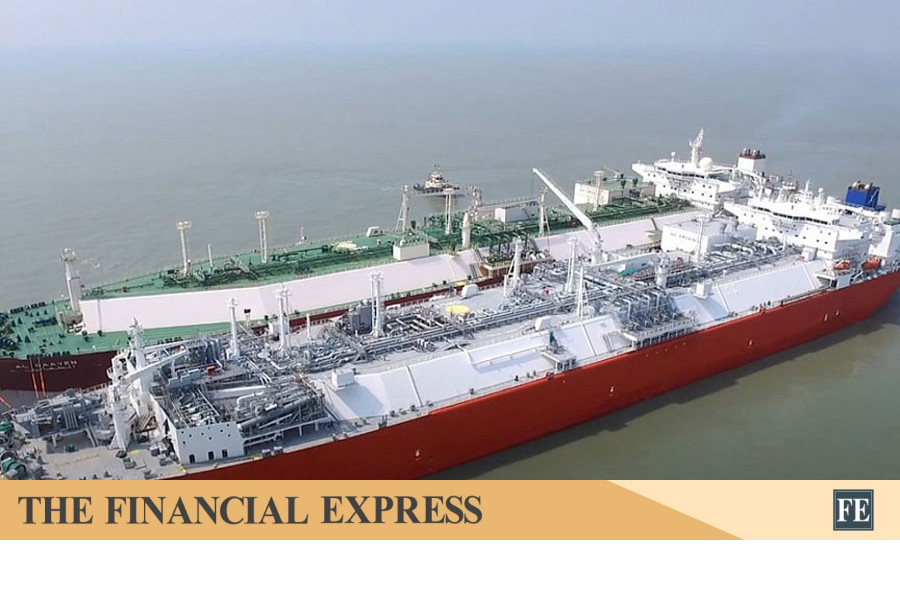
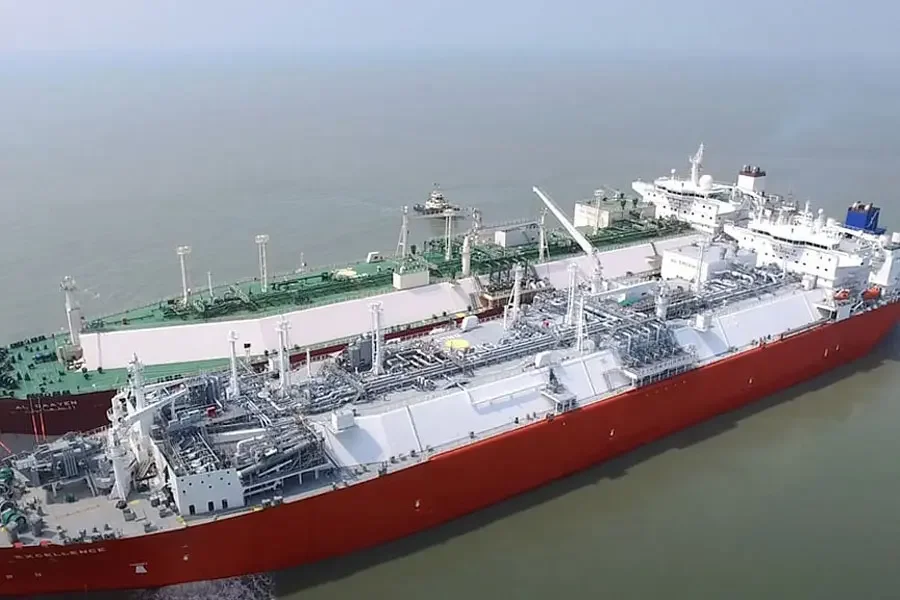
The government is eyeing to import three liquefied natural gas (LNG) cargoes from spot market in late August and September.

State-run Rupantarita Prakritik Gas Company Ltd (RPGCL) floated a tender to these spot LNG cargoes for August 30-31, September 10-11, and September 21-22 delivery windows expecting reasonable price quotes, a senior RPGCL official said.

The bid submission deadline is July 27, he said.

The volume of the spot LNG cargo is around 3.36 million Brithish thermal unit (MMBtu).

The cargoes are to be delivered to Moheshkhali Island, with an option to discharge it at either of the country’s two floating storage re-gasification units located on the island.

Bangladesh already bought four spot LNG cargoes for delivery in August, and if the tender turns out successful, the country’s spot LNG cargo purchase for August deliveries would be five.

Bangladesh has procured five spot LNG cargoes for July delivery.

The South Asian country has been purchasing increased volume of spot LNG cargoes over the past several months under a plan to boost natural gas supplies to industries, said the RPGCL official.

Bangladesh awarded its latest spot LNG cargo tender to Vitol Asia Pte Ltd for August 28-29 delivery window at US$12.43 per MMBtu, the RPGCL official said.

The RPGCL is a part of Petrobangla and looks after LNG trading in Bangladesh.

In addition to spot LNG cargoes, Bangladesh has been importing LNG from its two existing long-term suppliers -- QatarEnergy LNG (formerly Qatargas) and OQ Trading International -- for regasification at its two operational floating, storage and re-gasification units (FSRUs).

Bangladesh has been rationing gas supply to industries, power plants and other gas-guzzling consumers to cope with the mounting natural gas demand.

The country’s overall natural gas output -- local gas and imported LNG combined -- was around 2.832 million cubic feet per day (mmcfd) including 1,022 mmcfd of re-gasified LNG, against the demand for over 4,000 mmcfd, according to official data as on July 23, 2025​
 
Analyze

Analyze Post

Add your ideas here:
Highlight Cite Fact Check Respond

CPD lauds govt move to add 3000mw electricity from rooftop solar system

BSS
Published :
Jul 27, 2025 16:29
Updated :
Jul 27, 2025 16:29

1753660124879.webp


Centre for Policy Dialogue (CPD) has appreciated the government's initiative to add around 3,000 megawatts (MW) of electricity to the national grid through rooftop solar installations on public buildings.

Focusing on proper pre-planning and effective implementation guidelines for the successful implementation of the initiative, the think tank observed that it will help Bangladesh achieve the renewable energy goals.

CPD on Sunday made the observation at a discussion on "National Rooftop Solar Energy Programme: Proposals for its Design, Implementation, Monitoring, and Evaluation" at CPD office in the city.

CPD and Bangladesh Sustainable and Renewable Energy Association (BSREA) jointly organised the discussion.

CPD Research Director Dr Khondaker Golam Moazzem moderated the discussion while CPD Senior Research Associate Helen Mashiyat Preoty and BSREA Member Md Nasir Uddin delivered presentations.

In her presentation, Helen Mashiyat Preoty said the programme should kick start with the piloting of the selected areas instead of going full swing.

The piloting sample should be selected based on radiation impact, available finances in different divisions, grid readiness, major load shedding areas and presence of REB Somities, she added.

The new programme must learn from the failure of the previous programme and must not repeat the similar policy, she added.

She said the policy on the programme must refrain from becoming a "tick-box" culture in public buildings by designing policies that tie budget disbursement to actual energy generation, not installation.

"There should be a policy guideline for the successful implementation of the programme. All sorts of customs duty, import duty, VAT and Tax should be exempted from solar panels, battery and inverters," she added.

To maximize the effectiveness of the National Rooftop Solar Programme, Preoty said, site selection must be driven by solar radiation potential and the geographic distribution of government offices.

"A tailored, location-specific approach is essential to ensure technical and financial feasibility across diverse regions of Bangladesh," she added.

To ensure the success of Bangladesh's National Rooftop Solar Programme, she said, each installation must undergo a comprehensive feasibility study covering rooftop and structural assessment with shadow analysis, solar irradiation and tilt optimization, and site-specific equipment selection.

During the grid implementation process, she said, the NEM tariff should be discussed and finalised with utility providers.

As the full procurement process of the programme is highly technical, she said, there must be a technical committee to facilitate the process.

She said different renowned labs in the country should be entrusted with the testing of the equipment before and after installation.

She said Bangladesh Bank should introduce a refinance scheme or a dedicated green energy fund targeting rooftop solar on public buildings.

"In both CAPEX and OPEX-based rooftop solar projects on government buildings, a sovereign guarantee or bank guarantee mechanism should be institutionalized. A sovereign guarantee, issued by the Ministry of Finance or a central authority, would provide assurance of timely payments and contract enforcement," she added.

She said given transparency issues in public procurement and infrastructure, it is critical to introduce third-party monitoring and verification (M&V) mechanisms.

She also said a government-backed Guarantee Fund should be introduced to support urgent repairs and critical maintenance of rooftop solar systems, particularly in public institutions under the CAPEX model, where annual maintenance budgets are insufficient or absent.

Among others, former director of the Bangladesh Bank Sustainable Finance Division Khondaker Morshed Millat and Managing Director of the Geosolar Bangladesh Limited Eng. Nazneen Akhter spoke on the occasion.​
 
Analyze

Analyze Post

Add your ideas here:
Highlight Cite Fact Check Respond

JERA announces commercial operation of its Meghnaghat 718MW power plant

FE Online Report
Published :
Jul 28, 2025 20:50
Updated :
Jul 28, 2025 20:50

1753749246046.webp


JERA Meghnaghat Power Limited (JMPL) has announced the commencement of commercial operation at one of Bangladesh’s largest gas-fired power plants located in Meghnaghat, Narayanganj.

This milestone marks a significant step forward in JMPL’s effort to enhance Bangladesh’s energy security and support its economic growth. With a gross capacity of 745 megawatts (MW) and net output of 718 MW, this combined-cycle gas turbine (CCGT) project is one of the largest and most efficient power plants in Bangladesh, said a company statement Monday.

The project will be able to meet up to 5.0 per cent of the country’s peak electricity demand.

Electricity generated will be sold under a long-term power purchase agreement with the Bangladesh Power Development Board (BPDB) for a period of 22 years from the start of commercial operation.

As Bangladesh continues to balance affordability, energy access, and infrastructure modernization, it is critical to view large-scale power projects through a multi-decade lens. Bangladesh’s electricity demand is estimated to reach 51,000 MW as the country works towards its goal of becoming a developed nation by 2041, it said.

Access to a reliable power supply is essential to enable a thriving economy and improve livelihoods.

“This project, supported by a consortium of banks including the Japan Bank for International Cooperation and the Asian Development Bank, is designed to bring highly efficient and flexible power generation that can meet the current and future demand reliably, in a sustainable manner. By supporting the development of much-needed energy infrastructure in the country, we are empowering local industries and creating employment opportunities. We will continue to work closely with the relevant authorities and our local partners to contribute to a more energy-secure Bangladesh,” said Yasunori Katsumata, Chief Executive Officer of JMPL.

With the successful commencement of commercial operation, JMPL is pleased to support Bangladesh’s energy transition journey and remains focused on fostering meaningful partnerships to achieve sustainable outcomes over the long term, the statement said.​
 
Analyze

Analyze Post

Add your ideas here:
Highlight Cite Fact Check Respond

A moment of opportunity: Supercharging the clean energy age
António Guterres
Published: 29 Jul 2025, 18: 26

1753926153391.webp


Energy has shaped humanity’s path – from mastering fire, to harnessing steam, to splitting the atom. Today, we’re at the dawn of a new era. The sun is rising on a clean energy age.

Last year, nearly all new power capacity came from renewables. Investment in clean energy soared to $2 trillion – $800 billion more than fossil fuels.

Solar and wind are now the cheapest sources of power on Earth, and clean energy sectors are creating jobs, boosting growth and powering progress -- despite fossil fuels still receiving far greater subsidies.

Countries that cling to fossil fuels are not protecting their economies, they are sabotaging them – undermining competitiveness, and missing the greatest economic opportunity of the 21st century.

Clean energy also delivers energy sovereignty and security. Fossil fuel markets are at the mercy of price shocks, supply disruptions, and geopolitical turmoil, as we saw when Russia invaded Ukraine. But there are no price spikes for sunlight, no embargoes on wind, and almost every nation has enough renewable resources to be energy self-sufficient.

Finally, clean energy spurs development. It can reach the hundreds of millions of people still living without electricity -- quickly, affordably and sustainably, particularly through off-grid and small-scale solar technologies.

All this makes the clean energy era unstoppable. But the transition is not yet fast or fair enough. Developing countries are being left behind. Fossil fuels still dominate energy systems, and emissions are still rising when they must plummet to avoid the worst of the climate crisis. To fix this, we need action on six fronts.

First, governments must fully commit to the clean energy future. In the coming months, every country has pledged to submit new national climate plans – known as Nationally Determined Contributions – with targets for the next decade. These plans must align with limiting global temperature rise to 1.5 degrees Celsius, cover all emissions and sectors, and lay out a clear path to clean energy. G20 countries, responsible for around 80 per cent of global emissions, must lead.

Second, we must build 21st century energy systems. Without modern grids and storage, renewable power can’t fulfil its potential. But for every dollar invested in renewable power, just 60 cents go to grids and storage. That ratio needs to be one- to-one.

Third, governments must aim to meet the world’s surging energy demand with renewables. Major tech companies must also play their part. By 2030, data centres could consume as much electricity as Japan does today. Companies should commit to power them with renewables.

Fourth, we must embed justice in the energy transition. This means supporting communities still dependent on fossil fuels to prepare for the clean energy future. And it means reforming critical minerals supply chains. Today, they’re riddled with rights abuses and environmental destruction, and developing countries are trapped at the bottom of value chains. This must end.

Fifth, we must make trade a tool for energy transformation. Clean energy supply chains are highly concentrated and global trade is fragmenting. Countries committed to the new energy era must work to diversify supplies, cut tariffs on clean energy goods, and modernize investment treaties so they support the transition.

Sixth and finally, we must drive finance to developing countries. Africa received just two percent of renewables investment last year, despite having 60 per cent of the world’s best solar resources. We need international action – to prevent debt repayments sucking developing country budgets dry, and to enable multilateral development banks to substantially increase their lending capacity, and leverage far more private finance. We also need credit rating agencies and investors to modernise risk assessments, to account for the promise of clean energy, the cost of climate chaos, and the danger of stranded fossil fuel assets.

A new energy era is within reach – an era where cheap, clean abundant energy powers a world rich in economic opportunity, where nations have the security of energy autonomy, and the gift of electricity is a gift for all.

This is our moment of opportunity to supercharge the global shift. Let’s seize it.

António Guterres is the Secretary-General of the United Nations
 
Analyze

Analyze Post

Add your ideas here:
Highlight Cite Fact Check Respond

Govt keeps fuel prices unchanged for August

FE ONLINE REPORT
Published :
Jul 31, 2025 20:29
Updated :
Jul 31, 2025 20:29

1754006964776.webp


The government has kept unchanged the prices of diesel, kerosene, petrol and octane at Tk 102 per litre, Tk 114 per litre, Tk 118 per litre and Tk 122 per litre respectively for the month of August under the automatic fuel pricing formula.

Petroleum prices have been kept unchanged to those similar to July level to ensure the supply of such items at reasonable prices, an order of the Energy and Mineral Resources Division (EMRD) under the Ministry of Power, Energy and Mineral Resources (MPEMR) stated on Thursday.

The EMRD also published a gazette on the petroleum prices for August.

The automatic fuel pricing formula was first introduced by the government on March 07, 2024.

The government usually applies Platts's oil product assessments or benchmarks for fixing refined oil products and for crude oil, it looks at S&P Global Platts's Dated Brent benchmark while buying petroleum products from the international market.

Sources said the new oil pricing formula is aimed at ensuring no loss, no profit for state-run Bangladesh Petroleum Corporation (BPC).

The BPC in February last year prepared a guideline on automatic oil pricing under which the prices of all petroleum products will be fixed.

Under the guideline, all types of costs, including international market price, import tax, advance income tax and value added tax, or VAT, operational expense, administrative and maintenance costs, BPC's margin, and distributor's margins would be added before fixing the prices of petroleum products.

Prices of octane and petrol are considered as luxury fuel, under the guideline, and hence their prices should always be kept higher than diesel, it narrated.

The price difference between octane and diesel should be at least Tk 10 per litre in the domestic market, it spelled out.

Bangladesh usually imports around 300,000 tonne of octane annually to meet domestic demand, while the demand of petrol is made through production from the country's lone crude oil refinery - Eastern Refinery Ltd (ERL), and from condensate fractionation plants.

Since its independence in 1971, Bangladesh has been fixing domestic petroleum product prices through executive orders by the government.

The BPC would attain profit from petroleum product trading in most of the years and provide dividends to the government after clearing all debts and liabilities, including taxes and VATs.

The ministry of finance would provide a subsidy when the BPC incurred a loss in petroleum product trading or when oil prices in the international market were high and volatile.

Bangladesh introduced the automatic oil pricing formula for the first time in line with a recommendation from the global lender -- International Monetary Fund (IMF).

It was among several conditions for reduction of subsidies as set by the IMF for a US$4.7 billion loan.​
 
Analyze

Analyze Post

Add your ideas here:
Highlight Cite Fact Check Respond

Members Online

No members online now.
⤵︎

Latest Posts

Latest Posts