โ˜• Support Us โ˜•
[๐Ÿ‡ฎ๐Ÿ‡ท] - Iran launched ballistic missiles towards Israel | Page 4 | PKDefense

[๐Ÿ‡ฎ๐Ÿ‡ท] Iran launched ballistic missiles towards Israel

Reply (Scroll)
Press space to scroll through posts
G   Iranian Defense
[๐Ÿ‡ฎ๐Ÿ‡ท] Iran launched ballistic missiles towards Israel
More threads by PakistanProud

Israeli military bases hit by Iranian missiles but remain functional, source tells CNN


From CNNโ€™s Jeremy Diamond

Several Iranian missiles struck Israeli military bases on Tuesday night, an Israeli military source told CNN, but insisted there was no major damage to the facilities.

โ€œThere is no harm to the functionality of the IAF (Israeli Air Force),โ€ the source said.

The source said there were โ€œa few hits,โ€ but that they failed to hit โ€œessential infrastructure.โ€
 

Missile attack on Israel was intended as a show of Tehranโ€™s military capabilities, experts say​


From CNNโ€™s Abbas Al Lawati and Nadeen Ebrahim

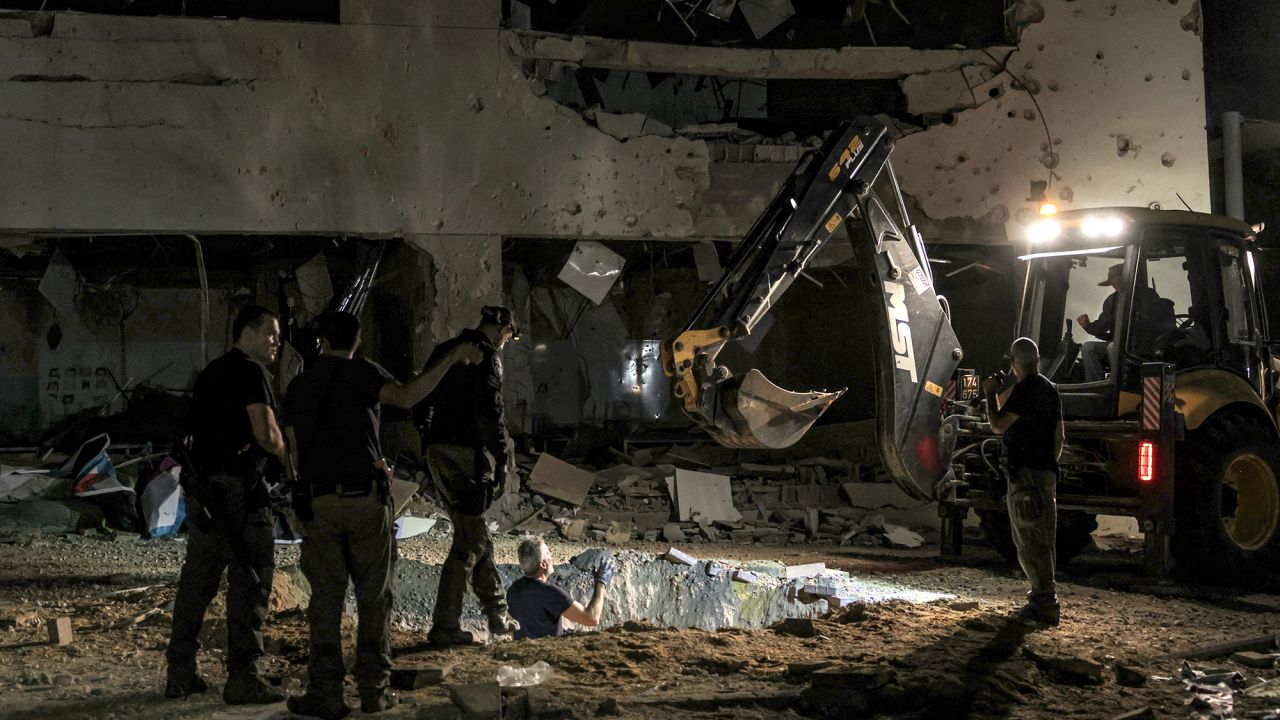
An excavator works by a crater left by an exploded projectile at a heavily-damaged school building in Israel's southern city of Gedera on October 1.


An excavator works by a crater left by an exploded projectile at a heavily-damaged school building in Israel's southern city of Gedera on October 1.

Menahem Kahana/AFP/Getty Images

Iranโ€™s missile attack against Israel on Tuesday was intended to signal that Tehranโ€™s arsenal is capable of inflicting mass casualties, Middle East experts say.

Mohammad Ali Shabani, editor of Amwaj.media, a London-based news site focused on covering the Middle East, said that unlike its attack on Israel in April โ€” which was meant to merely showcase Iranโ€™s capabilities and had been telegraphed in advance, allowing it to be largely thwarted โ€” Tuesdayโ€™s barrage was intended to send the message that Iran can inflict significant damage if it chooses to.

โ€œThe (Iranian) response was measured and geared to send a message through accuracy and ability to bypass Israeli air defenses, rather than inflicting mass casualties,โ€ Shabani said.

Ali Ahmadi, an executive fellow at the Geneva Centre for Security Policy, said that โ€œIranโ€™s April attack was deliberately designed to be ineffective so as to not escalate,โ€ but the feeling in Iran is that it was taken as a sign of weakness.

โ€œIran felt that it had to discredit Israeli and American air defenses,โ€ Ahmadi told CNN, adding that even though Tuesdayโ€™s attack did not cause mass casualties, it โ€œdid establish that Israel can be made to take on serious cost.โ€

Others disagree, however. Behnam Ben Taleblu, a senior fellow at the Foundation for Defense of Democracies (FDD) think tank in Washington, DC, said Iranโ€™s actions were meant to show that it is indeed responding to Israelโ€™s recent assassinations of key Hezbollah and Hamas leaders, โ€œboth by domestic and foreign audiences for purposes of regime security and survival.โ€

He noted, however, that despite the lack of mass casualties, โ€œwe cannot assume that a desire to wash blood away with blood was not present.โ€ The lack of damage had more to do with Israelโ€™s defense systems as well as the US and other regional alliesโ€™ support, he said.
 

Iran warns countries that helped intercept rockets targeting Israel

From CNNโ€™s Mostafa Salem and Leila Gharagozlou
Countries that helped block missiles targeting Israel will โ€œbe held responsible,โ€ Iranโ€™s Foreign Minister Abbas Araghchi said Wednesday.

Araghchi was responding to a question from reporters on Jordanโ€™s help in intercepting projectiles fired from Iran towards Israel on Tuesday. The US and UK were also involved in defending Israel.

Iran fired scores of missiles at Israel in response to the assassination of Hezbollah leader Hassan Nasrallah in Beirut last week.

Jordanโ€™s military said in a statement following the Iranian attack that all units and formations in its armed forcesโ€™ general command have been put on โ€œon high alert to confront any attempts that threaten the security and stability of the kingdom.โ€

โ€œJordanโ€™s position has always been that it will not be a battleground for anyone, protecting Jordan and its people is our number one responsibility,โ€ Mohammad al-Momani, Minister of Government Communication, told the state-funded al-Mamlaka TV channel on Wednesday.

Jordan, a US ally, helped intercept missiles during another Iranian attack targeting Israel in April, sparking warnings from Tehran.

Iranโ€™s attack on Israel Tuesday injured three people in Jordan and missile fragments fell in different parts of the country, including the capital Amman.

Jordanian state media broadcasts showed damage in several locations including one report from Balqa governorate, northwest of Amman, where a reporter said a 2-meter (6โ€ฒ 7โ€ณ) missile fragment had landed.
 

How Iran's attack has shifted the dynamics of Israel's conflicts in the Middle East​

From CNN's Helen Regan

Israelis take cover as projectiles launched from Iran are being intercepted in the skies over in Rosh HaAyin, Israel, on October 1.


Israelis take cover as projectiles launched from Iran are being intercepted in the skies over in Rosh HaAyin, Israel, on October 1.
Maya Alleruzzo/AP

Iranโ€™s attack has further changed the dynamics of Israelโ€™s conflicts in the Middle East from a war involving Iranโ€™s proxies toward a direct confrontation between two regional military powerhouses.

Itโ€™s the second time Iran has launched an aerial attack on Israel this year, but Tuesdayโ€™s barrage was of a different magnitude.

In April, Iran launched an unprecedented large-scale drone and missile attack at Israel โ€“ the first such direct assault on the country from its soil โ€“ in retaliation for a suspected Israeli strike on an Iranian diplomatic complex in Syria.

Iran gave 72 hoursโ€™ notice ahead of that attack, widely seen as designed to minimize casualties while maximizing spectacle with almost all projectiles intercepted. Israel responded with a limited strike on Iran.

This time, Israel learned about the threat just hours before.

Pentagon spokesperson Maj. Gen. Pat Ryder said Iranโ€™s Tuesday barrage was twice as large as the April attack. It also included many more ballistic missiles, which are harder to shoot down, posing a real threat to Israeli citizens.

No place for diplomacy? Diplomacy has so far failed to broker a deal between Israel and Iran-backed Hezbollah. And the ceasefire and hostage negotiations between Iran-backed Hamas and Israel have floundered.

Until weeks ago, some senior US officials believed that Washington had helped to successfully thwart a large-scale Iranian attack against Israel, sources told CNN.

โ€œI think Nasrallah was the final strawโ€ for Iran, said Jonathan Panikoff, a former senior intelligence analyst specializing in the region.

With no off-ramp, and Israel appearing unwilling to compromise with its regional enemies, Tuesdayโ€™s attack is perhaps the clearest sign a much-feared regional war may be about to ignite.
 

Why Iran launched its largest-ever attack on Israel​

From CNN's Helen Regan

Israel's Iron Dome anti-missile system intercepts rockets after Iran fired a salvo of ballistic missiles, as seen from Ashkelon, Israel, on October 1.


Israel's Iron Dome anti-missile system intercepts rockets after Iran fired a salvo of ballistic missiles, as seen from Ashkelon, Israel, on October 1.
Amir Cohen/Reuters

Iran has described its Tuesday attack as a calibrated response to repeated escalations from Israel.

Iranโ€™s Islamic Revolutionary Guard Corps said the missile strikes were in response to the killing of Hezbollah chief Hassan Nasrallah and other commanders, including Hamas political leader Ismail Haniyeh.

Along with Hamas, which attacked Israel on October 7, Hezbollah is part of Iranโ€™s โ€œAxis of Resistanceโ€ โ€” an alliance of Islamist militias spanning Iraq, Syria, Lebanon, Gaza and Yemen. The proxies give Iran strategic depth against its enemies.

Following the assassination of Hamasโ€™ most public figure after attending the inauguration of Iranโ€™s new president in July, the world waited to see how Tehran would respond.

Then came Israelโ€™s assassination of Nasrallah as it expanded its war with Hezbollah in Lebanon.

On Saturday, Israeli Prime Minister Benjamin Netanyahu gave a fiery speech directed at Iran, saying Israel was โ€œchanging the balance of power in the regionโ€ and that โ€œthere is no place in Iran or the Middle East that the long arm of Israel will not reach.โ€

Nasrallahโ€™s death was necessary, he said, to returning thousands of residents to their homes along the Lebanon border displaced by Hezbollah rocket attacks, and to prevent the group from launching a large-scale attack on Israel.

US officials have long assessed that both Iran and senior Hezbollah leadership has wanted to avoid all-out war with Israel, even as both have exchanged fire.

But Iran has made clear that any response from Israel would result in further escalation. Iranโ€™s President Masoud Pezeshkian said Tuesdayโ€™s operation was โ€œonly a portion of our power.โ€
 

Iran extends closure of airspace until Thursday morning​


From CNNโ€™s Leila Gharagozlou

Iran will extend the closure of its airspace until Thursday morning, according to the semi-official outlet Mehr News on Wednesday.

โ€œTo maintain the safety of flights and conditions in the region, all flights across the country will be canceled until 5 am tomorrow,โ€ Mehr reported, quoting a spokesperson of Iranโ€™s Civil Aviation Organization.

The organization had announced late Tuesday that all flights nationwide would be canceled until Wednesday morning.
 

Iran says 200 missiles fired in Tuesday's attack on Israel

From CNNโ€™s Artemis Moshtaghian and Lucas Lilieholm

Israeli rescue force members inspect the site where a missile fired from Iran hit a school building in central Israel, on October 1, 2024.


Israeli rescue force members inspect the site where a missile fired from Iran hit a school building in central Israel, on October 1, 2024.
Amir Cohen/Reuters

Two hundred missiles were fired during Iranโ€™s Tuesday attack on Israel, according to the Commander-in-Chief of the countryโ€™s powerful Islamic Revolutionary Guard Corps (IRGC).

A video posted by the semi-official Tasnim news agency on Wednesday shows Sardar Salami reportedly speaking by telephone with Iranโ€™s President Masoud Pezeshkian from the command room of the military operation.

โ€œ200 missiles were fired in this operation,โ€ he said on the call.

The Israeli military said its initial estimate was that Iran had fired โ€œapproximately 180 projectiles.โ€

US National Security Adviser Jake Sullivan said Iran had launched โ€œnearly 200 ballistic missilesโ€ towards Israel.

A statement from the IRGC, reported by Iranโ€™s English-language Press TV, said that 90% of the missiles had successfully struck their targets.

But both Israel and the US have downplayed the effectiveness of the strike. Israel said the attack โ€œfailed.โ€

Sullivan said it was โ€œdefeated and ineffective.โ€

Iranโ€™s missile attack took place over the course of about one hour on Tuesday.

The first nationwide alert was issued by the Israeli military at 12:32 a.m. local time (5:32 p.m. ET) followed by an update at 1:34 a.m. to civilians that it was safe to leave shelters.
 

White House believes Israel is yet to decide its Iran response, senior US official says

From CNNโ€™s Kayla Tausche

The White House does not believe that Israel has made a determination on how to respond to Iranโ€™s unprecedented missile attack, a senior US official told CNN.

Top Biden administration officials and their Israeli counterparts have been in touch constantly in recent days and weeks, as they braced for a potential Iranian strike in retaliation for attacks on top Hamas and Hezbollah targets. Nearly 12 hours after that attack materialized, US counterparts had yet to receive detailed and decisive information about what to expect.

โ€œAt some point, they will have to come to us with more details,โ€ the official said, noting that the US made no proactive specifications for how Israel should respond.

Some background:

After the US helped Israel intercept hundreds of drones and missiles fired by Iran in April, President Joe Biden urged Prime Minister Benjamin Netanyahu to โ€œtake the win,โ€ CNN reported at the time.

Israel pursued a more limited response against Tehran several days after the initial barrage, though the senior US official acknowledged this weekโ€™s attack โ€“ given the types of weapons used, with little notice, headed for intelligence and military targets โ€“ was on a โ€œmuch bigger scale.โ€
 

Iran wanted to do real damage, and Israel's response may not be as restrained as last time​

Jeremy Bowen. International Editor, BBC News
Reporting from Jerusalem

Reuters Iranian missiles seen intercepted by Israel's Iron Dome on 1 October


Reuters
Iranian missiles seen intercepted by Israel's Iron Dome on 1 October

When Iran attacked Israel in April, it seemed like it was making a point โ€“ but Iran effectively gave notice of the attack in terms of how it carried it out, and everything was pretty much shot out of the air by Israeli and American defences.

This time around itโ€™s different. The Iranians looked like they wanted to do some serious damage and were making a much more aggressive point.

Iranโ€™s Islamic Revolutionary Guards Corps put out an announcement saying that they were retaliating to the killings of senior leaders in Hamas and Hezbollah, and warned that if Israel retaliated, in turn they would strike back.

Last time around, Joe Biden said to Israeli PM Benjamin Netanyahu โ€“ โ€œTake the winโ€, donโ€™t carry out a big response - and they didnโ€™t. This time around in Israel the mood is very different.

Look at the tweet from former prime minister Naftali Bennett last night, using very strong language, saying: โ€œThis is the greatest opportunity in 50 years to change the face of the Middle East.โ€ He was arguing that Israel should go after Iranโ€™s nuclear facilities, in order to โ€œfatally cripple this terrorist regimeโ€.

Now heโ€™s not prime minister (although he is widely tipped to be a future one, so he was making a point to show he is tough) but it does reflect a certain mood in the country.

I would not rule out attacks by Israel on anything at the moment โ€“ nuclear sites, petrochemical facilities, anything that could cause damage to the Iranian economy.

The scenario always was that Iran had a forward defence in the shape of Hezbollah in Lebanon, with a massive arsenal of sophisticated weapons, to be used, in theory, if Iran and its nuclear facilities were attacked.

But in the last couple of weeks, Israel has decapitated the Hezbollah organisation, destroyed half of its weapons, according to American and Israeli authorities; and invaded Lebanon.

The deterrent Iran had, you could argue, is not just gone โ€“ itโ€™s smashed into a thousand pieces. So I think the Israelis are feeling more free to act. And Joe Biden is moving another carrier battle group to the Mediterranean, signalling to the Iranians that if you hit Israel, you hit the US too.

This is why people were talking about the fear of the war spreading: the instability, the turbulence that comes from everything thatโ€™s been happening โ€“ now we are seeing it play out and it leaves very little room for diplomacy at this moment.
 
As we all saw, the Iranian missile attacks targeted Nevatim, Hatzerim and Tel Nof Airbases as well as the primary Mossad HQ.

Nevatim and Tel Nof Airbases house the F-35 fighter while Hatzerim Airbase (much larger than the other two and having three runways) houses the advanced F-15s (F-15IA: Meet Israel's Own Special Version of the F-15EX Fighter Jet).

These airbases and aircraft housed within them were used in attacking Hezbollah targets in Lebanon. So naturally these were targeted by the Iranian missiles.
 

Members Online

Latest Posts

Latest Posts