New Tweets

[🇧🇩] July uprising

G Bangladesh Defense
[🇧🇩] July uprising
73
2K
More threads by Saif


Ordeals of a July uprising warrior
‘Protesters are not given medical care here’

July 15, 2024 photo at DU

1753665897917.webp

On July 15, 2024, Chhatra League hooligans and hired miscreants swooped down on protesters with iron rods, machetes, hockey sticks, and other weapons at the Dhaka University campus, injuring many, including Sokal. FILE PHOTO: RASHED SUMON

Sinthia Mehrin Sokal hails from a rural area in Sunamganj. She passed all pre-university exams with flying colours and began majoring in Criminology at Dhaka University (DU) in the 2020-21 academic year. For years, she was the only student from her village to qualify to study at this university.

Sokal had no political party affiliation. However, soon after coming to DU and becoming a resident student of Ruqayyah Hall, she started feeling the heat of the political crises that gripped Bangladesh and its universities during Sheikh Hasina's misrule.

In university dormitories, students were forced to endure Chhatra League's mistreatment. Predicaments of resident female students were much worse, which remained largely underreported. Sokal came to know about female students who were sexually abused by Chhatra League members.

The reinstatement of the quota system in government jobs in June 2024 rang the death knell for Sokal's future. She became active in the Students Against Discrimination movement.

On July 14, 2024, Sokal joined students' protest march to Bangabhaban to press home their demand that 95 percent of jobs be awarded based on merit. On that day, Sheikh Hasina had the audacity to use the pejorative term "razakar" to discredit the student movement. Immediately, students around the country burst into anger and took to the streets. That night, Sokal and other students broke the locks of the main gate and marched out of Ruqayyah Hall to demonstrate.

On July 15, 2024, Sokal took to the streets with her friends. When their procession came to the university's VC Chattor (square), Chhatra League hooligans and hired miscreants swooped down on it and started attacking protesters with iron rods, machetes, hockey sticks, and other weapons. One thug hit Sokal very hard and wedged a dent on her head. She fell on the ground and remained unconscious for the next two and a half hours of which she has no memory at all. She was taken to Dhaka Medical College Hospital (DMCH).

Chhatra League ruffians made several attempts to enter DMCH to attack injured protesters, but each time were resisted by brave healthcare providers. Then they pretended to be injured patients and thus entered DMCH and brutally assaulted the protesters taking medical care.


Feeling vulnerable to further attacks, Sokal left DMCH with the help of a relative but without proper treatment. On the way to Universal Medical College and Hospital in Mohakhali, she kept vomiting and had a near-death experience. The doctor recommended CT-scan and hospital admission, which Sokal couldn't afford. At her sister's house in Mohakhali, Sokal continued vomiting and feared the worst. Her otherwise mentally strong sister advised Sokal to bathe and prepare for death.

The CT-scan report showed that the head injury was deep and her skull was fractured.

Meanwhile, protest marches continued, defying Hasina's repression. Dhaka turned into a war zone, as the government imposed a curfew in the city.

Sokal's sister managed to take her to the city's Impulse Hospital. As she had not received proper early intervention, her infections spread and she was operated on immediately. It took two hours for the doctors to clean the infections and dress her head. Each episode of dressing caused her excruciating pain.

That was not the end of Sokal's ordeal.

The Hasina government shut down the Internet. From her sister's house, Sokal heard sounds of shootings and airstrikes from helicopters that killed many young people. The police were conducting block raids and barging into people's houses to round up protesters or anyone who looked like students. Sokal couldn't sleep at night and was having nightmares worrying that the police might come anytime and arrest her.

In the meantime, Sokal's mother fell seriously ill back home, and none of her siblings were available to take the ailing mother to hospital. She rushed to Mymensingh—the nearest town from her village—to arrange for her mother's treatment. The situation in Mymensingh was also very precarious. The police were herding students like felons and sending them to jail.

While Sokal was running here and there for her mother's treatment with her visible head injury, she kept being asked: "Did you participate in the movement?" Unbearable pain, anxiety about her mother's condition and the fear of being arrested by the police—all these made Sokal's life in Mymensingh intolerable.

On July 27, 2024, one day before the scheduled date of her head dressing, Sokal went to a hospital in Mymensingh for a doctor's consultation hoping that her head wound would be dressed the next day. The doctor wanted to know the reason for her medical condition. She bluntly said, "I participated in the quota reform movement."

The doctor made a sharp reply: "Protesters are not given medical care here." Sokal left the hospital stunned and dumbfounded. She dreaded that many other July warriors might have faced similar cruelty and embraced martyrdom due to lack of medical care.

The next day, Sokal had her head wound dressed at Mymensingh Medical College Hospital, where the duty doctor whispered to her: "Don't tell anyone that you are a protester." Once she was discharged and the effect of anaesthesia had worn off, she started experiencing acute, paroxysmal pain.

On August 1, 2024, Sokal went to her village in Dharmapasha, Sunamganj, with her mother and faced hostility from Awami League-leaning villagers. Using sexist terms, they called her names for her involvement in demonstrations.

But Sokal was unstoppable.

Mobilising and organising other students, she planned a rally in the village on August 4, 2024. Local Awami League affiliates passed their details to the police and started threatening them. Fear gripped Sokal, as she was having terrible pain in her head, her father had a heart condition, and her mother had undergone an operation only two days ago. What would happen to her parents if she were arrested!

Then came August 5, 2024, and the news of Hasina's fall and flight to India. People around the country took to the streets and joined spontaneous processions of joy, sharing sweetmeats with each other. Sokal participated in a similar procession in her village and felt gratified that her suffering and the lives and blood of thousands of young people didn't go in vain. The country became free from Hasina's mafia-style autocracy.

But Sokal's ordeal continues. She still suffers from occasional short-term memory loss and has to have regular medical check-ups. She has to move and walk carefully. But she is grateful to the Almighty for giving her an extra life.

She is a living martyr.

There are many more Sokals, and we owe them a debt of gratitude.

Dr Md Mahmudul Hasan is professor in the Department of English Language and Literature at the International Islamic University Malaysia.​
 
Analyze

Analyze Post

Add your ideas here:
Highlight Cite Respond

July uprising: A movement that united campuses and classrooms
For the first time, a protest brought together students from schools, colleges, madrasas and univs

1753837486587.webp

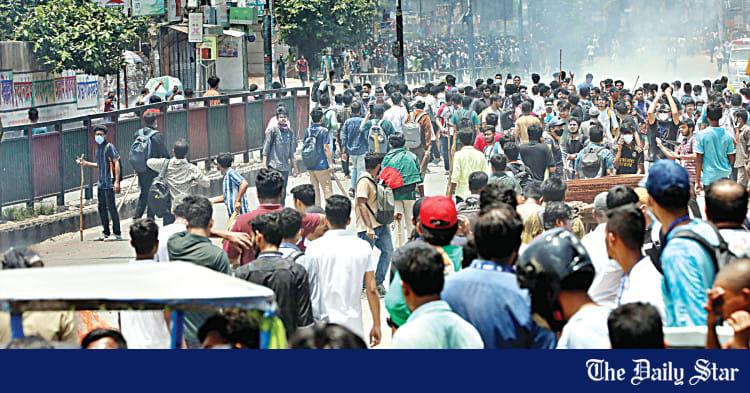
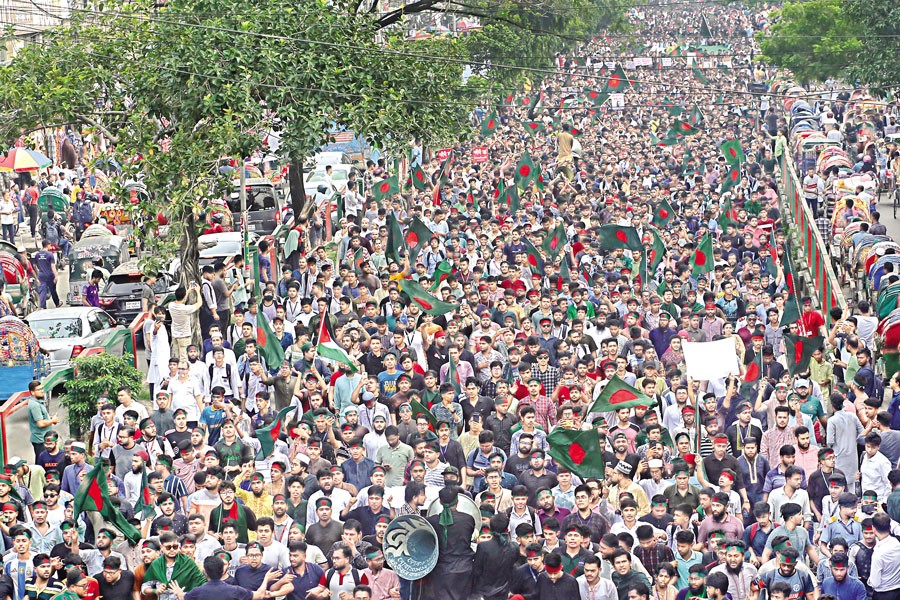
BRAC University students flood the streets in the capital’s Rampura on July 18, 2024, to join the ongoing protests. Despite police resistance, they, along with students from other private universities, became a vital force in the movement. PHOTO: File/PRABIR DAS

Bangladesh's student movements have long been rooted in the dormitories of public universities -- Dhaka University, Rajshahi University, Jahangirnagar University, and Chittagong University -- where slogans, marches, and political pressure have often driven change.

However, the uprising in July 2024 marked a pivotal shift as protests spread beyond the usual public campuses.

A new wave surged from private universities, colleges, madrasas, and even high schools -- reshaping the political landscape and rewriting the story of student-led resistance.

Once seen as "disengaged" or "apolitical", these students emerged as a powerful force in protests that began over job quotas and evolved into a wider demand for justice, accountability, and reform.

HOW IT TURNED INTO A NATIONAL RECKONING

The ignition came on July 14.

At a press conference that day, then prime minister Sheikh Hasina, while defending the 30 percent quota for descendants of freedom fighters, asked, "If the grandchildren of freedom fighters do not receive benefits, should the grandchildren of razakars receive them instead?"

The reference to "razakars" -- a term historically used to describe collaborators with the Pakistani army during the 1971 Liberation War -- sparked immediate outrage among students.

As protests intensified, so did the violence. Videos of students being beaten by Bangladesh Chhatra League activists flooded social media.

Then, on July 16, Abu Sayed, a student of Begum Rokeya University in Rangpur, was shot dead by police.

That night, the University Grants Commission shut down all public and private universities, medical colleges, and affiliated institutions, citing student safety.

Public university dormitories were evacuated, seemingly to deflate the movement's momentum. For a moment, it seemed the protests might end.

But then, a new wave rose.

Private university students stepped in. The demonstrations spilled beyond elite campuses, becoming a nationwide movement.

College and even school students joined.

According to the official government gazette, the list of martyrs includes 844 names.

An analysis by profession and age, based on information from families, shows that at least 269 students lost their lives -- second only to working-class people, according to a Prothom Alo report.

The scale of student sacrifice marked a historic turning point.

THE MOBILISATION

Private university students were among the first to mobilise; not over quotas, but out of collective outrage and the refusal to stay silent.

Jabed Bin Noor of South East University said, "The government did injustice to students. It doesn't matter where they studied. Students suffered. When my friend from Dhaka University was attacked on July 14 for a fair demand, it affected me. That's why we initiated our protest the next day."

He described people from all walks, including jobseekers, those struggling with living costs, families of the disappeared or falsely accused, uniting.

"We all arrived at one truth: our adversary is this government. Its fall is the only path towards our hopes."

For Hasibul Hasan Shanto of North South University, the protest was personal. "I've questioned the government since school…. I even resigned from a law enforcement job after seeing how it was used to rig the 2018 election.

"When the prime minister called us 'razakar', that was the moment I knew I had to act. This wasn't about institutions; it was about doing what's right."

He added, "This was a landmark movement. Students from public and private universities, colleges, madrasas, even schools -- all stood united. People are loyal to the state. It's the politicians who drag it into the ditch."

RESISTANCE IN THE DISTRICTS

Students outside Dhaka -- from private universities, colleges, schools -- kept joining, even as crackdowns continued.

Kousik Islam Apurbo, an HSC candidate from Rajshahi Shikkha Board Govt Model School and College, recalled being shot in the foot.

"When violence broke out on August 5 [the day the AL-led government fell], police fired tear gas and sound grenades. I raised both hands and screamed that we won't run. But then they fired live bullets. One hit my foot. As I bled, a protester with a stomach wound tried to carry me. That was the beauty of July -- no one left anyone behind."

But as their injuries slowed them, more attacks came.

"They beat me, fractured my jaw, stole my phone. Two Varendra students died but they weren't remembered. Public university martyrs got the cameras. It's all about footage," Apurbo said.

Md Abdul Bari from Rajshahi College said most protesters were not from public universities.

"Once Rajshahi University's dorms shut on July 18, participation dropped. Then it was private university, school, college, madrasa, nursing and polytechnic students who carried it forward.

"We hid in Padma Garden, lived on mashed potatoes and rice. We broke Section 144 in Rajshahi. That was our strength."

He also highlighted the role of girls. "They weren't from DU or RU. They were nursing and polytechnic students, and they were brave."

Shahana Islam, a 10th grader from Jhenidah Wazir Ali School and College, joined with her brother.

"When our senior classmates were attacked on campus on July 16, we couldn't stay silent. It wasn't only about quotas. It was about Chhatra League's brutality. Our first protest was against the attackers and then it became much bigger. We bled together."

In Dhaka, students from Dhaka College coordinated protests with private university students.

Tanvir Hasan Tushar joined the demo at Naya Bazar.

"Though I'm from Dhaka College, I lived with friends from private universities. We fixed two spots -- Naya Bazar and Rampura. Students from United International University, Daffodil, North South and others joined us.

"When we heard about the BRAC University attack, we changed direction. Near Ring Road, police fired tear gas and chased us. A bullet hit my ear, pierced my hand -- and damaged my eye. Now I have partial blindness."

Despite his injury, Tushar remains determined. "I've accepted it. But I'm working to stand on my own feet again."

WHEN MADRASA STUDENTS JOINED

Often sidelined in student politics, madrasa students took an early stand.

Aminul Islam of Darussunnah Kamil Madrasah in Narayanganj recalled starting protests with just 15–20 students.

"After Abu Sayed was killed on July 16, momentum grew. On July 18, police fired on our procession. Many female protesters were injured. It was terrifying.

"Whether I benefit from this movement was not my concern. If it failed, my future children might face the same discrimination. That's why we joined."

Hafez Abdullah from Rajshahi, a former Jatrabari Madrasa student, believed the timing was divine.

"The movement began in Muharram. That month has always marked the fall of tyrants. I believed it was symbolic.

"Near Railgate, I saw Awami League cadres standing beside police, ready to attack. I wore a beard and tupi. Back then, that meant being labelled Shibir. We stopped wearing our uniforms."

His roots in resistance ran deep. "In 2013, we saw our brothers martyred. Every time the chance came -- we rose."​
 
Analyze

Analyze Post

Add your ideas here:
Highlight Cite Respond

The July that rocked Bangladesh
July 30, 2024: The red wave of defiance

1753837722190.webp

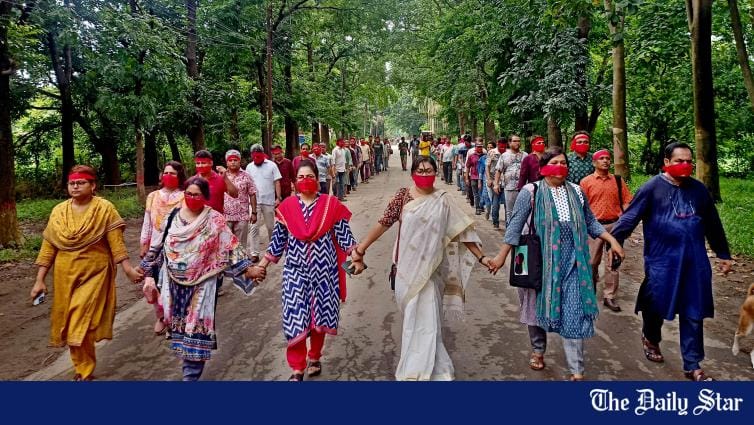
Teachers and students of Jahangirnagar University staged a silent march on July 30, 2024, with red cloths covering their faces, protesting the torture and detention of students and demanding justice for those killed during the quota reform protests. Photo: File/Akhlakur Rahman Akash

Amid continued mourning and mounting outrage, July 30 marked a powerful day of nationwide protests and symbolic resistance, as students, teachers, guardians, and citizens rallied across Bangladesh demanding justice for the lives lost during the quota reform movement. From campus demonstrations to courtroom reflections and diplomatic reactions, the country witnessed an outpouring of grief, defiance, and demands for accountability.

The High Court expressed deep sorrow over the deaths resulting from the recent unrest. "These deaths are sad for all of us," said a bench of Justice Mustafa Zaman Islam and Justice SM Masud Hossain Dolon during a hearing on a writ petition related to the violence.

At Jahangirnagar University, teachers and students staged a silent protest under the banner "Jahangirnagar Against Oppression." With red cloths covering their mouths and parts of their faces, they marched from the university's Shaheed Minar around 12:30pm, condemning the harassment, detention, and torture of students and calling for a thorough investigation into the indiscriminate killings. Faculty members at Rajshahi University, under the banner "RU Teachers Against Oppression," organised a similar demonstration. Over 200 teachers participated in the procession that began at the Shaheed Intellectual Memorial at 11:30am and ended with a rally at the university's main gate.

In Khulna, hundreds of students blocked the Shibbari intersection around 11:30am for more than three hours, chanting slogans like "Shooting won't stop the movement" and "One point, one demand—step down Sheikh Hasina." Many citizens joined the demonstration in solidarity. "Bullets bought with our fathers' tax money are being used against us," said one protester. "We demand justice for the students who were shot and killed."

In Tangail, quota reform protesters wearing red badges attempted a march on Registrypara Road around noon. However, police intercepted the procession near the Girls' School intersection, preventing it from continuing.

Online, a wave of digital protest swept across platforms. Students, teachers, guardians, and others changed their profile photos to solid red in solidarity with the Anti-Discrimination Student Movement's call. The action defied the government-imposed restrictions on websites, including Facebook, with many users bypassing the blocks using VPNs. The movement had rejected the government-declared nationwide mourning.

A fresh wave of mobilisation was announced in the evening. The Anti-Discrimination Student Movement, through a press release signed by one of the coordinators Abdul Hannan Masud, called for a "March for Justice" to be held at all educational institutions, court premises, and major roads next day. Their nine-point demand included an apology from Prime Minister Sheikh Hasina, the resignation of several ministers—including those of Home, Education, Law, Information, and Communications—and the dismissal of top police officials in districts where students had been killed. They also demanded the resignation of university vice-chancellors and proctors who had failed to protect peaceful protesters, immediate reopening of all institutions and dormitories, and the withdrawal of military, BGB, Rab, and police forces from campuses.

International voices added to the pressure. UN Secretary-General António Guterres expressed concern over reports of excessive use of force and credible evidence of human rights violations. EU Foreign Policy Chief Josep Borrell condemned the shoot-on-sight orders and unlawful killings, calling for thorough investigations and accountability.

According to official data, the government put the death toll at 150. However, The Daily Star's count showed at least 163 confirmed deaths, with fears the actual toll could be even higher. Many critically injured patients were admitted to hospitals that reporters could not access, and numerous families had collected bodies privately without media contact.

At least 354 more people were arrested in the last 36 hours till 6:00pm on July 30, bringing the total number of arrests to 10,488 since July 18. Police filed 672 cases in the capital and 51 districts. Of the latest arrestees, 215 were taken into custody from 29 districts. The Dhaka Metropolitan Police produced 139 arrestees before the Chief Metropolitan Magistrate's Court, where most were sent to jail and some placed on remand.

Prominent citizens, under the banner "Aggrieved Citizen Society," held a press conference at the Dhaka Reporters Unity, accusing the government of being largely responsible for the deadly crackdown. Transparency International Bangladesh Executive Director Iftekharuzzaman questioned the justification for holding protest leaders "for their safety" and asked if similar security would be extended to all citizens.

Meanwhile, police barred a group of guardians under the banner "Santaner Pashe Obhibhabok" from holding a sit-in in front of Dhaka Medical College. The parents had planned to demand answers regarding the deaths of their children.

The government announced its intention to ban Jamaat-e-Islami and its student wing, Islami Chhatra Shibir, for their alleged involvement in recent "anti-state activities." Law Minister Anisul Huq made the announcement a day after the Awami League-led 14-party alliance recommended the ban. BNP Secretary General Mirza Fakhrul Islam Alamgir questioned the timing of the decision, calling it a ploy to distract from the ongoing crisis.

Amnesty International, in an open letter to Prime Minister Sheikh Hasina, demanded the immediate lifting of the curfew and restoration of full access to social media. The letter also urged the government to ensure that shoot-on-sight orders and internet shutdowns would not be used again to suppress protests or curtail fundamental rights.

The events of July 30 bore witness to a fractured nation grappling with grief, fury, and a deepening crisis of trust. While red became the colour of resistance—on campus, online, and on the streets—the government's escalating crackdown and denial of responsibility further inflamed public sentiment. As the international community watched with alarm and citizens demanded justice with unrelenting courage, the question remained—will the state listen before the damage becomes irreversible?​
 
Analyze

Analyze Post

Add your ideas here:
Highlight Cite Respond

‘The July uprising was about truth and justice’

1753928928999.webp


The bitter truth about our current situation is this: we toppled the fascist regime, but we couldn't bring it to justice. FILE PHOTO: PRABIR DAS
In July-August 2024, a student-led mass uprising swept across Bangladesh, culminating in the fall of an autocratic regime spanning more than 15 years. A year on, three of the female protesters who took part in the movement on the streets—Nasita Binte Nasir, Lamisha Jaman, and Kameliya Sharmin Chura—share first-hand accounts of resistance and survival with Mahiya Tabassum of The Daily Star.

'The bullet passed right by me'
Nasita Binte Nasir
Undergraduate student, Islamic University of Technology (IUT)

Initially, I was hesitant to join the movement. On July 16, I tried to take part in a demonstration organised by a political party, but their behaviour was intimidating and made me feel unsafe. But things changed the next day. I spoke with a group of student protesters, independent from any platform, who made me feel reassured. With their encouragement, I joined a rally in Uttara in the morning.

On July 18, private university students from all over Dhaka decided to mobilise together, coordinating through social media. A few of my friends came to my place early in the morning, and around 9am or 10am, we headed out. Violent clashes were already being reported, but I still couldn't believe that state forces would open fire on unarmed student protesters.

We, the former students of Rajuk Uttara Model College, joined the protest rally in front of the establishment. As clashes intensified and more students were injured, we—especially the female protesters—took on the role of medics. We tried to get supplies from the nearby Lazz Pharma, but they refused to sell us anything. When the violence escalated further, they shut down completely.

Police officers began firing rubber bullets into the crowd. There were armoured personnel carriers around us. Then, out of nowhere, a military tank rolled into view, sweeping through the road and firing indiscriminately. It was the first time I had ever seen a tank up close. The sheer violence of it—the disregard for human life—shocked me to my core.

In that chaos, a bullet flew right past me and struck a young woman just a few metres behind. I had spoken to her only moments earlier. Other protesters quickly carried her to a hospital. She survived, but was seriously injured. Another protester wasn't as lucky. A police bullet hit him in the eye. He didn't survive.

Everything happened so fast. When the military tank entered the scene, panic took over. We began running in every direction, trying to find safety. But even that was difficult. Many of us sought shelter at nearby buildings, only to find locked gates and terrified residents unwilling to help. Most buildings had shut their doors to keep us out. We were left exposed while a military tank roamed the street to "clear" the area.

At one point, a building guard handed us a few sticks to defend ourselves, though we knew they were almost useless. Still, we took them. We focused our energy towards helping the wounded, continuing to collect supplies and administering basic first aid to anyone who needed it.

After that day, every Rajuk student I knew was mobilised. We kept returning to the streets, day after day, organising more rallies.

1753928980668.webp

Nasita Binte Nasir (left), a former Rajuk Uttara Model College student, in a rally in Uttara protesting the killing of students during the July uprising in 2024. Later, this photo went viral. Source: Prothom Alo

Then came the photo.

Someone took a picture of me mid-slogan, standing in the pouring rain, and it went viral. Overnight, I started receiving death threats. My inbox was filled with messages from strangers. Some people tracked me down on social media, sending vile and threatening messages.

I had to deactivate my Facebook account for safety. But I opened a new one to stay in touch with other protesters and to help coordinate actions.

That viral photo also led to wild speculations. Suddenly, people online were calling me a BNP field activist. Others tried to recruit me into various political parties, assuming I had political ambitions. But I refused every offer. I never had interest in politics before; I don't have it now.

I never wanted the limelight. I didn't join the protests to be seen or praised. The movement was not about fame or political alignment. It was about truth and justice. I will take to the streets again if I must—but not under the banner of any party. I don't need a political affiliation to stand for what is right.

Oddly enough, I felt more secure during the protests than I did afterwards. After August 5, the fear became constant. I started hearing from people close to me that various political groups were trying to find out where I was—trying to locate me.

Even though the regime has changed, I still don't feel safe.

'I felt the horror in my bones'
Lamisha Jaman
Undergraduate student, Jahangirnagar University

On July 15 last year, a photo of two students carrying another injured protester on the Dhaka University campus went viral. That was the day members of Bangladesh Chhatra League (BCL), student wing of the then ruling party, attacked students protesting at DU. I was on my way to the airport to see off a relative, but as news of the attacks started pouring in, we made a split-second decision to turn around and head to DU.

I didn't get caught in any clashes that day, but it was the first time I witnessed the reality on the ground. The tension in the air, the fear, the resistance—it all felt raw and urgent. By July 16, I was fully immersed in the protests, chanting slogans alongside fellow students. I vividly remember shouting, "Chhi chhi Hasina, lojjay bachi na," when a few of the rally organisers—some of whom are now at the forefront of National Citizen Party (NCP)—asked me not to raise such slogans. They claimed this protest was about quota reform, not against any particular regime or leader.

1753929031049.webp

Lamisha Jaman, a Jahangirnagar student, carries spatula and brick to defend herself against the lethal force carried out by law enforcers and BCL on Dhaka University campus during July protests in 2024. Photo: Courtesy

On July 18, school and college students in the Farmgate area came out on the streets, having coordinated with me the previous night. Initially, we were gathering in groups of three-four so as not to draw any attention. But soon, we felt safe enough to move in a large group. So around 400-500 students, all in uniforms, united in Farmgate and started a protest rally, moving towards Asad Gate via Manik Mia Avenue.

On Manik Mia Avenue, police opened fire on us. Students were breaking branches off from the nearby trees to defend themselves. Then we negotiated with the police that they would let us lead the rally towards Mirpur Road. By the time we got on Mirpur Road, a huge group of BCL activists rushed to the spot from Lalmatia, carrying sharp weapons, chasing the uniform-wearing students.

Police also started firing blank shots, as well as tear shells and sound grenades. The students dispersed and started running in different directions. That day, I faced the largest number of tear shells among all the days of July uprising. We started applying toothpaste all over our faces and tried to take shelter in the nearby buildings.

At Dhanmondi Road 27, I saw some students of Holy Cross College in front of a building beside Rapa Plaza, pleading with the people inside to open the gate and let them in. But no one inside agreed to give them shelter, saying they would get in trouble. A few of the students fell heavily sick due to the tear shells and were having breathing difficulties.

Then someone from upstairs called us and we noticed an emergency exit. We went upstairs via that and saw that a beauty parlour was giving shelter to a large number of people, crammed into a small room. There were women, senior citizens, children crying and praying.

Then I got calls and learnt that 300-350 more students were stuck in Rapa Plaza and another adjacent building. Then someone called me and said one of the students I knew had gotten shot with two bullets and needed to be taken to a hospital immediately. She was taken to at least six to seven hospitals—not a single one agreed to provide medical assistance. Then finally they found a hospital near Farmgate that took her in. She survived, but was traumatised for life.

While I was sitting there, crammed in the small dark room with others, I received another call, learning that a student from Dhaka Residential Model College (DRMC) had been fatally shot near Dhanmondi 27.

We decided to keep calm and plan for an escape. We started calling media houses because we were under the impression that if the incident got coverage, we would be spared. I called my elder sister—she was already in another protest. She just said, "Calling you in a minute, I am running." Then I heard a gunshot and the call dropped. I started screaming and crying and that was the first time I felt the horror in my bones. Every second felt like hours, filled with pain and horror till I could confirm that she was alright.

We kept reaching out for help, but no one came. We were advised to leave in a large group, but none of us felt safe doing so. The clashes continued for nearly six hours. We called the Mohammadpur and Dhanmondi police stations, but they said they couldn't help us either—the situation was spiralling out of control.

Eventually, teachers from the DRMC and an official from St. Joseph Higher Secondary School came to rescue their students. A DU faculty member also came. We begged them to take other students too, regardless of which school they belonged to. Surprisingly, no teacher or official from Holy Cross came, even after they were informed about their students' situation.

To prepare for the escape, we split into groups. Staff from a nearby business donated spare clothes, allowing many students to change out of their uniforms into civilian clothes so they wouldn't get targeted or arrested.

By around 4:30pm, the last student was escorted out of that room. Then I, along with a few close friends, stepped outside.

What we saw was devastating: tyres burning, streets littered with abandoned sandals, pools of blood, chunks of flesh. It looked like a war zone.

Walking away from that scene felt like stepping into a second life—an escape from death, a breath stolen back from chaos. And though our bodies were exhausted and our spirits shaken, we knew this was not the end. The fight was only just beginning.

To be continued...................
 
Analyze

Analyze Post

Add your ideas here:
Highlight Cite Respond
'I couldn't stay away from the protests'
Kameliya Sharmin Chura
Undergraduate student, Jahangirnagar University

Although I had the privilege of using the quota system, I was active during the 2018 quota reform movement because I didn't want any discrimination. But the protest in 2018 was only about quota; it didn't address the broader discrimination faced by marginalised communities. When the quota reform protests resurfaced in 2024, I wasn't part of it initially.

But everything changed on July 15. A protest rally of students had reached the VC bungalow in Jahangirnagar University (JU) when police, along with a group of BCL activists carrying weapons, attacked the students. The clash between protesters and the police-BCL members turned violent, and students took shelter in the VC bungalow. There was a blackout throughout the campus and our students got cornered with no safe escape route.

I couldn't just watch. I had to step out and join the protest, even as the police charged at us.

That night, as police and BCL activists attacked us, I saw a Facebook live broadcast from the VC Bungalow showing our trapped students. After watching that, I knew I had to act. I took the bell from my resident hall—the one we use for emergencies and warnings—and walked through the balconies of Pritilata hall.

I hammered that bell with everything I had and called everyone to gather, to step out and rescue our students. The sound echoed across the dormitory, and something extraordinary happened. A huge group of female students poured out of the hall and marched with me towards the VC bungalow to rescue the trapped protesters.

That became one of the most significant moments of the July protests on the JU campus. Without those female students that night, it would have been impossible to face the clashes head-on.

There are so many incidents from July-August 2024 that I can never erase from my memory. The images are burnt in my mind, instances where I had to jump over a dead body just to take shelter from the violent clashes raging around us on August 5. I saw so many corpses, so much blood. The trauma hasn't left me.

During the uprising, several of our teachers—who have since fled the country—called us, especially targeting female students like me. They threatened to inform our parents and suspend us from the university if we continued participating in the protests. But those intimidation tactics were nothing compared to the challenges we face in today's Bangladesh.

The bitter truth about our current situation is this: we toppled the fascist regime, but we couldn't bring it to justice. We fought against discrimination, but in today's Bangladesh, we're witnessing discrimination everywhere we look. The corruption, the extortion—it's all happening openly now. The very cause we bled for, we couldn't achieve it.

In this "noya bondobosto," discrimination has simply been repackaged, following the same rotten patterns we thought we had destroyed. I have never felt this unsafe before, both as a woman and as someone who is an artiste. The rise of ultraconservatism has put people like us at risk.

The revolution we fought for feels incomplete, hollow even. We paid in blood for change, but what we got was just a reshuffling of the same oppressive deck.

Mahiya Tabassum is a member of the editorial team at The Daily Star.​
 
Analyze

Analyze Post

Add your ideas here:
Highlight Cite Respond

‘July Uprising Book Fair 2025’ begins at Bangla Academy

UNB
Published :
Jul 31, 2025 23:08
Updated :
Jul 31, 2025 23:08

1754008975481.webp


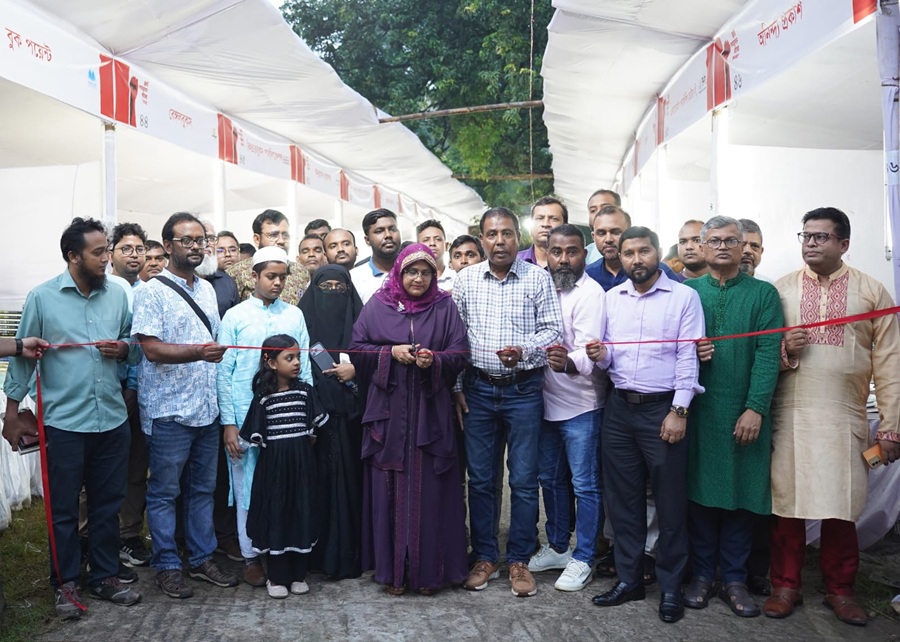
The 'July Uprising Book Fair 2025' was inaugurated on Wednesday at the premises of Bangla Academy, marking the anniversary of the historic July Uprising.

The fair has been organized by the Bangladesh Publishers and Booksellers Association, with support from Bangla Academy and under the patronage of the Ministry of Cultural Affairs.

The inauguration ceremony, held at 5pm, was graced by Kazi Lulul Makh Min, mother of martyred activist Fahmin Jafar, who officially opened the fair.

In a brief yet emotional address, she said, "The blood of my child is entwined with the July Uprising. Through this book fair, we are remembering that historic event and honoring those, like my son Fahmin Jafar, who stood fearlessly in the face of authoritarian bullets. This fair is not just a tribute to the uprising and its martyrs but also to a fearless generation that stood with unyielding resistance."

Prof Mohammad Azam, Director General of Bangla Academy, attended the event as a special guest. "In the past year, an impressive number of publications have emerged on the July Uprising. These works will serve as invaluable primary sources for future research."

"The July Uprising Book Fair is unique in its essence-books produced around the uprising carry historical significance as a counter-narrative to fascist propaganda," he said.

President of the Publishers and Booksellers Association, Rezaul Karim Badsha, remarked, "This is not just a commercial festival-it is a celebration of free thought. If any regime ever attempts to suppress freedom of expression again, the uprising stands as a stark reminder of the consequences, and that reminder is now preserved in these books."

The book fair will continue till August 5, open daily from 11am to 8pm, free for all visitors. Each day from 4:30pm to 7:30pm, memory-sharing lectures and discussions will be held on various aspects of the July Uprising under the title "Bloody July: In Our Memory, In Our Courage."

The schedule includes sessions such as: "Role of Intellectuals in Post-Uprising Bangladesh" with Hasan Robayet and Pulin Bokshi, and "Youth in the Uprising - '90 and '24" with Ruhul Kabir Rizvi on August 1; "Censorship and the Intellectual Space in Bangladesh" featuring Imrul Hasan and Mahbub Morshed, and "Role of Publishing in Rebuilding Post-Uprising Bangladesh" by Mohammad Nazim Uddin on August 2; "The Role and Nature of Media in Post-Uprising Bangladesh" with Kajal Rashid Shaheen and Sahul Ahmed, and "Language, Literature, and Culture of the Uprising" with Altaf Shahnewaz on August 3; "Justice and Injustice in Revolutions" featuring Arif Khan and Faridul Haque, "Uprising and Women" by Moshaheeda Sultana, and "Reporting the Revolution" by Amirul Islam Kagzi on August 4; and finally, "The Revolutionary Generation and the Future of Bangladesh" featuring Rezaul Karim Roni and Tuhin Khan on August 5.

Over 60 leading publishing houses from across the country are participating in the fair.

Notably, visitors can also access reports from seven reform commissions of the Government of the People's Republic of Bangladesh at the Publishers and Booksellers Association's designated stall.​
 
Analyze

Analyze Post

Add your ideas here:
Highlight Cite Respond

Unfinished tasks of July uprising

Tanim Asjad
Published :
Aug 02, 2025 00:14
Updated :
Aug 02, 2025 00:14

1754092122535.webp


As the anniversary of the July mass uprising continues, it is also time to examine the achievements and disappointment of this historical event critically. The task is challenging and also problematic due to the complex nature of the mass uprising and subsequent developments in the country over the past year. There is no doubt that the most visible and successful achievement of the student-led movement is the downfall of the authoritarian regime of Sheikh Hasina on August 5 last year. It was the day when Bangladesh re-emerged as a country boldly asserting its sovereignty and independence. The sovereign status of the country was systematically undermined during the authoritarian regime.

Nevertheless, the fall of the brutal regime is not the end of the story, as the mass uprising has widened the expectations of the people. The downfall of Hasina is also a point of a new beginning to rebuild the country in a balanced and sustainable way, thereby curbing socio-economic disparity. It opens the door to restoring the freedom of speech and reversing the course of hate and intolerance. The bloody and forceful departure of the tyrant also presents an opportunity to reshape democratic institutions for the greater interests of the nation. All these are big tasks and not possible to complete within a short period. Instead the same will require persistent efforts.

Immediately after Hasian's ouster and escape to seek refuge in India, the nation dipped into a chaotic disorder for the time being. With the killing of at least 1,400 people and injury to several thousand others by the tyrant's forces and goons in 36 days of the mass uprising, some amount of disorder was not unexpected. It is also true that some undesirable things happened at that time, undermining the spirit of the mass uprising.

It is also well known that a large number of people were intimidated over the 15 years of the tyrant by law-enforcing agencies, along with leaders and activists of the ruling party, Bangladesh Awami League (BAL), to be exact, for differences in their political positions. Many of the tortured did not waste the opportunity to take revenge. Therefore, several BAL leaders and activities came under attack. Top leaders of the party, however, escaped, and many fled to India. They are now staying there thanks to the generosity of the Modi-led Indian government in return for serving the Indian interests for more than a decade.

Some expected that things would be normalised automatically or that there would be little chaos. It was a misconceived notion, as the country's political transition did not occur through normal democratic means. More than a month-long movement, that witnessed venting of a decade-long legitimate anger and disappointment, led to the bloody mass uprising and compelled the tyrannical regime to fall.

Then the Yunus-led interim government took charge shouldering two immediate tasks: restoring law and order and fixing economic mismanagement. Despite several efforts, law and order are still a matter of grave concern in the country. Economic management has, however, improved modestly, and more progress is expected. It is, however, disappointing that some critical areas like education, health and transport are still carrying the legacy of the tyrant regime due to lack of effective intervention from the interim government. Instead of taking proper measures do some urgent rectifications, the over-ambitious move of comprehensive reforms will take time. The country is yet to regain normalcy by adjusting with the changeover.

So, the ultimate success of the July uprising will depend on addressing the socio-economic disparity in an effective and sustainable manner and also on the smooth transition to a democratic process. The road is long with a number of barriers and there is no easy or short-cut to move ahead. It is thus necessary to continue the fight.​
 
Analyze

Analyze Post

Add your ideas here:
Highlight Cite Respond

After July: A fragile transition, a nation in waiting

1754183400556.webp

VISUAL: ALIZA RAHMAN

One of the most significant political upheavals in Bangladesh's recent history occurred during the July uprising, which took place only a year ago. After years of political persecution, suffocation, and the deliberate deterioration of democratic principles, it was a moment of communal liberation for many. Former Prime Minister Sheikh Hasina's prolonged and increasingly autocratic administration came to an abrupt end due to a confluence of student protests, widespread public discontent, elite disenchantment, and institutional retreat. Hope for change, rebirth, and the restoration of the republic followed. That hope remains a year later, albeit weakened.

The subsequent transition following the uprising brought with it an interim government, headed by Prof Muhammad Yunus, which was never going to be easy. The government began cautiously optimistic, charged with re-establishing public trust, consolidating a shattered state, and laying the groundwork for a fair electoral process. It pledged a restoration of the rule of law, reform, and inclusivity. However, the administration is increasingly vulnerable to both internal conflicts and public scepticism due to its delayed delivery, increasing political inconsistencies, and growing doubts about its authority.

The breakdown of the political unity that initially enabled the revolt has been the most depressing development since it began. After briefly uniting behind a common goal—the overthrow of the previous government—the alliance of student activists, opposition parties, and civil society leaders has returned to distrust, competitiveness, and conflicting agendas. Long seen as the main opposition party, the BNP has struggled to articulate a consistent post-Hasina policy, wavering between calls for more extensive structural reform and demands for early elections. The National Citizen Party (NCP), which formerly presented itself with a young, reformist image, has become increasingly entangled in internal conflicts and characterised by exaggerated rhetoric. Even some student organisations, which were previously praised as the movement's moral core, have been drawn into disputes and controversies.

The Awami League's political future is still a significant concern in the interim. Whether it should be officially banned or marginalised remains a topic of debate. Although many people believe that a party long associated with authoritarianism and impunity must be held accountable, others caution that exclusion—particularly by decree—risks eroding the same democratic norms that the movement aimed to restore. Here, there are no simple solutions. There is a fine line between justice and retaliation, and in a culture still dealing with the effects of political violence, moving forward requires a level of self-control that is hard to muster.

The position is made more difficult by the strategic hesitations of the interim government. It has hinted at election dates, with February 2026 being the latest, but has yet to release a definitive schedule or legal framework. (On July 31, the law adviser said the election date would be announced in a few days.) Both supporters and opponents have criticised the interim for its incapacity or refusal to take decisive action on issues such as judicial independence, bureaucratic accountability, and law enforcement reform. Merely symbolising is no longer sufficient in an environment where public vigilantism, mob violence, and administrative indifference are becoming more apparent.

International players have also been keeping a careful eye on things. Once a major backer of the former Awami League-led government, India has been, at best, ambivalent towards the new administration due to its unclear stance and cautious diplomatic approach. Border disputes have escalated, especially in light of recent push-ins of Rohingya refugees and Muslims who speak Bangla. China and Pakistan, however, have taken a more realistic stance and are offering cautious engagement. While applauding the end of autocratic leadership, Western nations have begun to voice concerns about the absence of human rights protections and the lack of election certainty. The interim government continues to face a challenging balancing act between local consolidation and international credibility.

Nevertheless, something has changed amid all this uncertainty. The prevailing power's myth of invincibility has been dispelled. The fear-based culture that stifled dissent has been broken. A new generation has taken the stage, one that is politicised by engagement rather than inheritance. This is no small accomplishment in and of itself. However, this is not enough to sustain a movement. They need organisation, creativity, and most importantly a forward-looking vision.

The next few months will be pivotal. The gap will either be filled by opportunism, resentment, and a return to authoritarianism, or the interim government will be able to steer the country towards elections and reform in a legitimate manner. For a country that has repeatedly paid the price of freedom, it is reasonable to expect its leaders to step up when the time comes.

Zillur Rahman is a journalist and the host of the current affairs talk show 'Tritiyo Matra.' He also serves as the president of the Centre for Governance Studies (CGS).​
 
Analyze

Analyze Post

Add your ideas here:
Highlight Cite Respond

Latest Posts

Back
PKDefense - Recommended Toggle