Home Watch Videos Wars Movies Login

[🇧🇩] Khaleda Zia no more

[🇧🇩] Khaleda Zia no more
25
304
More threads by Saif

G Bangladesh Defense
Foreign leaders condole death of Khaleda Zia
Staff Correspondent 30 December, 2025, 11:35

1767144126821.webp

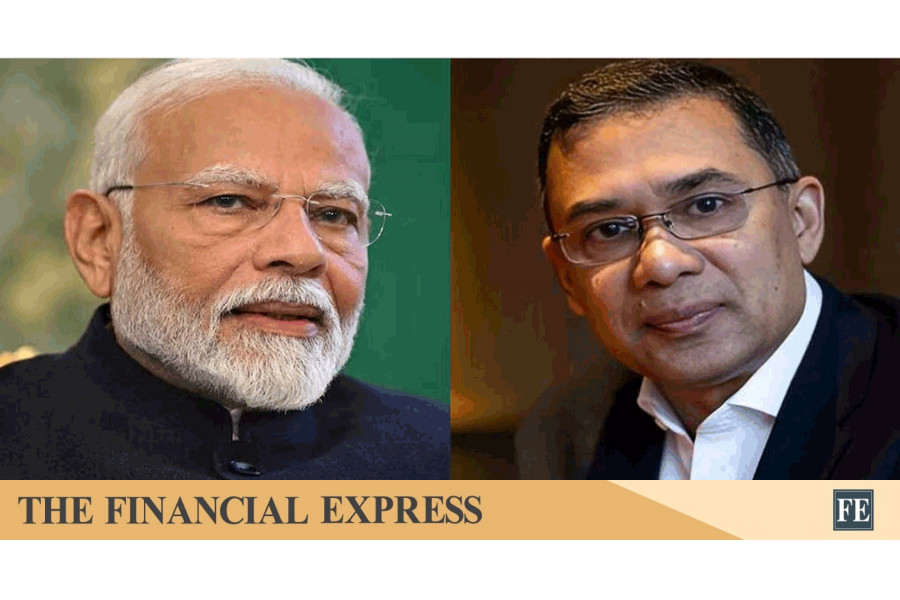
Former Bangladesh prime minister Khaleda Zia and Indian prime minister Narendra Modi. | Collected photo

Condolences poured in from foreign countries and international communities, too, following the death of Bangladesh’s first woman prime minister and Bangladesh Nationalist Party chair Khaleda Zia on Tuesday morning.

India, Pakistan, China, Nepal, Iran, Malaysia, United States, Australia, Germany, Canada, France, Russia, and European Union, among others, expressed condolences in separate messages issued over the death of Khaleda, three-time prime minister of Bangladesh.

She died while under treatment at a Dhaka hospital at the age of 80.

‘Deeply saddened by the news of the passing of former Prime Minister and BNP Chairperson Begum Khaleda Zia in Dhaka. Our heartfelt condolences to her family and all the people of Bangladesh. May the Almighty grant his family the strength to bear this irreparable loss,’ said Indian prime minister Narendra Modi in his X handle.

As the first female prime minister of Bangladesh, her significant contribution to the development of Bangladesh and the advancement of India-Bangladesh relations would be remembered forever, he said.

Modi went on to say, ‘I recall my cordial meeting with her in Dhaka in 2015. We hope that her thoughts and legacy will guide our partnership well into the future. May her soul rest in peace.’

Pakistan president Asif Ali Zardari and prime minister Shehbaz Sharif in separate messages expressed grief and sorrows over the death of Khaleda Zia.

Zardari extended heartfelt condolences to Khaleda’s family and the people of Bangladesh, saying, ‘Her leadership & services will be remembered with respect.’

‘Her lifelong service to Bangladesh and its growth and development leaves a lasting legacy,’ he said, adding that Begum Zia was a committed friend of Pakistan,’ said Shehbaz.

‘My Government and the people of Pakistan stand with the people of Bangladesh in this moment of sorrow. Our thoughts and prayers are with her family, friends, and the people of Bangladesh during this difficult time. May Allah SWT bless her soul. Ameen!,’ the Pakistan prime minister said.

West Bengal chief minister Mamata Banerjee also expressed deep sorrow over the death of Khaleda Zia.

In a condolence letter addressed to BNP acting chair Tarique Rahman, Chinese ambassador to Bangladesh Yao Wen said that the Chinese leadership mourned the passing of Khaleda Zia, describing her as a steadfast champion of freedom and a key figure in shaping Bangladesh’s political history.

The ambassador said that Chinese premier Li Qiang and foreign minister Wang Yi had separately conveyed their condolences to chief adviser Professor Muhammad Yunus and adviser for foreign affairs Touhid Hossain.

The US embassy in Dhaka in a message expressed deepest condolences on the passing of Khaleda Zia, saying, ‘Mrs Zia played a pivotal role in shaping her country’s modern history, and her leadership was instrumental in advancing Bangladesh’s development.’

The embassy of Russia in Bangladesh said that they were deeply saddened to learn about the demise of Bangladesh’s first female prime minister and BNP chair Khaleda Zia.

In a condolence message, the Australian high commission in Bangladesh said, ‘Our thoughts are with the people of Bangladesh on the passing of their former Prime Minister, leader and Chairperson of the Bangladesh Nationalist Party, Begum Khaleda Zia.’

In a message, the high commission of Canada in Bangladesh also extended Canada’s sincere condolences to the family and the people of Bangladesh after the death of Khaleda Zia.

The German embassy in Dhaka in a condolence message expressed its deepest condolences on the passing of Khaleda Zia, the country’s first female head of government and long-serving chair of the BNP.

The Bay of Bengal Initiative for Multi-Sectoral Technical and Economic Cooperation also expressed condolence on the passing of Khaleda.​
 
Analyze

Analyze Post

Add your ideas here:
Highlight Cite Respond
Khaleda's passing leaves irreplaceable void, but her vision, legacy will endure: Modi

UNB
Published :
Dec 31, 2025 23:33
Updated :
Dec 31, 2025 23:33
1767229283939.webp

Indian Prime Minister Narendra Modi has said that Begum Khaleda Zia’s passing has created an irreplaceable void, but her vision and legacy will endure.

"I am confident that her ideals will be carried forward under your able leadership of the Bangladesh Nationalist Party, and will continue to serve as a guiding light to ensure a new beginning and the enrichment of the deep and historic partnership between India and Bangladesh," he said in a letter to Begum Zia's son and BNP Acting Chairman Tarique Rahman.

Indian External Affairs Minister Dr S Jaishankar handed over the personal letter from PM Modi to Tarique Rahman in Dhaka.

At this moment of national mourning, PM Modi said his thoughts are also with the people of Bangladesh, who have shown remarkable strength and dignity throughout their history.

"I am confident that they will continue to be guided by their shared values, democratic traditions, and a deep sense of national unity, as they move forward in peace and harmony," Modi said.

The Indian Prime Minister said he was deeply saddened to learn of the passing away of Tarique Rahman's mother.

He warmly recalled his meeting and discussions with Begum Sahiba in Dhaka in June 2015.

"She was a leader of rare resolve and conviction, and had the distinction of being the first woman Prime Minister of Bangladesh," said the Indian Prime Minister.

He said Khaleda made many important contributions to the development of Bangladesh, as well as to the strengthening of India-Bangladesh relations.

"Please accept my heartfelt condolences on this profound personal loss. May her soul rest in eternal peace," Modi said.

He prayed to the Almighty to grant Tarique Rahman and his family the strength and fortitude to overcome this difficult time.

"I also extend my best wishes to you in your future endeavours," the letter reads.

Former Prime Minister Begum Khaleda Zia was laid to rest beside her husband and late President Ziaur Rahman at Sher-e-Bangla Nagar in the capital on Wednesday afternoon.

She was buried around 4:30 pm with state honour following her namaz-e-janaza at the South Plaza of the Jatiya Sangsad Bhaban.

Members of her family, high-ranking state officials, government authorities, foreign guests, diplomats and BNP-nominated politicians were present.

Khaleda Zia was given a guard of honour under the supervision of the President Guard Regiment (PGR) before her burial.

On behalf of Chief Adviser Professor Muhammad Yunus, his Military Secretary, Major General Abul Hasnat Mohammad Tariq, placed a wreath at the grave of Khaleda Zia.​
 
Analyze

Analyze Post

Add your ideas here:
Highlight Cite Respond
Longtime caregiver Fatema’s family grief-stricken over Khaleda Zia’s death

UNB
Published :
Dec 31, 2025 22:45
Updated :
Dec 31, 2025 22:45

1767229407613.webp

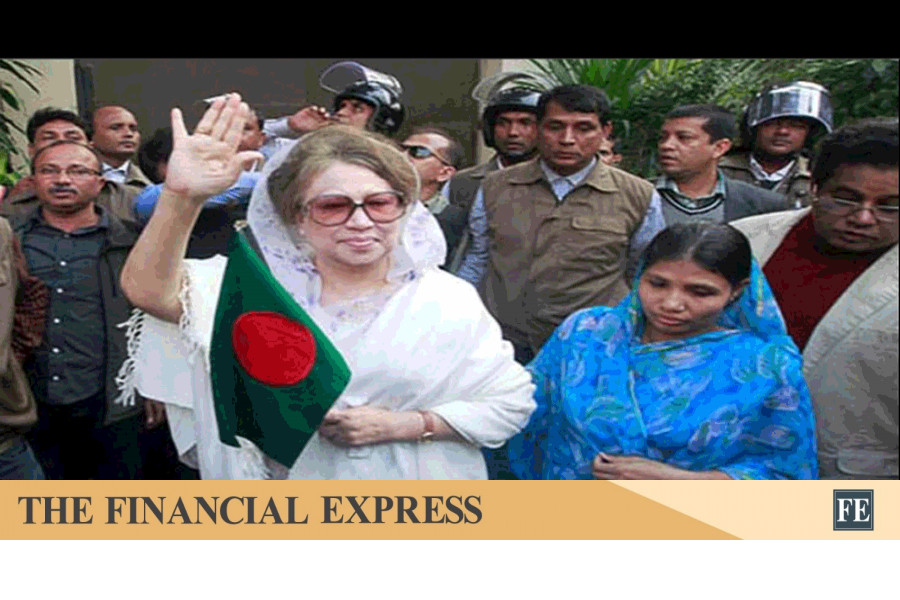
Photo: Collected via UNB

Fatema, longtime caregiver of BNP Chairperson and former Prime Minister Begum Khaleda Zia, and her family are grief-stricken following the leader’s death.

Since 2010, Fatema has been devoted to serving Begum Zia, even accompanying her to prison when required. Her father, Rafizul Mia, said the family was almost speechless with sorrow after hearing the news, and the atmosphere at their home in Shahmadar village of Kachia Union, Bhola Sadar, is somber.

Fatema, the eldest of two daughters, lost her husband shortly after marriage and moved to Dhaka with her five-year-old daughter and two-year-old son to seek livelihood. Through a relative, she began working as Begum Zia’s household caretaker in 2010 and has served the leader continuously for 16 years.

Rafizul Mia said he and his children traveled to Dhaka to attend Begum Zia’s funeral, praying for her soul’s salvation. Fatema’s children, Riamoni, who passed HSC from Nazir Rahman College in 2025, and two-year-old son Rifaat, preparing for SSC in 2026, said they have long been separated from their mother during 30 Eid celebrations. Despite the hardships, they feel proud of their mother for serving the national leader.

Local BNP leaders expressed pride in Fatema’s dedication, noting her sacrifices in accompanying Begum Zia abroad and during imprisonment. “Begum Zia was like family to Fatema,” said Rafizul Mia.​
 
Analyze

Analyze Post

Add your ideas here:
Highlight Cite Respond

Khaleda Zia: 1946-2025​

 
Analyze

Analyze Post

Add your ideas here:
Highlight Cite Respond

Hundreds of thousands gather at Manik Mia Avenue to attend Khaleda Zia’s janaza​

 
Analyze

Analyze Post

Add your ideas here:
Highlight Cite Respond
Hasina can’t evade responsibility for Khaleda Zia’s death: Nazrul
In 2018, Khaleda walked into jail, but came out seriously ill, he says

1767230761733.webp


BNP Standing Committee member Nazrul Islam Khan today said that ousted prime minister Sheikh Hasina would never be able to evade responsibility for the death of BNP chairperson and former prime minister Khaleda Zia.

"On February 8, 2018, Khaleda Zia walked into jail after being subjected to the personal vengeance of fascist Hasina. But she came out of prison seriously ill," he said while speaking at Manik Mia Avenue shortly before Khaleda Zia's namaz-e-janaza.

Nazrul said Khaleda's prolonged imprisonment, denial of proper medical treatment and restrictions on treatment abroad had severely damaged her health and ultimately led to her death.

"According to doctors at home and abroad, her illness worsened because she was denied the opportunity to receive treatment overseas during four years of house arrest. As a result, the uncompromising leader eventually succumbed to death. Fascist Hasina will never be free of responsibility for this death," he said.

Khaleda's body was taken to a temporary stage set up at the South Plaza of the Jatiya Sangsad around 2:45pm for her janaza.

Later, Nazrul Islam Khan read out a brief life sketch of Khaleda Zia on behalf of the party.

He explained the circumstances that led her to enter politics and highlighted her long struggle for democracy, her unwavering commitment to democratic values and her deep patriotism.

The BNP leader also recalled her contributions to the country and urged everyone to pray for her departed soul.

Nazrul said Khaleda Zia never bowed before any domestic or foreign force, nor did she compromise on democracy, freedom of expression or voting rights, despite facing repeated repression.

"She was jailed during the rule of autocrat Hussein Muhammad Ershad, during the so-called 1/11 regime and again under Sheikh Hasina," he said.

The BNP leader said Khaleda was evicted from her home linked to the memory of her martyred husband, late president Ziaur Rahman, and sentenced to 17 years in prison on what he described as false charges.

"Yet she never compromised with authoritarian politics. This is why she became an enduring inspiration in the struggle against fascism," Nazrul said.

"Those who sent her to jail and made her homeless could not live in peace and were forced to flee," he said referring to Sheikh Hasina, who was ousted in a mass uprising on August 5, 2024, and forced to seek refuge in India.

Nazrul said Khaleda joined BNP on January 3, 1982, to keep the morale of party leaders and activists intact after the assassination of Ziaur Rahman in 1981.

Despite being the party founder's wife, Nazrul said Khaleda Zia rose through its ranks constitutionally, first as a primary member, then vice-chairperson, acting chairperson and later elected chairperson through the party council.

Of her 43-year political life, he said, she led BNP for 41 years as its top leader, strengthening and organising the party.

Nazrul said Khaleda Zia led a continuous nine-year movement against Ershad's military rule and restored democracy through a free, fair and neutral election in 1991.

"She was the first woman prime minister of Bangladesh and the second in the Muslim world," he said.

Khaleda Zia passed away early Tuesday at Evercare Hospital at the age of 79 after suffering from multiple critical health complications.​
 
Analyze

Analyze Post

Add your ideas here:
Highlight Cite Respond
Khaleda Zia's role in Bangladesh-China ties will be remembered forever, Beijing says

Expresses deep condolences

1767231022019.webp

Photo: Collected

China today said the contributions of former prime minister and BNP chairperson Begum Khaleda Zia to strengthening Bangladesh-China friendship and bilateral relations would be remembered forever.


"Khaleda Zia is an old and dear friend of the Chinese people and long committed to China-Bangladesh friendship," Chinese Foreign Ministry Spokesperson Lin Jian said in Beijing.


China expressed deep condolences over the passing of Khaleda Zia and heartfelt sympathies to the interim government of Bangladesh and to Khaleda Zia's family.

While in office as prime minister of Bangladesh, the spokesperson said, Khaleda Zia made active efforts to develop Bangladesh-China ties, during which the two countries established a comprehensive partnership of cooperation featuring long-term friendship, equality, and mutual benefit.


Chinese Ambassador to Bangladesh Yao Wen attended the funeral of Khaleda Zia at Manik Mia Avenue in Dhaka today, along with other dignitaries.​
 
Analyze

Analyze Post

Add your ideas here:
Highlight Cite Respond
Khaleda Zia's janaza: What message did the massive turnout convey?

Sarfuddin Ahmed
Published: 01 Jan 2026, 14: 25

1767315749281.webp

Crowds throng Manik Miah Avenue to take part in Khaleda Zia's janaza Prothom Alo

The sky over Manik Mia Avenue was heavy, not only with grief, but with the weight of history. The janaza (funeral prayer) of BNP Chairperson and former prime minister Khaleda Zia began at 3:03 pm. Two minutes later, at 3:05 pm, it ended.

Yet what happened in those two minutes will resonate in Bangladesh’s political history for decades to come.At that moment, Manik Mia Avenue was no longer merely a road. It had turned into a sea of people. From Bijoy Sarani, Khamarbari, Karwan Bazar, Farmgate, Shahbagh, and Mohammadpur, people converged from every direction to a single point.

Khaleda Zia had been outside power, imprisoned, ill, silent. The state narrative sought to render her almost invisible. But this funeral proved that in politics, visibility does not always come with power.

No one could count how many were there. Some said two million, some said three million, others said even more.

But numbers are secondary here. One truth is certain. This was an unprecedented funeral prayer in Bangladesh’s history. Even on a global scale, it stands out as a rare gathering among funerals of deceased Muslim leaders.

This scene reminds us of Tehran in 1989. It brings to mind the funeral of Ayatollah Ruhollah Khomeini, where tens of millions were present. That sea of people was not made up of party workers; it was the people’s final utterance toward a political life.

1767315804161.webp

Iran's religious leader Ayatullah Khomeni passed away in June 1098. Over 10 million people attended his janaza Collected

It also recalls Egypt’s Gamal Abdel Nasser, Palestine’s Yasser Arafat, and South Africa’s Nelson Mandela, figures whose funerals drew people not merely to mourn, but to declare their own place in history.

Khaleda Zia’s funeral was such a moment. It was not just the farewell to a leader; it was the answer to a question: where does the public heart stand in Bangladesh’s politics?

For a long time, Khaleda Zia had been outside power, imprisoned, ill, silent. The state narrative sought to render her almost invisible. But this funeral proved that in politics, visibility does not always come with power. Sometimes it emerges through suffering, through silence. The crowd showed that they had not forgotten.

This public turnout carried not only a message of mourning for the BNP, but also one of revival. A party that has endured prolonged repression, division, and fragmentation suddenly discovered that its social roots remain intact.

This funeral gave BNP renewed confidence that politics is not run solely through administrative control; it is also driven by people’s emotions.

At the same time, the scene is a matter of deep concern for Awami League. Despite its long tenure in power, it has not been able to demonstrate such spontaneous mass gatherings for a long time. It serves as a reminder that the state and society are not the same. Even with administrative control, social legitimacy is never permanent.

The impact of this sea of people did not remain confined within the country. It was picked up by the subtle radar of international politics as well. Historically, BNP’s relationship with India has been strained.

These attendances indicate that regional powers no longer see BNP merely as a chapter of the past. They have begun to consider the party as a potential force for the future as well.

Yet at such a moment, India’s External Affairs Minister S Jaishankar met BNP Acting Chairman Tarique Rahman and handed over India’s condolence message to him. It is being described as a courtesy call and an expression of sympathy.

1767315882834.webp

Indian foreign minister S Jaishankar conveying India's condolences to Tarique RahmanFrom the X handle of Riaz Hamidullah, Bangladesh's High Commissioner in Delhi

But we know that in politics, courtesy is never meaningless, never without a message, never innocuous. In the language of diplomacy, courtesy often signifies an acknowledgement of the situation, and sometimes, the keeping of a door open for the future.

In that context, delivering the condolence message through Jaishankar and handing it directly to Tarique Rahman is hard to view as mere routine protocol.

The question naturally arises as to whether this was this a subtle signal from the Modi government to the BNP?

Nothing can be said with complete certainty, because diplomacy never speaks in simple sentences. But one thing is clear: India knows how to read realities. And the reality of this sea of people on Manik Mia Avenue is unlikely to have escaped India’s diplomatic attention.

In the past, India’s relationship with the BNP was distant, at times even hostile. But politics recognises no permanent enemies or friends, only possibilities.

Khaleda Zia’s funeral made that possibility visible. And it is against the backdrop of this visible reality that Jaishankar’s condolence message must be interpreted.

This context is made even more significant by the meeting between Pakistan’s National Assembly Speaker Sardar Ayaz Sadiq and Tarique Rahman, and the expression of solidarity.

In South Asian politics, Pakistan’s symbolic presence is always meaningful. This is not merely bilateral courtesy, it is a language of regional balance.

At the same time, the presence of official representatives from Bhutan, the Maldives, and Nepal, along with the participation of diplomats from many countries, together paints a picture of extensive international observation.

It is clear that opposition politics in Bangladesh is no longer just an internal matter. It has entered the calculations of regional powers as well.

These attendances indicate that regional powers no longer see BNP merely as a chapter of the past. They have begun to consider the party as a potential force for the future as well.


The truth this funeral reveals to us is not only about politics; it also exposes the deepest layers of statecraft. It reminds us that power is never merely a machine held in the hands of administration.

The permanence of power cannot be ensured through police, laws, directives, or departmental seals. The true abode of power lies in the consciousness of the people, in memory, in the depths of emotion, in the sense of justice and injustice.

When the state confines its strength solely to structures, it forgets that history is ultimately written in the feelings of the people, not in documents. The sea of people that surged at this funeral was a visible manifestation of that popular sentiment.

When the state seeks to silence the voices of the people, they change the language. They do not chant slogans or raise banners, they speak in the language of history. The funeral ceases to be merely a religious ritual; it becomes a silent referendum.

Yet, it would be wrong to interpret this sea of people as a final verdict. History never delivers its final word in a single day.

* Sarfuddin Ahmed is Assistant Editor, Prothom Alo.​
 
Analyze

Analyze Post

Add your ideas here:
Highlight Cite Respond

Members Online

Latest Posts

Back
 
G
O
 
H
O
M
E