[🇧🇩] Monitoring Bangladesh's Economy

[🇧🇩] Monitoring Bangladesh's Economy
1K
31K
More threads by Saif

G Bangladesh Defense

Map out economic priorities
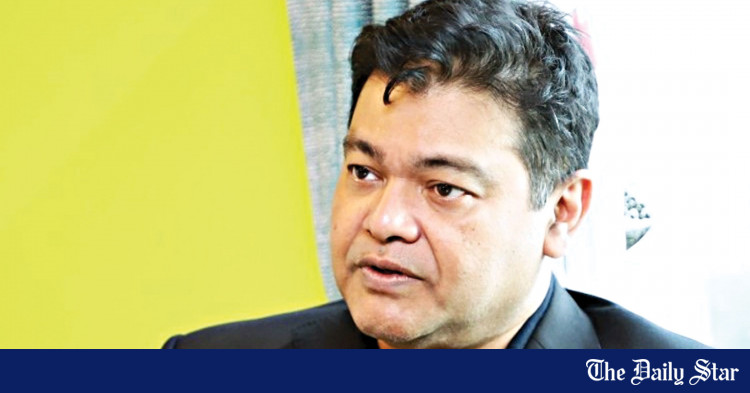
DCCI chief Ashraf Ahmed says a roadmap will help businesses set the direction of their action plans

1730336535214.webp


The head of DCCI has urged the government to map out its economic priorities once the committee to prepare a white paper on the economy, and other task forces on various reform agendas finish their jobs.

"Such a roadmap will set the direction of economic action plans [for businesses]," Ashraf Ahmed, president of Dhaka Chamber of Commerce and Industry (DCCI), said in an interview with The Daily Star last week.

"For example," he added, "We already know the government is emphasising investments in education and healthcare instead of large infrastructure projects.

"This can generally indicate slower growth in the building material industry, but higher growth in education- and healthcare-related businesses," the DCCI chief said.

He talked about the importance of creating a friendly environment for business, the missing link between employment and education, challenges facing businesses, and other aspects of the economy.

He said building confidence among entrepreneurs by restoring law and order and lowering the cost of financing is a must to bring fresh investments to the economy.

Uncertainty in economic policy direction over the short, medium and long terms is likely to make investors "very cautious and conservative", Ahmed said.

Such uncertainty will lead them to take a wait-and-see approach and delay investment decisions, he said in the interview on October 23.

On the other hand, if the government remains firm in its commitment to building a better business environment, it will help reduce uncertainty in policy directions and encourage new ventures, according to the DCCI chief.

"Confidence in the government's commitment to building a better business environment is a pre-condition for sustainable investment and economic growth."

EDUCATION AND JOBS

Ahmed said the country saw rapid growth in the economy as well as in the education sector in the last decades.

"Our numbers are our biggest strength, but it cannot be put to effective use unless we create the right environment and can invest in it."

Every year lakhs of new graduates enter the job market, but finding the right jobs for them has emerged as a major challenge, Ahmed pointed out.

A recent World Bank study says that overall unemployment is about 5 percent, which is an acceptable level. But nearly a third of those who graduated in recent years have remained unemployed, which is too high.

The DCCI chief said the current education programmes are not based on demand for skills, but focuses on a traditional system that does not change with the industry's demand.

A vast majority of graduates study liberal arts, where skills are not employable. As a result, jobseekers are not getting offers for the skills they have, he said.

Youths with tertiary (post-secondary) education are needed in larger numbers for the service sector, which is already the largest contributor to the economy. But the country has not yet been able to become a large service exporter, except in the freelancer segment of the ICT industry, according to Ahmed.

"We possibly need to focus on building a skill-based education system to compete with the others, especially in areas with opportunities such as accounting and IT," the DCCI president said.

In the short term, he suggested expanding the post-graduate diploma and training or introducing supplementary courses in tertiary education with the focus on job skills.

CHALLENGES

Ahmed sees many challenges ahead for the private sector, but pointed out three key areas that require immediate attention — law and order, energy and finance.

First, the law-and-order situation, which has improved significantly, is still a major concern. Order and discipline, especially in the industrial areas, is important to maintain production capacity and proper functioning of the industrial ecosystem, Ahmed said.

"The ability of businesses to continue operations uninterrupted is critical to achieve growth targets," he said.

Secondly, concerns over gas supply are impacting industrial production heavily, according to him. "If energy supply is not ensured, production will be hampered."

"If we have to use alternatives like diesel, the cost becomes exorbitant even when it is available. When costs increase, demand and sales fall because of high prices."

The third challenge is finance, as interest rates have increased to an "almost unsustainable level" of around 15 percent for the smaller businesses in the past few months, Ahmed said.

"This has tightened credit flow to SMEs. When interest rates rise, investment falls."

He said private sector growth depends on policy support, incentives, and infrastructure services. If these are ensured efficiently, the country will have a better business environment, according to him.

"The bottleneck is created mostly by procedures, regulations, and duplication of a paper-based system where the government machinery operates on the basis of, in some cases, century-old laws."

Ahmed criticised the central bank's conservative monetary policy, which focuses on raising interest rates to reduce demand and contain inflation.

This is effective in the short term, but in the long run, this will damage production capacity, according to him.

To control inflation, he suggested other measures such as a contractionary fiscal policy, and reduction of budget deficit and import duty.

"These may reduce government revenue, but will eventually bring relief to the common people," Ahmed said.​
 

Don’t let the growth slowdown persist
Govt must stabilise the economy, restore business confidence

1730337287573.webp


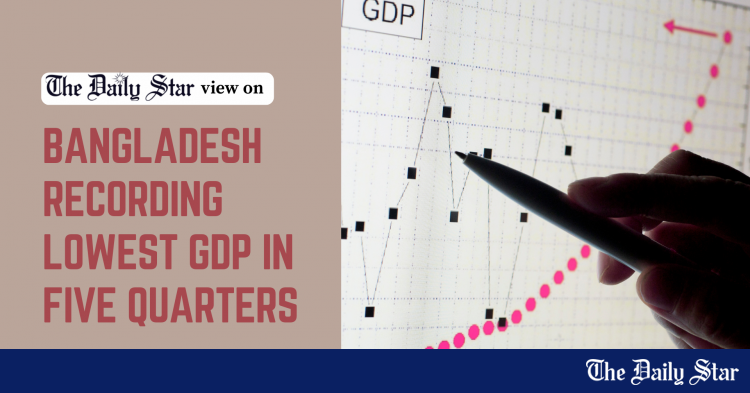
As expected, Bangladesh recorded its lowest economic growth in five quarters during the final quarter of the 2023-24 fiscal year, as the government implemented contractionary monetary and fiscal policies to address dwindling foreign exchange reserves and high inflation. According to the latest quarterly data published by Bangladesh Bureau of Statistics (BBS), GDP grew by only 3.91 percent from April to June this year.

This slowdown should not come as a surprise, given that the interim government inherited an economy devastated by the Awami League regime's corruption and mismanagement. In a recent interview, the Bangladesh Bank governor accused tycoons linked to the former administration of siphoning off $17 billion from the banking sector—a massive outflow that may be a global record for any country. Recovering from such severe setbacks will require substantial time and effort. Another important factor to consider is the mass data manipulation—including of GDP figures—under the previous regime, making comparisons with past data potentially misleading.

Nevertheless, if we look at the previous quarter, the GDP grew by 5.42 percent, down from the 6.12 percent announced by the previous government. This suggests that economic growth did suffer a significant setback. And that was primarily due to tightening monetary and fiscal policies to control inflation and prevent a further decline in our foreign reserves. However, beyond these measures, the government must address other bottlenecks driving high prices, such as possible market manipulation by syndicates, high transportation costs, supply chain constraints, and supply shortages. Simultaneously, it must work swiftly but judiciously to recover stolen assets siphoned abroad by AL-linked individuals, confiscate their domestic assets for resale, and renegotiate costly, one-sided deals with foreign entities. Such measures could boost foreign reserves and increase fiscal flexibility.

Reportedly, imports of raw materials declined by 15.9 percent in the last fiscal year, while imports of capital machinery fell by 23.86 percent. While some of this reduction may be linked to a decrease in illicit financial outflows, much of it points to declining economic activity, further evidenced by downturns across the service, agriculture, and industrial sectors over the past year.

It should be noted that part of this decline has been influenced by political instability, reduced business confidence, and decreased consumer spending. Therefore, while implementing structural reforms across various sectors, including the economy, the interim government must prioritise restoring political stability and business confidence. To achieve this, it should increase private sector engagement in its decision-making processes—including by potentially appointing an adviser from the private sector—to explore ways to boost economic activity in the short to medium term.​
 

Increased remittance inflow encouraging
Upskilling workers, easier migration process can further increase it


1730792341545.webp


We are encouraged by the recent increase in remittance inflows into the country at a time when our economy is under significant pressure due to dwindling foreign exchange reserves and various external payment obligations. According to Bangladesh Bank data, in October, remittances sent home by our migrant workers rose 21.31 percent year-on-year to $2.39 billion, following a 40 percent increase in August and 80 percent increase in September. Reportedly, from October 1 to October 26, Islami Bank Bangladesh received the highest amount of remittance at $371 million, followed by Agrani Bank at $185 million, Sonali Bank at $143 million, and BRAC Bank at $122 million. We now hope that this upward trend in remittance inflows will continue in the coming months, which will eventually help ease pressure on our forex reserves.

This achievement, of course, would not have been possible without the hard work of our migrant workers, who toil in foreign lands, often under unfavourable conditions and with low pay. Since our economy is heavily dependent on the remittances they send, it is our responsibility to ensure their rights are protected, both at home and abroad. The high cost of migration has long been a barrier for aspiring migrant workers, which the government should address urgently. Moreover, it is concerning that the number of workers who went abroad between January and September this year was significantly lower than during the same period last year—while 989,685 workers migrated in 2023, the figure dropped to 698,558 this year. The Ministry of Expatriates' Welfare and Overseas Employment must investigate the reasons behind this decline and take proactive measures to address them.

Currently, Bangladesh faces substantial challenges in paying its external debts and importing essentials such as gas, fertiliser, and raw materials for the garment sector due to the dollar shortage. Adani Power, for instance, has recently warned Bangladesh of a potential suspension of supply if overdue payments of around $850 million are not cleared. Therefore, it is crucial that the government take all necessary steps to increase our forex reserves. To this end, the government should find new markets and focus on sending more skilled workers abroad to secure better jobs and enhance remittance flows. Additionally, it should promote the use of formal channels for remittance transfers. Previously, the gap between official and unofficial exchange rates led many migrants to favour informal channels, but this practice needs to change.

However, the government should not rely solely on remittances to alleviate the ongoing pressure on forex reserves. Simultaneously, it must also work to boost export earnings.​
 

WB agrees to lend $400m for bankrolling project
Siddique Islam
Published :
Nov 06, 2024 00:14
Updated :
Nov 06, 2024 00:14

1730857093873.webp


A latest World Bank financing worth US$400 million is expected for strengthening financial-safety net and crisis preparedness in Bangladesh, officials said about the funding that specially focuses tidying up the banking sector.

The money will go for bankrolling the Financial Sector Support Project (FSSP) -II. Total tenure of the project will be five years.

Under the proposal, Bangladesh will achieve at least six outcomes that include enacting Distressed Asset Management Act (DAMA) and stress test based on AQR (Asset Quality Review) for all the scheduled banks within the second and third years of the project.

Non-performing loans (NPL) resolution guidelines will be issued and enforcement departments will be established at the central bank during the period under the review.

Besides, two acts - Financial Stability Act and Deposit Protection Act -will be issued under the project.

However, the banking sector, particularly enhancing deposit insurance system (DIS), strengthening bank restructuring and resolution will be focused with financing worth around $300 million.

These are performance-based credits (PBCs) under a new concept introduced by the World Bank under the project, according to a central banker.

He also says an alternative to these PBCs may be inclusion of an on-lending component like previous project (FSSP) of the World Bank.

"There are also requiring enacting some new laws which will be combined efforts of the central bank and the government," the Bangladesh Bank official explains.


The DAMA will be enacted in line with the World Bank recommendations and international practices.

Another $100 million will be invested in IT, databases and systems for modernizing financial-market infrastructure of the central bank of Bangladesh along with capacity building of the BB officials for dealing with financial issues in this critical era.

"We're now working to formulate TPP (Technical Project Proforma) for the project," Spokesperson for the central bank Husne Ara Shikha told the FE.

Ms. Shikha, also an executive director of the BB, said formal discussion with the World Bank in this connection had already been completed.

"We hope that the formulation of TPP will be completed by June 2025," she said, adding that the loan proposal is expected to be submitted at the World Bank board meeting in September 2025 for approval.​
 

‘Business-friendly environment remains elusive’

1730939892776.webp

Tapan Chowdhury

A congenial business environment is yet to be restored under the interim government, said Tapan Chowdhury, managing director of Square Pharmaceuticals.

Until that happens, fresh investment or business expansion plans would be on hold, Chowdhury told The Daily Star in an interview recently.

"Square Group also has plans to expand the group's business both at home and abroad, but this is not the time for investment as the congenial and business-friendly environment is absent now."

Regarding the recent labour unrest, he suggested minimising the communication gap between the factory owners and workers.

"There should be regular interactions between the workers and owners -- if there is any grievance of the workers, their views should be heard."

Only police and the army cannot manage the problem of worker unrest, he said, adding his pharmaceutical factory was also attacked during the time of weak law and order situation.

Chowdhury is also a director of the Nirapon, which was earlier the North American garment factory inspection and remediation platform Alliance.

Nirapon has been urging the local factory owners to implement a living wage and ensure freedom of association through trade unions.

However, international brands and retailers are reluctant to raise the prices such that the factory owners could pay a living wage to workers.

"When the question of price hike is raised, they [the international clothing retailers and brands] say that they cannot do it as it is a matter of competition."

Chowdhury gave an example of freedom of association and industrial relations.

"Many years ago, at our Pabna industrial plant, the workers demanded a salary hike and the then chairman of the group Samson H Chowdhury doubled the salary although the workers demanded half of the salary hike. That made the workers very happy. It was possible because of a warm relationship between the workers and owners."

Similarly, whenever and whatever the workers demanded something, the chairman honoured that.

"People think the majority of businessmen made money in the wrong way -- that perception needs to be changed. Businessmen are seen as villains here. It is true that many have done bad things but all are not bad. Few big groups of companies made money through corruption and they did these things in connivance with the government and in public. They do not represent the whole business community."

But it is also true that many factory owners do not pay their workers on time.

"But they are buying new cars and enjoying the life of luxury."

About the banking sector, Chowdhury questioned the logic behind having so many banks.

"In which country are there so many banks?"

With the money deposited by poor people, some are claiming themselves to be bank owners.

"Had the government not patronised them, they wouldn't have had the chance to become such monsters."

Chowdhury also touched upon the health sector, which is going through a tough time.

"It is difficult to negotiate with the current government as they do not know what is the priority of the government and there is a huge gap between businessmen and the government."

For instance, the government has been reforming the pharmaceutical industry, which may affect the prices of medicines.

"Many things are being touched in many areas simultaneously. You cannot do reforms in one day -- reforms should be made step by step. Why are the people going to private hospitals? The government should realise it. This government did not do anything to revive the government hospitals. The hospital which was supposed to be built with Tk 500 crore was made with Tk 1,000 crore and no doctor could be found in those hospitals. The government should address it."​
 

Crony capitalism stifled investment and growth in Bangladesh

1730941586421.webp

Crony capitalism essentially cannot avoid giving more undue privileges to the chosen few in business at the cost of a majority of private investors. VISUAL: ANWAR SOHEL

During the last decade, under the immediate-past Awami League government, the economic landscape of Bangladesh was defined by deepening crony capitalism, a situation in which business success is not determined by competitive advantage but by political connections and favouritism. Crony capitalism discouraged the growth of private investments on both domestic and foreign fronts. At the heart of crony capitalism lies the fact that business entities that enjoy intimate company with political elites always turn out to be at an undue advantage. These advantages range from preferential access to government contracts and resources to leniency in regulation and tax exemptions.

The quintessential example is the banking sector, in which a few politically connected conglomerates grabbed a disproportionately large amount of loans by showing little or no collateral. Lack of proper regulatory oversight resulted in increased non-performing loans (NPLs), which now stand as one of the major potential risks to the financial sector's stability. Furthermore, there were instances of a high level of contractual agreements in the power and energy sector, with firms having obvious political connections, irrespective of their doubtful feasibility or efficiency, especially regarding IPPs.

Crony capitalism essentially cannot avoid giving more undue privileges to the chosen few in business at the cost of a majority of private investors. This uneven playing field thus discourages genuine entrepreneurs who don't have any political connections from competing effectively. Small and medium enterprises (SMEs), which are crucially important for employment generation and diversification of the economy, usually cannot scale up because of exclusion from lucrative markets dominated by politically connected firms.

This is not easy for foreign investors either. They are eager to invest in those sectors that offer high growth possibilities, but they keep away because the playing field is never really level. A lack of transparency in regulatory matters and the threat of arbitrary policy changes persisted during the previous regime, which prevented the emergence of a favourable business environment for foreign investors. This is one of the reasons why foreign investment didn't register pace in Bangladesh.

Inefficiencies in regulatory mechanisms and bureaucracy, along with non-transparency of systems, posed serious problems concerning doing business. For example, essential permits, licences and approvals took a long time and involved excessively high costs unless moved by political patronage.

Besides, the legal system related to the protection of intellectual property rights and enforcement of contracts remained weak—a fact that is of primary concern for both local and international investors. In a nutshell, without strong legal protection, companies risk losing their investments or intellectual property to powerful competitors who could utilise their political networks for their benefit.

Several policies and practices were tailored to benefit politically connected businesses at the expense of the broader economy. The banking sector saw a lot of new licences, many of which were given to businesses close to power, which therefore enjoyed preferential credit access, leading to increased NPLs. Defaults were all over the place due to inadequate due diligence, with hardly any consequence for the high-profile large defaulters. Tax evasion was a common feature, with selective enforcement allowing politically linked businesses to escape through waivers and amnesties. In the power sector, independent and quick rental power producers were given privileged treatment on account of political connections, while megaprojects of infrastructure construction were usually awarded in a non-transparent manner to politically favoured companies. Real estate dealings had preferential land allocations, while strong groups manipulated the stock market. Politically connected industries benefited from export incentives and trade policies, which disadvantaged smaller competitors. This dominance of crony capitalism was facilitated by a strong "anti-reform coalition" among corrupt political elites, corrupt business elites, and corrupt bureaucrats.

One of the more disquieting features of crony capitalism in Bangladesh was the degree to which the politically connected businesses were able to influence policymaking, a phenomenon often referred to as "state capture." Examples of state capture include those in industries such as telecommunications, RMG, banking, real estate, and energy, where major policy decisions were doled out to a few select players.

The policy distortions favouring cronies led to an economy that is less diversified and more dependent on a few sectors dominated by a handful of influential players. This concentration of economic power stifled competition by raising barriers for new entrants and inhibited the growth of sectors that could otherwise drive economic diversification and sustainability.

Corruption in Bangladesh has been all-pervasive and acted as a facilitator for the emergence and consolidation of crony capitalism. Paying bribes or kickbacks has been a common practice for receiving contracts, as well as for hastening bureaucratic processes or evading regulatory fines. Such an atmosphere discourages ethical business practices, besides increasing the cost of doing business for those who do not indulge in corrupt practices.

Corruption has led to wealth from the public sector being syphoned off, since money that would have been used to build infrastructure, healthcare or schooling was instead spent on self-serving interests. Resources that ought to be contributing to inclusive economic development has been misallocated.

The solution to the problem of crony capitalism needs to be multifaceted. First, there needs to be a far greater commitment to the rule of law. Anti-corruption measures have to be enforced; regulatory bodies must be given full independence to do their job without any kind of political interference. In that way, enterprises will have equal opportunities to compete with each other, where success will be determined by competence and competitiveness rather than by political relationships.

Second, government procurement and policy formulation processes must be made more transparent. E-procurement systems reduce personal contact between businesses and officials, thereby reducing avenues for corruption. Besides, policies should be aimed at encouraging fair competition, innovation, and investment across all sectors, not just chosen sections.

Third, institutions involved in monitoring the financial system need more strengthening. Banking regulations have to be tightened, and the Bangladesh Bank must have the authority as well as resources to enforce compliance without discrimination. The NPLs will require not only financial restructuring but are also underlined for future fresh lending to be based on full transparency and risk-based criteria.

It is equally important to outline a culture of accountability among political leaders and business elites, and they must be made accountable for unethical practices, while at the same time, civil society organisations must be encouraged to raise their voices for greater transparency and reform. A strong legal framework that punishes corrupt practices and protects whistleblowers would go a long way in undermining the structures of crony capitalism.

Crony capitalism is deeply ingrained and has gotten in the way of a truly dynamic and inclusive economy in Bangladesh. Unless the structural issues that create and sustain crony capitalism are resolved, a propitious investment climate cannot be achieved and sustainable economic development through broad-based domestic and foreign investment cannot be ensured.

Dr Selim Raihan is professor at the Department of Economics in the University of Dhaka and executive director of South Asian Network on Economic Modeling (SANEM).​
 

Forex reserves cross $20b after 2 months
Reserves were $19.87 billion a week ago

1731025181161.webp


Bangladesh's foreign exchange reserves have grown to go past $20 billion after nearly two months thanks to migrants sending increasing amounts of funds as remittance.

The country's foreign exchange reserves, as per the calculation method of International Monetary Fund, went past $20 billion today, rising from $19.87 billion a week ago, according to the central bank data.

"This is the impact of increased flow of remittances," said Husne Ara Shikha, spokesperson of Bangladesh Bank (BB).

Bangladeshis living and working abroad sent a total of $8.93 billion in remittance in the July-October period of fiscal year 2024-25, up 30 percent year-on-year, as per the BB.

The BB data showed that gross reserves rose to $25.72 billion from $25.44 billion a week ago.

The country's forex reserves as per the IMF's calculation method were at $20.55 billion in early September this year.

It fell below the $20 billion mark after the payment of $1.37 billion in import bills for July and August under Asian Clearing Union, an arrangement for the settlement of payments among nine member countries.

BB Deputy Governor Md Habibur Rahman said the central bank has been buying foreign currencies from banks.

"Purchases will continue. We see a good supply of the US dollar, and we will buy the foreign currencies, keeping the forex market stable," said Rahman, who was previously serving as chief economist of the BB.

The central bank sold $9.4 billion of foreign currencies in FY24.​
 

Economy might have expanded in October: PMI

All key economic sectors of Bangladesh witnessed expansions in October, although the country continues to grapple with frequent protests, sluggish improvements in law and order and a slowdown in public administration activities, said the MCCI yesterday.

Bangladesh Purchasing Managers' Index (PMI) climbed to 55.7 in October, said the Metropolitan Chamber of Commerce and Industry (MCCI) in its latest PMI report.

This was a 6-point increase from that in the previous month, signalling a shift back to expansion after three consecutive months of contraction, according to an MCCI press release.

Bangladesh Purchasing Managers' Index climbed to 55.7 in October, said the Metropolitan Chamber of Commerce and Industry

The Bangladesh PMI is an economic indicator which helps understand the direction in which the economy is headed and based on data compiled from monthly surveys of over 500 private sector enterprises.

It was developed in 2024 by the MCCI and Policy Exchange Bangladesh, in cooperation with the Singapore Institute of Purchasing & Materials Management and supported by UK International Development.

A reading of above 50 generally indicates expansion and below that contraction.

The October reading suggests a strengthening economic outlook, with all major sectors—agriculture, construction, manufacturing, and services—posting positive trends, said the MCCI.

The manufacturing sector, a vital pillar for Bangladesh's economy, demonstrated accelerated growth across key metrics, including new orders, factory output, and input purchases, despite ongoing contractions in employment, supplier deliveries, and order backlogs, it said.

Agriculture showed its first expansion in business activity and new orders after months of downturn, although employment remained in contraction, it said.

Input costs, a key metric, rose swiftly, reflecting rising expenses across sectors, said the chamber.

Construction returned to growth, albeit marginally, as it recorded slower contraction rates in employment and order backlogs, it said.

The services sector similarly moved to an expansion phase, driven by a rebound in business activity and order backlogs, though employment contraction persisted, it added.

However, the broader economy faces domestic hurdles, including public protests, law enforcement issues, and stagnant public administration, which may affect near-term gains, said the chamber.

All sectors reported slower expansion rates in future business expectations, reflecting cautious optimism amid continued challenges, it said.​
 

Latest Posts

Back