Donate ☕
201 Military Defense Forums
[🇧🇩] - Press Freedom in Bangladesh | Page 6 | PKDefense
Home Login Forums Wars Movies Watch Videos
Serious discussion on defense, geopolitics, and global security.

[🇧🇩] Press Freedom in Bangladesh

Reply (Scroll)
Press space to scroll through posts
G Bangladesh Defense
[🇧🇩] Press Freedom in Bangladesh
51
2K
More threads by Saif

External forces must not interfere with the media

1731455631596.webp


Dr Iftekharuzzaman, executive director of Transparency International Bangladesh (TIB), talks about the current state of press freedom in the country, recent attempts by certain groups to suppress some media outlets, and the potential way out of the situation with Naznin Tithi of The Daily Star.

Why is the media still unable to operate freely following the political change in the country, despite repeated commitments from the interim government to ensure press freedom?

Let's remember the background of the anti-discrimination movement, which initially began as a quota reform movement seeking justice in public sector recruitment. The underlying factors behind this movement, however, were multi-dimensional and deeply rooted in institutionalised discrimination across all aspects of life and society, shaped by years of authoritarian rule. The student-led movement was soon joined by the broader public, rallying under the main slogan against all forms of discrimination. On August 5, the authoritarian regime fell. But this does not necessarily mean that we have achieved a discrimination-free Bangladesh, nor can we expect the deep-rooted discriminatory structures and practices to be transformed in the short term.

The people's dream for a "new Bangladesh" includes restructuring the state and establishing a new social and political order, with a clear stance against all forms of discrimination. While the government, the movement itself, and other stakeholders are clearly committed to realising this vision, what we are observing post-August 5 is that various groups, considering themselves victors—whether as direct participants, supporters, or opportunists—do not all share the same understanding or vision of a discrimination-free society. This divergence is now manifesting in different ways.

What reforms does the media need in Bangladesh?

The diversity of our society—in terms of gender, religion, culture, ethnicity, etc—is under severe stress as some groups feel newly entitled to impose parochial agendas. Using labels like "collaborators" or "co-opted beneficiaries" of the previous authoritarian regime, these forces now consider themselves empowered—sometimes excessively so—to impose their own agendas, which are not necessarily aligned with the anti-discrimination movement's spirit.

The media has become one of the targets of these groups, which are now trying to impose their own interpretations of media freedom onto others. Certain sections of the media that have played a very supportive role in the whole movement, advocated for a diverse and inclusive society, and have been consistent with the anti-discriminatory spirit are now being selectively targeted. Media freedom is being subjected to campaigns by forces whose basic conceptualisation, indoctrination, and ways of imposing agendas are discriminatory at their core, which is deeply troubling.

Nevertheless, we cannot ignore the factors that contributed to the transformation of an originally democratically elected regime in 2008 into a draconian authoritarian one. It was designed to monopolise political and governance space and to capture state and non-state institutions to create a superstructure perceived to maintain power indefinitely, without accountability. This setup enabled abuse of power, corruption, and the criminalisation of politics with impunity. It is also a fact that the media was among the institutions targeted for capture and control. As a result, some segments of the media struggled to navigate state-sponsored controls and conspiracies while striving for independence and professionalism, though often at the cost of reluctant self-censorship. On the other hand, many media outlets allowed themselves to be co-opted, benefiting from and even becoming components of the authoritarian superstructure. While no one should condone such collaborators or facilitators of the previous regime, indiscriminately victimising the entire media or launching targeted attacks on select outlets for what occurred under authoritarian rule is unacceptable.

How would you explain the recent attempts by certain groups to silence the media or the mob mentality directed against journalists and specific media outlets? What role has the government played in stopping this?

The interim government has repeatedly stated its commitment to a free press. When the chief adviser met with newspaper editors, he encouraged them to be critical and objective in identifying the government's failures. From the government's side, we have not seen anything detrimental to media freedom, except for the recent indiscriminate cancellation of accreditation of a large number of journalists.

When agitations took place against some of the leading media houses, the government provided them support and resisted such moves. However, certain groups who find themselves to be over-empowered—who may or may not have participated in the movement—continue to act as if it is their time to impose their own agenda to target media that is not in their liking for their own reason. While the government has successfully prevented worse outcomes, there is no guarantee that these forces have been fully controlled or managed to the extent that such indoctrinated groups won't strike back. So, the government must be vigilant to safeguard media freedom. History is replete with examples that failure to ensure free media can only be self-defeating.

Mob justice is the manifestation or a weapon these forces are using. And the media has obviously become one of the targets. However, this is not the first time that it has been used. Mob justice has taken place in other contexts as well since August 5. This is also not unusual in the context of such a huge popular uprising against a deep-rooted authoritarian regime. Many people would consider it normal because people have deep-rooted sentiments against the former regime. People have strong emotions against those who are in any manner considered to be associated with or part of the authoritarian regime and those who facilitated the ruthless killings, tortures, all kinds of discrimination and violation of fundamental rights. Mob justice is the outburst of that emotion of people against such grievances. But there is a limit to it and the government must strategically address and manage it in due process through effective communication.

Incidentally, the two most prominent media houses in the country, which are under attack now, were directly victimised in the worst possible way by the authoritarian regime. They were blacklisted from any government programmes or press conferences and deprived of government advertisements. It is no secret that they were consistent targets of manipulation, harassment, and intimidation by the intelligence agencies, the main powerbase of the previous regime. Both houses had to endure a series of politically motivated cases due to their role as free media. Their fate symbolised the criminalisation of free media driven by a hunger for power. Despite this, they survived the challenging situation without compromising their commitment to upholding the spirit of a free press. Whether they are targeted in the "new Bangladesh" because of their alleged "linkage" with India or the previous regime, or for upholding the spirit of a free press, is anyone's guess.

1731455742654.webp

VISUAL: ANWAR SOHEL

The interim government has announced plans to repeal the Cyber Security Act (CSA). How do you view this development?

It was the right decision and an expected one. There was widespread demand for this from the public, and the civil society and the media played a role in advocating for its repeal. Here, I would like to mention a number of things that should be done. The government should immediately undertake a comprehensive programme of duly compensating the victims of this draconian law and their families and rehabilitate them professionally, psychologically, and socially. Secondly, they should withdraw all the ongoing cases, although there is a legal issue in that. But if the government is willing, there can be ways of addressing the issue. Thirdly, in the present global context, there is no other option but to have a Cyber Security Act. But while drafting the new cyber security law, they should be able to take the right lessons from the DSA and the CSA. It has to be drafted through a fully participatory process, involving all stakeholders, including experts and professionals on cyber security. Plus, whoever is drafting this law must remember that it is not meant to control or dictate terms of freedom of expression or media freedom on cyber platforms—the Internet system, social media, and other digital platforms. The purpose of this law should be restricted to ensuring the safety and security of users on the Internet and the digital sphere. But any form of control of free expression, dissent, free speech, or free media should be outside the new law's scope.

Also, the names such as the Cyber Security Act or the Digital Security Act should not be used anymore. These names have created an atmosphere of intimidation, a sense of insecurity in society. The new law can be called something like the Internet Safety Act. Finally, since the government is the largest user and worst possible abuser of the Internet and digital system as per track record, to avoid conflict of interest, the authority to be created to oversee the implementation of this new law must be an independent body outside the control of the government.

The government has established a media reform commission. What types of media reforms are needed in this changed political climate and how can the media in Bangladesh regain public trust?

First of all, media as a fourth estate must be committed to upholding the fundamental principles of media ethics and integrity. The media as an institution cannot and does not need to be controlled by external forces. But in Bangladesh, we have seen that the media has been subjected to government control motivated by partisan political bias or influence for which draconian laws and state institutions including intelligence agencies were used. One of the tools used against media was divide and rule and cooption. As a result, while a few media houses may have their own integrity and ethical standards and practices, there has always been a lack of efforts on part of the media as a sector to develop and uphold the basic principles of independent and ethical journalism, or professional integrity among media personnel. I think now the media houses should try to sit together in the spirit of a new Bangladesh. They should themselves create a media code of ethics, ethics structures and implementation roadmaps. There must be mechanisms for the media to self-regulate and work transparently and accountably, maintaining professional integrity without external influence, political or otherwise. There has to be some serious system of sectoral oversight rather than anything coming from outside.

Secondly, like anywhere else in the world, media houses here are also essentially business entities. That's part of the reality. Nevertheless, there are good global practices. The capacity of the investors to differentiate between business interests and media freedom is very important. To instil this ideal into the media houses, their investors and media leaders, relevant professionals and experts should come together to make their own policies. However, no matter how much we talk about media reforms, unless and until there is a paradigm shift in the culture and practices of our politics and bureaucracy, which remain hostage to a media control mindset, changes will not happen.

Thirdly, media organisations must ensure that journalists and reporters are properly compensated and protected, with adequate job security and safety from all risks associated with the discharge of their professional duties. Many journalists are underpaid or irregularly paid, which must change for the media to maintain integrity.

Media, unlike most other institutions, have to be accountable to its constituency—the readers and viewers—every day, and in fact, every moment. Therefore, to survive credibly it must develop its own inbuilt system of ethics and integrity. No freedom is unlimited or unaccountable, but in the case of media, the limit to freedom and the process of accountability must be defined and ensured by the media itself within its constitutional mandate.​
 
Analyze

Analyze Post

Add your ideas here:
Highlight Cite Fact Check Respond
  • Like (+1)
Reactions: Bilal9

High cost of journalism
Tanim Asjad
Published :
Jan 31, 2025 23:00
Updated :
Jan 31, 2025 23:00

1738367679656.webp


Journalism is always challenging, and journalists are subject to various forms of intimidation due to their role in maintaining professionalism. Governments are generally not comfortable with the works of journalists, although, in democratic states, they are obliged to provide adequate room for journalism to function. The media is also obligated to play a responsible role in this connection. In this process, an environment of mutual cooperation develops for people's greater interests. Responsible media helps maintain the checks and balances of the government and the establishment. There is, however, no ideal democratic country in the world where journalists enjoy complete independence in their works and freedom of speech is fully ensured. Nevertheless, almost all functional democracies provide the required environment for newspapers and media with some limitations.

Like autocratic and authoritarian countries, non-functional democracies impose various media restrictions, making it difficult to work independently and professionally. Thus, journalism becomes distorted and suppressed in these countries. The autocratic regimes also adopt different techniques to make the media dysfunctional, biased and embedded. Undue monitoring, surveillance and financial tightening forced media outlets to compromise their stance. Supporting the pro-establishment media is another tool for holding back the professional works of journalism. Bangladesh is a good example of this.

During the autocratic regime of Sheikh Hasina, the tool was applied skillfully only to extract pressure on the media and distort the market. The net result is a sharp division among the journalists in the name of party-based so-called ideology. One group blindly extended their support to the Hasina regime on the plea that the regime was the only force that upheld the spirit of the liberation war. They argued that the misdeeds and wrongdoings of the regime should be ignored and not be reported in the media. This section of journalists was awarded for their loyalist role, making it more difficult for others to work professionally. Besides state agencies, the Hasina-loyal media also took a position against those who were critical of the regime, setting a bad example with a long-term negative effect.

During the mass uprising in July-August last year, the media in Bangladesh came under fire for not playing the appropriate role and the professionalism of journalists was questioned seriously. Except for a few media outlets and some journalists, most followed a cautious approach to the plea to avoid backlash from the ousted Hasina government and her political party. The pro-regime journalists also played a role in suppressing the news of killing and intimidating the government to suppress the student-led movement. So, after the fall of Hasina, who fled to India for shelter on August 5, journalists across the country faced intense criticism for obvious reasons. Their trustworthiness also came under question.

The problem is, however, not limited to Bangladesh. Media in India, the largest democracy in the world, has also been facing growing challenges due to the works of pro-government journalists and Modi loyalists. The term' godi media' has been popularised since 2014, indicating a large number of Indian media's non-professional and biased attitude. Instead of informing people properly, the 'godi media' is busy with cooking and fabricating stories where truth is mixed with fiction. The coverage of different things inside and outside India thus often becomes distorted and false. The proliferation of 'godi media' has put reputed newspapers like The Hindu under significant stress.

Again, think about Haaretz, the oldest daily in Israel, which has Hebrew and English versions. After the Hamas assault on October 7, Israel started a full-scale invasion of Gaza, causing the death of 50,000 Palestinians and the destruction of most of the physical infrastructures in the strip. The 15 months of war halted as two sides agreed on a fragile cease-fire deal with effect from January 20. During these months, Haaretz took a strong stance to cover the war in a balanced and unbiased manner that was completely absent in most Israeli and Western media. Israeli government continuously put pressure on the oldest daily and its journalists for its professional stance. The newspaper, however, sustained at a greater cost, setting an example of journalistic ethics and the establishment's unwillingness to accept the truth.​
 
Analyze

Analyze Post

Add your ideas here:
Highlight Cite Fact Check Respond
  • Like (+1)
Reactions: Bilal9

73% people do not read newspapers
Finds BBS survey on 45,000 households across 64 dists

1738883204285.webp


  • Only 26% read news​
  • 59% read news on phones​
  • 37% prefer print newspapers​
  • Popular consensus is on media independence​
Newspapers are losing their appeal across the country, with more readers choosing mobile phones as the preferred device for reading news nowadays, according to a study by the Bangladesh Bureau of Statistics (BBS).

According to its findings released yesterday, 26 percent of respondents said they read newspapers. About 59 percent read news on mobile phones, while 37 percent prefer print newspapers.

Those who don't read newspapers make up 73 percent of the respondents, with 46 percent saying they do not feel it is necessary.

"Overall, people haven't lost trust in the media, but interference from political arena, government and influential persons is seen as a major obstacle to publishing objective news," said Md Sayem Hossain, senior information officer of the Media Reforms Commission, in a press release issued yesterday.

The BBS survey, the first of its kind in the country, was conducted across 64 districts, involving the participation of members from 45,000 households aged 10 and above.

Meanwhile, 65 percent of people watch television. Among the 34.58 percent who do not, 53 percent said they don't find it necessary.

During a national disaster or crisis, 35 percent of people first look for updates on news channels on television, followed by 28 percent who turn to social media, and 24 percent who ask a trustworthy person.

The survey reveals that the people want to see the media independent, impartial, and free from government and political influence.

Of the respondents, 15 percent said mass media in the country is not free at all, while 23 percent said it is partially free, 24 percent said it is largely free, and 17 percent believe it is fully free.

Among the 6,849 respondents who believe mass media is not free at all, most cited political interference as the main reason, followed by government interference and influence by powerful individuals.

Nationally, 67 percent of people expect mass media to be independent, 60 percent expect media neutrality or impartiality, 37 percent want media to be free from political influence, and 32 percent expect mass media to be free from government influence.

Most people think state-owned Bangladesh Television and Bangladesh Betar should be operated under the stewardship of the government. Over 56 percent of people believe Bangladesh Television should be operated under government control, while 55 percent said the same for Bangladesh Betar.

In the case of radio, 93 percent of respondents said they do not listen to the radio, with 54 percent saying that they do not find it necessary.​
 
Analyze

Analyze Post

Add your ideas here:
Highlight Cite Fact Check Respond
  • Like (+1)
Reactions: Bilal9

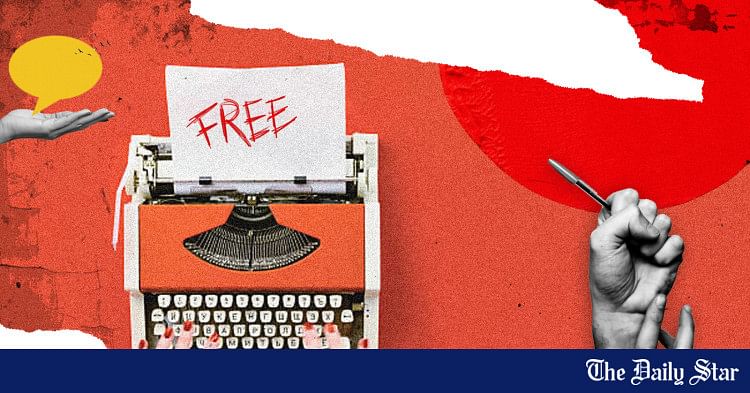
A new reality for free media
We must learn from the past

1740093621795.webp

VISUAL: SALMAN SAKIB SHAHRYAR

Before, when we spoke the truth, we were countered by the state and its agencies. Now, when we speak the truth, we are countered not by the state, but by lies, accusations without any proof, and tagging on the basis of hate narratives. Outrageous accusations are being made against legacy media without any evidence. In rare cases, when examples are cited, they are either false, taken out of context, distorted, or twisted to suit a predetermined goal. Thus, the media today is facing a new challenge in the post-truth era with an audience that is not used to such falsehood, half-truths and distortions, and as such is being victimised and misled.

I am heartened by a recent comment by the chief adviser's press secretary, Shafiqul Alam, for his emphatic assertion of the need for a free media for a country's advancement. He also stressed the necessity to examine the media's role in distorting objective journalism and upholding the fascistic policy and governance structure of the past regime. He repeatedly stressed that power must always be held to account, and invited all media outlets to scrutinise his own government's performance in the spirit of total independence and professionalism.

We would like to commend him for his stance and focus on two aspects of his remarks: the need to examine our past, and to chalk out a path for the media's unfettered and independent future journey.

As for the past, it is true that most newspapers did not challenge the dictatorial regime of Sheikh Hasina during her rule of over 15 years. They either vigorously supported it or hid the truth, deflected issues that deserved criticism, or distorted facts so that the public wouldn't feel negative about the regime.

There were a few of us who defied all threats—both public and undercover—and carried on speaking truth to power. In the case of this newspaper, the antagonism burst into fury when we invited Prof Muhammad Yunus as chief guest at our 25th anniversary celebration in 2016. In the presence of thousands of invited guests, including 22 editors from South and Southeast Asia, a drama was enacted by several Awami League (AL) ministers who publicly staged a walkout, shouting condemnatory remarks, accusing this writer of having insulted them when Prof Yunus appeared on the stage to deliver the keynote speech. This newspaper was accused of "launching" (whatever that meant) Prof Yunus and giving him a huge national and international platform to work against the Hasina government. (Given her venomous remarks, relentless personal attacks, and fictitious cases against Yunus ever since, one can understand her fury against this newspaper and its editor.) From then on, we were her declared "enemy," and she treated us as such. The avalanche of cases started within hours of that event using my remark on a TV show as a pretext.

This newspaper's editor was charged in 84 cases, 16 of which were for sedition. Several times on the floor of parliament, the former prime minister termed The Daily Star and Prothom Alo "anti-state," "anti-Awami League," and "anti-people." Many AL MPs castigated this newspaper in parliament, accusing us of "indulging" in all sorts of "conspiracies." Even some non-AL MPs joined the castigation, demanding the closure of this newspaper and jailing of its editor. On one occasion, the former prime minister spoke for 21 minutes in parliament denigrating this newspaper's editor, casting doubt on his role as a freedom fighter and raising all sorts of false questions against him. A few years later, during the opening of the Padma Bridge, she falsely accused this writer of travelling to the US and meeting high-level State Department officials and the World Bank president to lobby for the cancellation of the WB loan, as part of Prof Yunus's alleged "efforts" (totally false) to scuttle the Padma Bridge project. For nearly 15 years, we were never allowed to attend the former prime minister's press conferences or any of her functions. We were never allowed to cover her foreign trips or ask her questions as the head of the government. Over time, all her ministers, save one or two, started to avoid us, not allowing our reporters to talk to them and speaking against us whenever the occasion permitted. And all this while some 40 national and international businesses were asked not to give us any advertisement, abruptly reducing our revenue by 40 percent. This continued till the July uprising last year.

We are proud to say that The Daily Star never buckled, thanks to our staff, our board of directors, and the leadership.

The CA's press secretary also laid emphasis on examining not only the past, but also how media covered the events of July-August 2024, now popularly called the Monsoon Revolution. We welcome this decision and thank him for his praise that some media, in spite of severe threats, published prominently the number of students and general people being killed daily.

We also need to examine the politicisation of journalist unions. A special focus should be given on the role of the owners of media houses who used their outlets to eulogise the Hasina government for business purposes, get illegal bank loans, get lucrative contracts, retain untaxed profits, and indulge in money laundering. When directed by the owners, working journalists did not have much of a choice. We think the editors should have tried to prevent that—and failing that, they should have resigned.

Against all the laudable things that are being said about the freedom of media and the present opportunity to engage in independent journalism, we are sad to say that some very disturbing signs can still be seen that are posing a new set of threats against free press.

As of November 2024, as many as 140 journalists have been accused of murder and cases have been filed against them on the basis of their reporting of the student-led mass uprising. Twenty eight journalists have been charged with crime against humanity. We strongly feel that the interim government's treatment of journalists has been sweeping, denigrating, and devoid of the sensitivity that this profession deserves. At this moment, we have the highest number of "murder-accused" journalists in the world. In this situation, how likely is it that the world will believe this government is handling the media fairly? Whatever criticism that this government has so far received from world bodies—Human Rights Watch (HRW), Committee for the Protection of Journalists (CPJ), Reporters without Borders (RSF)—has mostly been for the way journalists are being treated.

It has been several months since the cases against journalists were filed. We know of no progress in terms of verification of the accusations. An eight-member committee by the interim government was formed to monitor harassment cases against journalists on October 27. No progress on this account has been reported till now. All this, while the accused journalists are unable to do their regular jobs, take care of their families, and in some cases pay for their children's education. They are also suffering from social humiliation and leading a life of constant fear, lest they be arrested. For any criminal or unethical action, a journalist must face the law as any other citizen. But everyone must be guaranteed the due process under the law, which is their constitutional right.

We appeal to the interim government, given all their professed commitment to free and independent media, to take an immediate look into the cases against journalists and bring them to an accepted legal standard.

Mahfuz Anam is the editor and publisher of The Daily Star.​
 
Analyze

Analyze Post

Add your ideas here:
Highlight Cite Fact Check Respond
  • Like (+1)
Reactions: Bilal9

Bangladesh’s media crossroads
Rezaul Hasan 20 February, 2025, 00:00

THE media landscape in Bangladesh has undergone a seismic transformation over the past few decades. From the era of a single state-run television channel, BTV, to the proliferation of private TV networks and the meteoric rise of digital platforms, the industry has witnessed both unprecedented growth and daunting challenges. As traditional media faces steady decline, the digital revolution offers both opportunities and threats, demanding a strategic recalibration to sustain the industry’s future.

Until the 1990s, Bangladesh’s media was dominated by BTV, alongside a few print and radio outlets. A turning point came in 1992 when satellite broadcasting introduced foreign television channels to Bangladeshi audiences, marking the advent of cable TV. However, it was the digital revolution — particularly after 2003 — that fundamentally reshaped media consumption habits.

According to Kantar, 67 per cent of Bangladeshi households now own television sets, with TV media exposure rising from 48 per cent to 70 per cent over the past two decades. Simultaneously, digital media has experienced exponential growth, signifying a radical shift in audience behaviour. Yet, with every opportunity comes a set of challenges that threaten to derail progress.

Despite the rapid evolution of digital platforms, the country’s media industry faces severe financial constraints. Print media is in steady decline, radio is on the brink of disappearance, and television channels struggle to maintain sustainable revenue streams. These issues are exacerbated by the lack of a robust audience measurement system, which hampers effective media planning and investment.

Bangladesh’s media industry operates within a fragile financial model. The primary stakeholders — advertisers, agencies, and media houses — are grappling with shifting dynamics. While multinational corporations have historically dominated media investment, local conglomerates are now leading the charge. However, a significant portion of media investment — over one-third — is still managed in-house by advertisers, bypassing media agencies altogether.

Moreover, Bangladesh lags behind its South Asian counterparts in media exposure. While 70 per cent of Bangladeshis watch television, this figure is overshadowed by Pakistan’s 92 per cent and Sri Lanka’s 75 per cent. Print readership is even lower, with only 11 per cent of Bangladeshis engaging with newspapers compared to 25 per cent in India. Additionally, 60-70 per cent of TV viewing time in Bangladesh is dominated by foreign channels, particularly from West Bengal, further diminishing the market share of local broadcasters.

The advertising industry, which remains a vital source of revenue for media, is also experiencing significant changes. Multinational companies have traditionally led media investments in Bangladesh, but in recent years, local businesses have gained ground. Brands such as Unilever, Marico, Reckitt Benckiser, and Grameenphone continue to be major advertisers, but domestic corporations like ACI Limited, Dutch Bangla Bank, and Pran-RFL are expanding their presence. This shift presents both an opportunity and a challenge — while increased local investment strengthens the industry, the growing trend of direct media buying by advertisers weakens the role of agencies, disrupting the traditional ecosystem of media planning and buying.

Enhanced audience measurement systems are essential for media planning. Strengthening TV ratings systems, national media surveys, and digital analytics will enable advertisers and agencies to optimise investments and ensure content is tailored to audience preferences. A more transparent and data-driven approach will create a level playing field, fostering sustainable competition in the advertising sector.

Robust media policies and revenue models must be developed to support local content production. Unlike other South Asian nations, local broadcasters do not benefit from cable TV subscription revenues, despite the market being three times larger than the TV advertising industry (valued at Tk. 1,600 crore annually). Implementing policies that allow local channels to earn a share of subscription revenue could provide a much-needed financial boost. Additionally, fostering syndication opportunities, diversifying revenue streams, and forming strategic content partnerships with corporate and public stakeholders will strengthen the industry’s economic foundation.

The demand for high-quality local content is another crucial factor that must be addressed. Countries like Pakistan and Sri Lanka have successfully retained audiences through strong local programming, yet Bangladesh continues to see a significant portion of its audience turn to foreign content. This trend underscores the urgent need for investment in original, compelling media productions that cater to local tastes and cultural narratives. Strengthening content production and fostering collaborations between media houses, advertisers, and production studios will help retain audiences and enhance the competitiveness of Bangladesh’s media sector.

Investing in talent development is crucial for the media sector to thrive. A workforce that blends creativity with analytical expertise is necessary to navigate the rapidly evolving digital landscape. Academic programmes, training initiatives, and technological skill development will equip professionals with the necessary tools to keep pace with industry changes.

Technology adoption is also vital to ensuring media sustainability. The rise of digital media means that traditional platforms must integrate new technologies such as artificial intelligence, data analytics, and programmatic advertising to remain relevant. Media houses must embrace innovative strategies to monetise content effectively, including digital subscriptions, pay-walls, and premium content offerings.

Bangladesh’s media industry stands at a crossroads. While challenges persist, this is not the end of the road. By addressing existing structural weaknesses and embracing innovation, the industry can transition into a more sustainable and resilient future. With the right policies, data-driven strategies, and a skilled workforce, Bangladesh’s media sector can not only survive but thrive in the digital age.

A robust media landscape is crucial for an informed and democratic society. As the voice of the voiceless, the media plays an indispensable role in shaping public discourse and ensuring accountability. Striking a balance between media houses, advertisers, and agencies is vital to fostering a thriving industry that can contribute meaningfully to Bangladesh’s economic and social development.

Rezaul Hasan is a managing partner at Mindshare Bangladesh.​
 
Analyze

Analyze Post

Add your ideas here:
Highlight Cite Fact Check Respond
  • Like (+1)
Reactions: Bilal9

When the media are considered dispensable
Nilratan Halder
Published :
Feb 20, 2025 22:56
Updated :
Feb 20, 2025 22:56

1740099589212.webp


That the media are no longer the primary and dominant source of news is quite understandable. A survey conducted by the Bangladesh Bureau of Statistics on behalf of the Media Reform Commission to know how people gather news and the source they consider credible has only confirmed the shift in people's choice for sources of news. Instead of relying on traditional media outlets such as newspapers, radio and even television, they prefer cell phones---smartphones in particular---for updating themselves about national and international developments. During national crises or disasters, though, they turn to television, most likely for live coverage of the unfolding events.

It is disheartening that 46 per cent of the selected respondents across social segments felt there was no need for reading newspaper. Against this, 53 per cent felt the same way about television with 54 per cent finding no interest in listening to the radio for news. Printed newspapers have long been losing their grounds to electronic media. But never before has a handy digital device been so versatile to keep its owner connected to the world at large.

The modern trend of short-cut is most likely to have a decisive role to play here. Before asking the audiences the question if they read newspaper or consider this a reliable source of information, they should have been asked if they read books at all; and if they do, how much time they spend on books. The percentage of book readers is increasingly declining because more and more people now consider book reading sheer waste of time. Instant gratification without verification has become the norm. As high as 88 per cent of the participants were found to be reliant on cell phones for keeping them abreast with developments all around.

The level of concentration needed for a post-editorial (article or column in common parlance) or editorial is lacking in the users of social sites. So, the number of discerning newspaper readers is also decreasing. No wonder, facebook and You Tube are the trusted source for 31 per cent and 16.5 per cent respectively. It is exactly at this point, the issue of news literacy has a very important function. Amid multiple sources of news, there is a dearth of verified and authentic reporting on issues, particularly the sensitive ones. Few readers can see through deficient, motivated and distorted news published without in-depth insight and balanced treatment based on versions of stakeholders belonging to opposing camps.

Flawed news consumption thus proves highly dangerous because instead of helping the readers to make informed decision, it can incite violence or social upheaval making a mountain out of a molehill. Newspapers or the media in general are passing a most critical time not only in Bangladesh but also across the globe. When the majority of people think newspapers and radio are dispensable, it is not a question of subscription and revenue but also of a national habit and culture. A rich vein of interaction and communication is behind the development of such a tradition and culture.

Well, radio may have lost its appeal because the receiving sets are almost out of market together with the inconvenience of moving knobs to chosen stations. Then the cell phone can be used as an alternative to such sets. Television creates instant news hardly ever furnishing in-depth analysis. This is why TV channels arrange for talk shows. So, the newspapers have the opportunity to carry the banner of projecting views and analysis in a dispassionate manner, provided that the media are free to do so. In countries where journalists have to self-censor themselves under hostile regimes, maintaining objectivity is always a challenge. Bangladesh has never been an exception to this rule, not even now.

The year 2024 was the worst year for journalists. In Bangladesh it was like walking a tightrope for them. Several newspapers and other media outlets faltered because their inhibition got the better of acceptance of the unprecedented change that was about to sweep away everything on its way like the great deluge. Not only news literacy but also a high level of cultural attainment is a sine qua non for preserving democratic values, human rights and freedom of the Press. Both society and the media grow together forging a symbiotic relationship. But today's world is not an ideal place for fostering such relations.

Crafty and intriguing use of digital devices have put into the most important seats of power political minnows or jokers who have agenda inimical to the prosperity of the human civilisation. The highest global organisation, United Nations (UN) has been turned irrelevant to the distress of humanity across swathes of the planet. Genocide and destruction of villages, towns and human settlements go on almost unchallenged, undermining in the process the rule of law and democratic principles everywhere. The big powers use smaller and poor countries as their stooges or playthings.

Thus economic independence of such nations is lost in favour of their status as vassal states where the big players install their chosen people in power. Thus dictators are created and after a certain period, public sentiment grows. The media can only play the role of a commentator to stay afloat hardly ever creating public opinion in favour of peace and national stability. In murky politics, the growth of powerful media becomes ever more challenging.​
 
Analyze

Analyze Post

Add your ideas here:
Highlight Cite Fact Check Respond
  • Like (+1)
Reactions: Bilal9

Members Online

⤵︎

Latest Posts

Latest Posts