New Tweets

[🇧🇩] Save the Rivers/Forests/Hills-----Save the Environment

G Bangladesh Defense
[🇧🇩] Save the Rivers/Forests/Hills-----Save the Environment
531
15K
More threads by Saif


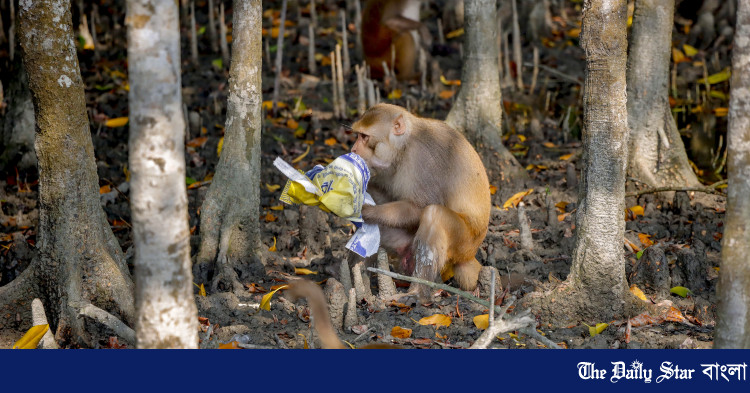
আদালতের নির্দেশ স্বত্ত্বেও সুন্দরবনে বন্ধ হচ্ছে না 'সিঙ্গেল ইউজ প্লাস্টিক'
এ বিষয়ে এখনই কোনো কার্যকর ব্যবস্থা না নিলে এর ভয়াবহতা আরও বাড়বে।

1717804375338.webp

প্লাস্টিক দূষণে হুমকিতে সুন্দরবনের জীববৈচিত্র্য। ছবি: স্টার

সাম্প্রতিক বছরগুলোতে সুন্দরবন ও এর আশেপাশের নদী-খালগুলোতে একবার ব্যবহারযোগ্য প্লাস্টিক ব্যবহার ব্যাপকভাবে বেড়েছে।

সংশ্লিষ্ট কর্তৃপক্ষের যথাযথ তদারকির অভাবে এই প্লাস্টিকের ব্যবহার কোনোভাবেই কমিয়ে আনা যাচ্ছে না। তাছাড়া ব্যবহারকারীদের অসচেতনতার অভাবে সুন্দরবনসহ উপকূলীয় অঞ্চলে সিঙ্গেল ইউজ প্লাস্টিকের ব্যবহার দিনদিন আরও বৃদ্ধি পাচ্ছে। ব্যবহারের উপযোগিতা ও সহজলভ্য হওয়ায় এটি এখন নিত্য ব্যবহার্য পণ্য হিসেবে বিবেচিত হচ্ছে।

পরিবেশবাদী ও বিশেষজ্ঞরা বলছেন, এ বিষয়ে এখনই কোনো কার্যকর ব্যবস্থা না নিলে এর ভয়াবহতা আরও বাড়বে।

দেশের উপকূলীয় এলাকার হোটেল, মোটেল ও রেস্তোরাঁয় একবার ব্যবহারের পর বর্জ্য হয়ে যায় এমন প্লাস্টিক সামগ্রীর ব্যবহার বন্ধের নির্দেশনা আছে হাইকোর্টের। কিন্তু এ নির্দেশনা অনুযায়ী সংশ্লিষ্ট কর্তৃপক্ষের যথাযথ তৎপরতার অভাবে এটি কার্যকর করা যাচ্ছে না।

যেসব প্লাস্টিক পণ্য একবার ব্যবহারের পর আর কোনো কাজে লাগে না, সেগুলোই সিঙ্গেল ইউজ প্লাস্টিক হিসেবে বিবেচিত হয়।

২০২০ সালের জানুয়ারিতে পরিবেশ অধিদপ্তরকে ২০২১ সালের মধ্যে এ ধরনের প্লাস্টিকের ব্যবহার বন্ধ করতে আদেশ দেন হাইকোর্ট। ইতোমধ্যে তিন বছর কেটে গেলেও এ বিষয়ে দৃশ্যমান তেমন কোনো অগ্রগতি হয়নি।

1717804430108.webp

ছবি: স্টার
খুলনা নগরীর দৌলতপুরের হোটেল ব্যবসায়ী নুরুজ্জামান শেখ দ্য ডেইলি স্টারকে বলেন, '৪-৫ বছর আগেও সিঙ্গেল প্লাস্টিকের ব্যবহার সেভাবে ছিল না। কিন্তু ক্রেতাদের চাহিদার কথা বিবেচনা করে আমি এখন এটি ব্যবহার করি। যদিও আমি নিজস্ব ব্যবস্থাপনায় খুলনা করপোরেশনের নতুন রাস্তা মোড়ের এসটিএস (সেকেন্ডারি ট্রান্সফার প্ল্যান্ট) প্ল্যান্টে ফেলে আসি।'

'করোনার সময় থেকে অধিকাংশ গ্রাহক একবার ব্যবহার উপযোগী প্লাস্টিকের গ্লাস দিতে অনুরোধ করেন, অনেকেই আবার একবার ব্যবহার করা প্লেট চান। ব্যবসার কথা বিবেচনা করে আমি এসব ব্যবহার করি। আর সত্যি কথা বলতে এগুলো পরিষ্কার করার কোনো ঝামেলা থাকে না। শ্রম কম লাগে, ব্যয়ও হয় কম,' বলেন তিনি।

শুধু খুলনা সিটি করপোরেশন এলাকার লবণচরা, টুটপাড়া, রূপসা, ফুলবাড়ি গেট অঞ্চলে কমপক্ষে ১৫-১৬টি প্লাস্টিকের কারখানা আছে। দিনে এসব কারখানা বন্ধ থাকে। চালু হয় গভীর রাতে। আর এখান থেকে বিভিন্ন হাতে ক্রেতাদের কাছে পৌঁছে যায় প্লাস্টিক।

স্থানীয় সূত্রে জানা গেছে, প্লাস্টিকের সবচেয়ে বড় মোকাম খুলনার বড়বাজার। এখান থেকে খুলনা জেলা ও এর আশেপাশের জেলাগুলোতে সিঙ্গেল প্লাস্টিকের বিভিন্ন আইটেম ছড়িয়ে পড়ছে। সেগুলো বিভিন্ন নদী-খাল হয়ে সুন্দরবনে প্রবেশ করছে।

To read the rest of the news, please click on the link above.
 
Analyze

Analyze Post

Add your ideas here:
Highlight Cite Respond

Need combined effort to protect environment
Speakers tell seminar

1717805245453.webp


The government alone cannot protect the country's environment, and a combined effort is needed in this regard, said speakers at an event on Thursday.

Eighteen green organisations -- including Bangladesh Poribesh Andolon, Bangladesh Environmental Lawyers Association, Association for Land Reform and Development, and Nagorik Uddyog -- organised the seminar at the Department of Environment auditorium in the capital.

Lawmaker Amatul Kibria Keya Chowdhury said political and administrative leaders are responsible for environmental destruction, not the poor.

Amatul emphasised the need for proper planning in haor development to prevent floods and called for accountability among officials.

Lawmaker Tanvir Shakil Joy said raising awareness among the people is important. He also called for an increased national budget for environmental protection.

DoE Director General Abdul Hamid said environmental impact assessments for sand mining leases would be conducted in the future, along with plans to amend the Environment Act to ensure stricter regulations.

Bapa Vice President Iqbal Habib said, "Rajuk's role should be to protect the capital's land, but often the authorities act like developers."-
 
Analyze

Analyze Post

Add your ideas here:
Highlight Cite Respond

Chalan beel is fast degrading to a tipping point
Protecting the beel and its network of waterbodies is vital

1717891198419.webp

VISUAL: STAR

It is appalling how we have allowed unplanned development, encroachment, dumping of waste, and over-extraction of groundwater to strangle life out of the largest wetland of the country: the Chalan beel. The beel once provided subsistence to thousands of farmers and fishers in North Bengal. But in just over a century, according to a report by this daily, its size has reduced from 1,085 square kilometres to a mere 168 sq km, with its biodiversity largely destroyed and groundwater sources almost depleted.

The gradual decline of many of the rivers and canals that feed water into the beel caused its alarming decline. Those rivers too have been subjected to encroachment, construction of unplanned sluice gates, and mindless waste dumping. Lack of dredging is another issue. Despite repeated media reports in this regard, no effective measures have been taken by the government. Instead, the government itself built structures and set up projects, especially on Boral river's land, the main water source of Chalan beel. Although some ad hoc steps were taken to remove some of the structures on the Boral, based on a 2018 study by the water resources ministry, no long-term coordinated action has been taken to restore the navigability of the river, and consequently, the beel continued to dry up.

Several government agencies are responsible for the protection of our rivers and wetlands. It is, however, clear that no one is doing their job right. While the ill-equipped Department of Environment has done nothing to protect the biodiversity of Chalan beel, the fisheries and livestock ministry did not think twice before giving permission for pond excavation and fish farming. No action was taken to penalise illegal enclosures harming the beel's natural environment. The local administration and other responsible agencies too kept on turning a blind eye to the unplanned roads, bridges, culverts, regulators and sluice gates constructed through the beel and its network. Unfortunately, it is not the only victim of the government's sheer apathy in protecting our wetlands. We have seen several other beels being subjected to the same fate.

This needs to stop. Government agencies must work together, and develop and implement long-term projects to save this precious wetland and others. They must also preserve the networks of rivers and wetlands breathing life into our delta.
 
Analyze

Analyze Post

Add your ideas here:
Highlight Cite Respond

Part of Cox's Bazar now sanctuary for marine species

1717891821169.webp

Photo: Sazzad Ibne Sayed/Star

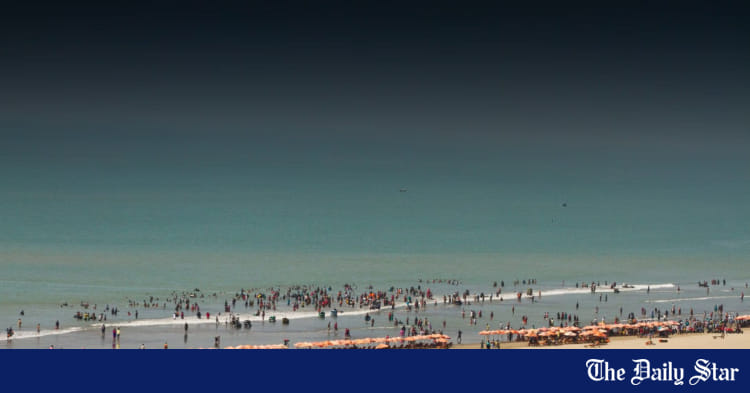
A part of Cox's Bazar sea beach has been announced as the sanctuary for marine species.

The 2.91 kilometre "Bori Beach", which was inaugurated today, will be off-limits to locals and tourists.

The beach would be hundred percent clean and plastic free and used for research on marine life and the blue economy.

Bangladesh Ocean Research Institute (BORI) will take care of the beach, stretching from Sonarpara to Reju canal under Ukhiya upazila of Cox's Bazar.

The district administration handed over the authority of the beach to Bori after an event organised to celebrate World Ocean Day.

Ali Hossain, secretary to the Ministry of Science and Technology, inaugurated the beach at Sonarpara area this afternoon.

BORI Director General Professor Touhida Rashid said, "This beach will only be used as a model for research work. We have no conflict with tourism. This beach will be a safe habitat for biodiversity. No one will disturb the marine life here. This beach will be 100% clean and plastic free. BORI will maintain the beach."

Khurshed Alam, secretary of the Marine Affairs Unit of the foreign ministry; Professor Dr Benu Kumar Dey, Vice-Chancellor of Chittagong University; Aftab Ali, Chairman of Bangladesh Council of Scientific and Industrial Research (BCSIR); Cox's Bazar Superintendent of Police Mahfuzul Islam also participated in the event among others.
 
Analyze

Analyze Post

Add your ideas here:
Highlight Cite Respond

Pollution, encroachment: Bangshi river dying slowly

1717978509240.webp


The once-vibrant Bangshi River in Jamalpur is slowly dying. Merchants once navigated its waters on large boats, but now, the three-kilometre stretch within Jamalpur municipality barely resembles a three-meter-wide canal before merging with the Brahmaputra.

Illegal encroachment, pollution, and unchecked siltation have led to its decline.

In 2007, local authorities began demarcating the river's land and excavating it to reduce waterlogging. However, the river was soon filled with garbage dumped by residents.

"Whenever it rains, our houses flood with dirty water as the river can no longer drain it away. The bad odour from the river is a constant nuisance. The municipality should take urgent steps to clean the river," said Aminul Sheikh, a resident of Dayamayi area.

"The river has become a canal over the years due to illegal land grabbing. Now it is filled with garbage and serves as a mosquito breeding ground. The municipality should clean up the waterbody and excavate it to prevent waterlogging and improve the environment," said Jahangir Selim, president of the Jamalpur District Environment Protection Movement.

Mayor Mohammad Sanowar put the onus on the local residents for the river's plight.

"We repeatedly try to prevent residents from throwing waste into the water body. Mass awareness needs to be raised," he said.
 
Analyze

Analyze Post

Add your ideas here:
Highlight Cite Respond

Air pollution linked to 135m premature deaths globally: study
1718063131457.webp


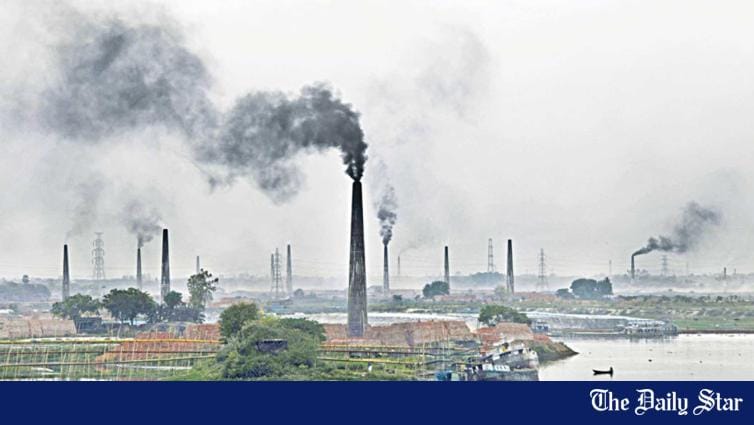
Pollution from man-made emissions and other sources like wildfires have been linked to around 135 million premature deaths worldwide between 1980 and 2020, a Singapore university said yesterday.

Weather phenomena like El Nino and the Indian Ocean Dipole worsened the effects of these pollutants by intensifying their concentration in the air, Singapore's Nanyang Technological University (NTU) said, unveiling the results of a study led by its researchers.

The tiny particles called particulate matter 2.5, or "PM 2.5", are harmful to human health when inhaled because they are small enough to enter the bloodstream.​
 
Analyze

Analyze Post

Add your ideas here:
Highlight Cite Respond
  • Like (+1)
Reactions: Krishna with Flute

What will happen when the 'Doomsday Glacier' disintegrates?
1718150698138.webp

The Thwaites Glacier in Antarctica is seen in this undated NASA image. Photo: Reuters

Punishing heatwaves is not the only measure of global climate change that is undergoing an abnormally rapid change. Numerous other indicators, such as violent storms, long-lasting droughts, devastating floods, raging wildfires, and permafrost thawing, among others, suggest a more general global warming trend. An indicator that does not get much attention but will nevertheless have reverberating effects across the globe is the melting of glaciers and ice sheets, particularly in Antarctica.

As climate change drives global temperatures ever higher, glaciers and ice sheets in the polar and mountainous regions will inevitably melt. According to a paper published in Nature Climate Change (June 2020), Antarctica has warmed at over three times the global rate since 1989. As a result, glaciers in Antarctica, which contain about 90 percent of all the ice on Earth, are flowing into the oceans where they melt and raise the sea level. From 1979 to 1989, some 40 billion tonnes of glacial ice in Antarctica melted each year. A study published in 2019 in the Proceedings of the National Academy of Sciences reported that the amount jumped to 252 billion tonnes each year starting in 2009.

Since 1880, global sea levels have risen roughly 23 centimetres. Over the past decade, the sea level is rising at a much faster rate of 3.9 millimetres per year, as measured by NASA's satellite-based radar altimeters. The rise is mostly due to a combination of water melting from glaciers and ice sheets, as well as thermal expansion of seawater as it warms.

Scientists are particularly concerned about Thwaites Glacier, a massive block of ice in West Antarctica, approximately the size of Florida. It is nicknamed the "Doomsday Glacier" because if it were to collapse and melt, it could single-handedly cause global sea levels to rise by as much as 65 centimetres. As one of the fastest melting glaciers currently losing 50 billion tonnes of ice annually, Thwaites already accounts for four percent (0.15 millimetre) of the planet's sea level rise. In the 1990s, it was losing just over 10 billion tonnes of ice a year.

When all the glaciers in Antarctica will melt, sea level will rise some 70 metres, according to the US Geological Survey. Moreover, if the rest of the glaciers on Earth melts too, 7.6 metres will be added on top of Antarctica's drastic total, wiping out most of the low-lying countries in the world, while in urban settings along coastlines, it will threaten infrastructure vital for local jobs and regional industries.

The coastal edge of Thwaites that interacts with the ocean stretches 120 kilometres, while its thickness from bedrock to surface measures between 800 metres and 1,200 metres. A platform of ice called an ice shelf that floats above the Pine Island Bay acts as a brace, holding this frosty goliath back on the land, thereby slowing its journey to the sea. Thwaites also acts as a natural dam to the surrounding ice in West Antarctica and hence provides an important defence against the sea-level rise.

To read the rest of the news, please click on the link above.

 
Analyze

Analyze Post

Add your ideas here:
Highlight Cite Respond

Keep trees, greenery intact during development projects: BAPA

1718236608692.webp


Bangladesh Poribesh Andolon today urged authorities concerned to plan and implement development projects while keeping existing trees and greenery intact as much as possible.

It also demanded immediate action to recover and protect waterbodies and the creation of a "blue network" connecting waterbodies with rivers to improve the livability of cities.

Bapa organised a discussion on the importance of the environment in sustainable urbanisation and unveiled a proposal booklet at the Sagar-Runi Auditorium of Dhaka Reporters' Unity.

Bapa Vice President and Architect Iqbal Habib presented the main article while scholars and activists discussed how to ensure sustainable urbanisation, focusing on waterbodies, greenery, open spaces, playing fields, and air and sound pollution.

Discussants proposed a tree census and a database of roadside trees to control tree felling in the name of development-related activities. They also proposed a policy to ensure tree plantation, maintenance, and urban forestry.

"Due to encroachment and pollution, Dhaka's waterbodies and greenery have decreased alarmingly. The city authorities should take effective action to restore and safeguard the waterbodies. Before taking any development project, a proper Environmental Impact Assessment and Environmental Mitigation Plan must be done and stakeholders should be informed about these," said Iqbal Habib.

Ishrat Islam, professor of Urban and Regional Planning at Buet, said, "The city corporation is responsible for protecting canals and waterbodies. We may still have time to save the existing ones. The scenario outside Dhaka is almost similar and needs special attention too."

"Assessment and accountability are needed from those who are responsible for saving the environment. An evaluation of their performances can be helpful," Prof Ishrat added.

Prof Ahmad Kamruzzaman Majumder, joint secretary of Bapa, said uncontrolled construction works and unfit vehicles are responsible for air and sound pollution in Dhaka.

He stressed short, mid and long-term plans to improve the situation.

Speakers also demanded protection of agricultural lands and maximum use of non-agricultural lands.​
 
Analyze

Analyze Post

Add your ideas here:
Highlight Cite Respond

Members Online

Latest Posts

Back
PKDefense - Recommended Toggle