Donate ☕
201 Military Defense Forums
[🇧🇩] - Save the Rivers/Forests/Hills-----Save the Environment | Page 13 | PKDefense
Home Login Forums Wars Watch Videos
Serious discussion on defense, geopolitics, and global security.

[🇧🇩] Save the Rivers/Forests/Hills-----Save the Environment

Reply (Scroll)
Press space to scroll through posts
G Bangladesh Defense
[🇧🇩] Save the Rivers/Forests/Hills-----Save the Environment
523
13K
More threads by Saif

Stop disturbing the Sundarbans!​

Restrain traffic of ships through the forest

1711232731282.webp


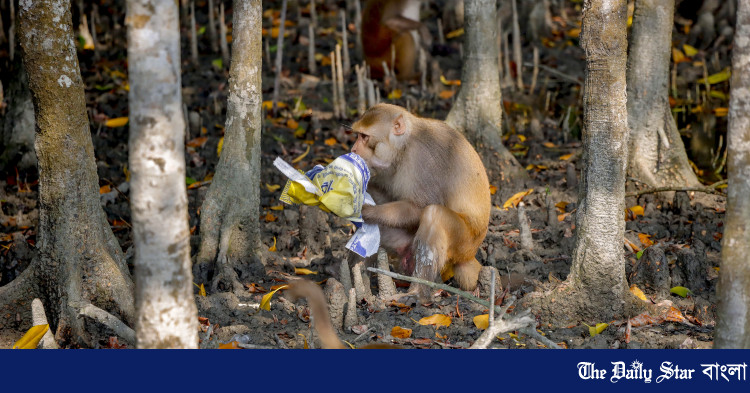
It is deeply concerning that on top of projects, megaprojects, illegal occupations and deforestation ravaging the Sundarbans, traffic of ships through the forest has increased dramatically in recent years. A recent report sheds light on how ships, discharging harmful fumes and sound pollution, and often carrying toxic materials through the forest, have nearly doubled in a decade—from 357 trips monthly in 2012 to 837 trips in 2022, and 701 trips monthly so far this year.

Under the first Protocol on Inland Water Transit and Trade between Bangladesh and India, signed in 1972, lighter cargo vessels can operate between the two countries using the waterways mostly through the Sundarbans. A major route for these ships goes through at least 100 km of the river system inside the mangrove forest, which takes around eight hours for the vessels to travel. While any motor vehicle, including boats and ships, is strictly prohibited from operating through the forest after sunset till sunrise, ships continue to operate 24/7 unrestrained. The customs station in Angtihara, the entry point to the forest on this route, only logs the trips of the ships and does not monitor if any laws have been broken. While the customs and immigration in India close off at night, our customs office continues to operate throughout the night.
By allowing these activities, we are now destroying the Sundarbans from the inside. The toxic fumes and loud sounds greatly impact wildlife habitats and breeding environments. The propellers disrupt the marine ecosystem, and the waves cause severe erosions. For instance, the width of rivers on this route has increased from 20-30 metres to 50-60 metres. Most of the ships on this route contain fly ash, coal, and stones from India for our riverside cement factories. In the last seven years, at least 15 such ships have capsized inside the forest, spilling these harmful materials directly into the river.

Bangladesh has now become a land of lost forestlands and dead ecosystems. We have irredeemably destroyed a number of forests and major sources of biodiversity throughout this delta, and even in the hill tracts. The Sundarbans is the last hope for any unique and great population of wildlife to survive. The government must ensure that any activity harming this forest is halted immediately, and look for an alternative route for maritime trade with India as well as consider moving major power plants and factories from the area.​
 
Analyze

Analyze Post

Add your ideas here:
Highlight Cite Fact Check Respond

Pollution, encroachment: Bangshi river dying slowly

1717978509240.webp


The once-vibrant Bangshi River in Jamalpur is slowly dying. Merchants once navigated its waters on large boats, but now, the three-kilometre stretch within Jamalpur municipality barely resembles a three-meter-wide canal before merging with the Brahmaputra.

Illegal encroachment, pollution, and unchecked siltation have led to its decline.

In 2007, local authorities began demarcating the river's land and excavating it to reduce waterlogging. However, the river was soon filled with garbage dumped by residents.

"Whenever it rains, our houses flood with dirty water as the river can no longer drain it away. The bad odour from the river is a constant nuisance. The municipality should take urgent steps to clean the river," said Aminul Sheikh, a resident of Dayamayi area.

"The river has become a canal over the years due to illegal land grabbing. Now it is filled with garbage and serves as a mosquito breeding ground. The municipality should clean up the waterbody and excavate it to prevent waterlogging and improve the environment," said Jahangir Selim, president of the Jamalpur District Environment Protection Movement.

Mayor Mohammad Sanowar put the onus on the local residents for the river's plight.

"We repeatedly try to prevent residents from throwing waste into the water body. Mass awareness needs to be raised," he said.
 
Analyze

Analyze Post

Add your ideas here:
Highlight Cite Fact Check Respond

Air pollution linked to 135m premature deaths globally: study
1718063131457.webp


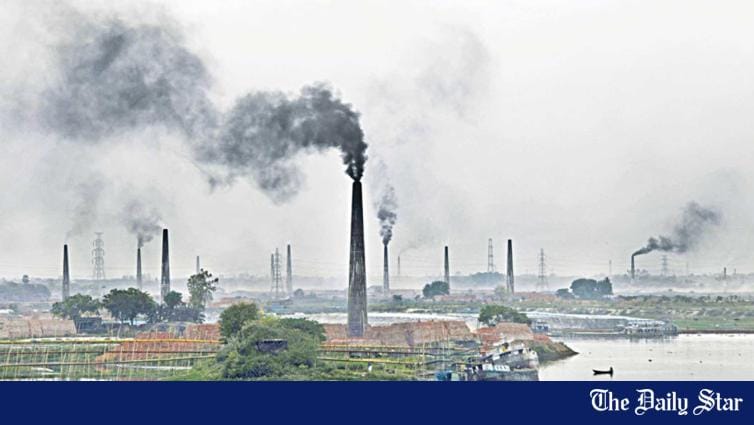
Pollution from man-made emissions and other sources like wildfires have been linked to around 135 million premature deaths worldwide between 1980 and 2020, a Singapore university said yesterday.

Weather phenomena like El Nino and the Indian Ocean Dipole worsened the effects of these pollutants by intensifying their concentration in the air, Singapore's Nanyang Technological University (NTU) said, unveiling the results of a study led by its researchers.

The tiny particles called particulate matter 2.5, or "PM 2.5", are harmful to human health when inhaled because they are small enough to enter the bloodstream.​
 
Analyze

Analyze Post

Add your ideas here:
Highlight Cite Fact Check Respond
  • Like (+1)
Reactions: Krishna with Flute

What will happen when the 'Doomsday Glacier' disintegrates?
1718150698138.webp

The Thwaites Glacier in Antarctica is seen in this undated NASA image. Photo: Reuters

Punishing heatwaves is not the only measure of global climate change that is undergoing an abnormally rapid change. Numerous other indicators, such as violent storms, long-lasting droughts, devastating floods, raging wildfires, and permafrost thawing, among others, suggest a more general global warming trend. An indicator that does not get much attention but will nevertheless have reverberating effects across the globe is the melting of glaciers and ice sheets, particularly in Antarctica.

As climate change drives global temperatures ever higher, glaciers and ice sheets in the polar and mountainous regions will inevitably melt. According to a paper published in Nature Climate Change (June 2020), Antarctica has warmed at over three times the global rate since 1989. As a result, glaciers in Antarctica, which contain about 90 percent of all the ice on Earth, are flowing into the oceans where they melt and raise the sea level. From 1979 to 1989, some 40 billion tonnes of glacial ice in Antarctica melted each year. A study published in 2019 in the Proceedings of the National Academy of Sciences reported that the amount jumped to 252 billion tonnes each year starting in 2009.

Since 1880, global sea levels have risen roughly 23 centimetres. Over the past decade, the sea level is rising at a much faster rate of 3.9 millimetres per year, as measured by NASA's satellite-based radar altimeters. The rise is mostly due to a combination of water melting from glaciers and ice sheets, as well as thermal expansion of seawater as it warms.

Scientists are particularly concerned about Thwaites Glacier, a massive block of ice in West Antarctica, approximately the size of Florida. It is nicknamed the "Doomsday Glacier" because if it were to collapse and melt, it could single-handedly cause global sea levels to rise by as much as 65 centimetres. As one of the fastest melting glaciers currently losing 50 billion tonnes of ice annually, Thwaites already accounts for four percent (0.15 millimetre) of the planet's sea level rise. In the 1990s, it was losing just over 10 billion tonnes of ice a year.

When all the glaciers in Antarctica will melt, sea level will rise some 70 metres, according to the US Geological Survey. Moreover, if the rest of the glaciers on Earth melts too, 7.6 metres will be added on top of Antarctica's drastic total, wiping out most of the low-lying countries in the world, while in urban settings along coastlines, it will threaten infrastructure vital for local jobs and regional industries.

The coastal edge of Thwaites that interacts with the ocean stretches 120 kilometres, while its thickness from bedrock to surface measures between 800 metres and 1,200 metres. A platform of ice called an ice shelf that floats above the Pine Island Bay acts as a brace, holding this frosty goliath back on the land, thereby slowing its journey to the sea. Thwaites also acts as a natural dam to the surrounding ice in West Antarctica and hence provides an important defence against the sea-level rise.

To read the rest of the news, please click on the link above.
 
Analyze

Analyze Post

Add your ideas here:
Highlight Cite Fact Check Respond

Keep trees, greenery intact during development projects: BAPA

1718236608692.webp


Bangladesh Poribesh Andolon today urged authorities concerned to plan and implement development projects while keeping existing trees and greenery intact as much as possible.

It also demanded immediate action to recover and protect waterbodies and the creation of a "blue network" connecting waterbodies with rivers to improve the livability of cities.

Bapa organised a discussion on the importance of the environment in sustainable urbanisation and unveiled a proposal booklet at the Sagar-Runi Auditorium of Dhaka Reporters' Unity.

Bapa Vice President and Architect Iqbal Habib presented the main article while scholars and activists discussed how to ensure sustainable urbanisation, focusing on waterbodies, greenery, open spaces, playing fields, and air and sound pollution.

Discussants proposed a tree census and a database of roadside trees to control tree felling in the name of development-related activities. They also proposed a policy to ensure tree plantation, maintenance, and urban forestry.

"Due to encroachment and pollution, Dhaka's waterbodies and greenery have decreased alarmingly. The city authorities should take effective action to restore and safeguard the waterbodies. Before taking any development project, a proper Environmental Impact Assessment and Environmental Mitigation Plan must be done and stakeholders should be informed about these," said Iqbal Habib.

Ishrat Islam, professor of Urban and Regional Planning at Buet, said, "The city corporation is responsible for protecting canals and waterbodies. We may still have time to save the existing ones. The scenario outside Dhaka is almost similar and needs special attention too."

"Assessment and accountability are needed from those who are responsible for saving the environment. An evaluation of their performances can be helpful," Prof Ishrat added.

Prof Ahmad Kamruzzaman Majumder, joint secretary of Bapa, said uncontrolled construction works and unfit vehicles are responsible for air and sound pollution in Dhaka.

He stressed short, mid and long-term plans to improve the situation.

Speakers also demanded protection of agricultural lands and maximum use of non-agricultural lands.​
 
Analyze

Analyze Post

Add your ideas here:
Highlight Cite Fact Check Respond

FY25 budget allocation for climate finance inadequate, say experts
Published :
Jun 13, 2024 21:42
Updated :
Jun 13, 2024 21:42
1718323342643.webp


Despite formulating long-term plans like the Centenary Delta Plan to tackle climate change, Bangladesh's annual budget allocations remain insufficient for effective implementation, experts said at a seminar on Thursday.

They made the remark during a seminar titled "Independent Climate Finance Inevitable for Sustainable Development" organised by EquityBD, AOSED, CLEAN, CSRL, and COAST Foundation at the Dhaka Reporters' Unity. The event was presided over by Dr Qazi Khaliquzzaman Ahmad and moderated by Rezaul Karim Chowdhury of EquityBD, according to a press release.

Abul Hasan of Coast Foundation presented the keynote, with three major demands for climate finance: allocating at least 3.0 per cent of GDP to climate finance to reduce reliance on foreign loans and protect vulnerable populations; prioritising the National Strategy Paper on Displacement Management in the climate finance framework; and ensuring local needs-based allocations separate from traditional embankment construction funds for coastal protection.

Hasan Mehdi of CLEAN pointed out the disparity between the national five-year plan's target of achieving 10 per cent renewable energy by 2025 and the current achievement of only 3.0 per cent.

Ziaul Haque Mukta from CSRL stressed the need for regional plans to address local climate impacts, stating that national plans are inadequate for regional-specific issues.

Dr. Qazi Khaliquzzaman Ahmad noted that although the National River Protection Commission has identified river encroachers, it lacks the enforcement power to take action against them.

Rezaul Karim Chowdhury said Bangladesh could follow the success of community-involved embankment maintenance models in Bhola and Charfashion.​
 
Analyze

Analyze Post

Add your ideas here:
Highlight Cite Fact Check Respond

Members Online

⤵︎

Latest Posts

Latest Posts