New Tweets

[๐Ÿ‡ง๐Ÿ‡ฉ] July uprising

G Bangladesh Defense
[๐Ÿ‡ง๐Ÿ‡ฉ] July uprising
71
2K
More threads by Saif


July revolution did not seek to overturn constitution: Chief Justice
Outgoing CJ Refaat says movement aimed to purify constitutional engagement

1766107935857.webp

File photo: Collected

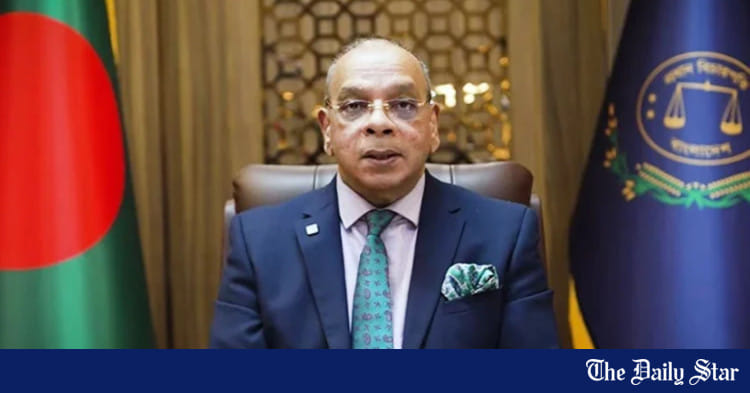
Chief Justice Syed Refaat Ahmed today said the July revolution did not propose to overturn the constitution; rather, it sought to purify the nation's engagement with it.

"Transparency, accountability, and responsiveness -- these three virtues became the leitmotif of the public conscience," he said.

He added that during those uncertain months, the judiciary remained the only fully functional constitutional organ. As a result, it had to act with both humility and firmness.

"Yet the judiciaryโ€ฆ was compelled to adopt a posture at once humble and resolute -- humble in acknowledging that it cannot exceed the boundaries of the text that gives it life, and resolute in ensuring that within those boundaries no right is rendered illusory, no institution made captive, and no citizen abandoned," he said.

Syed Refaat Ahmed, who will retire on December 27, made the remarks while delivering a speech in response to a farewell felicitation accorded to him by Attorney General Md Asaduzzaman and Supreme Court Bar Association (SCBA) President AM Mahbub Uddin Khokon.

The event was held this morning at the Chief Justice's Courtroom of the Appellate Division of the Supreme Court.

Judges and lawyers from both the Appellate Division and the High Court Division were present at the function.

In his speech, the chief justice said, "Together, through mutual respect, shared responsibility, and an unshakeable commitment to constitutionalism, we reaffirm that the strength of our judiciary lies not in any single office, but in our collective resolve to serve justice with integrity, balance, and foresight."

Addressing the chief justice, AG Asaduzzaman praised his leadership during a challenging period.

"During your short tenure as chief justice, through your wisdom, intellect, and foresight, you have established a unique judicial standard," he said.

SCBA President Mahbub said Refaat Ahmed made his utmost efforts to protect the constitutional and fundamental rights of citizens.

He added that the chief justice continued to uphold justice by removing delays in the disposal of cases.

Chief justice calls on president

Chief Justice Syed Refaat Ahmed paid a courtesy call on President Mohammed Sahabuddin at Bangabhaban at 2:00pm today.

During the meeting, the president exchanged pleasantries with the chief justice and highly appreciated the various initiatives taken by him to ensure the institutional independence of the judiciary.

The president also praised the successful implementation of those initiatives.

He particularly commended the chief justice's tireless efforts to establish a separate Supreme Court Secretariat for the judiciary.

The chief justice, in turn, expressed his sincere gratitude to the president for his special cooperation in implementing measures aimed at ensuring the judiciary's institutional independence, according to a Supreme Court press release.

Law adviser meets chief justice

Later in the day, Law Adviser Asif Nazrul paid a farewell call on Refaat Ahmed at his Supreme Court office.

During the meeting, the law adviser expressed concern to the chief justice over "terrorists being granted bail by the High Court".

After the meeting, Asif Nazrul spoke to journalists and said it was the chief justice's last working day.

"Today was the last working day of Chief Justice Dr Syed Refaat Ahmed. I came to express my thanks and gratitude to him," he said.

He said the chief justice took office at a critical moment for the country. He added that the chief justice played a key role in advancing judicial reforms in line with the expectations of the July mass uprising.

"Who will be the next chief justice is a matter of government policy. I do not have the authority to say anything unilaterally on this policy matter," he said.

"However, I can tell you that you will likely know it within the next three to four days," he added.​
 
Analyze

Analyze Post

Add your ideas here:
Highlight Cite Respond

Does the fall of autocracy automatically restore democracy?

The fall of autocracy does not automatically usher in freedom. It simply gives the citizens a chance. Mohammad Sajjadur Rahman writes about the fall of the autocrat and thereafter.

Mohammad Sajjadur Rahman
Published: 26 Dec 2025, 17: 07

1766797852454.webp


The end of the old autocratic system may not be the last chapter in the struggle for democracy, but may start a dangerous new chapter. The fall of autocracy does not automatically usher in freedom. It simply gives the citizens a chance. Mohammad Sajjadur Rahman writes about the fall of the autocrat and thereafter.

The colossal bronze statue has been pulled down by cranes. Towering pillars are now plastered with rebellious graffiti. Disreputable police headquarters lie in ruins, gutted by the fire of public rage.

These moments immediately following the fall of a despot are often described by international media, observers, and urban society with a kind of romantic optimism as the โ€œearly daysโ€ or โ€œDay Oneโ€, as if the transition from a dark tunnel to the sunny boulevard of liberal democracy were a straightforward and inevitable journey.

Yet from the beer halls of Weimar Germany to the battered thoroughfares of post-Saddam Baghdad, history has repeatedly warned us that the vast vacuum of political authority left in the wake of a dictatorโ€™s fall is rarely filled by reasoned parliamentary debate or a revised constitution.

Borrowing from the Italian Marxist theorist Antonio Gramsci, this interim period can be described as an 'interregnum', an in-between. As he wrote, the old is dying, but the new cannot yet be born. It is in this shadowy span of time that a host of morbid symptoms emerge.

Prolonged authoritarian rule leaves deep and lasting scars on the public psyche, particularly on the psychology of young people. In The Origins of Totalitarianism, Hannah Arendt shows that the core strength of totalitarian rule lies not merely in police repression or the reign of fear, but rather in its profound strategy of โ€œatomizingโ€ societyโ€”breaking it into isolated individuals.

Rulers deliberately destroy mutual trust, social bonds, and the capacity for collective organization, turning each person into a detached and lonely being. As a result, individuals afflicted by extreme isolation and a sense of meaninglessness surrender themselves blindly to the ideology of the leader or the state as their sole means of survival, and, lacking mutual trust, fail to build any form of collective resistance.

This becomes even clearer through the metaphor of the ordinary greengrocer in Czech thinker and statesman Vรกclav Havelโ€™s classic essay 'The Power of the Powerless'. Every day, the shopkeeper hangs a slogan in his store, โ€œWorkers of the world, unite.โ€ Yet he does not believe in this slogan for a moment, and he knows that passers-by do not believe in it either.

Still, he displays it simply to avoid trouble, to keep himself safe. According to Havel, modern authoritarianism does not merely demand obedience from citizens; it demands that they live โ€œwithin a lie.โ€

In this context of a culture of falsehood, we may also recall the concept of โ€œKetmanโ€ developed by the Nobel Prize-winning Polish poet Czesล‚aw Miล‚osz. Miล‚osz borrowed the term from the travel writings of the nineteenth-century French diplomat Gobineau and employed it in his classic work The Captive Mind.

It was said that in ancient Iran, religious dissenters concealed their true beliefs in public in order to survive or to protect themselves from enemies, outwardly conforming to the surrounding society. Miล‚osz transposed this strategy of religious self-preservation into the modern political context, showing that under authoritarian or totalitarian regimes, some people practice โ€œKetman.โ€ That is, they openly display blind loyalty to the rulerโ€™s ideology and enthusiastically sing the rulerโ€™s praises, while deep within they harbour entirely different beliefs and continue to despise the regime.

This is not mere cowardice; rather, it is a refined form of intellectual performance, a kind of double life. The practitioner of Ketman derives a secret sense of pride or superiority from the belief that, through outward falsehood, he is deceiving the machinery of the state while keeping his inner โ€œfree selfโ€ untouched.

Citizens display blind devotion to the rulerโ€™s supposed miraculous powers and greatness in public gatherings and in everyday life, behaving as if they genuinely believe in it. Yet behind this spectacle, both ruler and ruled know perfectly well that this devotion is nothing more than a farcical charade.

But Miล‚osz issues a brutally sharp warning: over time, as one continues this game of deception and performance against oneโ€™s own conscience, the true face and the mask gradually merge, and the individual loses his authenticity and moral integrity, ultimately becoming a slave to the very system of lies he once believed he was outwitting.

To understand how authoritarianism corrodes mutual trust and confidence among citizens, we can turn to political scientist Lisa Wedeenโ€™s 'Ambiguities of Domination', which dissects the regime of Hafez al-Assad in Syria. Through the concept of โ€œas if politics,โ€ Wedeen presents a chilling picture that stands as documentary evidence of psychological domination in modern authoritarianism.

Wedeen shows that under this system, citizens display blind devotion to the rulerโ€™s supposed miraculous powers and greatness in public gatherings and in everyday life, behaving as if they genuinely believe in it. Yet behind this spectacle, both ruler and ruled know perfectly well that this devotion is nothing more than a farcical charade and an exercise in falsehood.

According to Wedeen, shrewd authoritarian rulers do not actually expect love or genuine belief from the populace. Instead, by forcing people to perform these bizarre and false rituals, they seek to crush their moral backbone and their courage to speak the truth. As a result, living day after day in compulsory performance and a double life against oneโ€™s own conscience, an entire generation becomes psychologically โ€œschizophrenic,โ€ fragmented and divided selves.

The long-term consequences of this process are profoundly terrifying. It erodes the most fundamental human quality, trust, to such an extent that people later find themselves unable to place deep faith in any political ideology at all. They begin to see politics and state institutions merely as staged performances or elaborate deceptions.

Thus, in the power vacuum and social chaos that follow the fall of authoritarian rule, clandestine pathways for extreme ideologies such as fascism can open anew. If authoritarianism is a sedative, a sleeping pill, then fascism is an explosive โ€œstimulant,โ€ akin to gunpowder.

Authoritarian comfort lies in popular passivity: it wants people to forget politics and lock themselves inside their homes. Fascism, however, has a different appetite. It does not seek passivity but collective frenzy. A fascist system wants masses of people to flood the streets with torches in hand and to sacrifice themselves to a bloody mission of โ€œpurifyingโ€ the nation.

The tragic irony of this cycle is that the crowd believes it is making a revolution, while in reality it is rapidly descending into darkness and even greater instability. By hollowing out civil society and stunting the moral development of the young, the authoritarian ruler unknowingly serves as the โ€œmidwifeโ€ to the fascist monster.

The most profound psychological explanation of why people, in the aftermath of authoritarianism, yearn once again for subjugation was offered by Erich Fromm, the Frankfurt School psychologist. In his classic work 'Escape from Freedom,' Fromm argues that modern individuals desire freedom, yet are unable to bear the loneliness, uncertainty, and burden of responsibility that freedom entails.

Most people lack personalities strong enough to withstand this psychological strain. As a result, they choose the โ€œcertainty of bondageโ€ and the warmth of security over uncertain freedom. They come to believe that surrendering their selfhood at the feet of a leader is the only way to escape this cosmic loneliness.

Prolonged rule by fear and a culture of performance erase individuality from within and give rise to a peculiar slave mentality. The Russian sociologist Aleksandr Zinoviev gave this pathological human type a name, 'Homo Sovieticus'.

Such people may loathe the state with all their hearts, yet for the sake of livelihood or security they cling to that very state like parasites. They fear personal initiative and shirk responsibility for their own lives. Consequently, when authoritarian rule collapses, this suddenly acquired freedom becomes an unbearable burden for an โ€œorphanedโ€ society.

Post-Saddam Iraq and the history of the Arab Spring remind us of this brutal truth: freedom does not arrive simply by removing the โ€œiron manโ€ or dictator from his throne. Societies crippled by long subjugation often fail to celebrate freedom and instead plunge into a profound existential crisis and the abyss of chaos.

The French sociologist Gustave Le Bon, in 'The Crowd: A Study of the Popular Mind,' showed how an individualโ€™s conscience dissolves within a crowd. The most dangerous aspect of collective frenzy is the disappearance of personal responsibility: a harmless individual who would be incapable of even imagining a crime when alone can, under the excitement of the crowd, set fire to a library. This happens because, under the cover of anonymity, he convinces himself that it is not his personal crime, but rather a reflection of the so-called โ€œwill of the people.โ€

Le Bon himself was a conservative and hostile to democracy, and history bears witness to the fact that it was by exploiting this very โ€œfear of the massesโ€ that dictators such as Hitler and Mussolini designed their propaganda. From Le Bon they learned that crowds are not subdued through reason, but through emotion and hypnosis.

Yet viewing the masses merely as a manipulable entity, as Le Bon did, offers no solution to crises in times of transition. Fascism wants people to remain a mob, an unthinking, frenzied mass. Democracy, by contrast, wants the masses to become citizens.

The collapse of an old authoritarian system, therefore, may not mark the final chapter of the long novel of democratic struggle; it may instead signal the beginning of a dangerous one. The fall of authoritarianism does not automatically bring freedom, it merely creates an opportunity for citizens to attain it.

* Mohammad Sajjadur Rahman is part-time lecturer, IUB​
 
Analyze

Analyze Post

Add your ideas here:
Highlight Cite Respond
July uprising now part of textbook history

Staff Correspondent Dhaka
Published: 05 Jan 2026, 16: 30

1767660663622.webp

Free textbooks were distributed to students on 1 January. This year's book includes content on the July Uprising in the history section Prothom Alo

As part of history, the new textbooks now include the July mass uprising. At the same time, the 1990 mass uprising has also been added. These updates have been made mainly in the Bangladesh and World Studies books for sixth, seventh, eighth, and combined ninthโ€“tenth grades.

Some changes have also been made to previously existing historical content. Across various grades, most mentions of Sheikh Mujibur Rahman in the Bangladesh and World Studies books no longer include the title โ€œBangabandhu,โ€ though a few instances remain. In the eighth-grade literature anthology, the essay โ€œEbarer Sangram, Swadhinatar Sangramโ€, which contained Sheikh Mujibur Rahmanโ€™s historic 7 March speech, has been removed. As a result, the number of essays in that book is now 11.

For the new academic year, which began on 1 January, students have received the free textbooks. However, at the secondary level, the National Curriculum and Textbook Board (NCTB) has not yet supplied all the books, so not every student has received every book.


More than 214 million copies are being printed for free distribution across secondary and primary levels. NCTB said that by 3 January, 78.69 per cent of secondary books had reached schools: over 85 per cent for sixth grade, 68.69 per cent for seventh, around 55 per cent for eighth, about 88 per cent for ninth, and over 96 per cent for primary students. The number of copies printed exceeds these figures. For primary education, more than 85.9 million books have been fully distributed.

Which books include the mass uprisings?

After last yearโ€™s studentโ€“public uprising led to the fall of the Awami League government, the interim administration revised textbooks according to the old 2012 curriculum rather than the new one. Following this, poems, essays, prose, and even graffiti covering the July mass uprising were added to Bengali and English books for fifth to ninthโ€“tenth grades. Previously, this was all under literature.

Now, the July mass uprising has been included in history chapters for sixth, seventh, eighth, and ninthโ€“tenth grade Bangladesh and World Studies textbooks. In the sixth-grade book, the second chapter History of Bangladesh includes a section at the end titled Mass Uprisings in Independent Bangladesh. It briefly describes the 1990 uprising and also the 5 August 2024 uprising against Sheikh Hasinaโ€™s government, calling it the July Mass Uprising. The text highlights the courage, unity, and democratic aspirations of the Bangladeshi people.

Two photographs are included: one of martyr Noor Hossain during the anti-dictatorship movement and one of Martyr Abu Sayed from the July uprising.

NCTB officials said the length of content was chosen considering studentsโ€™ ages. While the sixth-grade textbook gives a brief account, the seventh, eighth, and ninthโ€“tenth grade books expand on it.

The seventh-grade book chapter Bangladeshโ€™s Liberation and Mass Uprisings now includes Mass Uprisings in Bangladesh and the July 2024 Uprising, covering both the 1990 and 2024 uprisings with Abu Sayedโ€™s photograph.

The eighth-grade book under Bangladeshโ€™s Liberation War and Democratic Struggles has a new section Mass Uprisings in Bangladeshโ€™s Democratic Journey, again including the 1990 and 2024 uprisings, accompanied by images of Abu Sayed and the Dhaka blockade rally on 10 November 1987.

The ninthโ€“tenth-grade book under Bangladeshโ€™s Independence includes a section on Mass Uprisings in Independent Bangladesh. It provides more detail than the lower grades and cites a UN investigation, noting that around 1,500 people were martyred during the 36-day movement, 12โ€“13 per cent of them children.

The textbooks emphasise that the 2024 uprising was not merely a socio-political event, but a reflection of a new civic consciousness in Bangladesh. This consciousness represents democracy, equality, social justice, and human dignity, and shows that people will no longer accept dictatorship, oppression, or tyranny.

Ensuring accuracy of facts

NCTB sources said these changes were made following the National Curriculum Coordination Committee (NCC) and government directives, with NCTB participation. Some changes were debated.

The NCC includes external educators and specialists. Several experts and scholars played key roles in this update.


Last year, during textbook distribution, A K M Riazul Hasan served as NCTB chairman. He told Prothom Alo that last yearโ€™s Bengali and English books had included stories, poems, and graffiti on the July mass uprising. A policy decision had already been made to include the topic in history chapters, but time constraints prevented it. This year, the content is being added to history sections as planned.

He added: โ€œIt is a good decision. But care must be taken to ensure the accuracy of information so that no one can raise objections.โ€​
 
Analyze

Analyze Post

Add your ideas here:
Highlight Cite Respond

Where are women in the postโ€“mass uprising election?

The political structure and processes in Bangladesh remain predominantly patriarchal and under male control. The patriarchal society of Bangladesh does not favour women's participation in the country's political framework, resulting in low female representation at all levels of political parties. Selim Jahan explores where women stand in the upcoming elections.

Selim Jahan
Published: 18 Jan 2026, 17: 32

1768784320050.webp


After the July 2024 uprising, a question that emerged was, "Where are the women warriors of July?"

This question had context. During the July uprising, women were at the forefront of the struggleโ€”leading, demanding, and visible. There is no doubt that women's participation was a significant catalyst in the success of the July movement.

Historically, this is not new in our country. In the 1971 Liberation War of Bangladesh, women fought shoulder to shoulder with menโ€”directly on the battlefield and indirectly across the nation.

However, post-independence, neither their heroism nor their role in the liberation war was duly acknowledged.

Often, those women have only been portrayed as victims of the liberation war, not as warriors deserving of proper valuation. Consequently, post-independence, women were largely overlooked in various nation-rebuilding activities. No one considered them, nor thought of utilising their capabilities.


The primary reason is that the political structure and processes in Bangladesh are still predominantly male-dominated and controlled by men. The patriarchal society does not wish for women to participate in the political structure of the country, resulting in lower female representation across all levels of political parties.

Eighteen months after the July uprising, Bangladesh is now preparing for a fair and participatory national election as part of its democratic journey.

The foundation of the July movement was the establishment of a non-discriminatory Bangladesh and the creation of an equal society. With this aim, Bangladesh is moving towards a participatory and fair election to form a democratic government.

In this context, again the question arises, "Where are the women in the elections today?"

There is a justifiable reason for raising this question. According to media reports, a total of 2,568 nomination papers have been filed for the upcoming national elections. Among these, there are 109 female candidates, which is only 4.2 per cent of the total candidates.

Among these female candidates, 72 are party-nominated and 37 are independent. This means, out of every three female candidates, one does not have any party backing.

Politically, 50 political parties in Bangladesh are participating in the upcoming elections. Thirty of these parties have no female candidates, meaning three-fifths of the political parties in the country have not fielded a single female candidate.

More than half of Bangladesh's total population is female. In this situation, it is unfortunate that these 30 parties did not find even one qualified woman to nominate as a candidate.

Naturally, questions arise: Has an implicit hostility towards women and discrimination against them played a role here?

Among the parties that have fielded female candidates, Bangladesh Nationalist Party (BNP) and the Marxist Bangladesh Socialist Party (BSP) top the list with only 10 female candidates each.

It is highly regrettable that a major grassroots-embedded political party like BNP could not or did not include more than 10 female candidates (merely 3 per cent) out of its 328 candidates.

Nine political parties in the country have nominated only one female candidate each. The National Citizen Party (NCP), which emerged from the July 2024 uprising, selected only three female candidates out of its 44 nominees, despite being born in the context of an anti-discrimination movement.

Notably, among the 279 candidates of Jamaat-e-Islami, one of the major political parties in the country, there is not a single female candidate. What message is this party trying to convey?

Recently, several female leaders of the NCP have resigned, citing their discomfort with Jamaat's policies and stance towards women, following the party's alliance with Jamaat.

Moreover, political parties had reached a consensus regarding the elections, pledging that a minimum of 5 per cent of their candidates would be women. It now seems that most political parties have broken this commitment.

Secondly, according to the Representation of the People Order of the country, political parties were supposed to ensure at least 33 per cent female representation in their councils at all levels by 2020. Failing to meet this requirement, the deadline was extended to 2030. Although exact data is unavailable, it seems unlikely that this target has been achieved.

What are the reasons behind this unfortunate picture?

The primary reason is that the political structure and processes in Bangladesh are still predominantly male-dominated and controlled by men. The patriarchal society does not wish for women to participate in the political structure of the country, resulting in lower female representation across all levels of political parties.

In essence, women's presence in the political arena is minimal, and the number of women actively engaged in politics in Bangladesh is limited.

Consequently, fewer women run as candidates, participate in rallies, or campaign during elections. Society is not accustomed to seeing women in these roles. Furthermore, the traditional use of muscle power in elections in Bangladesh does not encourage women to run as candidates.

For women, it is challenging to fund their campaigns, mobilise manpower, or even gather financial support if they are party candidates. Additionally, the spread of "mobocracy" in recent times has discouraged women from running for office. Many women prefer to contest in reserved seats instead.

This is a reserved system and goes against women's competitive political capabilities.

Despite this backdrop, it remains true that for three decades, women have been at the helm of the two most prominent political parties in Bangladesh, and during this period, they took turns serving as the country's head of government.

However, this remained confined to the top level of the political framework and did not significantly impact the reality of women's participation or representation at the grassroots or mid-levels.

Moreover, during their leadership or tenure as prime ministers, they did not take any extensive direct incentivising measures in this regard.

Therefore, even though women are at the top of the collective political structure, it seems their presence has not contributed positively to increasing the overall political participation of women.

Historically, there has not been a significant presence of women participating in rallies or campaigns in support of any candidate during elections in Bangladesh.

The male-dominated society also does not look favourably upon women's participation in election activities. Although women vote, many do not exercise their voting rights based on their preferences.

Household males dictate whom or which symbol they should vote for, giving women little opportunity to use their judgment and discretion in casting their votes.

Consequently, the best answer to the question of where women stand in Bangladesh's elections is that they remain in the position where the patriarchal society wants them to be.

If this circle cannot be broken, elections will come and go, but the women of this country will remain in their male-designated places. Breaking this circle is not just the responsibility of women, but of all of us.

#Selim Jahan is former Director, Human Development Report Office and Poverty Eradication Division, United Nations Development Programme.​
 
Analyze

Analyze Post

Add your ideas here:
Highlight Cite Respond

July Uprising Memorial Museum will show path to nation: CA

BSS
Published :
Jan 20, 2026 20:54
Updated :
Jan 20, 2026 20:54

1768955668861.webp


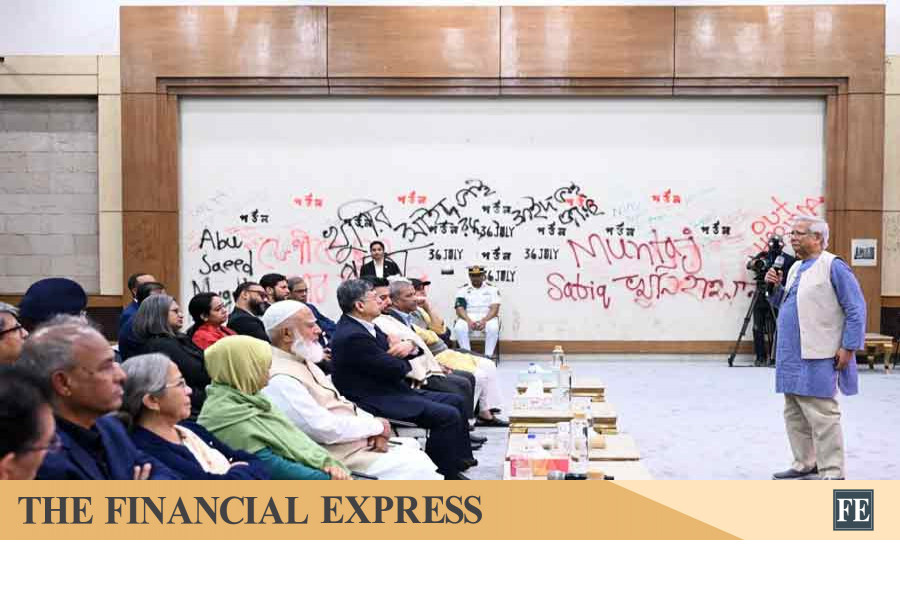
Chief Adviser Professor Muhammad Yunus on Tuesday said that if the nation becomes bewildered for any reason it will find path in the July Uprising Memorial Museum, noting it has been possible to build the museum while the blood of the July martyrs is still fresh.

โ€œIt has been possible to build this museum while the blood of the July martyrs is still fresh. It is an unprecedented example for the entire world,โ€ he said.

The Chief Adviser added: โ€œWe do not want there to be a need to build such a museum anywhere in the future. If our nation ever becomes perplexed for any reason, it will find its path in this museumโ€.

Prof Yunus made the remarks this afternoon after inspecting the progress of the final phase work of the July Uprising Memorial Museum at the Gonobhaban here, the residence of ousted Prime Minister Sheikh Hasina.

He said that every citizen of the country should come to the museum and spend a full day, and that students should visit the museum in groups.

Spending a day in this museum will help people understand what kind of brutality the nation had to go through, the Chief Adviser said, adding, if anyone wants to stay in the symbolic โ€˜Aynagharโ€™ set up in the museum for some time, a few hours, or even a full day, they should be allowed to do so.

He said by sitting inside the โ€˜Aynagharโ€™, visitors could realize the level of brutality in which the detainees were kept.

Prof Yunus further said that everyone must internalize how they can remain united so that such brutal incidents never occur again.

โ€œOn this one point, we will all remain united that this nation will never return to such brutal days again,โ€ he said.

When a brutal act was happening, the Chief Adviser said, the youth and students stood up against it and resisted it.

โ€œThey had no weapons and nothing at all. That even ordinary people can stand up fearlessly and courageously in front of weapons- this is a lesson for us,โ€ he added.

Prof Yunus expressed gratitude to Cultural Affairs Adviser Mostofa Sarwar Farooki and all those involved in the work of the museum.

Speaking on the occasion, Farooki said that it was a record that the work of this museum has reached this stage in a short time.

He said it has been made possible due to the tireless efforts of many young people, noting that many worked here for eight months without any remuneration.

Farooki expressed his gratitude to all of them.

Noting that work of several more sections will be completed in the next few days, he said the museum will be open to public before the elections slated for February 12.

โ€œThe July Museum will stand as a bearer of history and will remain a source of Bangladeshโ€™s past, present, and future politics,โ€ the cultural affairs adviser said.

He also said that the museum will play an important role in future political discourse, education and research, as well as in cultural and literary practice.

Earlier, the Chief Adviser arrived at the museum around 3pm and went around the museum that projects the reasons behind the mass uprising and the history of Awami League's 16-years' misrule under the dictatorship of Sheikh Hasina.

BNP Standing Committee member Salahuddin Ahmed, Bangladesh Jammat-e-Islami Ameer Dr Shafiqur Rahman and National Citizen Party Convener Nahid Islam as well as advisers of the interim government and victims and family members of the victims of enforced disappearance were present on the occasion.​
 
Analyze

Analyze Post

Add your ideas here:
Highlight Cite Respond

July Uprising Ordinance: Who is protected, who isnโ€™t

A breakdown of legal indemnity, case withdrawals, and how โ€˜criminal misuseโ€™ will be prosecuted

By Star Online Report

1769475755874.webp

File photo: AFP

The government has issued the โ€œJuly Mass Uprising (Protection and Liability Determination) Ordinance, 2026โ€, granting legal protection and indemnity to students and people who participated in the movement that toppled the Sheikh Hasina regime in 2024.

The Legislative and Parliamentary Affairs Division of the law ministry yesterday issued a gazette in this regard.

The draft of the ordinance was approved at an Advisory Council meeting on January 15. The ordinance, signed by the president under the powers granted by Article 93(1) of the constitution, is deemed to have come into effect retrospectively from July 1, 2024.

The ordinance designates the students and public who participated in the movement as โ€œrevolutionariesโ€.

It states that all civil and criminal cases filed against the participants for incidents occurring during the movement -- aimed at establishing democracy, human rights, and the rule of law by ending the fascist rule -- will be withdrawn. No such cases can be filed in the future.

According to the ordinance, if any case or legal proceeding is active against a participant, the relevant court will immediately withdraw it upon an application by the public prosecutor or a government-appointed lawyer, subject to government certification.

Upon such application, the accused will be immediately discharged or acquitted.

The ordinance draws a clear distinction between acts of โ€œpolitical resistanceโ€ and โ€œcriminal misuse of chaotic situationsโ€.

It states that during July and August 2024, defensive measures became inevitable to resist indiscriminate killings and armed attacks ordered by the then-government. Citing Article 46 of the constitution, the ordinance notes that it is the state's duty to protect those who participated in this resistance.

However, specific allegations of murder against any participant cannot be filed directly in court. Instead, such complaints must be submitted to the National Human Rights Commission (NHRC).

The NHRC will investigate murder allegations to determine the nature of the act.

If the investigation finds that the act was part of โ€œpolitical resistanceโ€, no legal action will proceed against the accused. However, the commission may order the government to provide compensation to the victim's family. This decision cannot be challenged in any court.

Conversely, if the probe proves that the killing was committed for personal interest or was a "criminal misuse" of the chaotic situation, the commission will submit a report to the relevant court. The court will treat this finding as a police report and initiate judicial proceedings.

A specific condition has been imposed regarding investigations: if the victim is a member of the police or any other force, no current or former officer of that force can be assigned to investigate the matter.

The government may formulate new rules as necessary to implement the objectives of this ordinance.​
 
Analyze

Analyze Post

Add your ideas here:
Highlight Cite Respond

If another revolution happens, itโ€™ll be against media and administration: Hasnat

Ownership may have changed, but their character has not, NCP leader says

By Our Correspondent, Cumilla

1769821609493.webp

Photo: Collected

NCP Chief Organiser (South) Hasnat Abdullah today came down heavily on the media, police and the administration at an election rally held in Cumillaโ€™s Laksham.

โ€œIf another revolution takes place, it will be against the media and the administration,โ€ Hasnat, the 11-party alliance candidate from Cumilla-4 (Debidwar), said as a special guest at the rally.

Ahead of the upcoming 13th National Parliamentary Election, the alliance organised three separate public rallies today in Feni, Laksham in Cumilla, and at the Cumilla Town Hall ground. Jamaat-e-Islami Ameer Dr Shafiqur Rahman addressed the rallies as the chief guest.

Criticising the media, Hasnat said, โ€œDear media colleagues, it is deeply unfortunate that even after July, some media figures have not stopped acting as brokers. Somoy TV, Ekattor TV, DBC have once again started this... I have seen that the reports written by agencies are published directly by DBC, Ekattor, and Somoy TV. Ownership may have changed, but their character has not. We will once again bring you before the peopleโ€™s court, In sha Allah.โ€

He further said, โ€œThe media only asks questions. All the worldโ€™s questions and problems are directed towards us. โ€˜Where does our income come from? Where do our living expenses come from? Where do we buy our shirts? How are political programmes organised?โ€™ All these questions are for us [NCP] and not for certain political parties. Meanwhile, all praise and admiration go to that one particular political party.โ€

Hasnat said, โ€œI see members of the administration and police present here. Your accountability is to the people. Your accountability is not to Gulshan, not to Dhanmondi. Your accountability is only to the people.โ€

Addressing the administration, he said, โ€œYou do not need to serve any political party. You are not Jamaat-e-Islami's, you are not BNP's , you are not NCP's. Your accountability is to the people of Bangladesh.โ€

He warned, โ€œIf you steal votes, if you conduct โ€˜night-time electionsโ€™ by stuffing ballots at night, if you steal the peopleโ€™s mandate, you will be accountable to your own children.โ€

Addressing police, he said, โ€œEarlier, your senior officials used you to secure their own positions and titles. They used youโ€ฆ Do not allow yourselves to be used anymore. Stand for justice and fairness, not for any political party. The people of Bangladesh will stand by you.โ€

โ€œThe media and administration are necessary to make Bangladesh happy, prosperous, and developed. We are not your enemies. We want your accountability to be people-oriented, not party-oriented."​
 
Analyze

Analyze Post

Add your ideas here:
Highlight Cite Respond

Uprisingโ€™s expectations remain unmet in last 18 months: TIB

UNB
Published :
Feb 02, 2026 23:39
Updated :
Feb 02, 2026 23:39

1770079311733.webp


Transparency International Bangladesh (TIB) on Monday noted that despite an announcement to establish the practice of disclosing the asset statements of members of the Council of Advisers and government employees, they failed to set a positive example.

According to the TIB report, the growth and influence of religion-based politics were visible, and in many cases, gender, religious, cultural, and ethnic diversity were under threat due to violence and the use of force, which is contradictory to the spirit of anti-discrimination.

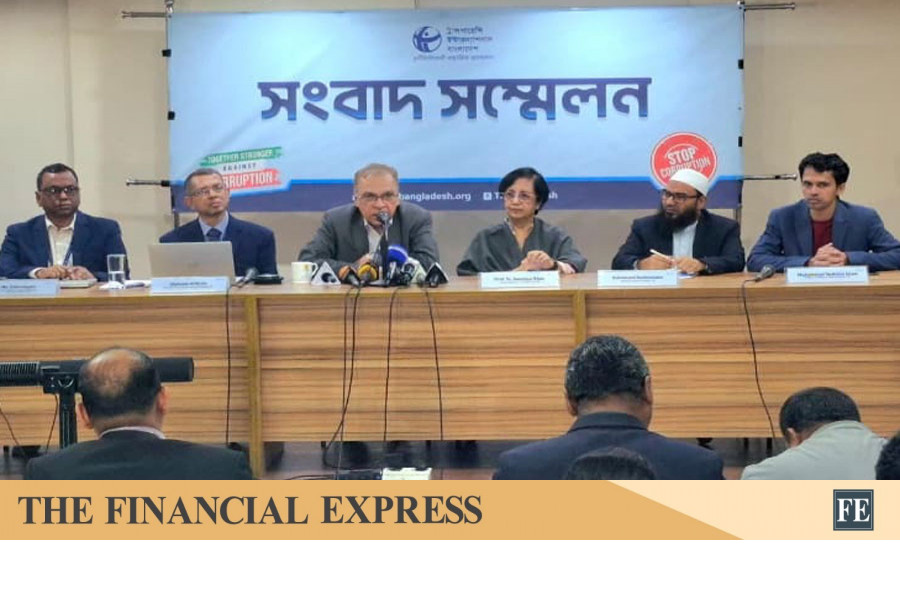
The organisation shared these observations during a press conference organised on the occasion of the publication of an observation-based research report titled โ€œOne and Half Years after the Fall of the Authoritarian Regime: Expectations and Realities.โ€

There was a failure on the part of the government to ensure equality, human dignity, justice, equal rights for all, and freedom of expression for all, TIB said.

In some cases, TIB said, the empowerment of bigots occurred due to the government's inaction or appeasement.

TIB said the free flow of information in state institutions was not ensured and there was a tendency to conceal information in government offices.

It said the issue did not receive importance in ensuring the free flow of information and the people's right to information.

One and a half years after the fall of authoritarianism, the foundation for state reform has not been strengthened; rather, the shortfall is significantly greater than the achievements, TIB said.

At the same time, it said, a failure to establish the foundation for a well-governed, corruption-free, and accountable government has been observed during this period. Furthermore, initiatives taken in the name of reform have missed their mark in almost all cases, and in some instances, the opposite has occurred relative to expectations.

Moreover, although there was a public aspiration to be committed to the people through the establishment of democracy and good governance among new and old political parties as part of a new political settlement, no visible examples of fulfilling this expectation have been observed.

Above all, TIB said political parties and the bureaucracy have not learned any lessons from the July movement.

TIB Executive Director Dr Iftekharuzzaman, Advisor-Executive Management Professor Dr Sumaiya Khair, Director of Research and Policy Division Muhammad Badiuzzaman, and Director of Outreach and Communication Division Mohammad Tauhidul Islam were present.

The report was jointly presented by Senior Research Fellows of the Research and Policy Division, Shahzada M. Akram and Md. Julkarnayeen.

According to TIBโ€™s observations, despite various internal and external adversities, significant initiatives and decisions were taken in the fields of justice, reform, elections, and state governance during the interim period, and the infrastructure for state reform, justice, and elections was created.

However, because this infrastructure was not sufficiently strong, the foundation of state reform in these three areas did not become as robust as it could have been.

While reaching a consensus with political parties on several fundamental issues of state reform in the July Charter was a significant achievement, the foundation of reform was weakened due to resistance from various influential political parties regarding essential provisions for the ultimate goal of establishing an accountable government.

Subsequently, the government's surrender to the subversive and reactionary forces of the resistant circles, particularly the influential sections of the bureaucracy, in matters of ordinances and government decisions led to the reforms missing their mark.

Additionally, there was a failure by the government to achieve progress in immediately implementable reforms, and there were no significant initiatives to implement the recommendations of the reform commissions outside the scope of the July Charter.

Furthermore, TIB said, due to a lack of interest in analyzing the risks posed by those resisting reform, the government had to surrender to these resistant forces.

Highlighting the fundamental weaknesses in various ordinances formulated by the interim government, TIB Executive Director Dr Iftekharuzzaman said recommendations helpful for establishing an accountable government were purposefully excluded from almost every important ordinance.

He said one of the main reasons for this is the government's surrender to the reform-averse bureaucracy.

Initiatives were taken to depoliticize by removing high-level officials in the name of administrative and institutional reform, but in reality, instead of the monopoly influence of one party, a tripartite influence prevails in the bureaucracy: consisting of a section of beneficiaries of the fallen authoritarian government and those blessed by the two currently active major political parties, Dr Zaman said.

Overall, an ad-hoc and โ€œpick and chooseโ€ tendency was observed in the interim governmentโ€™s decision-making process regarding reforms; on the other hand, indecision or a lack of firmness in implementing decisions was prevalent.

Additionally, he said, a lack of coordination among state-responsible forces was seen, which created a sense of insecurity among the public.

Noting that the interim government considered the responsibility of establishing the foundation of reform only as fulfilling an expectation from the beginning, and did not analyze the adverse situations and risks or seek ways to resolve them during implementation, he said, the government could not implement the proposals for immediate action within its jurisdiction as promised; those that were done were superficial.

Dr Zaman said the position of political forces against the establishment of an accountable government system during the formulation process of the July Charter has been reflected in the ordinances approved by interim government.

โ€œCommendable progress has been made in the reform of the judicial system. On the other hand, alongside the slow pace and procedural weaknesses in the judicial process, the line between justice and revenge has become blurred,โ€ he said.

As a result, Dr Zaman said, while the right to a fair trial for the accused is being curtailed indiscriminately on one hand, the possibility of holding the actual criminals accountable is becoming slim on the other.

The TIB Executive Director said in terms of achieving the goals of the new political and social settlement, the weight of the shortcoming is heavier than the progress.

The July Charter has been weakened and the possibility of implementation has been jeopardized due to the uncompromisingly hostile position of the major political parties regarding the proposed recommendations in most fundamental sectors of reform, particularly in ensuring accountability to the people.

In response to a question, describing the picture of the last one and a half years in ensuring media freedom and the safety of media personnel and institutions as deeply disappointing, Dr. Zaman said, the institutional security of the media has come under more severe pressure than before and has faced pressure from quarters outside the state machinery.

The government has failed to take timely steps to prevent this, and has even given impunity to forces opposing media freedom.

Additionally, he said, the interim government has failed to take a stand and adopt strict measures in favor of ensuring equal rights and coexistence for all citizens regardless of gender, religious, ethnic, and cultural identity.

In particular, the government devalued the report of the Womenโ€™s Commission by publicly denying its involvement with the report and over-empowered those forces who are against women's empowerment.โ€™

On the issue of the role of civil society, it was seen that while special importance was given to civil society in various reform activities at the beginning of the interim government, a tendency to ignore them was observed later. Recommendations from civil society were ignored in various reforms.

On the other hand, although a significant portion of civil society was within the government, they failed to play the expected role, resulting in a negative perception of civil society among the general public.

Additionally, alongside challenges to media freedom, there was a visible failure to ensure the security of journalists and media institutions during the interim government's tenure.

The freedom and security of the media are now held hostage by over-empowered non-state forces alongside the state. On the other hand, the existence of internal enemies within the media also persists.​
 
Analyze

Analyze Post

Add your ideas here:
Highlight Cite Respond

Members Online

Latest Posts

Back
PKDefense - Recommended Toggle