[🇧🇩] Monitoring Bangladesh's Economy

Afghanistan Albania Algeria Andorra Angola Antigua Austria Azerbaijan Bahamas Bahrain Bangladesh Barbados Canada China Egypt Finland Germany India Iran Israel Japan Lebanon North Macedonia Pakistan Palestine Qatar Russia Syria Turkey Ukraine United Kingdom United States Yemen
[🇧🇩] Monitoring Bangladesh's Economy
1K
39K
More threads by Saif

G Bangladesh Defense

Economy needs more private investment
Govt and other stakeholders must work together for its growth
1736124397207.webp


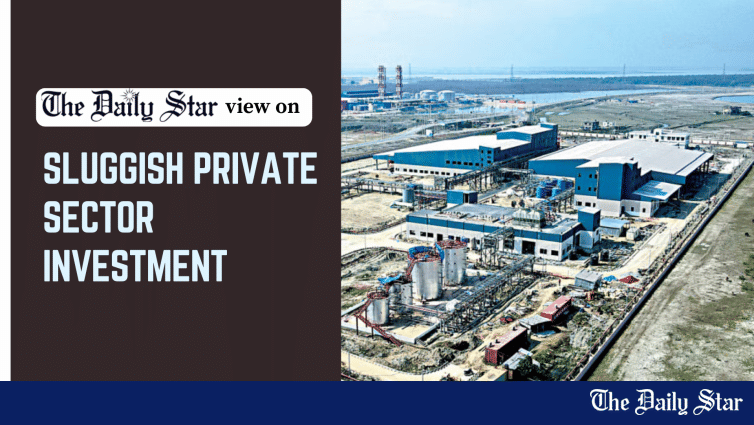
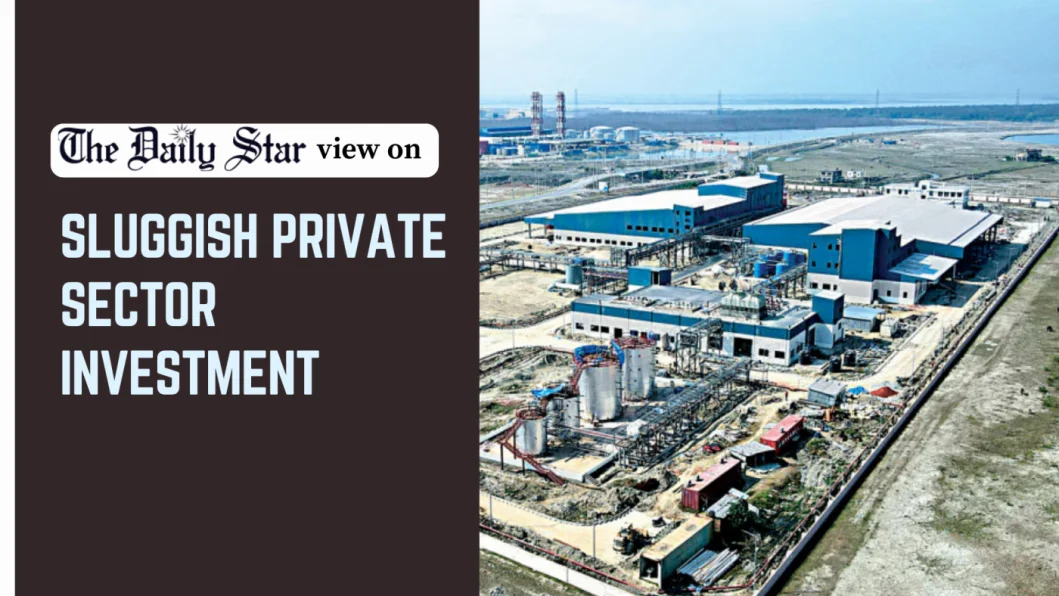
It is worrisome that private sector investment isn't rising in the country, even though our foreign exchange reserves demonstrate promising stability, driven by record remittance inflows and growing exports. According to the latest data from the Bangladesh Bank, private sector credit grew by 9.86 percent year-on-year in August but slowed to 7.66 percent in November of the previous year. Furthermore, during the July-November period of the current fiscal year, the settlement of letters of credit (LC) for capital machinery imports declined by 21.9 percent compared to the same period in the previous fiscal year, while LC openings for such imports fell by 26.45 percent. Economists have identified political instability as a primary factor behind the lack of private investment activity, along with other contributing factors. They also warn that this sluggish growth could persist for another year unless the government implements effective measures.

Since taking office, the interim government has introduced several initiatives to stabilise the economy. For the first time since the interim administration assumed power in August, the country's forex reserves surpassed $21 billion, reaching $21.36 billion on December 31. This achievement is largely attributed to high remittance inflows, creditable to both our overseas workers and government initiatives. Additionally, Bangladesh's exports reached $50 billion in 2024, reflecting an 8.3 percent year-on-year increase. In December alone, exporters earned $4.62 billion, an 18 percent rise compared to the same month the previous year. These successes have been facilitated by the central bank's foreign currency policies and stable exchange rates.

However, such progress may not be sustainable without an increase in private investment. The country's private investment levels have been low for several years, and the current political uncertainty has exacerbated the challenges. Rising business costs, high interest rates, liquidity shortages, and a distressed banking system are key barriers to growth. Additionally, many business owners with ties to the previous government have ceased operations or are struggling, further deterring new investments. Persistent high inflation and interest rates have also increased business expenses, making it difficult for small and medium-sized enterprises to secure loans and expand.

To address these challenges, the government must prioritise maintaining political stability while taking immediate steps to curb inflation and eliminate barriers to doing business. Many local and foreign investors believe that certain rules and regulations from the National Board of Revenue and the Bangladesh Bank hinder investment. The government should engage with investors and other stakeholders to make these regulations more business-friendly. Furthermore, fostering greater collaboration with the private sector in policy-making during ongoing reforms is crucial.​
 

From Tk 600 to Tk 36,000cr: The MGI story

1736124702166.webp

Mostafa Kamal

The Meghna Group of Industries (MGI), which markets products under the brand name "Fresh", attained a turnover of $3 billion (over Tk 36,000cr) in 2024 after embarking on its journey around 50 years ago.

The entity had opened in 1976 with capital of around Tk 600 to Tk 650.

Around Tk 300 of this capital was availed as a loan on mortgaging some land, said Mostafa Kamal, chairman and managing director of the group, in a recent interview at his office in Gulshan, Dhaka.

He took to doing business at a young age with no big plans. He sought to fulfil his childhood dream of becoming a businessperson, and that inspiration came from seeing his uncle's weekly trade of betel nuts.

He availed a trade licence under the name "Kamal Trading Company" showing the address of his brother's roadside shop at Sher-e-Bangla Nagar.

From vehicle business to demand orders, buying and selling was his primary business. Some of the business was profitable and some was not, Kamal said.

In 1989, he established his first factory, Meghna Vegetable Oil, to refine edible oil. From his own profit, he started diversifying the business, and now the group has 54 factories with four more to open soon.

"I targeted to expand my business to my backward and forward linkages when I felt that sometimes it became difficult to get necessary raw materials for my products," he said.

Kamal once felt that he had to face a huge queue to get cartons, and it delayed his product delivery. At that time, he planned to set up a carton factory.

"I consider the fact that whenever there is a crisis, there is an opportunity, so why should I not take up the opportunity," Kamal said.

"When we realised that we need drums, cartons, and shipping for importing and exporting our products, we expanded our business towards all of these from our basic business of edible oil," he added.

Regarding monitoring, Kamal said he still monitors his company's purchases and other operations with his own eyes, even though this is a big task.

"I do it so that I can give good advice and add value from my long experience, and I believe savings in purchases are earnings."

On whether the group defaulted bank loans, Kamal said he once defaulted in 1983 when he imported palm oil.

On incurring a huge loss in this transaction, he failed to repay bank loans on time and had to make the payment from income generated afterwards.

After that, he never defaulted on bank loans, claimed Kamal, adding that he sometimes faced problems due to local and global crises such as Covid-19.

However, he always convinced banks to give higher amounts of loans so that he does not need to reschedule the loans and is able to repay them once the business becomes profitable again, he said.

At present, most of the loans of the conglomerate are availed from abroad as it is easy to get long-term loans at low cost from foreign sources.

However, Kamal informed that recent exchange rate fluctuations have had a big effect on the local value of these foreign loans.

Regarding the country's business climate, the businessperson said the mindset of bureaucracy is still not conducive for business.

At least six months is required to get all the necessary licences for a business in Bangladesh. But in Vietnam, a businessperson can get all the licenses within just 30 days, he added.

Kamal suggested that to create a climate favourable for business, government policies should be favourable and uninterrupted energy and adequate infrastructure should be made available.

On whether syndicates hiked commodity prices, the chairman and managing director of the Meghna Group of Industries said it was not possible to hide international commodity prices, imports and production in the present era of information and technology.

"So, this word has become a buzzword only, and it may prevail at the retail level, but it is not possible at the manufacturing level," he said.

On the other hand, several government agencies always monitor the producers of commodities and so, it is not possible to maintain a syndicate, Kamal added.

To celebrate its 50-year journey, Meghna Group organized an event at its head office in Gulshan.

Its Vice Chairperson Beauty Akter and directors Tanjima Mostafa and Tasnim Mostafa were present while directors Tahmina Mostafa and Tanveer Mostafa joined online.

At this event, Mostafa Kamal thanked his colleagues for joining the journey. At one point of talking about his successes, Kamal even broke into tears and expressed hope to go further and attain more business.

The company is exporting to more than 52 countries and employs over 50,000 people. Apart from this, it has 6,650 distributors all over the country.​
 

NBR plans to phase out tax exemptions

While hiking value-added tax (VAT) on 43 goods and services, the National Board of Revenue (NBR) is also focusing on widening income tax coverage by phasing out exemptions to raise the tax to GDP ratio.

"Along with the VAT, various steps are being taken to increase the tax base in the case of income tax," the NBR said in a statement on Saturday night.

As a part of ongoing efforts to phase out the practice of providing income tax exemptions, several provisions have already been repealed or amended, the statement said.

"Additional measures are currently underway," it added.

On top of that, the tax administration is now reviewing plans to phase out existing exemptions for poultry farming, hatcheries and processors, including breeders, and feed millers.

"Along with the VAT, various steps are being taken to increase the tax base in the case of income tax," NBR said in a statement

Currently, the first Tk 10 lakh of income is tax-free, while a 5 percent tax applies to the next Tk 10 lakh. Incomes exceeding Tk 20 lakh but up to Tk 30 lakh are subject to a 10 percent tax rate.

Finally, a 15 percent tax rate is applied to incomes above Tk 30 lakh.

"We are yet to take any final decision. We are reviewing the issue," said an official of the NBR.

"If we want to raise the tax to GDP ratio, we have ultimately no option but to phase out the existing exemption. So, we are moving very carefully," he added.

In the current fiscal year, the NBR has estimated that tax exemptions would be worth Tk 163,000 crore, all aimed at easing the pressure on individuals and facilitate higher economic growth.

The estimated tax expenditure for FY25 is 11 percent higher from the roughly Tk 147,000 crore spent in fiscal year 2023-24, which accounted for 2.91 percent of the country's gross domestic product (GDP).

Last month, NBR Chairman Md Abdur Rahman Khan also said they already started to phase out the exemption, including removing power plants from the list.

For instance, the NBR has cancelled tax exemption facility for a power company owned by S Alam Group and also for foreign ocean-going ships in December.

Recently, the advisory council of the interim government has decided to raise VAT on 43 goods and services along with raising taxes on items like airfares, cigarettes, medicine, detergents, and soaps – an unprecedented move in Bangladesh in the middle of the fiscal year.

The VAT hike is being linked to conditions set by International Monetary Fund (IMF) for its ongoing $4.7 billion loan programme for Bangladesh.

Besides, the NBR is striving to increase government revenues by an additional Tk 12,000 crore.​
 

‘Gone are those days of subsidies, cheap money and low interest rates’: Finance adviser
FE Online Report
Published :
Jan 05, 2025 18:21
Updated :
Jan 05, 2025 19:05

1736127008970.webp


Finance Adviser Dr Salehuddin Ahmed on Sunday made it clear that the government would not continue to provide subsidies and cheap money to the private sector.

He also mentioned that the interim government would leave just a footprint of reform since it could not complete the reform programme within its tenure because it would depart soon.

“They want confidence. They want assurance. They want support. They want all kinds of concessions. One thing I very clearly said, gone are those days of subsidies, cheap money, and low interest rates. These are not the signs of a competitive economy,” the finance adviser told a discussion meeting on ‘Enhancing Saudi-Bangla Economic Enhancement’ organised by the foreign ministry.

“Please don’t expect that the government will do everything,” he urged the businesspeople.

Dwelling on the policy reforms, the finance adviser said the government would not be here for a very long time.

“Our plan is to retire very soon, retire or leave very soon. But we want to leave a footprint. That is our challenge, as we cannot finish everything within one and a half year, or two years,” Dr Salehuddin said.

Citing the example of the RMG industry, Dr Salehuddin, who is also a former governor of the central bank, said that despite having started its journey long ago, the sector still wanted incentives.

Brushing aside apprehensions that foreign buyers would leave Bangladesh, he said that leading global buyers like GAP, Mark Spencer and H&M had assured him that they would remain.

He said that donors were very positive about this government and have already committed 1.6 billion dollars recently. “We are expecting another 700 million dollars soon,” he added.

Terming trade as the most important vehicle for economic development, he said that it was essential to improve bilateral trade ties with countries like Saudi Arabia for boosting the economy.

Dr Salehuddin said that the government was reviewing the timeframe for the graduation and was preparing for a soft transition.

He pointed out that the government was working to create an enabling environment for businesses and investors.

In this regard, he recalled how world-renowned companies like Saudi Aramco and Samsung were not given due importance during the previous regime, which forced them to move to other countries.

He stressed the need for correcting wrong policies to ensure a proper investment climate, saying that while the challenges in this regard were formidable, they were also surmountable.

Addressing the programme, foreign adviser Touhid Hossain said that the current government was committed to making things easier for investors.

“The government is working to create a better atmosphere and a welcoming environment for entrepreneurs,” he said.

He underscored the need for developing the skills of people before sending them to countries like the Kingdom of Saudi Arabia (KSA).

The foreign advisor noted that the same number of people could earn much greater incomes and contribute much more to the country if they were given training.

Foreign Secretary Md Jashim Uddin, who presided over the meeting, said that such discussions contribute to enhancing bilateral engagement.

Secretary (East) of the foreign ministry Nazrul Islam delivered the welcome speech in the meeting.

Saudi Ambassador in Dhaka Essa Yousef Alduhailan stressed the need for addressing challenges such as logistics bottlenecks and tariff barriers, as outlined in the report presented in the meeting.

“I also take this opportunity to reaffirm the kingdom’s unwavering commitment to supporting Bangladesh’s development aspiration and strengthening our partnership for shared prosperity,” he said

“Actually, the Saudi Bangladeshi relationship is a multi-dimensional relationship” he added, emphasising that Saudi Arabia would always stand and support Bangladesh ‘critical journey’ to become a developed country.

He noted that from 2020 to the end of 2023, more than 30 high-level visits took place, including ministerial visits and delegations.

“Over 160 Bangladeshi businessmen have visited Saudi Arabia to explore potential opportunities, with significant discussions on bilateral trade and investment”.

Expressing his government’s commitment to accommodating skilled workers from Bangladesh, he said it would provide significant economic benefits to Bangladesh.

While presenting the report at the discussion, Masrur Reaz, Chairman and the CEO of Policy Exchange, Bangladesh, said that as Saudi Arabia looks for new opportunities, Bangladesh presents several potential sectors for investment, including green energy, fertiliser, electronic manufacturing, infrastructure and logistics, petroleum refining and petrochemical products, tourism and hospitality, education and skills development, shipping lines, and construction.

These sectors offer promising avenues for Saudi Arabia to diversify its investment portfolio while contributing to the economic growth and development of Bangladesh, he added.

"Saudi Arabia is the destination for roughly 36 per cent of total overseas employment for Bangladesh, and the cumulative number of people leaving for KSA has roughly doubled since 2016.

"Saudi Arabia has long ranked as the largest origin of official remittances to Bangladesh, and it [Bangladesh] is the 7th largest recipient of remittances, with higher employment from KSA.”

“Despite these challenges, Saudi Arabia remained a dominant source of remittance income for Bangladesh,” he said, adding that these substantial inflows from key countries highlight the critical role of the Bangladeshi diaspora in bolstering the national economy, emphasising the importance of remittances for household incomes and overall economic stability.

He recommended an improvement in regulatory environment for businesses through modernising archaic laws, including the Companies Act, Bankruptcy Act, and tax policies.

He also suggested strengthening contract enforcement (ADR), faster disposal of commercial cases, business taxation, and strengthening regulatory governance through the introduction of systematic tools such as RIA.

The report recommended strengthening export competitiveness through broad-based global value chain capabilities.

It also advised reducing average rates of protection, harmonising tariff schedules across all intermediate and final goods, adopting a national environmental and social compliance framework and implementing efficient trade facilitation.


ADB to provide $1b annually for Bangladesh’s development
Yun Jeong said ADB will provide Bangladesh with US$ 1 billion annually in concessional financing over the next five years
BSS
Dhaka
Published: 05 Jan 2025, 18: 34

1736128809022.webp


ADB Country Director Hoe Yun Jeong meets Environment, Forest and Climate Change Adviser Syeda Rizwana Hasan at the Forest Department, Dhaka on 5 January 2025 PID

Asian Development Bank (ADB) will provide US$ 1 billion to Bangladesh annually in concessional financing over the next five years.

ADB Country Director Hoe Yun Jeong came up with the assurance when he met Environment, Forest and Climate Change Adviser Syeda Rizwana Hasan at the Forest Department Sunday.

During the meeting, they discussed ADB’s commitment to supporting Bangladesh’s climate resilience and environmental sustainability.

Rizwana emphasised ADB’s increased focus on climate-focused and socially inclusive activities over traditional infrastructure projects.

Highlighting her government’s ambitious plans to restore eight major rivers across the country’s eight divisions, she urged ADB to prioritise river cleaning initiatives around Dhaka.

The environment adviser also stressed the need for tangible actions on the ground instead of merely formulating action plans.

She called for concessional loans and sought ADB’s support in addressing key environmental challenges, including solid waste management, sewage treatment, salinity intrusion, waterlogging, and human-elephant conflicts.

Yun Jeong said ADB will provide Bangladesh with US$ 1 billion annually in concessional financing over the next five years.

He assured enhanced financial support, including grants, to advance Bangladesh’s environmental goals.

The ADB country director expressed strong interest in river cleaning projects. In addition, he highlighted ADB’s commitment to increasing community engagement and public consultations during project implementation.

The environment secretary, chief conservator of forests and representatives from ADB were present at the meeting.​
 

Professor Yunus asks BEPZA to promote Bangladesh abroad
Staff Correspondent 06 January, 2025, 16:13

1736213655791.webp

Chief adviser Muhammad Yunus receives BEPZA’s annual report from executive chairman Major General Abul Kalam Mohammad Ziaur Rahman in an event at the CA’s office at Tejgaon in the capital Dhaka on Monday. | PID/Focus Bangla photo

Chief adviser Professor Muhammad Yunus on Monday asked the Bangladesh Export Processing Zones Authority to create a team for economic diplomacy and help promote Bangladesh abroad.

He underlined the need for promoting Bangladesh abroad in collaboration with the foreign affairs ministry to bring more investments to the country’s industrial sectors.

‘Create a team for economic diplomacy and promote Bangladesh abroad,’ Professor Yunus told the BEPZA officials, asking the body to collaborate with the Ministry of Foreign Affairs for the purpose.

The chief adviser issued the directive when BEPZA submitted its annual report for the 2023-24 financial year to him at his Tejgaon office in Dhaka, according to a press release from the CA press wing.

He also asked BEPZA officials to engage Bangladeshi students studying abroad, especially in China and Japan, to help investors overcome language barriers before making investment choices.

BEPZA executive chairman Major General Abul Kalam Mohammad Ziaur Rahman said that they were already receiving positive responses from investors following the July-August uprising in Bangladesh and the repeatedly changing global political landscape.

‘In the past three weeks, we have received a $135 million investment proposal from the Chinese investors. Talks are underway for more investments,’ he told the chief adviser.

He said that eight export processing zones are currently operational in Bangladesh, housing 452 factories.

There are 136 more factories currently under construction in the zones.

Among the operational factories, over 100 are owned by the local investors, and the rest are mostly joint ventures.

Of the factories, 52 per cent produce ready-made garment items, textile items, and garment accessories. The remaining factories are multifarious, producing miscellaneous items such as coffins and toys.

The BEPZA executive chairman informed the chief adviser of some of the demands of the investors, including uninterrupted gas and power supply, bonded warehouse facilities in the BEPZA areas, Chattogram-Sanghai direct air connectivity, and visa counsellor service in the Chinese city of Shanghai, said the release.

The chief adviser asked the authorities to explore the possibility of setting up solar power plants in export processing zones and work on gas exploration and develop a distribution system.

He also asked the authorities to see if Bangladesh could benefit from importing energy from neighbouring countries.

Special envoy to the chief adviser Lutfey Siddiqi, who was present on the occasion, put an emphasis on targeted economic diplomacy.

Bangladesh Investment Development Authority chairman Ashik Chowdhury said that Bangladesh should incentivise investors to invest in export processing zones.

‘We should make BEPZA and BEZA more attractive and promote the facilities available in the area across the globe to bring more investments,’ he said.

The principal secretary to the chief adviser, Md Siraj Uddin Miah, was also present.​
 

Cryptocurrencies in Bangladesh: a growing shadow economy
Mir Md Tasnim Alam
Published :
Jan 06, 2025 21:50
Updated :
Jan 06, 2025 21:50

1736215523507.webp


Cryptocurrencies like Bitcoin and Ethereum have introduced a transformative way of handling money, offering a decentralized, digital alternative to traditional currencies. Built on blockchain technology, these virtual currencies use cryptography for secure transactions, making them resistant to manipulation by central authorities. Unlike traditional currencies that are issued and controlled by governments, cryptocurrencies operate outside of any centralized regulation, which is both what makes them unique and, at times, controversial.

In Bangladesh, cryptocurrencies remain a contentious issue. Officially, the government has restricted their use for transactions due to concerns over money laundering and unregulated trade. Despite this, there is a thriving underground market where individuals regularly engage in cryptocurrency trading, largely unnoticed by the authorities. Apps such as Binance and KuCoin, which are designed for trading crypto, are easily accessible through the Google Play Store and Apple App Store in Bangladesh. This unrestricted availability, combined with the lack of strict verification requirements, allows users to trade cryptocurrencies freely, including large sums, despite the official restrictions.

The process of acquiring cryptocurrencies in Bangladesh typically happens in one of two ways. One method involves purchasing crypto using international credit or debit cards that are endorsed in US dollars. This allows banks to track the movement of funds and potentially identify individuals involved in crypto trading. However, there is also a more secretive method that involves local agents. These agents, scattered across the country, buy and sell cryptocurrencies like Bitcoin and USDT (Tether) in exchange for Bangladeshi Taka. They charge a small commission on each transaction, making a profit from the buy-sell spread. Investors buy cryptocurrency with the hope that its value will appreciate and later sell it back to these agents, converting their holdings into Taka. This process mirrors the operations of the stock market, with one key difference: there is no central authority regulating the trade, nor is there any taxation on the transactions.

However, the darker side of the cryptocurrency trade in Bangladesh cannot be ignored. Many individuals are using cryptocurrencies as a tool for money laundering, transferring funds across borders with little to no oversight. The process typically works like this: a person buys cryptocurrency from a Bangladeshi agent using Taka, then sells it to an agent in another country, such as the USA, converting their cryptocurrency into foreign currency. The foreign agent then deposits the equivalent amount in dollars into the individual's bank account, completing the illicit transaction. This decentralized nature of crypto trading, along with the use of anonymous wallets like TRC20, makes it difficult for authorities to trace the flow of money and monitor suspicious transactions.

In addition to money laundering, the country has witnessed an alarming rise in Ponzi schemes and scams in the cryptocurrency space. One of the most notable cases was the MTFE scam, which drew thousands of people with promises of daily returns of 5 per cent on their investments. Unlike legitimate platforms like Binance or KuCoin, MTFE did not allow users to buy or sell crypto using Taka or traditional bank accounts. Instead, investors were required to transfer USDT from other crypto exchanges into their MTFE accounts via the TRC20 wallet. Eventually, MTFE disappeared overnight, taking with it the funds of many unsuspecting investors. Similar platforms, such as MT4, MT5, and Exness, continue to operate in Bangladesh, luring individuals with the promise of quick profits. These operations are often unsustainable and operate under the guise of legitimate businesses, but eventually, they too will collapse, leaving investors with nothing.

Further complicating the situation are online gambling platforms that accept cryptocurrencies as payment. After purchasing crypto from local agents, users often transfer their funds to these gambling apps, where they engage in high-risk betting. While some may win, the majority lose, contributing to a larger pattern of financial instability. What is clear, however, is that the crypto market in Bangladesh is not only unregulated but also growing increasingly volatile and risky.

To combat these issues, the government must take decisive action. One key step would be to hold cryptocurrency agents accountable for their activities, as they play a significant role in facilitating illegal trades. If crypto trading is illegal, it is crucial to question why platforms like Binance and KuCoin continue to operate in the country. It is important to remember that cryptocurrency trading is not illegal everywhere. In countries like the USA, individuals are required to link their crypto accounts to their Social Security Number (SSN), ensuring transparency and proper taxation of all profits. Bangladesh could adopt a similar system to regulate cryptocurrency trading, creating a framework that ensures accountability and oversight. If not a complete ban, such measures could strike a balance between harnessing the potential of cryptocurrencies and safeguarding the country's financial stability.

The government's primary concern should be safeguarding of the nation's financial stability. While global figures like Lionel Messi may sport jerseys emblazoned with the Binance logo, this should not distract the government from its responsibility to protect its economy. The rapid growth of crypto agents and the widespread involvement of people in these shadowy transactions are troubling signs. If the country is to maintain control over its financial system and ensure the safety of its citizens, decisive action is needed to curb the rise of unregulated cryptocurrency trading.

Scientist, Satelytics Inc., USA​
 

Bangladesh’s current situation stable for investment: EIB VP
Bangladesh Sangbad Sangstha . Dhaka 07 January, 2025, 21:36

1736296209733.webp


Visiting European Investment Bank vice-president Nicola Beer holds meeting with foreign adviser Md Touhid Hossain at foreign ministry in Dhaka on Tuesday afternoon. | BSS photo

The visiting European Investment Bank, vice-president Nicola Beer, on Tuesday said that her bank was backing Bangladesh interim government and the country’s current state was suitable for European investment.

‘The current situation (in Bangladesh) . . . I see it’s stable for investment, so we go on with what we already decided together (with Dhaka). So, this was the reason why I was speaking about further signatures during this year’s time,’ she told reporters after holding a meeting with foreign adviser Md Touhid Hossain at the foreign ministry in Dhaka on Tuesday afternoon.

Responding to a question regarding the upcoming election, Beer said that it is up to the Bangladeshi ‘citizens and bodies to decide on the moment of elections’.

The EIB vice-president began her three-day Bangladesh visit on Tuesday to review the existing partnerships, discuss various issues and explore expanded investment cooperation with the interim government.

Beer said that the EIB was closely aligned with the Bangladesh interim government’s programme of reforms and plans for leading the country to elections soon.

‘I think we are quite near when it comes up for the programme of the interim government to reform and lead it to elections, quite soon,’ she said.

The EIB vice president said that her bank supported this interim government’s efforts and was working with various ministries to identify priority investments, particularly in sectors like water and sanitation.

‘We now can also speed up what are the priorities of investments here,’ she added.

Beer highlighted the EIB’s ongoing collaboration with Bangladeshi authorities to finalise significant projects within the year and expressed optimism about furthering investment opportunities.

‘I only can assure you that the European Union as a whole is standing behind this interim government together with the Bangladeshi people, to serve the Bangladeshi citizens for the future to come,’ she added.

The EIB vice-president also underlined the importance of energy, water and sanitation as pivotal sectors for development.

‘Energy is a crucial part of our agenda. We have a framework loan, we want to bring it really down now also in the project and this is something we will look further and try to speed up,’ she added.

Beer also expressed her eagerness to engage with local ministries, economic leaders, and citizen groups to understand their challenges and aspirations.

Responding to a query on specific investment proposals, Beer said that those were still under discussion.

‘We reaffirm the support of the European Union and also of its bank as European Investment Bank. And now we’ll see the different projects and maybe also new proposals with the other ministries and sectors. So maybe you ask me in two days’ time,’ she said.

Regarding international relations, Beer emphasised the EIB and European Union’s shared goal of strengthening Bangladesh’s regional standing.

Reaffirming the European Union’s unwavering support for the Bangladeshi people, she said that the EU wanted to position Bangladesh as a strong nation on equal footing in the region.

The EU ambassador to Bangladesh Michael Miller, among others, accompanied her during the meeting with adviser Hossain.

Beer, during her stay in Dhaka, is also scheduled to hold meetings with finance and planning adviser Salehuddin Ahmed, power, energy and mineral resources; railways adviser Muhammad Fouzul Kabir Khan; environment, forest and climate change, water resources adviser Syeda Rizwana Hasan, local government, rural development and co-operatives adviser Asif Mahmud Shojib Bhuyain and Bangladesh Bank governor Ahsan H Mansur.

She will also have a breakfast meeting with the representatives of the KfW, AfD, ADB, IMF, WB, IFC and JICA.

The vice-president will have interactions over dinner with the European Union Chamber of Commerce in Bangladesh.

She is likely to visit Ghandharbpur Water Treatment Plant on Thursday before wrapping up her visit.

The EIB, owned by the 27 EU member states, is the world’s largest multilateral financial institution and serves as the European Union’s investment bank.

The EIB finances and invests both through equity and debt solutions companies and projects that achieve the policy aims of the European Union through loans, equity and guarantees.

Since its establishment in 1958, the EIB has invested over a trillion euros in projects in Europe and countries worldwide.​
 

Latest Posts

Back