[🇧🇩] Monitoring Bangladesh's Economy

[🇧🇩] Monitoring Bangladesh's Economy
1K
33K
More threads by Saif

G Bangladesh Defense

Four-tier plan taken up to reform fragile financial sector

FE REPORT

Published :
Apr 22, 2026 09:07
Updated :
Apr 22, 2026 09:07


1776903127307.webp


Bangladesh's total external-debt buildup touched US$78.067 billion as of last February, the finance minister apprised parliament Tuesday while outlining their new government's financial-reform recipe.

To a question, Amir Khasru Mahmud Chowdhury said between the 2008-09 and 2025-26 fiscal years, the previous government had taken external loans amounting to $85.993 billion.

The government has taken a four-tier, targeted plan to reform the country's fragile financial sector and restore economic stability, the finance minister told the House in response to a question from Noakhali-5 MP Mohammad Fakhrul Islam.

"As part of this, a medium-term macroeconomic framework up to the 2028-29 fiscal year has been approved, coordinating monetary and fiscal policies," he said, adding that the strategy was finalised at a Coordination Council meeting held at the Finance Division on April 10.

The minister said, "To maintain macroeconomic stability, the policy interest rate has been kept at 10 per cent, which is having a positive impact on controlling inflation. Food inflation, which rose to 14.10 per cent in July 2024, declined to 8.24 per cent by the end of March 2026."

Regarding the country's foreign-exchange reserves, he said as of 15 April 2026, the total reserves stood over $34.87 billion, or $30,201.71 million according to IMF's BPM6 method.

He also notes that Bangladesh Bank would provide special support to importers and general businesses facing capital shortages due to the depreciation of the taka.

"To keep economic activities dynamic, the central bank has also taken separate action plans for distressed productive sectors."

Finance Minister Chowdhury further says the government is forming a "Capital Market Reform Commission" to restore investor confidence in the stock market. Plans are also in place to modernise the market system using blockchain technology and to develop a strong bond market.

He adds that to restore discipline in the financial sector, targets for money supply (M2) and private-sector credit growth for the 2026-27 fiscal year have been reset in line with economic growth.

The government is also launching an "Investment Gateway" to make it easier for expatriates to invest and is taking legal measures to protect investors.

In a statement made in response to a question from MP Shamsur Rahman Shimul Biswas, the minister told parliament that between the 2008-09 and 2025-26 fiscal years, the previous government had taken external loans amounting to $85.993 billion. During the same period, $22 billion in principal and $8.6 billion in interest were repaid.

Responding to a question from Brahmanbaria-2 MP RumeenFarhana, he said as of 2026, the outstanding external debts of the government stand at $78.067 billion.

"The Economic Relations Division repays foreign loans on behalf of the government. Each fiscal year, projections are made for total repayment costs, including both principal and interest, and the required amount is allocated in the national budget. Loan repayments are being made throughout the year according to schedule using these budgetary allocations," the minister adds.

The minister also faced criticism over the present government's bank-borrowing spree. RumeenFarhana strongly criticised what she described as the "uncontrolled" pace of the government's bank borrowing and the fragile state of revenue collection.

She expressed concern over the future of the economy, stating that within just 52 days of taking office, the new government borrowed Tk 445 billion from the banking system.

While raising a supplementary question, she criticised the current economic situation.

She said the budget target for bank borrowing in the current fiscal year was Tk 1.04 trillion, but by early April, it had already exceeded 108 per cent of the target, reaching Tk 1.12761 trillion.

Citing a Bangladesh Bank report, she also mentions that revenue collection is lagging behind the target by about Tk 75 billion. "To cover the deficit, the government is becoming overly dependent on bank borrowing."

She asks the finance minister whether the government has any specific plans to expand the tax base or increase revenue.

The finance minister replies that the large volume of borrowing is largely a continuation of liabilities left by the previous government, describing it as a "carryover."

He notes that the current government has been in office for only two months and argues that the borrowing figures should not be seen as its own performance.

He assures parliament that the government's core economic policy is to gradually reduce reliance on borrowing from domestic banks, and that this will be reflected in the upcoming budget.

The minister also observes that businesses in the country are currently facing an "existential crisis" and industries are struggling with multiple challenges.

"It takes some time to restore the tax-to-GDP ratio to its previous level." Although this ratio declined during previous governments, he expresses optimism that the current government will efficiently strengthen the economy once again.​
 

Govt takes initiative to launch PayPal to boost employment: PM

BSS
Published: 22 Apr 2026, 22: 31

1776904021867.webp

Prime Minister Tarique Rahman spoke during the JS session on 22 April PMO

Prime Minister Tarique Rahman today said effective initiatives have been taken to introduce the much-anticipated online payment gateway PayPal to create large-scale employment through the expansion of information technology in the country.

He said this in response to a question from treasury bench lawmaker from Natore-4 Md Abdul Aziz in the Jatiya Sangsad (JS) here with Speaker Hafiz Uddin Ahmad, Bir Bikram, in the chair.

The premier informed that a master plan has been adopted to issue identity (ID) cards to 200,000 freelancers over the next five years and to train several thousand youths in advanced technologies.

Tarique Rahman said various organisations and departments under the Information and Communication Technology (ICT) Division have undertaken multiple plans and activities aimed at generating employment through the expansion of IT.

He said the Department of ICT will impart training to 1,000 individuals over five years to develop them as freelancers and provide ID cards to 200,000 freelancers during this period.

A total of 7,500 freelancers have already been issued ID cards and the programme is ongoing, he added.

The leader of the house said 2,400 people will be trained in advanced technologies such as artificial intelligence (AI), machine learning (ML), and virtual reality in 2026 through Bangladesh Hi-tech Park Authority.

To accelerate investment and employment, 83 services are currently being provided online, with plans to add 10 more services within the next year, he said.

The premier said a committee has already been formed to ensure the effective operation of hi-tech or software parks and ICT centers, and to take necessary steps for launching PayPal services in Bangladesh.

He said over the next five years, around 1,000 undergraduate and graduate students will receive IT training in 20 batches through Bangladesh Computer Council (BCC).

Initiatives have also been taken to provide training to 5,020 job-seekers and students in areas such as AI, mobile app development, Python programming, data analytics, and cyber security, including short courses as well as one-year diploma and postgraduate diploma programmes, he mentioned.

He said initiatives have also been taken to provide basic computer training to about 700 people with special needs to help them become self-reliant.

Additionally, around 700 women entrepreneurs will receive skills development training under the “Women in ICT Frontier Initiative” to create employment opportunities, he said.

Highlighting ongoing programmes, the prime minister said under IT training initiatives, 300 students from 15 universities are currently receiving training in the April 2026 session.

He also noted that training has been completed for 40 people with special needs in basic computer skills and for 20 women entrepreneurs in Wi-Fi-related skills development.​
 

Economists warn of inflation as Bangladesh ‘prints money’ to offset deficit

bdnews24.com
Published :
Apr 23, 2026 22:45
Updated :
Apr 23, 2026 22:45

1776987550506.webp


Economists and business leaders have expressed grave concern over the government’s recent move to borrow from the central bank by "printing money", warning that such "high-powered money" could further fuel inflation.

Ashikur Rahman, principal economist at the Policy Research Institute of Bangladesh (PRI), revealed on Thursday that the government borrowed Tk 200 billion from the Bangladesh Bank in March alone.

"This is fresh money being injected into the economy. Its direct impact will be felt by the common people through rising inflation," Ashikur said during a seminar.

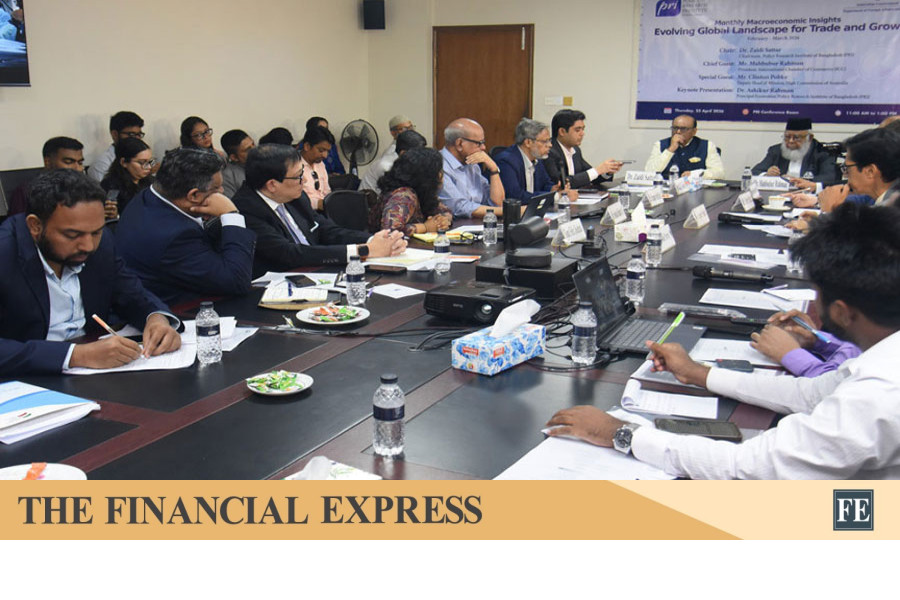
Titled “Evolving Global Landscape for Trade and Growth”, the seminar was held at the PRI office in Banani.

The warning comes despite recent government data showing a slight dip in inflation.

Point-to-point inflation reportedly fell to 8.71 per cent in March, down from 9.13 per cent in February, official data showed.

Economists argued that using printed money to cover budget deficits and subsidies could reverse this trend, especially amidst an ongoing energy crisis.

The seminar, jointly organised by PRI and the Australian Government's Department of Foreign Affairs and Trade (DFAT), highlighted that Bangladesh's economic stability is under pressure from Middle East geopolitics, LDC graduation challenges, and global policy uncertainty.

Mahbubur Rahman, president of the International Chamber of Commerce, Bangladesh, called for reforms for the sake of the national economy, not merely to satisfy IMF conditions.​
 

Phasing out tax holidays

FE
Published :
Apr 24, 2026 00:23
Updated :
Apr 24, 2026 00:23

1776988344612.webp


The decision of the National Board of Revenue (NBR) to phase out tax holidays has been a long time coming. For years, these incentives were promoted as tools to stimulate investment and industrial growth. However, their overall impact has been mixed at best. The NBR's latest move signals a clear shift towards a more uniform, compliance-driven tax regime, with an emphasis on broadening the tax base and strengthening revenue mobilisation. Instead of relying on exemptions to attract investors, the government now appears committed to ensuring that all businesses contribute to the national exchequer.

This policy direction was reaffirmed during a recent pre-budget discussion where the NBR Chairman made it clear that there are no plans to introduce new tax holidays for any industry. His remarks came in response to demands from business leaders, including a proposal for a 15-year corporate tax holiday for the semiconductor sector to encourage both domestic and foreign investment. The government's stance reflects a broader intention to move away from a culture of tax exemptions and towards a system where tax compliance is universal, regardless of the applicable rate. But industry groups continue to advocate for extended incentives, arguing that tax holidays remain an important tool for nurturing emerging sectors and attracting capital in a competitive global environment. This highlights a growing policy divide between the goals of revenue mobilisation and investment promotion.

Tax holidays, by design, are temporary incentives that reduce or eliminate corporate income taxes for a certain period -- typically five to ten years -- to encourage investment in certain sectors. In Bangladesh, such incentives have historically been offered to industries including pharmaceuticals, textiles, IT services and agricultural machinery. In some cases, businesses have enjoyed full tax exemptions in the initial years, followed by gradually reduced rates. Additional benefits have also been extended to healthcare providers operating outside major urban centres like Dhaka and Chattogram. Proponents argue that these incentives can stimulate economic activity, encourage entrepreneurship and help develop priority sectors. However, critics question their effectiveness, noting that tax holidays often shift the timing of investments rather than generating genuinely new economic activity. More importantly, they can result in significant revenue losses for the government and create opportunities for misuse, such as profit shifting to tax-exempt entities.

From the NBR's perspective, these concerns are increasingly difficult to ignore. The continuation of generous tax exemptions not only constrains public revenue but also complicates tax administration and undermines fairness within the system. By phasing out such incentives, the government aims to create a level playing field where businesses compete on the basis of efficiency and innovation rather than preferential tax treatment. That said, the transition away from tax holidays should be approached with caution. While their shortcomings are evident, these incentives have played a role in supporting industrial growth and attracting investment, though not in the most efficient manner. Moving forward, a balanced approach is essential -- one that combines a predictable and transparent tax regime with targeted, performance-based incentives where necessary.​
 

Industries grow, planning lags

Shiabur Rahman
Published :
Apr 24, 2026 00:17
Updated :
Apr 24, 2026 00:17

1776988551938.webp


The industrial sector of Bangladesh has proved itself to be the greatest contributor to its economic development over the recent decades. The country has diversified its focus from agricultural activities towards industrial performance, and the proportion of the contribution of the industrial sector to GDP was estimated to be approximately 34 to 37 per cent for the 2024-2025 fiscal year. There exists a gap or rather a weakness in the process of industrialisation in Bangladesh.

Industrialisation has taken place in an almost unplanned and uneven way here. Factories and other industrial units have been set up wherever space is found. The impact of this kind of industrialisation is evident in the degradation of agricultural land. Given the land shortage in the country, this development has been causing concern for sustainable development in the country.

Also equally alarming is the concentration of industries in Dhaka and Chattogram. These two zones have become the centers of industrialisation, capturing investments, infrastructure development and labour market. While there are definite economic benefits that can accrue from clustering, like proximity to markets, ports and infrastructures, this trend has also led to a number of problems. Urban congestion, pollution, high cost of land use and pressure on city infrastructure are some of the hallmarks of such cities, while other areas have not received their share of developments.

In an effort to tackle the problems associated with clustering, the government decided to pursue the path of planned industrialisation by setting up Export Processing Zones (EPZs) and Special Economic Zones (SEZs). This was aimed at offering investors infrastructure facilities and a business-friendly environment to encourage investment.

It theoretically provides an opportunity to make industries decentralised and reduce the burden of development from cities such as Dhaka and Chattogram. But practically the outcome has not always been positive and many of these areas have found it difficult to meet the expected levels of investment at first. One of the major obstacles to success has been the lack of effective communication and transportation network connections between the industrial zones and the larger market and port areas.

Another barrier to industrial decentralisation is that there is no shift in the concentration of regulatory bodies and important services to other places than Dhaka. Even when there is development in other regions through industrial zones, companies face problems due to their Dhaka-centric nature.

The problems encountered by individual projects reflect these trends. For instance, the Savar Tannery Estate was conceived as a relocation of tanneries from the heavily polluted Hazaribagh, providing an organised and eco-friendly environment. Though the shift was successful, the project suffered from inefficient waste disposal and a lack of other infrastructure. Therefore, it has been unable to meet its intended goals.

This example shows that there is a consistent trend where designs are never followed up with timely implementation and coordination. Unless such issues are sorted out, the industrial zones will not realise their full potential.

What is needed is a more cohesive and proactive industrialisation strategy. The first step should be ensuring that better land-use planning takes place to avoid the arbitrary conversion of arable land into industrial sites. The development of the necessary infrastructure to match the industrialisation and the decentralisation and digitalisation of licensing processes are also critically important.

The industrial sector of the country has certainly developed to a large extent, but the future prosperity of this sector rests largely upon how successfully it can tackle the problems it is facing.​
 

Economy facing severe pressure from global shocks: PRI
Staff Correspondent 23 April, 2026, 22:44

1776993473311.webp

International Chamber of Commerce president Mahbubur Rahman and Policy Research Institute of Bangladesh chairman Zaidi Sattar, among others, are present at a dialogue in the capital on Thursday. | Press release

Bangladesh’s economy may face severe stress due to narrow fiscal space and concurrent external headwinds including, the Middle East crisis and the country’s graduation process from the least developed country category.

Policy Research Institute of Bangladesh made the statement at a programme organised at its office in the capital on Thursday.

They said that recent economic growth — strained by 30 per cent non-performing loans, higher energy costs, weakened trade flows, supply chain disruptions, and uncertainty surrounding the IMF programme — masks underlying structural weaknesses that could undermine stability if not urgently addressed. Bangladesh travel guide

PRI principal economist Ashikur Rahman said the economy had experienced a ‘fragile recovery’ until early 2026, with foreign exchange reserves rising to around $30 billion and inflation easing to 8–9 per cent. However, growth momentum has since weakened sharply, with second-quarter GDP expansion dropping to just 3 per cent— the lowest since the Covid period.

He pointed to mounting stress in the financial sector, where non-performing loans have surged to nearly 30 per cent, discouraging banks from extending credit to the private sector.

As a result, credit growth has slowed to about 6 per cent, while fiscal space remains severely constrained. This has forced the government to rely on high-cost short- and medium-term borrowing from the banking sector, and more recently, on central bank financing.

‘This recovery rests on shaky foundations,’ he said, cautioning that policy reversals and backtracking on reforms could further deepen macroeconomic stress.

The situation is being compounded by three major external shocks: geopolitical tensions in the Middle East, Bangladesh’s impending graduation from least developed country status, and uncertainty surrounding US trade policies.

These factors are already contributing to higher energy costs, weaker exports, and disruptions in global supply chains, putting renewed pressure on the balance of payments.

PRI chairman Zaidi Sattar warned that the global economic order itself is undergoing a fundamental shift, with weakening multilateral institutions, including the United Nations and the World Trade Organisation, and rising geopolitical fragmentation adding to uncertainty for trade-dependent economies like Bangladesh.

He highlighted risks stemming from disruptions in critical energy routes such as the Strait of Hormuz, noting that Bangladesh’s fuel reserves cover only about three months of demand. A prolonged crisis could trigger sharp increases in fuel, fertiliser, and food prices, placing significant strain on households, businesses, and overall macroeconomic stability.

‘Bangladesh is facing multiple overlapping shocks at a time when it is preparing for LDC graduation. There is no room for complacency,’ he said.

Despite some improvement in external stability — supported by exchange rate adjustments and a gradual recovery in reserves, concerns persist over weak revenue mobilisation, fiscal imbalances, and ongoing fragility in the banking sector.

He noted that progress on key reforms tied to the IMF programme will be crucial for securing the final loan tranche and maintaining international confidence.

Export performance has also faltered, declining by around 5 per cent in FY26 amid subdued global demand, while import growth remains below the level needed to sustain strong economic expansion.

He argued that restrictive trade policies are limiting access to essential inputs for production, thereby undermining export competitiveness.

He also emphasised the dual need to safeguard macroeconomic stability while accelerating long-overdue structural reforms.

PRI research director Bazlul H Khondker warned that Bangladesh’s demographic dividend may begin to diminish after 2034–2035, underscoring the urgency of timely and productivity-enhancing reforms.

He also highlighted the need to investigate why inflation remains persistently high in Bangladesh compared with regional peers, despite facing similar external shocks.​
 

Global crises cast shadows on external credit inflows
Budget-support funds from foreign financiers look uninspiring
Only $750m so far confirmed for current budget although fiscal year nears end

Syful Islam

Published :
Apr 24, 2026 23:47
Updated :
Apr 24, 2026 23:47

1777075259152.webp


Budget-support funding from foreign financiers seems drying up as only US$750 million has so far been confirmed although the financial year nears end with the economy facing unanticipated shocks amid global crises.

The country faces severe fund shortages caused due to heightened subsidy pressure amid the ongoing Mideast mayhem.

Finance Ministry officials say at least two major development partners have deferred talks on providing budget-support credit under regular arrangement and so they are now pursuing the financiers for lending the money in emergency balance-of-payments support.

According to them, the only development partner having confirmed budget support worth $750 million on completion of negotiations is the Asian Development Bank (ADB). The proposal will now be placed in board meeting early May, and if passed, the loan agreement will be signed when ADB President Masato Kanda visits Dhaka late next month.

Confronting such a situation at the very outset, the new government is also trying to secure an additional $250 million from the ADB to finance the additional spending incurred due to the fallouts from war and conflicts in the Middle East that force buying fuel oils and gas at excessive prices.

Sources have confirmed that the World Bank has rejected a government proposal for $250 million in budget-support credit under regular arrangement. Now the finance officials are pursing the World Bank to provide some $500 million under emergency support to meet the deficit being created under war's domino effect.

Also, the Japan International Cooperation Agency (JICA) has deferred a planned budget-support programme until next fiscal year, "leaving nothing for this fiscal year", sources say.

A JICA team on April 29th is scheduled to meet with finance ministry officials to discuss financial assistances. Sources says the finance ministry officials may request the agency team to provide some $500 to $700 million as emergency assistance from the $10-billion fund Japan has created to help its Asian neighbours whose economy is reeling from severe crisis caused by the Iran war.

Sources say the government is also in talks with the Asian Infrastructure Investment Bank (AIIB) for $700 million worth of budget support. However, the confirmation of AIIB financing will depend on consent from the co-financer.

The finance officials are not sure until now whether the AIIB credit will be finally available or not within this fiscal year that expires in little over two months.

Finance and Planning Minister Amir Khasru Mahmud Chowdhury recently visited Washington, DC, to attend the Spring Meetings of the International Monetary Fund and the World Bank Group.

The IMF has yet to give confirmation as to whether two due tranches of an ongoing credit programme, amounting to $1.3 billion, will be released for Bangladesh within this fiscal year, 2025-26.

As such, the finance minister, in meetings with top officials of the IMF and the World Bank in Washington, requested emergency assistance worth $1.0 billion each from them to offset the energy shocks of an unprecedented scale amid the blockade of the Strait of Hormuz and Iranian ports.

"All the development partners of Bangladesh are very positive to support us at this crisis moment," the minister told reporters after return from the United States. However, he wouldn't confirm how much assistance was secured so far.

"We are discussing with them emergency assistance," he says. In fiscal year 2024-25, Bangladesh had received around $3.0 billion as budget support from the development partners.

Dr. Zahid Hussain, a former lead economist at the World Bank's Dhaka office, told The Financial Express that getting budget-support credit from development partners in many aspects depends on government's "comfort position" with the IMF, which remains absent for a long.

"We need to cut budgetary spending as much as possible to face the crisis," he says, adding that containing spending will help lower import and thus the requirement of foreign currency will lessen.

He suggests maintaining exchange-rate flexibility and ensuring that no gap remains between domestic and international energy prices.​
 

Beyond growth-- Bangladesh's unequal transformation

Matiur Rahman

Published :
Apr 24, 2026 00:16
Updated :
Apr 24, 2026 00:16

1777076463926.webp


Bangladesh has long been celebrated as one of development economics' most commendable success stories. Between 2010 and 2022, real GDP grew by 6.6 per cent annually, nearly doubling GDP per capita and reducing extreme poverty from 12.2 to 5.6 per cent, while multidimensional poverty declined from 46.8 to 21.3 per cent alongside improvements in health, education, sanitation, and electricity access. These are not trivial gains. They represent millions of lives changed.

And yet, the story Bangladesh must now tell itself is a more uncomfortable one. Growth has been real, but so has been the growing gap between those who benefit from it and those who do not. The question before policymakers, businesses, and citizens alike is no longer how to grow - but for whom, and on what terms.

The headline numbers on poverty mask a troubling undercurrent. After 2016, Bangladesh's economic growth pattern shifted, becoming less inclusive, and income inequality rose as income growth benefited wealthier families more. A Power and Participation Research Centre survey found that poverty has surged over the past three years, with nearly 28 per cent of the population now poor, compared to 18.7 per cent in 2022, while extreme poverty has risen to 9.35 per cent. Expenditure inequality has also intensified, with the national Gini coefficient rising to 0.436 from 0.334 in 2022, and urban inequality surging to a striking 0.532.

Nearly 62 million people - about one-third of the population - remain vulnerable to falling back into poverty if faced with an illness, natural disaster, or other unexpected shock. In such a context, economic growth is not so much a rising tide as a selective current, pulling some forward while leaving many anchored in place.

The French sociologist Pierre Bourdieu argued that inequality is reproduced not only through money but through access to education, networks, and cultural resources - what he called "social and cultural capital." That insight resonates with painful clarity in Bangladesh today. Our education system has expanded enormously in enrollment, but quality remains deeply stratified. At the secondary level, the dropout rate reaches 32.85 per cent, and girls constitute just 27.50 per cent of vocational-technical enrolment, limiting economic mobility for a significant share of the population. The English-medium schools, private tutors, coaching centres are not merely amenities; they are the engines of intergenerational privilege. Research shows that intergenerational educational mobility in Bangladesh actually declined from 2005 to 2016, indicating that growth in education was not equally conducive to all social strata.

No policy vision has shaped Bangladesh's recent identity more powerfully than Digital Bangladesh. The ambitions were genuine and, in important respects, the gains are real. Mobile banking has deepened financial inclusion, digital government services have reached millions, and the country's freelancing sector has carved out a remarkable global footprint. Bangladesh is home to nearly 14 per cent of all freelancers worldwide.

But the digital dividend has been captured unevenly. Only 36.5 per cent of individuals in rural areas use the internet, compared to 71.4 per cent in urban areas - a gap that widened in the first quarter of FY2024-25, according to the BBS ICT Access and Use Survey. Nationally, 51.1 per cent of people aged five and above remain offline, and a pronounced urban-rural divide persists: 81 per cent of urban households have at least one smartphone, compared with 69 per cent in rural areas.

Crucially, access alone does not confer capability. Research by economists at the University of Dhaka found that only about 35 per cent of people with internet access have internet skills, and 31 per cent can use it effectively for basic tasks - meaning access is a necessary but not sufficient condition for participation. A smartphone in a rural household does not automatically translate into empowerment in the absence of digital literacy, relevant local content, or affordable data. Out of every Tk 100 spent on mobile data, around Tk 50 goes to the government through various charges, keeping marginalised and low-income communities digitally excluded even as online services increasingly shape access to education, healthcare, finance and government support.

The gender gap compounds this picture. Of internet users, 47 per cent are men and 34 per cent are women, with rural women facing additional barriers due to social norms imposed by families. Women's participation in the IT sector stands at only 12 to 13 per cent - a statistic that speaks not only of economic exclusion but of the limits of a digital transformation that has not adequately reckoned with gender.

Bangladesh's labour market is undergoing a structural shift that its legal frameworks have not yet absorbed. The gig economy - ride-sharing, food delivery, freelancing, e-commerce - has become a significant employment absorber, particularly for young people. Industry insiders estimate that about 200,000 drivers work in ride-sharing, 400,000 in deliveries, and another 500,000 in freelancing. The ride-sharing industry alone is estimated to be worth $259 million and is expected to grow to $1 billion within five to seven years.

Yet growth in gig employment is not the same as security. The British sociologist Guy Standing coined the term "precariat" for a class defined not only by low income but by structural instability - no contracts, no benefits, no clear social identity. That description fits a large share of Bangladesh's digital workforce with uncomfortable precision. Gig workers remain outside the protections of formal employment: they have no service benefits, insurance, or compensation in case of accidents, damaged goods, or income loss during disruptions. The vulnerability became clear during Bangladesh's 10-day internet shutdown in July 2024 amid political unrest.

Bangladesh's Labour Act 2006 does not acknowledge platform-based labour. Gig workers have no recourse to labour courts, no right to unionise, and no protection under the minimum wage board. More than 90 per cent of ride-sharing drivers run rented vehicles, handing over nearly half their income to owners. Meanwhile, for freelancers, nearly half - 48.1 per cent - earn less than BDT 25,000 per month, an income that is precarious and not always a reliable substitute for stable, formal employment.

Inequality in Bangladesh does not operate along a single axis. It is compounded by geography, gender, and climate. Men earn 36 per cent more than women in Bangladesh, particularly in agriculture, and women over 65 earn 70 per cent less than their male counterparts. Women's labour force participation stands at 32 per cent, less than half of that for men, and only 7.5 per cent of rural enterprises are owned by women.

The spatial dimension is equally stark. Rural Bangladesh saw faster poverty reduction over the past decade. However, poverty is still six points higher than in urban areas, while urban inequality widened and structural challenges persisted, including congestion, weak job creation, and poor service quality. Cities like Dhaka attract migrants seeking opportunity but deliver to many only informal settlements, precarious work, and exclusion from quality services.

Climate vulnerability overlays all of this. Bangladesh is among the countries most exposed to flooding, cyclone damage, and sea-level rise, and these hazards fall hardest on those with the least capacity to adapt or relocate. Environmental shocks are not merely humanitarian crises; they are engines of inequality, erasing assets and reversing progress accumulated over the years.

The Bangladesh economy faces a conjuncture of pressures: growth slowed to 4.0 per cent in FY25, and poverty at the international $3.0 line is projected to rise to 8.9 per cent, with nearly 1.2 million more people at risk of falling into poverty. Labour market conditions weakened as the employment ratio fell to 56.7 per cent in 2024. These numbers do not erase past progress, but they do warn against complacency.

The policy agenda that follows from this analysis is demanding but not mysterious. It requires, first, a genuine broadening of how inequality is measured - beyond income alone, to encompass education quality, digital capability, and social inclusion, disaggregated by region, gender, and social group. Second, investment in human capital must shift from expanding access to improving quality and equity; the 32.85 per cent secondary dropout rate is not an administrative footnote but a structural wound. Third, the governance of digital technologies must be strengthened - citizens need the right to understand and challenge algorithmic decisions that increasingly determine access to government services, credit, and employment. Fourth, social protection must be redesigned for an economy where informal and platform-based work is the norm for tens of millions, not an exception. And fifth, a specific legal framework for platform labour is urgently needed, one that guarantees minimum income transparency, occupational safety, and the right to organise without destroying the flexibility that makes gig work attractive.

Bangladesh stands at an inflexion point. The achievements of the past decades are genuine, hard-won, and worth defending. But the development model that produced them is showing its limits. The World Bank's latest poverty assessment finds that by adopting innovative policies - improving connectivity, creating quality urban jobs, facilitating pro-poor value chains in agriculture, and making social protection more effective - Bangladesh can restore and accelerate the pace of reducing poverty and boosting shared prosperity.

The question is whether there is the political will to act on what the data already tell us. A nation that graduates 200,000 students into unemployment each year, that leaves half its population offline, and that offers its gig workers neither a contract nor a safety net is not building a just society - regardless of what its GDP growth rate says. The measure of Bangladesh's success will ultimately be not the aggregate of its output, but the distribution of its opportunities.

Dr. Matiur Rahman is a researcher and development professional.​
 

Latest Posts

Back